African Daisy

81212It seems like not so long ago when the only African daisy that was commonly available was the trailing African daisy that makes such a nice relaxed ground cover for small spaces. The simple white flowers have navy blue centers, and are occasionally joined by mutant light purple flowers. The cultivar that blooms only in light purple was not as popular. Things have certainly changed!
African daisies, Osteospermum, have been bred and hybridized so extensively that most of the modern cultivars are not categorized by specie, so are known by their cultivar names. Most are likely related to Osteospermum ecklonis, which was the first of the shrubby specie to become popular. Although often grown as cool season annuals, African daisies are short term perennials.

Flowers can be various pastel hues of purple, pink, orange, yellow or white. Bloom can be profuse in random phases, and sporadic bloom is almost continuous between early spring and late autumn. It is only postponed by the coolest winter weather and the warmest summer weather. Mature plants can get a bit more than two feet high and wide. They want full sun and regular watering.

Get Perennials Ready For Winter

81212thumbDilemmas are common in gardening. Should summer vegetables that are still producing be removed so that winter vegetables can get started on time? What about replacing summer annuals that are still blooming with winter annuals, and then replacing winter annuals with summer annuals half a year later? Should tender perennials be regarded as annuals, or get a second chance?
Right now, some perennials are looking tired. Many will be going dormant for winter. Many do not get much down time, and will start to develop new growth faster than old growth deteriorates. Not many make their intentions obvious. Deciding how to work with them can be confusing at times. It might take a few years and a few mistakes to get familiar with the habits and lifestyles of some.

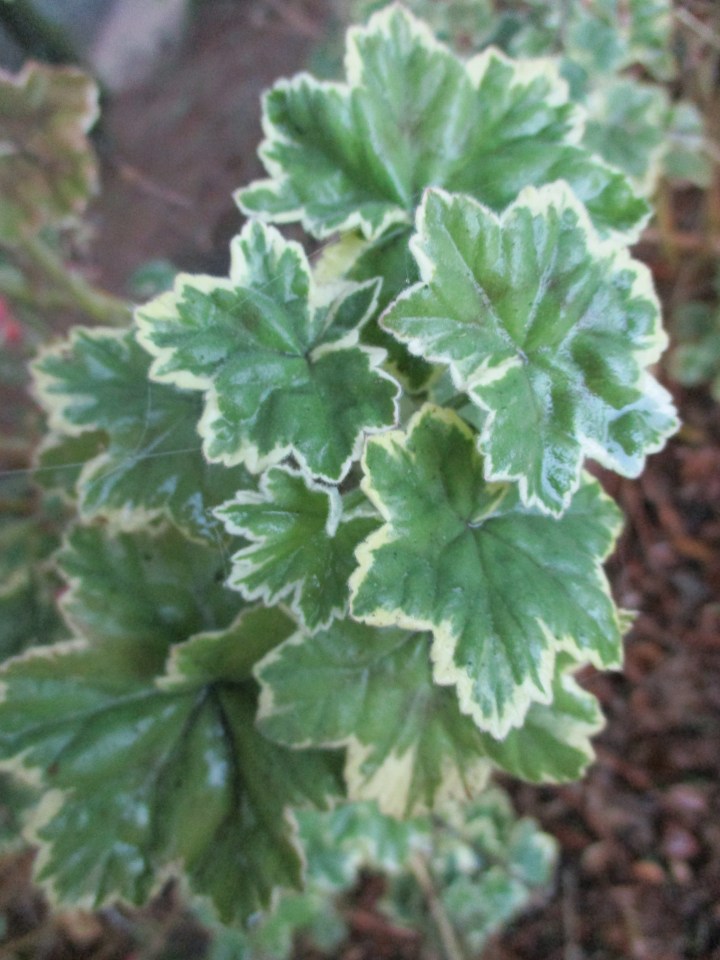
If cut back too early, hardy zonal geraniums will not regenerate much until the weather gets warmer at the end of winter. In the interim, they are more likely to be killed by frost without the protection provided by old growth However, some varieties start to grow in winter. If not cut back soon enough, new growth mingles with old, so that they are difficult to separate when they do get cut back.

It is best to observe what hardy geraniums are up to before deciding on when to prune. If they start to develop vigorous new growth down near the ground, the old growth should probably be cut down as far as the new growth. It is likely better to take a chance that they might be damaged by frost. Those that do not start to grow right away can enjoy the insulation of old foliage for a while.

Thoroughly deciduous perennials, like deciduous daylilies, dahlias and some ferns, can be groomed of their deteriorated old growth without risk that they will start to regenerate new growth prematurely. However, cutting back some specie of salvia might actually stimulate development of exposed and frost sensitive new growth. Perennials that get damaged by frost later In winter should not be groomed of damaged growth right away. The damaged material provides a bit of insulation for lower growth, particularly if new growth was stimulated by the damage.

Six on Saturday: More Unknown Succulents


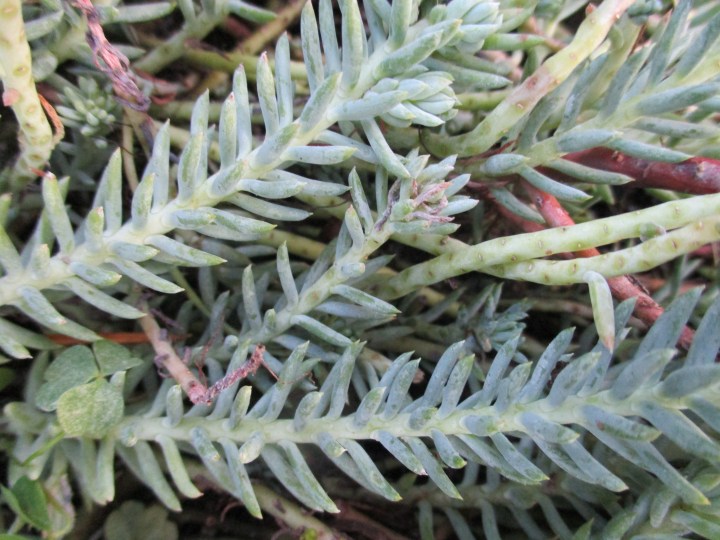
This is not as simple as it looks. It is something of a guessing game for me. I am rather certain that #1 and #2 are identified correctly. I am not so certain about #3 and #5. The name of #4 is merely a guess. #6 is the only one that I know the name of for certain, although the name that I know it as is now outdated.

The lack of a species name for the two species of Sedum #1 and #2 seems like a cop out to me. I might have discussed it in one of my Wednesday rants, or will do so soon enough. All species should be described as a ‘species’, not merely as a genus with a cultivar name tossed in as if it adequately designates the identity. I sometimes write about how the nomenclature of plants is like that of cars. Both plants and cars are distinguished by genus AND species, with some specie divided into separate cultivars and varieties. (Cultivars are merely ‘cultivated varieties’.) Depriving a plant of a species name is like describing a car as a Buick ‘Convertible’, or a Chrysler ‘Sedan’. There is a big difference between a convertible Electra and a convertible Skylark, although both are Buicks. There is also a big difference between an Imperial sedan and a LeBaron sedan, although both are Chryslers. I may not have identified the two Sedum with their correct names, but even their correct names are not very correct anyway.

Echeveria glauca #3 seems too simple. Shouldn’t it have a cultivar name too? I really do not know. I really do not even know what species it is.

The same goes for Graptopetalum paraguayense #4. Really, I do not even know what genus it is. This is merely a guess. How embarrassing.

Aloe brevifolia #5 has a different issue with its name. It seems that all aloes are known simply as Aloe vera, even though not many of us would recognize Aloe vera if we actually saw it. This makes it easier to identify unknown aloes, but complicates the identification of familiar aloes.

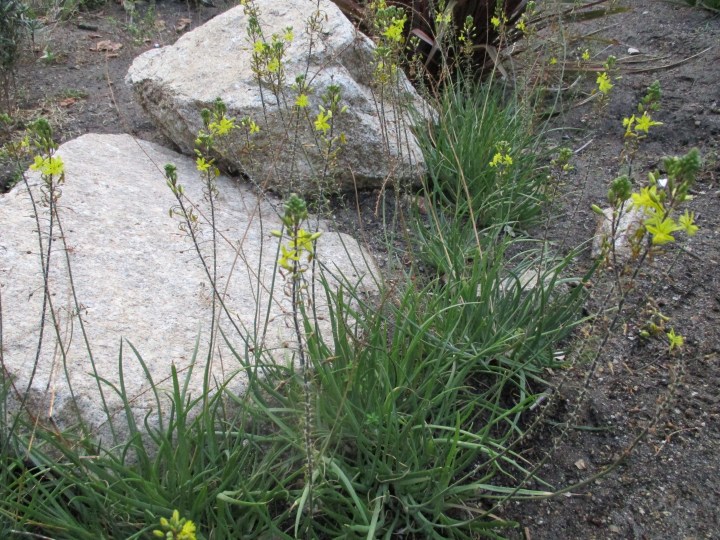
Then there is the easily identifiable Bulbine caulescens #6. Seriously, I recognize it, but somehow, the name got changed. The first name is how I know it. The second name is the newer correct name.

1. Sedum ‘Angelina’P81124

2. Sedum ‘Blue Spruce’P81124+

3. Echeveria glaucaP81124++

4. Graptopetalum paraguayenseP81124+++

5. Aloe brevifoliaP81124++++

6. Bulbine caulescens or Bulbine frutescensP81124+++++

This is the link for Six on Saturday, for anyone else who would like to participate:

https://thepropagatorblog.wordpress.com/2017/09/18/six-on-saturday-a-participant-guide/

Japanese Anemone

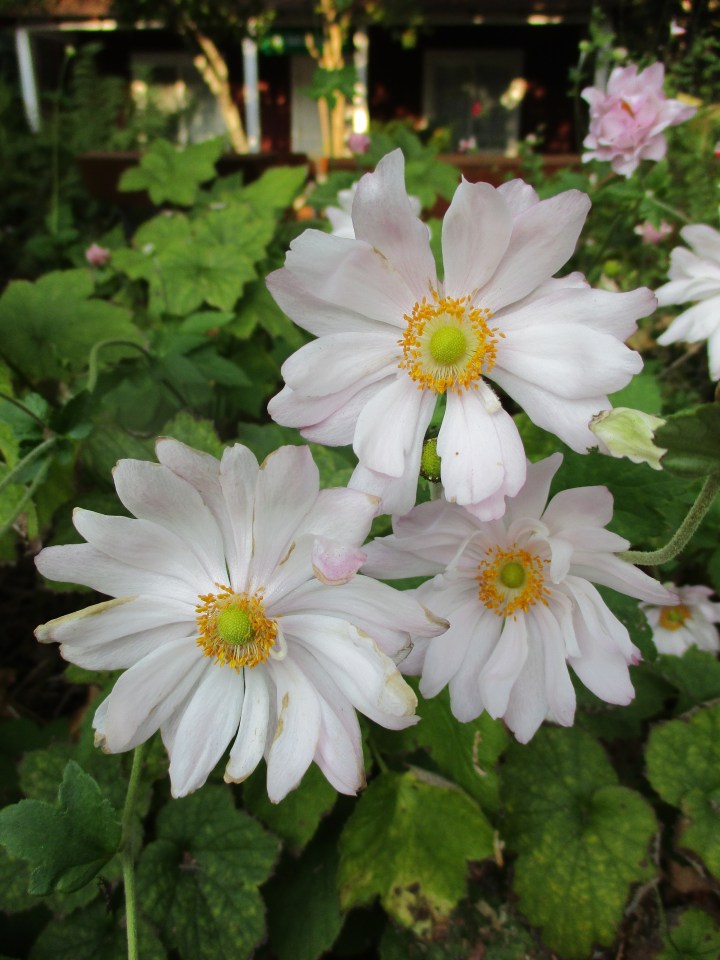
81128Here it is, three quarters of the way through November, and this Japanese anemone, Anemone hupehensis or Anemone X hybrida, is finally finishing bloom. It should have finished a month ago, but does not always stay on schedule here. Each cultivar exhibits a distinct responsiveness to the seasons, so others finished a while ago. The deciduous foliage will eventually succumb to frost.

Once they get going in a spot that they like, Japanese anemone slowly spread. Although not considered to be invasive, they can be difficult to get rid of if they creep into spots where they are not wanted. Because they bloom so late in summer and autumn, they get divided in spring. Even old colonies may never need to be divided, but can be divided if more plants are desired elsewhere.

The elegance of the foot high foliage seems contrary to its woodsy and unrefined compatibility with taller shrubbery and small trees, like rhododendrons, Japanese maples and hydrangeas. It is an excellent seasonal understory. The limber stems of the white or pale pink flowers get about twice as high as the foliage. The one and a half to two inch wide flowers are either single or double.

Japanese anemone wants rich soil, partial shade and regular watering. It can be happy in full sun exposure if it does not get too warm and dry.

Propagation Of Perennials By Division

80718thumbAutumn is for more than planting. It is when most of the aggressive pruning gets stared. It might be the best time to work with compost and conditioning the soil. Bulbs get planted. Gutters get cleaned. Leaves get raked. Perennials get groomed. We might think of it as a time of slowing down after such a busy summer, but in many gardens, autumn is just as busy with seasonal chores.

Autumn is when many of the spring, and some of the early summer, blooming perennials get divided. That means that they get dug up, split into smaller parts, and then replanted. Because there will be more smaller plants after the process than there were bigger plants before the process, some should get planted over a larger area, in other parts of the landscape, or shared with friends.

Not all perennials need to be divided annually, and some may never need to be divided at all. Perennials that bloom in autumn or winter, such as Japanese anemone and bergenia, get divided in spring, since they will have plenty of time to recover from the process to bloom on schedule. Black-eyed Susan does not likely care if it gets crowded, but can get divided simply for propagation.

Lily-of-the-Nile should be divided if it gets too crowded to bloom well. Division allows more room for the individual shoots to grow and bloom as they should. However, because it takes a while for newly divided shoots to recover, they should only be divided every few years or so, and only if they happen to be getting crowded. African iris gets divided if overgrown plants are looking shabby.

It is not always necessary to dig entire plants. If dividing New Zealand flax just for propagation, it is easier to pry the desired number of side shoots from a mature clump, without digging the main part of the clump. Agave pups might be (very carefully) pried off of larger rosettes just to keep the main rosettes neat. Black-eyed Susan and other deciduous perennials get divided while bare.

Six on Saturday: Tangly Cottage Gardening Journal


tanglycottage.wordpress.com is where you can find it. This is a blog about gardening, gardens, life, and of course, Skooter the kitty, in and around Ilwaco, in the very southwestern corner of Washington, where the Columbia River flows into the Pacific Ocean. Like so many blogs, it shares compelling insight about a culture and a region that might be very different from what one is accustomed to. Then again, it might be compellingly similar . . . or even unexpectedly familiar. You can decide for yourself.

I have been to Ilwaco only once, about twenty years ago. I spent the night in a campground there while driving from Silverdale, west of Seattle, to Saint Helens, north of Portland. It was certainly not a direct trip. That would have been a two and a half hour drive. I was on vacation, so drove around the Olympic Peninsula. I sort of intended on returning someday, but never did.

After all these years, it has been fascinating to read about the flora of the gardens of the region. When I was there, I was more interested in the native flora outside of town. Ilwaco still looks something like I remember it to look like, although I think that there is more landscaping downtown now.

A while back, I commented on Gladiolus papillio that was blooming in a planter box in downtown Ilwaco. I was impressed that it was such a reliable perennial species of gladiolus. I had been wanting to grow a species of gladiolus that was more perennial than than the common summer blooming bulbs that I am familiar with, but had not decided on which ones to try. Anyway, in response to my comment, the author of ‘Tangly Cottage Gardening Journal’ offered to send me a few of the bulbs! How could I refuse?

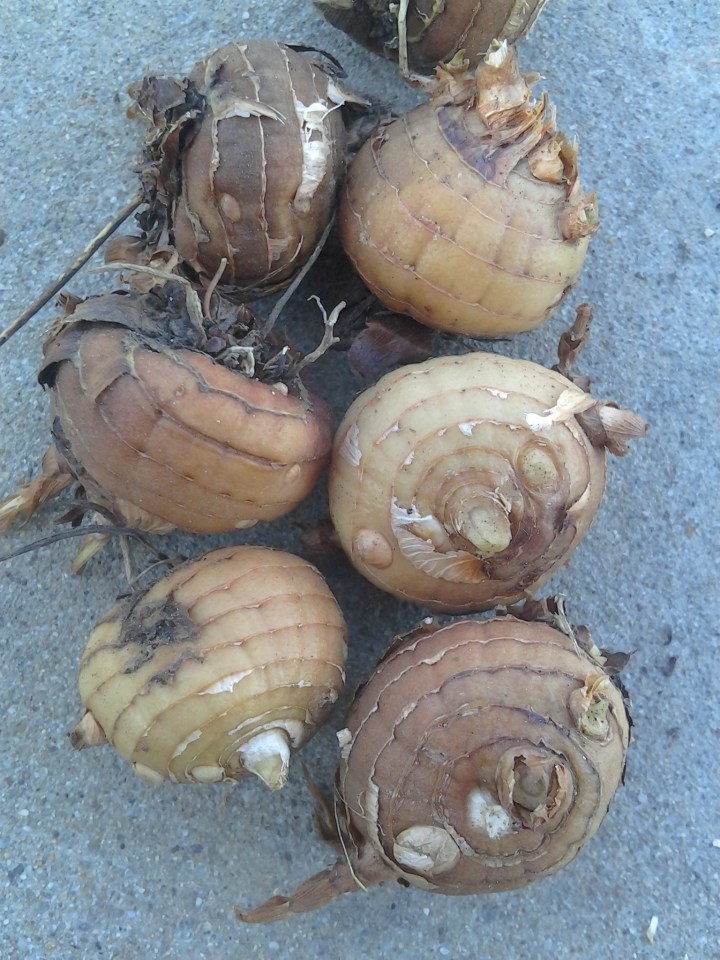
These six pictures are of those Gladiolus papillio bulbs that came from Ilwaco in Washington.

1. It is so excellent to get a package in the mail from such an exotic and far away place! It got here very fast. It was in my mail only two days after being postmarked on October 25.P81110

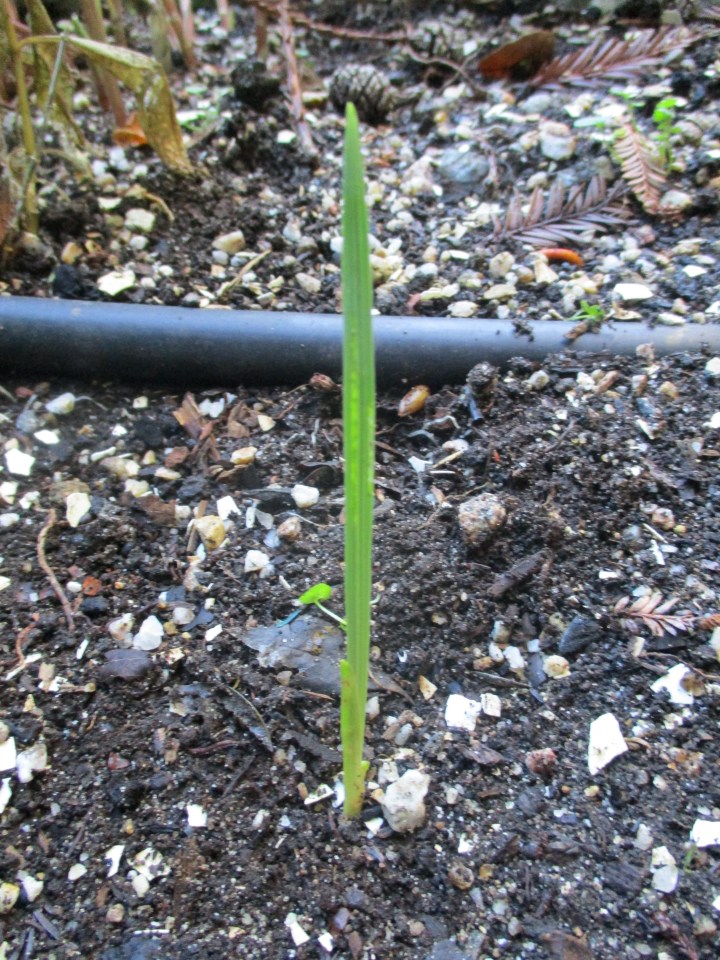
2. The contents of the package are even more excellent than the package itself! There were nearly fifty bulbs here! I planted them on the first of November, a bit more than a week ago.P81110+

3. The bulbs were planted in three groups of about a dozen, with two groups of about half a dozen between them. The first group is partly buried here because a bit of soil fell back into the hole before I got this picture.P81110++

4. This is how the same first group of bulbs looks completely buried. Aren’t they pretty? Never mind the calla. It is not vigorous enough to bother the Gladiolus papillio.P81110+++

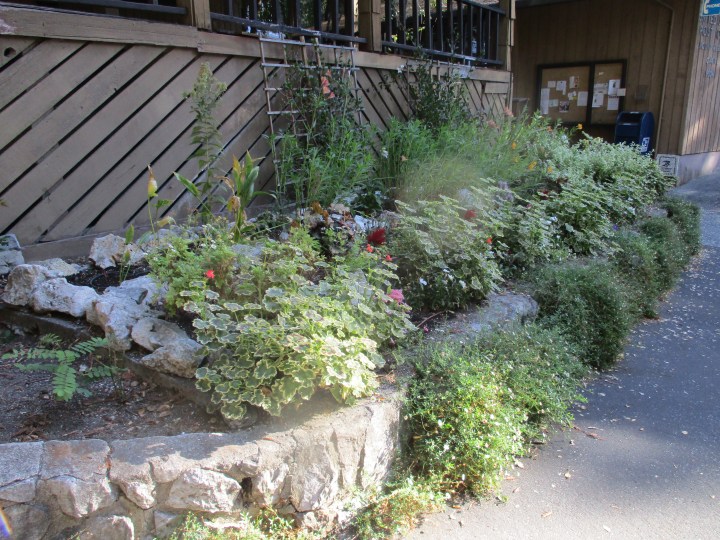
5. This is the planting bed where the Gladiolus papillio bulbs were planted. They are up in back, in a row that extends from the left edge of the picture to the corner of the trellis with the espaliered camellia. The pinboard and mailbox in the top right corner of the picture are at the Post Office next door. I would have preferred to plant the bulbs in front of the Post Office, but there is no place to do so over there. I am pleased that these Gladiolus papillio were planted in a public space almost in front of the Post Office because that is where they originated in Ilwaco. As the proliferate, I intend to take a few to my downtown planter box in Los Gatos, and might even share a few with the lady who tends to the planter box next door to the Los Gatos Post Office.P81110++++

6. This is the Mount Hermon Post Office is next door.P81110+++++

This is the link for Six on Saturday, for anyone else who would like to participate:

https://thepropagatorblog.wordpress.com/2017/09/18/six-on-saturday-a-participant-guide/

Heavenly Bamboo

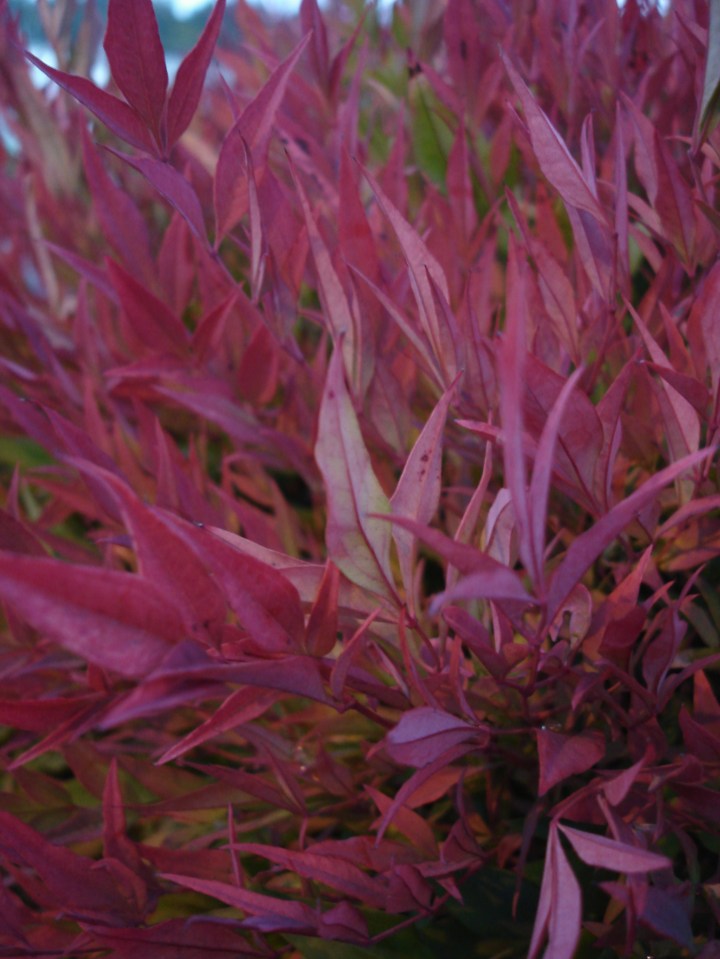
51111Good old-fashioned Heavenly bamboo, Nandina domestica, which can almost reach the eaves, can be difficult to obtain nowadays. More compact modern cultivars do not get much more than six feet tall, and some stay less than three feet tall. Foliage is airier in partial shade, but more colorful where more exposed.

As it begins to emerge in spring, new foliage is pinkish or reddish before greening. It slowly bronzes by autumn. Some cultivars turn ruddy or orangish, or even burgundy. Individual leaves are actually quite large, but are divided into many small, diamond shaped leaflets. Some cultivars have very narrow leaflets. Tiny white flowers bloom through summer. Bright red berries ripen through autumn.

Although unrelated, Heavenly bamboo grows like bamboo, with vertical canes developing from creeping rhizomes. Overgrown or deteriorating canes should be cut to the ground as they get replaced by newer canes. Otherwise, they become top-heavy and inhibit development of new canes. Foliage should not be shorn, since it is not much to look at without its naturally intricate texture.

Chrysanthe-Mum Is The Word

51021Only a few decades ago, when horticulture was taken more seriously, potted blooming plants like chrysanthemums, orchids, azaleas, hydrangeas, lilies and even poinsettias, got the respect that they really deserve. Now they are more commonly purchased in full bloom, enjoyed only as long as their bloom lasts, and then discarded as their blooms deteriorate.

Some get put outside, but often die before they actually get repotted or planted into the garden. Many of those that do get planted, die when their sensitive greenhouse-grown foliage gets scorched by real sun exposure. Others succumb to desiccation before they can disperse their roots. Only orchids want to stay in their original pots for a while, but they rarely get the attention and regular watering that they crave.

Chrysanthemums happen to be in season now, both as potted plants for the interior of the home, and as autumn annuals in the garden. Yet, they are quite sustainable as perennials that can live for quite a few years. They only need to be groomed accordingly so that they can bloom in season, and new stems can replace the old. When they get planted into the garden, multiple plants in a single pot should be separated.

Many chrysanthemums get tall enough to require staking. If left to perform naturally, they bloom profusely. Hobbyists who want to grow larger flowers remove axillary flower buds (sideshoots) to concentrate resources into single terminal (top) flowers that most effectively display their distinctive colors, textures and forms. Sadly, many of the most impressive chrysanthemums have become rare as more profuse bloomers have become more popular.

The Chrysanthemum Society, which can be found on Facebook, is one of the most reliable resources for anyone wanting to grow some of the rare but really fancy exhibition types of Chrysanthemums. The internet makes it possible to get involved with regional chapters well beyond their designated regions. Chrysanthemum fanatics are more than happy to show off and talk about their favorite flowers.

Fall For Spring Bulbs Now

61019thumbThey are certainly not much to look at now. They are even less interesting once buried out of sight in the garden. The big and colorful pictures on the boxes that they arrive in are probably a bit more spectacular than the flowers expected early next spring will actually be. Nonetheless, it will be amazing to see such flashy bloom emerge from seemingly lifeless bulbs that get planted now.

Dormant bulbs are so easy to plants precisely because they are dormant, and therefore lacking any foliage, bloom or roots that can be damaged in the process of planting. They only want to be planted at the right depth, and preferably in the correct orientation (with their tops up and their bottoms down). They like to be planted now, so that they can slowly chill through cool winter weather.

Chill through winter is important to convince dormant bulbs that it really is winter. In such a mild climate, some plants might wonder about that. Cool winter weather either initiates the development of blooms within dormant bulbs, or stimulates bloom as weather subsequently warms. Many tulip, hyacinth, anemone and ranunculus might not get enough chill here to bloom after their first year.

Daffodil, narcissus, grape hyacinth and some iris are not so discriminating. They are likely to bloom even better in their second spring, and can naturalize in good soil with occasional watering. Freesia and crocus might also naturalize, but want more water. Crocosmia and montbretia can actually be invasive. Dahlia and gladiola are summer bulbs, so will be available for planting later.

All bulbs, as well as the corms, rhizomes, tubers and tuberous roots that are commonly known as bulbs, become available in nurseries when it is time for them to be planted, for obvious reasons. Some will be available for quite a while, so can be planted in phases every two week or so, like vegetable plants. Each subsequent phase starts to bloom as each previous phase finishes bloom.

Phasing only works for certain bulbs that are on a tight schedule, and only for the first season. By the second year, they will be synchronized. Iris, anemone and ranunculus tend to bloom together, when the weather is right, regardless of when they were phased. Plants with aggressive roots might not bother bulbs in their first season, but can smother bulbs that might otherwise naturalize.

Mexican Bush Sage

51014In the first year, Mexican bush sage, Salvia leucantha, does not get very big. Then it gets cut back to the ground at the end of winter. It gets about twice as big in the second year, only to get cut back again as winter ends. By the third or fourth year, healthy maturing plants can grow to five feet tall and seven feet wide each season. While cut back, big clumps can be divided to propagate.

Strikingly purplish blue floral spikes bloom from summer or early autumn until frost. The odd white ‘tags’ that protrude from the fuzzy bracts are the true flowers. The lanceolate leaves are grayish sage green and somewhat fuzzy. Plants are well rounded like tumble weeds, and should not be shorn. Mexican bush sage is very popular among hummingbirds, butterflies and bees.

Mexican bush sage wants full sun exposure, and unlike most other sages, it prefers relatively rich soil. Fertilizer can compensate for inferior or dense soil, and improves foliar density, but too much can delay bloom. New plants like to be watered regularly, especially if they grow well. As they mature and disperse their roots, they become less reliant on regular watering.