Six on Saturday: BIG News!

The BIG NEWS for this ‘Six on Saturday’ was only discovered yesterday morning. It does not look like much yet. I suppose that anyone who witnessed my exuberant reaction to it likely wondered what all the fuss was about. I suppose that I should be embarrassed. Oh well, I am not. I know how totally awesomely excellent it is! Furthermore, it is approved by both Skooter and Rhody! (That is ‘the’ famous Skooter of Tangly Cottage Gardening.) The fifth of these Six is also important news, although the first four are rather mundane.

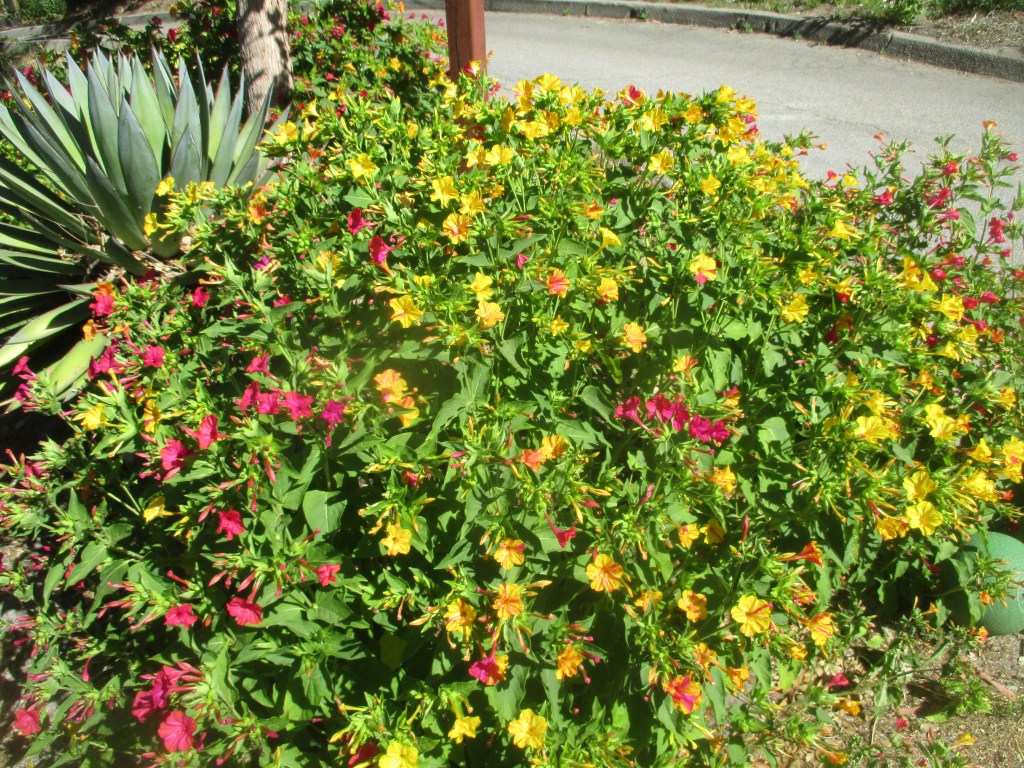
1. Four O’ clock with a five O’ clock shadow is not big news. It is actually rather mundane folly that is included here merely because I like bragging about shabby but pretty weeds.
2. Lily of the Nile fasciation does not classify as big news either, although it is intriguing. This entire colony blooms like this or worse, and after all the other lily of the Nile finish.

3. Black coral pea climbing over the Eureka lemon tree is more of an annoyance than big news. I should have known this would happen while I was not looking. Vines are sneaky.
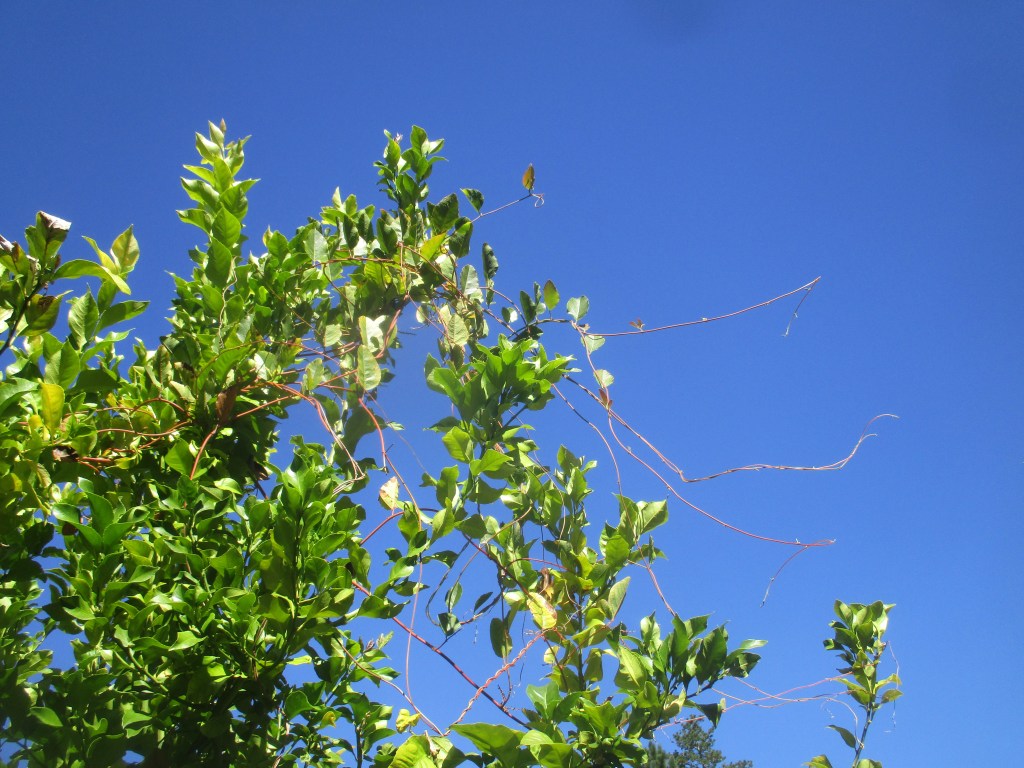
4. Grapevines, although sneaky, are at least productive. These are suspended more than ten feet above the courtyard below. Unfortunately, opossums typically get the fruit first.

5. Koi are rather big news, but are not the big news. Seven moved into the drainage pond last Saturday just after Six on Saturday. Cheeto is below the middle. Shiro is to the right.

6. Gladiolus papilio from Tangly Cottage Gardening is finally THE BIG NEWS this week! It has been here for a few years, but bloomed only once last year, after major tribulation. I noticed this floral stalk today. I do not know how long it will take to mature and bloom.

This is the link for Six on Saturday, for anyone else who would like to participate: https://thepropagatorblog.wordpress.com/2017/09/18/six-on-saturday-a-participant-guide/
Six on Saturday: Mostly Summer

Seasons here are rather mild. People from more interesting climates may not realize that there are any seasons here. Some may believe that it is almost always summer, with only a few days of some other season that is not summer. In reality, climates here experience the same four seasons that occur throughout the rest of North America. The seasons are merely less distinct here. That confuses some plants. Many plants that do not mind mild climates set their own schedules. Some simply have extensive bloom seasons. Of course, many flowers, such as petunias, are totally aware of winter, but know how to thoroughly exploit summer.

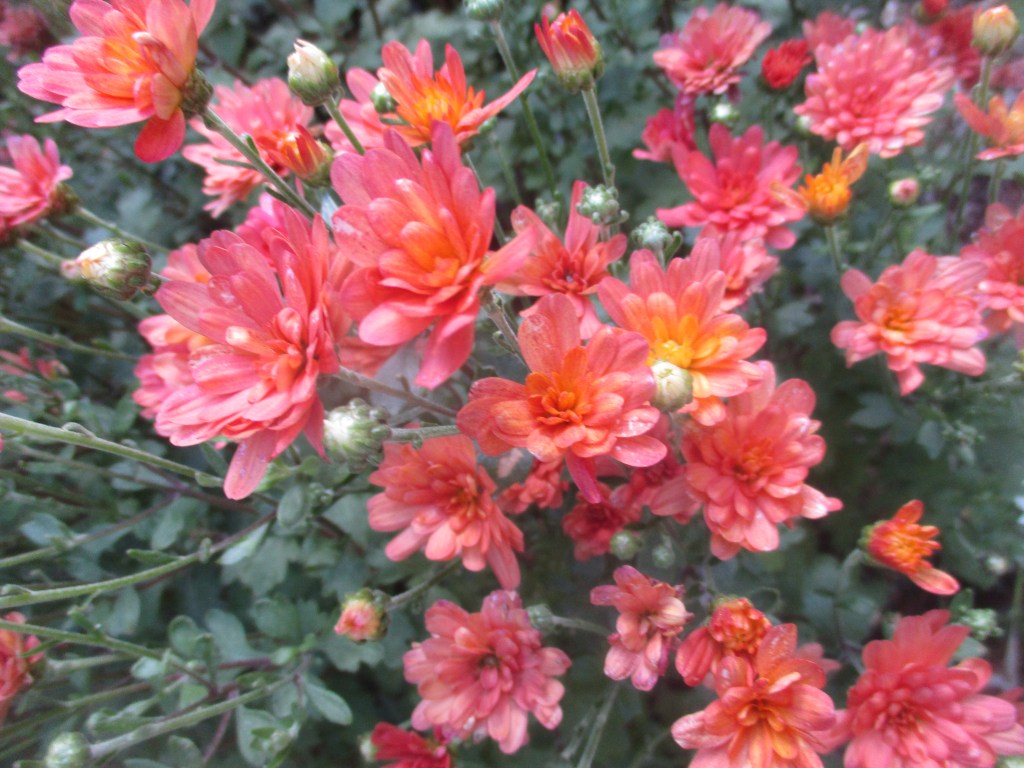
1. Chrysanthemum does not seem to be aware that it should bloom for autumn. Actually, it blooms whenever it wants to, and after this bloom phase, may also bloom for autumn.

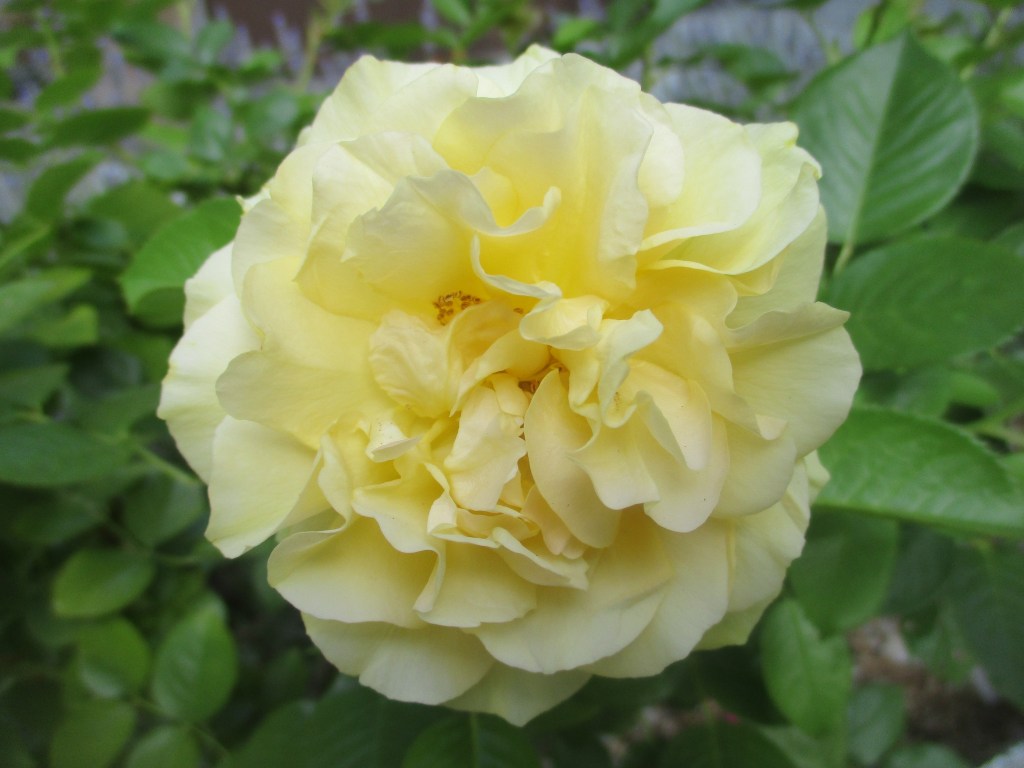
2. Roses should bloom from spring until autumn, but because of partial shade, generally finish with the best bloom by now. This year, their bloom continues as if it is still spring.

3. Lilies that grow from bulbs bloom only for spring, although many were still blooming recently. This one is a daylily. Like the chrysanthemum, it blooms whenever it wants to.

4. Petunia is a classic warm season annual for summer. This one is dressed up as Santa Claus for Christmas time though. Maybe it is actually dressed up like the flag of Austria.

5. This color is rad, even if I can not describe it. Is it purple? Is it burgundy? Perhaps it is irrelevant. I would not have selected it anyway. Such tasks require specialized expertise.

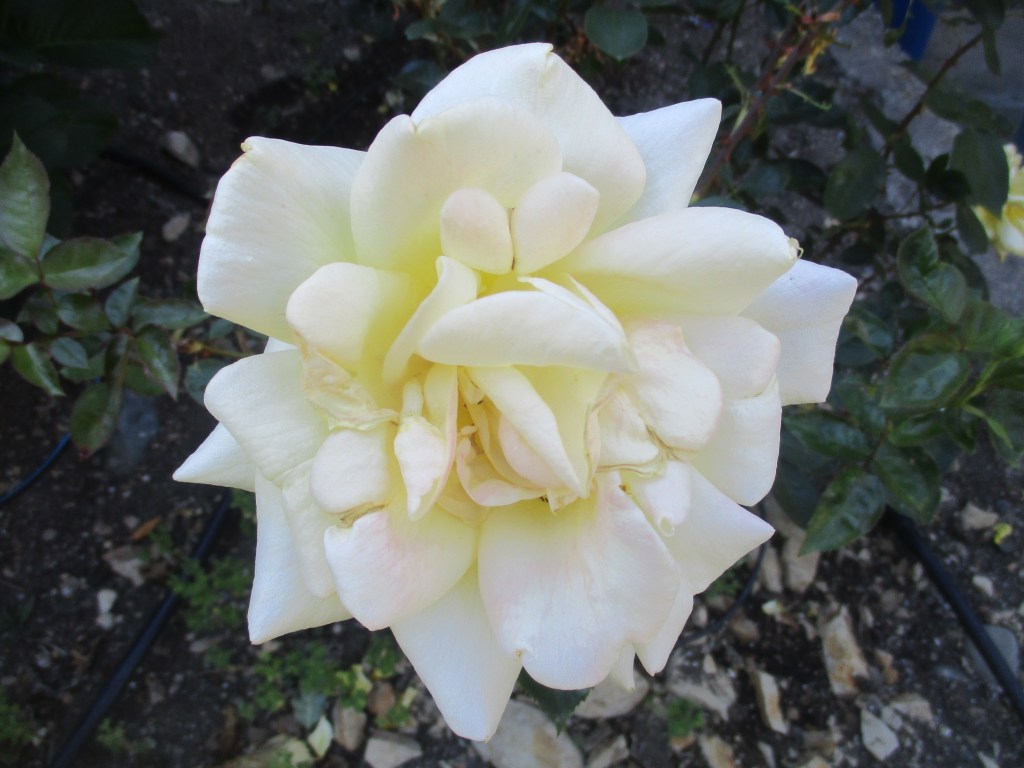
6. Ah, this is more my style. Even I can see that this is plain white. It is my favorite color, and is one of the two simplest. Only black is as simple; but it is very rare among flowers.

This is the link for Six on Saturday, for anyone else who would like to participate: https://thepropagatorblog.wordpress.com/2017/09/18/six-on-saturday-a-participant-guide/

Six on Saturday: Glad

Gladiolus hybrids are not reliably perennial locally. They might not be reliably perennial anywhere. I had believed that they could be so where they get more winter chill, but chill does not seem to help. I have been told that they are no more perennial in Pennsylvania, Oregon or Oklahoma. When I grew them many years ago, only about a third survived to bloom for a second season. Of that third, only about a third survived to bloom for a third season. This is one of many reasons why I am so ‘glad’ about perennial Gladiolus papilio , as well as Watsonia species, from Tangley Cottage Gardening. Although, strangely, a few hybrid Gladiolus survive.

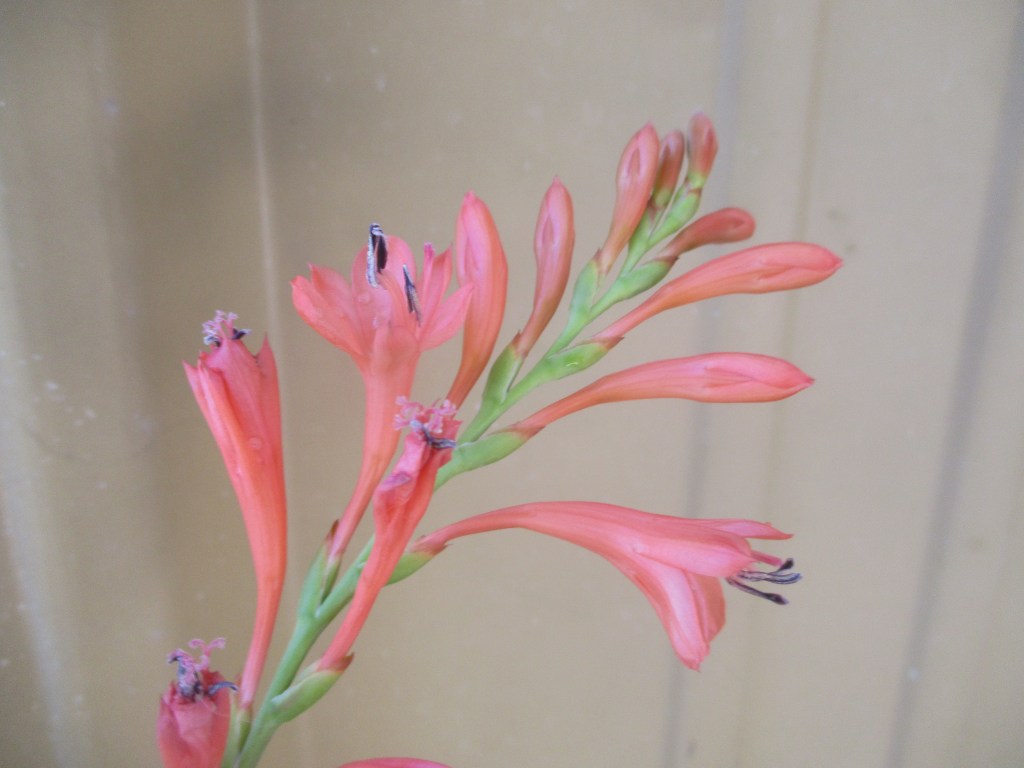
1. Watsonia X pillansii ‘Coral and Hardy’, just like the Gladiolus papilio, was a gift from Tangly Cottage Gardening of Ilwaco in Washington. I learned that it blooms in summer.

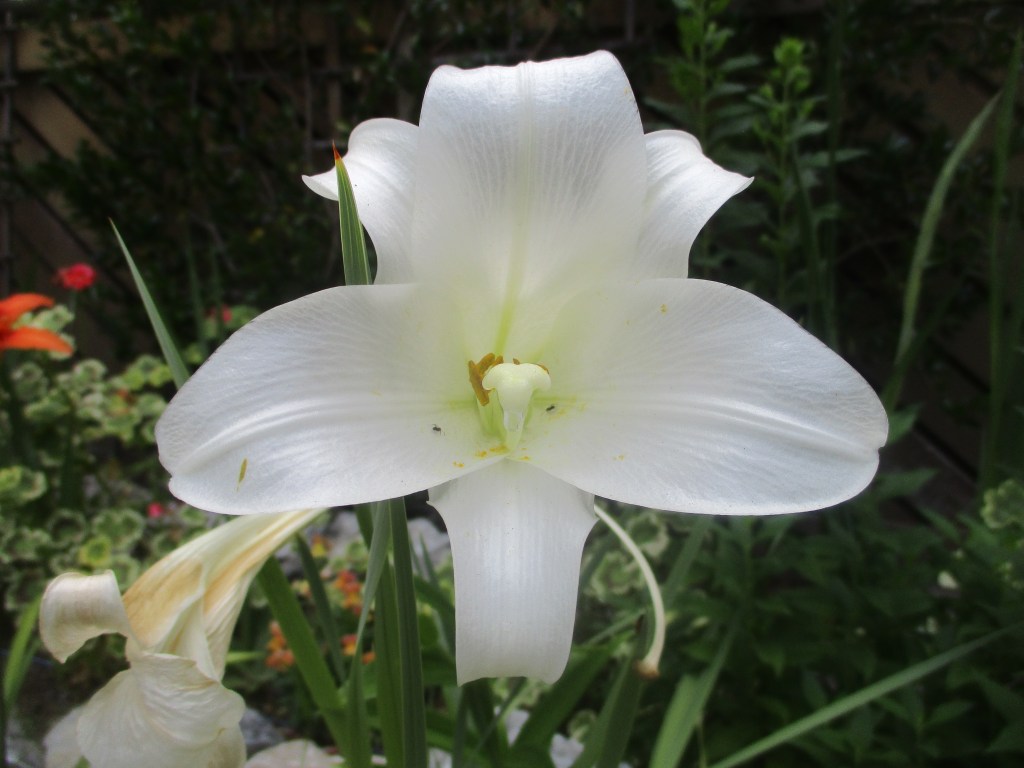
2. Lilium of an unidentified cultivar is finally finishing bloom. Obviously, it is irrelevant to Gladiolus. It just happened to be so pretty precisely as I was in need of a sixth picture.

3. Gladiolus is mostly finishing bloom now. These few are blooming a bit late. These are merely the common hybrid sort that someone purchased from a retail nursery years ago.

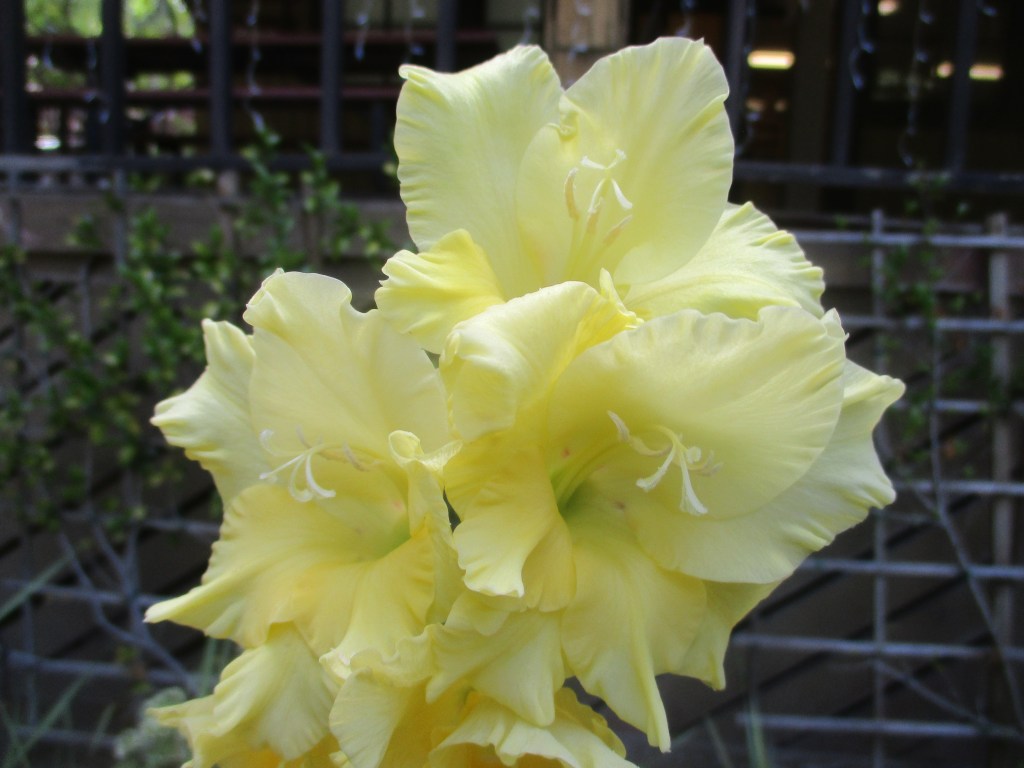
4. Not only have a few of the Gladiolus hybrids been surprisingly reliably perennial for a few years, but this pastel yellow cultivar has actually multiplied, from one bulb to a few.

5. This Gladiolus hybrid blooms annually also, but unlike the pastel yellow cultivar, does not multiply. This and one other just like it are the only two, with neither more nor less.

6. This purple Gladiolus hybrid does the same. It would be nice if it could generate a few copies. Since it is the only specimen here, and might be fragile, I will not tamper with it.

This is the link for Six on Saturday, for anyone else who would like to participate: https://thepropagatorblog.wordpress.com/2017/09/18/six-on-saturday-a-participant-guide/

Six on Saturday: Flood Zone

The biggest lawn where I work for part of the week was formerly a pond. It was installed above an extensive drainage system to compensate for the natural saturation of the soil. A relatively small pond remains at the lowest corner of the large lawn to contain some of the runoff, which gets pumped back onto the lawn for irritation. However, this pond had drained and became overwhelmed by vegetation many years ago. Only recently, after the removal of the overwhelming vegetation, the pond was restored by the simple closure of its drainage gate. It is developing into a different sort of riparian ecosystem from what it was for the past several years, which was different from what it was before that.

1. Cattail and Himalayan blackberry overwhelmed this area many years ago. We knew it as the corn dog orchard because of the cattail bloom. This is what remains of the cattail.

2. Cottonwood appeared several years ago. They grew in a small grove of several slender trunks, perhaps from a single root system of a primary tree. These two are flooded now.

3. Knotweed proliferated on the margin of the newly flooded pond. Some got submerged where it grew while the water was lower. I hope that it dies like the submerged bramble.

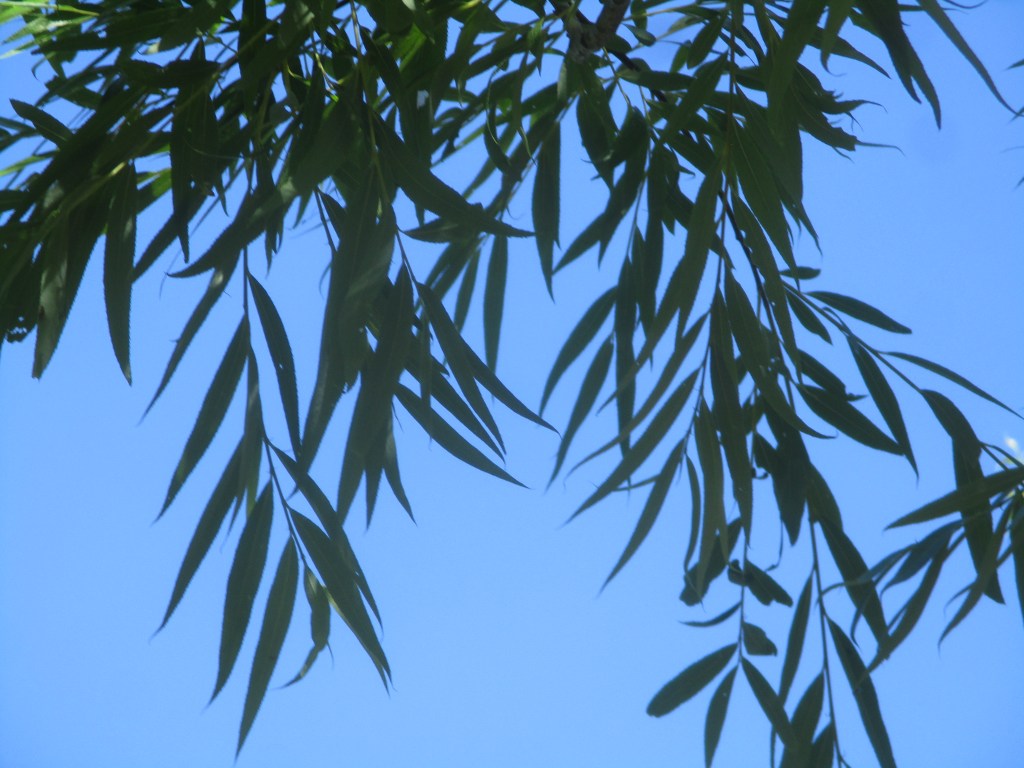
4. Weeping willow enjoys the swampy situation here. The newly flooded pond might not bother it much. The soil is naturally saturated within a minimal depth from the surface.

5. Water lily seems happy here too, although one of the six that were installed is missing. One specimen has about twenty leaves. I could not take a picture of it without reflection.

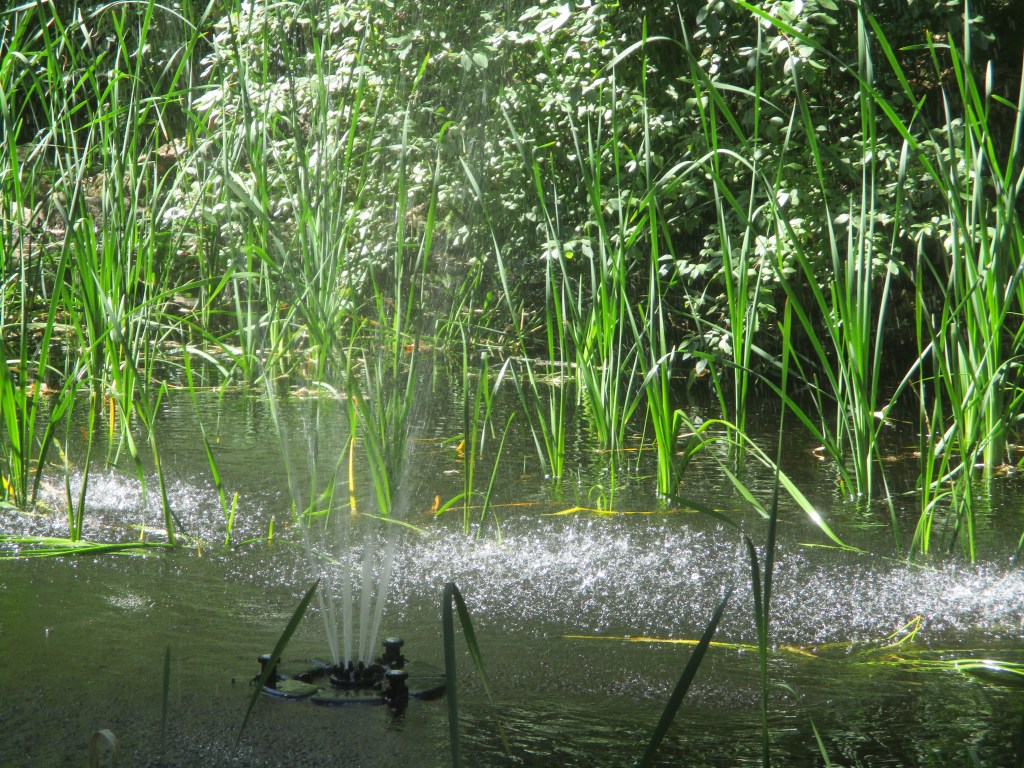
6. Fountains are supposed to dissuade proliferation of mosquitoes. I do now know what to think of it. Everyone else (except mosquitoes) likes it though. That is more important.

This is the link for Six on Saturday, for anyone else who would like to participate: https://thepropagatorblog.wordpress.com/2017/09/18/six-on-saturday-a-participant-guide/

Six on Saturday: Oh Deer!

Deer have avoided the primary rose garden for longer than anyone can remember. They avoid a large colony of carpet roses nearby also. (The carpet roses were relocated across the road from where they were, but did not go far.) I thought that some old canned roses could be about as safe in another landscape less than half a mile of winding road away. I was wrong. The primary phase of bloom was harvested by neighbors who walk past that landscape. Subsequent phases are mostly consumed by deer. I was surprised to find that these flowers lasted long enough to deteriorate.

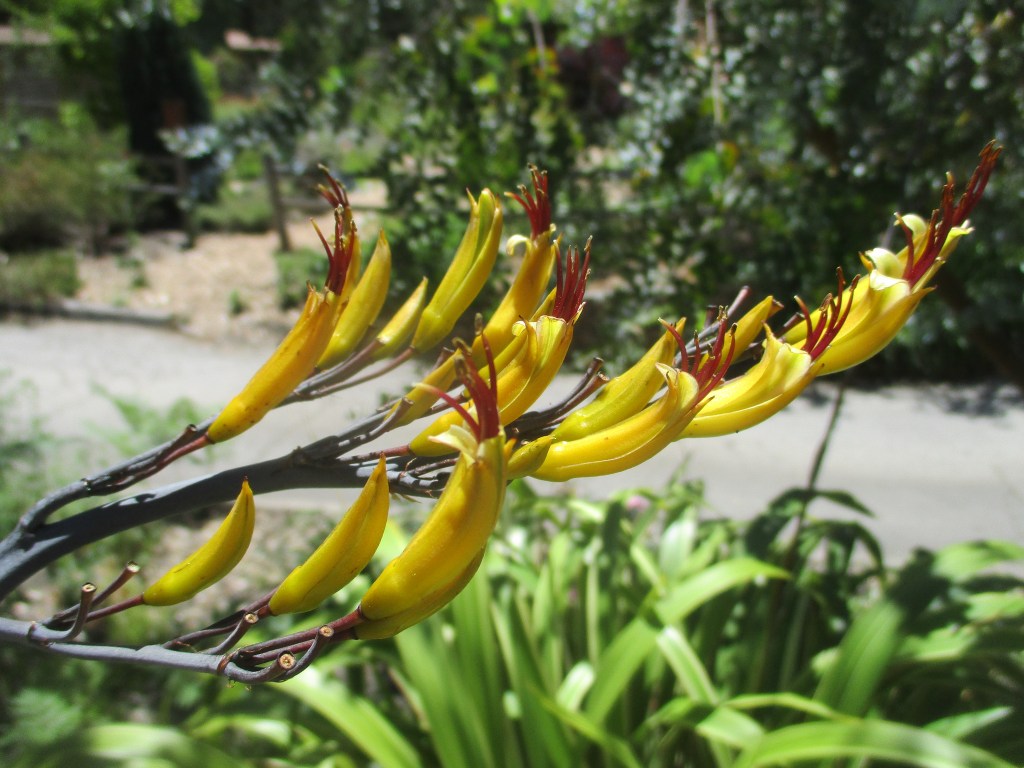
1. There is not much vegetation that deer will not eat. New Zealand flax is one of the few species they ignore. It is primarily a foliar plant though. Bloom looks like dinky bananas.

2. Carpet roses often manage to bloom regardless of the voraciousness of deer. Bloom is generally too profuse for deer to eat all the flowers. Unfortunately, I loathe carpet roses.

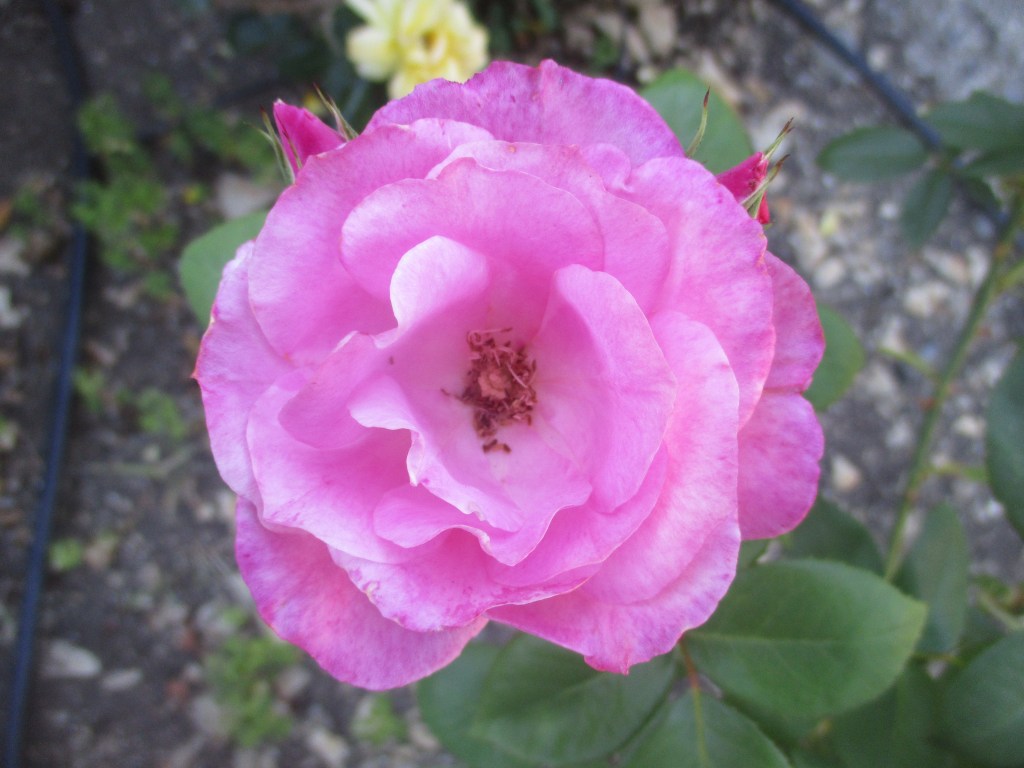
3. I believe that the color of this particular rose could be described as ‘peach’. I am not at all proficient with color, so this is merely a guess. This cultivar seems to be a floribunda.

4. This rose initially blooms brighter yellow before fading like this. Of course, I have not seen it fade much in the past. I am impressed that this flower lasted long enough to fade.

5. Two buds peeking over the edge suggest that this pink rose is a floribunda too, like the peach rose #3 above. I can not identify any of the cultivars of any of these recycled roses.

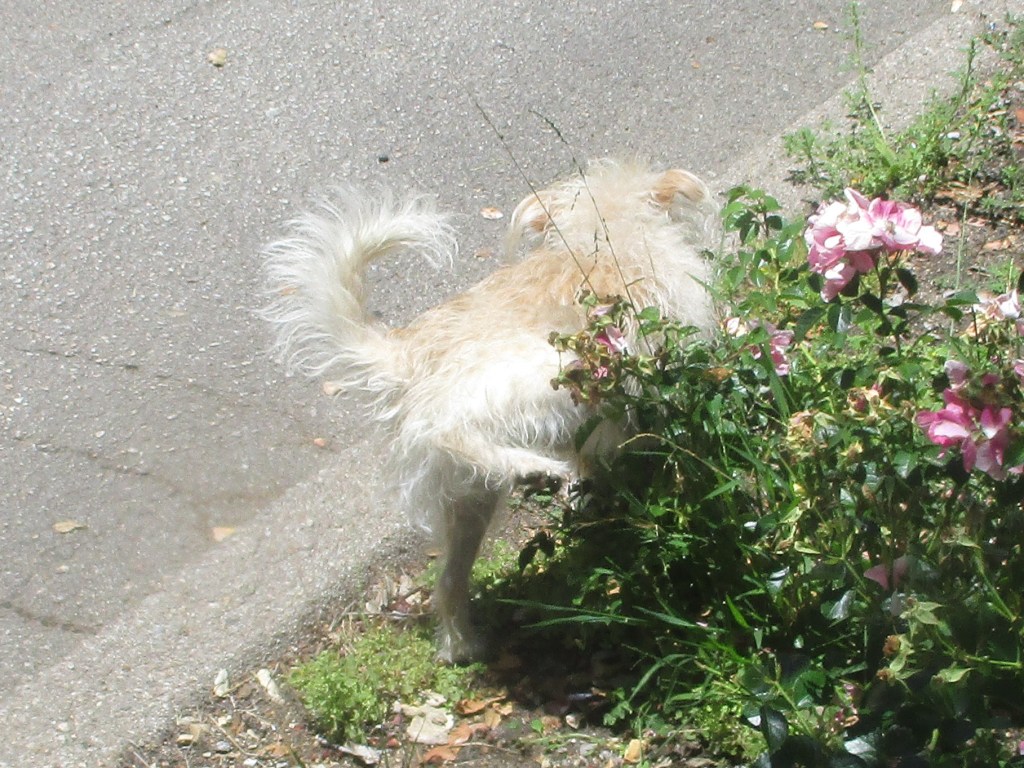
6. Rhody apparently shares my disdain for carpet roses. I realize that this is not the most flattering picture, but I also realize that the worst picture of Rhody is the best of my Six.

This is the link for Six on Saturday, for anyone else who would like to participate: https://thepropagatorblog.wordpress.com/2017/09/18/six-on-saturday-a-participant-guide/

Six on Saturday: Bummer!

Things do not always go according to plans. Seasons and weather change faster than we can keep up. Many plants do what they want to do rather than what we want them to do. There is always compromise. It is a bummer that a unique agave is bolting now, and will eventually die, but it provided plenty of pups to replace itself with. It is a bummer that I must remove a productive elderberry bush before the berries ripen, but there are plenty more elsewhere. It is a bummer that two exemplary red maples may have died, but there are three more. The excess of recycled cannas is not a bummer though, but merely extra work.

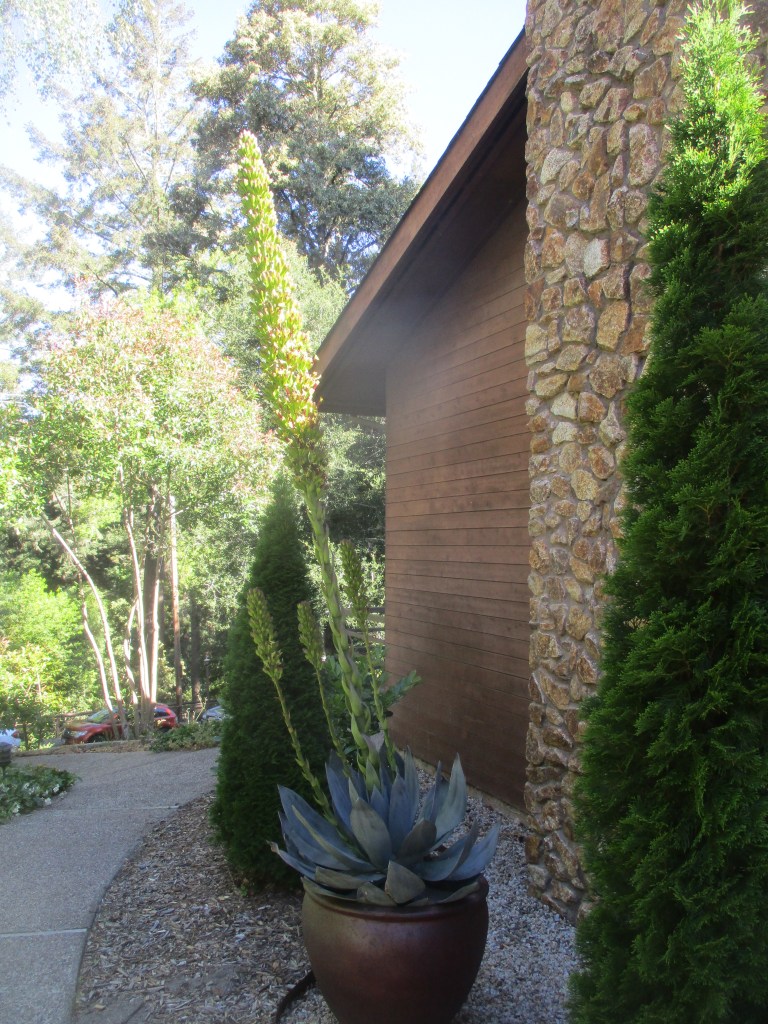
1. Whale’s tongue agave was a splurge. The horticulturist who got it had been wanting to grow it for a while. However, two years later, it had a litter of pups and is now blooming!

2. The flowers are not even very pretty. At least the floral stalks are weirdly striking, and bloom slowly. Although monocarpic, it could take months for the original rosette to die.

3. Six big potted maples were installed temporarily last year. Three are red maple. Three are Norway maple. The red maples foliated before we made arrangements for irrigation.

4. Elderberries are developing nicely. These are some of the best. However, they are on a big healthy elderberry bush that must be cut back from a roadway before they can ripen.

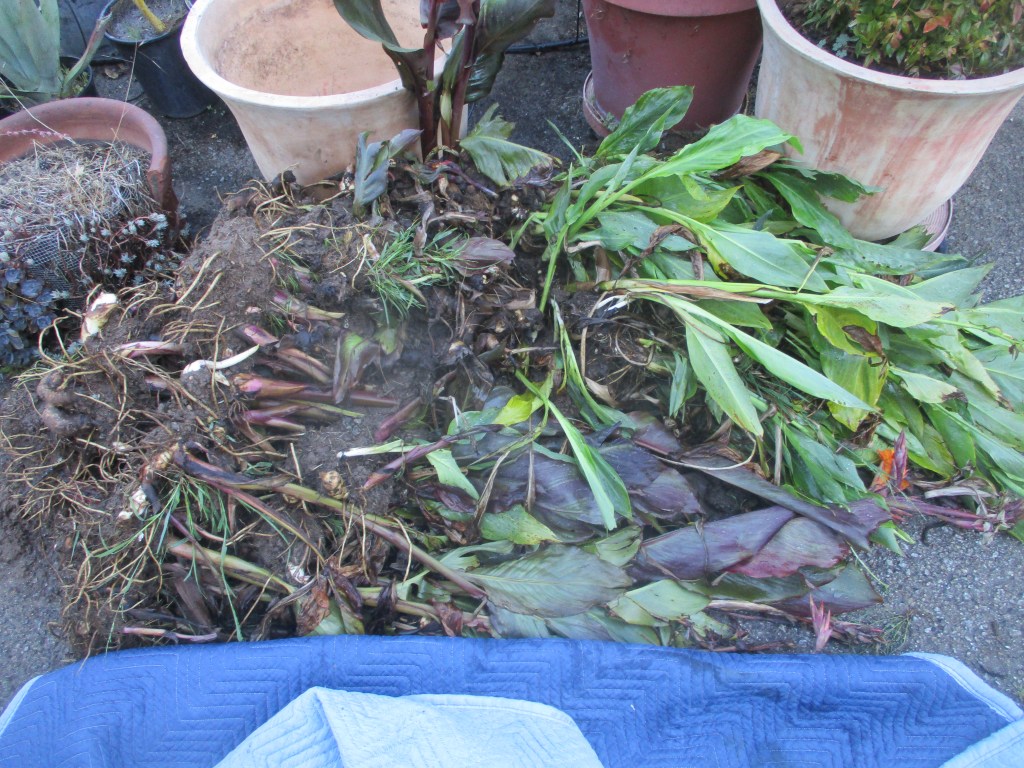
5. Cannas are fun! I was pleased with an opportunity to recycle a bunch from a neighbor. However, this pile is HUGE! Well, I know what I will be doing this Saturday. Goodness!

6. These cannas bloom very nicely. Most are bright orange. Most of the rest are yellow. A few are red. Unfortunately, they are blooming in the big pile, unseen and unappreciated.

This is the link for Six on Saturday, for anyone else who would like to participate: https://thepropagatorblog.wordpress.com/2017/09/18/six-on-saturday-a-participant-guide/
Six on Saturday: My First Allium!

Allium species have been somewhat elusive. I had seen only pictures of them from other gardens. By the time I finally decided to try them in my own garden, they were no longer available from local nurseries. When I found them online, there were too many cultivars to choose from. It was baffling. Tangly Cottage Gardening sorted it all out for me by giving me my first two, Allium schumbertii and Allium christophii. They are exquisite, and are now generating seed. I should have gotten better pictures of them while they were in the middle of bloom, rather than before and after bloom. Since there are only three pictures of them here, three pictures from work were added, for a total of Six on Saturday.

1. Robinia pseudoacacia, black locust, is a horrible weed. This one had been falling for a long time before it landed in this motorpool yard. At least it warned us to avoid damage.

2. Gunnera tinctoria, Chilean rhubarb, regenerates efficiently after winter dormancy. It was completely bare only a few weeks ago. It should get much grander through summer.

3. Lilium asiaticum, Asiatic lily, was a gift from a neighbor two winters ago. Its dormant bulbs were unimpressive at the time. They were splendid last year, and are more so now!

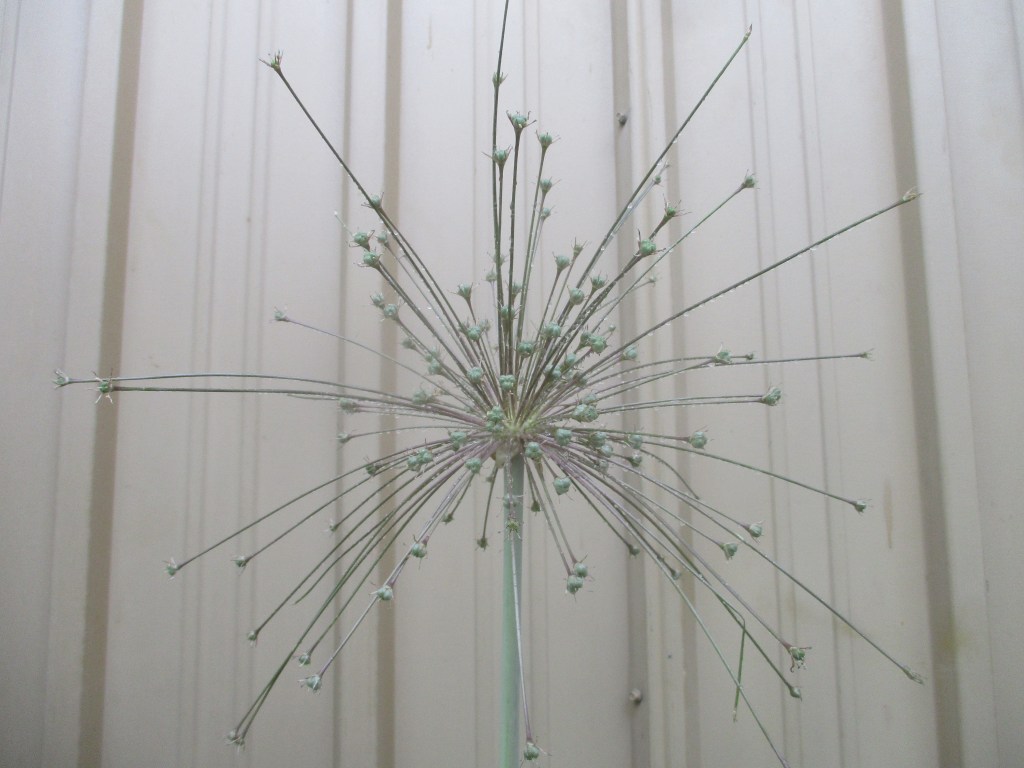
4. Allium schumbertii, Persian onion, is one of two species of Allium that were gifts from Tangly Cottage Gardening! This unfinished bloom was more than a foot and a half wide!

5. Allium schumbertii, Persian onion, is also known as tumbleweed onion because these seeded trusses break off to disperse seed as they tumble about the deserts they inhabit.

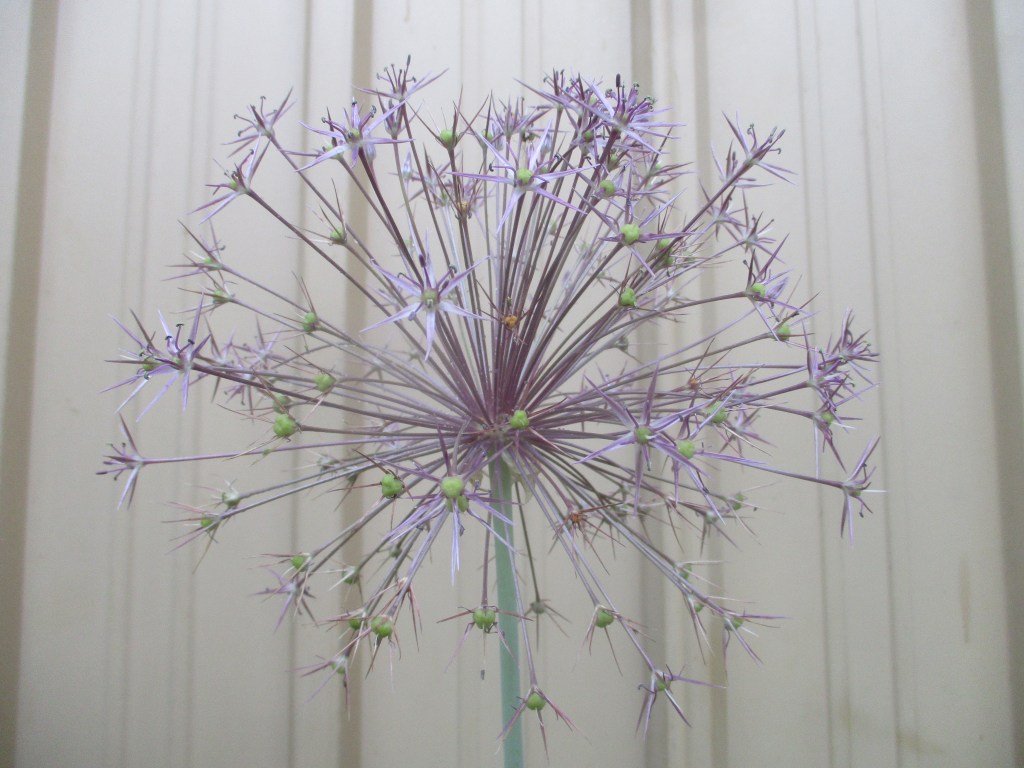
6. Allium christophii, star of Persia, is the other of the two species of Allium from Tangly Cottage Gardening. I hope that both species are reliably perennial, and their bulbs multiply.

This is the link for Six on Saturday, for anyone else who would like to participate: https://thepropagatorblog.wordpress.com/2017/09/18/six-on-saturday-a-participant-guide/
Six on Saturday: Four Feral Iris?

The iris that live in my garden will likely always live in my garden. Each one has history. I got my first Iris pallida from my great grandmother’s garden at about the time I was in kindergarten. Less than twenty others have been added since then, because I am so very selective. I must be. Otherwise, my garden would fill with iris which I would be obligated to perpetuate. These four iris pictured here are at work, although #4 originated from my garden, where the two other white iris that are not pictured here live. All finished bloom a while ago, so these are old pictures.

1. Dicentra formosa, which I believe is Pacific bleeding heart, blooms at about the same time as the bearded iris. Some of the colonies are quite broad under the redwood forests.

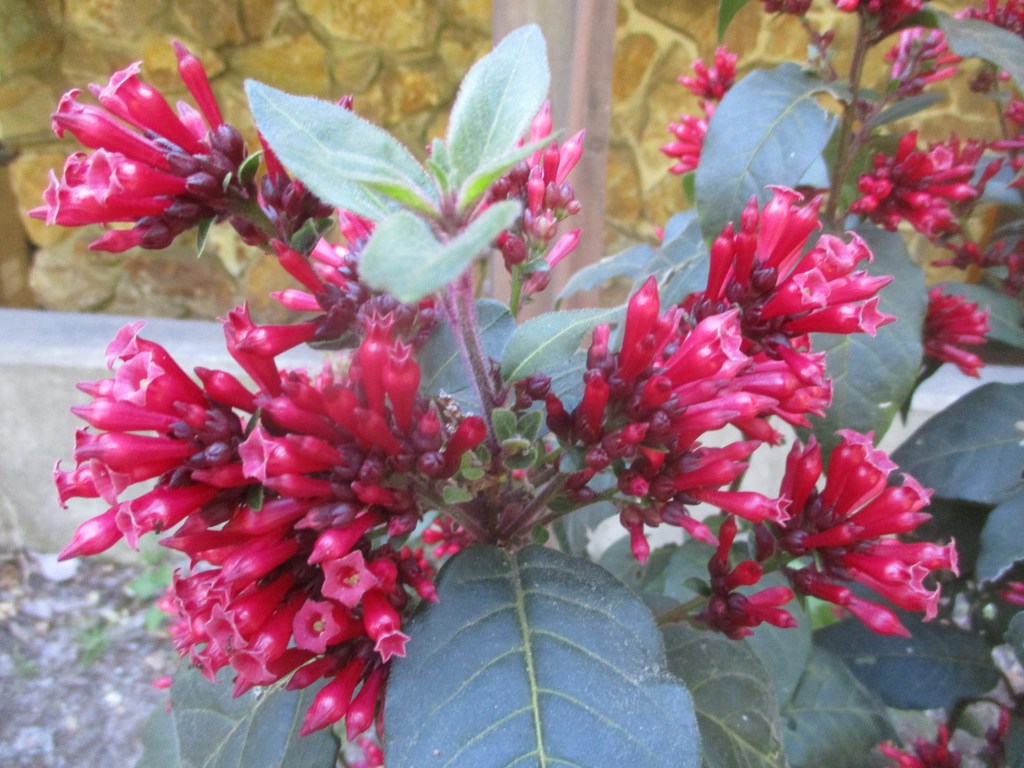
2. Cestrum fasciculatum Newellii ‘Ruby Clusters’ could do without either its first variety name or its subsequent cultivar name. I did not select it, but am getting to appreciate it.

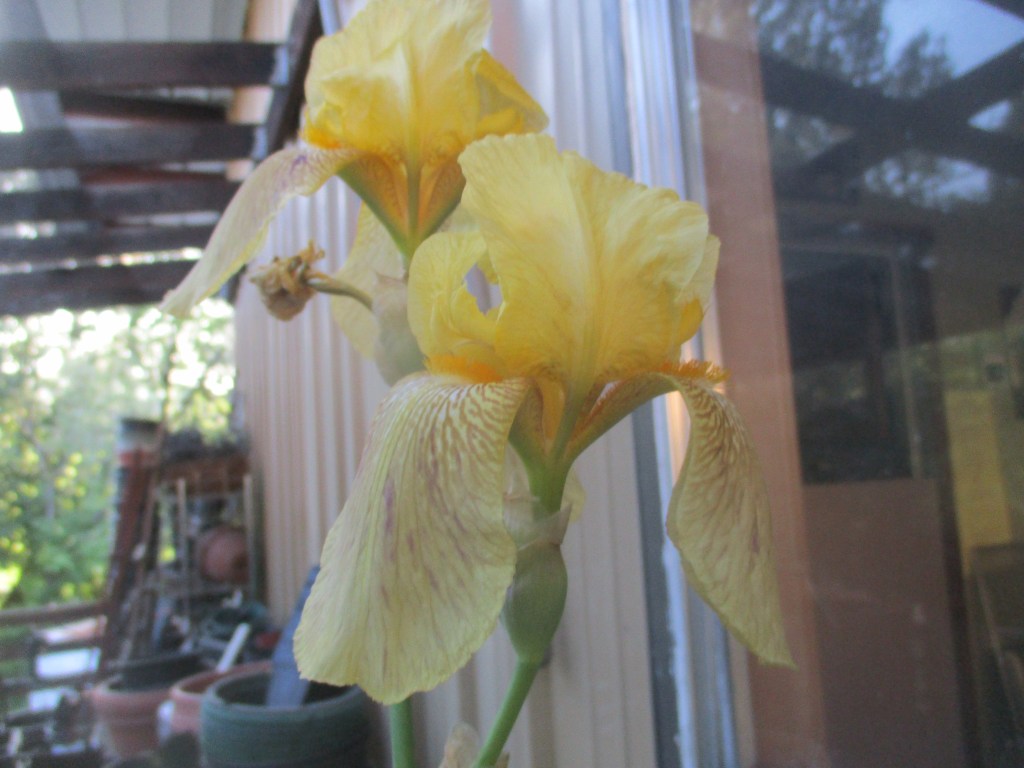
3. Yellow iris appeared next to a debris dump many years ago. It could have grown from a scrap, or could be feral. It seems wimpy. It got canned, but should have been relocated.

4. White iris seems prettier at night. During the day, it seems to be slightly grayish, with oddly pale yellow beards. I believe that it is feral. Two other cultivars are perfectly white.

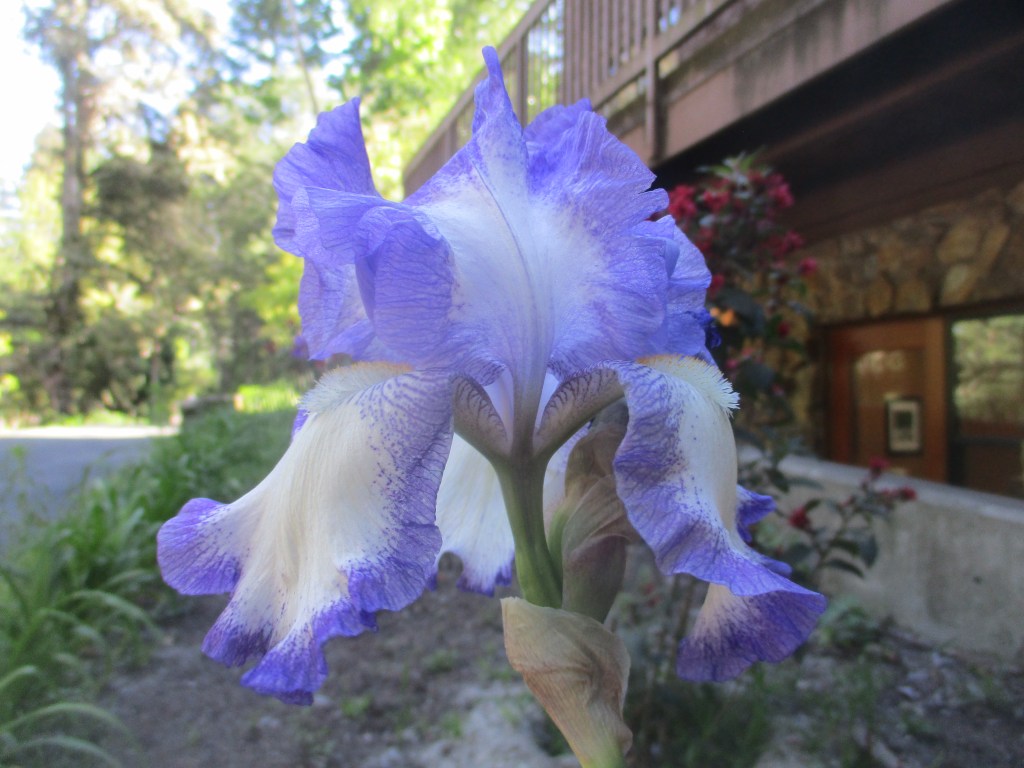
5. Blue iris, with both dark and light blue, could actually be a cultivar. It is impossible to be certain. The flowers are simple and not ruffled. The stems are tall, but a bit too lanky.

6. White and blue iris, of these four, is the most likely to be a cultivar. Lanky stems could be a result of neglect. I hastily interred the rhizomes last autumn just to keep them alive.

This is the link for Six on Saturday, for anyone else who would like to participate: https://thepropagatorblog.wordpress.com/2017/09/18/six-on-saturday-a-participant-guide/

Six on Saturday: Rhody’s Rhodies 2022 – Prettier Than Pink? – (a sequel)

Some flowers excel with particular colors. Jacaranda is best in blue. White looks plain or boring. California poppy is best in natural orange. Pale white, pale purple, pink and any other modern color seems weird for them. Poinsettia should be red, or perhaps white or pink, but not ‘peach’, ‘plum’ (whatever color that is) or yellow! Although I had never met a rhododendron that I did not like, I do find that the best are either purple or red. Pinks are very appealing too, but not quite as ideal as the others. White rhododendrons can be rather bland. These six rhododendrons bloomed prior to last Saturday. Since I intend to limit the redundancy of pictures of rhododendrons this season, they will be the last.

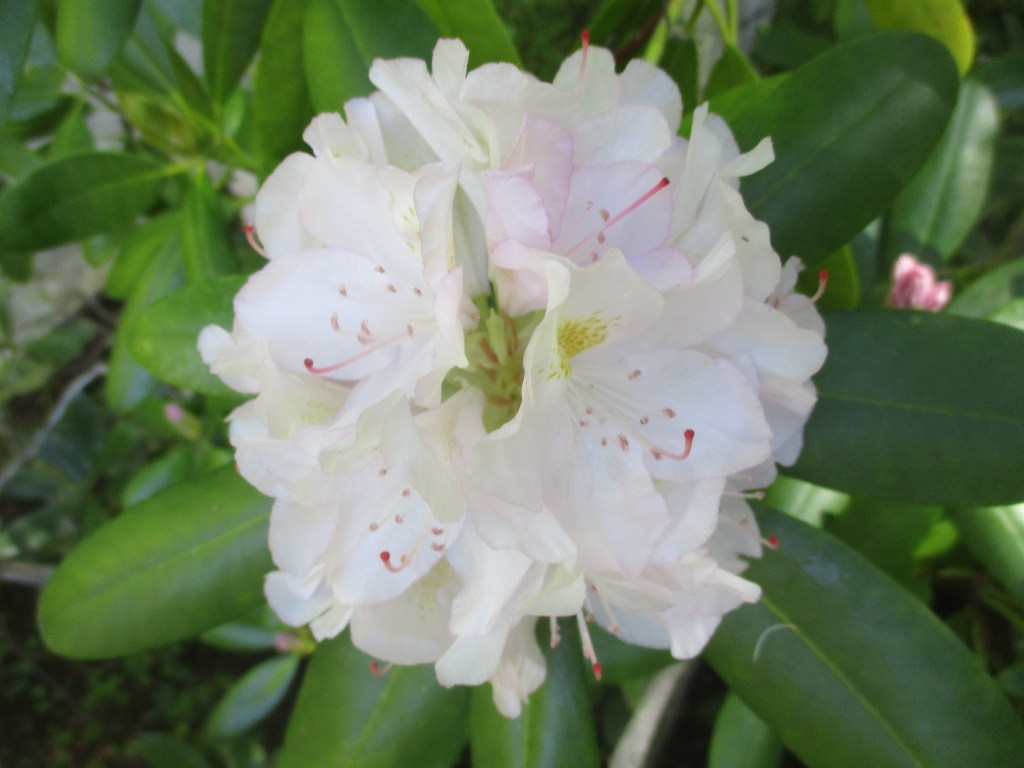
1. White is my favorite color. White rhododendrons should therefore be my favorites. So, are they? I would prefer this one to be brighter white, without tan spots or pink stamens.

2. White, to me, seems mundane for rhododendrons anyway. This is brighter white than the other, and lacks pink stamens, but has yellow centers. Simple white would be better.

3. Lavender, or whatever this color is, seems a bit more appropriate for rhododendrons. It is slightly more pinkish than it seems in this picture. Can it really qualify as lavender?

4. Lavender is a tint of purple, like pastel purple. Therefore, this may qualify as lavender more than the previous picture. It is slightly more bluish, with a slightly ruffly structure.

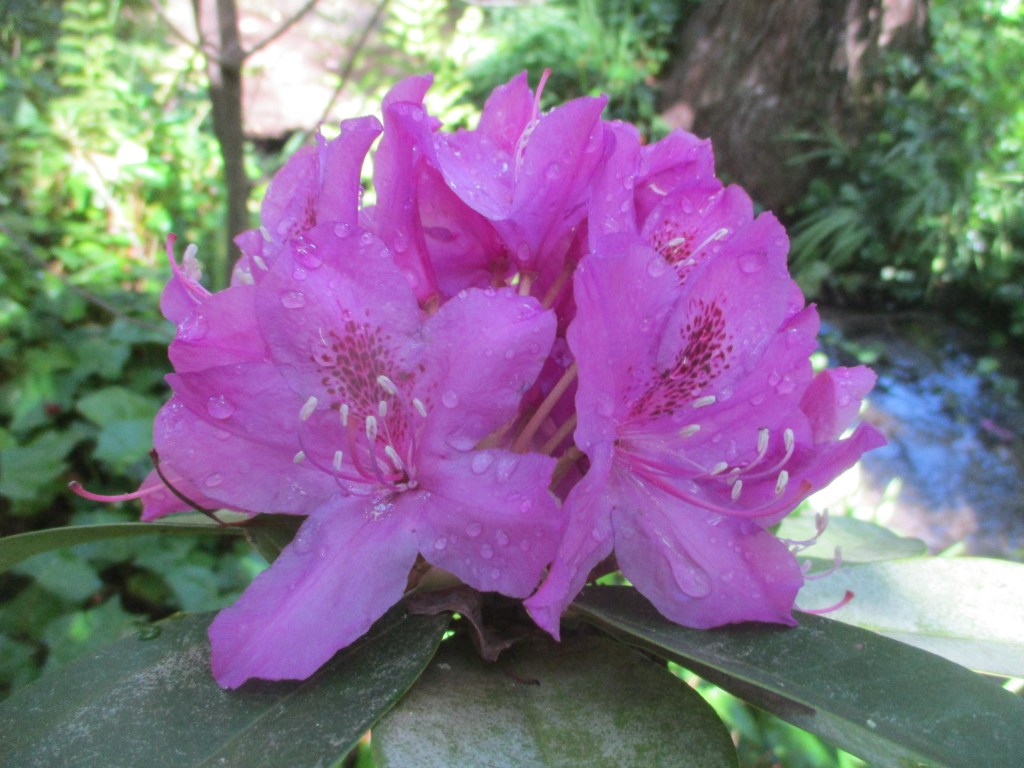
5. ‘Anah Kruschke’ was likely the most popular cultivar grown on the farm, and for good reasons. The pinkish purple bloom is exquisite and reliable. Foliage with form are ideal.

6. Purple and red are, in my opinion, the best colors for rhododendrons. Not many other flowers can bloom with such rich purples and reds. Other flowers provide better whites.

This is the link for Six on Saturday, for anyone else who would like to participate: https://thepropagatorblog.wordpress.com/2017/09/18/six-on-saturday-a-participant-guide/
Six on Saturday: Rhody’s Rhodies 2022 – Pretty In Pink

There are too many rhododendrons here. Working with them in a landscape situation is very different from growing them on the farm. The farm generates hundreds of primary cultivars, with hundreds of others to potentially introduce. Thousands of plants grow in cans on much of forty acres. Ideally, most develop an abundance of floral buds, but then leave the farm prior to bloom. Here, only a few hundred rhododendrons bloom well and mature within their landscapes with no intentions of ever leaving. These are mostly pink with one that blooms pinkish red.

1. Mothers’ Day Rhododendron blooms reliably for Mothers’ Day annually, regardless of how early or late other neighboring rhododendrons bloom. No one knows its real name.

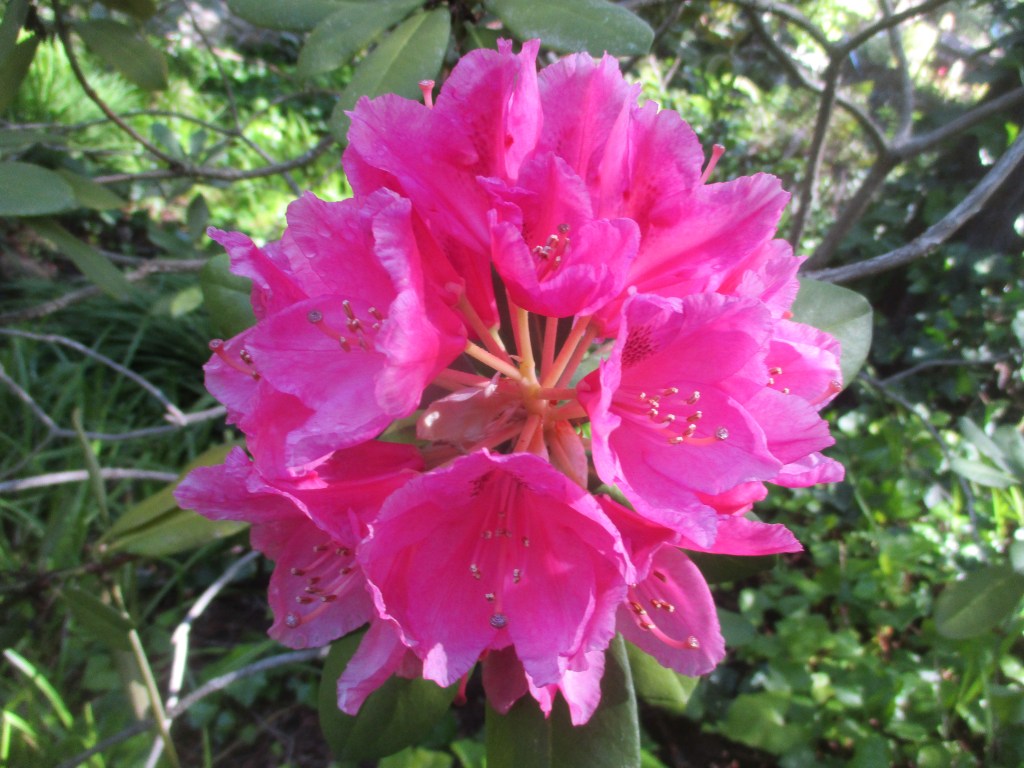
2. Now that I see this one in this picture, I do not remember if it was more rosy in color. It seems to be a simpler but bright pink now. I am not so proficient with analyzing color.

3. This one also seems to be a bit different from how I remember it. I thought that it was more like watermelon red, rather than reddish pink. This is why I will not choose colors.

4. Oh, I should remember the name of this one. My colleague grew it! I delivered it years ago. It looks like ‘Rocket’ but I do not believe that it is. I should have saved the old label.

5. Of these Six, this is the only rhododendron that I know the name of, and is one of only a few that I may identify here. It is one of the most common cultivars; ‘Mrs. G. W. Leak’.

6. Most of our rhododendrons here are pink or purple. Only a few are red. This might be the darkest red here. I refer to it as ‘Taurus’, but it is not. Individual flowers open widely.

This is the link for Six on Saturday, for anyone else who would like to participate: https://thepropagatorblog.wordpress.com/2017/09/18/six-on-saturday-a-participant-guide/