Six on Saturday: Tracks


Tracking is not done for hunting here. Anyone who can hunt here would merely wait for deer or turkey to arrive as they so frequently do through the day. I only notice the tracks while they are so visible in the mud and damp soil. Most are from harmless animals. Some are from animals who control unwelcome rodents. Even notoriously destructive deer are not a problem here.

No one knows why deer avoid the landscapes here. There are no fences, so deer can come and go as they please. They are a serious problem for some of the home gardens nearby, but avoid others like they avoid our landscapes. I got these pictures outside of landscaped areas. Bobcats have never bothered anyone except the rodents who are not wanted in the landscape anyway.

I saw no tracks left by raccoons, skunks, turkeys or mountain lions, which is just fine. Mountain lions are rare, so their tracks are rarely seen around areas of human activity. The others are too lightweight to leave well defined tracks that I could get pictures of anyway. Skunks are actually beneficial to the landscapes, by eating grubs and slugs. They refrain from digging in lawns.

Turkeys are only becoming a concern because of their proliferation. The minor damage that they cause while scratching for grubs and pecking at anything colorful is likely to become a major concern when there are more of them shredding flowers, fruit and vegetation. Raccoons are more obnoxious for the messes they make with garbage than for their damage in the landscapes.

1. Deer often leave double prints, with the second set slightly back from the first. This pair seems to be single prints from different hooves that just happened to land right next to each other.00128-1

2. Bobcat prints must have appeared while the weather was still drizzly enough to mute the detail. Bobcats are common enough here for (La Rinconada de) Los Gatos to be named for them.00128-2

3. Coyote prints are fresher. They seem to be too small to be left by a coyote; but fox tracks are even smaller, and rare. Foxes are so lightweight that they leave tracks only in very soft mud.00128-3

4. Human prints are very fresh. I did not notice them on my way out, but found them on my way back. Whoever or whatever left these prints could have been dangerously close at the time!00128-4

5. Chevrolet prints over John Deere prints are also rather fresh. There are prints of Ford, Dodge and even a rare Buick in the area. It must have been quite a herd! I should track that Buick!00128-5
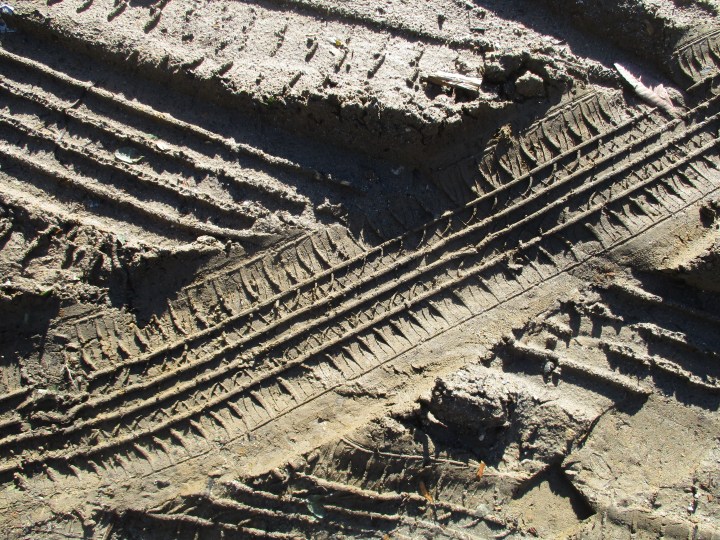
6. Rhody the terrier leaves no more prints than a fox, since he too is so lightweight. I tried to press his paw into the mud for this one, but he did not cooperate. This was the best we could do.00128-6

This is the link for Six on Saturday, for anyone else who would like to participate:

https://thepropagatorblog.wordpress.com/2017/09/18/six-on-saturday-a-participant-guide/

Six on Saturday: Pet Rock Amongst Redwoods


Macabee Gopher Trap was invented in Los Gatos. So was the Bean Pesticide Sprayer. Both were very useful in the vast orchards that formerly occupied the Santa Clara Valley. Another one of the more famous invention that originated in Los Gatos was not so practical. Actually, it was weirdly impractical. What was weirder was that it became such a craze in 1975 and early 1976.

It was the Pet Rock.

1. Pigeons don’t lay eggs in December. They certainly don’t lay such big eggs, or leave them without a few twigs to keep the from rolling away. Now that I think of it, pigeons don’t live here.P91207-1

2. Oh, it is just a rock, painted by someone named Madeline. Perhaps, it is a Pet Rock named Madeline. It seems to be of impeccable breeding. Form, color and temperament are exemplary.P91207-2

3. Perhaps it was painted by someone named Joy, or it is named Joy. Well, whatever or whoever it is, it seems to be very important. It was put back in the hanging basket of zonal geranium.P91207-3

4. That’s the hanging basket with the zonal geranium in it, right there, second from the left. It is not exactly a good place for a Pet Rock to nest. Notice the plaque over the rail right below it.P91207-4

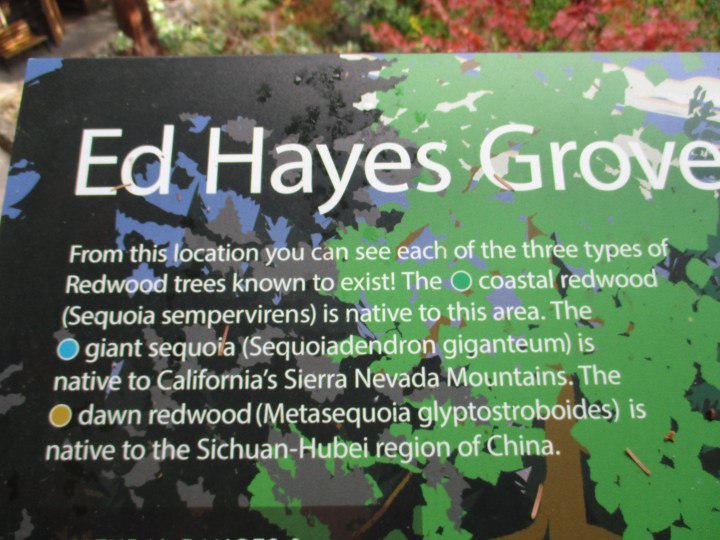
5. The plaque identifies all three species of redwood in the landscape. The green, blue and brown dots next to the names correspond to a diagram showing where each is within the landscape.P91207-5

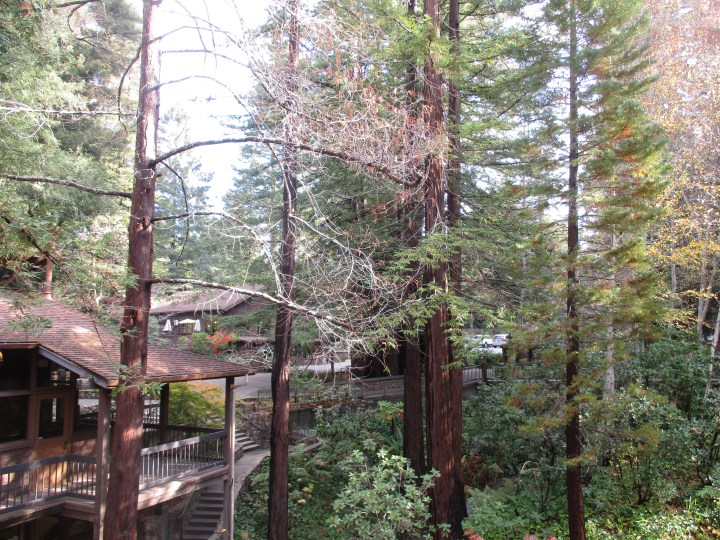
6. The defoliated dawn redwood is to the left. The small giant redwood is to the right. Those in between and in the background are the native coastal redwoods, which grow wild in the region.P91207-6

This is the link for Six on Saturday, for anyone else who would like to participate:

https://thepropagatorblog.wordpress.com/2017/09/18/six-on-saturday-a-participant-guide/

Six on Saturday: First Storm


The first storm since spring came through Tuesday night. It was cool enough for a bit of snow on the summits of the Diablo Range, including Mount Hamilton, east of the Santa Clara Valley. The fire season is now over. More storms are forecast. More will continue through the remainder of winter and into spring. Even chaparral climates eventually get a seasonal ration of rain.

1. An inch and a half of rain is generous for a first storm. It is more than 10% of what my garden in town got annually. This side of the Santa Cruz Mountains gets about three times as much.P91130

2. My reflection in the rain caught in this ‘tote’ is not as artistic as it was in the green bucket last year. I tried. A flash would have added interest. I do not really know how the camera works.P91130+

3. Cyclamen, even the common florists’ type, deserve more than to be grown as cool season annuals, and then discarded in spring. I can rant about that later. For now, they sure are pretty.P91130++

4. After the rain, even a close up of this seriously abused juniper is pretty. It was recycled from one site into another, only to be removed again. It is now canned and waiting for a new home.P91130+++

5. Storms are messy. There was not much wind with this storm. Nonetheless, rotten limbs get heavier and softer as they get soaked by rain. This one broke apart more as I dragged it away.P91130++++

6. What is worse than runoff from the road washing away some of the yellow birch foliage dislodged by rain, is that it likely took away some of the amaryllis seed tossed out here earlier.P91130+++++

This is the link for Six on Saturday, for anyone else who would like to participate:

https://thepropagatorblog.wordpress.com/2017/09/18/six-on-saturday-a-participant-guide/

Six on Saturday: Stumped


Stumps are mostly left to rot after a tree gets cut down in our unrefined landscapes. Only those that are in the way get ground out. Some that remain probably would have been ground out if they were accessible to a stump grinder, because they are so unbecoming. Burning them out in winter is impractical for those that are close to buildings, and is no longer socially acceptable.

1. This one was nearly four feet high and nearly five feet wide! No one knows why it was not cut lower to grade. It was an unappealingly prominent feature of its landscape for several years.P91123

2. Mushrooms around the base indicated that it was quite rotten. A lack of stubble or stumps from secondary growth indicated that the tree was likely dead before it was cut down years ago.P91123+

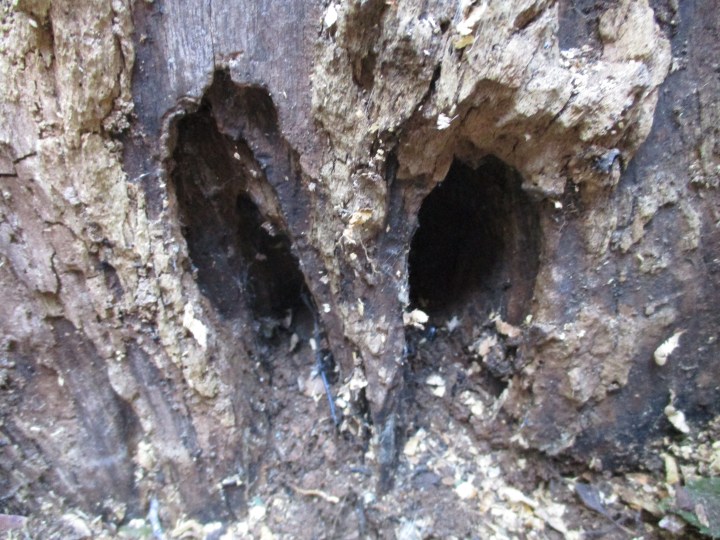
3. It was rotten enough to be inhabited by rodents. It looked like a duplex. Alternatively, the holes could have been excavated by skunks pursuing grubs. They did not seem to be very deep.P91123++

4. As big as it was, the stump was not quite big enough to become a hot tub as the rotten guts were removed. Besides, it was already an unsightly focal point without steam coming out of it.P91123+++

5. What remains is a low pile of pulverized rotten wood with leaves from nearby dogwoods and a sweetgum tossed about on top to make it look less like a low pile of pulverized rotten wood.P91123++++

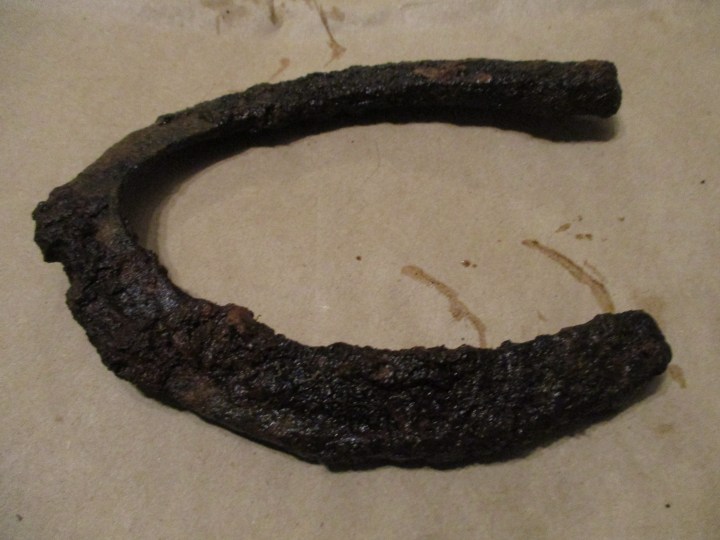
6. There was a slice part way into the stump near grade, as if someone tried to cut it properly when the tree was cut down. This old bent horseshoe was found about where the slice stopped.P91123+++++

This is the link for Six on Saturday, for anyone else who would like to participate:

https://thepropagatorblog.wordpress.com/2017/09/18/six-on-saturday-a-participant-guide/

Six on Saturday: The Endless Summer


Summer really did end here. There was a minimal frostless frost to prove it more than two weeks ago. This climate just happens to lack the more apparent seasonal changes that others get to show off. Except for a bit of drizzle last Thursday, and a bit at the end of September, there has been no rain since last spring. It may seem to be boring, but such weather is normal here.

1. There is typically more foliar color by now. Sweetgums are only beginning to yellow. However, these dogwoods started to defoliate early without much color. This is about as good as it got.P91116

2. Not all of the warm season annuals have been replaced with cool season annuals. These petunias are blooming too happily to be replaced with pansies or violas like we installed elsewhere.P91116+

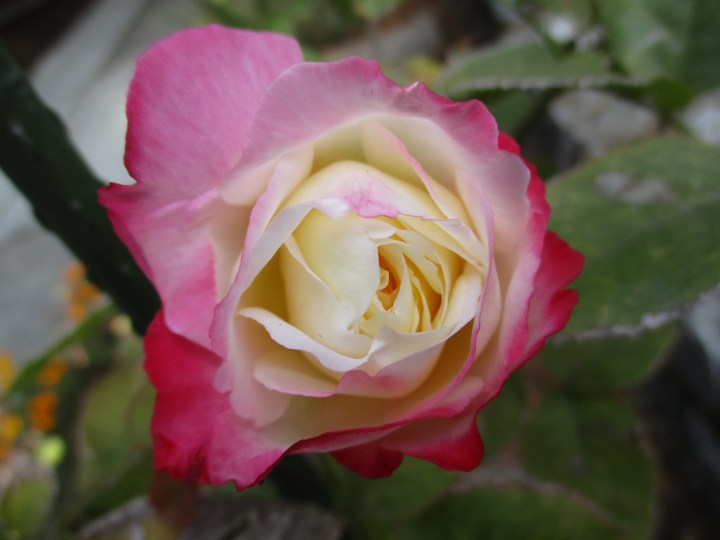
3. Roses continue to bloom. This one looks like ‘Double Delight’ to me. I really do not know what it is. The flowers are rather small, so it must have noticed that nights are longer and cooler.P91116++

4. These two look silly to me because both are grafted together onto the same standard (tree rose). I believe they are ‘Iceberg’ and ‘Burgundy Iceberg’. I would not mind them individually.P91116+++

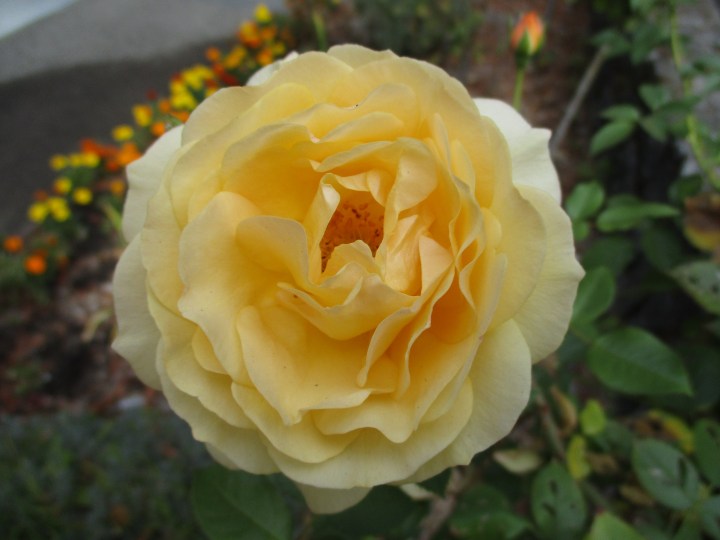
5. Even by our local standards, roses should be finishing by now, with only a few that are still blooming when they get pruned in winter. I do not know what this one is, but it still looks great.P91116++++

6. This is my favorite of these six pictures. I do not know what this rose is either. It is in a neighbor’s garden. It did not start to bloom until part was through summer, and is now at its best.P91116+++++

This is the link for Six on Saturday, for anyone else who would like to participate:

https://thepropagatorblog.wordpress.com/2017/09/18/six-on-saturday-a-participant-guide/
Six on Saturday: Light Duty Autumn


Autumn is mild here. There has been no rain yet. None is in the forecast. Nights are only beginning to get cool. A thermometer outside claims that it has been cool enough for frost, although none has yet been observed. As pleasant as such mild weather is, it can be boring in the garden. The few deciduous trees that develop good color are only beginning to do so, and in no rush. Some chores that rely on chill or rain get delayed.

1. 32 degrees! Does this qualify as frost? This is the same thermometer that said it was 96 degrees last week. I do not believe everything it says, although cold is not as easy to fake as heat.P92202

2. Krispy Kritter had a bad day. It is not from frost though. This formerly exemplary Heavenly bamboo succumbed to warmth and aridity, . . . . and unintended disconnection of irrigation.P92202+

3. California buckeye defoliated through the warmth of summer, and should foliate for early winter, only to defoliate as winter gets cooler. I knock these big seeds out because they look silly.P92202++

4. African iris, Morea bicolor, got split early where it crowded a walkway. We did not want to plug it until the rain starts, so soaked it in a bucket of water, where the roots started growing!P92202+++

5. Mrs. Pollock zonal geranium, Pelargonium hortorum ‘Mrs. Pollock’, likewise needed to be pruned back prematurely. I was able to process cuttings from the scraps, and plug them directly.P92202++++

6. Such intricate variegation is genetically unstable. Mrs. Pollock zonal geranium often gets less variegated mutant growth that must be plucked. Well, . . . . I sort of plugged some as cuttings.P92202+++++

This is the link for Six on Saturday, for anyone else who would like to participate:

https://thepropagatorblog.wordpress.com/2017/09/18/six-on-saturday-a-participant-guide/
Six on Saturday: More Outages


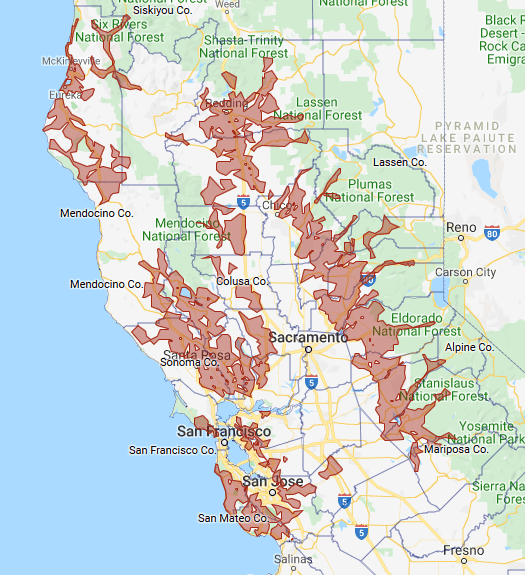
Electricity is expected to be turned off again tomorrow. The weather is predicted to be too warm, windy and arid (with minimal humidity) to leave it on. Otherwise, sparks from electrical cables out in forested areas could potentially start catastrophic fires. Although unlikely, it is more likely during such weather.

Hopefully, fires will not be started by candles, oil lamps, barbecues, or any of what will compensate for the lack of electricity. One of the worst fires in history here was incidentally started by sparks from a generator.

Trees are regularly and efficiently pruned for clearance from electrical cables. That does not fix everything though. Utility cables can spark even without trees blowing into them. Many trees in many areas are much higher than the utility cables, so can drop limbs onto them.

1. These are the regions of Northern California where electricity will be turned off.

P91026

2. This is a close up of our region, between San Jose and Santa Cruz. At the moment, I am near the first ‘t’ in Scott’s Valley.

P91026+

3. I am not as concerned about the garden in this weather as I am about this freezer without electricity. I would not use a freezer, but this one if for Felton League. I would not normally freeze bread either, but there happened to be space at the time, and it was better than discarding it.P91026++

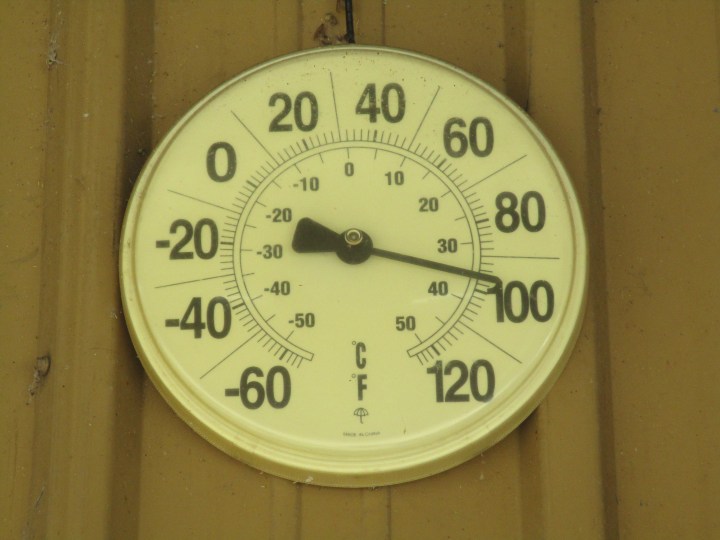
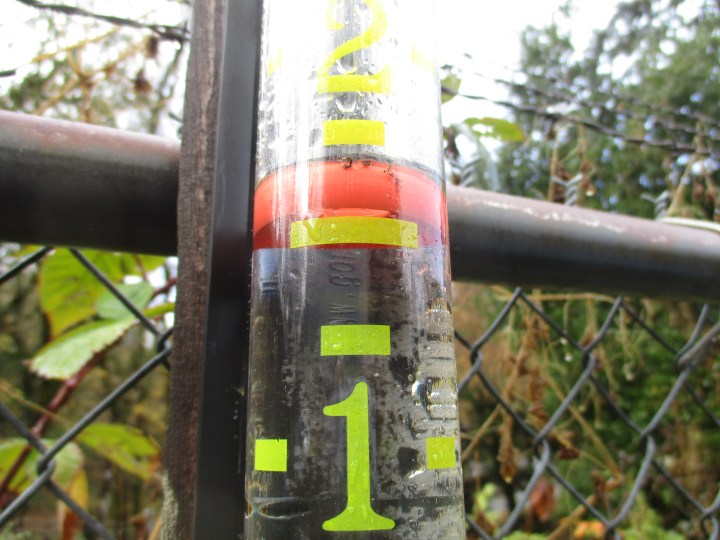
4. Although this thermometer supposedly got to a hundred today after I got this picture, it was really not much more than ninety degrees. This thermometer is just in a hot spot. According to the weather forecast, it should be only in the mid seventies tomorrow. Obviously, the predicted fire risk is determined by a combination of heat, humidity and wind.P91026+++

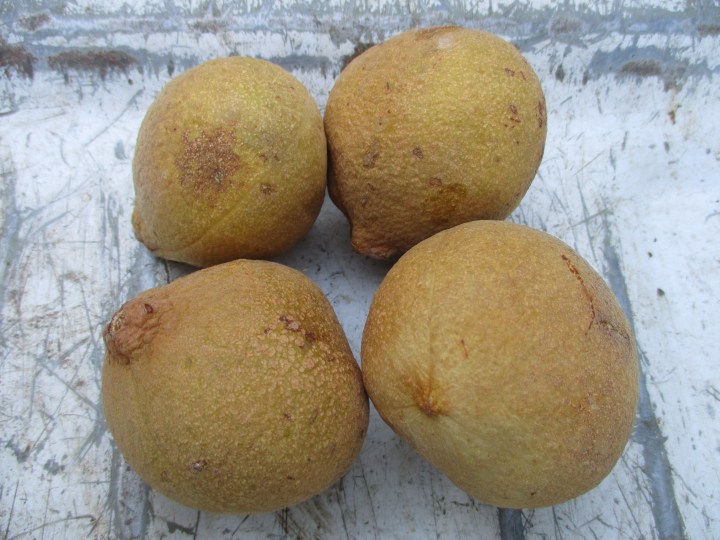
5. There was a bit of horticulture to mention too. These are seeds of naked lady amaryllis. They certainly are weird, like mutant salmon eggs, or pink pomegranate seeds. They are supposed to be sown while still pink and fleshy like this, rather than dried. It just seems wrong.P91026++++

6. There were a few amaryllis bulbs in a group that made these unusually big seed capsules. I should have put something else in the picture to show scale. The largest is about as big as a ping pong ball. I suspect that they are the same as the others, but I will sow them separately anyway. Although unlikely, neighborhood crinum could have gotten in the mix.P91026+++++

This is the link for Six on Saturday, for anyone else who would like to participate:

https://thepropagatorblog.wordpress.com/2017/09/18/six-on-saturday-a-participant-guide/
Six on Saturday: Moss Rose

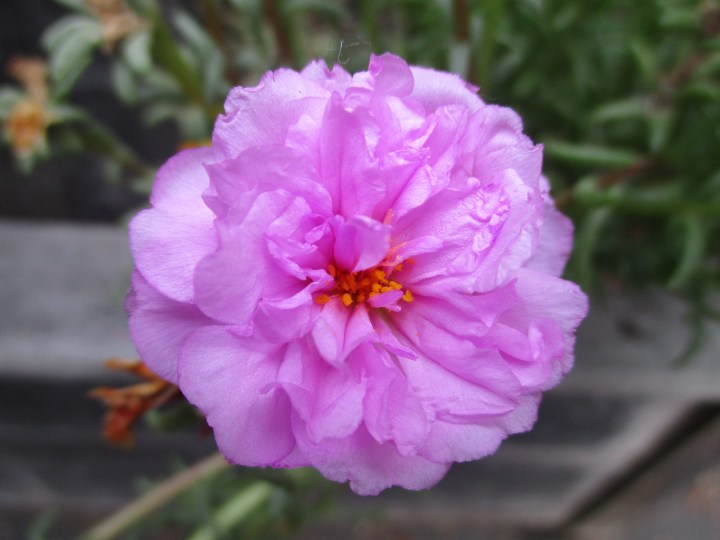
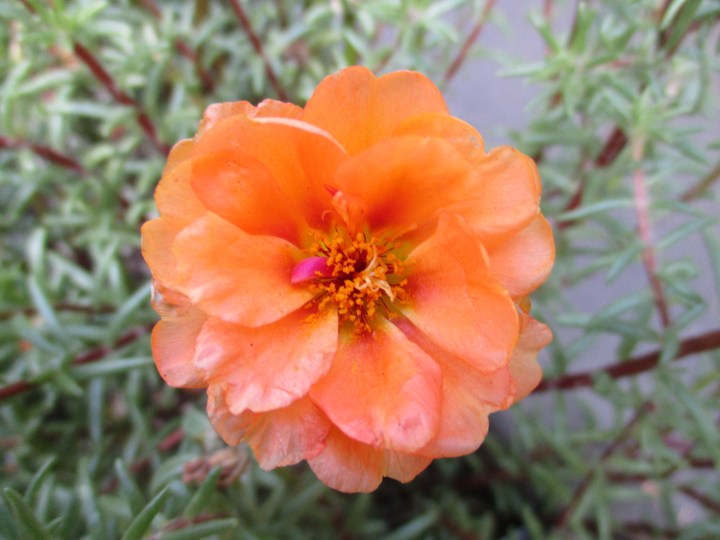
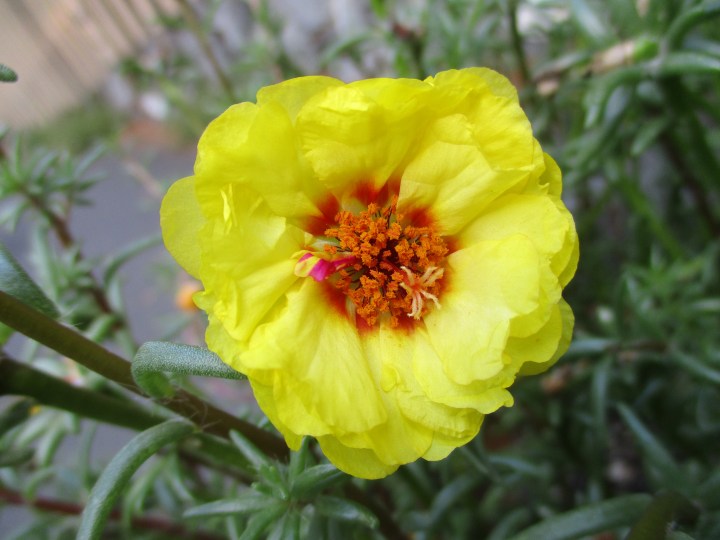
Moss rose has something in common with fern pine and cabbage palm. ‘It is neither this nor that’. Fern pine is neither a fern nor a pine. Cabbage palm is neither a cabbage nor a palm. Well, moss rose is neither a moss nor a rose. It is Portulaca grandiflora. It is a somewhat uncommon warm season annual that blooms until frost, with potential to toss a few seed for next year.

Ours were planted a bit late, after English daisies that were where they are now succumbed unexpectedly to rust. Because they are in three small planter boxes, where annuals get replaced regularly, they will not be able to naturalize. I suppose I could collect some of the seed to toss about nearby, or in a sunnier place where they would be happier. It really is that time of year.

These six picture show six of the colors of our moss rose. There might have been a seventh color that was very pale pink. It was omitted because it was so similar to the white that I am still not certain that it was not white. Peach #3 is more distinct from orange #4 than it seems to be in these pictures. Red, which is common among moss rose, is strangely lacking from our mix.

Flowers are somewhat variable. Pink #1 seems to be a bit fluffier than the others. Yellow #5 has a bit of red around the center. Rose #2 seems to have a very slight bit of white at the center. I only guessed on the names of the colors ‘rose’ for #2 and ‘peach’ for #3.

1. pinkP91019

2. roseP91019+

3. peachP91019++

4. orangeP91019+++

5. yellowP91019++++

6. whiteP91019+++++

This is the link for Six on Saturday, for anyone else who would like to participate:

https://thepropagatorblog.wordpress.com/2017/09/18/six-on-saturday-a-participant-guide/

Six on Saturday: Souvenirs From Oklahoma


Oklahoma is a place that I mention often in my writing. It was one of those very few places outside of California that I had always wanted to go to. After actually going there seven years ago, I want to go back to see what another season besides autumn is like. The flora there was so fascinating and unfamiliar. In the short time I was there, I collected seed of several species. Amazingly, most seed were viable a few years after collection.

1. Seed ~ was collected in these old pill bottles. These seed are not really from Oklahoma. They are mostly from canna, and were collected more recently. Collecting seed can be a bad habit.P91012

2. Yucca glauca ~ seed was collected at a truck stop in New Mexico on the way to Oklahoma, where it is also native. I found a shoot of Yucca arkansana in Oklahoma, but it did not survive.P91012+

3. Sapindus saponaria ~ seed was found hanging over a fence from a backyard into an alley in Norman. The ‘seedling’ on the left grew from a root that broke from the seedling on the right.P91012++

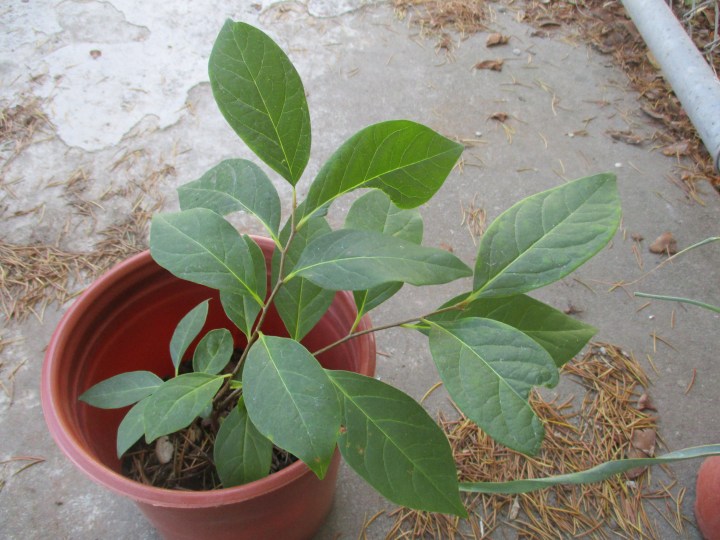
4. Diospyros virginiana ~ happened to be in season while we were there in November and December. The small persimmons are very different from Japanese sorts, and loaded with seeds.P91012+++

5. Cercis canadensis ~ is the state tree of Oklahoma. Supposedly, the variety that grows wild there is ‘Texensis’. Several native plants are named for places where they were first identified.P91012++++

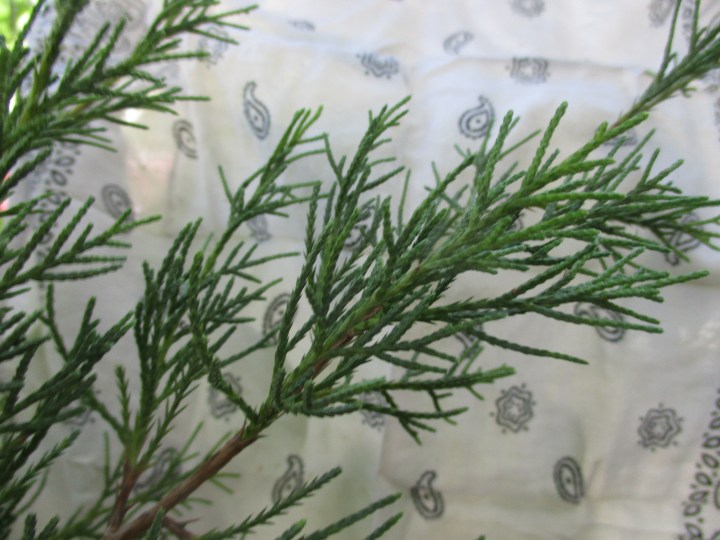
6. Juniperus virginiana ~ was not grown from seed, but gathered as wild seedlings. It is unpopular among those more familiar with it, and for good reason. I, however, am unfamiliar with it.P91012+++++

This is the link for Six on Saturday, for anyone else who would like to participate:

https://thepropagatorblog.wordpress.com/2017/09/18/six-on-saturday-a-participant-guide/

Six on Saturday: Souvenirs


My first rhubarb was given to my by my paternal-paternal great grandfather before I was in kindergarten. My Iris pallida also goes back four generations. I got one of my two favorite zonal geraniums from a compost pile in Montara, and snuck it back on the train when I was in the seventh grade. Some of the plants I grow have been with me for a remarkably long time.

Well, I did not get pictures of my rhubarb, Iris pallida or zonal geranium for today. Instead, these are five plants with whom I became acquainted more recently, and my first yucca whom I met three decades ago. They all have their respective stories that are more interesting than what I mentioned here. None are directly from nurseries, although #2 and #4 are from cultivars.

I sort of suspect that these plants and others of such significance to me will be with me for a very long time. I know that blue gum is nearly impossible to tame, and that windmill palm can’t be pruned down like the others. I will not force them to comply. The others can give me more cuttings to replace themselves indefinitely. The place names designate where I acquired them.

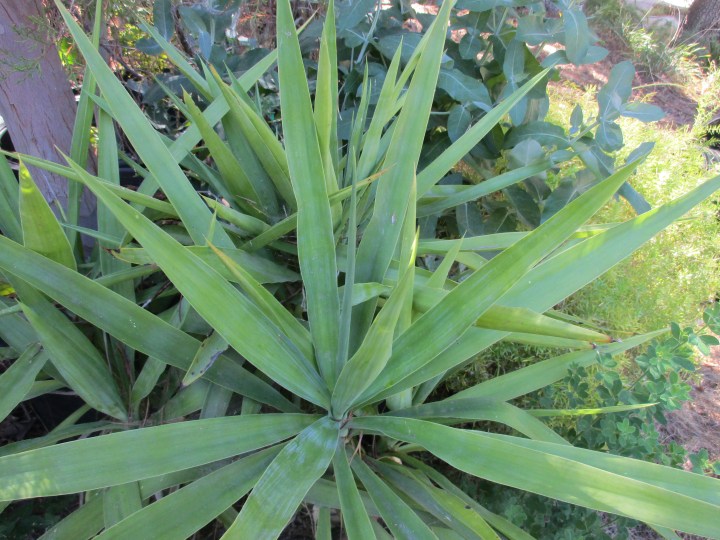
1. Holmby Hills ~ Los Angeles – Yucca elephantipes – This was my very first Yucca. My colleague, Brent Green, removed it from a project he was working on back in about 1988. It lived as a houseplant next to my desk for many years, and produced a few pups.P91095

2. Mid City ~ Los Angeles – Brugmansia suaveolens – Brent got me cuttings for this angels’ trumpet from another of his landscapes a few years ago because I really wanted a single white to add to the four more complicated cultivars that I already accumulated.P91095+

3. Reno ~ Nevada – Salix laevigata – I know that there is nothing special about the all too common red willow. I like this one anyway, because it grew from a broken twig I happened to grab on the Truckee Riverwalk through Reno. I should be more discriminating.P91095++

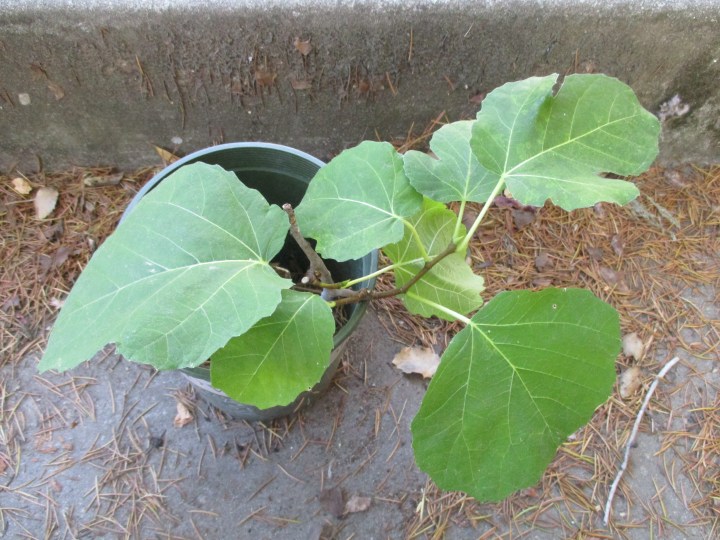
4. Murphys – Ficus carica – A few of these little fig trees were grown from pruning scraps. A friend wanted copies of the original tree before selling the home where the tree lived. We do not now what cultivar it is, but we sort of suspect it is the common ‘Mission’.P91095+++

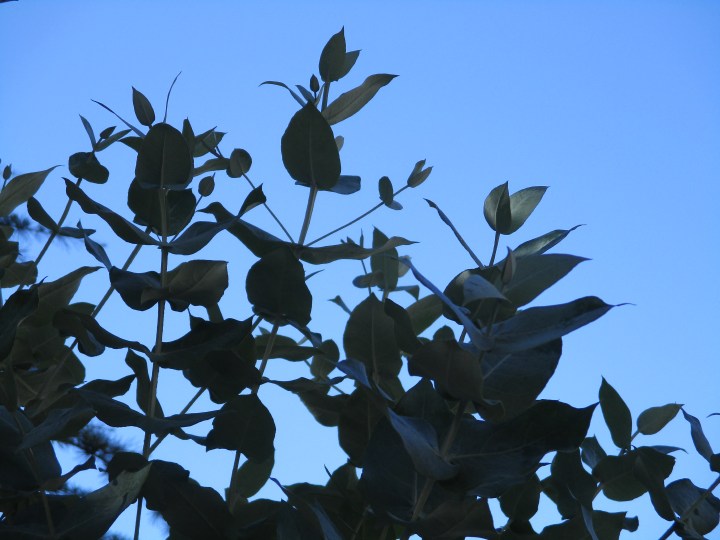
5. Santa Cruz – Eucalyptus globulus – While waiting for a friend who needed a ride, and pacing outside, I started plucking a few tiny weeds from planter. One of the weeds happened to be a tiny blue gum seedling. Against my better judgment, I did not discard it.P91095++++

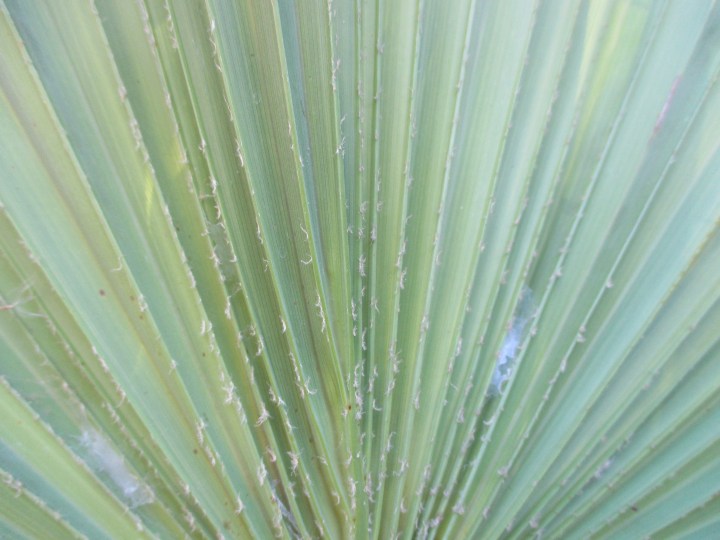
6. West San Jose – Trachycarpus fortunei – An old friend’s mother grew flowery annuals and perennials in pots on the porch. This windmill palm grew from seed in one of the pots, and was happy there for a few years, but eventually got too big. It lives here now.P91095+++++

This is the link for Six on Saturday, for anyone else who would like to participate:

https://thepropagatorblog.wordpress.com/2017/09/18/six-on-saturday-a-participant-guide/