Six on Saturday: Self Isolation


Self isolation was not exactly why I avoided the landscapes. Since there are very few people here, I can get all the pictures I want without getting too close to anyone. Nor did I intentionally avoid the landscapes because, as I mentioned earlier, it is too saddening to see them looking so good without anyone here to enjoy them. I was just too busy to get out. These six pictures are instead from the recovery nursery. These are items that should eventually be out in the landscapes. Some should have bee there a long time ago.

1. Jasminum humile, Italian jasmine was grown from pruning scraps from a big shrubby specimen in Monterey. It does not look like much so far, but is extremely fragrant, like pink jasmine.P00502-1

2. Solanum jasminoides, potato vine was left by someone who moved away, but has not yet been planted into a landscape. It is overgrown now, so will need to be pruned back when planted.P00502-2

3. Mimulus aurantiacus, sticky monkey flower got removed from where it was in the way of something else, got canned, and now waits to be recycled elsewhere. I should have composted it.P00502-3

4. Cistus x argenteus, rockrose was actually purchased rather than recycled or grown here. It was for a small new landscape that can not be completed right now. This might be ‘Silver Pink’.P00502-4

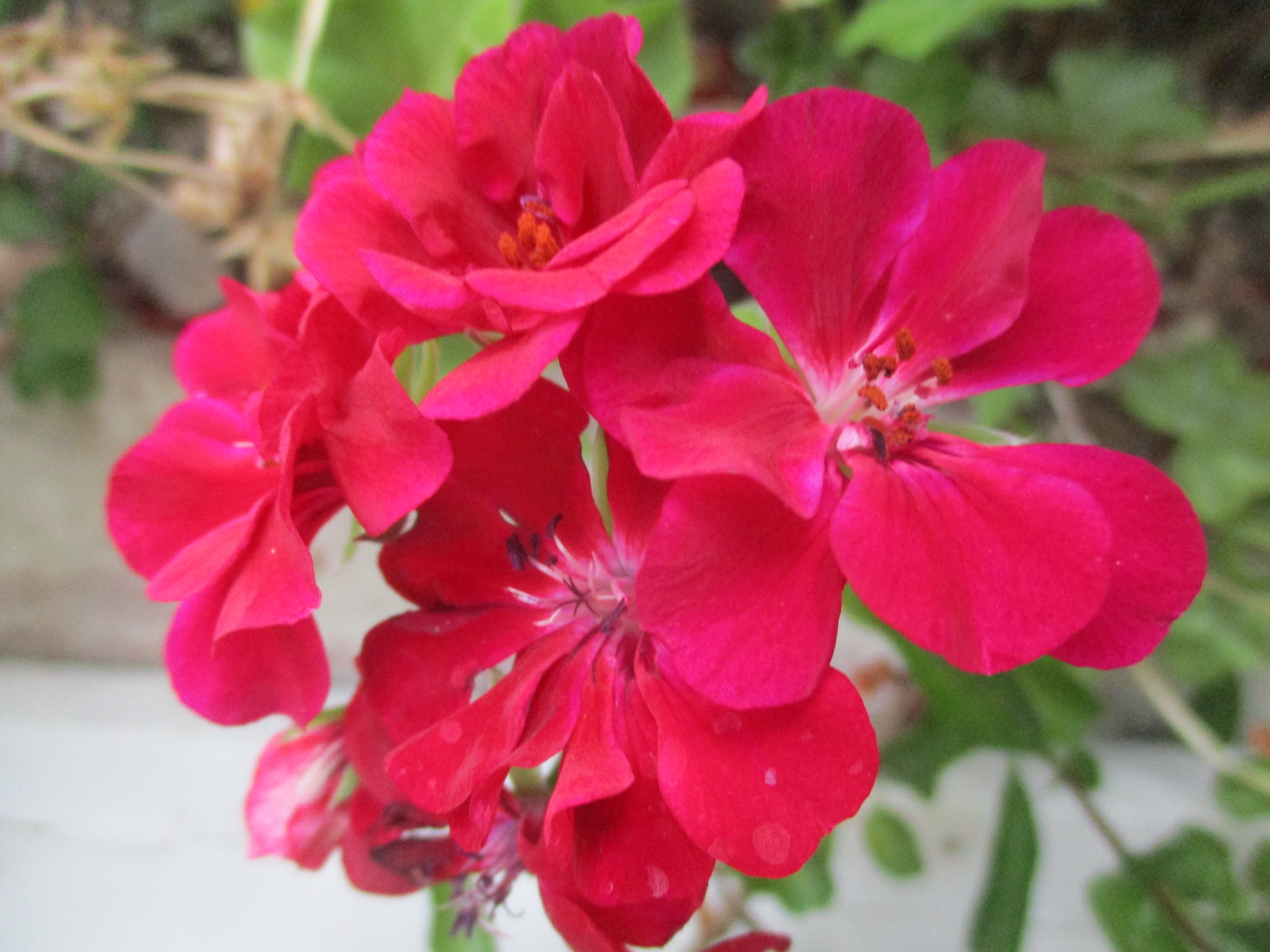
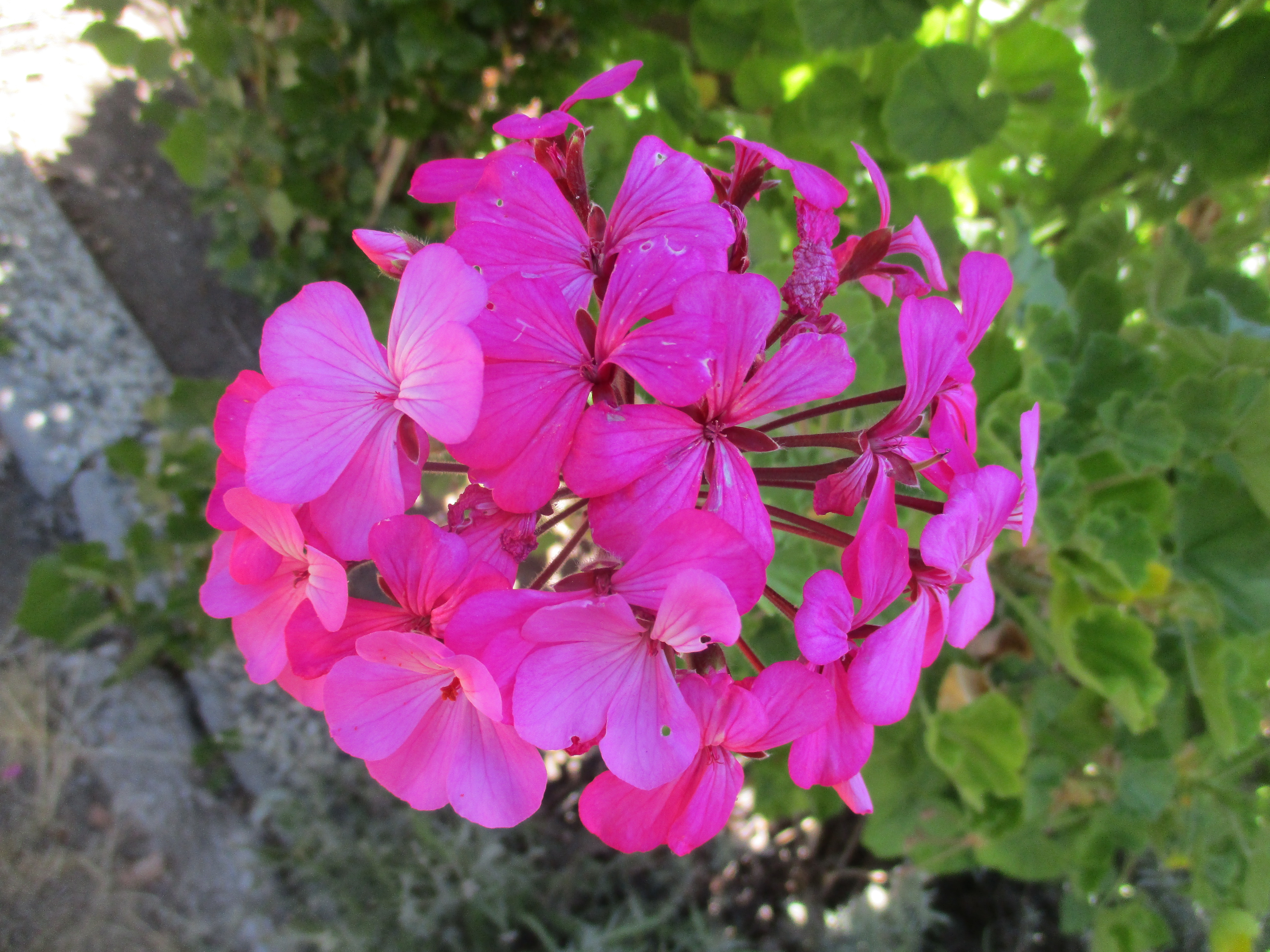
5. Pelargonium peltatum, ivy geranium provided cuttings when pruned a month ago. It might be ‘Royal Candy Cane’. They should have been planted intact, but there is not enough of them.P00502-5

6. Leucanthemum × superbum, Shasta daisy, like sticky monkey flower, was removed from an area that was outfitted with a new landscape, but not yet recycled. I really should just plant it.P00502-6

This is the link for Six on Saturday, for anyone else who would like to participate:

https://thepropagatorblog.wordpress.com/2017/09/18/six-on-saturday-a-participant-guide/

Six on Saturday: Blank Slate (& Asphalt)


While unable to work at my second most time consuming job, I developed a bit of unused space into a vegetable garden. I would not have done so if I had known how much work it would be, or how much of what seemed to be usable space was just trash, brambles and a shallow bit of soil on top of pavement. Alternatively, I should have had the main unpaved area bulldozed first.

Now that it is halfway through spring, this new vegetable garden is finally started!

1. Four decades of junk mixed with wicked brambles was removed to expose less than four hundred square feet of cruddy slope. Rain draining from the deck eroded a gully in the middle.P00425-1

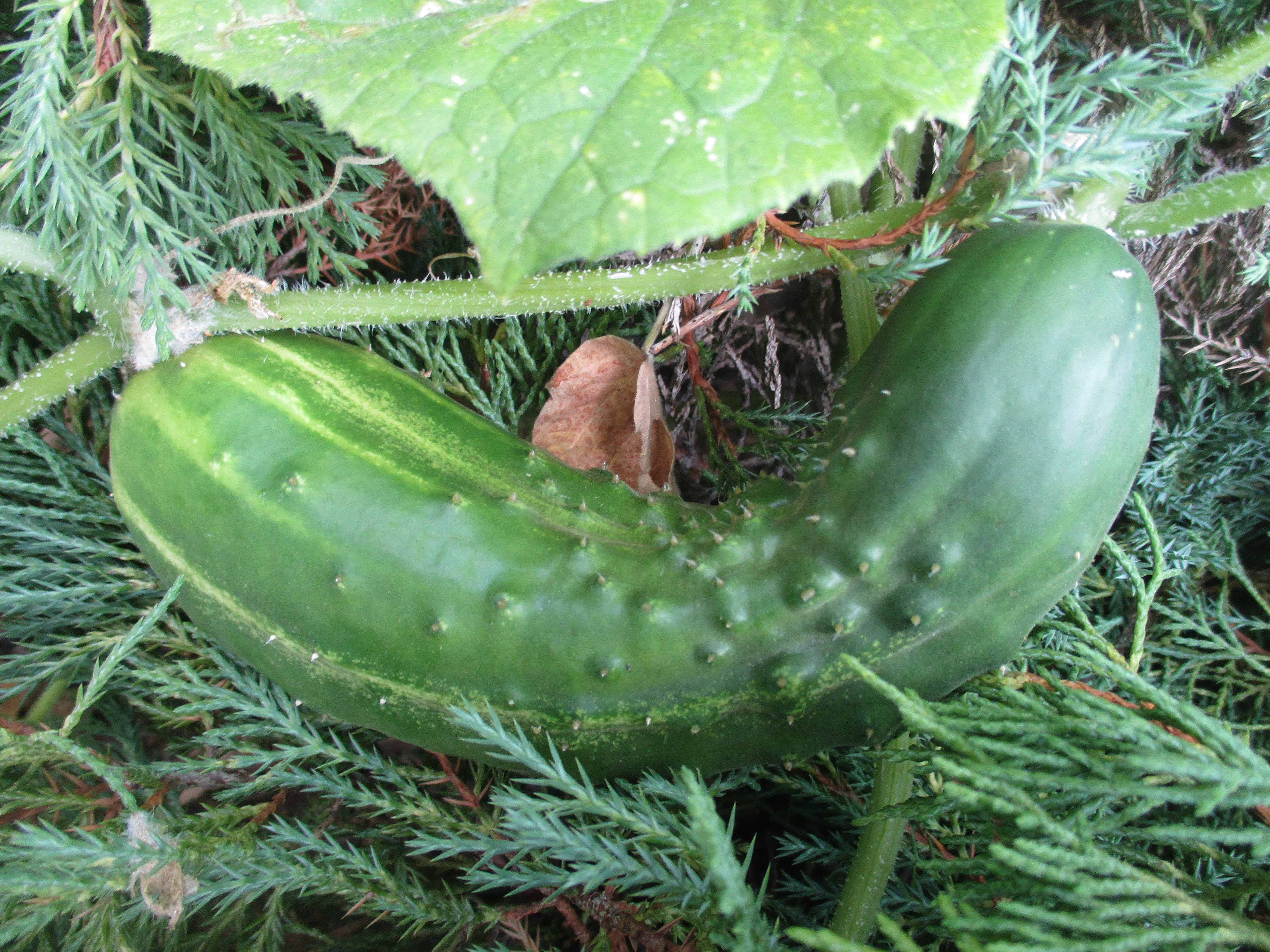
2. To the right, disfigured juniper should be temporarily obscured by cucumber vines expected to grow from seed sown just above a ditch. Indeterminate tomato vines will be added soon.P00425-2

3. Across the road, more junk, weeds and brambles were removed from between a curb and fence, only to find that the area is paved to the fence! Pole beans will be pleased with the fence.P00425-3

4. Posts supporting the deck had too much potential to ignore. Dragon fruit plants can climb them to the top and cascade downward. The posts are pressure treated, so will be painted first.P00425-4

5. ‘Kadota’ fig can grow as a hedge where the outer surface gets sunlight under the downhill edge of the deck. The area behind it is too shaded to be useful. The area in front is for vegetables.P00425-5

6. There are plenty of radish greens growing wild outside of the garden; but a few radish roots would be nice too. These are developing splendidly, and should be ready before anything else.P00425-6

This is the link for Six on Saturday, for anyone else who would like to participate:

https://thepropagatorblog.wordpress.com/2017/09/18/six-on-saturday-a-participant-guide/

Six on Saturday: Moving Day

A neighbor family relocated to a new home a short distance away. The former home needs such major repair that it may instead be demolished and replaced. For now, it remains abandoned. I collected a few plants from the abandoned garden so that some could be relocated to the new home. So far, only two Philodendron selloum and one Mexican fan palm went. The rest remain here, and may actually go to other homes.

1. In all my career, I have never seen a trunk of a palm shrivel from desiccation like this. All of the now absent roots were desiccated also. I seriously doubt that this queen palm will survive.P00418-1

2. It got canned anyway. Without significant roots, it certainly did not need all this medium. It only got a #15 can so that the shriveled trunk could be buried, sort of like a weird palm cutting.P00418-2

3. This lemon tree was almost left behind because it is so mutilated. It looks a bit suspicious too, sort of like shaddock understock of a formerly grafted tree. Actually, it is ‘Ponderosa’ lemon.P00418-3

4. The smaller of two Mexican fan palms got canned into a #5 can until it starts to produce new roots and foliage. Actually, only the queen palm and the big Mexican fan palm got larger cans.P00418-4

5. This bigger Mexican fan palm got a squat #20 can because the trunk is wider than a #5 can. There are not very many roots in there yet. It got left here to divert traffic around the garden.P00418-5

6. These three Philodendron selloum were all I originally wanted to salvage. One lacks foliage for now. The other can that seems to be empty contains bare tubers of an unidentified heliconia.P00418-6

This is the link for Six on Saturday, for anyone else who would like to participate:

https://thepropagatorblog.wordpress.com/2017/09/18/six-on-saturday-a-participant-guide/
Six on Saturday: More Recycling


Since lauristinus, deodar cedar and a few other species are happy enough here to naturalize and proliferate a bit too much where we do not want them, they should be just as happy to perform where we do want them. That is how we justify reallocation of such resources. We do it with other species too, just to avoid wasting them, or just because they are easy to propagate.

Norway maples and birches got canned over winter too, but I did not get pictures.

1. cyclamen – was something I grew in high school as a perennial that went bare for the heat of summer. It saddens me that it is so expensive, but also so expendable as a cool season annual.P00404-1

2. cyclamen – will get a second chance this year. They got replaced earlier because of mold, but both the white group above and this red group went out into a landscape where they can stay.P00404-2

3. ivy geranium – pruning scraps got plugged as cuttings to eventually replace zonal geranium that were mistakenly planted into hanging baskets. (That is the Pet Rock in the background.)P00404-3

4. zonal geranium – pruning scraps get plugged as cuttings also. As they hopefully subordinate to ivy geranium, those in the hanging baskets will get pruned back more until totally replaced.P00404-4

5. pigsqueak – that needed to be removed from one spot got plugged into another. Leftovers that could not be accommodated there and then, got canned for another time and another place.P00404-5

6. Boston ivy – could be a problem. We wanted only a few copies. Rather than plug just a few pruning scrap cuttings into just a few cans, I plugged a whole flat of a hundred. Most are rooting!P00404-6

This is the link for Six on Saturday, for anyone else who would like to participate:

https://thepropagatorblog.wordpress.com/2017/09/18/six-on-saturday-a-participant-guide/
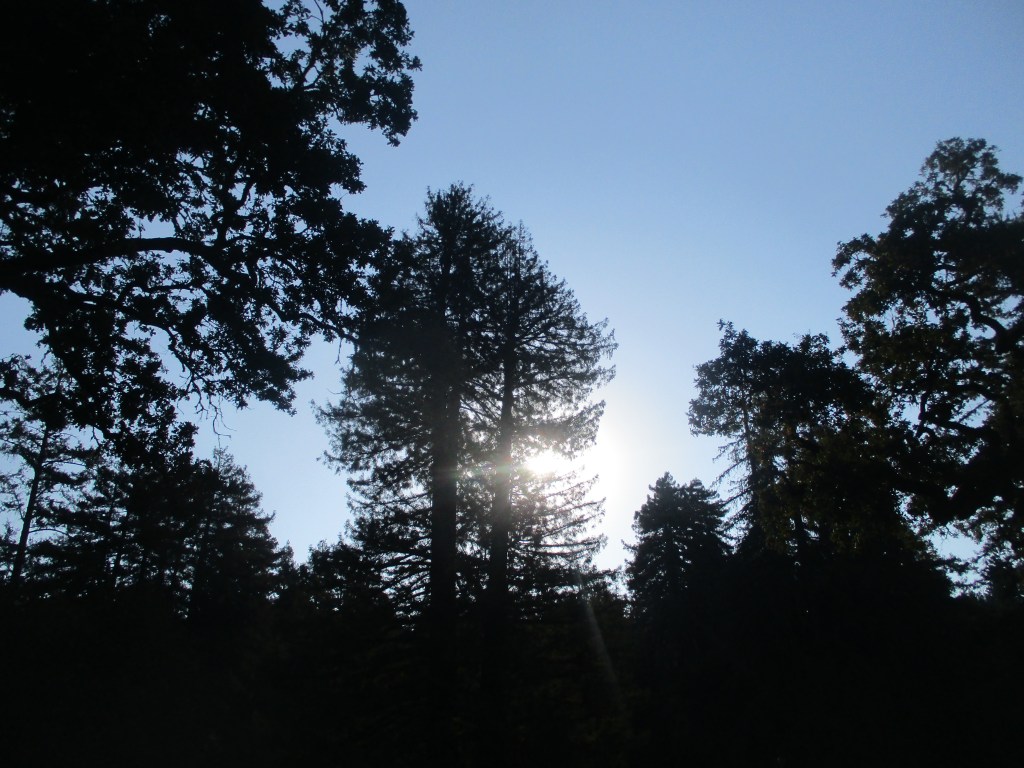
Unused Pictures

P00325K-1
I believe that this azalea is ‘Phoenicia’.

Okay, so I felt slightly guilty about not posting anything of any horticultural interest today. Okay, perhaps a bit more than slightly. Okay, perhaps guilty enough to post a few pretty flowery pictures . . . and the last one, which some might find objectionable.

P00325K-2
‘Coral Bells’ is not one of my favorite azaleas, but is reliable and profuse.

I will not put much effort into this. I did not even take these pictures for any particular article.  I am only sharing them here and now because I have no use for them, but did not want to just file them away unseen forever. Hey, these flowers work hard to bloom!

P00325K-3
I have no idea what this azalea is, but I am impressed.

Actually though, except for the last picture, all are about a month old. The last picture is half as old, and the bloom that is shows continues. Otherwise, the other blooms are already finished. Although colorful, none are particularly remarkable or interesting.

This odd camellia seemed to grow from the base of a bigger and older specimen, as if it is a sucker from understock. However, there is no indication that the original specimen is grafted. Nor is there any reason why a Camellia japonica should be grafted. The odd camellia could have grown from seed. It is rare but not impossible for Camellia japonica to produce seed here. It is not crowding anything, so remains.

P00325K-4
This odd camellia looks like it could be an extra on the Muppet Show.

I really should eradicate this pampas grass. However, it has been here for many years without becoming aggressively invasive. We have observed no seedlings nearby. Besides, even if we did eradicate it, there are herds of more just over the ridge. I can not explain why it is not migrating inward, but I am not complaining. I happen to like the bloom.

P00325K-5
This is not just any pampas grass. It is the dreaded Cortaderia jubata.

These pictures are, of course, not nearly as awesome as the pictures of Rhody that posted earlier. They just happen to be more relevant to what should be a horticultural blog.

Horridculture – Antihorridculture


Wednesday has been my day for ranting about aberrations of horticulture. I certainly have plenty to rant about. However, there is plenty of other ranting going on nowadays without my help. Therefore, for this Wednesday only, I will forego the ranting. Furthermore, I will forego the horticulture too. I can not remember ever doing that before. This could be something totally new for me.

After Rhody photo bombed one of my pictures that was featured on Saturday, others suggested that I feature more pictures of Rhody. Everyone loves Rhody.

Most of these pictures are devoid of vegetation. The minimal vegetation that is visible in the other pictures is mostly unrecognizable in the background. There are a few redwoods, a few firs, some English ivy and all that riparian mess around Zayante Creek behind the abandoned ball field. They are unimportant in this post.

This post is just pictures of Rhody, complete with captions that all begin with ‘Rhody’.

Rhody really has been a good sport. He has been coming to work without his crew for more than a week. Only a few of them stop by in the morning. One or two rarely come by through the day. We avoid each other.

Rhody misses them very much. He frolics on their sofa where he typically does ‘laps’ during morning staff meetings, and sometimes settles into the rocker chair that he typically avoids when no one else in it. He neglects his favorite thrasher toys, but instead drags around a dirty glove that belonged to someone of his crew. He takes it to bed, but I somehow wake up with it.

We will work in the still unvegetated vegetable garden in the morning. It is right outside, so he will be here if anyone of his crew happens to stop by.

P00325-01
Rhody found us a new car.
P00325-02
Rhody still prefers his friend’s work truck.
P00325-03
Rhody in camo.
P00325-04
Rhody found it, . . . but doesn’t know what it is.
P00325-05
Rhody likes the beach, . . . but can’t find the ocean. (It is a few miles away.)
P00325-06
Rhody gets to second base and beyond, past the outfield of the abandoned ball field.
P00325-07
Rhody is easily amused. I don’t get it.
P00325-08
Rhody is still intent on finding . . . it.
P00325-09
Rhody can be such a ham.
P00325-10
Rhody knows how cool he is.
P00325-11
Rhody misses his staff who can’t come to work yet.
P00325-12
Rhody misses them a lot!
P00325-13
Rhody still works hard at being cute, even though there is no one here to see it.
P00325-14
Rhody is done with pictures for now.
P00325-15
Rhody thinks the camera smells . . . interesting.

Six on Saturday: Unidentified Colors

Girls can see more colors. Furthermore, they know all their fancy names. Sometimes, I suspect that they just make up names as necessary. There are four African daisies at work that are odd colors that I can not identify, and another flower that I know is not lavender.

1. Blue is the easiest of these colors. Others might say it is pale, soft or sky blue. Even I can see that it is most definitely not lavender, as some might insist. Is this species so easy to identify?P00314-1

2. Blue is the only color for rosemary. It is more obvious up close in the previous picture. It is easier to mistake it for lavender if that is the color that is expected from the particular species.P00314-2

3. Lavender is how I would describe this color. Perhaps it is pale lavender. I have been told that this is lilac or pale lilac. That makes sense, since common lilac blooms with lavender flowers.P00314-3

4. Purple or light purple works for this one. Heck, if the previous is pale lavender, this could be lavender . . . that is not pale. Alternatively, it could be lilac, . . . but probably not the pale sort.P00314-4

5. Yellow or pale yellow should be good enough. I do not know what buff is, but I do not believe that this is it. Nor does it strike me as lemon or butter yellow. I know what colors lemons are.P00314-5

6. Red should be good enough, although I would believe if this is rust or rusty red. I am open to suggestion on this one. It is quite a distinctive color. I like it, even though I can not identify it.P00314-6

This is the link for Six on Saturday, for anyone else who would like to participate:

https://thepropagatorblog.wordpress.com/2017/09/18/six-on-saturday-a-participant-guide/
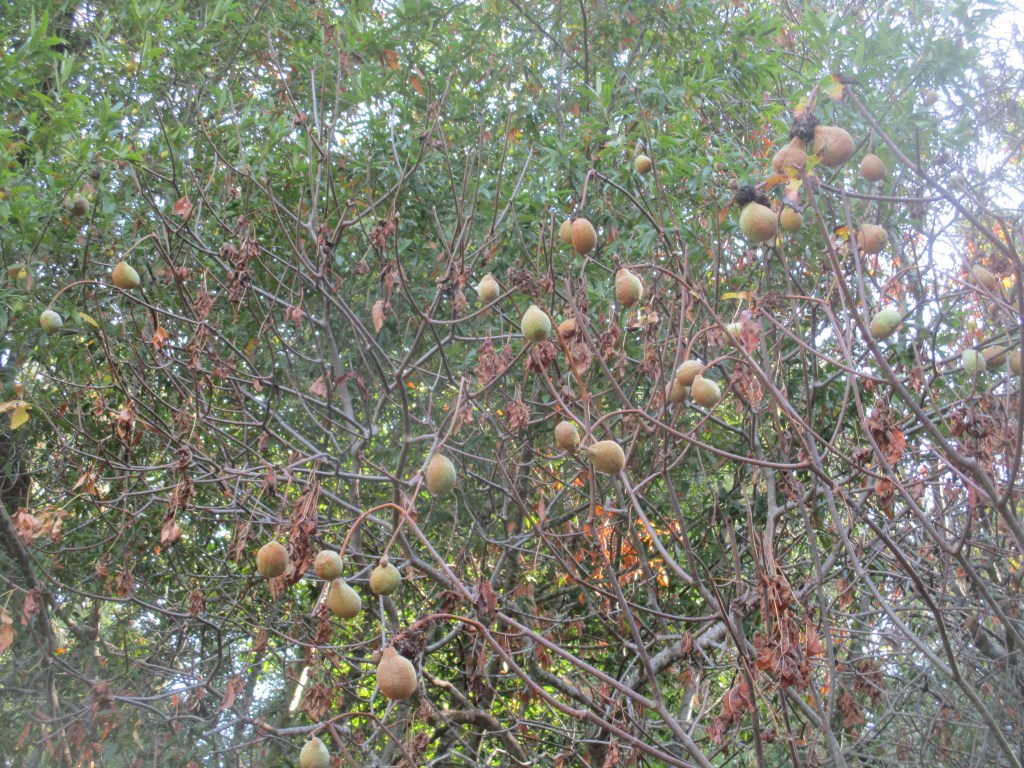
Six on Saturday: Housebound


It is a long story. I did not get out to get any pictures until Friday. By that time, I was none too selective. I just got pictures of what happened to be convenient. It really is coincidence that all happen to be white. The first three are from work. The other three are on roadsides in town. 1, 3 and 6 have potential to be colors besides white. However, 1 and 6 are typically white in their feral state as shown here; and only one cultivar of 3 is only slightly blushed.

1. Alyssum – can not decide if it is a warm or cool season annual. A new generation starts to bloom before predecessors finish, regardless of season. All are feral, so none are pink or lavender.P00307-1

2. Candytuft – is mistaken, by some, for alyssum. It blooms almost as continuously. It really should get cut back about now. Although, no one wants to cut it back while it continues to bloom.P00307-2

3. Clematis – is evergreen, but was defoliated by harsh winter pruning. It lacks sufficient space to grow wild. Earlier bloom is fading already. The ‘Apple Blossom’ cultivar has blushed bloom.P00307-3

4. Plum – of unknown origin blooms spectacularly at a gas station in town. Bloom is not quite as delicate as that of other feral American plum that naturalized from old stone fruit understock.P00307-4

5. Snowflake – grows wild along roadside drainage ditches, but does not seem to be aggressively invasive. Mine bloomed earlier just like this. This is what I grow instead of trendy snowdrop.P00307-5

6. Calla – is in the same ditch with the snowflake. It is even less aggressive. Weird colorful hybrids do not naturalize at all, probably because they are weaker, and do not produce viable seed.P00307-6

This is the link for Six on Saturday, for anyone else who would like to participate:

https://thepropagatorblog.wordpress.com/2017/09/18/six-on-saturday-a-participant-guide/
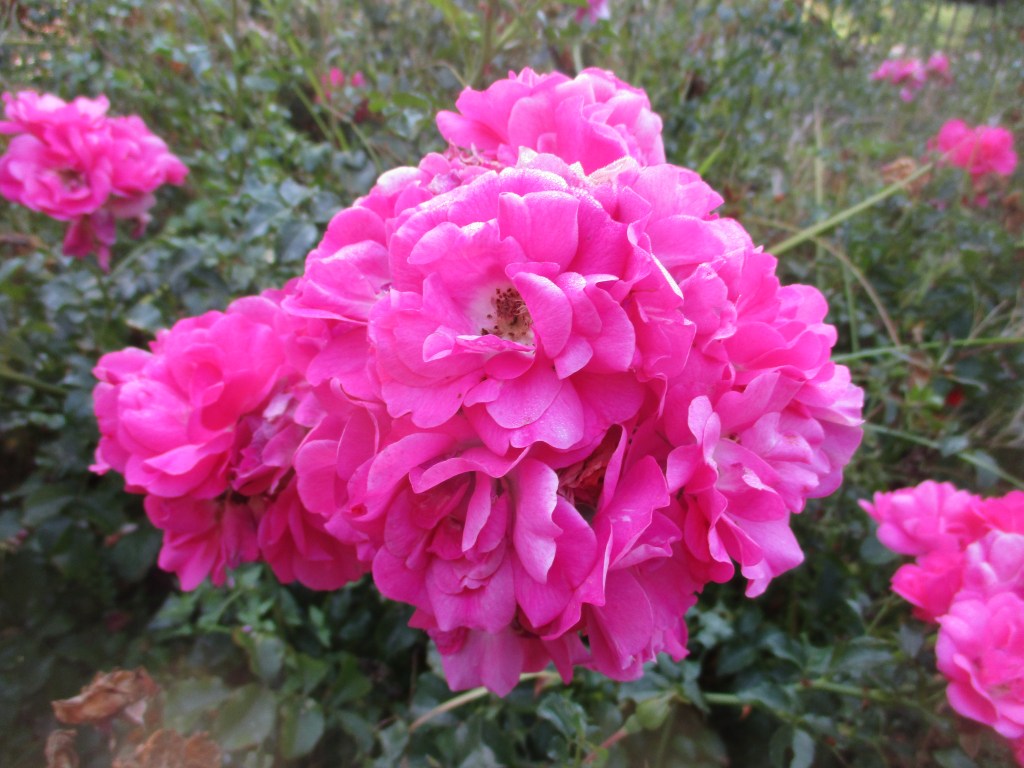
Six on Saturday: Pretty In (Mostly) Pink


There was no theme for these six. I just took a few pictures of what happens to be blooming presently, and most just happened to be pink, or at least some variation of pink. The first picture of the bloom of the understock of flowering plum is my favorite this week, because it looks something like apricot bloom . . . in pink.

1. Flowering Plum – The flowering plum that was here first got cut down years ago. This tree grew from its understock. It is too pretty to cut down. The fruit is like apricots that never ripen.P00215-1

2. Rhododendron – Not many are blooming yet. This one is typically one of the earliest, but typically does not look so good. It tends to get battered by rain. There has been no rain in weeks.P00215-2

3. Camellia – Most that are blooming now happen to be simple pink like this one. None of the white ones are blooming. The few red ones that are blooming seem to be of just a single cultivar.P00215-3

4. Primrose – This one seemed to be more rosy magenta pink when I took this picture. (I don’t even know if that is a real color.) It certainly looks red here. All of their colors are pretty now.P00215-4

5. Corsican Hellebore – There is nothing pink about this one. It is just as sickly greenish white as it looks. I can not understand the allure. This is the only hellebore that does well for us here.P00215-5

6. Hellebore – Common hellebore is not at all happy here. Many were planted years ago. Many ferals grew from self sown seed. Only this grungy pink one inexplicably blooms so abundantly.P00215-6

This is the link for Six on Saturday, for anyone else who would like to participate:

https://thepropagatorblog.wordpress.com/2017/09/18/six-on-saturday-a-participant-guide/

Six on Saturday: Perks


It has been two year since I started my ‘part-time temporary’ job. I work here only three days weekly, and only if I can. That is what makes it ‘part-time’. After two years, I am not sure if it still qualifies as ‘temporary’. I do intend to eventually return to my normal work. However, this part-time temporary job will not be easy to leave. It is so excellent in so many ways! Besides, there are so many incredible perks!

1. Scenery is incredible. The redwoods in the background to the left are on the other side of a deep ravine where Bean Creek flows through. All the scenery here could not fit into one picture.P00208-1

2. Native flora in the forest is incredible. Most of what is in the landscapes is native flora too, or garden varieties of native flora. There is no transition between the forests and the landscapes.P00208-2

3. Redwoods are incredible. What is not obvious in the picture is that these grand wild redwoods with wild bay laurels to the right, are just beyond the landscaped perimeter of a vast lawn.P00208-3

4. Exotic flora is incredible too, but compatible with native flora. The simple landscapes are both horticulturally correct and environmentally sensible. Daffodil naturalize but are not invasive.P00208-4

5. Redwoods are incredible. Did I mention that yet? They really are grand. That is why they are the Official State Tree of California. They never get old, but they live for thousands of years.P00208-5

6. The crew that I work with is the most incredible perk. I should write an article about them. Oh, I already did. I have no picture of them. There are too many for Six on Saturday anyway.P81010

This is the link for Six on Saturday, for anyone else who would like to participate:

https://thepropagatorblog.wordpress.com/2017/09/18/six-on-saturday-a-participant-guide/