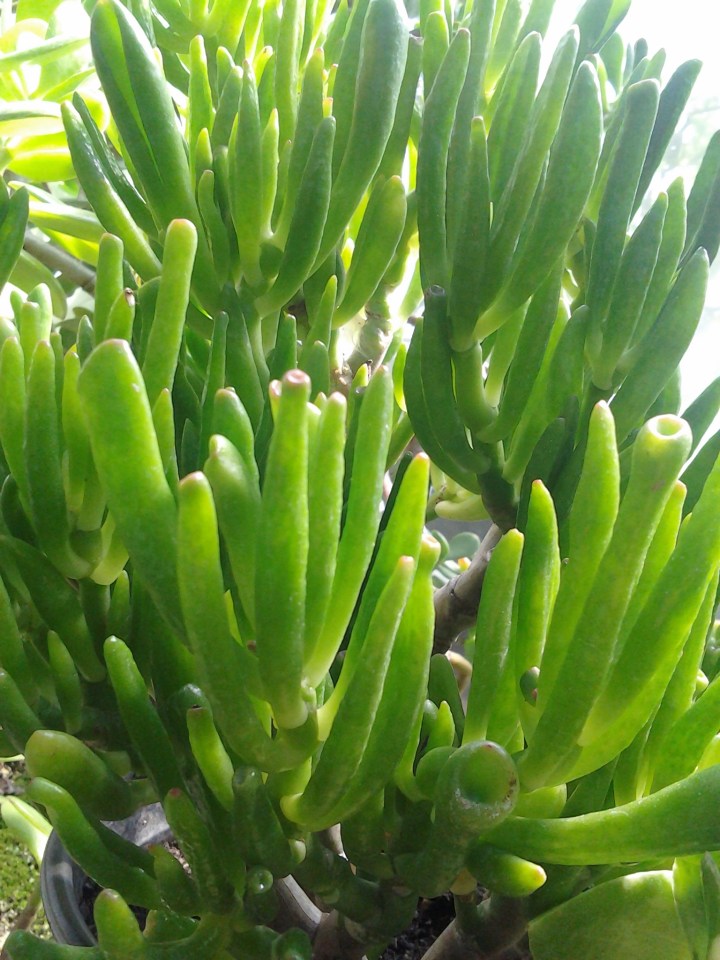
Good old fashioned jade plant has a few interesting cultivars (cultivated varieties) that exhibit variations of color, texture and form. Hobbit’s pipe, Crassula ovata ‘Hobbit’, is similar to classic jade plant in form and color. It is only slightly lighter green, and only a bit shorter. The succulent stems are just as plump and gray. The small and round-topped clusters of pale pink or white flowers that bloom sporadically are just as unimpressive. What is unique about hobbit’s pipe is the weirdly tubular foliage. Each leaf is rolled into a cylinder, with a hollow tip.
Mature plants do not often get much more than two feet tall and broad, although they have the potential to get twice as large. Because they are more sensitive to frost than other jade plants, hobbit’s pipe should be grown in sheltered spots, or pots that can be moved to sheltered spots through the coldest part of winter. Foliage that is too exposed during the warmest weather of summer can get roasted. Hobbit’s pipe can tolerate a slight bit of shade, so can be happy as a houseplant.
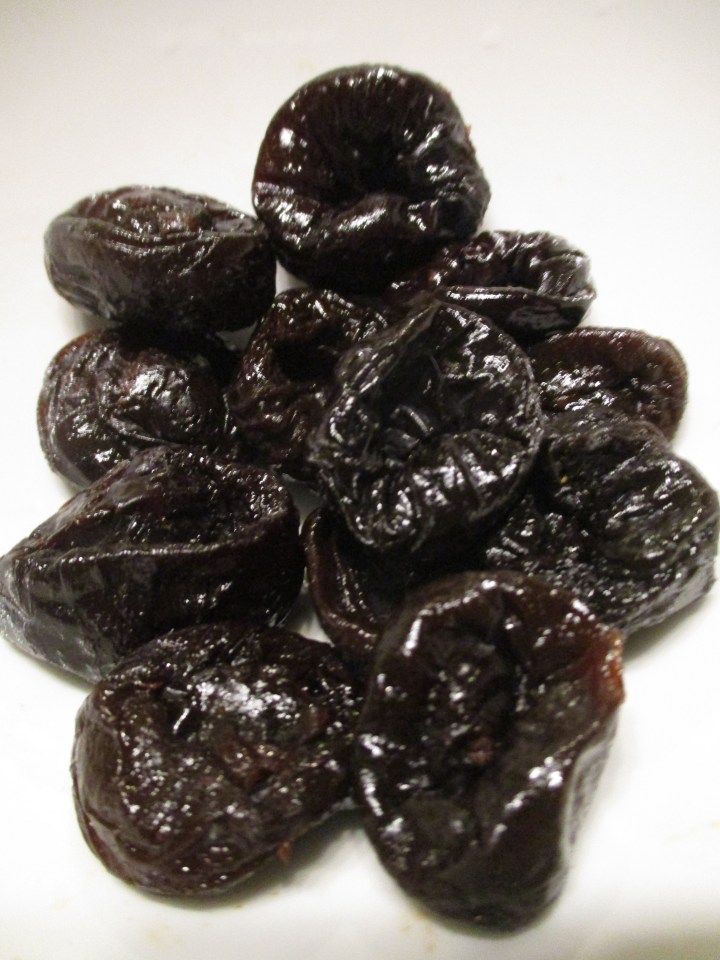

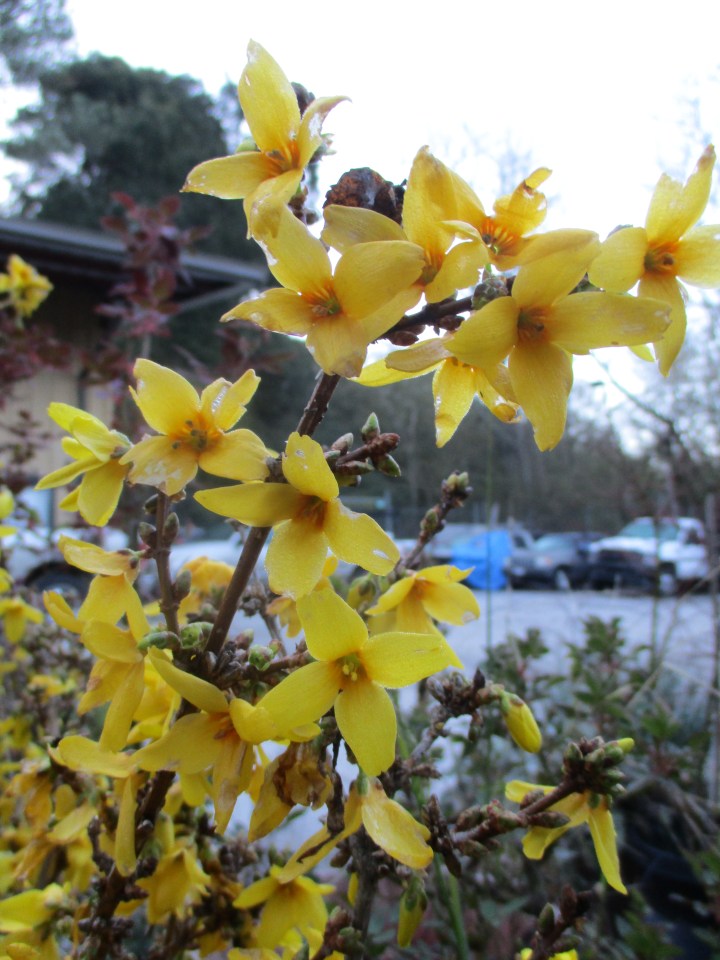 This may seem to be three months early, or an entire season out of season; but this is when bare root forsythia, Forsythia X intermedia, gets planted. Even so, the smaller of new bare root plants will bloom with only a few flowers early in their first spring, so will not produce their famously profuse and garishly bright yellow bloom for another year and three months. They will be worth the wait.
 The simple pink and white of ‘good & plenty’ candy is what fairy primrose, Primula malacoides, is known for. Pastel purple is also popular. Rosy reddish pink and deeper pinkish purple are somewhat rare. The small flowers are arranged in circular trusses that stand as tall as one foot, just above the softly mounding light green foliage. The rounded leaves are slightly fuzzy. All parts of fairy primrose are toxic, and to those who happen to be allergic to it, can be as severely irritating to the skin as poison oak!
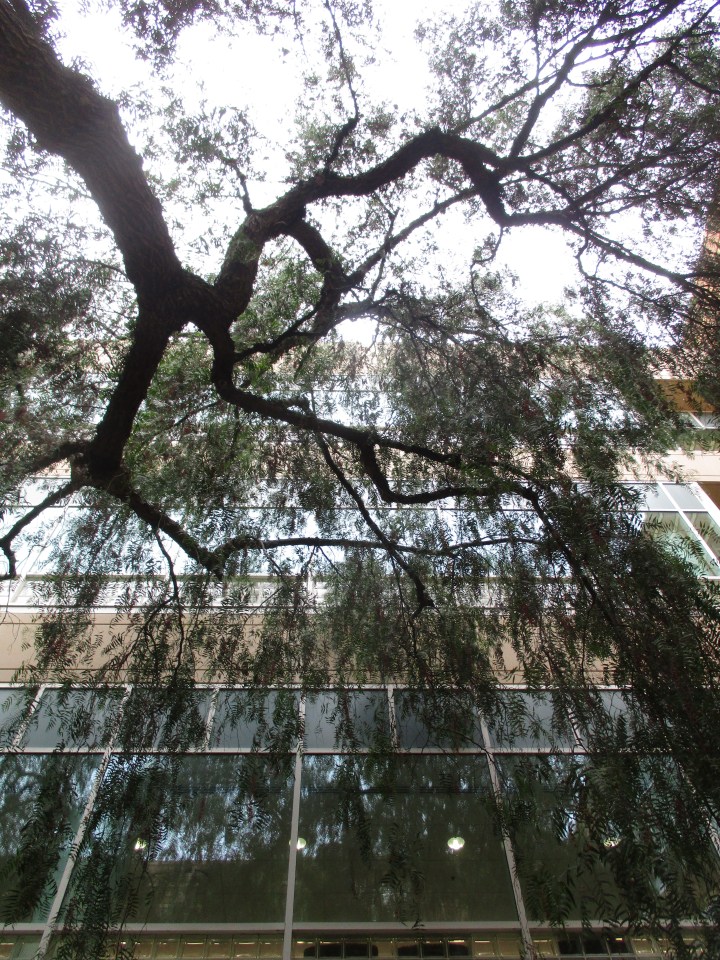 It has been naturalized in Southern California long enough to seem to be native. California pepper, Schinus molle, is actually endemic to Peru and adjacent arid regions of South America as far south as Central Argentina. Furthermore, although its small pink fruits with hard black seeds are sometimes used for culinary purposes, it is actually not related to black pepper, and is mildly toxic.
 Climate is why the European larch, Larix decidua, is so rare here. It prefers cooler weather in both winter and summer, and more humidity. Foliage can roast if too exposed through summer. Small trees that are partly sheltered or partly shaded by larger trees have the best color and foliar density. Larch are innately reliant on somewhat regular watering, so are not drought tolerant. The mildly cool weather of autumn is enough to brown the formerly bluish foliage, which falls shortly afterward.
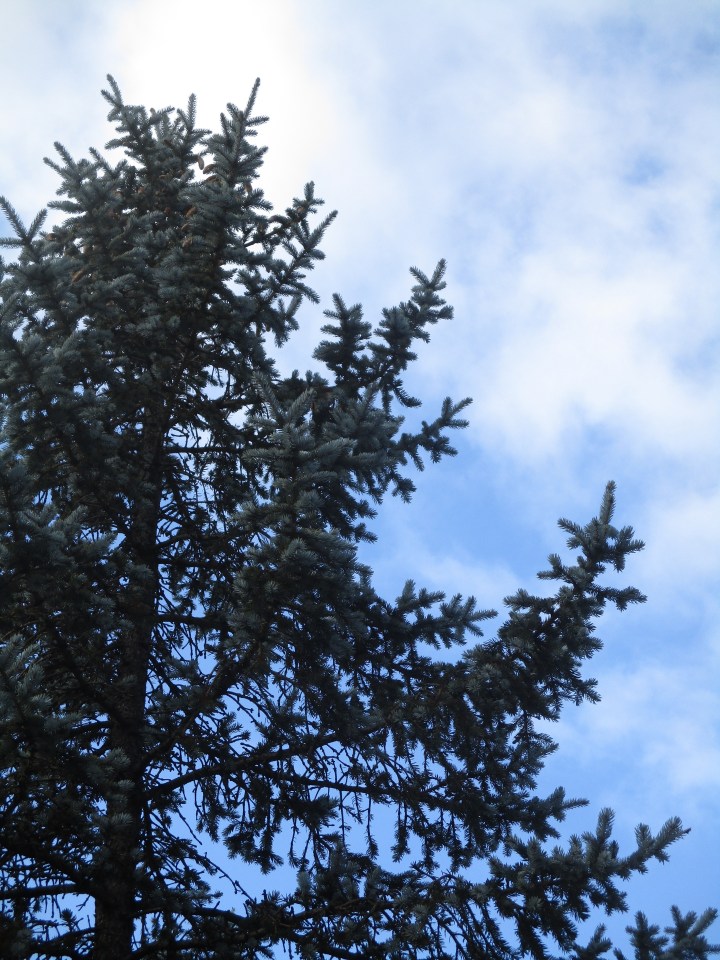 For a tree that is native to the upper elevations of the Rocky Mountains, blue spruce, Picea pungens, does surprisingly well here. It only wants to be watered a bit through summer to compensate for the lack of rain and humidity in chaparral climates. It does not seem to miss a more pronounced chill through winter. Disease and insect infestation are uncommonly noticeable or damaging.
 One might surmise that a tree that is resilient enough to be the state tree of Texas is not too discriminating. If it can take the heat and humidity of the Lone Star State, it can make it anywhere! However, pecan, Carya illinoinensis, actually prefers heat and humidity, and is bored with the mild local climate. The nuts and the mess that comes with them are actually less abundant than they would be in the Gulf Coast States. The deciduous foliage is not quite so colorful in autumn.
 It is unfortunate that most florists’ cyclamen, Cyclamen persicum, are enjoyed as cool season annuals only through winter, and then discarded as they are replaced by spring annuals. They can actually survive as perennials for several years, with white, red, pink or magenta flowers hovering above their marbled rubbery foliage each winter. Foliage typically stay less than six inches deep.
