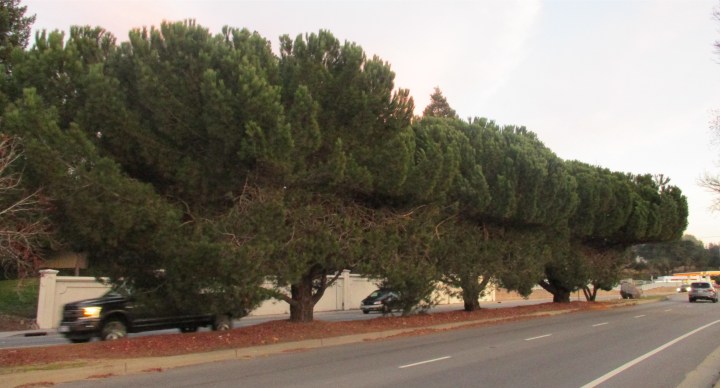
 Even though it can get about fifty feet tall and wide, Italian stone pine, Pinus pinea, often gets planted as a small living Christmas tree into confined urban gardens. It gets so big so fast that it can get to be a serious problem, as well as expensive to remove, before anyone notices. It is really only proportionate to large public spaces such as parks or medians for big boulevards. The bulky trunks typically lean one way or another. The long limbs spread laterally to form an unusually broad and flat-topped canopy.
The paired needles are about four to six inches long. However, small living Christmas trees are still outfitted with juvenile foliage that looks nothing like adult foliage. Juvenile needles are single, very glaucous (bluish) and only about an inch or an inch and a half long. Adult foliage may not develop for a few years. The four or five inch long cones mature slowly for three years. Squirrels and birds like the big seeds, which would otherwise be known as pine-nuts if people could get them first.
(Apologies for this inadequate illustration of Italian stone pines damaged by traffic. It was the only picture of Italian stone pine I could find.)
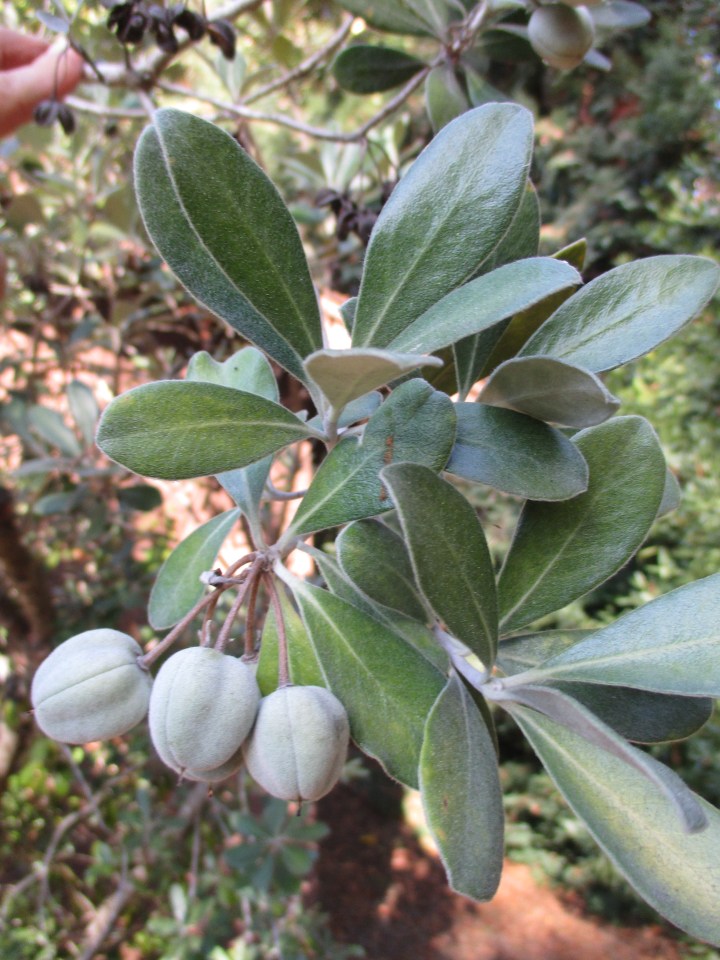 Of all the popular pittosporums in Western landscapes nowadays, the karo, Pittosporum crassifolium, is certainly not one of the most familiar. It might have been one of the earliest to have been popularized here though. Because of its resiliency to coastal climates, it was a common hedge in San Francisco during the Victorian Period. With minimal watering, it did well farther inland too.
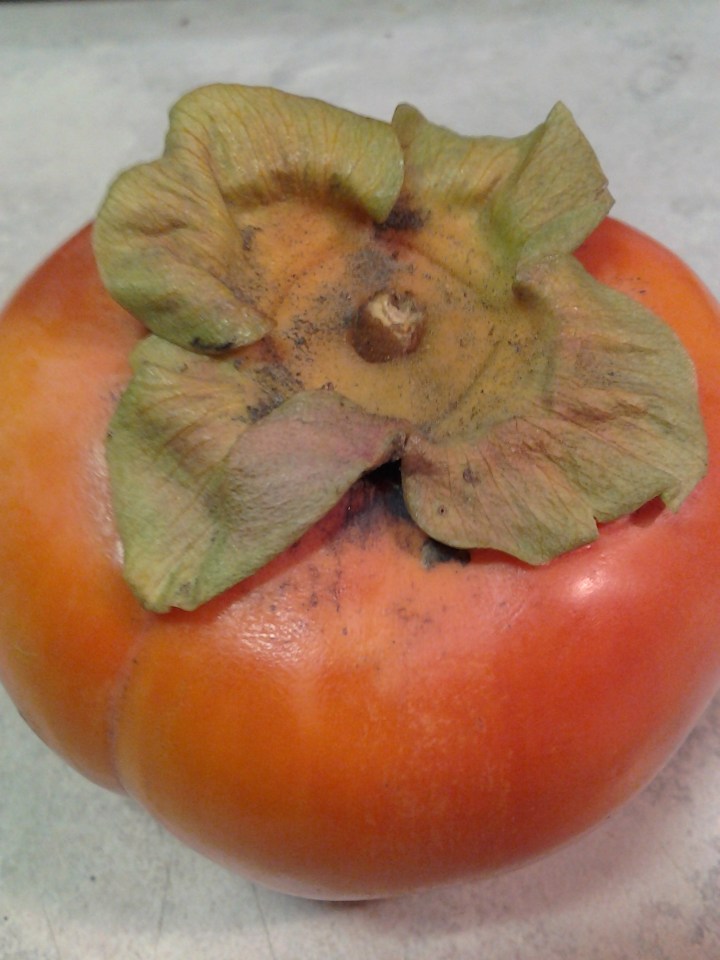 A mature persimmon tree, Diospyros kaki, is often too much of a good thing. The fruit is both big and abundant as it ripens this time of year. Much of the fruit in taller trees is out of reach. Nearly ripened but somewhat firm fruit can be picked and shared with neighbors for a while, but must be picked immediately once completely ripe. Otherwise, it falls and makes a squishy mess that can not be raked up! Nearly ripe fruit ripens easily off the tree. Individual fruits only need to be spread out in a single layer to limit molding.
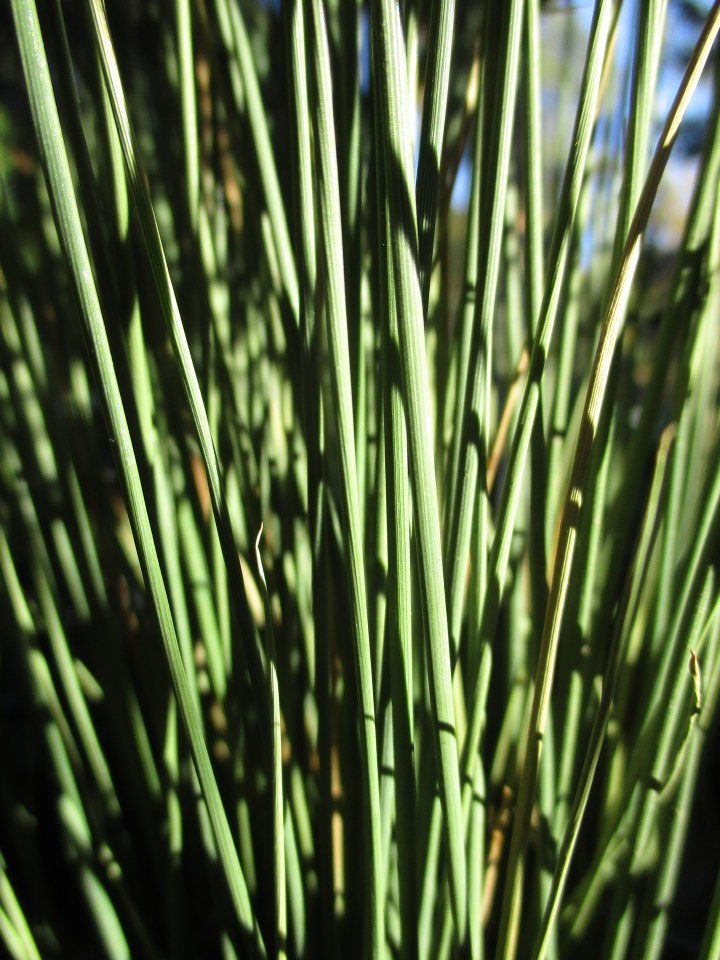 Not to be confused with the Canadian rock band from the 1970s, this rush, Juncus patens, is native to riparian areas between western Washington and San Diego County. It is also known as the common rush because it is, obviously, the most common species of the genus on the West Coast. It is only occasionally planted intentionally, but more often sneaks into well irrigated landscapes.
 Out in rural chaparral regions, where water is scarce, the big and bold California sycamore, Platanus racemosa, somehow seems to find the spots where groundwater is not too far below the surface of the soil. It is technically a riparian tree, that is just as comfortable competing with cottonwoods and willows along forested rivers and floodplains. It eventually get too big and messy for refined urban gardens, but is somewhat popular nonetheless.
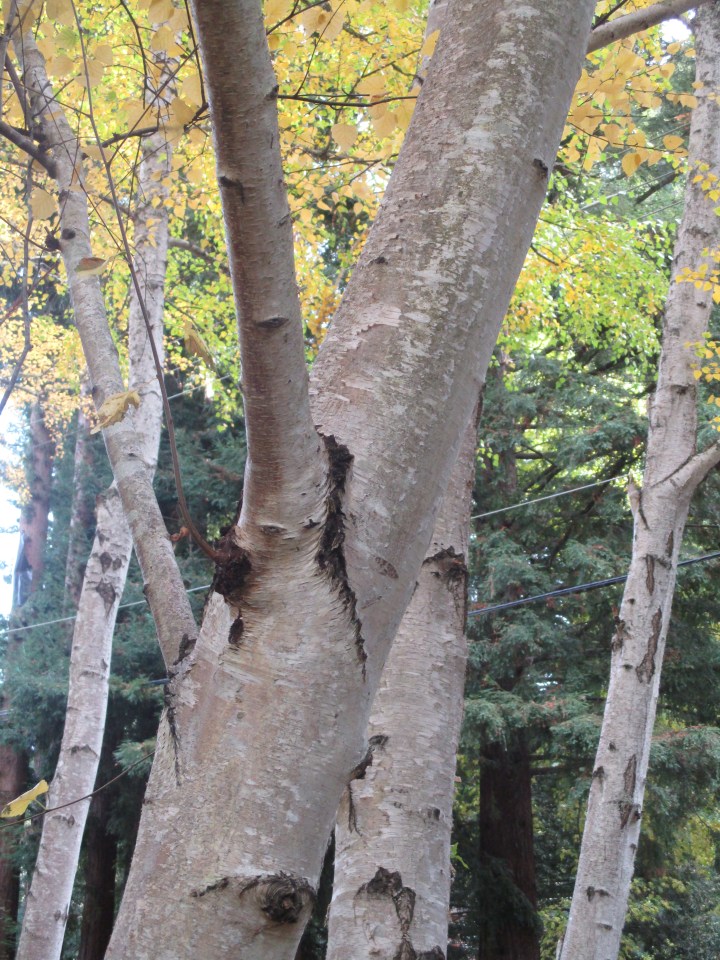 Like a flower girl scatters rose petals ahead of a wedding procession, European white birch, Betula pendula, tosses its small deltoid leaves soon after turning soft yellow with autumn chill. Color may not last long on the trees, but becomes a delightful mess for those who appreciate such assets. The primary allure though, is the slender strikingly white trunks, accented with black furrowing.
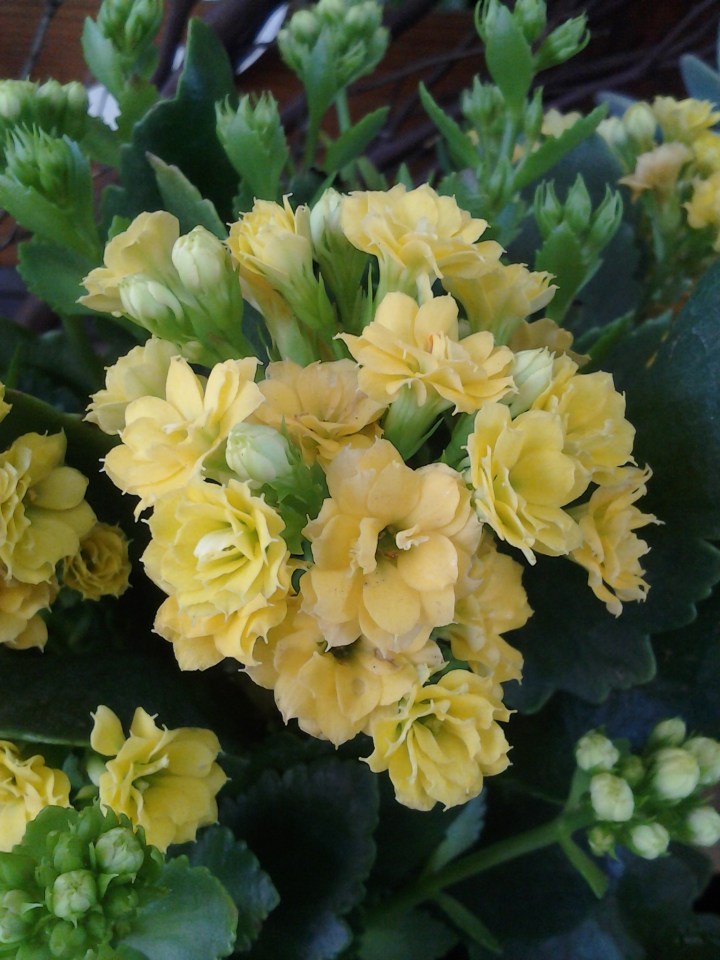 It is unfortunate that, like Easter lilies and poinsettias, most kalanches, Kalanchoe blossfeldiana, are enjoyed while actively blooming, and then discarded as their blooms fade. It is so easy to simply snip out the deteriorating flowers, and grow the small perennials plants for their appealing succulent foliage until they bloom again. They do not get much more than half a foot tall, so can stay in small pots indefinitely. They seem to prefer the porosity of clay pots. Because they can rot, they should be watered when the surface of the soil seems to be getting dry, and their drainage saucers should not be allowed to hold water too long. Kalanchoes like bright but indirect sunlight. They can be acclimated to direct sun exposure, but might seem to be somewhat stunted. If brought in before frost, they can be happy out on a patio. The clustered small flowers can be white, pink, red or bright or pastel shades of orange or yellow.
 Ah, something vintage! Remember Hollywood juniper, Juniperus chinensis ‘Kaizuka’ (or ‘Torulosa’) flanking big two-car garage doors of mid century modern homes? Those that are still around after half a century are big and strikingly sculptural, like miniature Monterey cypress for home gardens. They get about fifteen feet tall and ten feet wide, but have potential to get significantly larger.
 It is almost never planted in home gardens, but the native red willow, Salix laevigata, has a sneaky way of getting where it wants to be. The minute seeds go wherever the wind blows them. Because it is a riparian tree, red willow prefers well watered spots. If not detected and pulled up in the first year, it can grow rather aggressively, and overwhelm more desirable plants, although the somewhat sparse canopy makes only moderate shade.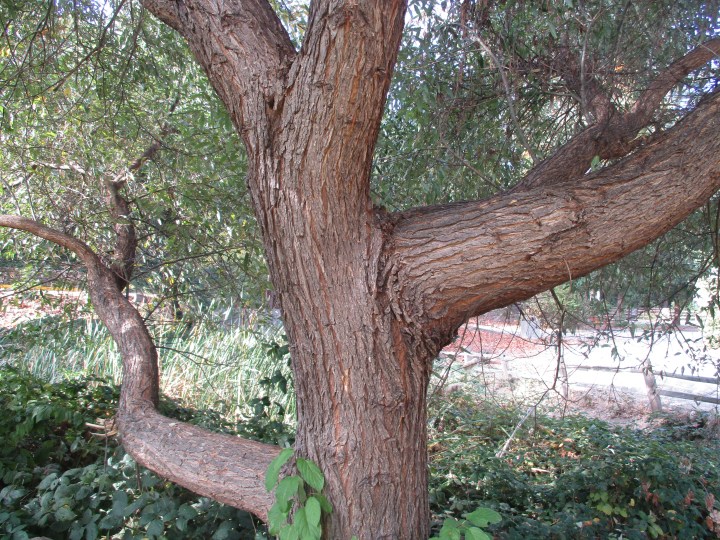
 The ‘X’ preceding its Latin name ‘X Cupressocyparis leylanii‘ designates Leyland cypress as a hybrid of two distinct genera, namely Monterey cypress and Nootka cypress. (Those who consider the parents to be two species of the same genus know Leyland cypress as Cupressus X leylandii.) The many cultivars combine desirable qualities of both parents, but also innate weaknesses.
