 What is it?!?
Is it alive?
Was it alive?
Is it moving?
Should we roll it back into the river?
Can we eat it? Someone actually asked that.
It really is as big and ugly as it looks. That is a size 11 boot next to it to demonstrate how big it is. We can not eat it. There is no need to put it back into the river. It is not moving. It was alive, and still is. It is the distended tuberous root of a wild cucumber, of the genus Marah, which is also known as ‘manroot’ because of how big it can get. That stub protruding from the top (toward the top of the picture) is the remnant of a stem. A few thin roots protrude from the lower half, with thicker root stubs at the bottom.
This picture was taken last winter after the San Lorenzo River flooded and then receded. There has not been enough rain this year to wash more than leaves and a few pinecones downriver.
If this tuberous root had not been unearthed and scoured clean by floodwater, it would have been actively growing through winter. The surprisingly thin and wiry vines appear in autumn and climb with tendrils over shrubbery and small trees. The palmately lobed leaves are rather fragile, and tear easily. Loose clusters of small pale white flowers are followed by weirdly spiny round fruit that ripens from light green to greenish yellow. Each fruit is about the size of a golf ball, and contains a few big seeds. As the weather gets warm in summer, the vines die completely to the ground, leaving the drying fruit dangling from whatever the vines grew onto earlier.
Why can’t the river bring us something useful?
 This is an extreme bloomer! Cineraria, Pericallis X hybrida, blooms with composite flowers, which means that each small daisy flower is really a whole bunch of minute flowers clustered together to look like a single flower. As if this were not impressive enough, a whole bunch of these composite flowers are clustered together on top of each big wide floral truss. They are not easy to ignore.
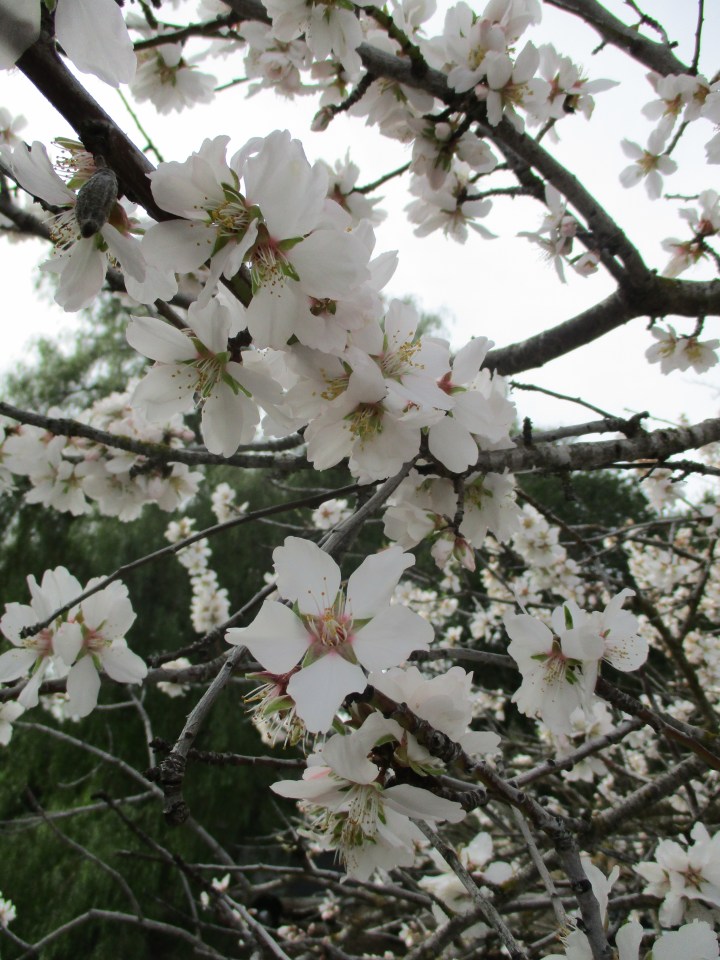 It is known more as a small to mid-sized shade tree that produces edible nuts, but almond, Prunus dulcis, also blooms magnificently as soon as the weather allows. Actually, it often blooms a bit earlier than it should. Nut production can be ruined if rain dislodges blossoms or developing nuts. The profuse white flowers are small but slightly larger than those of other related stone fruit trees.
 There is some controversy about the identity of the flowers that Micky Mouse picks at the porch to present to Minnie Mouse when she answers the door. Some insist that they are Transvaal daisy, Gerbera hybrida. When they are not in black and white, the substantial daisy flowers are cartoon hues of yellow, orange, red, pink and white, sometimes with chocolatey brown or black centers.
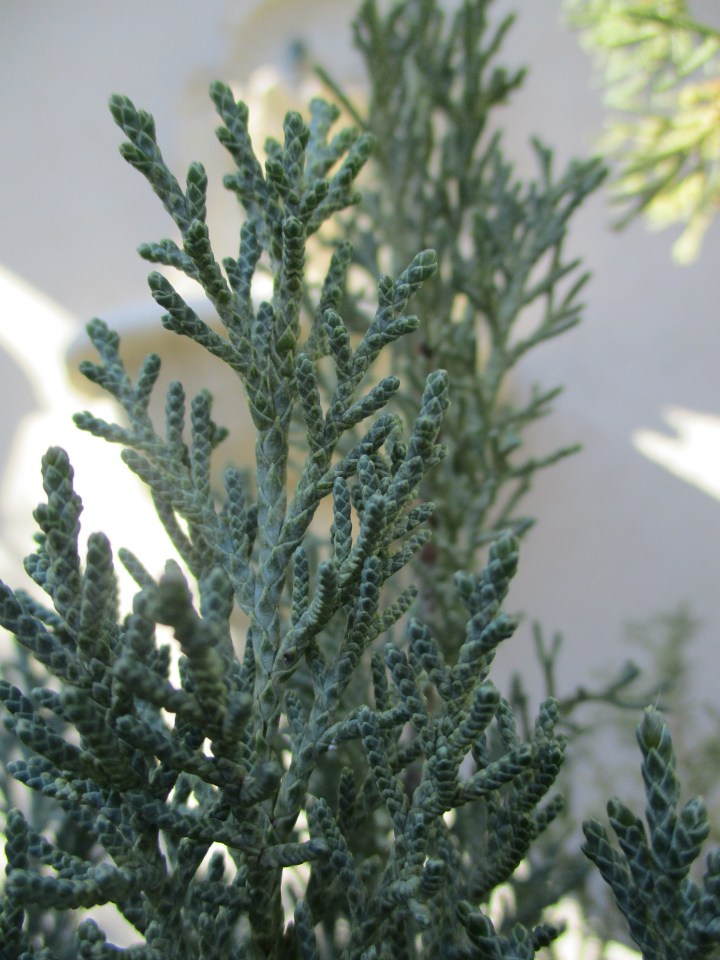 It is no coincidence that many plants with gray foliage are from mountains or deserts. Gray foliage is ‘glaucous’, which, like glaucoma, diffuses light. This helps to protect it from desiccation and scald when sunny weather is also hot, windy or arid. The glaucous foliage of Rocky Mountain juniper, Juniperus scopulorum, is what distinguishes it most from related North American junipers.
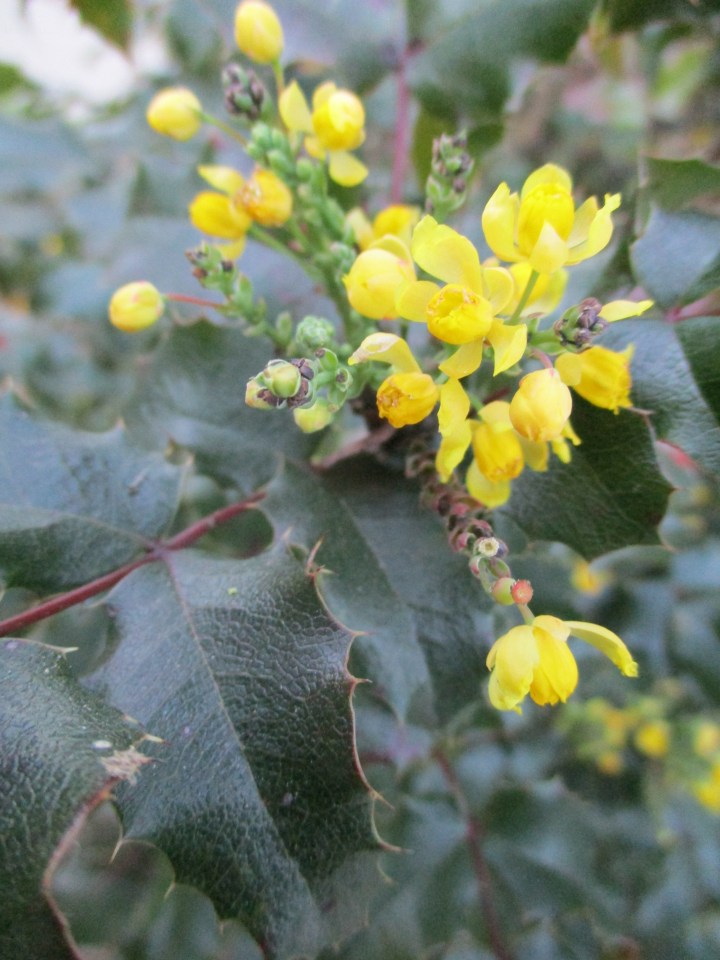 Oregon has good taste. Douglas fir, one of the most useful of timber trees in America, was selected as the state tree. Oregon grape, Mahonia aquifolium, was designated as the state flower. Although the tight clusters of tiny bright yellow flowers that bloom about now may not be as flashy as other state flowers, they contrast handsomely against the glossy and deep dark green foliage.
 When the weather warms up a bit between frosty weather and winter storms, the rich fragrance of winter blooming daphne, Daphne odora, is at its best. The domed trusses of tiny pale pink flowers are not much wider than a quarter, so are easy to overlook while investigating the source of the fragrance. ‘Aureomarginata’, the standard cultivar, has glossy evergreen leaves with narrow pale yellow margins. Mature plants are only one or two feet high. All parts of the plant are incidentally toxic.
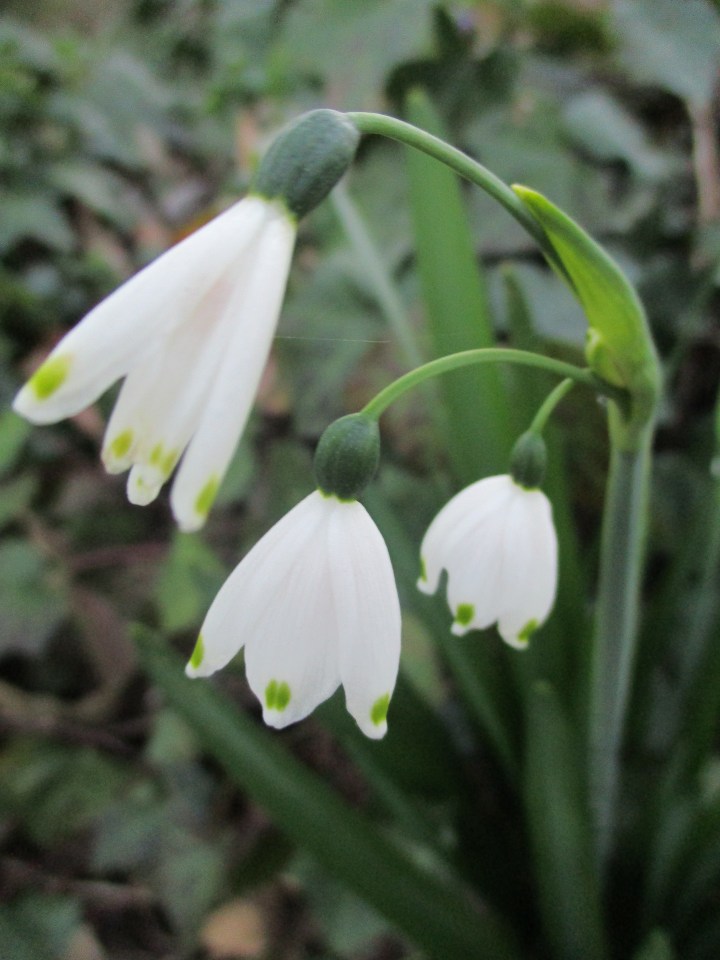 Where winters are more wintry, garden enthusiasts get to brag about their snowdrops as they emerge and bloom through melting snow. Diminutive white flowers against a backdrop of white snow may not look like much to us. We have more colorful flowers through winter, without the snow. Their kind of snowdrops, Galanthus specie, need more winter chill than they would get here anyway.
 Fans of the Brady Bunch might recognized agonis, Agonis flexuosa, from the front yard of the Brady Residence. That particular tree was rather dark olive green, and might have grown two or three feet annually to reach the upstairs eaves. Most of the popular modern cultivars are darker bronze or burgundy, and probably stay a bit shorter, but attain the same elegant and slender form.
 As a group, aloes really deserve more respect. Many will naturalize and thrive with only occasional watering through summer. Candelabra aloe, Aloe arborescens, wants a bit more water than most other aloes, but not much. It looks like a sensitive jungle plant, but is surprisingly durable, and very easy to propagate. Any pruning scraps can be plugged wherever new plants are desired.
