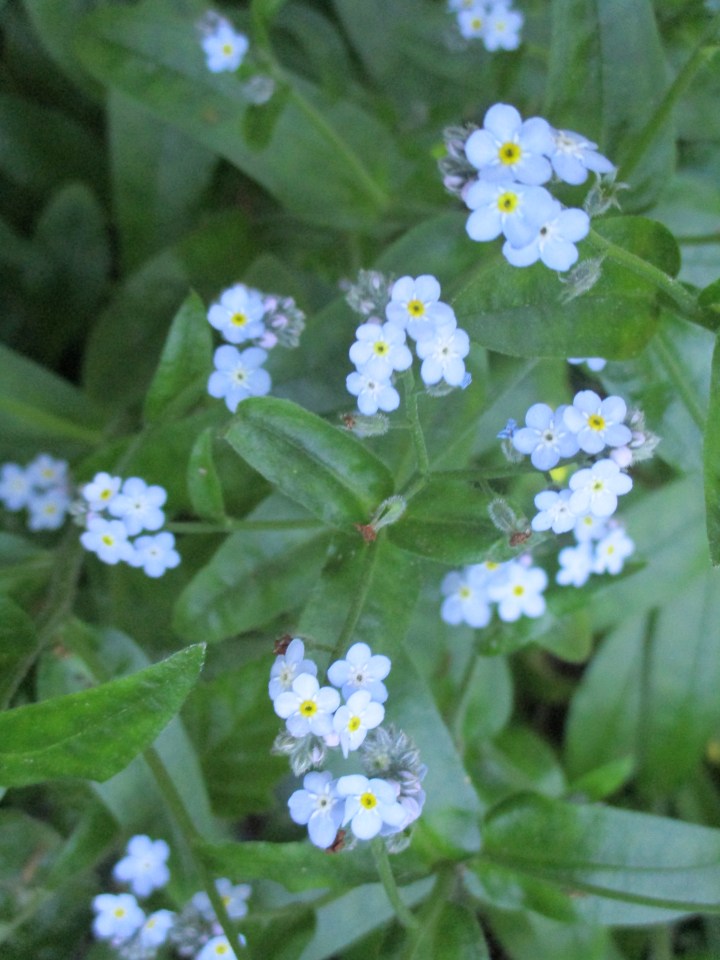
 It is not easy to forget annual forget-me-not, Myosotis sylvatica. Even if it dies back early in the heat of summer, it will probably throw plenty of seed to regenerate through next winter, and bloom again by next spring. It can easily naturalize in damp or riparian areas, and might be considered to be a weed; but like nasturtium and foxglove, it is a polite weed that is not aggressively invasive.
The tiny blue flowers start to bloom while winter is still cool, and then get a bit more abundant as the weather warms in the beginning of spring. Some modern garden varieties bloom with pink or white flowers. Tender leaves are about two or three inches long, and less than an inch wide. Soft stems creep laterally, but do not get far. Mature plants are less than a foot tall, and two feet wide.
Between autumn and early spring, seed can be sown directly where plants are desired. Because they are so tender, plants are not often available in nurseries. Forget-me-not is a nice understory plant to larger rhododendrons and up-pruned shrubbery, or covering for daffodils, freesias and other spring bulbs. They want regular watering and rich soil, and can be happy in cool partial shade.
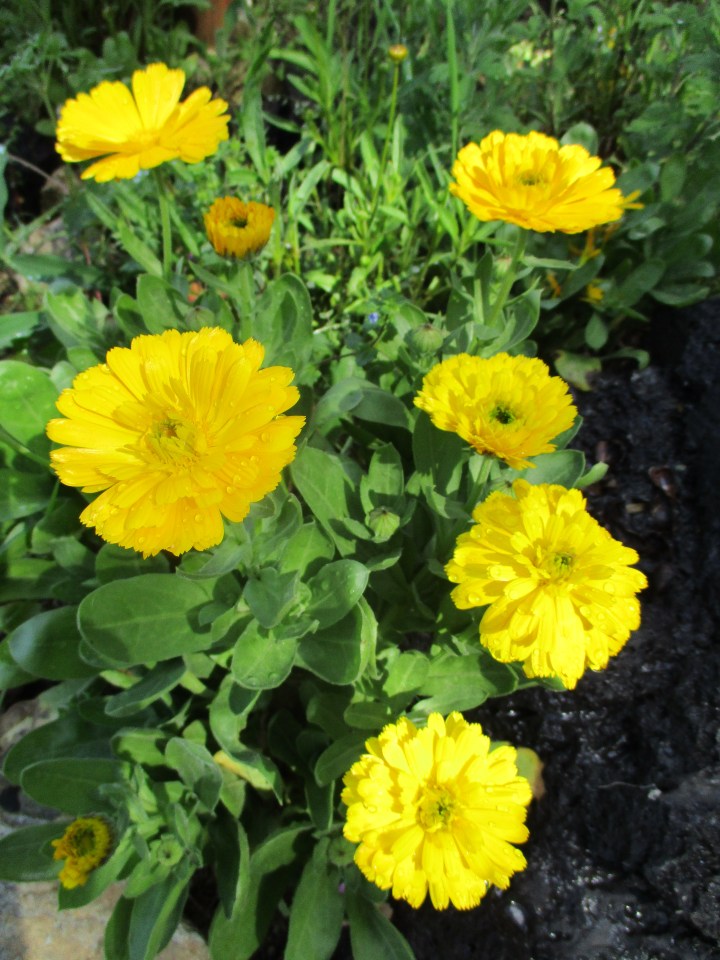 Just before the weather gets warm enough for real marigolds, and after the weather starts to get too cool and rainy for them, pot marigold, Calendula officinalis, is at its best. It can bloom at any time of year, depending on when it gets planted, but prefers cool and humid spring and autumn weather. It is not so keen on frost in winter, or the arid warmth of summer that real marigolds enjoy.
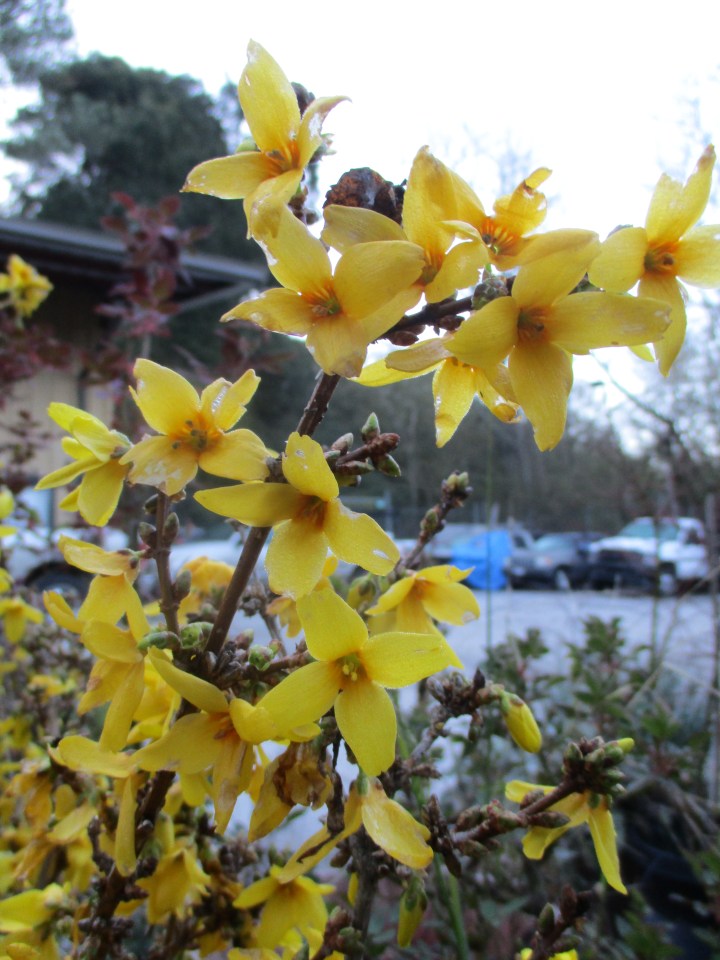 It is a shame that forsythia is not more popular here. Years ago, there was a commonly perpetuated myth that winters were not cool enough for it, as well as lilac. We now know that both lilac and forsythia are happy to bloom here. Now, some might insist that there are so many evergreen shrubs that bloom nicely right through winter, that there is no need for deciduous blooming shrubbery.
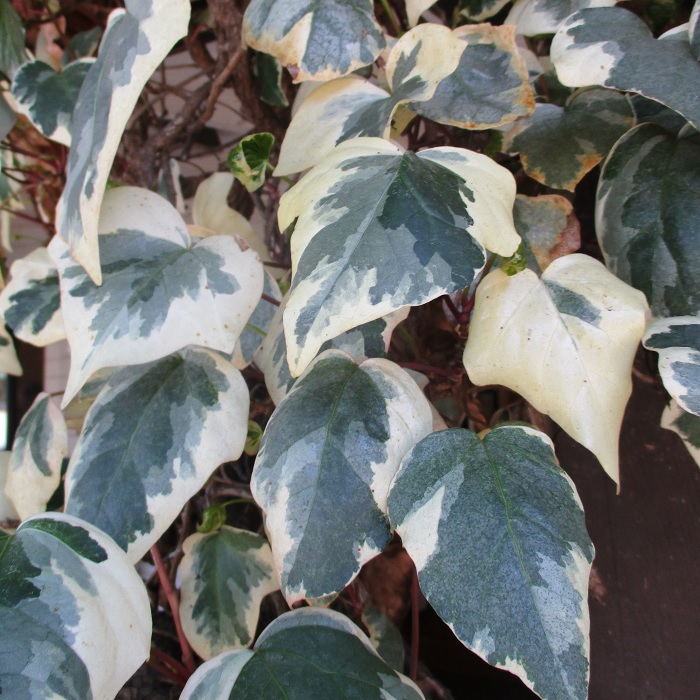 This is one of those plants that many of us have strong feelings about. Many of us who remember it from when it was more popular in the 1970s might consider Algerian ivy, Hedera canariensis, to be an aggressively invasive weed. Those of us who are less familiar with it might appreciate it as a vigorous and resilient groundcover that gets dense enough to exclude most other weeds.
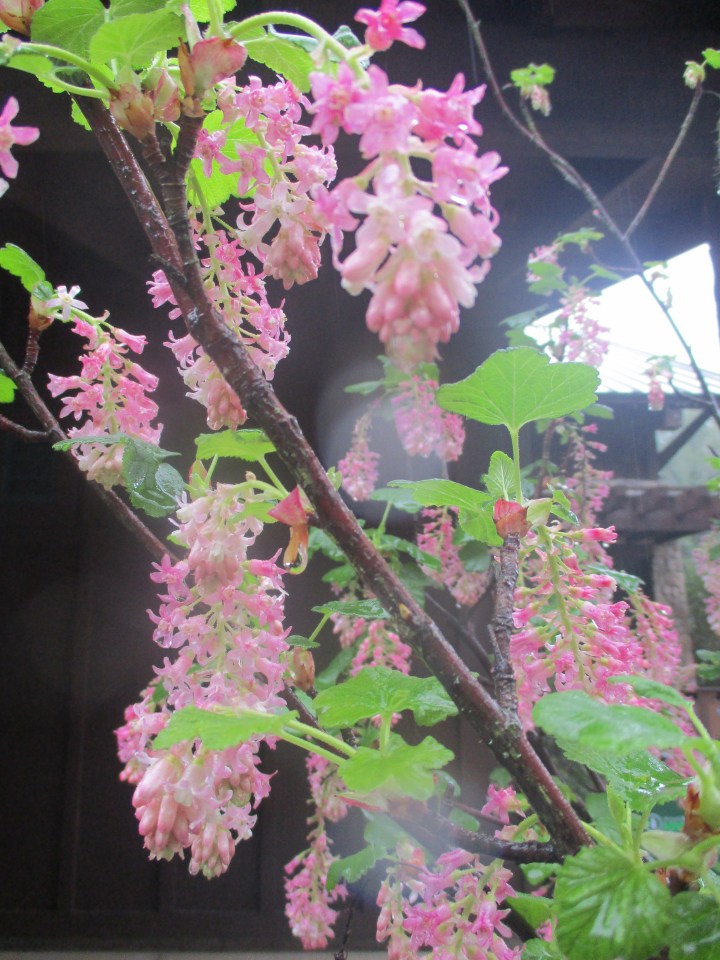 We tend to think of currants as being from Europe, Russia or Eastern North America. The pink flowering currant, Ribes sanguineum glutinosum, is actually endemic to canyons and riparian sites of the coastal ranges of California. Because it is an understory species that lives in the partial shade of large trees, it is quite tolerant of shade, and even prefers a bit of shade rather than full sun.
 What ever happened to Point Reyes ceanothus? It is such a nice low growing shrub, with small holly-like leaves, and cheery blue flowers in very early spring. It was quite popular when it initially became available, but now seems to be rare. Maritime ceanothus, Ceanothus maritimus, from San Luis Obispo County, is a similar species that presently seems to be getting more attention.
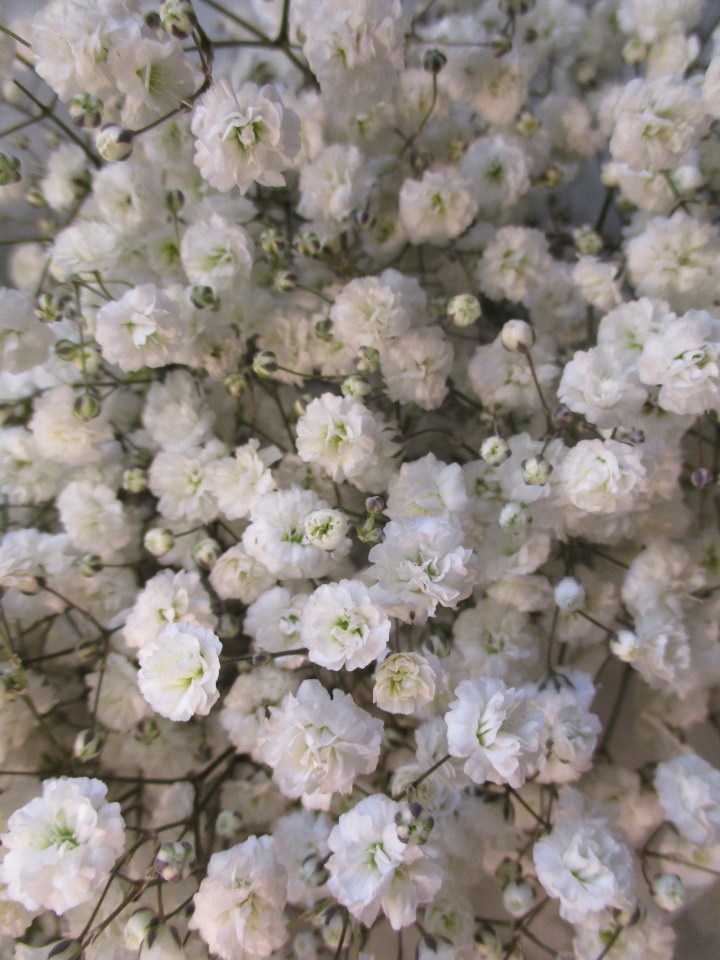 You might think that such a popular flower would be easy to get a picture of. Baby’s breath, Gypsophila paniculata, is everywhere, and almost a standard component of the mixed bouquets found in supermarkets. However, the flowers are so small and so sparsely arranged on thin stems, that they do not look like much in pictures. This picture is a closeup of a tightly bound bundle of bloom.
 This one is different though. It is not the characteristic homogeneous bright orange that California poppies should be. The orange in the middle is what the entire flower should look like. The outer yellow hallow is not typical.
 Before its new lime green foliage emerges, the otherwise modest star magnolia, Magnolia stellata, dazzles with a surprising profusion of crisp white, blushed or pale pink bloom. The three inch wide flowers have between a dozen and two dozen floppy petals (which are actually tepals). If the weather is right, the flowers might be slightly fragrant. If only bloom could last longer than it does!
 It looks like sweet alyssum, but is not even close. The tiny white flowers and finely textured foliage work almost as well for similar uses in the landscape. In fact, the plants are most often grown as short term warm season annuals. However, candytuft, Iberis sempervirens, is really a perennial that can be cut back in autumn, regenerate through winter, and bloom for spring and early summer.
