Not my shame of course; but that of the trees in the pictures below.
Do not try this at home. I only did it because I am a horticulturist and arborist; and I happen to be one of the last arborists in America who condones coppicing and pollarding, which are depicted here.
Coppicing is cutting trees or shrubbery down to the ground annually, or at least regularly every few years or so. Some coppiced trees form basal burls or lignotubers. Some just form thicket growth that replaces itself after getting coppiced back to the ground.
Pollarding is similar to coppicing, but rather than cutting all growth back to a stump or stumps at ground level, it involves pruning all growth back to the same distended knuckles at the ends of a few main limbs annually, or at least regularly every few years or so. It is done in such a manner that the pruning wounds are compartmentalized by the new growth of the following year. Knuckles can be elongated by leaving single short stubs.
There are a few reasons for coppicing and pollarding. Some subjects develop an abundance of appealingly lush foliage. Some develop an abundance of appealing or useful twiggy growth. Coppiced red twig dogwoods are much twiggier and more colorful while bare in winter. Pollarded or coppiced willows produce an abundance of canes for basketry. White mulberries are pollarded to provide an abundance of lush foliage to feed silkworms.
I coppiced a Eucalyptus globulus ‘Compacta’ and pollarded a Eucalyptus globulus for two main reasons. Both are such problematic trees that I do not want to plant either into the ground, so must keep them contained. Also, I want the remarkably aromatic juvenile foliage that develops in response to coppicing and pollarding.
1. Eucalyptus globulus ‘Compacta’ coppiced stump. It is not such a great example of a coppiced stump, since the tree did not grow enough two years ago to get coppiced last year. Consequently, the few main trunks that were just recently coppiced are already starting to form their own separate lignotubers on top of the original, which is now rotting below. Soon enough, they will fuse to form a single lignotuber, concealing the evidence.
2. Eucalyptus globulus ‘Compacta’ before getting coppiced. It is quite small for a specimen that was not coppiced last year.
3. Eucalyptus globulus ‘Compacta’ after getting coppiced. Rhody is not impressed.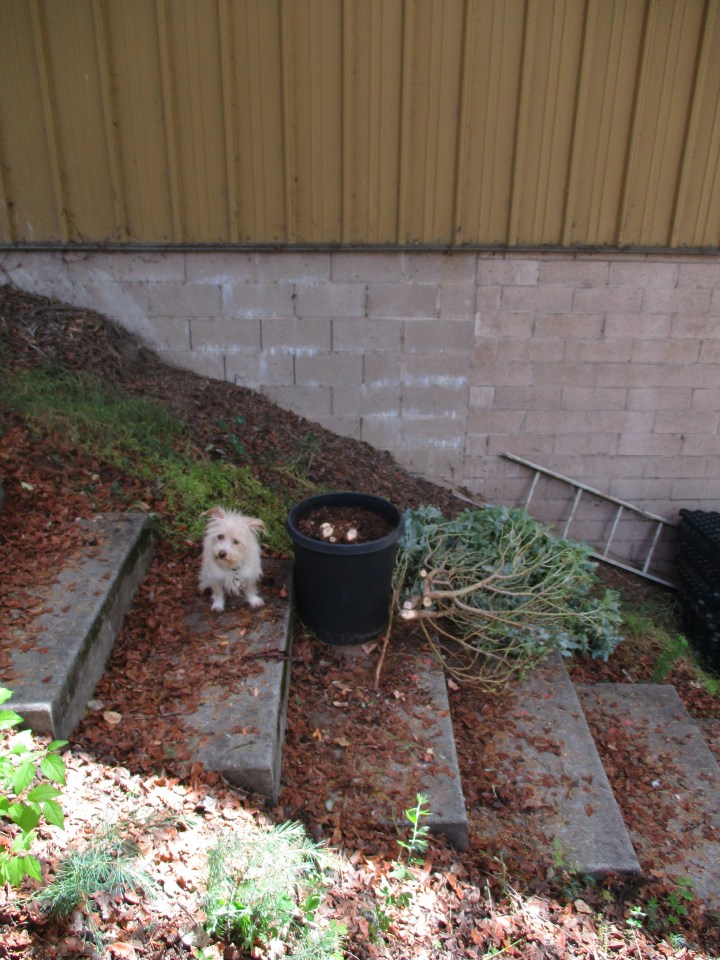
4. Eucalyptus cinerea in need of pollarding. This tree grew too big too fast to survive any longer in the relatively small #15 (15 gallon) can. Fortunately, in just a few days, it will instead get installed into a landscape where it can disperse roots and mature into a normal unpollarded tree. After a few years, it might get pollarded anyway, just to produce silvery juvenile foliage withing reach of the ground, but that is not a concern just yet.
5. Eucalyptus globulus pollarded knuckle. This is only the second pollarding procedure for this subject. The first procedure involved lopping the lanky single trunk off right here where the knuckle is now. The multiple limbs that developed were just recently lopped off, leaving this distended knuckle to repeat the process, hopefully annually.
6. Eucalyptus globulus pollarded trunk. This is why Eucalyptus globulus should not get pollarded! They look ridiculous if deprived of their naturally elegant form. They do not look much more dignified with multiple pollarded limbs. Oh, the shame!
This is the link for Six on Saturday, for anyone else who would like to participate:
https://thepropagatorblog.wordpress.com/2017/09/18/six-on-saturday-a-participant-guide/
 It sounds like science fiction, but it is not. Every spring and during particular summer weather, limbs can fall from trees without warning, and seemingly for no reason at all. It happens when least expected, while the weather is warm and perhaps humid, but notably without wind. The lack of wind is what makes it so unexpected. It is a phenomenon known simply as spontaneous limb failure.
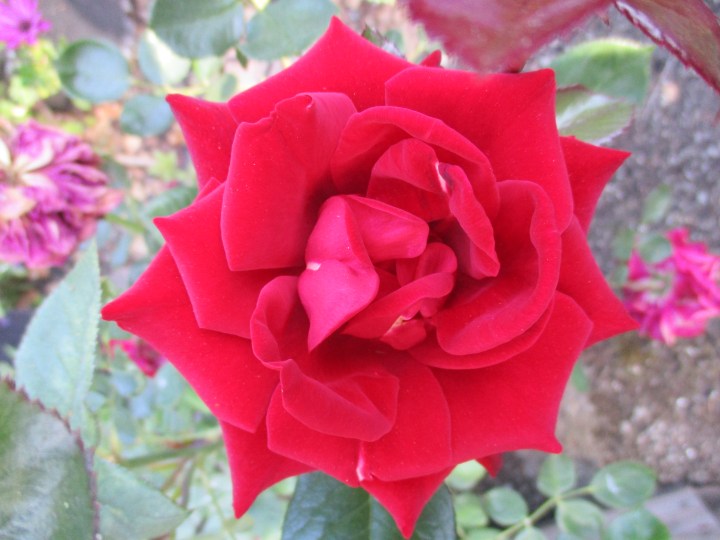 Roses are not for the meek. They are too demanding, too sensitive, too thorny, and without their flowers, they are not even very attractive. They have no business in a low-maintenance landscape, or in a landscape maintained by mow, blow and go gardeners. Those who want to grow rose plants for their flowers should be ready to give them what they want, and to prune them aggressively.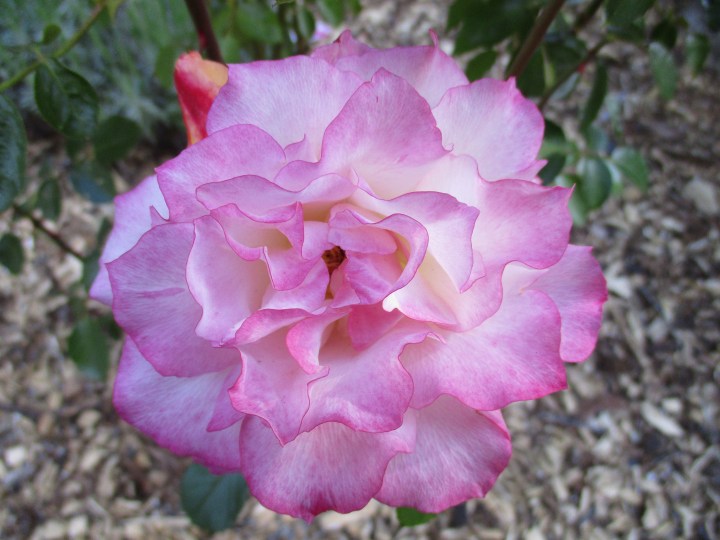
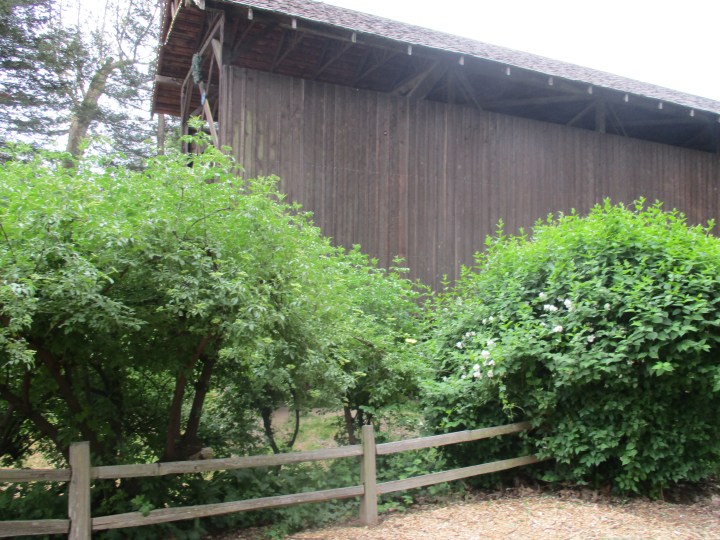 Pollarding and coppicing are proper pruning techniques. If you think you are an arborist who believes otherwise, do not waste my time arguing about it. More than likely, you are neither as educated nor as experienced as I am with such matters, or you work exclusively with trees for which such procedures would be very inappropriate.
 This is the beginning of one of several new knuckles on a pollarded crape myrtle tree that was pollareded for the first time just this past winter. It was quite a mess of thicket growth that was too congested to bloom well. It is also located in a confined situation where it could not just be groomed, pruned up for clearance, and then just left to develop a larger canopy higher up. Pollarding will both contain it, as well as invigorate healthier growth.
 Scheduling of gardening chores is as important now as it ever was. We plant warm season vegetables and annuals in time for spring and summer. We plant cool season vegetables and annuals for autumn and winter. We pick flowers as they bloom. We harvest fruits and vegetables as they ripen. We watch the seasons change on our calendars, as well as in the locally specific weather.
 There is no sugaring season here. Spring comes on too suddenly. By the time sap starts to flow, buds are already swelling.
 There may not be exceptions to every rule, but there are a few exceptions to the rule that winter is the best time for pruning. It is generally true that most plants are the most dormant through the coolest part of winter. It is also true that while they are the most dormant, most plants are less sensitive to pruning, as well as other horticultural techniques that interfere with their normal function.
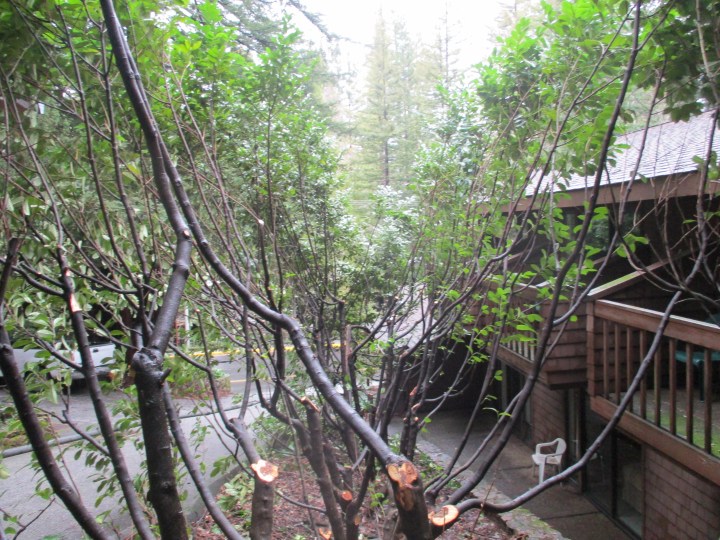 What makes this Bullwinkle worse than most is that I pruned it like this myself. What makes it worse than worse is that it did not need to be pruned in this disfiguring manner for clearance from utility cables like the last one I wrote about was.
  This theme may be getting a bit redundant about now. There is just so much that needs to be done in the garden through winter for what will bloom in spring and summer. We plant new fruit trees, and prune mature ones. When we finish planting spring bulbs, we can start planting summer bulbs. Berries, rhubarb and grapes all get planted. With all this going on, it is also time to prune roses.
