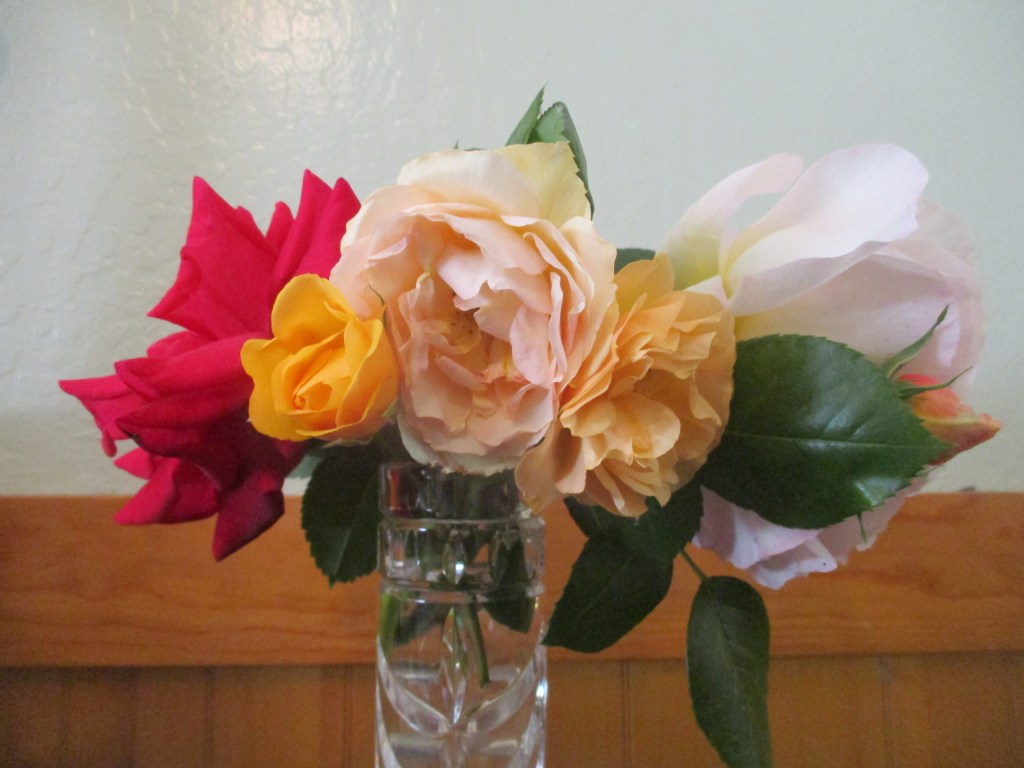
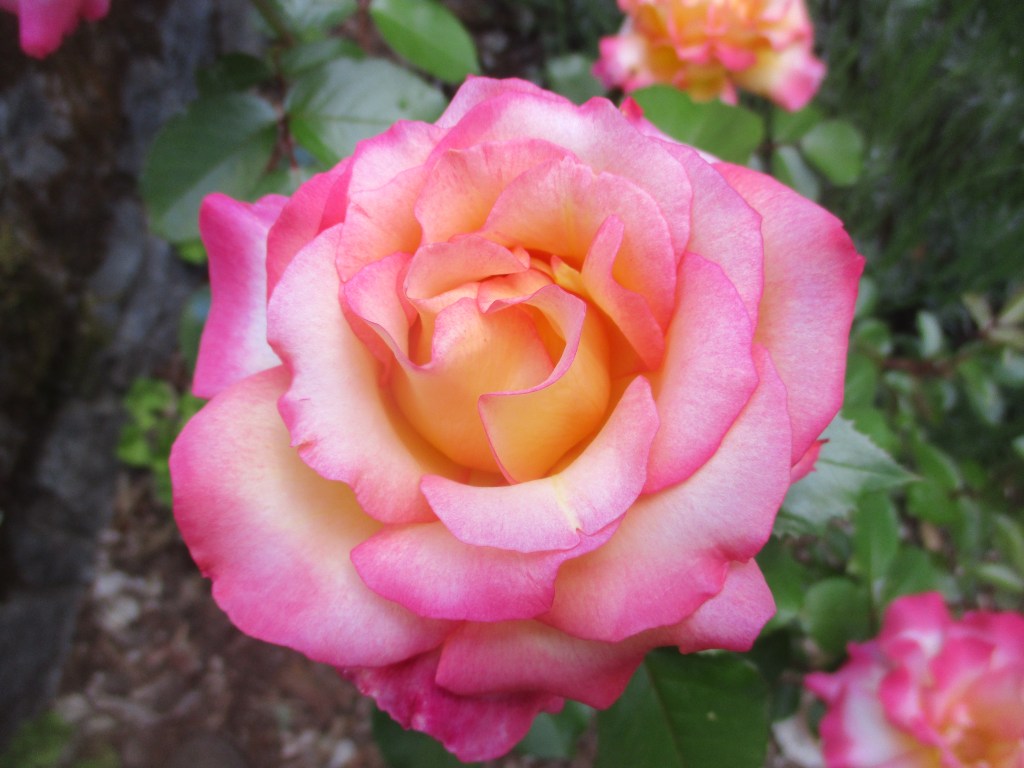
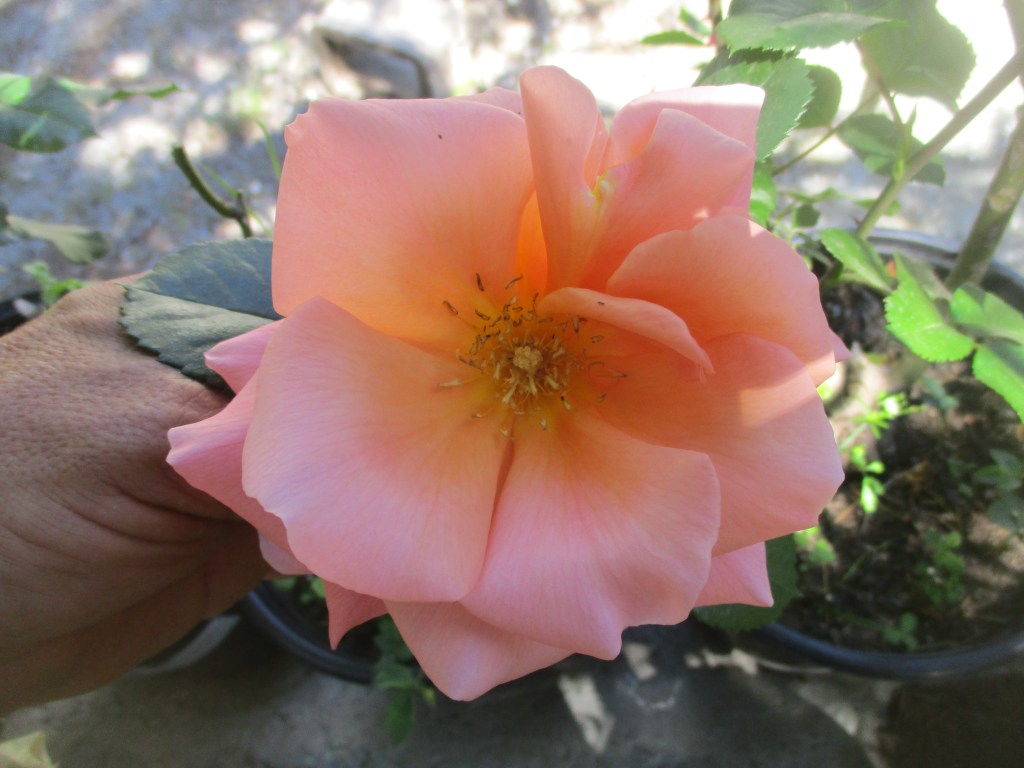
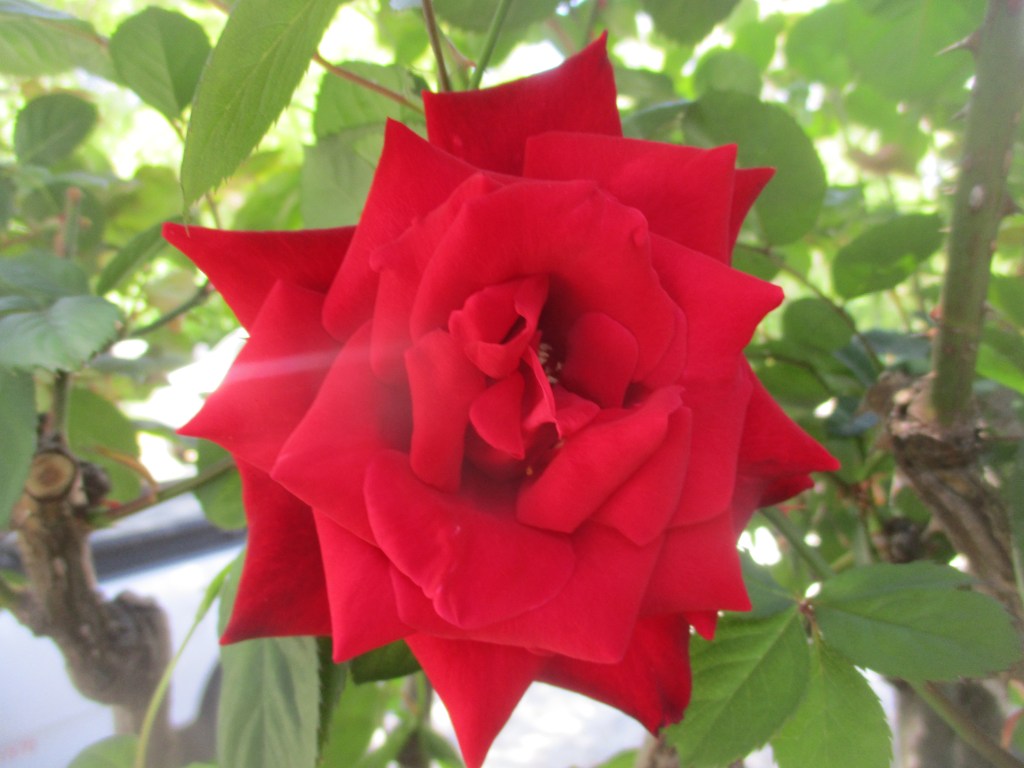
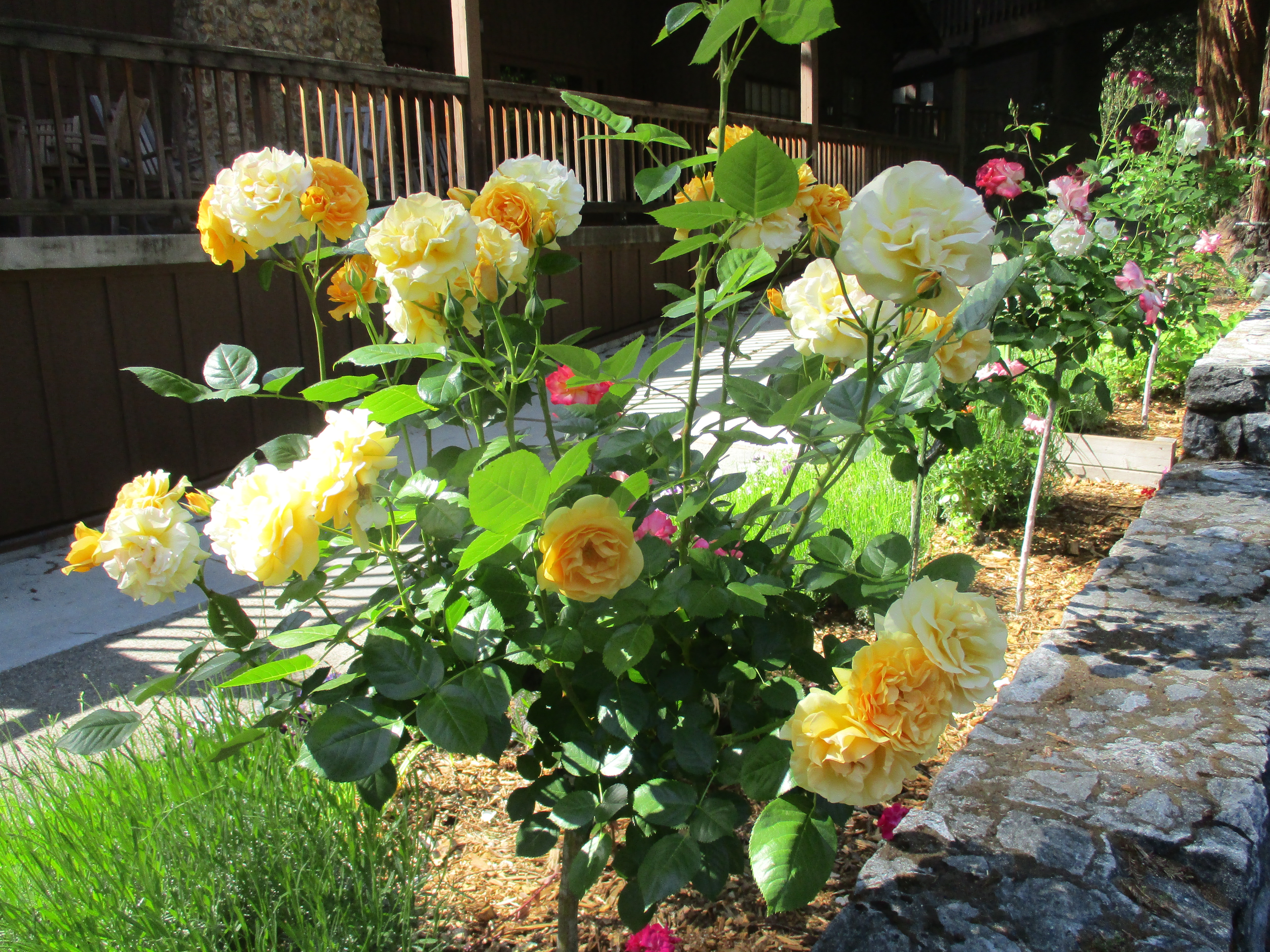
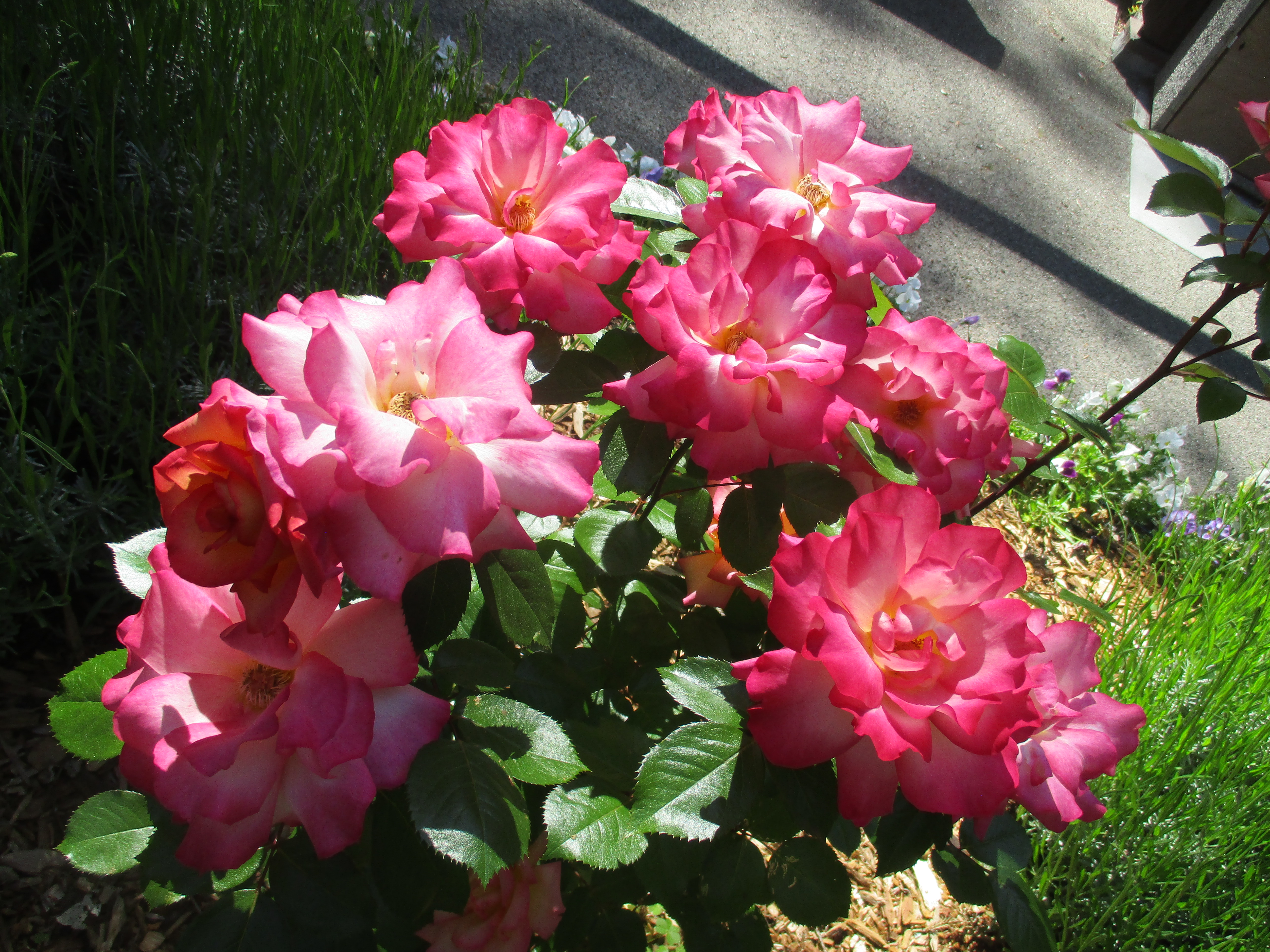
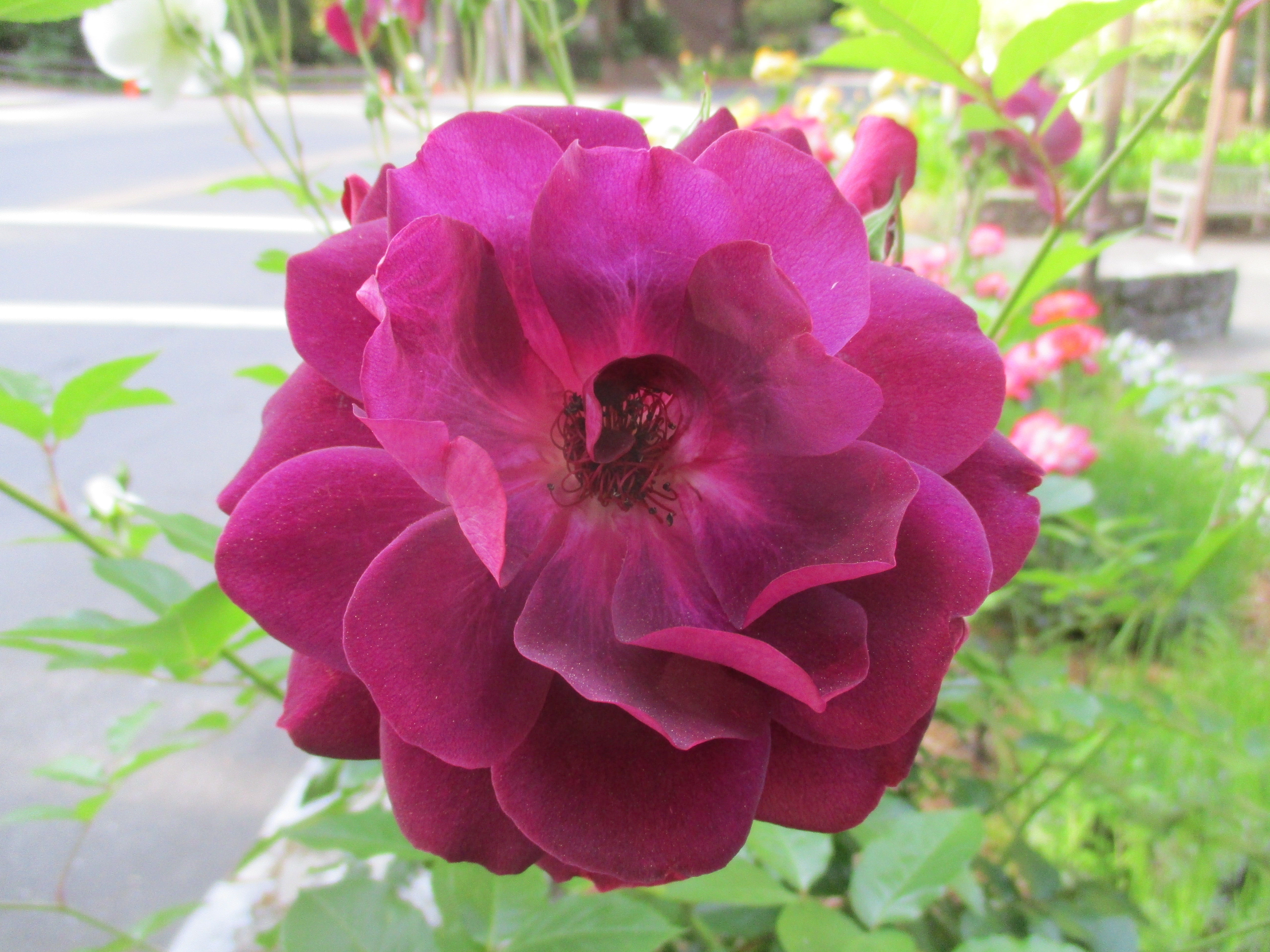
Deer have avoided the primary rose garden for longer than anyone can remember. They avoid a large colony of carpet roses nearby also. (The carpet roses were relocated across the road from where they were, but did not go far.) I thought that some old canned roses could be about as safe in another landscape less than half a mile of winding road away. I was wrong. The primary phase of bloom was harvested by neighbors who walk past that landscape. Subsequent phases are mostly consumed by deer. I was surprised to find that these flowers lasted long enough to deteriorate.
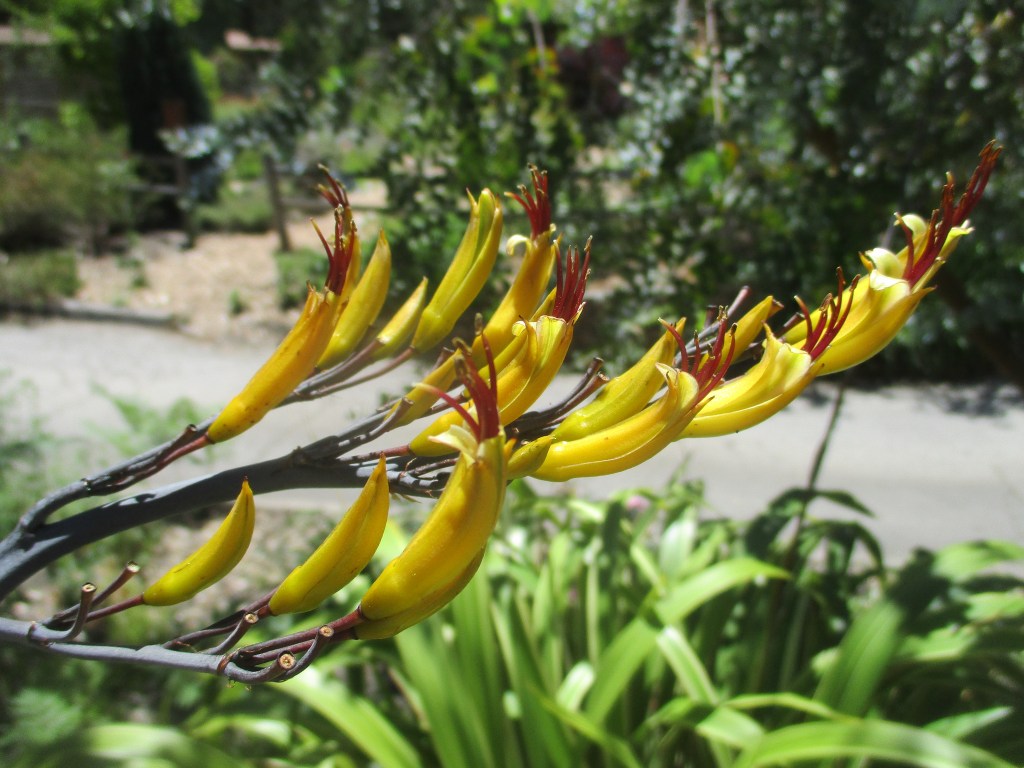
1. There is not much vegetation that deer will not eat. New Zealand flax is one of the few species they ignore. It is primarily a foliar plant though. Bloom looks like dinky bananas.
2. Carpet roses often manage to bloom regardless of the voraciousness of deer. Bloom is generally too profuse for deer to eat all the flowers. Unfortunately, I loathe carpet roses.

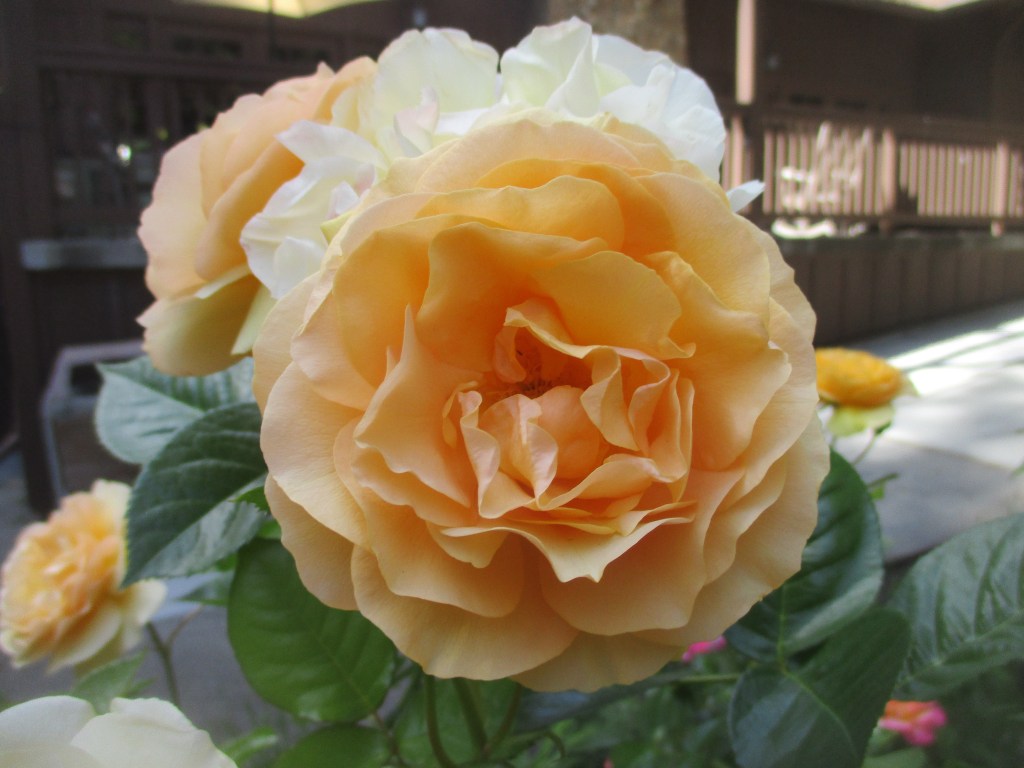
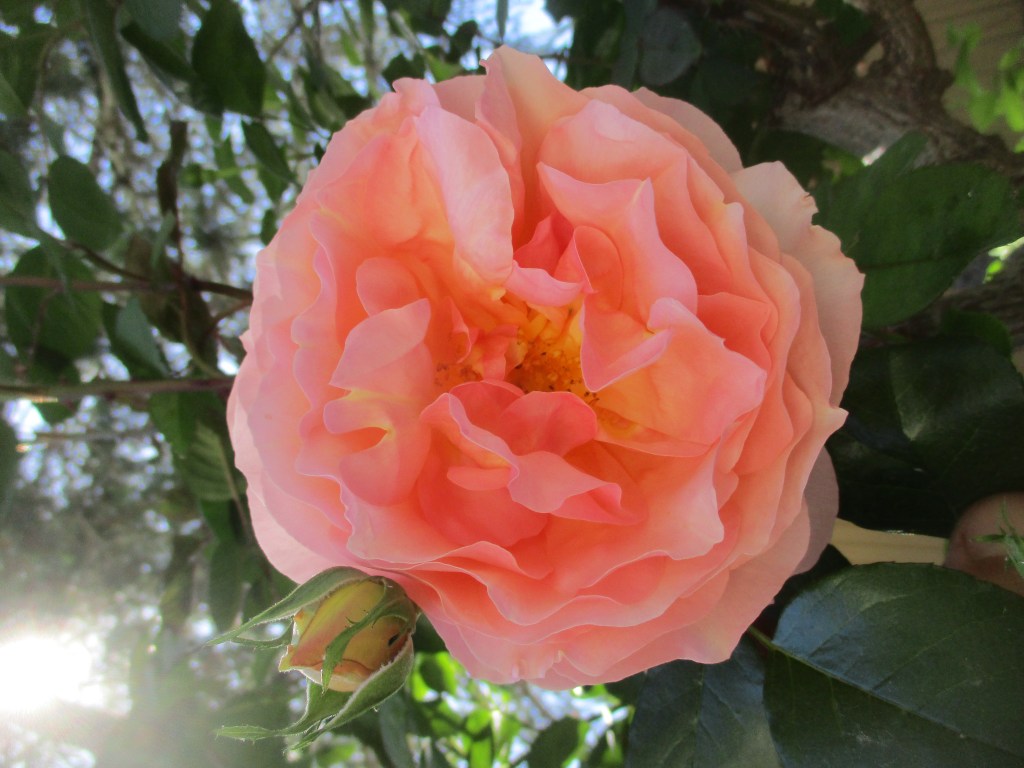
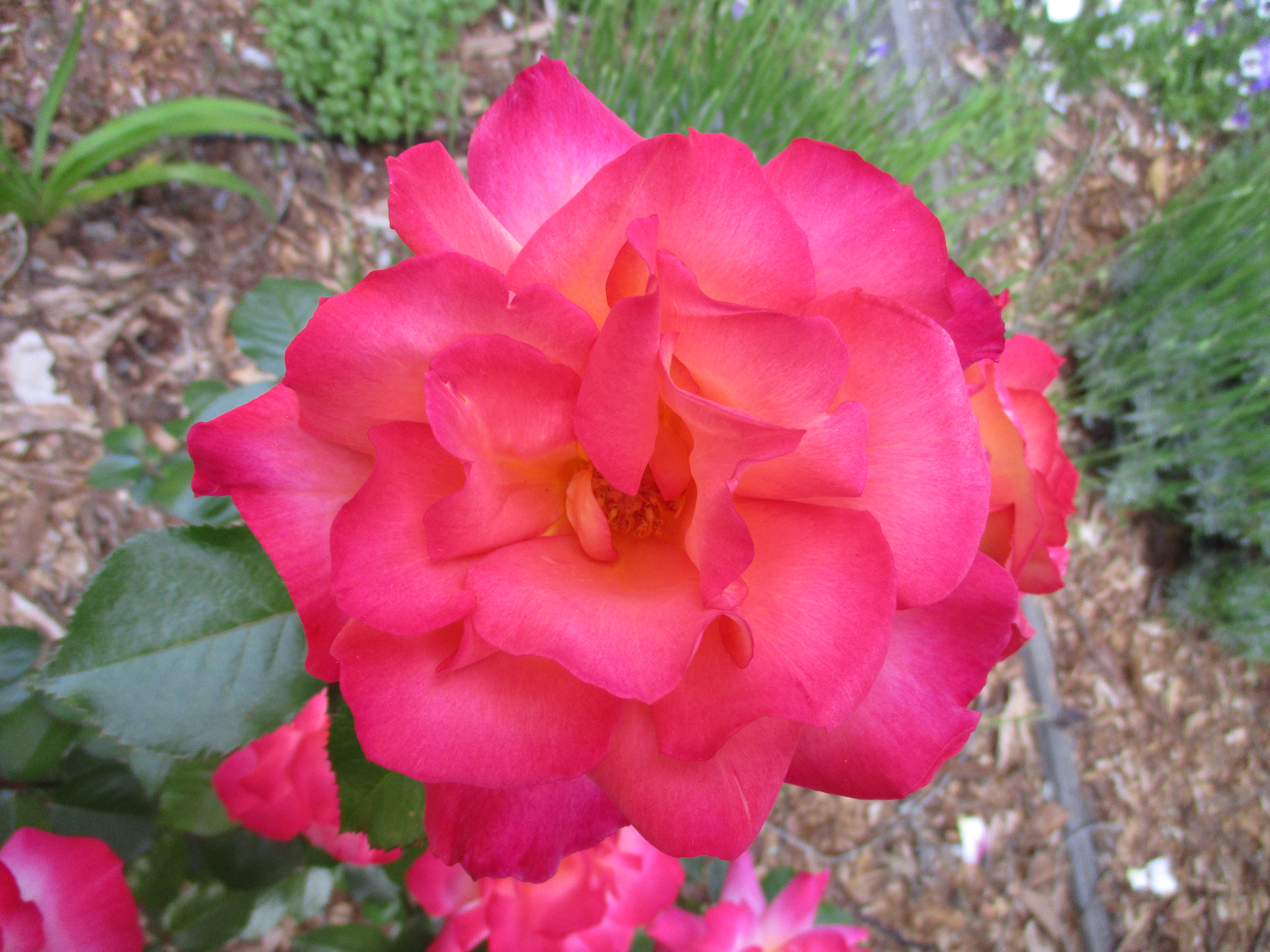
3. I believe that the color of this particular rose could be described as ‘peach’. I am not at all proficient with color, so this is merely a guess. This cultivar seems to be a floribunda.

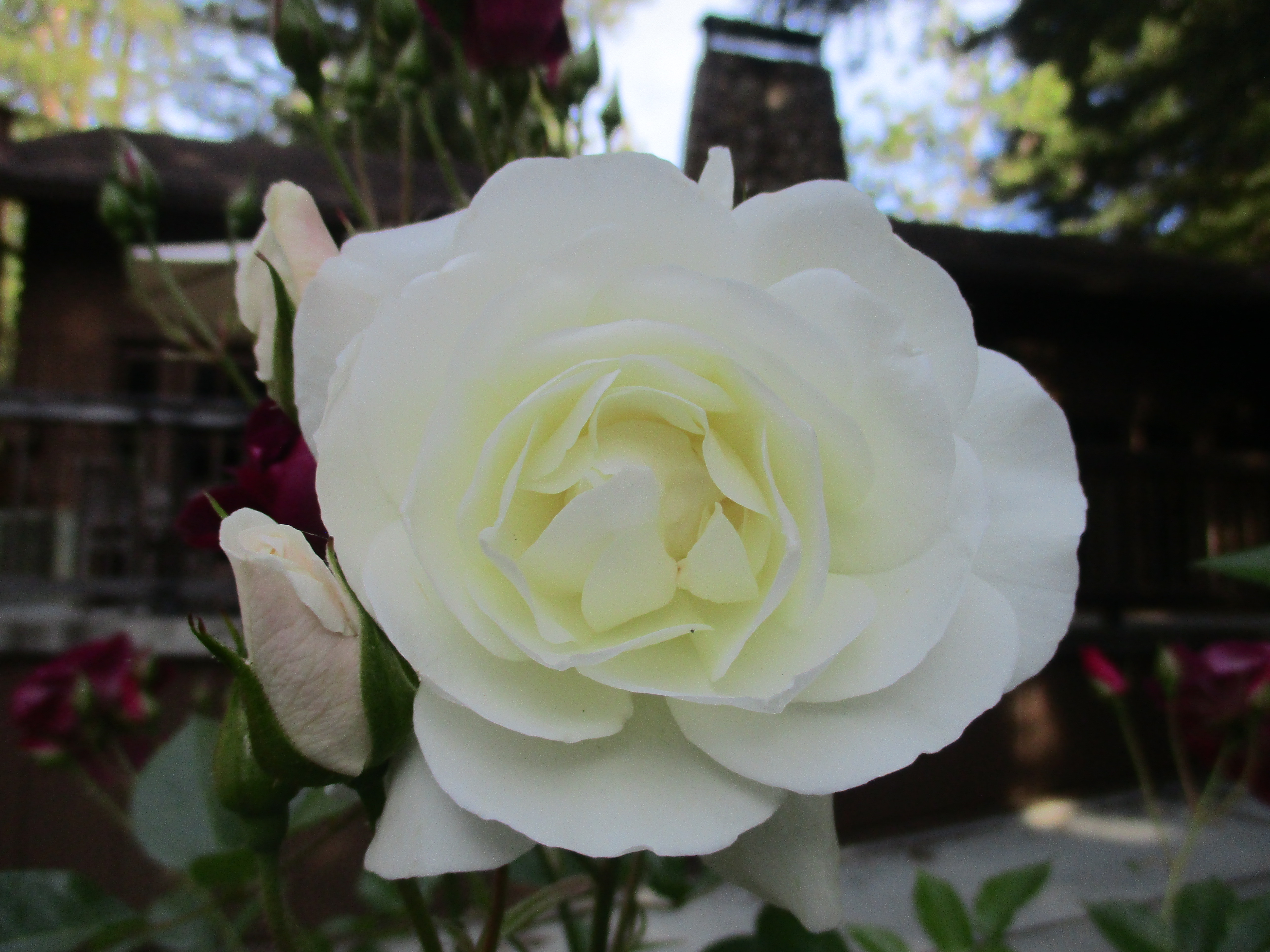
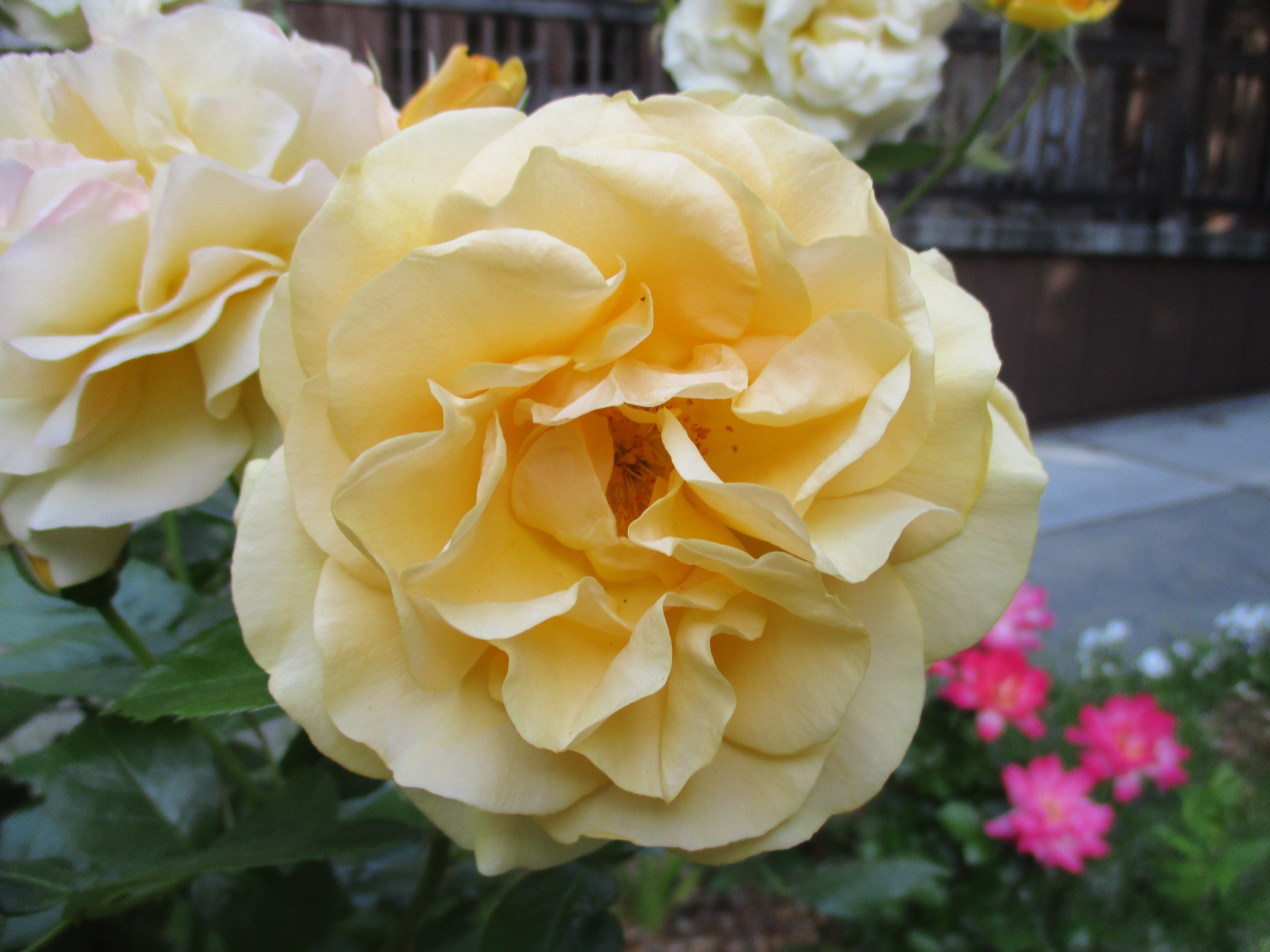
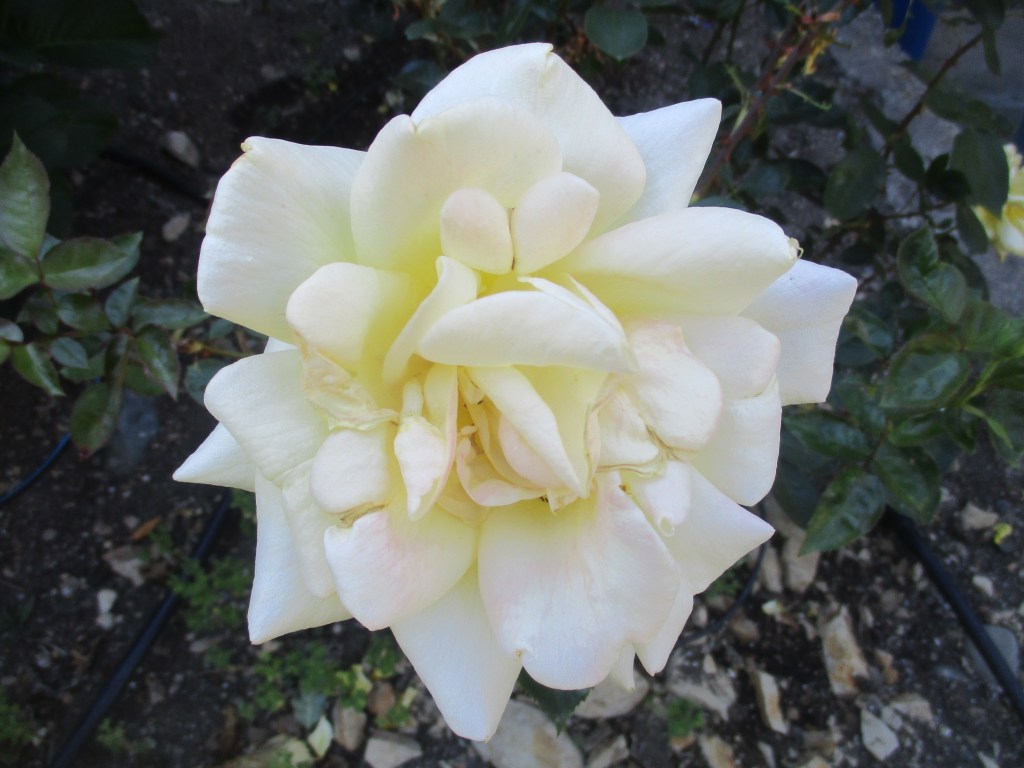
4. This rose initially blooms brighter yellow before fading like this. Of course, I have not seen it fade much in the past. I am impressed that this flower lasted long enough to fade.
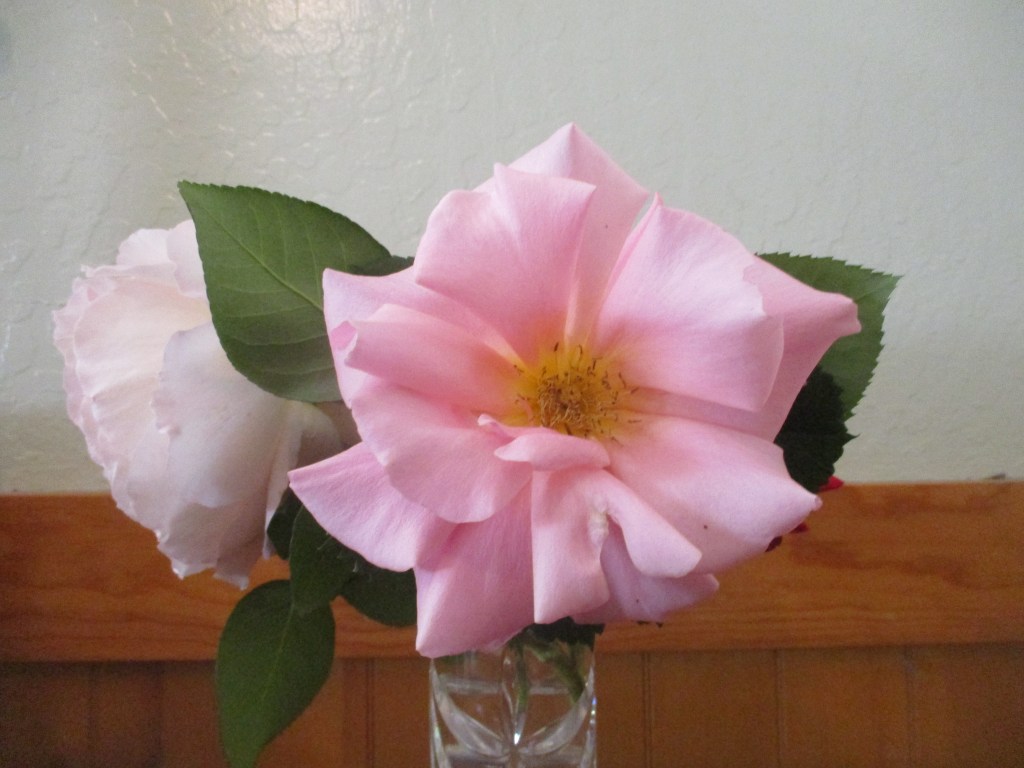
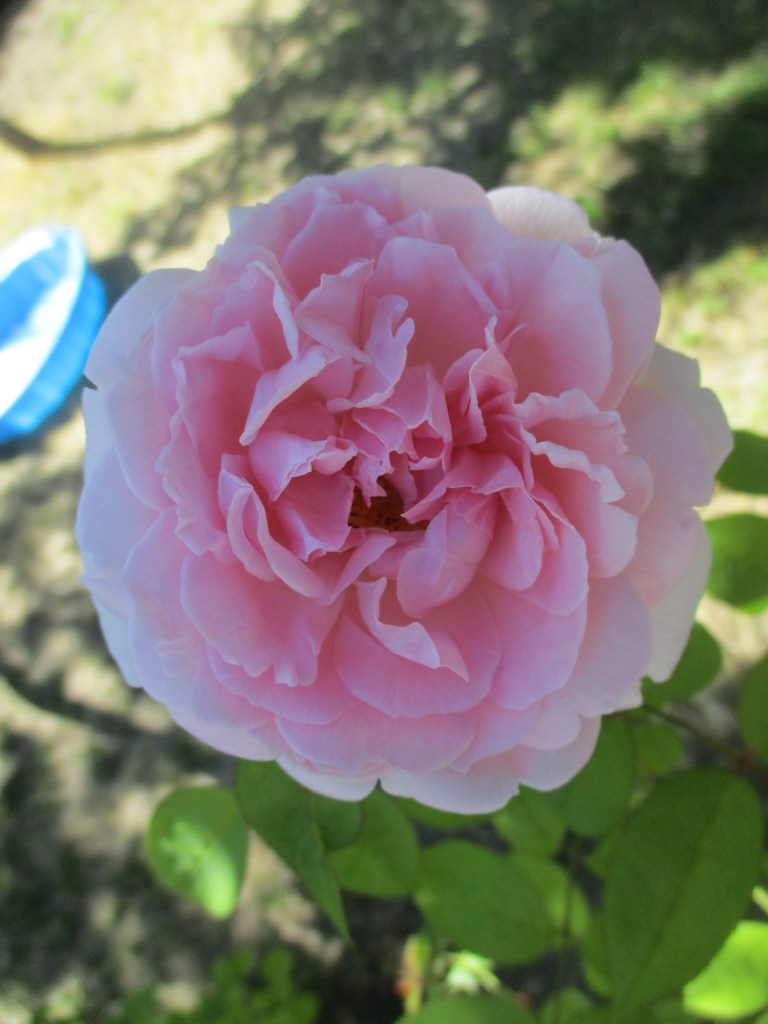
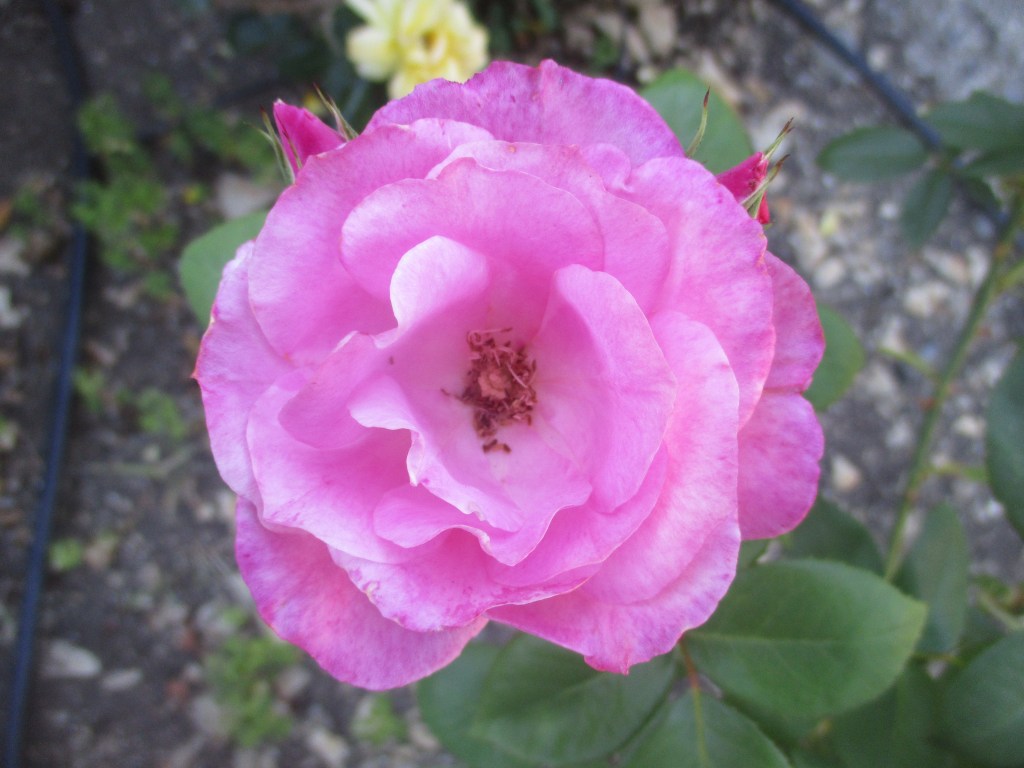
5. Two buds peeking over the edge suggest that this pink rose is a floribunda too, like the peach rose #3 above. I can not identify any of the cultivars of any of these recycled roses.
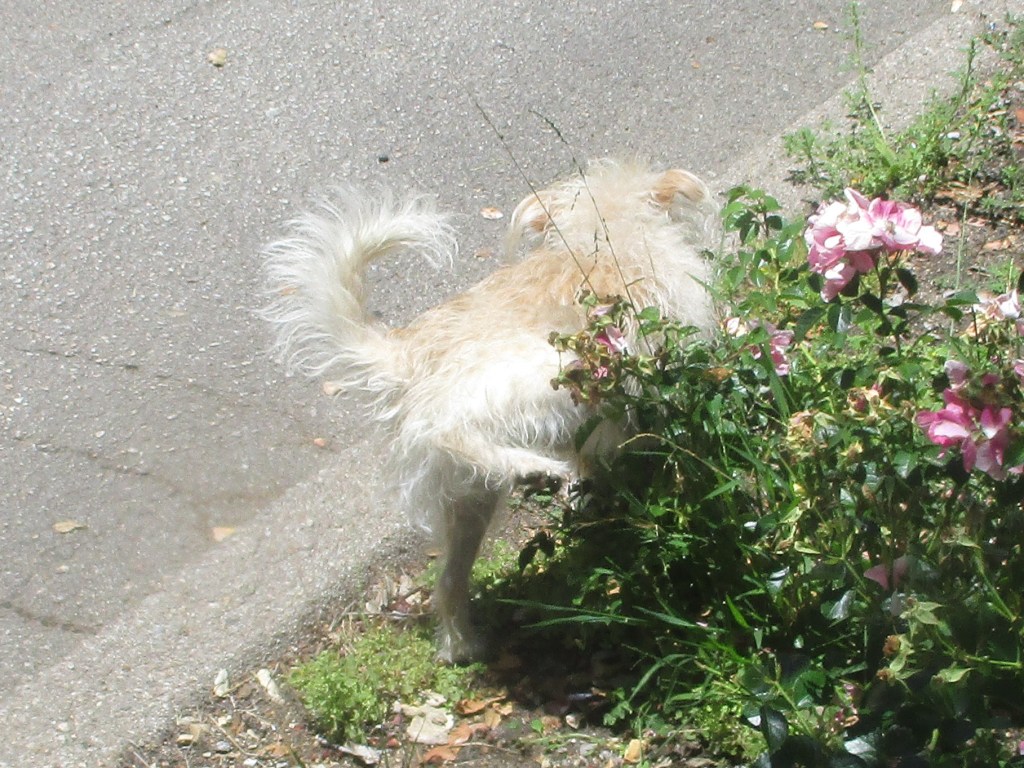
6. Rhody apparently shares my disdain for carpet roses. I realize that this is not the most flattering picture, but I also realize that the worst picture of Rhody is the best of my Six.
This is the link for Six on Saturday, for anyone else who would like to participate: https://thepropagatorblog.wordpress.com/2017/09/18/six-on-saturday-a-participant-guide/