
Knowing how colorfully bulbs will eventually bloom can initially make planting them disappointing, since there is nothing to see for all the effort. Planting bare root plants is not much more rewarding. The bare stems are a bit more proof of the effort, but will do nothing until they break dormancy in spring. Now that Christmas trees have vacated nurseries, bare root plants will be arriving, and will need to be planted before winter ends.
As the name implies, bare root plants have bare roots, without the soil they were grown in. Better equipped nurseries ‘heel in’ bare root plants in moist sand, which simply means that the roots get buried temporarily. When purchased, the plants get pulled from the sand and wrapped for the trip to their new home garden, where they get planted permanently into real soil.
Alternatively, bare root plants can be prepackaged in bags of moist sawdust. They only need to be removed from their packaging and sawdust before getting planted into the garden. Mail order plants, including plants purchased online, often get packaged even more simply, with a damp bag around the roots, maybe with a bit of gel or damp paper. The plants are safely dormant, so are not even aware of what is going on.
The main advantage of bare root plants is that they cost about a third of what typical nursery stock in heavier cans of media (soil) cost. Because they are so much less cumbersome, several bare root plants can be purchased at a time, and brought home in a small car without much effort. Since they lack the luxury of the soil they were grown in, they immediately disperse their roots directly into the surrounding soil.
Roots of bare root plants should be spread away from each other at planting. Soil amendment is nice, but should not be so copious that roots will not want to disperse outside of the amended soil. Even if rain is expected, newly planted bare root plants should initially get soaked so that soil settles around the roots. Grafted plants should be planted with the graft union above grade.
Fruit trees such as apricot, cherry, plum, prune, peach, nectarine, almond, apple and pear, as well as roses, are the most popular of bare root plants. Flowering crabapple, flowering cherry, poplar, willow, lilac, forsythia, wisteria and grape are also available.
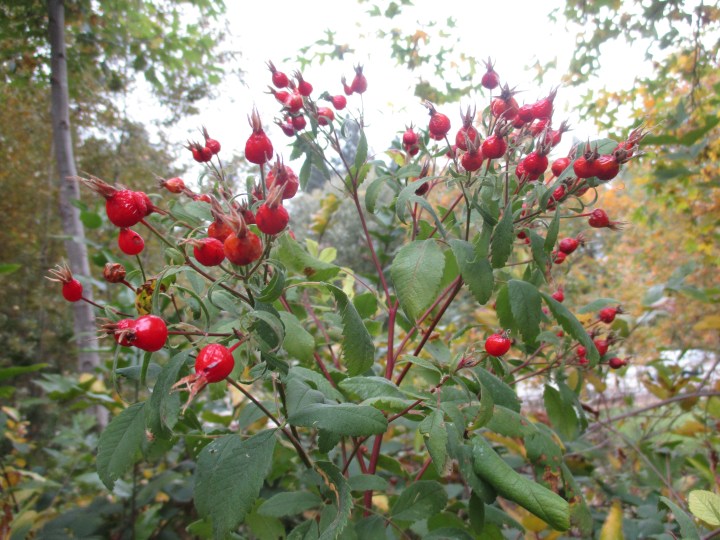 Chopped dried rose hips can be purchased from a supermarket in town that stocks an impressive variety of useful bulk herbs. They are used as a dietary supplement and remedy for several minor ailments. Although most of the copious vitamin C they contain while fresh is ruined by drying and storage, they are still popularly used as a remedy or preventative for colds and flu.
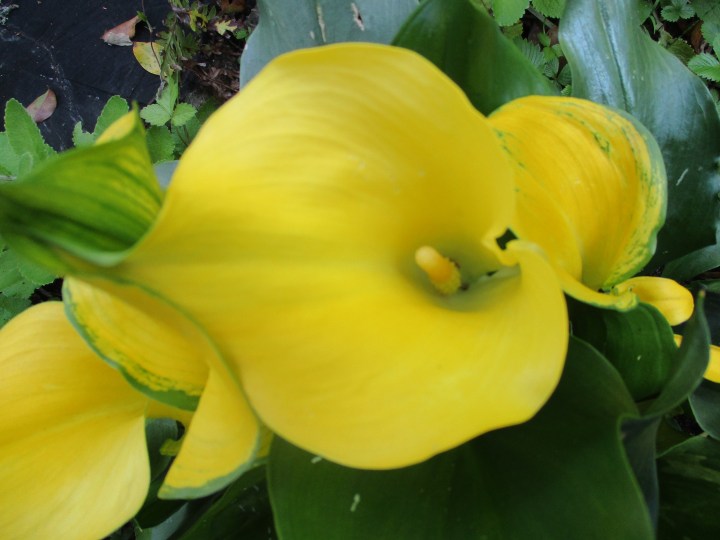
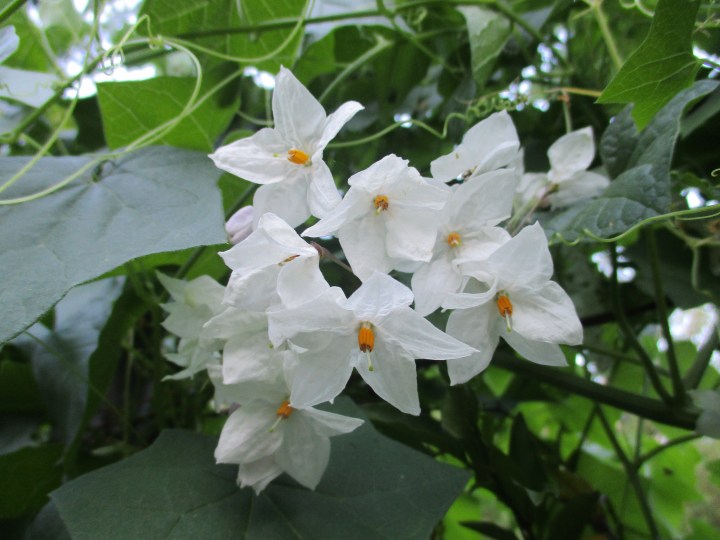
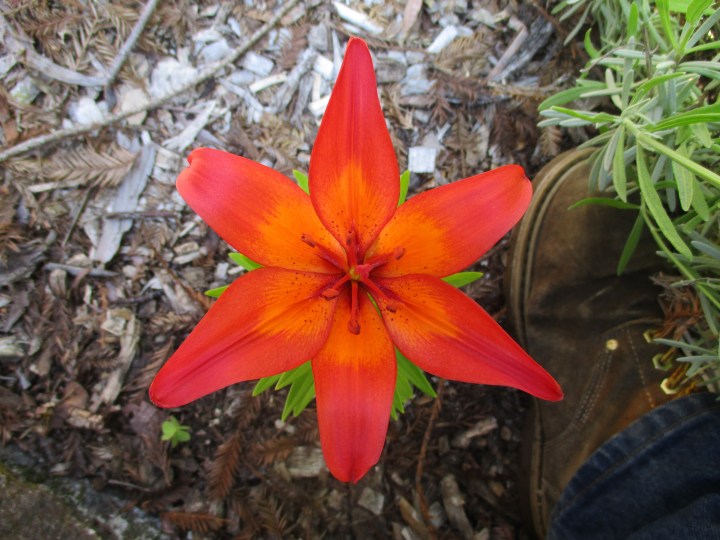 What a delightful surprise! It happens sometimes here in the rose garden. It may not look like much, as a short stemmed single lily floret that is mostly overwhelmed by the English lavender that I held back with my boot for this picture. It should be three feet tall or so, with several florets. The surprise is that no one planted it. Well, at least no one planted it recently. This rose garden has more history than is obvious from what blooms here now.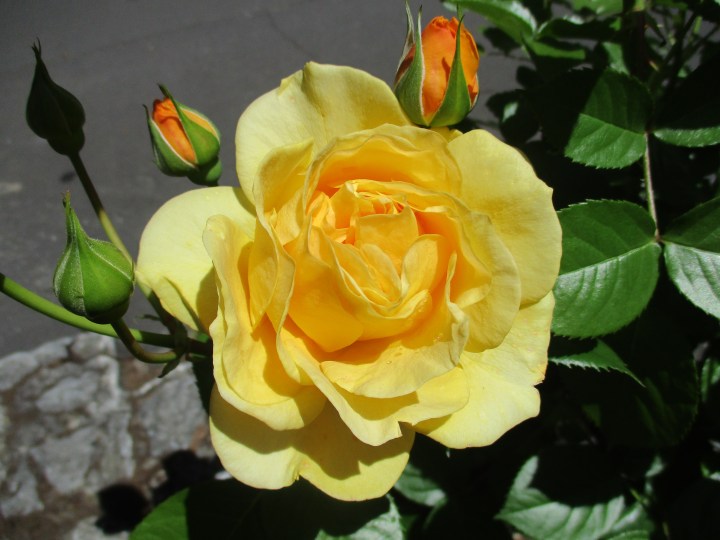
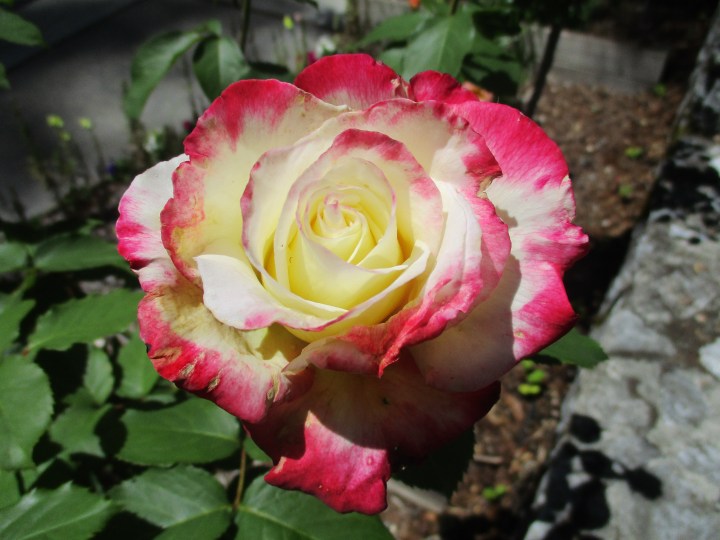
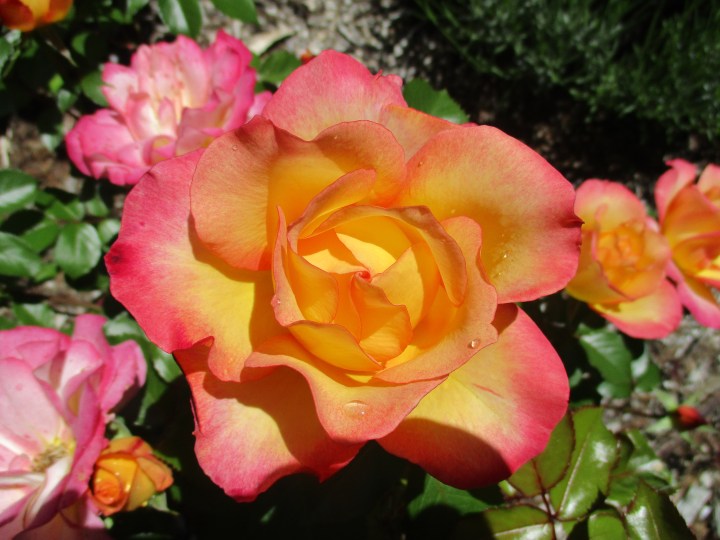


 Compared to extensively bred garden varieties, wild roses are not much to look at. Their tiny flowers do not get much wider than two inches, and may not get much wider than those of blackberry, with only about five petals. Flower color ranges only between pale luminescent white and pale pink. Bloom is typically rather brief in mid spring. Only a few healthy specimens bloom again later.
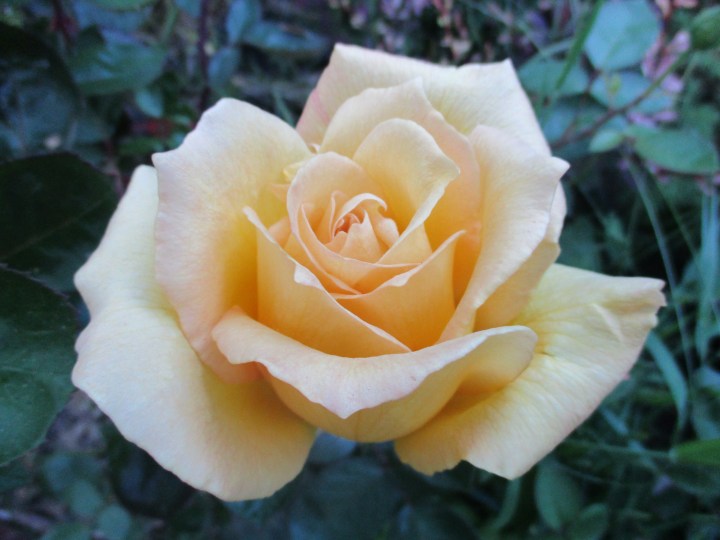
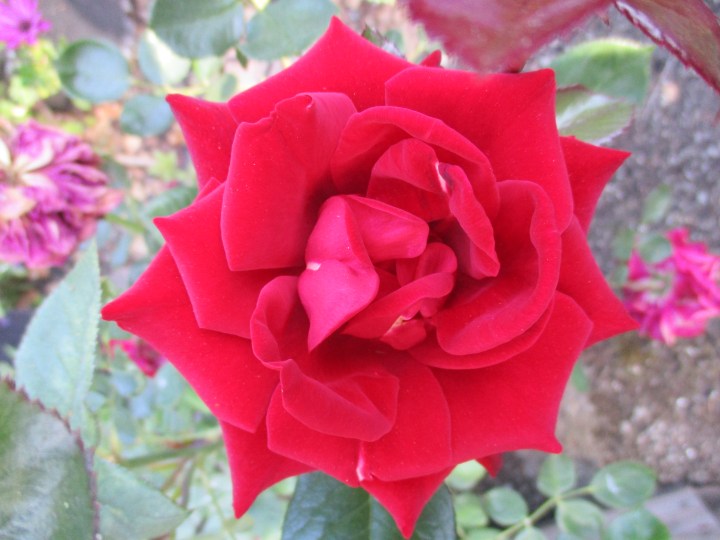 Roses are not for the meek. They are too demanding, too sensitive, too thorny, and without their flowers, they are not even very attractive. They have no business in a low-maintenance landscape, or in a landscape maintained by mow, blow and go gardeners. Those who want to grow rose plants for their flowers should be ready to give them what they want, and to prune them aggressively.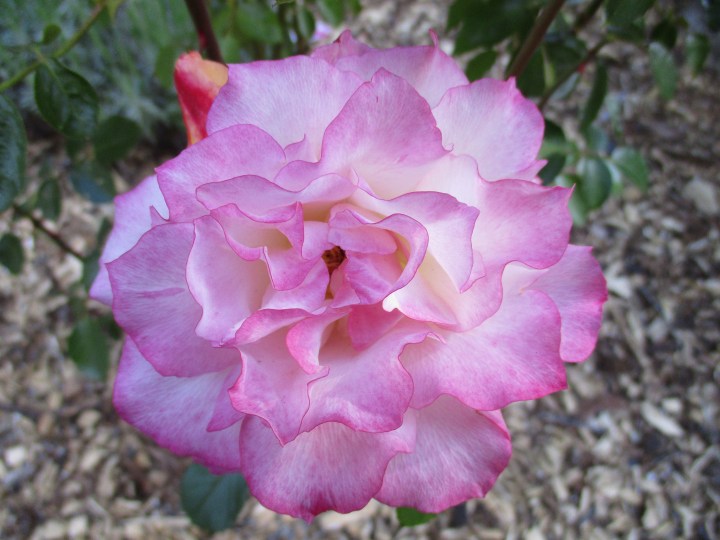
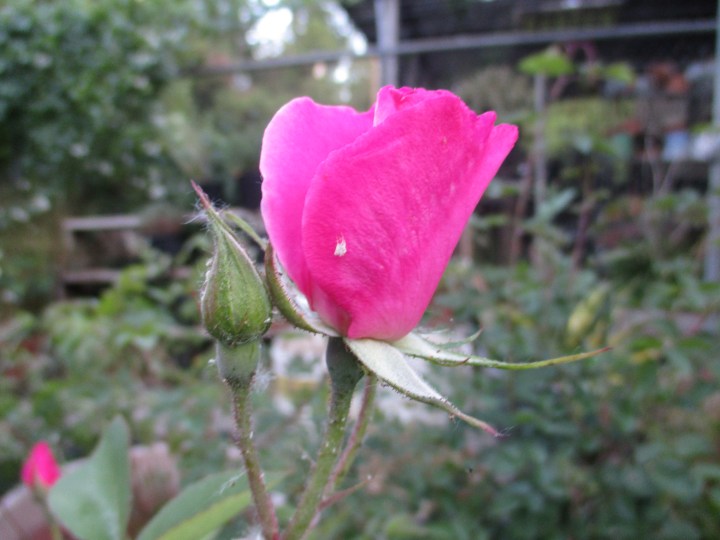
 This is the one that got away; or actually, the one that was never caught. It bloomed after I got the pictures for the ‘Six on Saturday’ post for this morning. It could be the same unopened bud in picture #3 of the Six on Saturday post, as it is now blooming. If not the same bud, it is on the same plant, and now looks even more like the common ‘Simplicity’ rose. It is not my favorite, but I did not select it.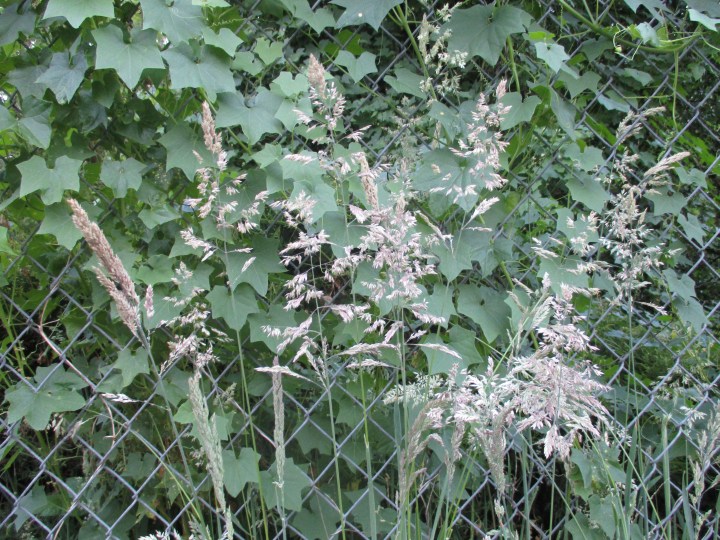
 This theme may be getting a bit redundant about now. There is just so much that needs to be done in the garden through winter for what will bloom in spring and summer. We plant new fruit trees, and prune mature ones. When we finish planting spring bulbs, we can start planting summer bulbs. Berries, rhubarb and grapes all get planted. With all this going on, it is also time to prune roses.
