Six on Saturday: Rose Parade


There is way too much blooming for me to keep up with. Because I know there will be less blooming through summer, I get pictures while I can, even if I can not use them right away. Consequently, these pictures are not exactly from this last week. Some were from the second phase of bloom, and the first picture is from the first and only phase of bloom of a rose that blooms only once annually. I suppose I could have gotten pictures of the other five this last week, but I wanted to get them earlier than later, just in case they were between phases when I wanted to get the pictures.

Roses do very well here, and are even happier in the warmer and more arid weather of the Santa Clara Valley, just a few miles away. The Santa Clara Valley is one of the best places in the world for roses, which is why the Heritage Rose Garden is located there. Sadly, that collection is presently not in very good condition.

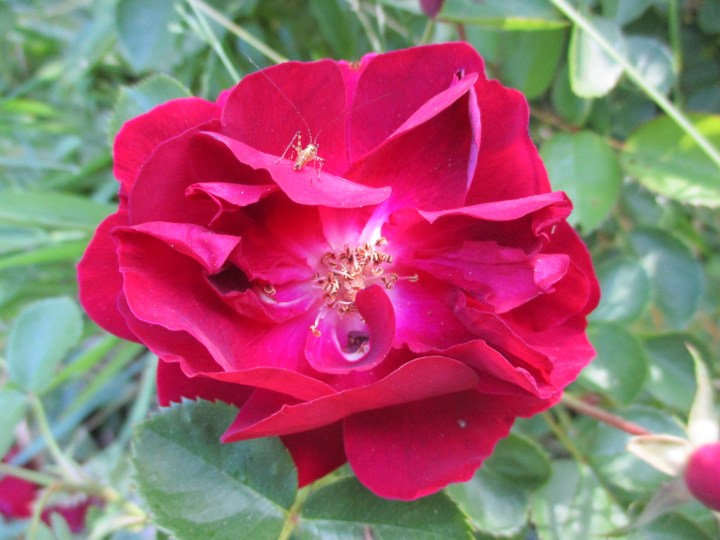
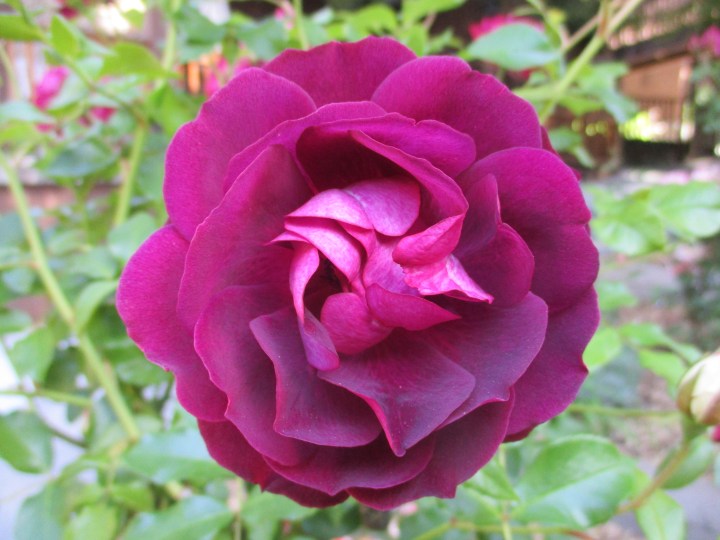
1. ‘Doctor Huey’ is the only cultivar of these six that I can positively identify. It has been the common understock for grafted roses longer than I can remember. Because it is only used as understock, it is not often seen blooming out in the garden. These are only blooming because the original scion died, and was replaced with sucker growth from below the graft. ‘Doctor Huey’ blooms profusely but only once in spring. It grows as a bramble, and can form small thickets if neglected long enough.P80602
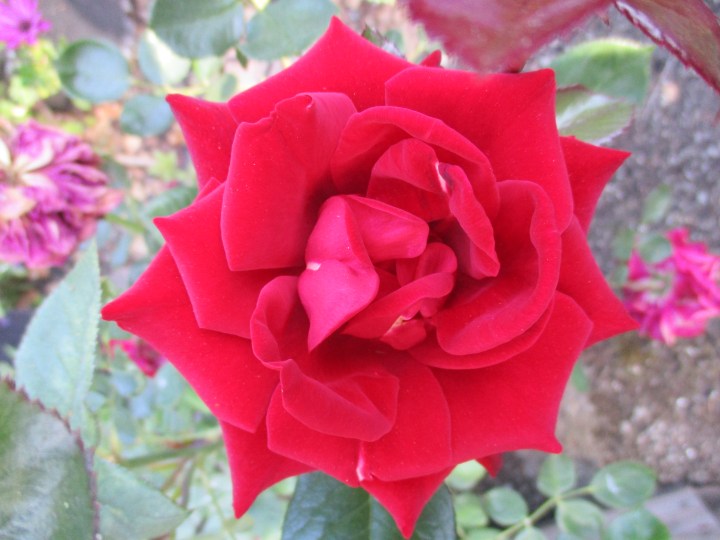
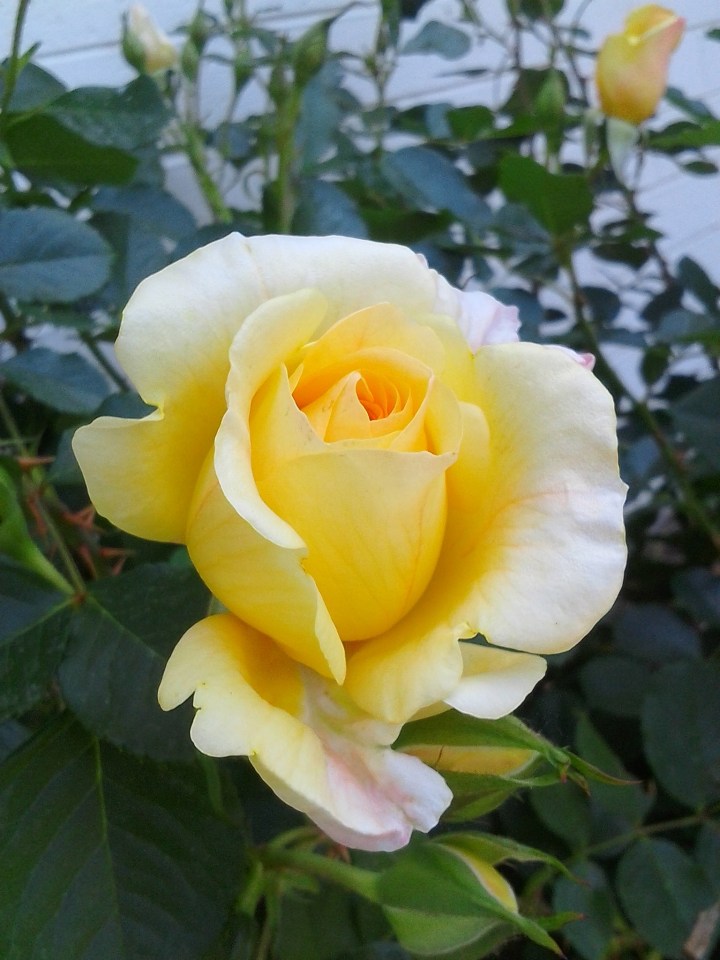
2. Although not white, this pretty hybrid tea rose is probably my favorite of the six just because it is so perfect. I do not know the cultivar. It is not in the landscape, but is in the nursery, waiting to be installed into the landscape. Hybrid teas are the roses that I grew up with, so are my favorites.P80602+
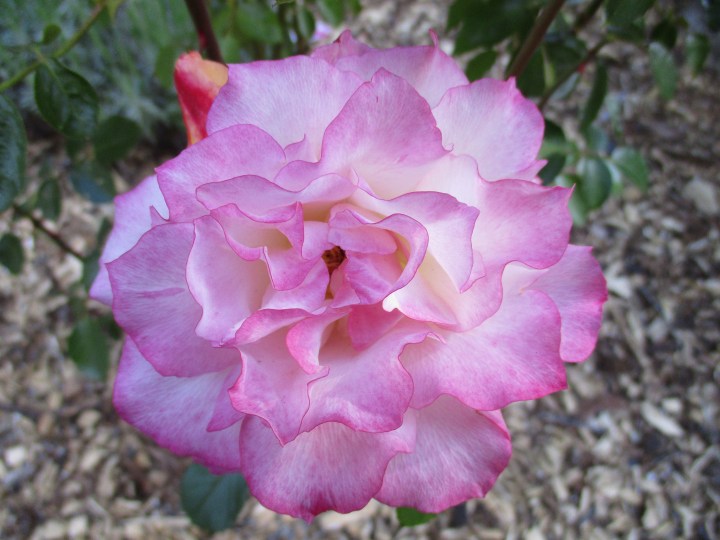
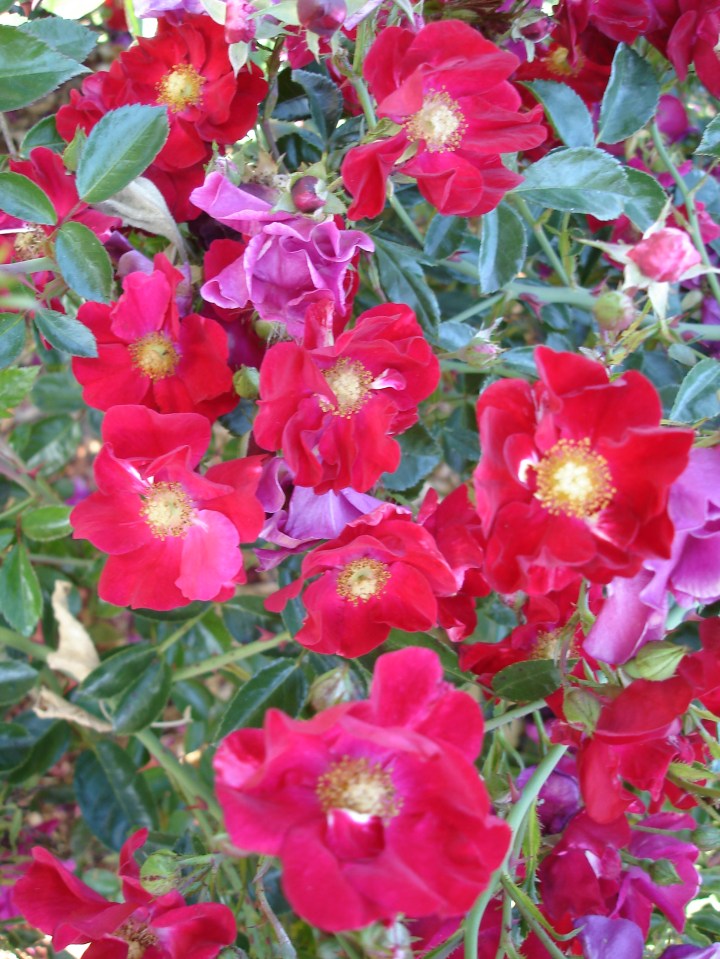
3. I am not sure if this bicolored rose is a hybrid tea or a floribunda. I am guessing that it is a floribunda because there are groups of flowers blooming where I earlier deadhead the first phase of single blooms. It is out in the landscape, in the same garden with 4, 5 and 6 below. It is grown as a shrub. The others are grown as standard or tree roses.P80602++
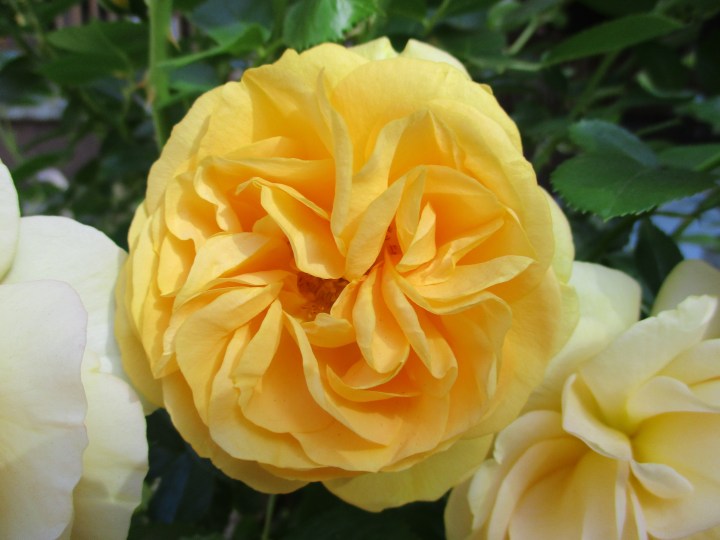
4. This is my least favorite of the six because it looks like one of those trendy David Austin roses. The color is nice, but the form is weird. I will never understand fads. I know that hybrid tea roses were a trend or maybe even a fad at one time, but it was the trend that I grew up with, which is why they are what I compare all other roses to. This rose does not compare to them too well. It is grown as a standard or tree rose.P80602+++
5. This is also grown as a standard or tree rose, but in conjunction with 6 below. I mean that they are grafted together on the same trees. Individually, they are nicely formed roses with excellent color, but they look silly stuck together with the white roses. I could probably identify this rose if I wanted to, but I do not want to misidentify it. Except for the color, the rest of it grows just like ‘Iceberg’.P80602++++
6. This one looks just like ‘Iceberg’, and except for the color, grows just like 5 above, which it is grafted onto the same trees with (as I mentioned above). The white is perfect. If it were a hybrid tea, it would be my favorite of these six. I just prefer 2 above because it is such a perfectly formed rose on good stems.P80602+++++
This is the link for Six on Saturday, for anyone else who would like to participate:

https://thepropagatorblog.wordpress.com/2017/09/18/six-on-saturday-a-participant-guide/

Timmy in the Garden

P80314

Tim Buck II, pronounced like ‘Timbuktu’ in Mali, but known simply as ‘Timmy’, came to live with us while he was just a baby fawn. Mr. Tim Buck Senior left Mrs. Buck to raise little Timmy alone as a single mother. Mrs. Buck then vanished, leaving little Timmy enfeebled on the side of Highway 9 south of town. No one knows what happened to Mrs. Buck. She might have been hit and killed by a car. She might have been eaten by a Mountain Lion. Somehow, she was not there to raise little Timmy.

Traffic was stopped on Highway 9 as little Timmy staggered about, either anemic, or starving from the absence of Mrs. Buck. He could barely walk, and certainly could not bound up or down the steep hillsides to leave the Highway. Most of us who stopped knew that he would not survive, and just accepted it as part of nature. However, we could not just leave him there with a few concerned children also stopped in the traffic with us. I loaded him into the back seat of the pick up and took him with me so that the children would think that he would be taken care of. I expected him to be deceased by the time I got home.

Instead, like a scene straight out of ‘Tommy Boy’, Timmy survived. He got up and was looking at me in the rear view mirror. Now what? Barbecue? I took him home to ask the neighbors.

That was too much help. They gave Timmy goat milk and groomed him of ticks, and a within a few hours, Timmy was bounding about the yard and playing with Bill the terrier, and Melly and Chewy the two cats. By nightfall, the entire herd wanted to sleep in my bed!

Timmy grew very fast and consumed quite a bit of goat milk. He craved more than milk though, and started eating my roses. (This was later in spring.) When I yelled at him to stop, he just looked at me quizzically, and continued eating. The roses did not last long. Timmy then ate the leaves off the fruit trees. Then he ate some ornamental grasses. There was not much that Timmy would not eat. When I tried chasing him off to eat in the forest, he just came right back to play with his friends and eat more of the garden. When I kept the door closed, he just came in the cat door and found his way to my bed. When I took him across the creek and down the road a bit, he just followed me back.

The funny thing is that everyone liked Timmy! He was so nice and polite, even as he destroyed the garden. That was a very bad year for gardening!

By the following spring, Timmy was spending almost all of his time out in the forest. He had depleted everything in the garden, so needed to go farther out to find vegetation within reach. He had grown very fast into a tall and lanky young buck. I slowly resumed gardening in early summer, with only minimal nibbling.

I sometimes wonder how Timmy is doing. I am pleased that he is no longer in my garden. I can enjoy growing roses again. The only thing I enjoy finding in the rose garden more than a nice healthy rose is a bitten off stub where there was about to be a rose.
Roses Get Pruned In Winter

30508thumb++Winter is no excuse to be less diligent in the garden. It would seem that gardening would be less demanding because there is less going on, and so many plants are dormant. However, dormancy is precisely why there is so much to do through winter. Bare root plants and bulbs are planted because they are dormant. Fruit trees get pruned because they are dormant. Now it is time for roses.
Just like fruit trees, modern roses were intensively bred for enhanced production. Their flowers are too big and abundant for overgrown plants to sustain. Consequently, aggressive specialized pruning is necessary to concentrate resources and promote vigorous growth. Rather than producing an abundance of inferior blooms, well pruned canes produce fewer blooms of superior quality.

Also like deciduous fruit trees, roses should be pruned while dormant, preferably after defoliated, and before new buds swell. This sounds easier than it really is. Some roses might still be trying to bloom on canes from last year. Others might be trying to generate new foliage for this year. Fortunately, they are tougher than they look. Besides, early or late pruning is better than no pruning.

Hybrid tea, floribunda and grandiflora roses need the same sort of pruning. They all should be pruned back to only a few canes that grew last year. Older canes should be pruned out completely, unless there are not enough new canes that grew last year. Hybrid tea and floribunda roses need only three to six canes, only about two feet tall. Floribunda roses might have a few more canes. Tree roses should be pruned just like shrub roses, as if the upper graft union is at ground level. The canes can be pruned shorter.

Suckers from below the swollen graft union (from where canes emerge) should be removed completely. If possible, they should be pulled or peeled off instead of cut. This seems harsh, but leaves less of a stub from which more suckers might develop later. Because fungal spores and bacterial diseases overwinter in decomposing foliage, fallen leaves should be raked from around roses.IMG_20140331_112633

Proper Bare Root Planting Technique

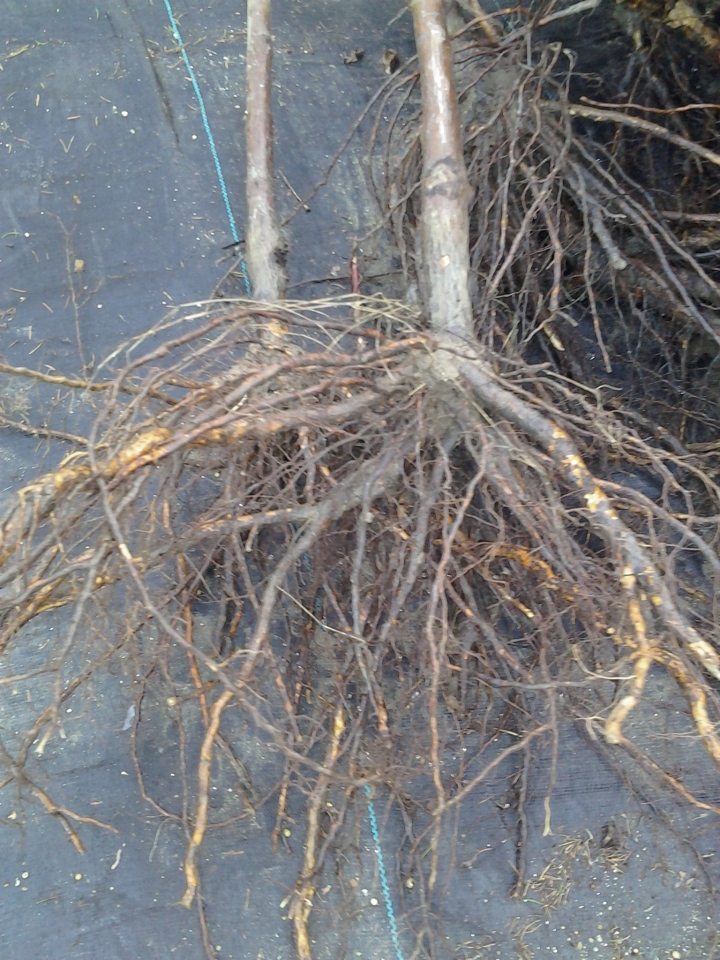
80124thumbBare root plants are less expensive, easier to handle, and easier to prune into a desired form than canned (potted) plants are. Also, they get established into the garden easier. Yes, even with less roots, they disperse their new roots directly into the surrounding soil more efficiently than secondary roots escaping from crowded roots that had been confined to cans of media (potting soil).

Bare root plants have no incentive to stay confined. They get planted while dormant, and wake up surrounded only by their new soil, with nothing else to get in the way. Canned plants might have been circling their roots within a limited volume of media for a while, trying to find a way out. Once they get in the ground, they may not like what they find there, and try to stay close to the familiar.

Bare root plants should not get too much of a good thing. The need only minimal soil amendment. They might like a bit of organic matter to retain moisture and to keep the soil loose while they get oriented to their new home. A bit of fertilizer would be nice too. Yet, new bare root plants should not get so much amendment that they do not want to disperse their roots beyond the planting hole.

Planting holes do not need to be very big at all. They should be wider than the roots can be spread, but not deeper. Loosing the soil and adding amendments below will cause new plants to sink. Graft unions of grafted plants must remain above grade. Plants with big roots, like fruit trees and roses, prefer their roots to be spread out over a cone of soil in the center of their planting hole.

Most bare root fruit trees are sold with more branches than they need, so should be pruned after planting. Some might get pruned by half. The superfluous stems are there both to cushion the trees in transport, and also to allow more choices for pruning. Some of us want to prune down to lower branches, while others want to prune up to slightly higher branches. Berry canes need very small planting holes, and get pruned back to only two or three buds above ground.P80115

Bare Root Stock Is Here

80117thumbChristmas tree lots at nurseries come and go at a good time. Cut and live Christmas trees become marketable just as retail sales of other items is declining. Although autumn is the best season to plant many things, not many of us want to be out in the garden as the weather gets cooler. As Christmas trees get sold and relinquish their space, bare root nursery stock becomes available.

Smaller bare root plants might be available first, because they can be brought in before leftover Christmas trees get recycled after Christmas. These include grapevines, currants, gooseberries, blueberries, blackberries, raspberries and perennials like rhubarb, asparagus and strawberries. Roses might be included too, but because they are so numerous, they often arrive with fruit trees.

Deciduous fruit trees are the majority of bare root stock. They include stone fruits, pomme fruits, figs, pomegranates, persimmons, walnuts and almonds. Stone fruits are of the genus Prunus, including apricot, cherry, plum, prune, peach, nectarine and almond. Pomme fruits are apple, pear and quince (pictured above). The flowering counterparts to some of these fruit trees may be available as well.

The flowering counterparts are those that are grown for colorful bloom rather than fruit production. Flowering stone fruit trees, such as the famous flowering cherries, produce no fruit. Flowering crabapples produce small and potentially messy fruits. Flowering quinces are actually a different genus than the fruiting types. Most are fruitless. Flowering pears are not often available bare root.

While dormant in late autumn, bare root plants are dug and deprived of the soil that they grew in. They get planted into their new homes before they wake up in spring. Some are packaged in damp sawdust. Others get heeled into damp sand. The advantages of bare root stock relative to canned (potted) stock are that bare root stock is less disfigured, lacks disfigured and circling roots, gets established in a new environment more efficiently, is easier to transport, and is significantly less expensive.