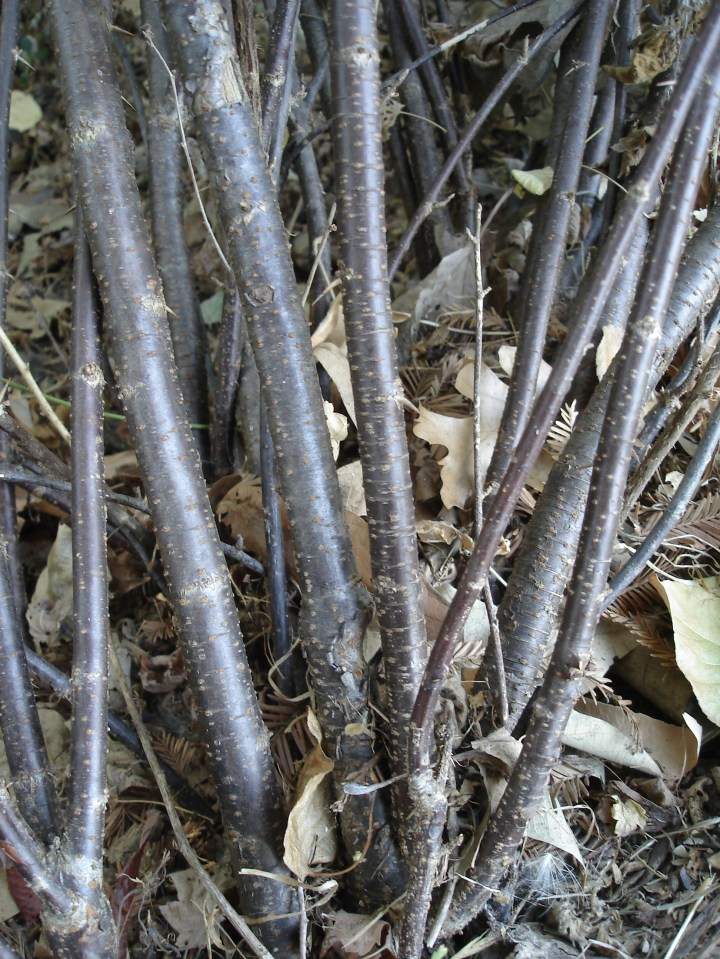
Heavenly bamboo, or simply ‘nandina’, is one of those many plants that almost never performs like it should. The intricately lacy foliage is so appealing while plants are young, and changes color with the seasons. The red berries can be comparable to those of holly. Unfortunately, healthy plants grow, and then ultimately get shorn into globs of disfigured leaves and stems.
The same abuse afflicts Oregon grape (mahonia), mock orange (philadelphus), forsythia, lilac, abelia and all sorts of shrubby plants that really should be pruned with more discretion. Their deteriorating older stems should be pruned to the ground as new stems grow up from the roots to replace them. It is actually not as complicated as it seems.
This pruning process, known as ‘alternating canes’, prunes the plants from below. It is a standard pruning technique for maximizing production of blackberries, raspberries and elderberries. It is similar to grooming old stalks from bamboo and giant reed, even if it does not prevent them from spreading laterally.
The deteriorating older stems, or ‘canes’, are easy to distinguish from newer growth. Old canes of Heavenly bamboo and Oregon grape become heavy on top, and flop away from the rest of the foliage. Old canes of mock orange and lilac get gnarled and less prolific with bloom. Aging abelia and forsythia canes become thickets of crowded twigs.
The newer stems are likely a bit lower, but are not so overgrown. Since the foliage is not so crowded, it is displayed on the stems better. Their blooms or berries are more abundant. By the time new growth becomes old growth, there will be more newer growth right below it. In fact, the regular removal of aging canes stimulates growth of new canes.
This is the time to prune Heavenly bamboo and Oregon grape, just because the oldest foliage is as bad as it will get after the warmth of summer. Mock orange, forsythia and lilac should get pruned while dormant through winter, but are commonly pruned just after they finish bloom early in spring. Abelia should probably wait until spring because new growth can look sad through winter.

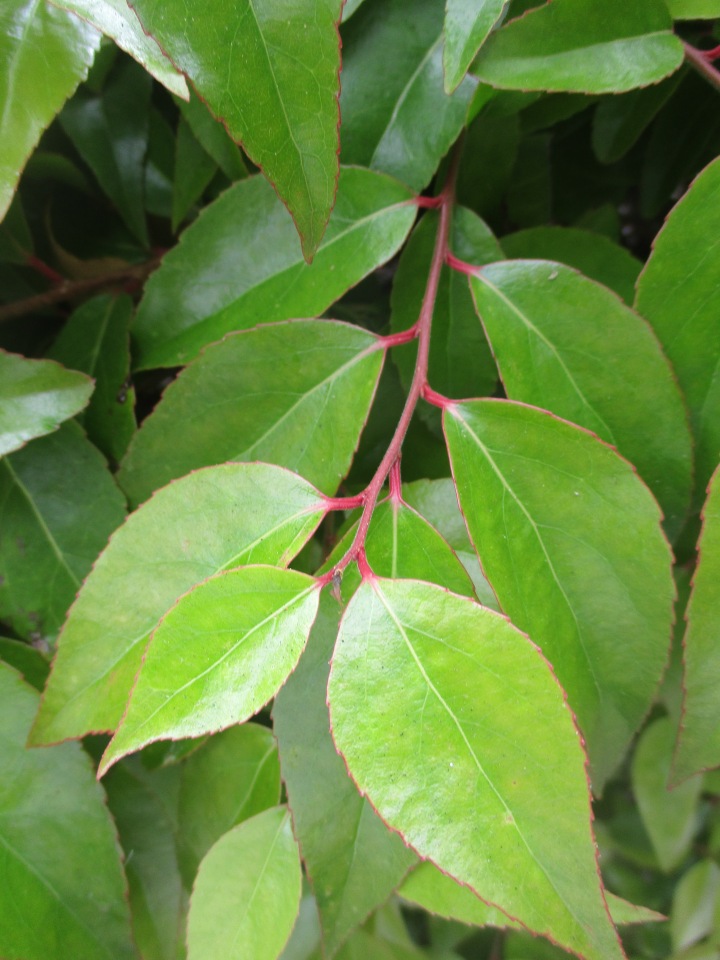
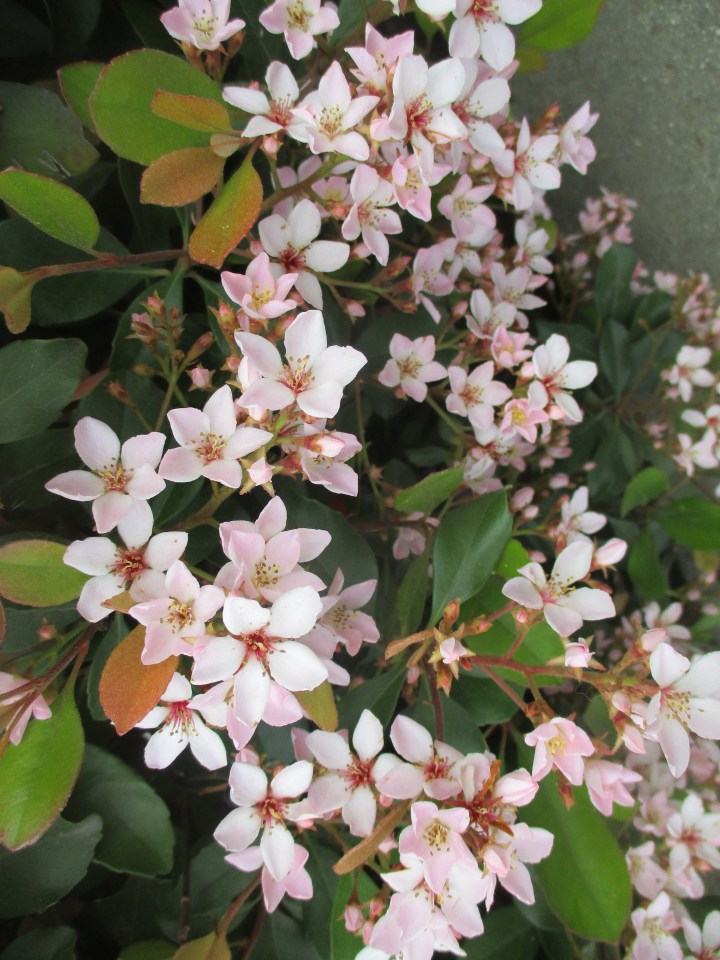
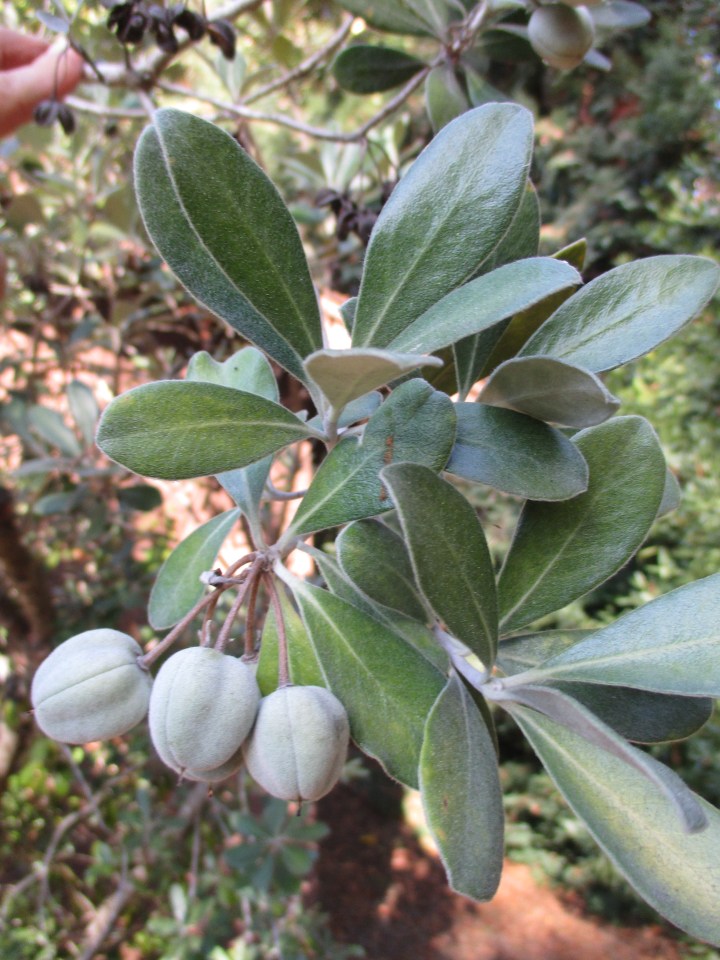 Of all the popular pittosporums in Western landscapes nowadays, the karo, Pittosporum crassifolium, is certainly not one of the most familiar. It might have been one of the earliest to have been popularized here though. Because of its resiliency to coastal climates, it was a common hedge in San Francisco during the Victorian Period. With minimal watering, it did well farther inland too.
 Ah, something vintage! Remember Hollywood juniper, Juniperus chinensis ‘Kaizuka’ (or ‘Torulosa’) flanking big two-car garage doors of mid century modern homes? Those that are still around after half a century are big and strikingly sculptural, like miniature Monterey cypress for home gardens. They get about fifteen feet tall and ten feet wide, but have potential to get significantly larger.
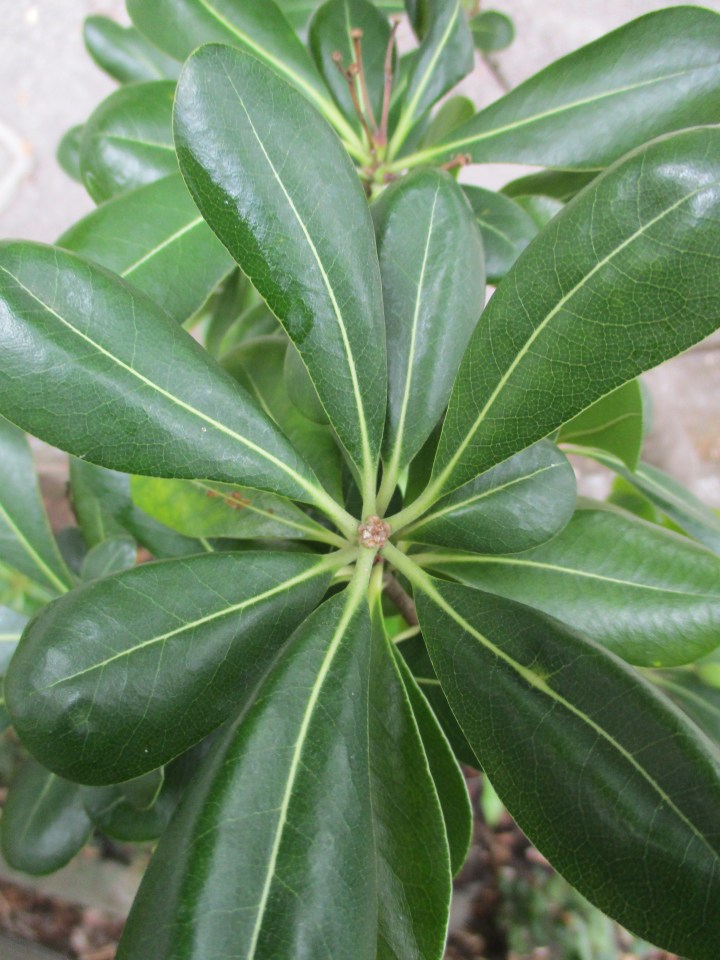 A surplus of common names seems to be a common theme for many plants that we thought we knew the names of. The simple Pittosporum tobira, which might be known here by its Latin name, might instead be known as mock orange, Australian laurel, Japanese pittosporum, and Japanese cheesewood. Its native range is about as diverse, including Greece, Japan, Korea and China.
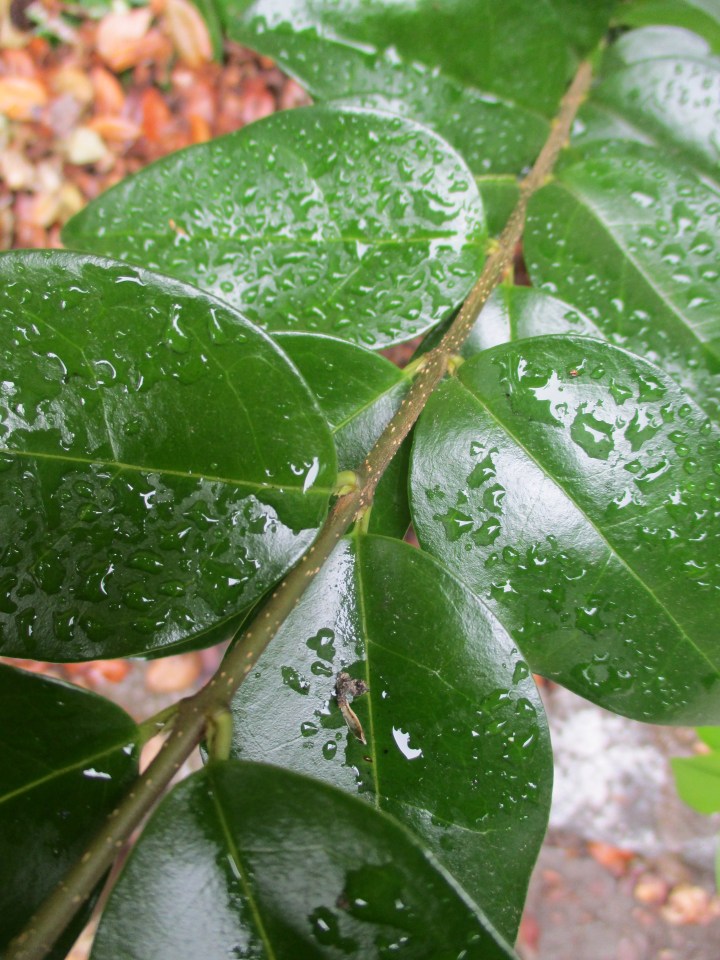 Here on the West Coast, privets had traditionally functioned like hollies had in the East. They are conducive to shearing into the big formal hedges that were popular during the Victorian period. Since then, as gardening space became more limited, the common glossy privet became less popular than the more compact and complaisant waxleaf privet, Ligustrum japonicum ‘Texanum’.
 ‘Shrubbery’ sounds so unflattering for a pine; but mugo pine, Pinus mugo, is not really much of a tree. The tallest trees do not reach eaves. Most old trees are only a few feet tall and about twice as broad, with strictly rounded form, and dense forest green foliage. The stout paired needles are only about one or two inches long. The plump cones, which are rarely seen, are not much longer.
 As a shorn evergreen hedge or simple shorn shrubbery, photinia, Photinia X fraseri, produces handsomely glossy bronzy red foliage without bloom. It is best if shorn as weather warms at the end of winter, and then allowed to grow out for a while. It can be shorn again through summer as bronzy foliage fades to green, but should not be shorn so often that it is always deprived of red foliage.
 Tony Tomeo