
By now, I can safely assume that any of the various old seed that were sown late last February that have not yet germinated are not likely to do so. They were all so old that I knew at the time that their viability was questionable. Nonetheless, I could not discard them without confirming that they were no longer viable. Four months later, this empty flat just about confirms it.
So far, the sole survivor is a seedling of a California fan palm, Washingtonia filifera. It looks silly all alone in the otherwise empty flat. Yet, even if no other seedlings germinate, the effort will have been worth this dinky palm seedling. California fan palm happens to be my favorite palm; but I would have been just as pleased with something that is not a favorite.
This little seedling is still too young to be pulled and canned. It will therefore wait and grow in the flat for now, and perhaps until autumn. I still hope that other seed will germinate during that time. Even if they do not, the empty flat will get set aside where it will continue to be irrigated as needed until late next spring. Viable but old seed may be unusually slow to germinate.
I can not help but wonder if some of the seed did not get enough chill after they were sown late in February. Maple, ash, elm, birch and arborvitae might require more of a chill through more of winter to be convinced that the warm weather afterward really is spring. I am not quite ready to give up on them yet.
There are still many more very old seed to sow this autumn. For most, I do not expect germination to be any better than it was for this previous batch.


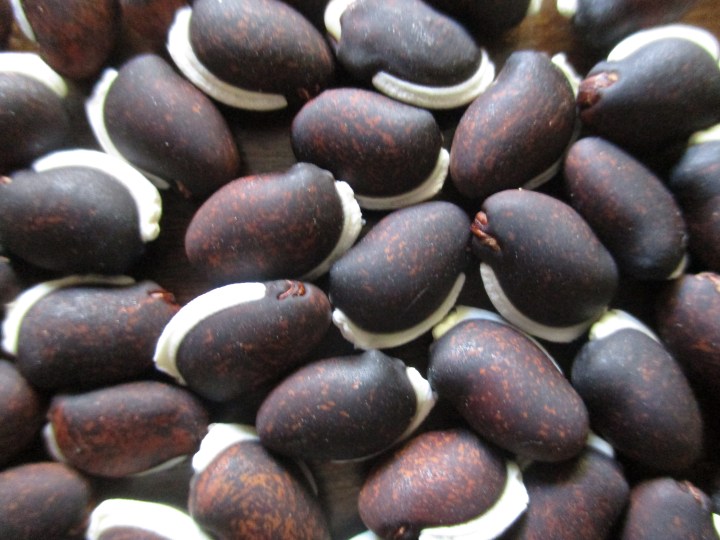 Hooey! It’s a bunch of hooey! Sweet pea seed that gets sown this time of year for next spring does NOT need to be soaked before sowing. In fact, unless there is some strange species of plant that has become that dependent on human intervention, NO seed need to be soaked prior to sowing. Not only is the technique completely unnecessary, but it is completely unnatural as well.
 The gardens with the most flowers need the most deadheading. This involves the removal of deteriorating flowers and any developing fruiting structures and seed associated with them so that they do not divert resources from subsequent bloom or vegetative growth. Old flowers that do not produce seed because they are sterile or lack pollinators might get deadheaded too if unsightly.
 Tony Tomeo