Fung Lum was an architecturally imposing Chinese restaurant in Campbell years ago. It was more famous for the facade of the building than for the food. Although the food was purportedly excellent, not everyone ate there. Everyone in town knew the building though. It was prominently situated right on Bascom Avenue, at a time when the region was still somewhat suburban.
The meticulously pruned and groomed landscape in the minimal space between the ornate facade and sidewalk was mostly rather low so that it did not obscure the architecture. The tallest features were strategically situated to be unobtrusive. Except for only a few of what seemed to be big, sprawling but low profile Japanese maples, there were no other significant maple trees.
‘Fung Lum’ means ‘maple grove’. Commercials on the radio said so. When I was a kid, I therefore expected to see at least a few maples that grew as trees rather than low sprawling mounds in the associated landscape. I figured that the maple grove must be out back where the parking lot was. I sort of wondered if their maples were Chinese, and what Chinese maples were like.
I probably should have been content in believing that the mix of holly oaks, flowering pears and other common trees in the neighborhood were maples. No one else noticed a discrepancy. For all I know, the name referred to a maple grove in China. Maybe the Japanese maples out in front were the grove. They could have been Chinese. Maybe I put way too much though into this.
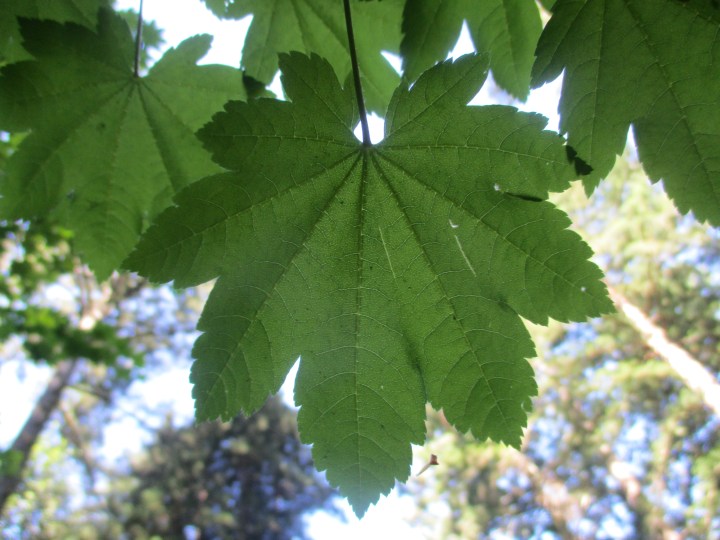
Now, I actually work with what is purported to be some sort of Chinese maple, perhaps Acer robustum. It really does resemble a Japanese maple. It produces the foliage that can be seen to the right in the last (sixth) picture that I posted early this morning. If it really is a Chinese maple, I would not be surprised if cultivars of this species were what lived in front of Fung Lum.
 Nomenclature is a standardized technology of naming. It dictates the universal ‘botanical’ names of all plants, so that everyone everywhere can communicate more efficiently about horticulture. Botanical names might seem confusing, and maybe even unflattering, but they eliminate the confusion associated with regional common names that are as variable as languages and cultures.
 Tony Tomeo