Pumpkins are the most famous winter squash. However, they are more familiar as decor than for culinary applications. For that, butternut and acorn squash are probably the most popular. Kabocha squash, though, is becoming about as readily available. LIke so many squash, it is a variety of Cucurbita maxima. It grows very well within local home gardens.
Kabocha squash vines sprawl over the ground, and can reach more than eight feet long. Alternatively, vines can climb trellises. Because their fruits weigh only about two or three pounds, they need no support. Slings may become necessary if unusually vigorous fruits grow more than five pounds. Powdery mildew can be problematic with congested vines.
Kabocha squash look like small and dark green pumpkins. Some are striped with lighter green or ivory white. Their flesh is yellow or orange, around a hollow interior full of seed. They take quite a while to cure after harvest though, from one and a half to three months. After curing, they can last even longer, and may even be fresh as summer squash ripens.
Cool season vegetables do not include any winter squash. All squash are warm season vegetables. They all begin their growing season in early spring to grow through summer. Their foliage begins to fade by autumn, and then succumbs to winter chill. The difference between summer and winter squash is their harvest time. Winter squash ripen for winter.
Conversely, summer squash produce for summer. They produce several more individual fruit that are ready for harvest before they ripen. They produce even more in response to the harvest of their juvenile fruit. Any fruit that matures for too long can get big and tough. It also diverts resources that should otherwise sustain production of fresh young squash.
Winter squash produce fewer fruit that mature through summer to ripen by autumn. Some types produce only two or three individual fruit. Fewer fruit concentrate resources, so that individual fruit are relatively large. Pumpkin, which is a famously big winter squash, may grow singly on its vines. Once ripe, some winter squash might last for months into winter.
Ideally, some type of squash should always be available from the garden. Winter squash become available as summer squash finish. Then, summer squash become available as stored winter squash deplete. However, winter squash are supposedly better if they cure for two weeks after harvest. Summer squash might finish a while before that can happen.
Hubbard, butternut, acorn and kabocha squash are all types of winter squash. Countless others are available. Their vines are more rampant than those of typical summer squash. Those with relatively lightweight fruit can climb trellises or shrubbery to conserve space. Although they do not bloom as much as summer squash, their yellow flowers are edible.
Winter squash develop more uniformly with occasional turning as they grow. This entails turning fruit weekly so that all sides of it get exposure sometime. By now, the palest sides should face upward. Fruit should retain its short stem when cut from its vine. It is likely to mold without it. There is no rush to harvest though, since fruit can remain as vines wither. Exposure to mild frost supposedly enhances the flavor of winter squash.
Zucchini is the most familiar variety of summer squash, Cucurbita pepo. It is not the only one, though. Several are varieties of Cucurbita moschata. These species are so variable that they seem to be many more than two. Some varieties are winter squash, which also develop through summer, but ripen for winter. Their fruits are plumper but less numerous.
Some summer squash can grow to be very big also. They can likewise remain intact into winter. However, they are best if harvested while small and tender. Frequent harvest that prevents squash from maturing diverts resources to more squash. Some summer squash can almost be too productive. Production should continue until foliage withers with frost.
Yellow crookneck is probably the second most popular summer squash. It can be almost as productive as zucchini. Pattypan squash has firmer texture, which is an advantage for stews and freezing. All summer squash enjoy organically rich soil and frequent irrigation. Their coarsely foliated vines can get almost aggressively vigorous with summer warmth. Seed from mature squash fruits is typically very variable. Only seed from reliable sources is consistent.
Jack o’ lanterns and pumpkins will soon meet their gory demise now that Halloween is over.
Pumpkins are both the biggest of the common fruits, and also the most wasted. So many of us bring at least one into our homes for Halloween, only to discard them afterward. Not many of us actually bake or make pies from ‘used’ pumpkins. However, those of us who like to can or freeze fruit and vegetables can really take advantage of this tradition by politely collecting jack o’ lanterns from neighbors, or getting unsold pumpkins from markets for very minimal expense. (Pumpkins are ‘low acid’ fruits that need to be canned with a pressure cooker.)
The somewhat small brownish ‘sugar pie’ pumpkins that are sold for pies are of course the best, with the richest flavor and meatiest shells. The common bright orange pumpkins used for jack o’ lanterns are not as meaty and lack flavor, but are certainly worth the price if they are free. White pumpkins can be just plain bland; but with enough sugar and spices, can make decent pie. The deeply furrowed green or gray pumpkins might likewise taste better than they look, but who knows? I certainly have not tried one yet.
Because the jack o’ lantern pumpkins have such thin shells, my neighbor and I prefer to cut them into pieces and steam them before peeling them. It is a messy job, which is why she has me do the peeling part of it. Before steaming, she cuts out any parts with candle wax (on the bottom) or soot (on the top). Once peeled, the pulp is ready to be pureed, and then frozen, canned or baked directly into pies.
Those of us who do not indulge in freezing, canning or baking of ‘recycled’ pumpkins can either give our pumpkins to neighbors who do, or must otherwise dispose of them. On the compost pile, pumpkins should be chopped up and spread out so that they do not mold and rot as much as they would if left intact. Chopping them with a shovel should be adequate. By now, there should be plenty of fresh leaves on the compost pile to spread pumpkin parts out over.
If fireplaces or wood stoves have been used already, the resulting ash can be spread out with chopped pumpkin, to inhibit mold in compost piles. Ash also deters snails. Just be certain that only dead ash gets scattered, without any embers, and that it gets spread thinly enough so that it does not become a mucky mess that actually inhibits composting.
Winter squash grow through summer. This includes spaghetti squash, Cucurbita pepo subspecies pepo. They thrive with warmth, rich soil and steady watering, to mature in late summer or autumn. They store nicely through winter. Technically, spaghetti squash can ripen earlier in summer. However, flavor improves with a bit of age. Mature fruits can stay on their vines until the foliage gets crispy at the end of the season.
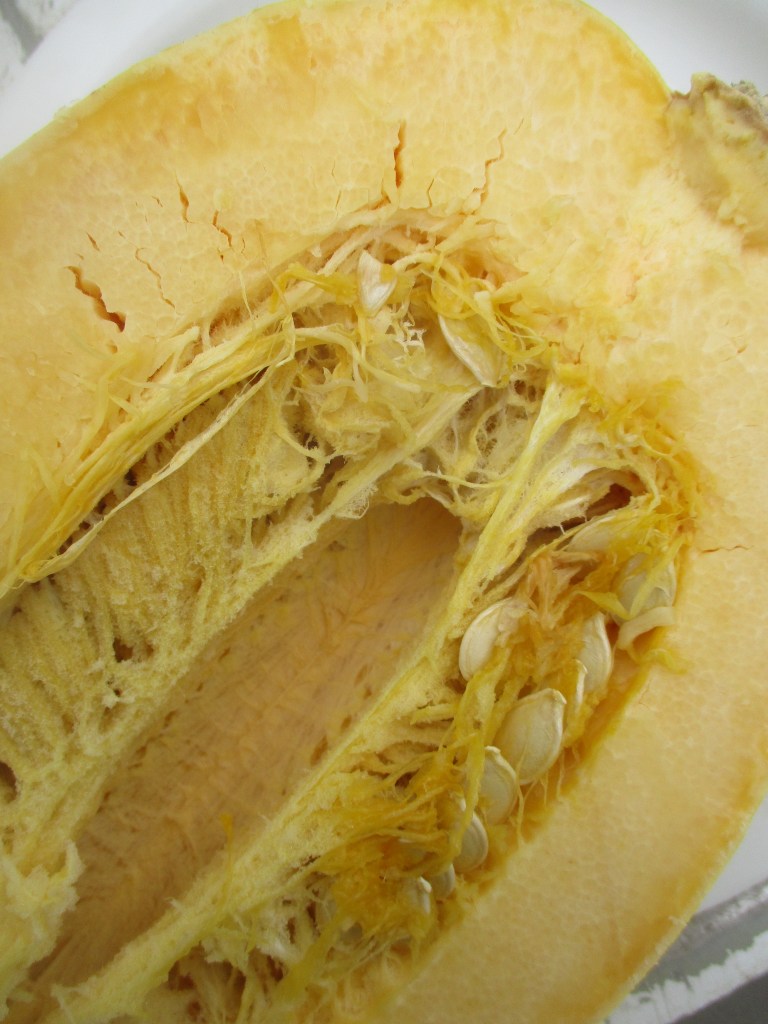
Spaghetti squash fruits resemble melons. Most types get about four inches wide and eight inches long. Color ranges through creamy white, pale tan, yellow and golden orange. Fruits with pale color tend to have milder flavor. After cooking, the otherwise solid flesh pulls apart into squiggly bits that resemble spaghetti. The big seeds within may not be true to type. Related squash hybridize freely, particularly with zucchini.
The long vines of spaghetti squash can be somewhat sloppy. This can actually be an advantage. Such vines can sneak about into otherwise unused areas, like pumpkin vines. Alternatively, they might like to climb trellises or shrubbery. They are happy to grow from mounds too, and wrap around the perimeters. Fruits on the ground benefit from occasional turning. Superfluous and fruitless male flowers are good for frying.
Just a few feet downhill from where the old valley oak had lived for centuries (https://tonytomeo.wordpress.com/2017/09/11/goodbye-to-an-old-friend/), a pumpkin vine appeared shortly after the big oak stump was ground out. That was in late September, so was much too late for it to do much; or so I thought.
The vine grew very quickly! It is hard to say if it got water from a leaking pipe. A valve manifold that is visible in front of the stump in the original picture is completely obscured by the foliage of the vine in the second picture. With all the heavy work that was done right on that spot, it would have been very easy for a pipe or exposed valve to get damaged. (Water from a previously leaky pipe or valve could have contributed to the demise of the tree, by promoting the development of excessively heavy foliage that caused…
Well, since writing this three years ago, and mentioning that I would not likely grow this squash again, . . . I grew it again. It is in the garden right now.
There are not many things that will grow in my zone that I will not at least try to grow if I have the space and resources to do so. I really like to grow fruits and vegetables, particularly those that I am familiar with from when I was young. They are just as productive now as they were then. The only problem is that I do not know how to cook. I can freeze, can or pickle large quantities of produce, but cooking is something that I leave to experts.
I notice that almost all garden columns or blogs include recipes for the produce grown in home gardens. Mine does not. Except for a few recipes for pickles, jams and jellies, I just do not have any recipes that I would share.
When I get big winter squash, I really do not know what to do with them. I…
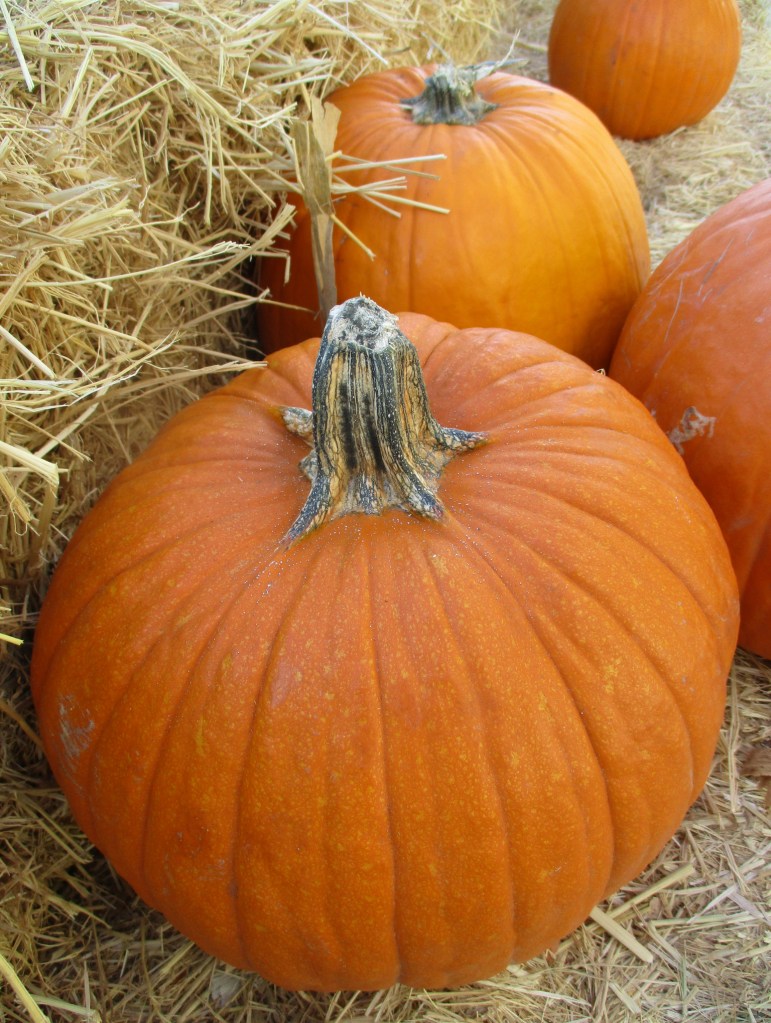
Actually, it is a fruit; a rather BIG fruit. It happens to be one of the more familiar of winter squash, but is not too commonly eaten. Although it makes excellent pie, and provides edible seeds and flowers, pumpkin is more popularly known as jack-o’-lanterns or Cinderella’s ride to the ball. Pumpkin is not for every garden, since each big and coarsely foliated annual vine needs regular watering, rich soil and considerable space to grow all through summer to produce only one or two big fruit in autumn.
Most pumpkins are big and round, and have smooth and bright orange skin. Those grown for jack-o’-lanterns are brighter orange, and not quite as meaty. Those grown for pie are often a bit smaller and meatier, with a rustier orange color. The biggest pumpkins get too huge to move easily, but lack flavor. The flavors and densities of many weird modern varieties are as variable as the green, red, pink, yellow and white hues of their skins. Some pumpkins have been developed specifically for their seeds, which are known as pepitas, or are used for production of pumpkin seed oil.
This is not how we normally look at these flowers, stems and vegetables (fruits). They might look strange out of context. That was sort of intended. ‘Six on Saturday’ allows more freedom of creativity than the simple illustrations that I use for the gardening column. The last two are closeups of the same two gladiolas that were featured last week. Perhaps they show color better.
I should try this again for next week.
1. Lily of the Nile is the ‘Fourth of July Flower’. It blooms for the Fourth of July, and the florets radiate from the center of their floral truss like fireworks. I will write more about this at noon.
2. Epiphyllum stems, like the stems of other cacti, do all the work of foliage. Because they are flat, they actually look like big and weirdly arching leaves. New tip growth is still rather blushed.
3. Zucchini is too productive. I neglected to go down to harvest it for two days or so, and then found that some fruits had gotten as big as bowling pins. They are fortunately not too tough yet.
4. Red willow is a weedy tree that I should not be growing intentionally. This is special though. I brought its cuttings from Reno. It will be coppiced, and not allowed to grow as a real tree.
5. Gladiola got enough attention last week that I got closer pictures of them this week. This one seemed to be more purple or less blue last week, with just a bit of white, like elderly Grimace.
6. Gladiola are more fun when someone else selects bold colors that I would not consider. This flashy orange and yellow bloom is exquisite, and looks like Grimace’s friend, Ronald McDonald.
This is the link for Six on Saturday, for anyone else who would like to participate:
Zucchini, Cucurbita pepo, is the epitome of summer squash. Because it is so easy to grow, it is the primary choice for gardens that can accommodate only one set of summer squash plants. The fruits can be yellow, dark green or dark green with a lacy gray pattern, Yet, the common medium green variety is still the most popular. It is likely the most vigorous and most productive of them all.
Like all summer squash, zucchini wants good warm exposure, rich soil and regular watering. Powdery mildew can be a problem if the foliage gets wet from watering late in the day. Foliage that is ruined by powdery mildew should be removed. Plants are easiest to grow from seed sown directly where they are desired, after the last frost. Two or three plants should grow together in each set.
Fruits are best before they get longer than eight inches or so, although they are edible at any stage. They can eventually grow as big as baseball bats. However, plants that produce such big fruits produce almost nothing else. Regular harvest promotes prolific production. Male flowers are more abundant than females flowers that produce the fruits. All flowers are edible before they shrivel.




 Just a few feet downhill from where the old valley oak had lived for centuries (
 There are not many things that will grow in my zone that I will not at least try to grow if I have the space and resources to do so. I really like to grow fruits and vegetables, particularly those that I am familiar with from when I was young. They are just as productive now as they were then. The only problem is that I do not know how to cook. I can freeze, can or pickle large quantities of produce, but cooking is something that I leave to experts.




 Tony Tomeo