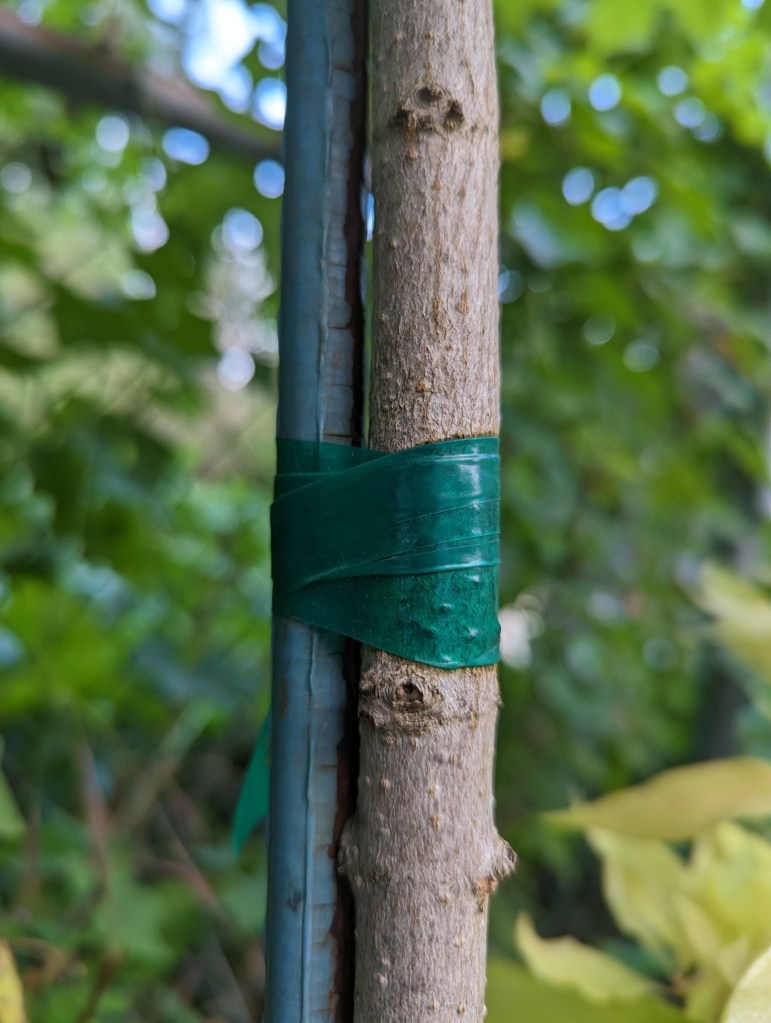
Staking is not quite the same as binding with stakes. It is more for the benefit of the roots than the trunks, which is what binding is for. Staking should support new trees only while such trees disperse roots for adequate stability. As trees do so, stakes become obsolete. Actually, stakes that remain for too long may be detrimental to healthy tree development.
Binding with stakes promotes straight trunk growth. It is particularly practical for trees that naturally develop crooked or multiple trunks. It is a technique that is quite common within nurseries, although not home gardens. However, many trees retain binding stakes when they arrive from nurseries. For a while after planting, some continue to benefit from them.
However, binding may be more detrimental than staking if it remains for too long. Trunks that become reliant on any sort of supportive stake remain weak or limber. Also, tape that binds trunks to stakes can become constrictive as trunks grow. It is important to remove it before it begins to interfere with trunk expansion. Looser tape can be useful if necessary.
For example, California pepper tree naturally develops a few irregular and limber trunks. To produce trees with single and straight trunks, nurserymen bind single trunks to stakes. They then prune out other trunks and low limbs until main trunks attain an optimal height. Because they are still limber, trees remain bound to their stakes while available for sale.
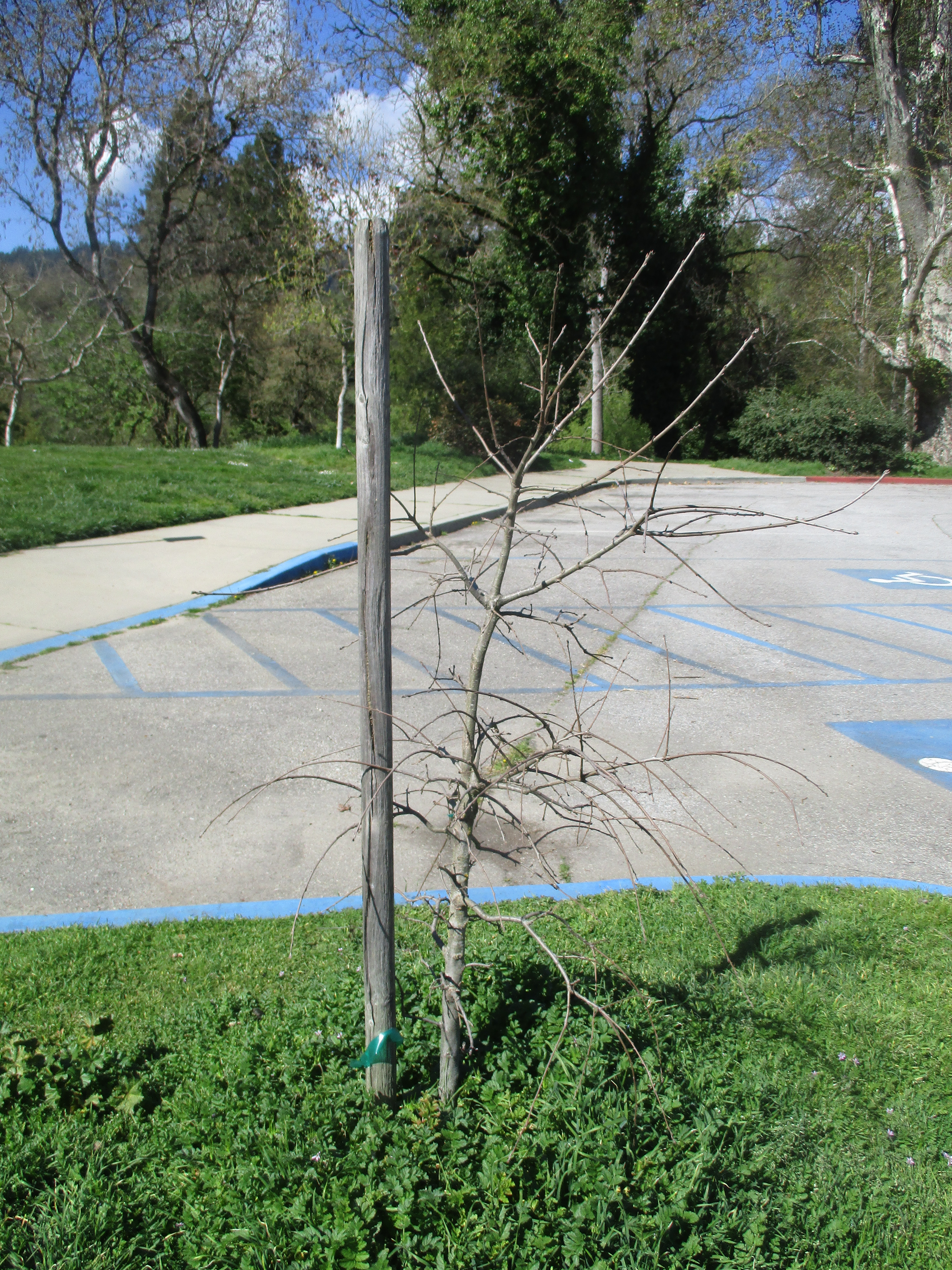
However, such stakes provide only support for trunks. They do nothing for stability while trees disperse roots into their new gardens. Additional staking with heftier stakes may be necessary for that. Such stakes must extend into undisturbed soil below the roots of such new trees. If possible, it is better to merely replace binding stakes with supportive stakes.
The next best option is to replace tape that binds young trunks to stakes with looser tape. This maintains the straight form of such trunks without inhibiting their growth. Supportive stakes, in addition to binding stakes, maintain their upright posture. Most trees need only supportive stakes, realistically. A few trees, especially new palms, need no stakes at all.


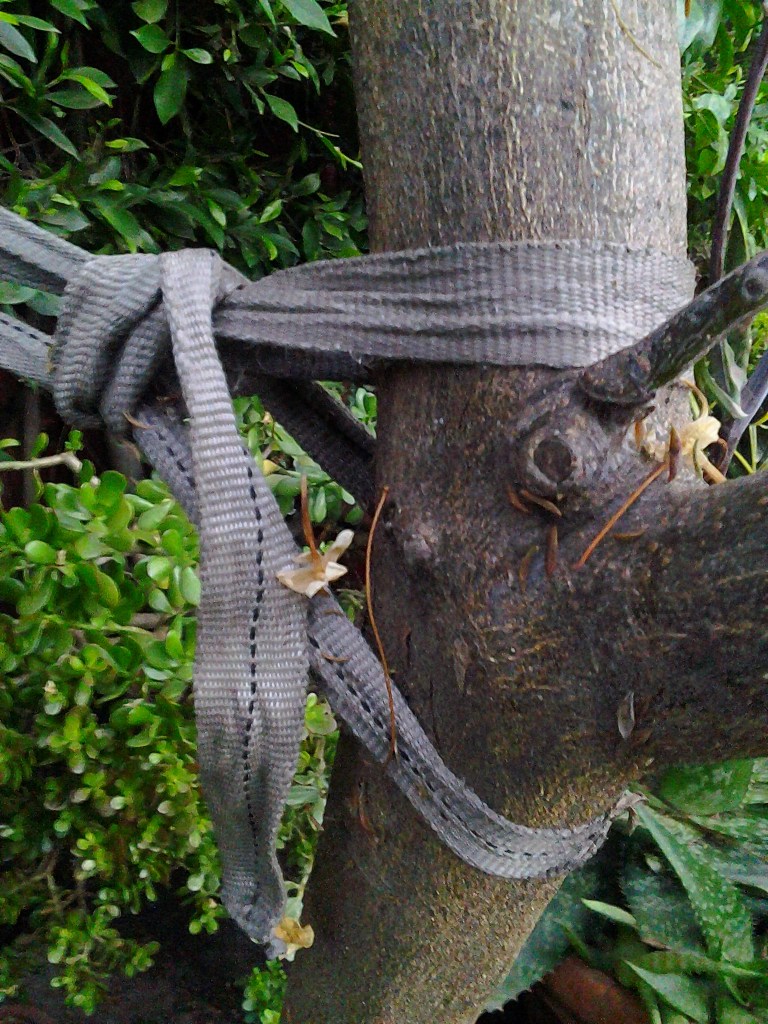


 This landscape is nothing fancy. It is out in front of a fast food establishment on Ocean Street in Santa Cruz. It is low maintenance, and starkly simple. It would be nice if the so-called ‘gardeners’ would cut back the African iris and English lavender a bit better, but they may have left them like this so that they are less likely to get trampled. The colored chips get replenished regularly, and the trash gets harvested quite efficiently. As I said, it is nothing fancy. The only remarkable feature had been this exemplary crape myrtle in the middle.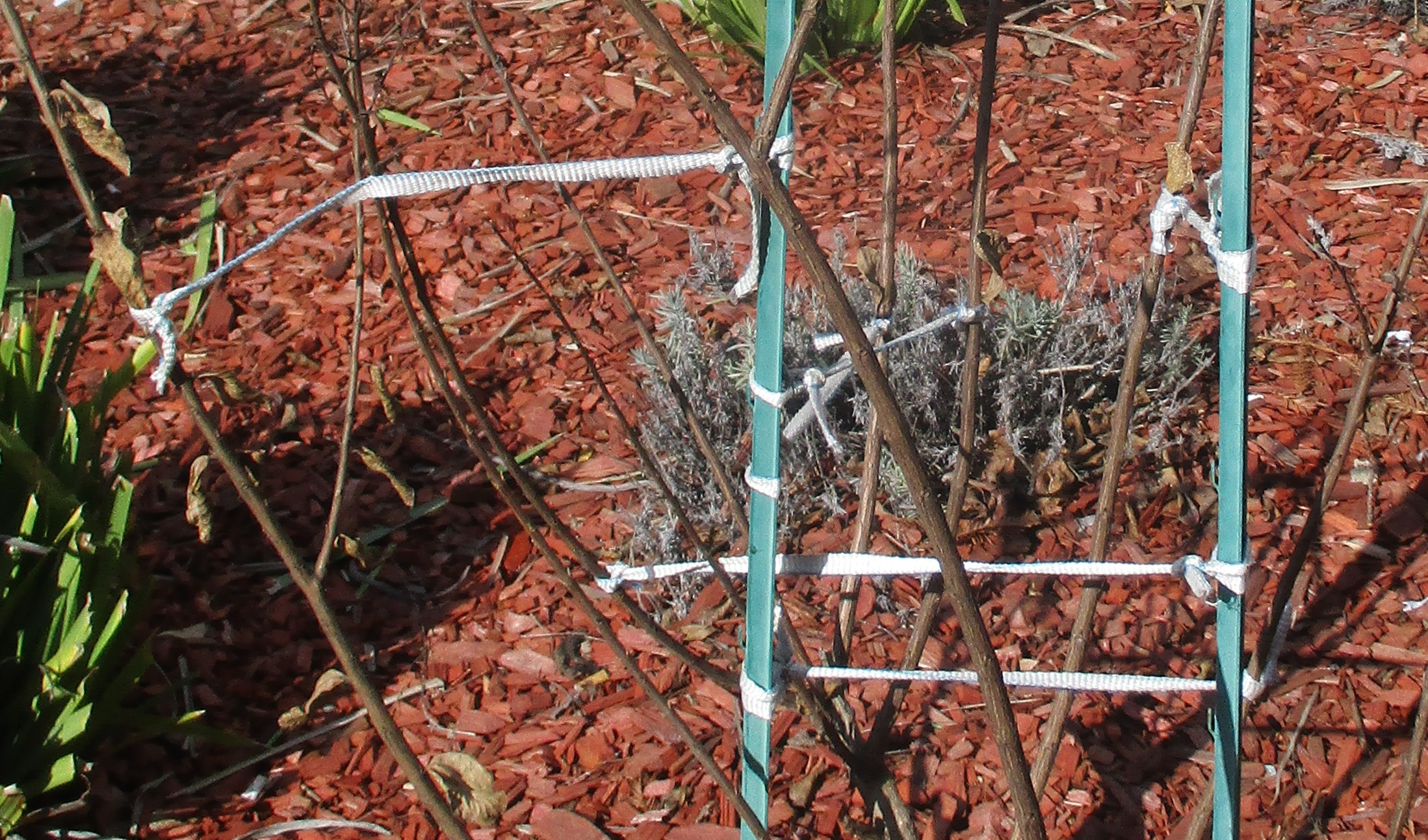

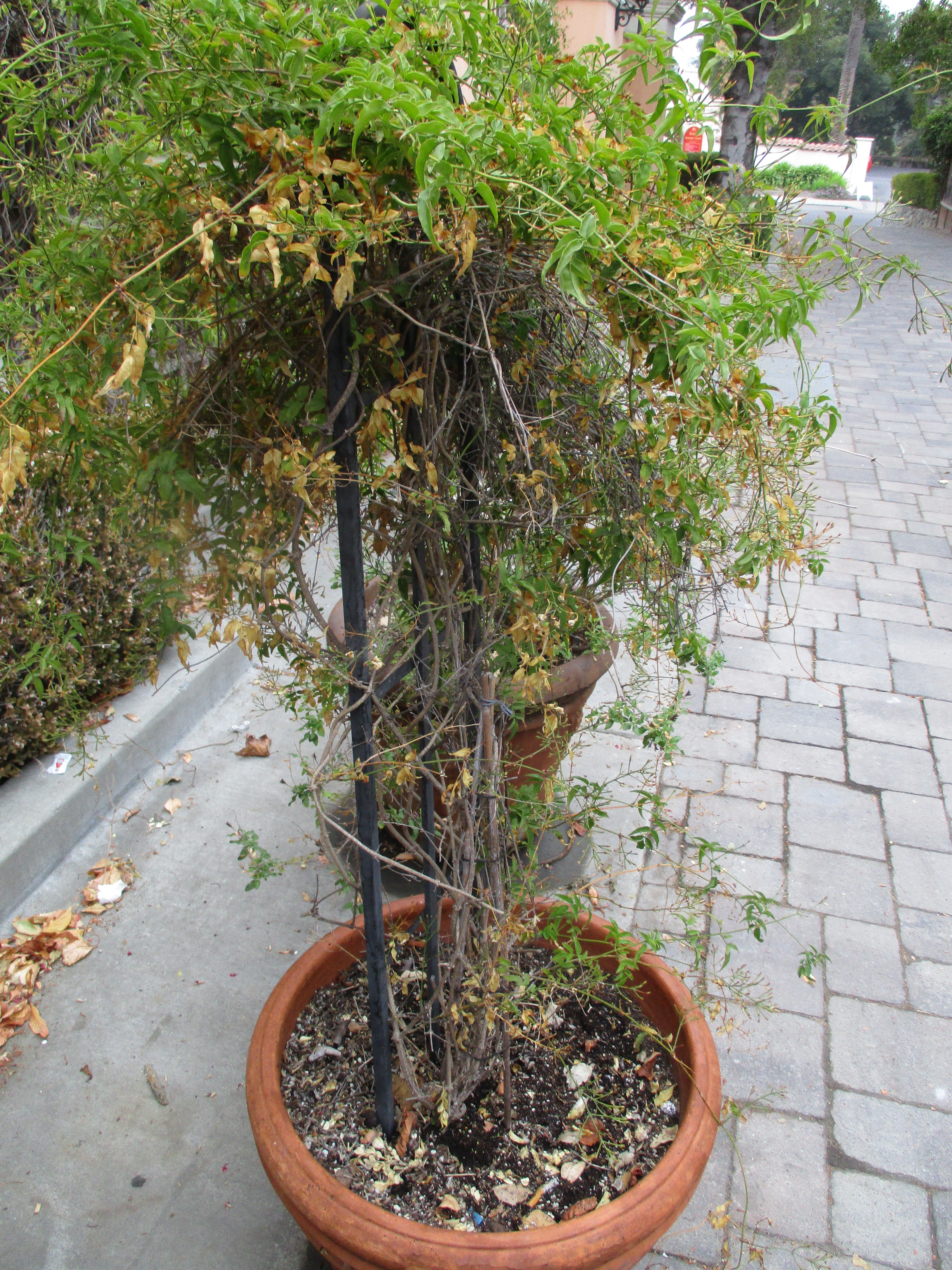
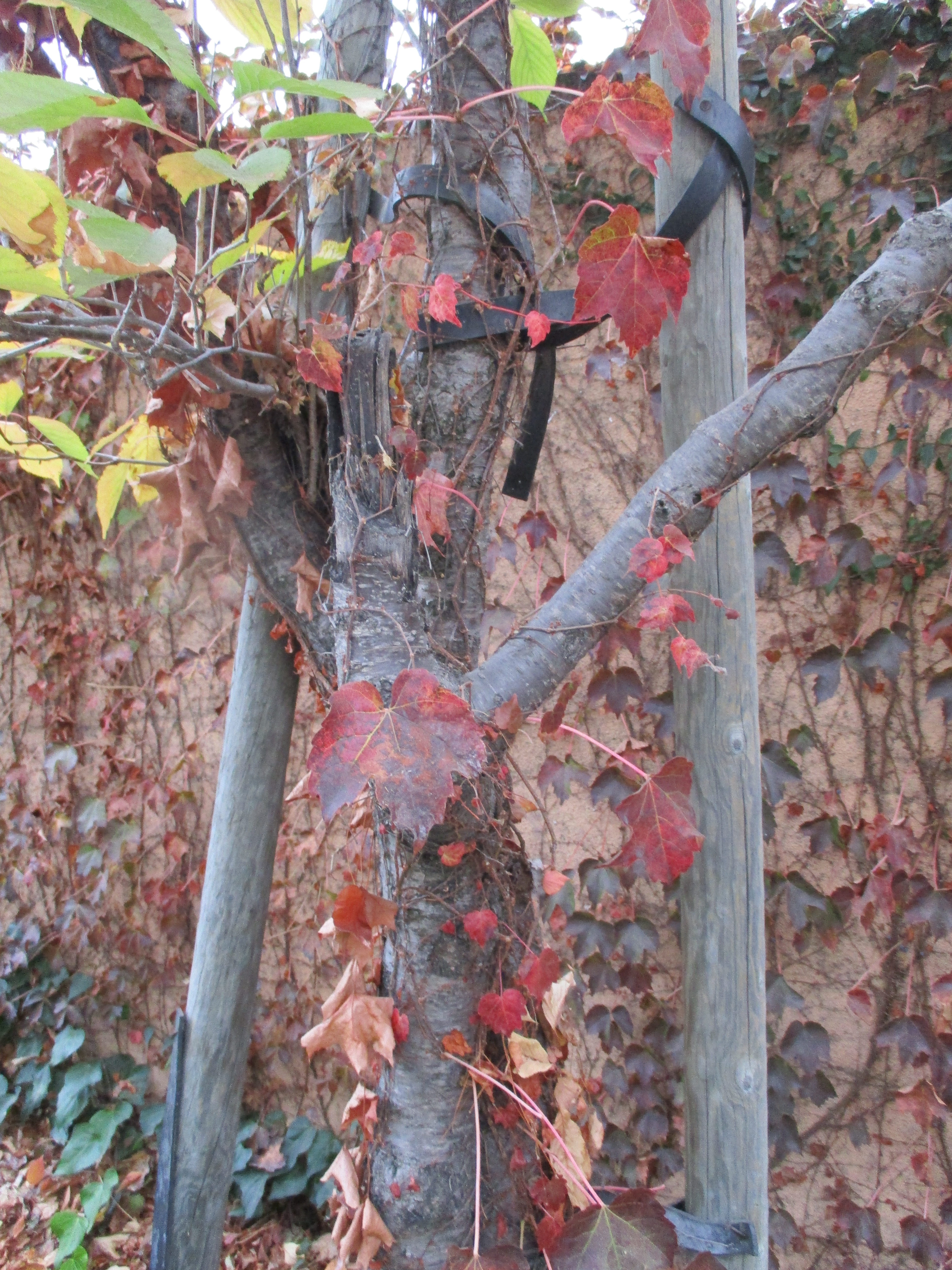
 In the wild, trees do just fine without any help from anyone else. They certainly are not stupid. Their roots disperse for adequate stability. Their trunks grow upward as limbs spread outward for adequate structural integrity. Trees only need help in landscape situations because they are expected to perform so unnaturally. From the very beginning, their trunks are bound and their roots are confined.
 Tony Tomeo