 In this situation, the point is that all those pointed tips of the leaves of this awkwardly floppy century plant, Agave americana, are extremely sharp, extremely rigid and EXTREMELY dangerous. Those shorter teeth on the margins of the leaves are just as sharp and rigid, and are curved inward to maximize injury to anyone trying to get away from an initial jab. With tips that impale, and marginal teeth that slash, this is one very hateful perennial!
Another point is that this big and awkwardly obtrusive century plant is on a patio at a Mexican restaurant. Yes, it is in a public place where people get dangerously close to it. On Friday and Saturday nights, this restaurant can get quite crowded. Some within such crowds are inebriated, so are more likely to stumble about and bump into things that are best avoided. Those concrete slabs to the left are benches where people are often seated.
The third point is that the only remedy for this ridiculously bad situation is to remove the century plant. Chopping the leaves like those that were over the bench on the left only removes a few tips and teeth, but does not make the rest of the foliage significantly safer. Nor does folding the leaves inward, like those that are next to those that were chopped. Such abuse only makes the whole mess uglier. Now it is both dangerous AND ugly.
Now, who thought that putting the most dangerous of all perennials available into this public situation was a good idea?! (Cacti with inward curving spines and other plants that are more dangerous are not even available in nurseries.) Century plants are dangerously nasty even when small and young, so even someone who knows nothing about landscape design should have known better than this!
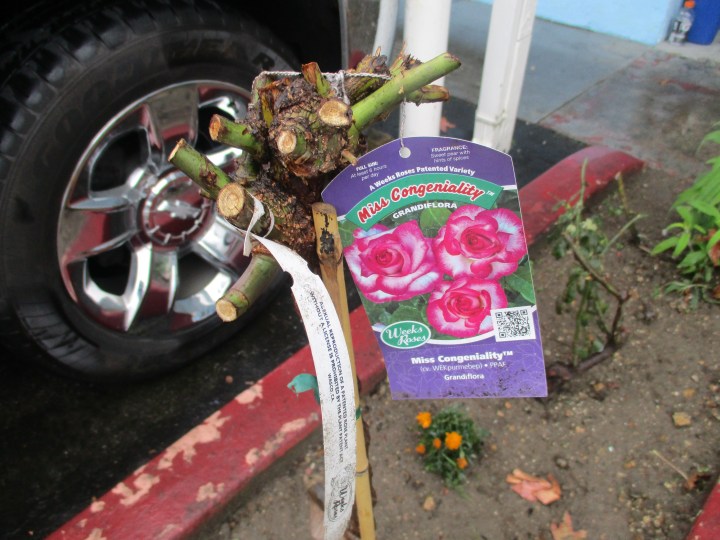 Now, before I commence with my rant and long list of problems with this picture, I should mention that this seemingly abused rose tree does seem to be appreciated. All the roses in this landscape seem to be very healthy, and they bloom constantly between spring and autumn. Their performance suggests that they are regularly fertilized and deadheaded.
 The first specie to be imported to North America from Europe were utilitarian plants that produced fruits, vegetables or other horticultural products. English hawthorn, Crataegus laevigata, was likely one of the first ornamental specie to be imported merely because those who were familiar with it appreciated the delightful white spring bloom and the rich red berries in autumn and winter.
 Seriously, I am not making this up. ‘Drunk Stick’ is what the Spanish name of ‘palo borracho’ translates into. It is one of the few common names of the tree I know only as floss silk tree, Chorisia speciosa or Ceiba speciosa. Yes, it sounds crazy, but not as crazy as what the trunk and limbs looks like. One can speculate why it is known as ‘drunk stick’. I am not certain that I want to know.
 Shortly after germinating and producing their first few leaves, many seedlings start to produce foliage that is indistinguishable from the foliage that they will produce for the rest of their lives. Other plants might initially be outfitted with leaves that are smaller, thicker, or somehow slightly different from what will appear later. Then there are those that produce juvenile growth that is completely distinct from later adult growth.
 Tony Tomeo