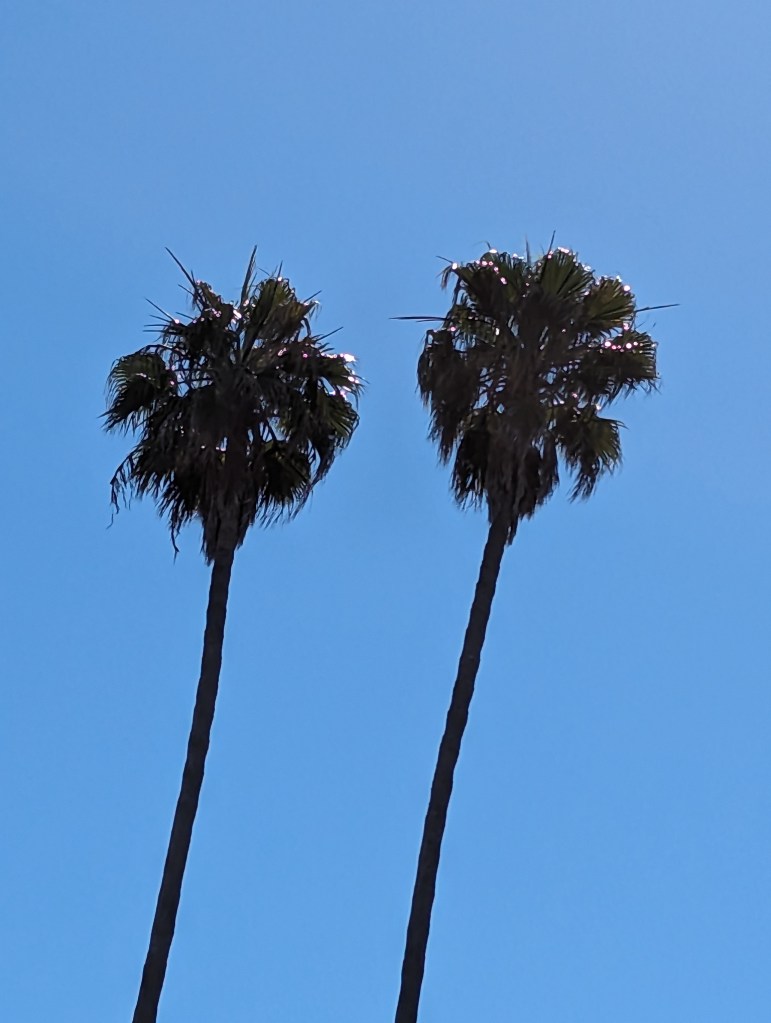
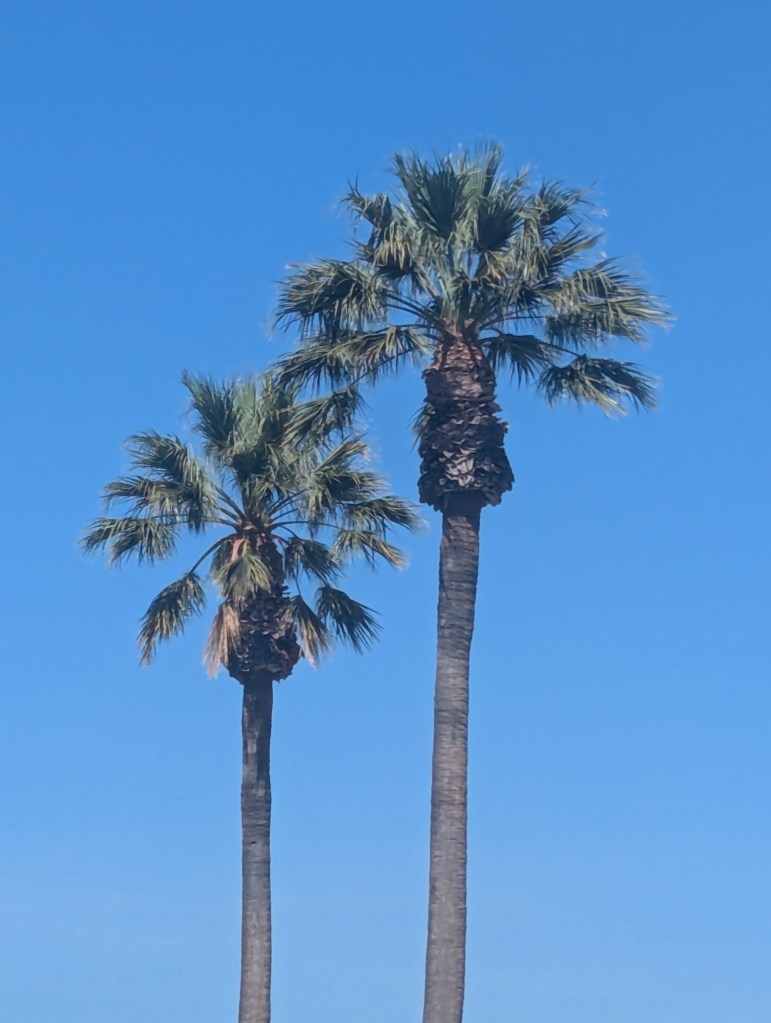
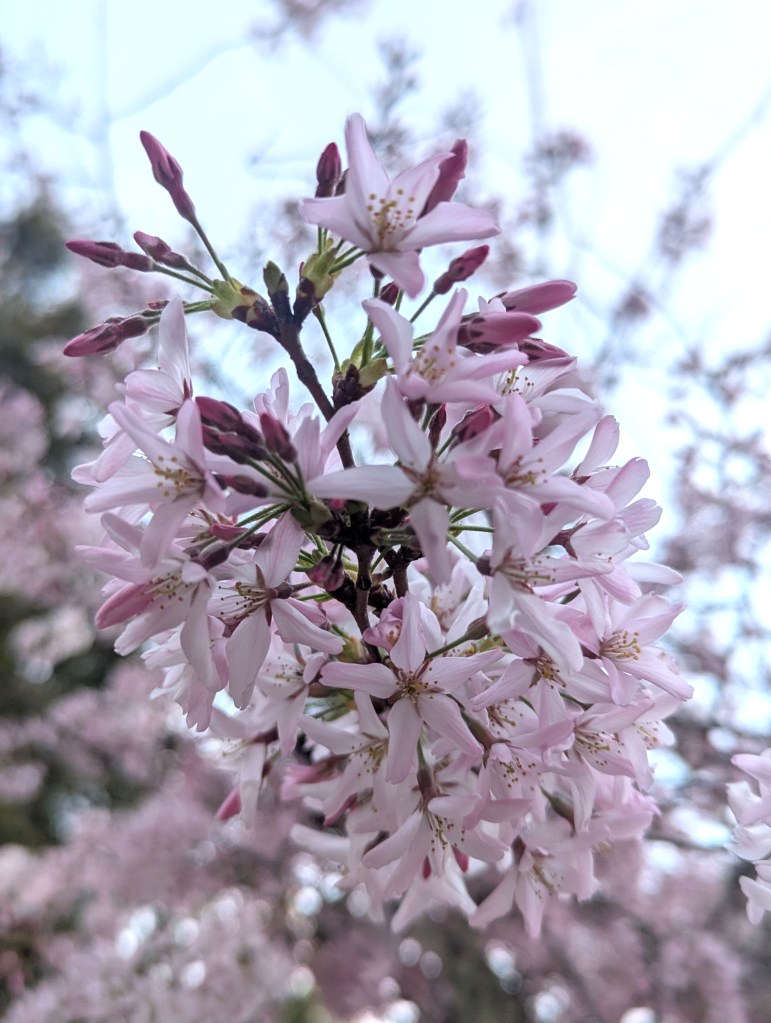
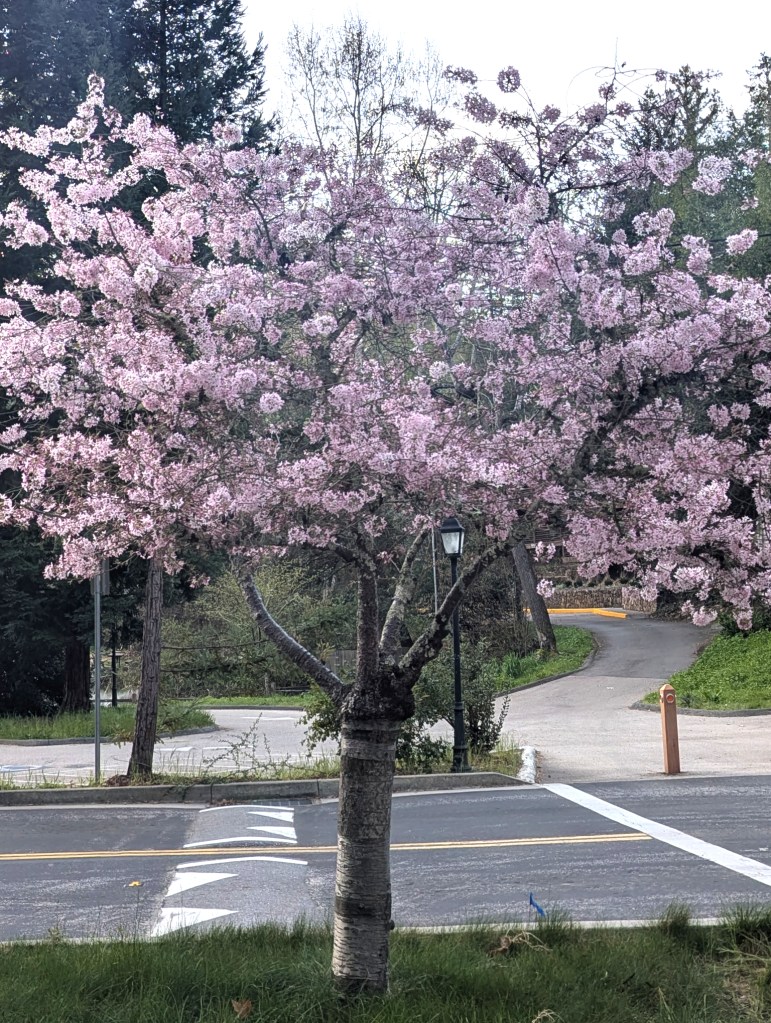
Queen palm might now be the most popular and common palm here. However, Mexican fan palm, Washingtonia robusta, is still the most prominent. That is because it is so very tall! It grows quickly to about fifty feet tall. Growth decelerates with maturity; but old trees are about twice as tall. Some of the tallest local specimens are more than a century old.
Mexican fan palms are about twice as tall as California fan palms, but slimmer. Their tall trunks lean as prevailing winds blow them. Consequently, some of the tallest lean above adjacent gardens rather than their own. The pleated and palmate leaves are about three feet broad. They are about six feet long with their petioles, which have unpleasant teeth.
Mexican fan palm is not discriminating about soil or water. It commonly self sows where it gets no irrigation, and grows well without it. With irrigation, it only grows faster. Without pruning, Mexican fan palm accumulates beards of dry fronds. With pruning, it can either retain a lattice of petiole bases on its trunk, or be shaven. Only arborists can prune them properly.
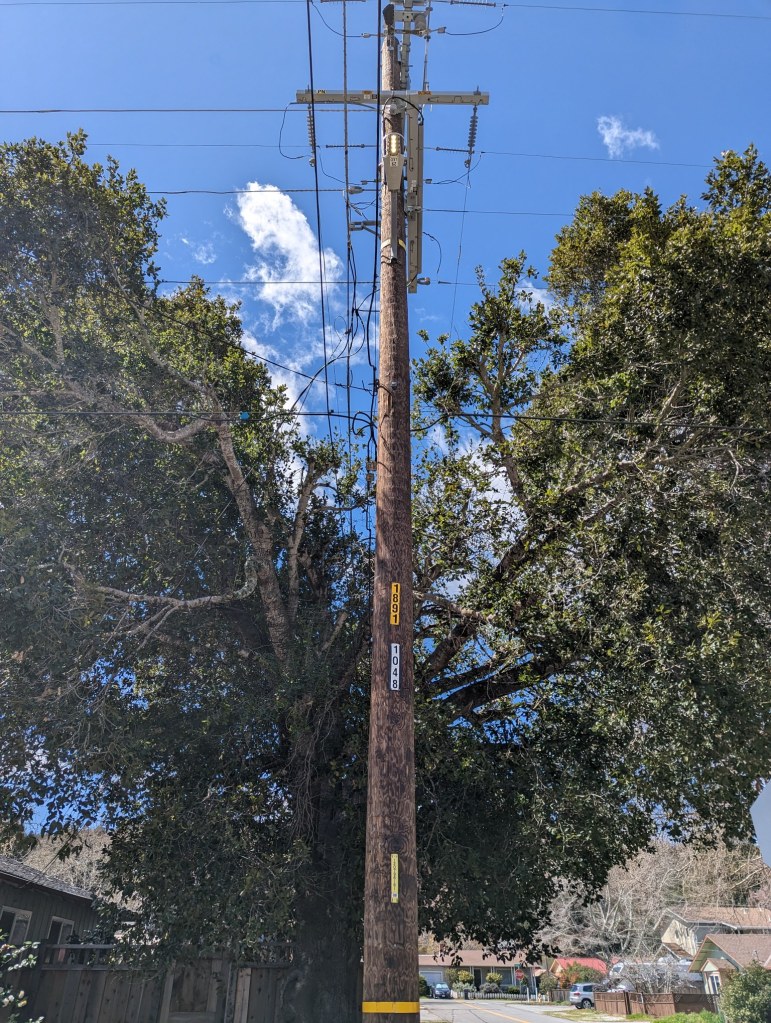
Trees and utilities should not mix. Unfortunately, on rare occasion, they do. Trees cause electrical outages or fires by dropping limbs onto electrical cables. Telecommunications are also susceptible to such disruption. Arborists maintain clearance for utility cables, but can not eliminate all hazards. Several trees are simply too large and too close to utilities.
Of course, this is more of a problem within rural areas, where native trees grow wild. It is also sometimes a problem within urban areas, though. Many urban trees are too large for their particular situations. Some extend their growth within easements for aerial utilities. Selection of trees that are proportionate to their situations helps to avoid such problems.
Any palm tree that can grow tall enough to reach utility cables should avoid them. Palms grow only upward, so are not conducive to pruning around such cables. Any that get too close to high voltage cables will be subject to decapitation. That entails removal of their solitary terminal buds, which kills them. Then, their dead carcasses necessitate removal.
This is unfortunately a common problem. Mexican fan palms commonly grow below high voltage cables. This is because birds that drop their seed so often perch on such cables. Also, queen palms are popular for planting within rear corners of backyards. This is often directly below aerial utilities. Queen palms reach such utilities within only several years.
Palm trees are not the only concern in regard to utilities. Various sycamores, ashes and elms vigorously grow quite tall. Canary Island pine and sweetgum develop upright form. Actually, any tree that grows as high as high voltage cables should avoid them. Plenty of smaller trees are available. Clearance pruning for aerial utilities is potentially disfiguring.
Pruning any tree near high voltage cables is extremely hazardous. This is why electrical service providers employ professionally trained arborists to do so. Unfortunately though, proper arboricultural technique is not a priority. Safety and reliability of electrical service are. Pruning for clearance of utilities is efficient, but can severely damage subject trees.
Nature is competitive. Competition is natural. In the wild, vegetation competes for limited resources. Where sunlight is a limited resource within forest ecosystems, competition for it is fierce. Understory vegetation does what it can in the shade of taller trees. Taller trees strive to be the tallest for more sunlight. Vines are the most aggressive competitors of all.
Vines are blatantly exploitative. They rely on trees to do the work of growing to the top of the forest canopy. Then, they climb into and over such trees to grow even higher than the trees do. Some can overwhelm and even shade out and kill the trees that they rely on for support. Strangler fig literally strangles its hosts as it develops its own supportive trunks.
Vines climb with clinging roots, twining stems, tendrils, twining leaves or hooked thorns. Some are perennials or even annuals. Some sprawl over the ground while juvenile, and then climb as they encounter support. As they reach the top of their supports, such vines generate shrubbier adult growth. Then, such adult growth can bloom and generate seed.
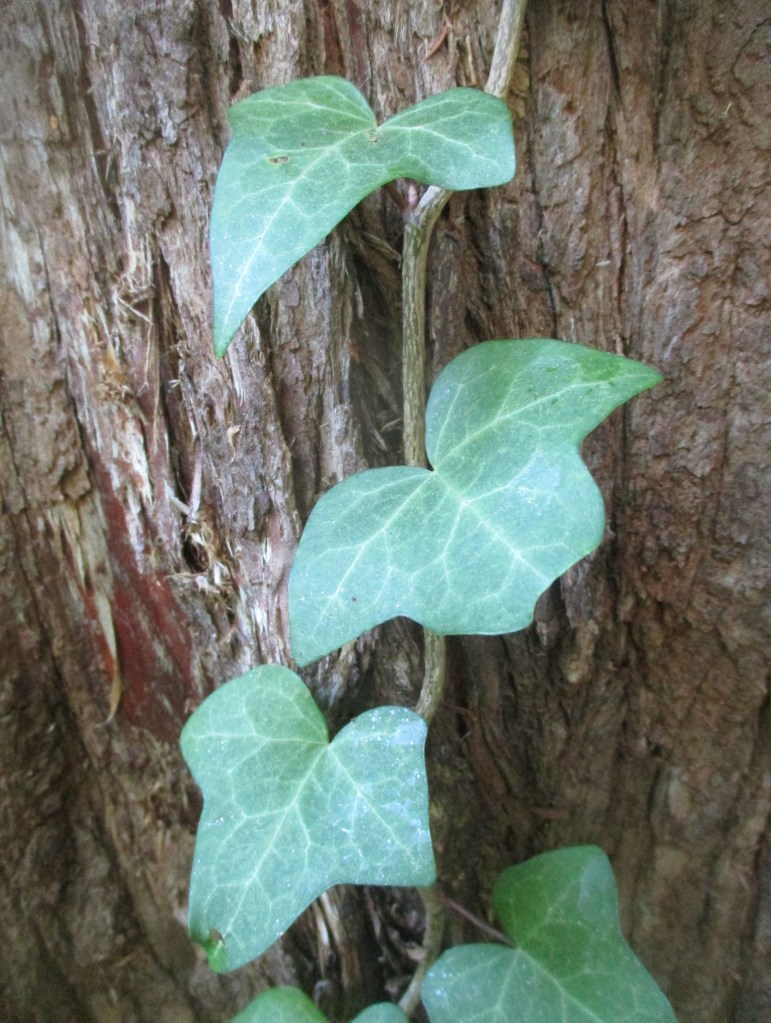
English ivy, for example, is a practical groundcover plant in its juvenile form. However, it becomes a clinging vine when it finds support. It quite often climbs shrubbery, trees and buildings. If left unattended, it develops into shrubbier growth that blooms and produces seed. Such shrubby growth shades desirable vegetation, and on buildings, promotes rot.
Carolina jessamine, lilac vine, mandevilla and wisteria climb by twining stems. They are generally not as potentially destructive as clinging vines. However, they can crush lattice or small trellises. Wisteria can crush substantial trellises. Like English ivy, star jasmine is likely more popular as a ground cover. It performs double duty, though, as a twining vine.
Bougainvillea neither clings nor twines. It merely produces vigorously tall canes that flop over on top of their support. Long thorns help to anchor them into place. Therefore, such canes need a bit of help to climb trellises or other support. They must be tied in place or woven into their trellises. Various other vines exhibit various and distinct characteristics.
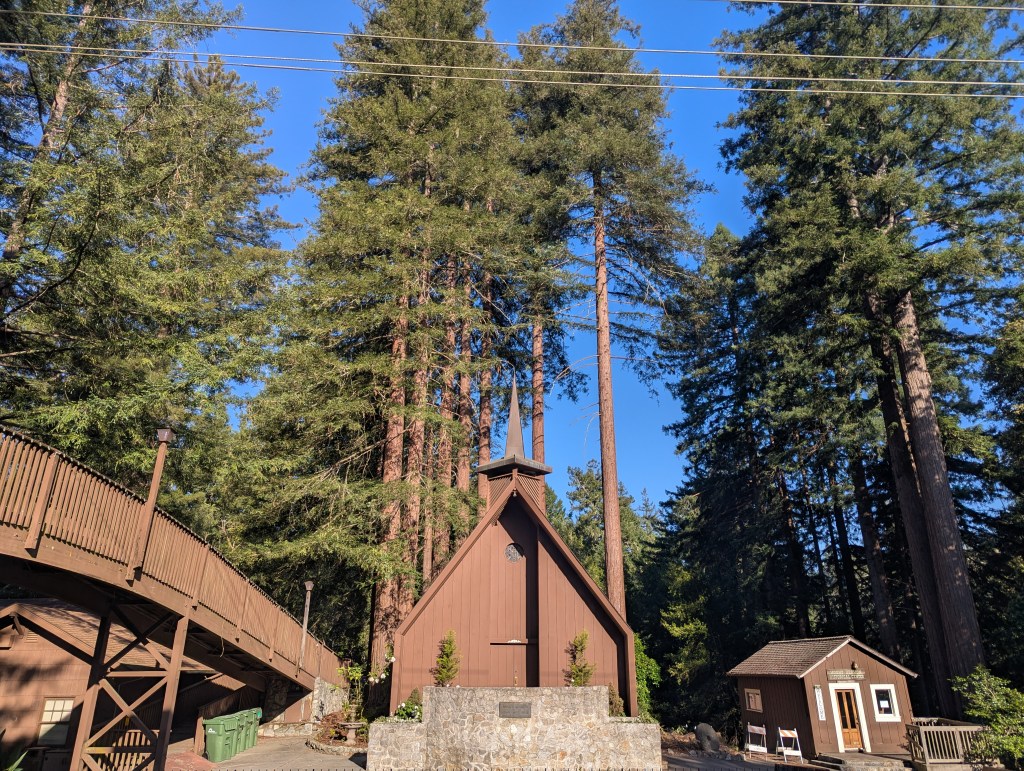
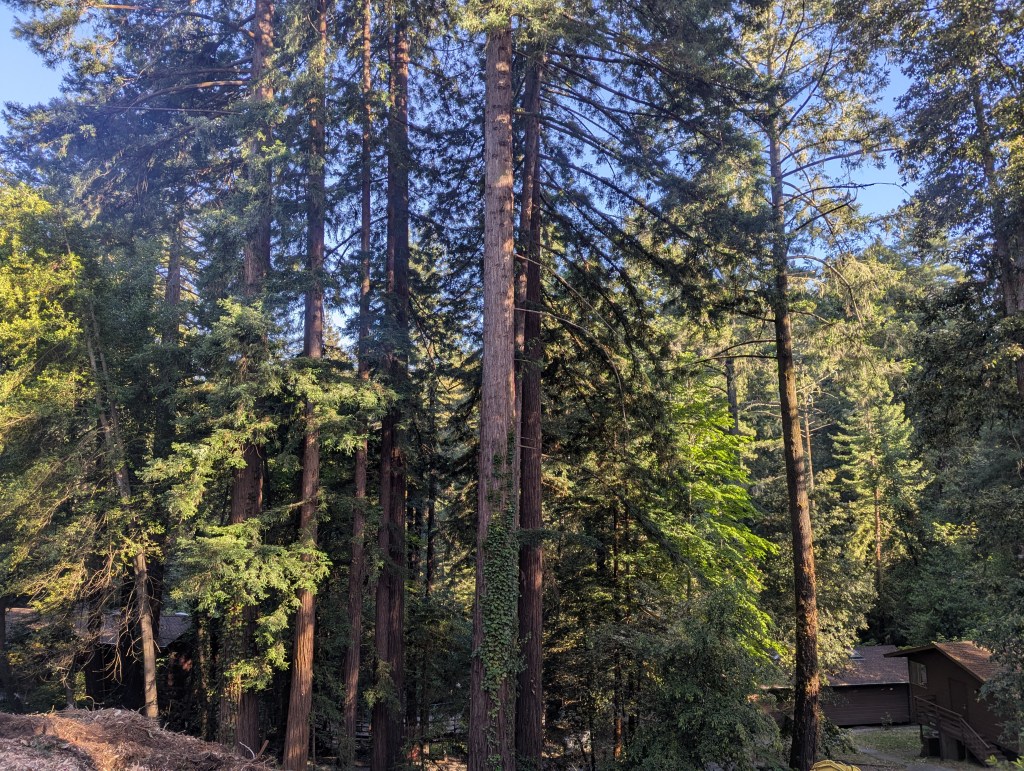
1. The steeple of the Mount Hermon Memorial Chapel (el Catedral de Santa Clara de Los Gatos) is now visible. It had been mostly obscured by a big Douglas fir and a big tan oak.
2. This new view of stately redwoods is also visible behind the Mount Hermon Memorial Chapel. It had previously been cluttered with tan oaks, bays and another big Douglas fir.
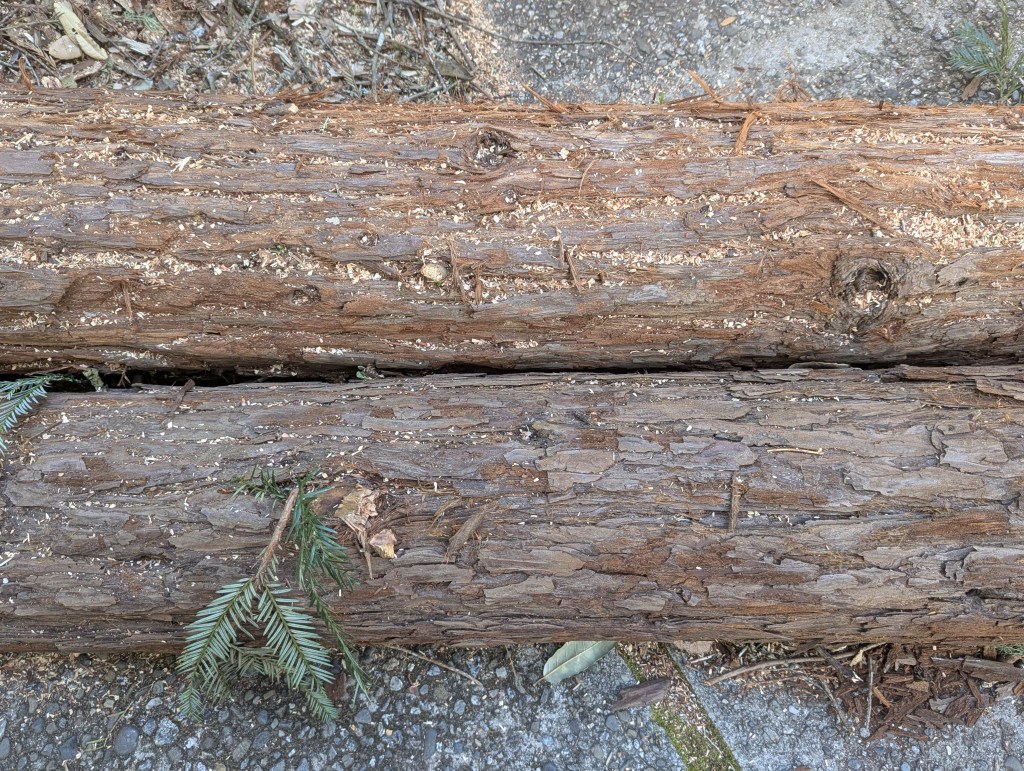
3. Logs were still strewn about when I took these pictures on Wednesday. Unfortunately, a few redwoods needed to be removed also. The largest trunks will be milled for lumber.
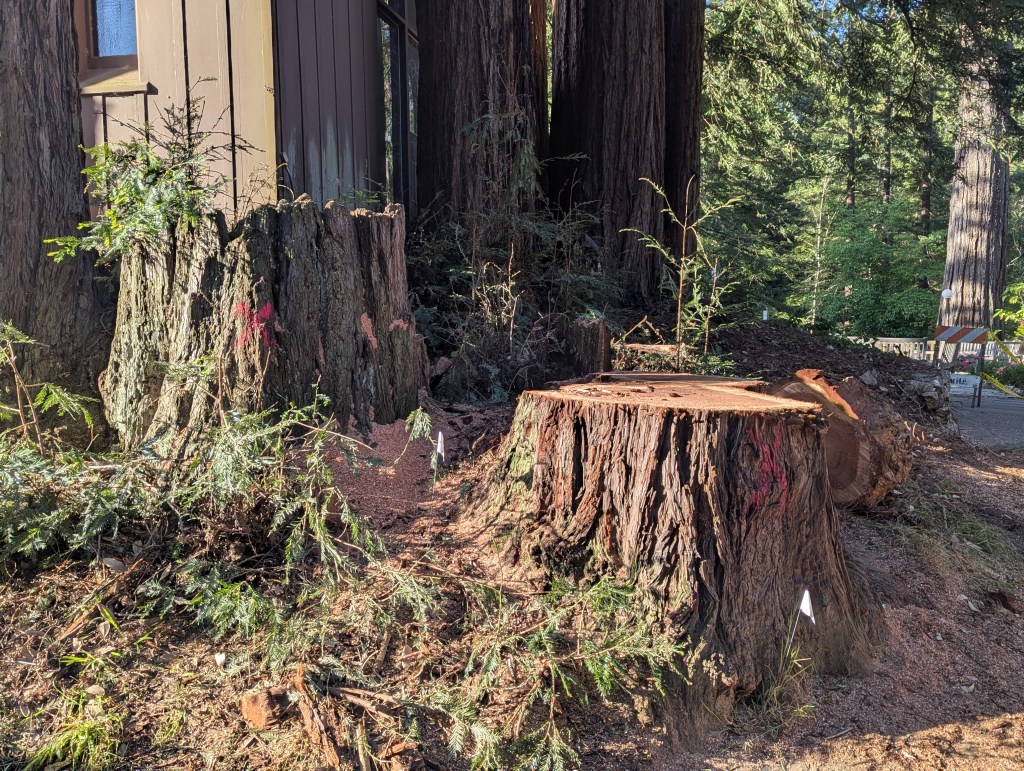
4. The stump to the lower right was cut last Monday or Tuesday. The stump to the upper left was cut when the redwoods were harvested, prior to 1906, more than 120 years ago.
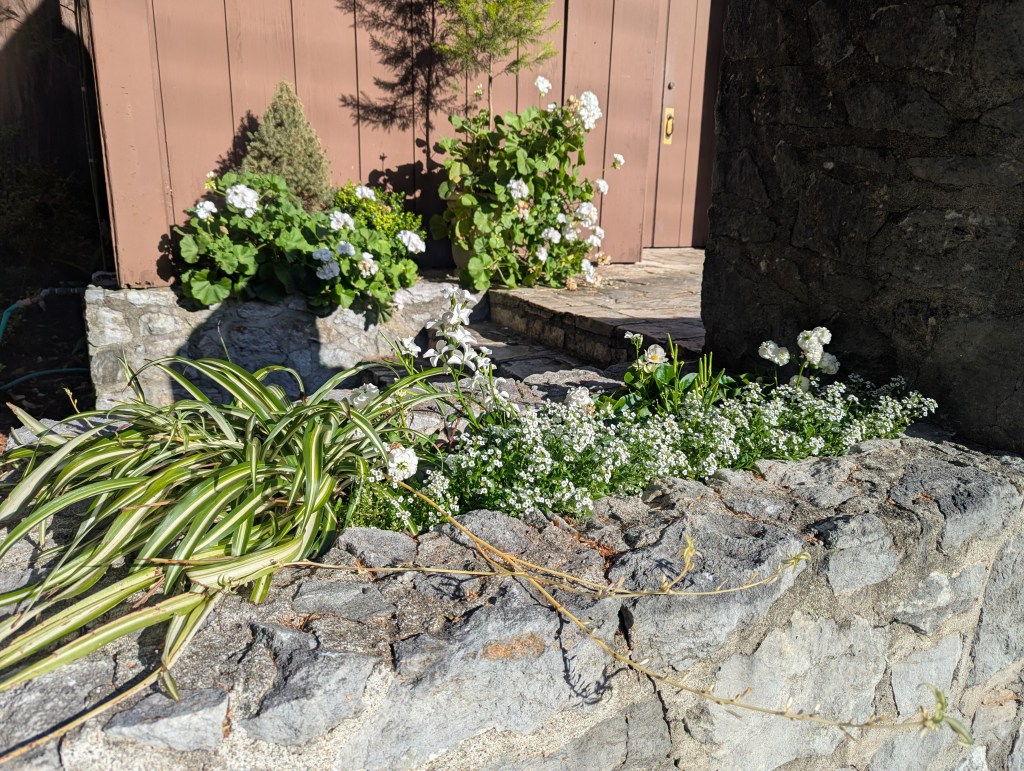
5. Alyssum, wax begonia and zonal geranium should perform much better with so much more sunshine. (Stock will be removed for summer.) They had always been in the shade.
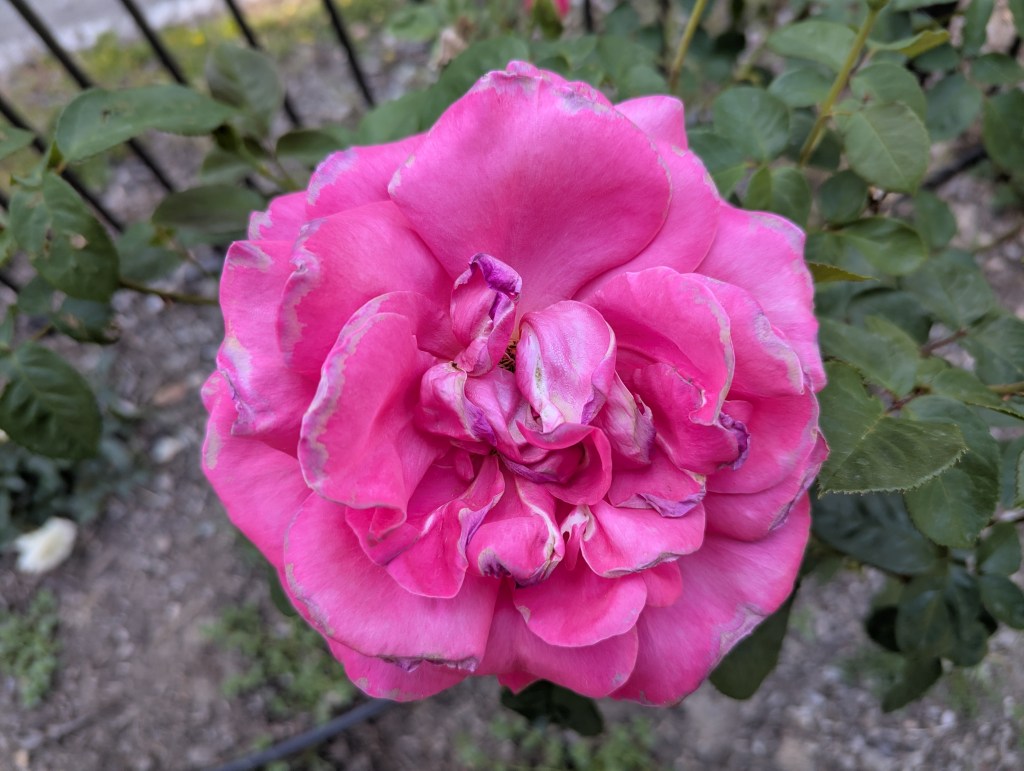
6. This rose, although irrelevant to the topic, is the token flower of my Six for this week. It is too colorful to omit. I have no idea what cultivar it is. It was red, then faded to pink.
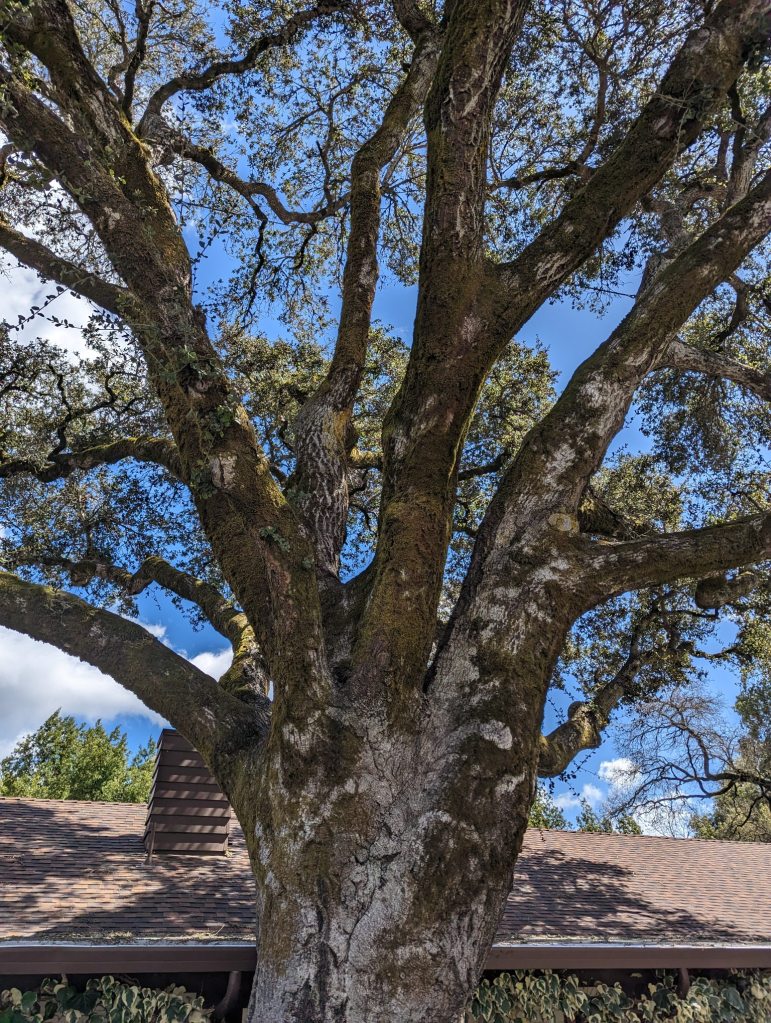
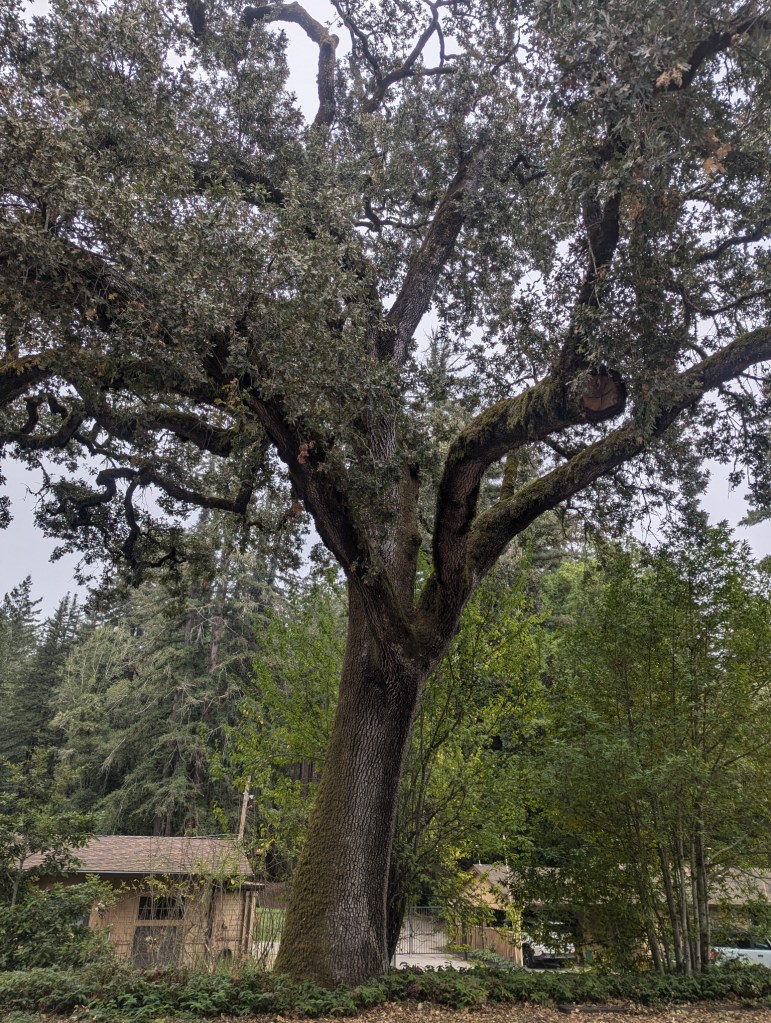
Coast live oak, Quercus agrifolia, is more adaptable in the wild than in home gardens. It can grow in groves or mix with other tree species, particularly at the coast. Alternatively, it can grow solitarily in open grassland, particularly inland. Solitary specimens can be a few centuries old. They can grow as tall and wide as seventy-five feet, with a few trunks.
Within irrigated home gardens, though, coast live oak likely does not survive for as long. It is impossible to know because no home garden here is a few centuries old. With water, young specimens mature faster than they would in the wild. Once established though, no irrigation is needed. Mature wild specimens often succumb to root rot with new irrigation.
Coast live oak is more appealing in the wild than within home gardens anyway. It sheds foliar debris continually, particularly as new foliage emerges during spring. Although it is technically evergreen, it replaces its foliage annually. Its foliar debris is mildly herbicidal to delicate plants below, and stains pavement. Every few years, acorns are very prolific. Seedlings can appear in the oddest of situations.
A tree is a woody perennial plant with a single tall trunk and branches. However, several tree types can not conform with this overly simplistic definition. Palm trees and tree ferns are neither woody nor branched. Although branching, arboriform yuccas and dracaenas are no woodier than palms. Banana trees develop a few unbranched herbaceous trunks.
Actually, several types of trees do not conform with their own definition. Many Japanese maples, crape myrtles and olive trees develop multiple trunks. Many citrus are not as tall as big shrubbery. Papayas are merely large perennials that survive for only a few years. Banyans support their canopies with multiple aerial roots instead of conventional trunks.
Generally, though, trees are the most significant living components within their gardens. Not much else within home gardens is as big or as permanent as its trees are. Some old oaks inhabited their gardens centuries before their gardens. Some old redwoods contain more lumber than their associated homes. Many trees influence adjacent home gardens.
This is why proper selection is so important. Trees must be appropriate to their particular applications. They should remain proportionate to their particular situations, even if they live for centuries. They should not generate more mess than those living with them want to contend with. Also, they should not require more maintenance than they will likely get.
Shade trees near houses should be deciduous to allow sunshine through during winter. Evergreens at a distance can obscure unwanted scenery throughout the year. Evergreen vegetation is generally a bit messier than deciduous vegetation, though. It sheds through the year instead of only in autumn. Utility cables and easements limit placement of trees.
Many municipalities have adopted strict tree preservation ordinances. Such ordinances protect heritage trees or trees that exceed a particular size. They often make it difficult or impossible to remove unwanted and problematic trees. Preemptive selection of the most appropriate tree varieties helps avoid such situations. Prevention is better than the cure.
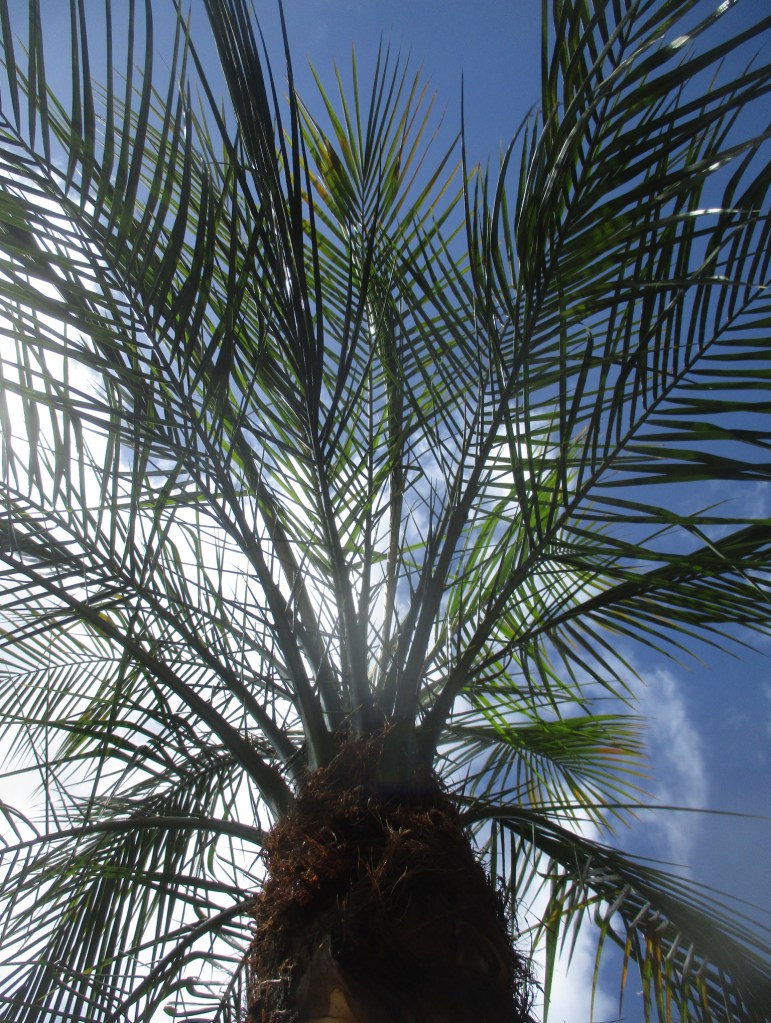
Canary Island date palm is the grandest of palm trees locally. Pygmy date palm, Phoenix roebelenii, is of the same genus, but conversely diminutive. Only a few very old trees are more than ten feet tall. Its pinnately compound leaves are less than four feet long. Its thin leaflets are less than ten inches long. The evergreen foliage is billowy with a fine texture.
However, inner foliage is somewhat spiny. Like all date palms, pygmy date palm defends its single terminal buds. The spines are actually specialized proximal leaflets. Unlike all other date palms, mature pygmy date palms are not conducive to relocation. Fortunately, they are compact enough to remain in large pots indefinitely. Many have multiple trunks.
Pygmy date palm, with enough sunlight, is a splendid houseplant. It is also proportionate to compact atriums and enclosed patios. It is ideal for those who enjoy the aesthetics but not the scale of big palm trees. Visually, pygmy date palm resembles common date palm more than Canary Island date palm. It appreciates regular irrigation, particularly if potted.
Trees conform to an overly vague definition. Most simply, they are substantial and woody perennial plants with tall trunks and branches. Yet, several Japanese maple trees are no more substantial than big shrubbery. Tree ferns and banana trees are neither woody nor branched. Arboriform yucca trees and palm trees are technically herbaceous, not woody.
Doum palms, which are the only palms that develop branches, are extremely rare locally. Any other palm which develops a branch is an extremely rare aberration. Therefore, with very few and extremely rare exceptions, palm trees develop no branches. A few, such as the Mediterranean fan palm, develop a few trunks though. All trunks develop at the base.
Palm trees are either fan palms or feather palms. Fan palms have round palmate leaves on sturdy petioles. Feather palms have elongated pinnately compound leaves on sturdy rachises. Most fan palms have nasty teeth on their petioles. Several feather palms have dangerously sharp spines on the bases of their rachises. All palms trees are evergreen.
Once palm trunks begin to grow upward, they do not widen. Nor do their foliar canopies. They grow only vertically. Those that encroach into high voltage cables require removal. Unfortunately, most palm trees grow high enough to necessitate the services of arborists. Although trunks do not expand, some large palms develop widely distended basal roots.
Mexican fan palms are the most prominent of palm trees locally because they are so tall. California fan palms, or desert fan palms, are shorter and stouter but much less common. Canary Island date palms are big and bold feather palms with wide and dense canopies. Common date palms, which only became common recently, are not as broad and dense.
Queen palms develop billowy and feathery canopies on tall and elegant trunks. They are among the most popular of palm trees nowadays. Windmill palms are relatively small fan palms with very shaggy trunks, but can grow tall. Mediterranean fan palms stay lower but with a few curving trunks. These are merely a few examples of many different palm trees. A few more are available. Bismarck palm and hesper palm are becoming more popular.
Flowering cherries are a complicated group of many distinct hybrids, of several species. Japanese cherry, Prunus serrulata, is the most common ancestor of almost all of them. It is a relatively small deciduous tree that does not get much more than twenty five feet tall. The wild species produces unpalatable fruit, but its many hybrids are generally fruitless.
Most flowering cherries exhibit splendid autumn foliar color, with yellow, orange and red. Weeping cultivars develop strikingly pendulous form. Birch bark cherry exhibits distinctly smooth and chestnut brown bark, with broad lenticels. Weeping cultivars are sometimes grafted onto birch bark cherry trunks. This combines pendulous form with smooth trunks.
The primary allure of flowering cherries, though, is their profusions of early spring bloom. Floral color ranges from bright white to rosy pink, although most cultivars are pastel pink. Flowers can be delicately single or billowy double. Some cultivars bloom slightly earlier or later than others, but all bloom quite early. Their blooming stems are pretty cut flowers.
Fruit trees such as apricot, cherry, peach and plum, bloom about now. Some are already finished, while a few are just beginning. Apple and pear trees will bloom somewhat later. More colorfully, flowering or fruitless counterparts of such trees are on similar schedules. Flowering apricot has already finished bloom. Flowering crabapple will likely bloom last.
The difference between fruit trees and their flowering counterparts is not their bloom. It is their fruit or lack thereof. “Flowering” has become a euphemism for “fruitless”. Trees with such designation produce either no fruit or fruit of relatively inferior quality. Wildlife might enjoy some of any inferior fruit. Although, even inferior crabapples might make good jelly.
Purple leaf plums are probably the most popular of this type of flowering or fruitless tree. Flowering cherry is less common. Flowering peach is somewhat rare. Fruitless pear is a popular street tree, but may not bloom as profusely as the others. Also, it does not bloom quite as early. Flowering quince grows as shrubbery rather than trees with upright trunks.
While very closely related, fruiting trees and their fruitless counterparts are very different. Fruiting trees should obviously produce fruit. That is their primary purpose. Their fruitless counterparts are merely ornamental. The truly fruitless types grow and bloom where fruit would be a messy nuisance. For example, some perform well as small scale street trees.
Because they are fruitless, such trees do not require specialized dormant pruning. There is no need to prune to concentrate resources into developing fruit. Nor is there any need to prune to accommodate the weight of fruit. Fruitless trees can assume their natural form and scale instead. Although none are large trees, they can grow taller than fruiting trees.
Also because they are fruitless, their bloom is their priority. They bloom more abundantly than fruiting trees, and some bloom with double flowers. Floral color is more diverse too, ranging from bright white to rich rosy pink. Some flowering crabapple trees bloom nearly red. Since dormant pruning is unnecessary, blooming stems are splendid as cut flowers.