All crabapple trees flower. Almost all subsequently produce fruit. Those designated as ‘flowering’ crabapples exhibit the most spectacular bloom, but generally produce inferior fruit. A few cultivars are nearly fruitless. Crabapples not designated as ‘flowering’ are not as bold in bloom, but generally produce larger fruit of better quality. Their fruit is useful for jelly and other culinary applications.
Almost all crabapple trees here are flowering crabapples. Fruiting crabapples are rare locally. Their fruit is not as popular as it is in other regions. However, flowering crabapples that produce big fruit are increasingly trendy. Their fruits can get as wide as an inch and a half, almost as big as fruits of fruiting crabapples. If not picked or eaten by birds, even typical berry sized fruits are messy.
White, pink or reddish pink bloom is impressively profuse, just prior to spring foliation. In fact, bloom is comparable to that of flowering cherries, and only a bit later. Most flowering crabapples get no taller than fifteen feet. Aggressive annual dormant pruning is not necessary as it is for trees that produce heavy apples. Instead, mature trees appreciate summer structure pruning and thinning.
Japanese maples get all the notoriety. They have such delightful texture and form. Many are proportionate to small spaces, such as atriums. Realistically though, they are overrated and overused. Meanwhile, other maples that work as larger shade trees remain obscure. Norway maple, Acer platanoides, gets broad enough to shade much of an urban garden, but rarely gets to forty feet tall.
Of course, Norway maple has innate limitations. It dislikes arid and harshly warm desert climates. Nor does it like to be too close to the coast. Los Angeles is about as far south as it wants to live. In the Pacific Northwest, it gets much bigger, and develops greedy roots. The non-cultivar species is invasive there. Norway maple defoliates neatly for winter, but then refoliates late in about April.
Almost all local Norway maples are cultivars. ‘Schwedleri’ has richly bronzed foliage. It is rare now, but was a popular street tree in the 1950s. ‘Crimson King’ has richer purplish foliage, but is less vigorous. ‘Drummondii’ displays delightful variegation. The deciduous foliage of Norway maple turns soft brownish yellow or gold for autumn. The palmately lobed leaves may be five inches wide.
So many really nifty small trees never get an opportunity to perform to their best potential. Many function so well as shrubbery that there is no need to prune them into tree form. Many just get shorn down because that is the most obvious option.
There certainly is no problem with maintaining large shrubbery as shrubbery if that is the intended function. Oleander, photinia, privet, bottlebrush and various pittosporums are all excellent shrubbery, and except for oleander, can be shorn into hedges. Yet, any of them can alternatively be grown into small trees.
‘Standards’ are shrubs that are trained onto single staked trunks. Small shrubs trained as standards, such as boxwood, azalea and euryops, are really only shrubbery on a stick. The larger shrubs though, are more often trained onto trunks about six feet tall so that they can develop as small trees with single trunks.
However, they do not necessarily need single straight trunks. Many have naturally sculptural trunks that are worthy of display. They can be planted as shrubbery, and simply trained up on a few of the trunks that they are naturally equipped with. They only need lower growth pruned away as they mature, instead of getting pruned down.
Overgrown shrubbery that has become so obtrusive that it might otherwise need to be removed can often be salvaged by getting pruned up as small trees. For example, if a New Zealand tea tree or myoporum has gotten so wide at the base that it is awkward to work around, the basal growth can be pruned away so that only upper grown that has adequate clearance remains suspended on exposed trunks. The gnarly trunks within are often more appealing than the abused foliage that obscured them.
Japanese maple, crape myrtle, water gum (Tristania laurina) and various podocarpus really are small trees, but often get shorn instead of pruned properly by ‘mow, blow and go’ gardeners who do not know any better. Olive, coast live oak and saucer magnolia are substantial trees that often get shorn into shrubbery before they can grow beyond the reach of abusive gardeners.
Hollywood juniper as well as some of the other larger junipers naturally develop into sculptural small trees that are just as appealing with or without their lower growth. The gnarly foliated stems are just as sculptural as the trunks and stems within. If space allows, they can be left to grow somewhat wildly with only occasional pruning of superfluous stems.
There are no flowery pictures here this week. Nor is there a picture of Rhody. I know that everyone loves Rhody. Also, I had been trying to include something flowery as everyone else does. Instead, I got only pictures of damage that was caused by very strong wind that blew through here on Monday night and Tuesday. I missed it while at my other work, but now have a major mess to contend with. Redwoods are very big and very messy, even without wind. With wind, they are very dangerous too. No one can remember stronger wind here.
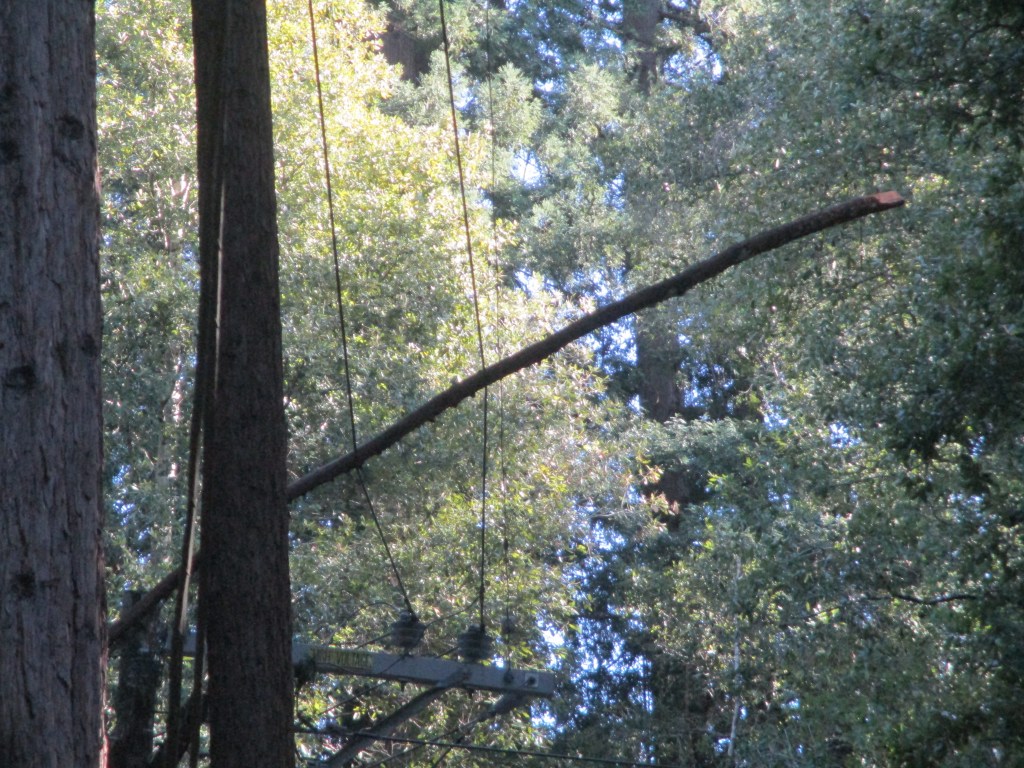
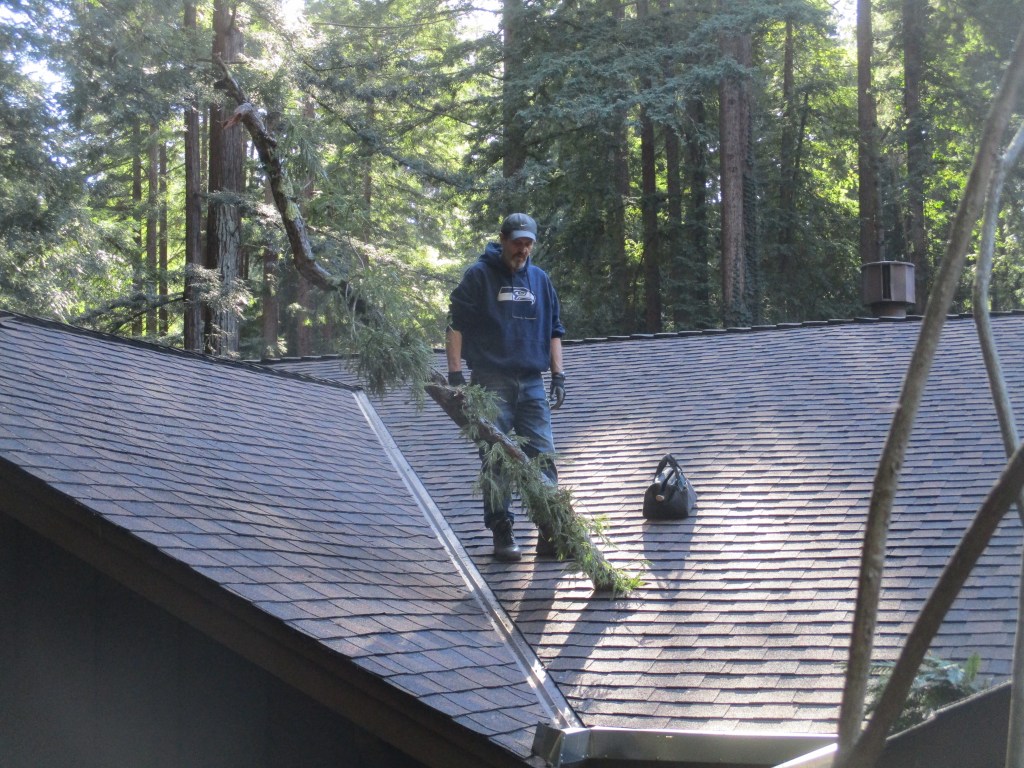
1. Electricity sometimes gets disabled prior to strong wind. This wind storm disabled the electricity first. Debris such as this needed to be removed before the electrical service was restored.
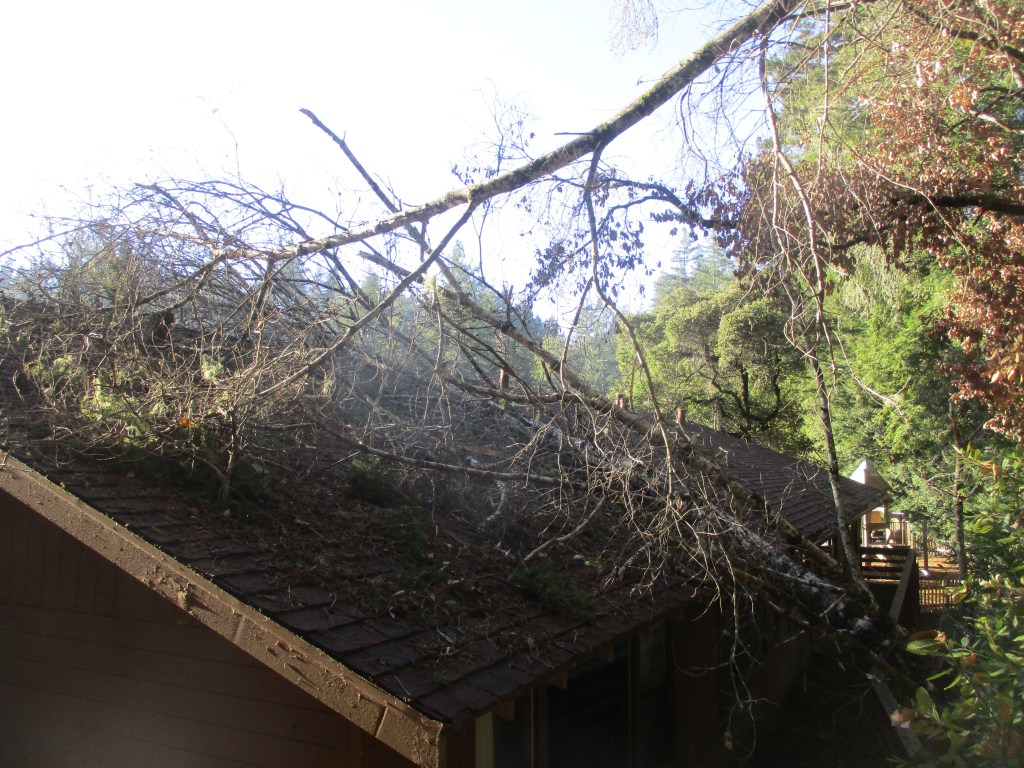
2. Decayed dead trees blow down easily, even without much drag. They are not as heavy as viable trees, but are not as flexible either. A few stubs of broken limbs perforated this lodge roof.
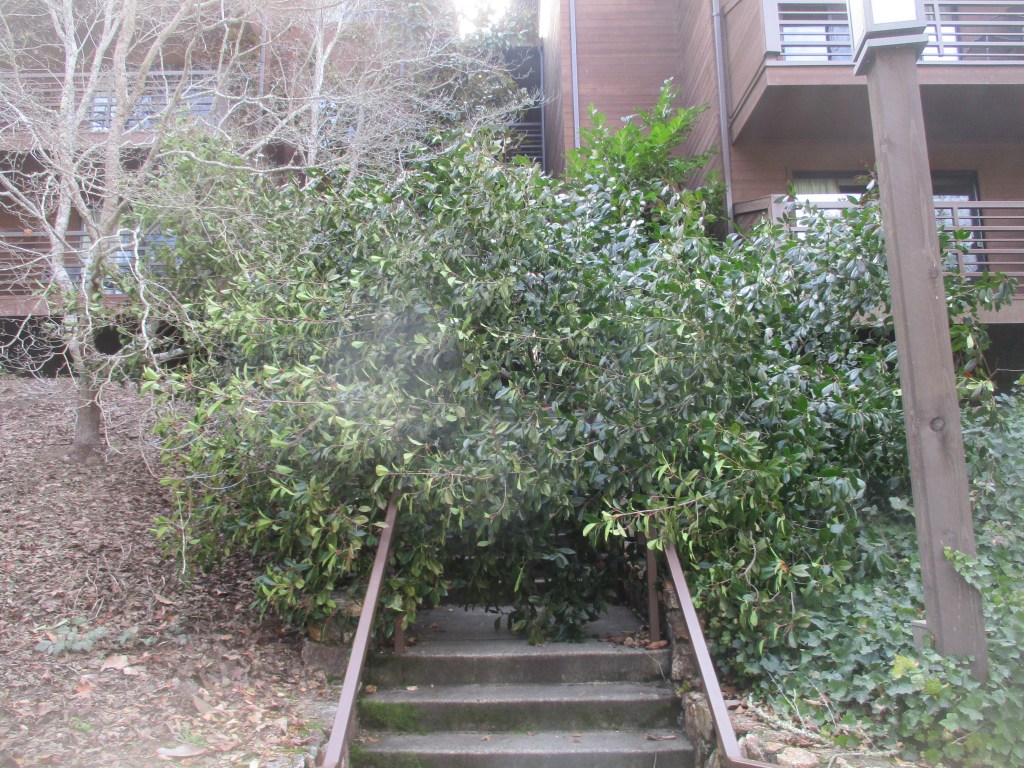
3. Stairway to photinia was too silly to not get a picture of. The photinia looks as if it had always been there. I certainly did not expect it to fall over. We took the necessary steps to remove it.
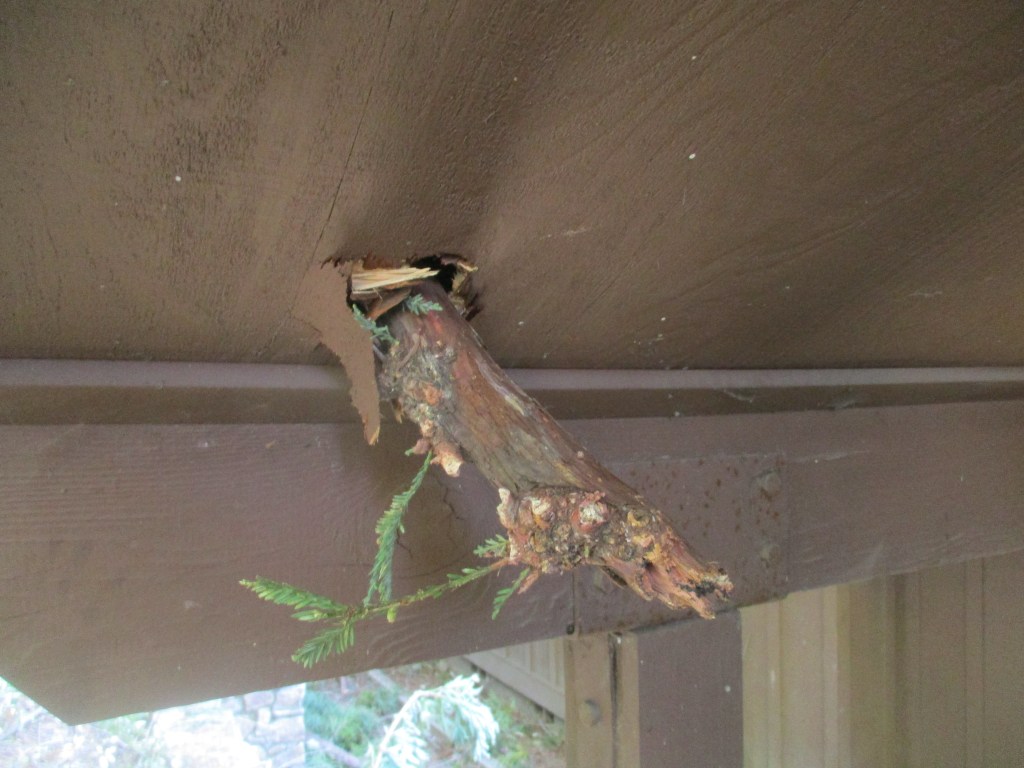
4. Redwoods are hundreds of feet tall. Even small limbs that fall from such heights come down with significant momentum. This limb punctured the roof and this plywood porch ceiling below.
5. Several limbs such as this perforated this same roof. Abundant other debris was raked and blown off before these limbs could be removed, and the roof could be patched. Rain is expected.
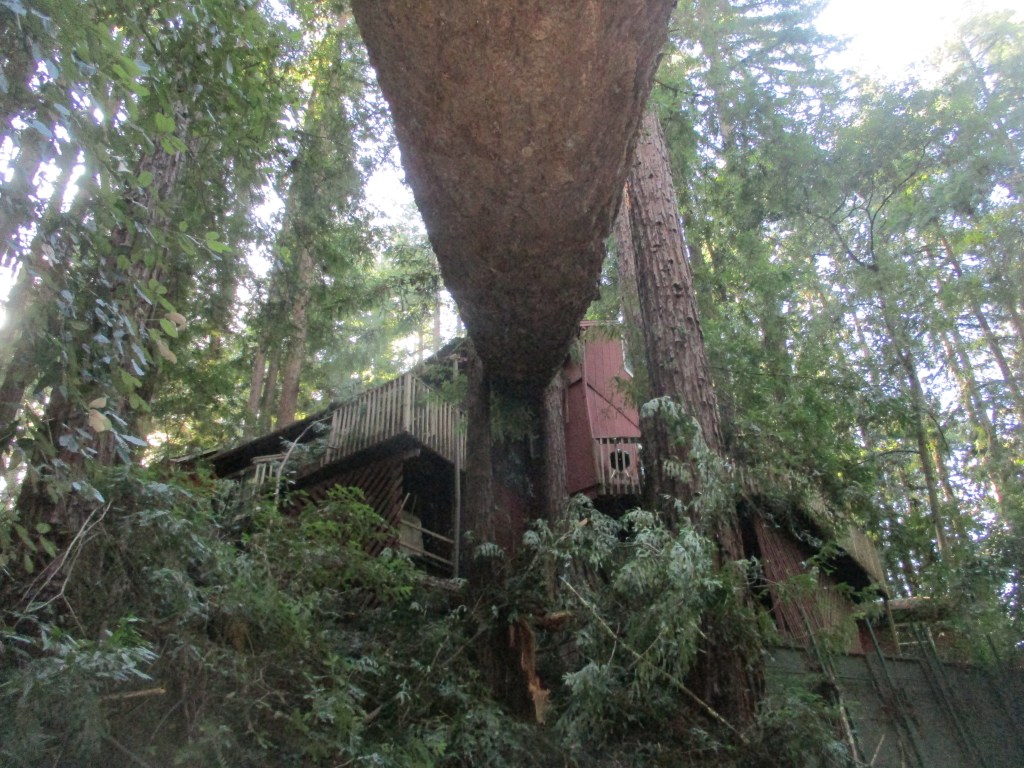
6. This roof, as well as the house below it, got the worst sort of damage when this big fir came down. Sadly, this is not the only home that was destroyed by falling trees. Several cars died too.
This is the link for Six on Saturday, for anyone else who would like to participate:
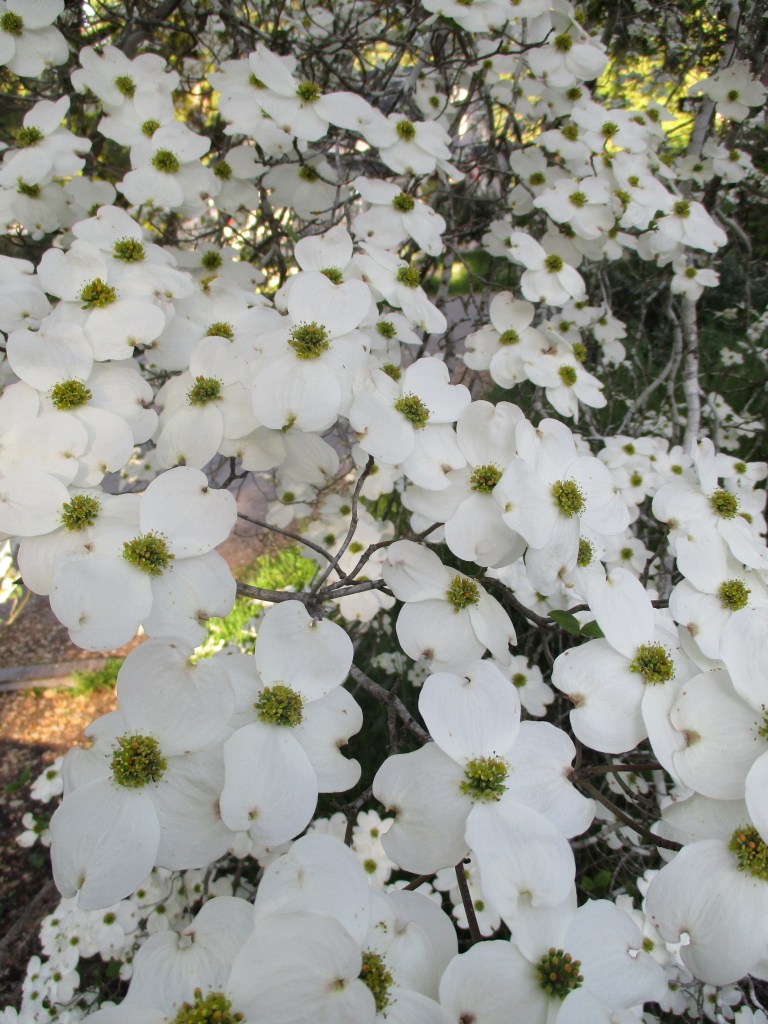
Flowering dogwood, Cornus florida has something in common with Poinsettia. The most colorful component of their bloom is not floral, but is instead foliar. What appears to be petals are colorful leaves known as bracts. Exactly four bracts surround each small cluster of tiny and unimpressive pale green real flowers. These bracts are most popularly white, but can be pink or rarely brick red.
The deciduous trees are bare now, but bloom spectacularly in early spring. Any necessary pruning should happen after bloom, and preferable after new foliage matures somewhat. Floral buds for next year are already prominent on the tips of bare twigs. Dormant pruning would eliminate some of the buds prior to bloom. For now, only minor grooming of unbudded interior growth is practical.
Mature flowering dogwood trees can be twenty feet tall, but typically stay lower. As understory trees, they prefer a bit of shelter from larger trees. Foliage can scorch if too exposed. Some cultivars have variegated foliage. All can develop vibrant orange and red foliar color for autumn, even with minimal chill. Floral debris resembles fallen leaves that fall just as new and real foliage develops.
For spacious landscapes, Canary Island pine, Pinus canariensis, became more common than Monterey pine through the 1970s. New trees became less popular as old trees demonstrated how big they get! However, as seemingly docile live Christmas trees, they still often sneak into gardens that are not big enough for them. Their short blue juvenile needles suggest that they stay small.
They instead get quite tall. Old trees can get more than a hundred feet tall, even if their canopy gets no wider than twenty feet. Their rich brown bark is distinctively and coarsely textured. Their thin and long needles are somewhat pendulous, with a rather fluffy appearance. They are in bundles of three. Although individual trees are not very broad, their shade can get too dark for other plants.
Canary Island pine is a stately tree, but is not easy to accommodate. It produces copious foliar debris that can shade out lawn and ground cover, and accumulate on shrubbery. In unrefined areas, without other plants, foliar debris suppresses weeds. However, too much can be combustible. Such grand and resilient trees suit parks, and are ideal for freeway embankments and interchanges.
Cut Christmas trees are just really big cut foliage, like what comes with cut flowers.
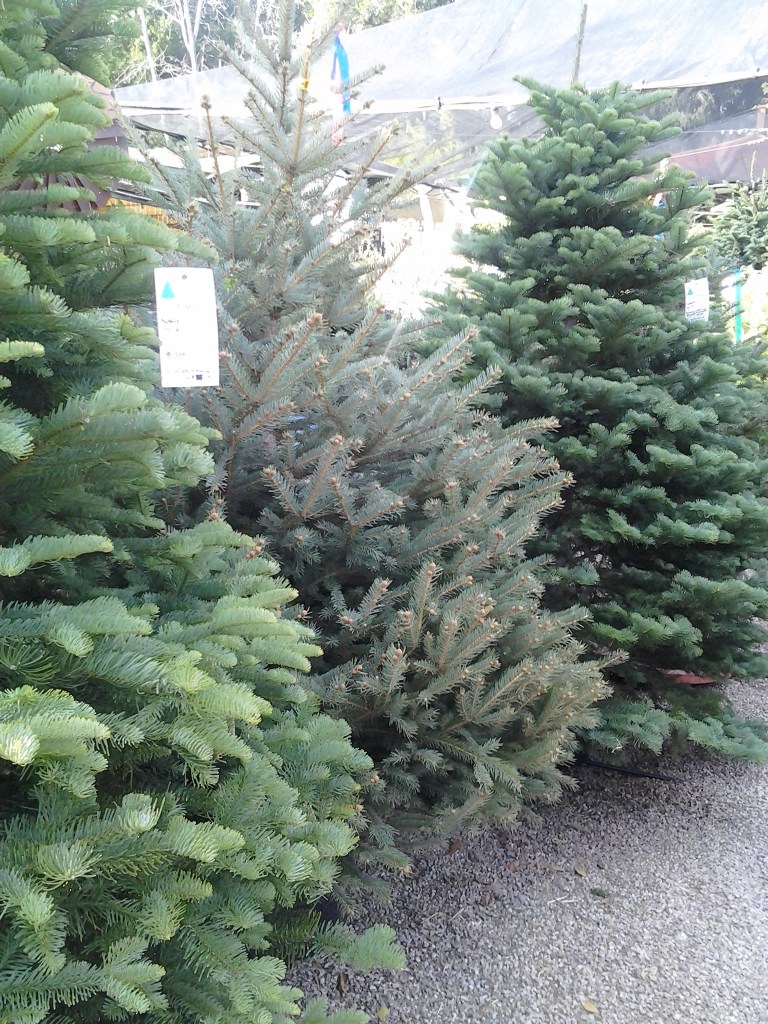
By now most people have already acquired their Christmas trees. Some are live trees in containers. Some are artificial. Most are cut firs, pines, or alternatively, spruces, cedars, cypresses or even junipers. For at least the next two weeks, these trees dutifully maintain their healthy green vigor to brighten our homes with Christmas cheer.
Cut trees should have no problem lasting from the time they were originally cut through Christmas, as long as they get plenty of water. Artificial trees do not have much choice in the matter. Live trees are probably more reliable than cut trees are in regard to freshness, but can be more awkward to accommodate in the home, since they are more likely to leak excess water that can damage floors. If they they get a bit dry, live trees can also be sensitive to relatively dry and warm interior air after spending autumn out in cool and humid garden environments.
The main problem with living Christmas trees though, begins after Christmas. Spruces and other compact evergreens that can work as Christmas trees for several years need to be returned to the garden and maintained until next Christmas. Retired living Christmas trees, including those common, small trees that can be purchased with a few decorations already wired to their stems, eventually need to be planted out into the garden. Circling roots (that grow around the perimeter of a container in search of a way out) need to be severed so that they do not get constricted as they mature.
Unfortunately, with few exceptions, living Christmas trees mature into significant trees when they get the chance to grow. Those common, pre-decorated trees are most commonly juvenile Italian stone pine or Canary Island pine, which become very large trees. Because they seem so innocent as small potted trees, they often get planted in very awkward situations where they do not have enough space to grow without damaging nearby features.
Planting such a tree out in a forest is not practical, since it will not survive through the first year without supplemental watering. Their roots are just too confined to reach out for moisture. Even if such a tree could survive, it would not be an asset to the forest, since it would be an exotic (non-native) species.
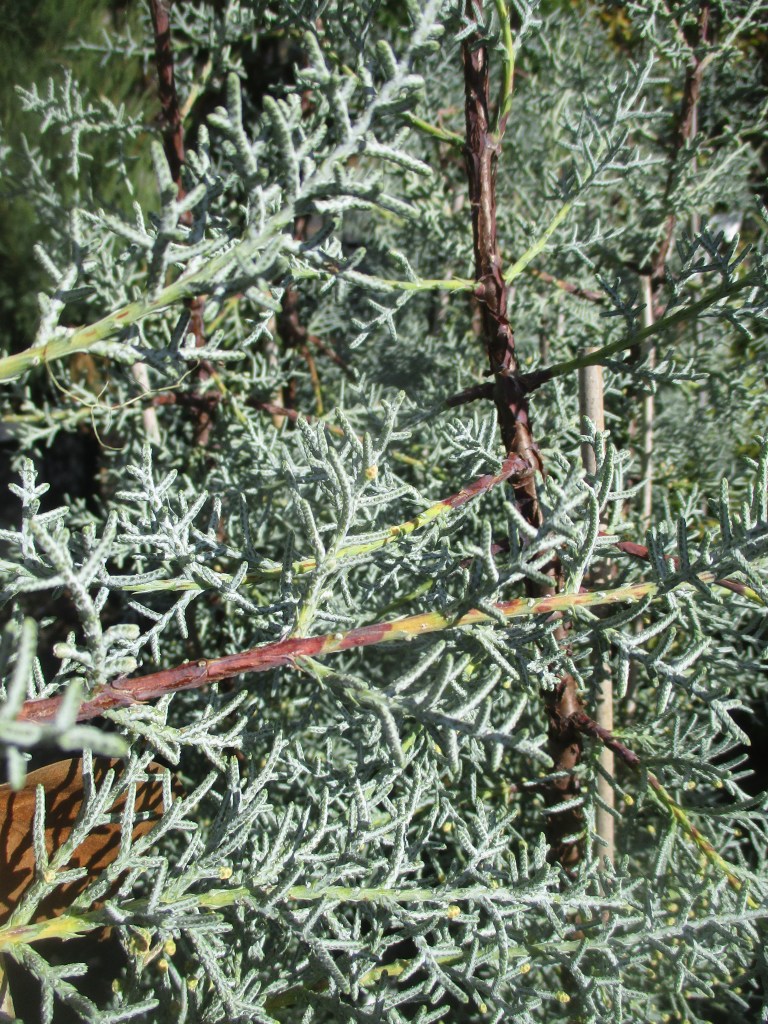
If Hetz blue juniper grew as a tree, it might look something like Arizona cypress, Cupressus arizonica. The evergreen foliage of modern cultivars is almost as blue as blue spruce. Older trees that grew from seed (not cloned) can exhibit significant genetic variability, and are more grayish green than blue. Some are stout and shrubby. Taller specimens might exhibit sculpturally irregular form.
In the wild, Arizona cypress is even more variable, with as many as five distinct varieties. Some varieties are sometimes classified as separate species. Shorter types may get no taller than a two story house. Taller types get twice as tall, and as wide as thirty feet. Trunks can get two feet wide. Smooth Arizona cypress has patches of distinctively flaking bark over shiny chestnut brown bark.
Arizona cypress are best where they can develop their natural form. They prefer no more than minor pruning of awkward stems. Although, none seem to mind grooming to eliminate dead or aging stems. Modern cultivars are more conducive to minor pruning than older trees. Some cultivars supposedly make nicely dense shorn hedges. Furthermore, shearing enhances the blue foliar color.
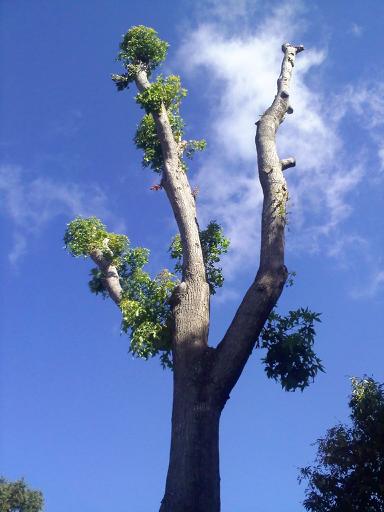
I use the term loosely. Okay, so maybe I use it mockingly in this context. This sort of thing really should have no connection to the works of Calder, Rodin or Brancusi. It might be worthy of a few fancy adjectives, such as ‘severe’, ‘unusual’, ‘dramatic’ and ‘bold’. Horticulturally though, we might be thinking more like ‘disgraceful’, ‘abhorrent’, ‘ridiculous’ or ‘just plain sad’.
There is nothing wrong with pollarding, that severe sort of pruning that almost all other arborists will tell you is wrong. It involves pruning trees back to the same distended terminal knuckles every winter. Only a few trees are adaptable to the technique, and technically, sweetgum happens to be one of those few trees.
The stipulation is that once pollarded, they MUST be cut back to the same knuckles EVERY winter. A small stub or maybe two can be left on knuckles to allow them to elongate…
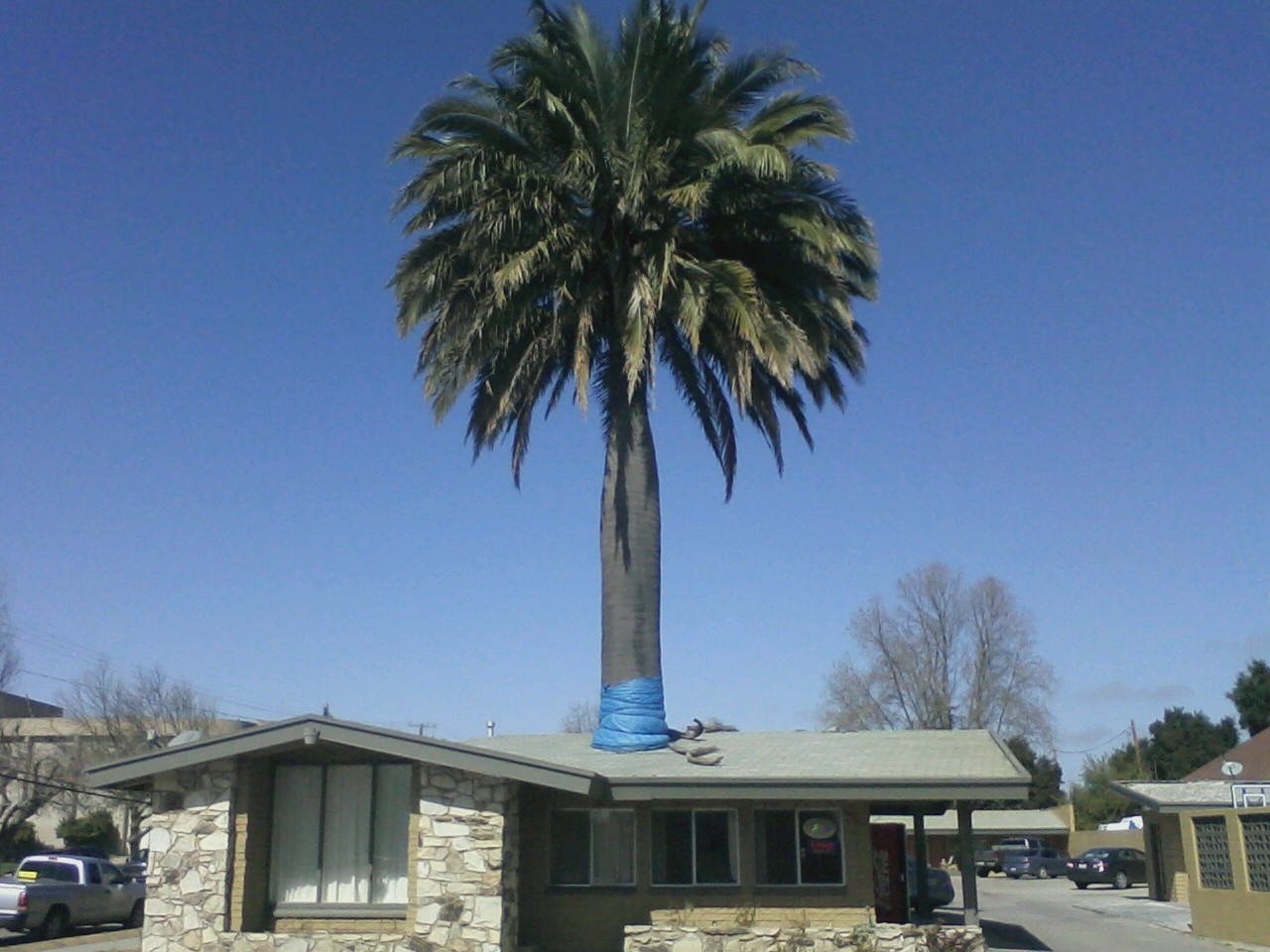
None of the above. It is just weird architecture, designed to preserve a rare Chilean wine palm. The tree was probably planted in the front garden of a Victorian home that was on this site before the site was redeveloped. Chilean wine palms were more popular back then; and this one seems to be about that age. Although it seems to be healthy now, the constriction in the trunk indicates that it had been stressed by the redevelopment, which undoubtedly covered much of the established root system. The time it took for the length of trunk above the constriction to grow coincides with the estimated age of the building below. The tree very likely had better access to rainwater before.




 Is this a bad idea for a green roof?
