It is a hybrid. It is naturally occurring. Yet, most cultivars (garden varieties) resulted from intentional hybridization and selection. It is not as strange as it seems. Freeman maple, Acer X freemanii, is a naturally occurring hybrid of silver maple and red maple. It grows wild where the natural ranges of the parents overlap. From their example, breeders learned to selectively breed the cultivars.
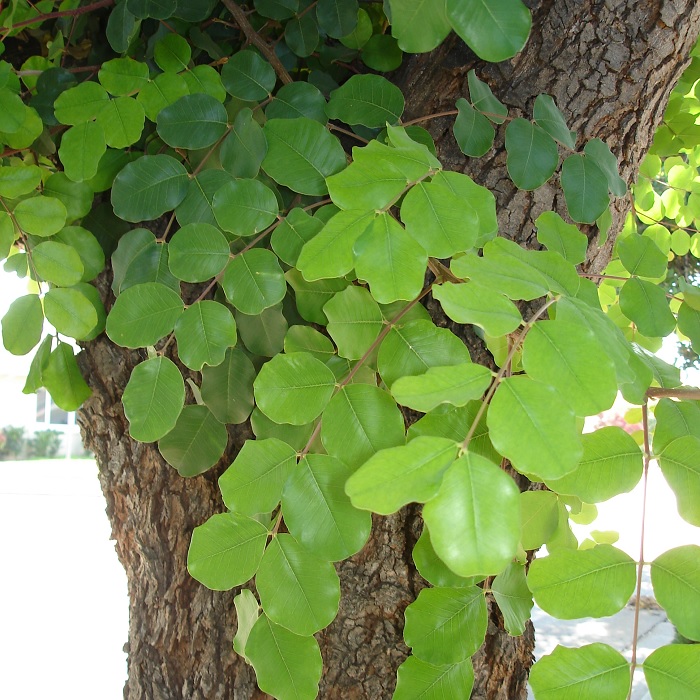
These cultivars combine the fast growth rate of silver maple with the structural integrity of red maple. None get to be as imposing as the silver maple. Some get to be about forty feet tall and wide, which is a bit bigger than red maple gets in local climates. Foliage is lacy like that of silver maple, but more substantial, like that of red maple. It develops brilliant orange and red color for autumn.
Freeman maple, although locally uncommon, is one of the more practical maples here. Like silver maple, it does not require much chill in winter. Like red maple, it develops a symmetrical canopy with reasonably high branches. Roots should be complaisant with concrete. Because it is a hybrid, it is mostly sterile. It does not produce enough seed to be invasive in more conducive climates.