Dia de los Muertos, or Day of the Dead, was yesterday, Friday, November 2. However, the dead are still dead. They don’t need a special day to be so. In fact, they do it every day of the year. Dia de los Muertos is just one day of celebration to honor them.
Dia de los Muertos is not for plants though. Dead plants just get cut down and disposed of. Some get composted. Dead trees get recycled into firewood. These are six pictures of five species of dead plants that I needed to contend with in the week before last.
1. Rhododendron. I really do not know what killed this group of rhododendrons. It is not uncommon for one to die. With all the rhododendrons in the landscape here, a few dead ones get removed annually. However, it is rather disconcerting that a few died all in the same area at the same time. All their dead stems were rather sculptural. They were removed just after this picture was taken. Of the five specie in these six pictures, this is the only species that is not native.
2. Madrone. Bits and pieces of madrone commonly succumb to blight, sort of like fireblight in apple and pear trees. Sometimes, entire trees are killed like this one. It is fire wood now.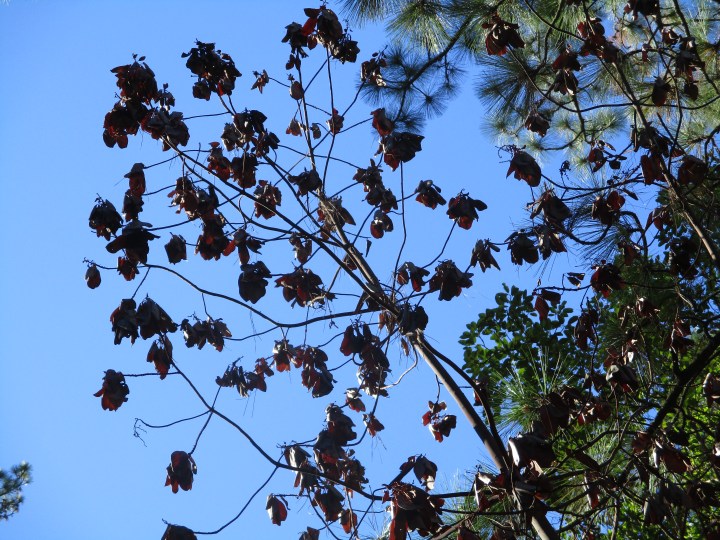
3. Ponderosa pine. The forest does not burn as frequently as it used to before people were here to extinguish forest fires. The lack of restorative fires interferes with regional ecology. Not only is the forest becoming congested with unburned fuel, but pathogens are proliferating in the aging flora and consequently accelerating the deterioration of the forest, which increases the combustibility. It is a natural process designed to correct an unnatural lack of restorative fires, but does not go well for those of us who live here. Ponderosa pines can live for a few centuries. However, in our compromised ecosystem, many succumb to pathogens while still relatively young. This one will need to be removed next year. Once dead, they deteriorate and start to drop limbs within the year.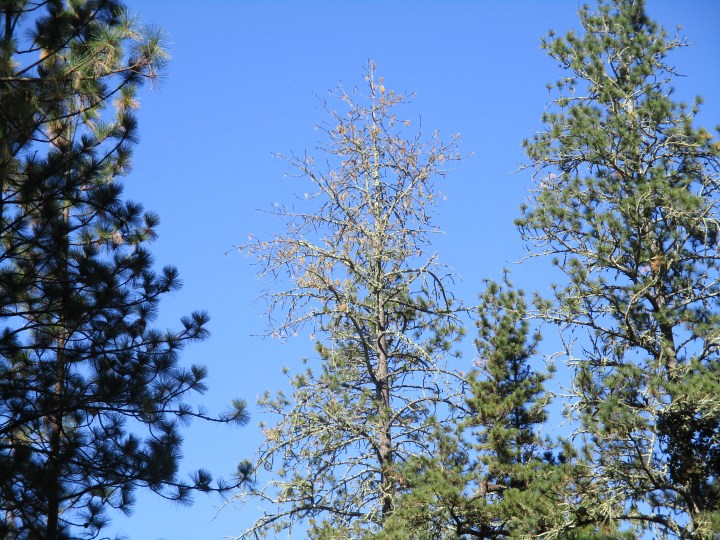
4. Coast live oak. This is one of the most adaptable of tree specie in California. It lives right down to the beach, and into interior valleys, and up the summit of the Santa Cruz Mountains. It does what it must to adapt to the various environments within its range. It often lives in groves of the same, where it is more likely to burn every few decades or so. In spacious valleys, it is often not so social, with individual trees living in relative isolation from their neighbors. Grass fires can burn harmlessly between such trees, allowing them to live for a few centuries. Wherever they are, they develop more trunks than they need. As they mature, subordinating trunks like this one, get shed naturally and harmlessly. It is not as bad as it looks. In the wild, it would rot and fall to the ground as the rest of the tree continues on as if nothing happened. In our landscape, it was cut and taken away.
5. Coast live oak. This dead foliage is a bit more alarming because I do not know what caused it. It is probably superficial damage caused by a girdling beetle. I did not look for evidence. Sudden Oak Death Syndrome is a much more serious disease that is all too common here (and a very sensitive subject). Fortunately, this particular specimen is a small and unimportant tree that I would not mind cutting down if it were to succumb. I just do not like to be reminded of how rampant Sudden Oak Death Syndrome is here.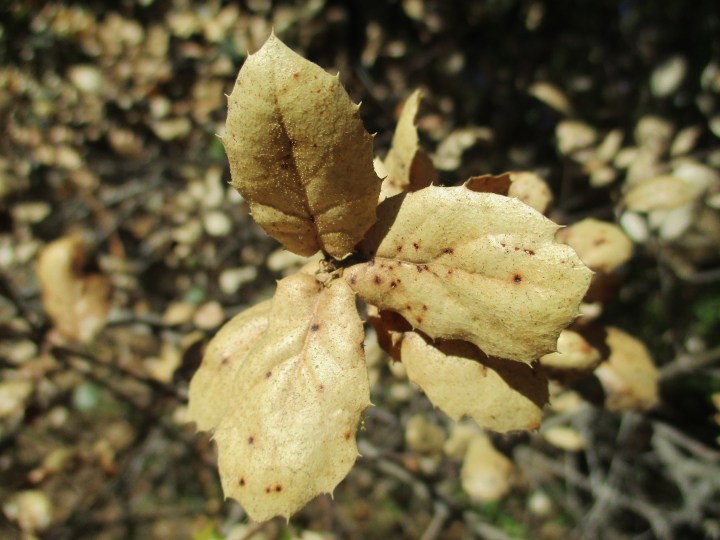
6. Tan oak. This tree really did succumb to Sudden Oak Death Syndrome, Phytophthora ramorum, which is more commonly known here as SODS or SOD. A few adjacent tan oaks that succumbed last year are already very deteriorated and will soon be dropping limbs if not removed over winter. These particular trees are not very important to the surrounding forest. Their removal will actually improve the collective landscape, and give the surrounding redwoods more space to expand. The problem with SOD is that we never know which oaks it will kill next. It kills trees before we know they are infected. There is no remedy.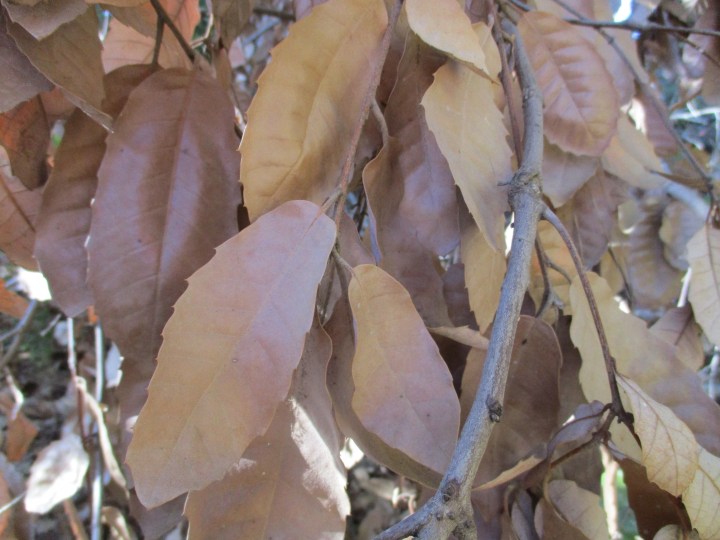
This is the link for Six on Saturday, for anyone else who would like to participate:
https://thepropagatorblog.wordpress.com/2017/09/18/six-on-saturday-a-participant-guide/
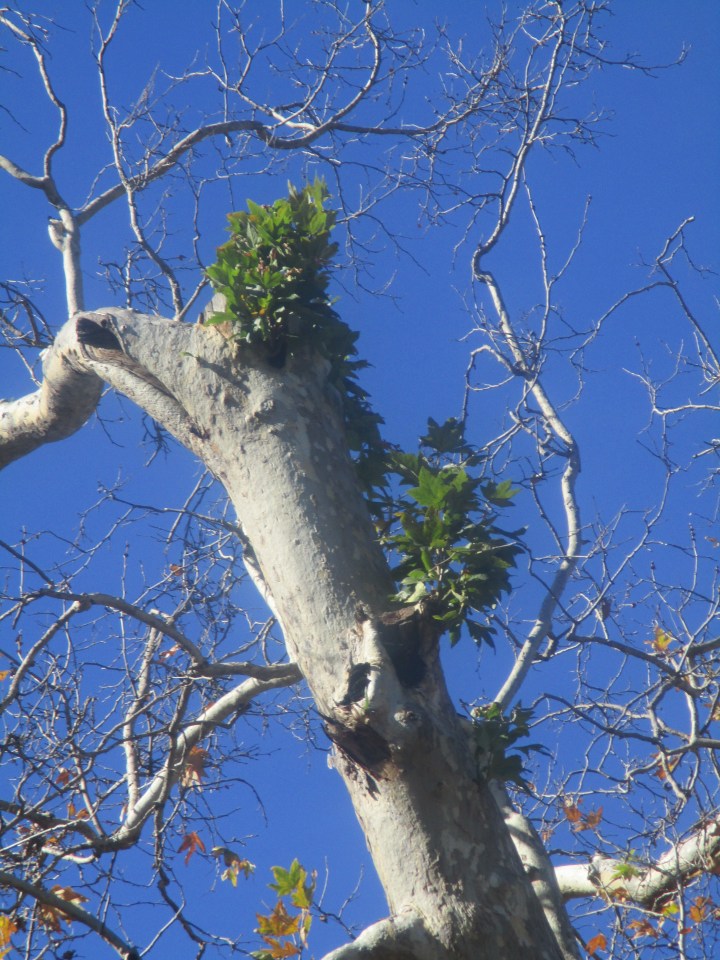 The tufts of small branches that so often develop where limbs were pruned from the trunks of a coast live oaks are sometimes referred to as ‘tumbleweeds’. They are about the same size as an average tumbleweed. By the time the get any larger, most of the smaller stems have subordinated and died out, leaving only a few more defined dominant stems, which will continue the process until even fewer or a single new branch dominates. Such tumbleweeds, as well as stems that originated from such growth, are weakly attached to the main trunks. They often get pruned off for the same reason that the limbs that were there before got pruned off, or because they are expected to be weakly attached. If they remain long enough, they can of course develop into new limbs.
 All around town, there are Italian stone pines, Canary Island pines, Monterey pines and Aleppo pines that are much too big for the home gardens that they live in. Some are too close to pavement or foundations. Others are under utility cables. Many are shading or crowding out other more desirable plants. What most have in common is that they started out as living Christmas trees.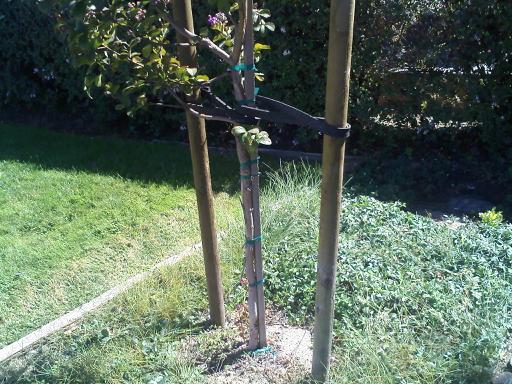

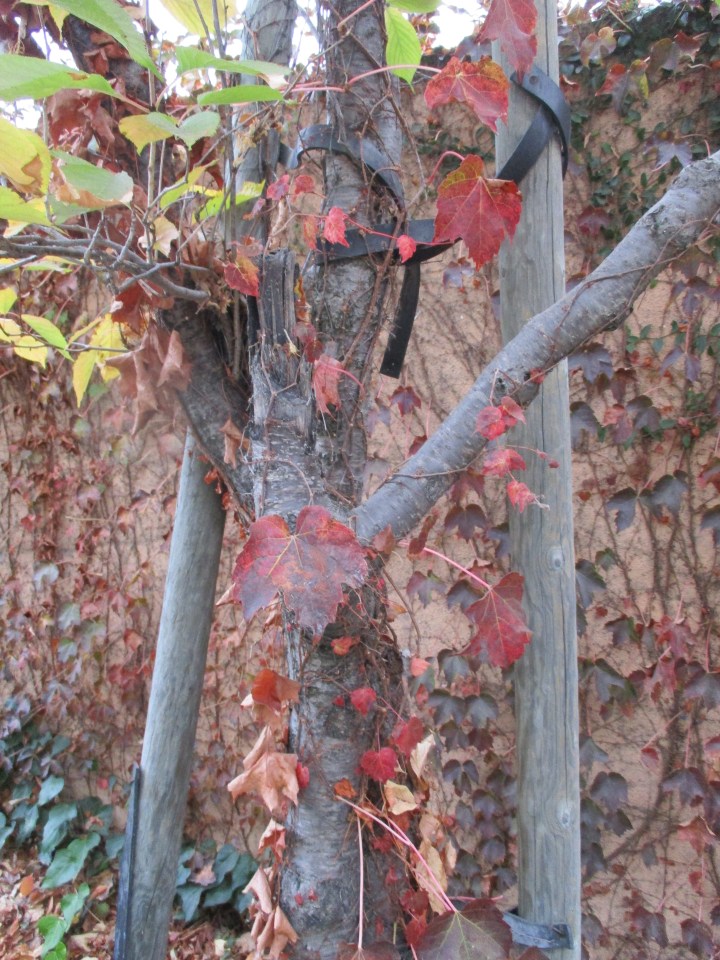
 Some of us may remember deodar cedar, Cedrus deodara, from the opening scene of the Andy Griffith Show. They were in the background as Andy Taylor and his son Opie skipped stones on Myers Lake near Mayberry in North Carolina. Those well established and naturalized trees and the pond are actually in Franklin Canyon Park in the Santa Monica Mountains above Beverly Hills.
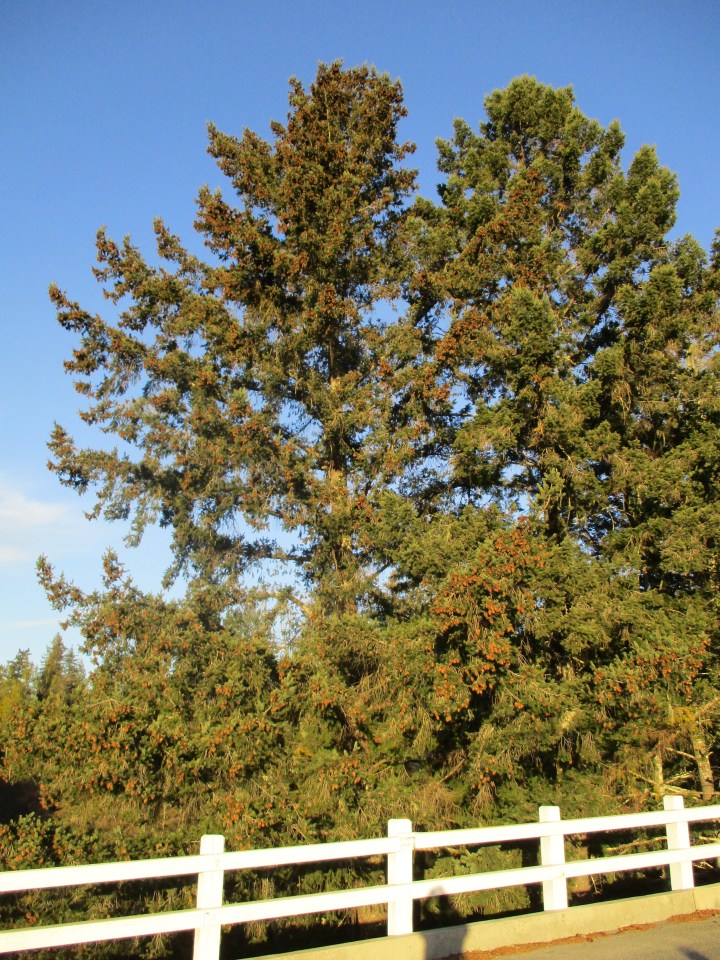 The first storm of the year has a way of reminding us if our trees need attention. Whether then need to be worked on this year or not, we tend to notice how they blow in the wind, or if they are full of dead and deteriorating debris that falls into the garden or onto the roof. As deciduous trees defoliate, they are less likely to be damaged by wind, but their structural deficiencies become visible.
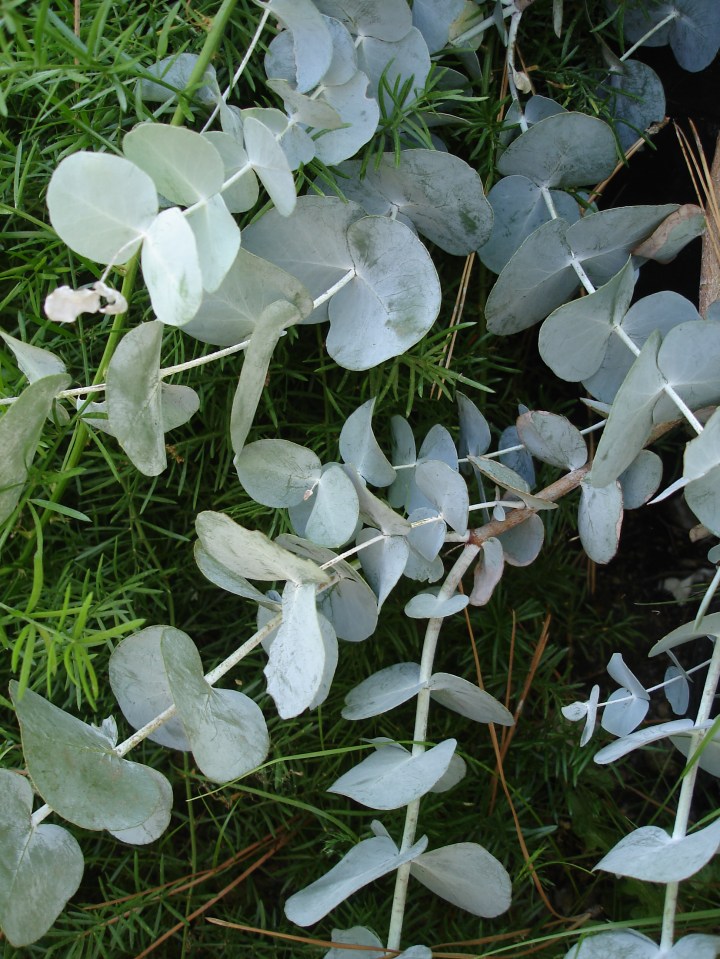 Junipers have a bad name. So do eucalypti. Too many of the wrong types were planted back at a time when they were too trendy. Those that were planted into inappropriate situations grew up to cause problems. The names of all junipers and eucalypti are now synonymous with those problems, even though there are many types of both genera that are quite practical for landscape purposes.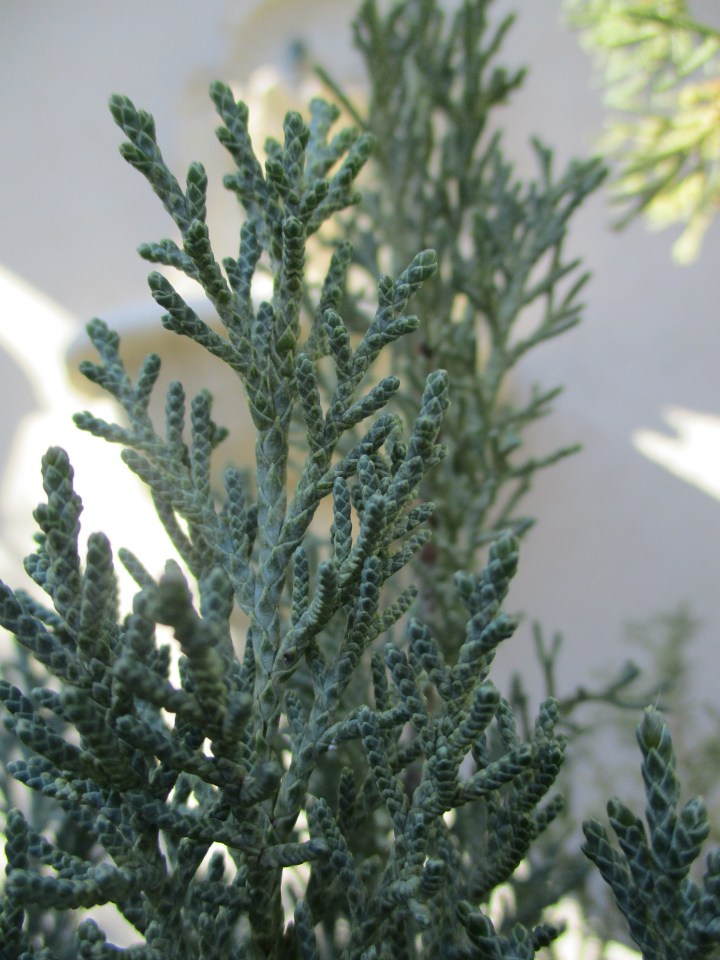
 By ‘big trees’, I don’t mean the various ficus trees that can grow up to the ceiling, and be quite happy inside. I am referring to the shade trees that live out in the yard, or forest trees that live beyond that. They are outside for a reason . . . or actually, several reasons. They are too big to bring inside. They probably would not like the climate inside. No one wants to rake fallen autumn leaves inside. Well, you get the point.
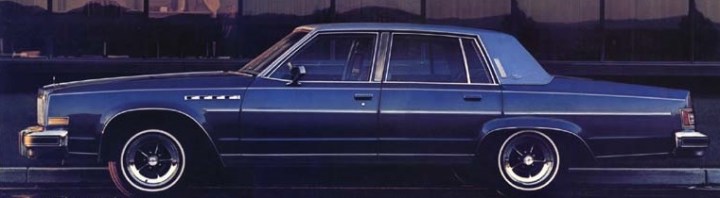 That is a myth. They do not hate all cars. They just hate particular cars.