Tufts

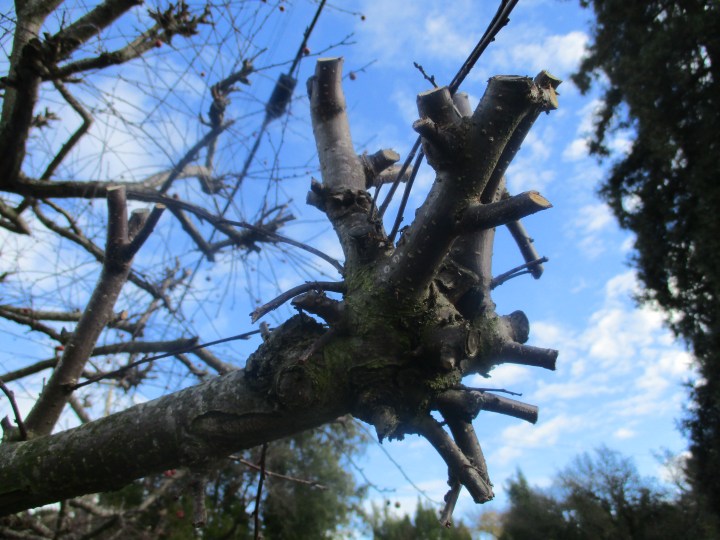
P81208KKThe tufts of small branches that so often develop where limbs were pruned from the trunks of a coast live oaks are sometimes referred to as ‘tumbleweeds’. They are about the same size as an average tumbleweed. By the time the get any larger, most of the smaller stems have subordinated and died out, leaving only a few more defined dominant stems, which will continue the process until even fewer or a single new branch dominates. Such tumbleweeds, as well as stems that originated from such growth, are weakly attached to the main trunks. They often get pruned off for the same reason that the limbs that were there before got pruned off, or because they are expected to be weakly attached. If they remain long enough, they can of course develop into new limbs.

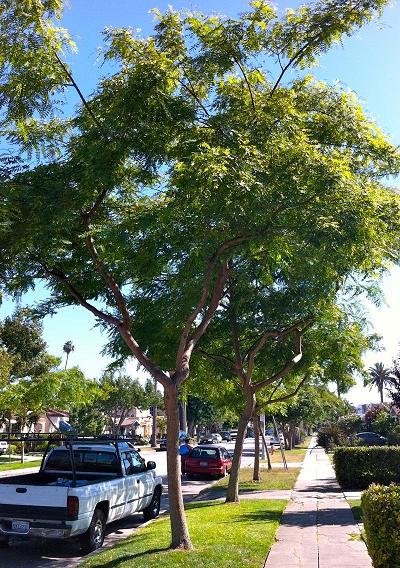
Tufts of the same sort of growth on sycamores or other deciduous trees are known more simply as . . . ‘tufts’ I bet you didn’t see that coming. They can get much bigger than tumbleweeds before they develop much distinction between the dominant and subordinate growth. Because tuft growth is innately vigorous, the leaves are bigger and coarser. Then, when the rest of the deciduous trees that produce them defoliate in autumn, the tufts retain their green foliage until it gets ruined by frost.

This big sycamore dropped its top over summer. https://tonytomeo.com/2018/07/14/nature-is-messy/ The tufts developed on the big trunks that became exposed to sunlight by the loss of the upper canopy above. The tree will naturally try to replace its top, but will also naturally be even more disfigured and structurally deficient than it already was. As the tufts develop into limbs, and the limbs get heavy with foliage, they will be very likely to break away and fall. As unpleasant as all that sounds, it is quite natural for such a mature sycamore who is so old that he just doesn’t care who gets offended anymore.

Living Christmas Trees Grow Up

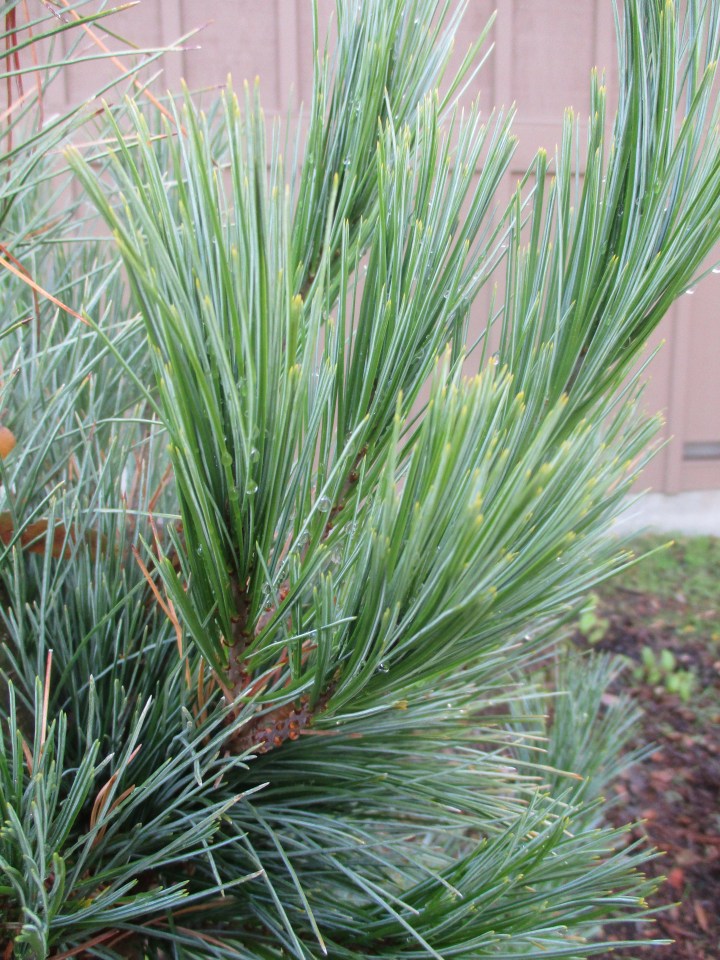
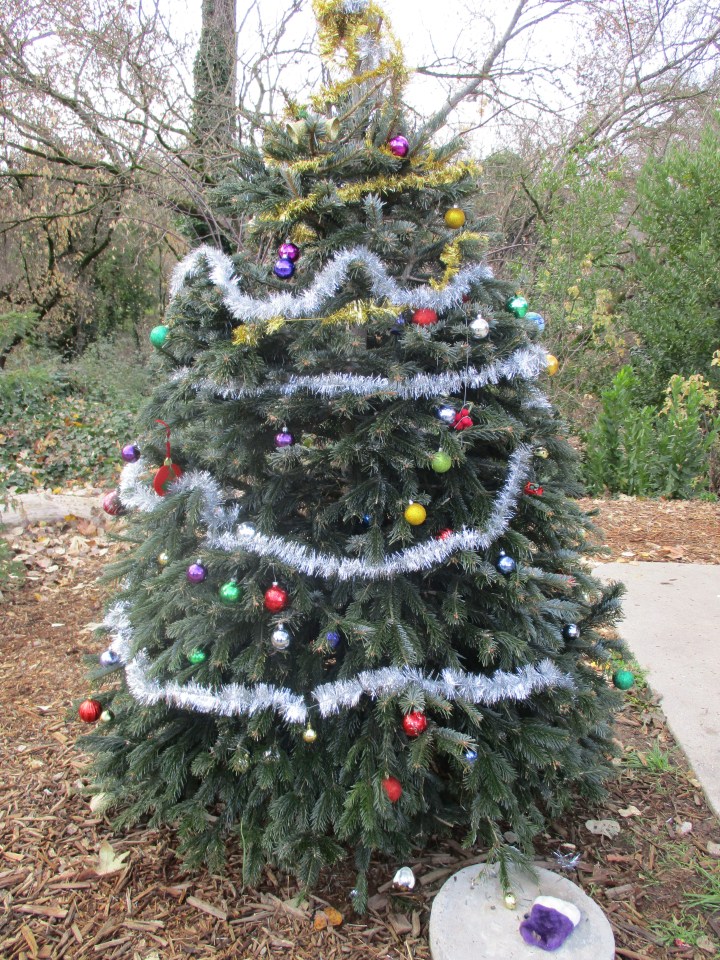
81031All around town, there are Italian stone pines, Canary Island pines, Monterey pines and Aleppo pines that are much too big for the home gardens that they live in. Some are too close to pavement or foundations. Others are under utility cables. Many are shading or crowding out other more desirable plants. What most have in common is that they started out as living Christmas trees.

Because they seem to be so cute and innocent when they are decorated in a small pot, living Christmas trees very often get planted where they really do not belong. Not much consideration is given to their true potential. Pines are innately difficult to contain, and can not easily be pruned back for confinement once they get growing in a space that is not spacious enough for them.

Living Christmas trees simply are not often the horticulturally responsible option for Christmas trees that we would like to believe that they are. Very few end up in good situations where they have room to grow. Planting them in the wild is not practical, since their roots are too confined to survive without watering. Because they are not native, they should not be planted in the wild anyway.

Contrary to popular belief, the most popular of the living Christmas trees do not do well in containers long enough to function as Christmas trees for more than just a few years. Some spruces and small pines can be happy in containers for many years, but can be demanding. If their roots get too disfigured, they are less likely to adapt to the landscape when they outgrow containment.

Ironically, cut Christmas trees are usually more practical than living Christmas trees. They may seem to be expensive, but they are less expensive than living Christmas trees of good quality (unless a living Christmas tree functions for a few years.) Even though they are bigger, cut Christmas trees are not as heavy and unwieldy as the big tubs of soil needed to sustain living trees.

Cut Christmas trees are not harvested from forests, but are grown on farms like any other horticultural commodity. There should be no guilt associated with bringing one into the home. In the end, they can be composted or otherwise recycled like green-waste. There is no long term commitment, and no need to provide accommodations for an eventually humongous tree in the garden.

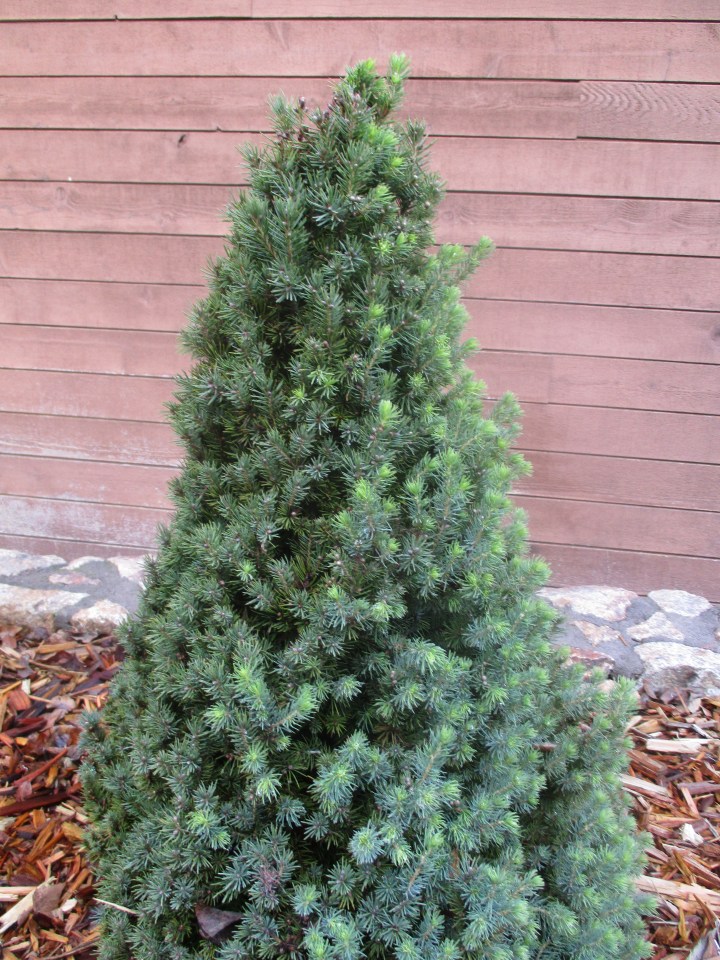
Those who insist on procuring a living Christmas tree should choose responsibly, and be ready to accommodate a growing young tree. Although not big enough to be real Christmas trees, dwarf Alberta spruce like those in the picture above are sometimes decorated as a small live Christmas tree. They happen to be conducive to confinement in proportionate pots. One in the ground, they grow like strictly conical shrubs that do not get big enough to cause problems.

Horridculture – Well Done Stakes Are Rare

P81128++

Stakes are temporary. That is what so called maintenance ‘gardeners’ do not seem to understand. Stakes should not stay any longer than necessary, so need to be removed sooner than later, depending on their function. Stakes that are left too long can interfere with the healthy development of the trees and vines that they were intended to help.
Nursery stakes are used either to straighten the trunks of developing trees, or to support climbing vines. They must be removed when the trees or vines that they worked for get installed into the landscape, or as soon after installation as possible. Some flimsy trees may need their stakes for more than their first year.
The problem with leaving trees bound to their nursery stakes for too long is that they rely on the stakes for support as they grow, so do not put much effort into supporting their own weight.
The picture above shows a coast live oak that was staked properly with landscape stakes to the side, but while still bound to the original nursery stake. Because the tree was bound for too long as it grew, it may be too flimsy to support itself without bending when the binding nursery stakes eventually gets removed. For this particular tree, the bindings may need to be removed in phases so that the tree can learn to support itself before the last binding is cut loose.
The problem with leaving vines bound to their nursery stakes is that they remain bundled in the middle while new growth spreads out more naturally. Vines should instead be unbound and spread out onto their support, even if they need to be bound to the new support like they were bound to their nursery stake. Only a few vines that will get cut to the ground annually or after their first growing season, such as Boston ivy and creeping fig, can remain bound through their first year, only because the whole mess will be pruned to the ground, and replaced with new growth later.
The picture below shows a pink jasmine vine that is still bound to its stake, right in front of a disproportionately small trellis. The bundled mess of stems in the middle is partially obscured only because the tangled upper growth is so overgrown. There are so many problems with this unfortunate potted pink jasmine that it will be a topic for next week.P81128+

Landscape stakes are very different from nursery stakes. They are not needed to straighten trunks of trees, but are merely used for a little bit of support while new trees disperse their roots. When trees have adequately dispersed their roots and are stable enough to stand up to a bit of wind on their own, landscape stakes must be removed. They are not as likely to interfere with the development of structural integrity like nursery stakes do, but can interfere with root dispersion and development of adequate stability if trees become reliant on them for support.
The flowering cherry tree in the picture below obviously does not need the support of the unsightly landscape stakes that remain partly strapped to the trunk. The stakes did not compromise stability only because the tree is so naturally stout. The stakes really are unsightly though. So is the overgrown Boston ivy on the trunk and up into the canopy, . . . and the mutilated stubs and stems that were ‘pruned’ by the maintenance ‘gardeners’. Seriously; what kind of ‘gardener’ does this sort of atrocious work?! Well, those topics can be addressed at another time.P81128

Deodar Cedar

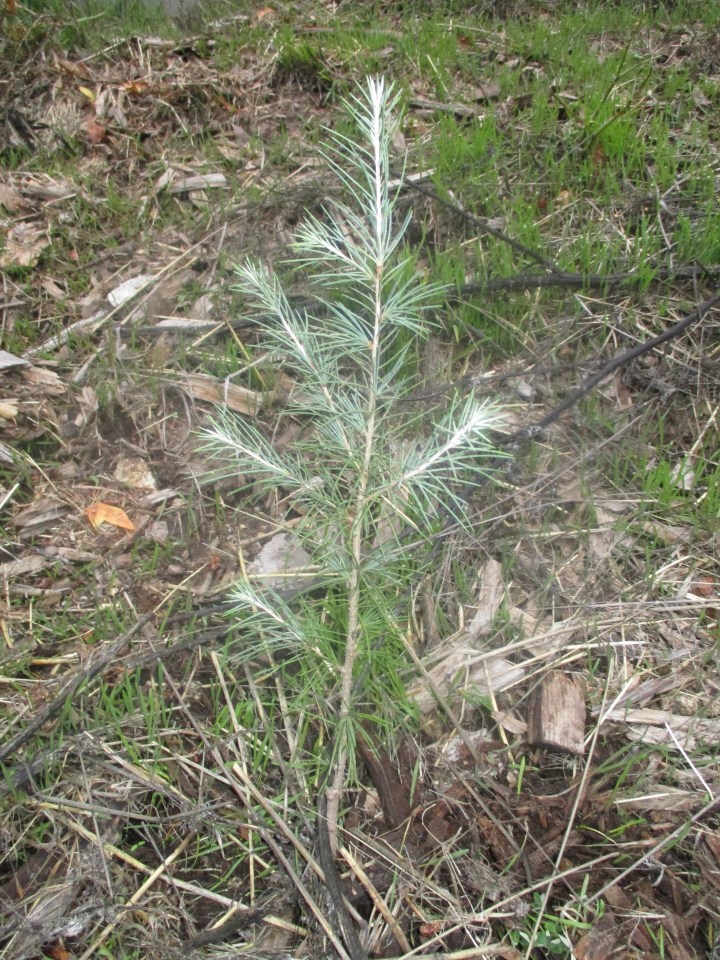
81205Some of us may remember deodar cedar, Cedrus deodara, from the opening scene of the Andy Griffith Show. They were in the background as Andy Taylor and his son Opie skipped stones on Myers Lake near Mayberry in North Carolina. Those well established and naturalized trees and the pond are actually in Franklin Canyon Park in the Santa Monica Mountains above Beverly Hills.

If only it did not get big enough to shade most of a compact home garden, deodar cedar would be better than most other evergreen coniferous trees used in California landscapes. It enjoys the warmth and sunshine here, and does not require any more water than what most regions that are not desert get from rain. It eventually gets fifty feet tall and thirty feet wide, and might get bigger.

The glaucous grayish needle leaves are about an inch or two long, and are arranged either in tight terminal clusters on the tips of short and stout stems, or singly on longer and pendulous shoots. Ideally, trees develop conical canopies with horizontal limbs that droop at the tips. Some trees develop a few main trunks down low, or big structurally deficient limbs that curve irregularly upward.

Arborists Are Very Specialized Horticulturists

81205thumbThe first storm of the year has a way of reminding us if our trees need attention. Whether then need to be worked on this year or not, we tend to notice how they blow in the wind, or if they are full of dead and deteriorating debris that falls into the garden or onto the roof. As deciduous trees defoliate, they are less likely to be damaged by wind, but their structural deficiencies become visible.
This is when some of us will contact arborists to inspect and perform necessary arboricultural procedures for trees that have grown to big for us to maintain. We do not want trees to be damaged by the wind. Nor do we want them dropping limbs or falling onto whatever is within their reach. Those that are biggest and most beyond our reach have the most potential to cause major damage.
Arborists are horticulturists who specialize in the horticulture of trees, which is known as arboriculture. They assess the healthy, stability and structural integrity of trees, then prescribe necessary corrective arboricultural procedures, and if necessary, prescribe the best time for such procedures. Most arborists work with a tree service that is equipped to perform the prescribed procedures.
Arborists who are certified by the International Society of Arboriculture, or ISA, have passed an examination of their arboricultural expertise, and maintain their credential by continued involvement with the educational seminars, classes and workshops of the ISA. More information about the ISA, local certified arborists and even arboriculture, can be found at the website http://www.isa-arbor.com.
As mentioned earlier, arboriculture is specialized horticulture of trees. It is not something that gardeners should be expected to perform; particularly mow, blow and go gardeners who are not even proficient with simple gardening. Many arborists can concur that unqualified gardeners sometimes kill trees, and cause much of the damage to trees that arborists must later correct. Besides, arboriculture is the sort of work that can be very dangerous to those who lack training, experience or the necessary equipment.

Horridculture – Bad Name

51104Junipers have a bad name. So do eucalypti. Too many of the wrong types were planted back at a time when they were too trendy. Those that were planted into inappropriate situations grew up to cause problems. The names of all junipers and eucalypti are now synonymous with those problems, even though there are many types of both genera that are quite practical for landscape purposes.
Get over it.
There are many junipers and eucalypti that are very good options for some landscape purposes. They need only minimal watering once established, and many will survive with none at all when mature. Some types of juniper grow as very low and very dense ground cover. With proper pruning, others can develop as exquisitely sculptural shrubbery or even small trees. (Just do NOT shear them!) Because of their very complaisant roots, some of the smaller eucalypti work very well as street trees.
I am certainly not promoting either junipers or eucalypti. They will not work for every application. I am merely saying that they should not be automatically dismissed because of their names. They were once overly popular for a variety of reasons, and those reasons are still valid.
However, I will say that there are a few species and varieties of each that are worth avoiding. They are likely what originally justified the bad reputations that are now shared by all of their relatives. For example, blue gum eucalyptus that was planted as a timber crop so long ago really is MUCH too big and messy for home gardens. Even where space is sufficient, there are probably better options.
Some of the current fads are also worth avoiding, or at least questioning. Some are very likely to earn a ‘bad name’ in the future, either because there will be too many of them, or because their faults will become evident as they mature. Because so many get planted within such a short time, many that mature at the about the same rate will develop their faults at about the same time.
For example, crape myrtle is such a useful and complaisant tree that it has been planted too commonly for just about every situation in which a tree is desired. It is resilient. It is complaisant with concrete. It blooms spectacularly. It colors splendidly in autumn. It really is an excellent small scale or medium tree for small garden spaces or near utility easements. It works very well in narrow park strips where larger trees would displace concrete. Yet, despite all the attributes, it is not good for everything, and does not get big enough to become a substantial shade tree, as it so commonly gets planted for. In the future, there will be so many crape myrtles in so many of the wrong situations that they will be considered to be too common.
Queen palm is another example. It used to be somewhat uncommon and respected. Through the 1990s, big box stores were selling them like junipers and eucalypti decades earlier. They happen to be very appealing palms that are more practical than the formerly more common Mexican fan pale, but have become so common that they were very often planted into situations that they are not appropriate for. Those that are under utility easements will need to be removed when their canopies start to encroach into utility cables. Because they are palms, they can not be pruned around the cables. Those that are able to mature will outgrow the reach of those who maintain their own gardens, or typical gardeners, necessitating attention from more expensive tree services. Like crape myrtles, they will also lose their appeal in the future.70222

Big Trees Are Bad Houseplants

P81111By ‘big trees’, I don’t mean the various ficus trees that can grow up to the ceiling, and be quite happy inside. I am referring to the shade trees that live out in the yard, or forest trees that live beyond that. They are outside for a reason . . . or actually, several reasons. They are too big to bring inside. They probably would not like the climate inside. No one wants to rake fallen autumn leaves inside. Well, you get the point.
Unfortunately, on rare occasion, big trees that are outside end up partly inside by falling or dropping limbs onto the homes that they provide shade for. Just like trees seem to fall onto certain types of cars more than others ( tonytomeo.com/2018/11/04/trees-hate-cars ), trees seem to fall onto certain types of homes more than others. The difference between the homes that trees seem to dislike and the cars that they seem to dislike, is that there are actually reasons why some types of architecture is more susceptible to falling limbs or trees.
First of all, just as some trees seem to avoid falling on cars, some seem to avoid falling on houses.
Coastal redwoods in landscape situations are remarkably stable. In my entire career, I have inspected only three that have fallen. One had a massive pair of trunks that split apart and fell away from each other. Although they were on the fence line between two closely set urban homes, and there was almost no place for them to fall without destroying one home or another, they did the seemingly impossible. They literally fell onto the property line. One trunk fell out into the street. The other fell back into the backyards of the homes behind. The fence was pressed into the ground. The landscapes were seriously damaged. Gutters were stripped from both adjacent homes. Otherwise, there was NO structural damage to any of the homes. I am still amazed at how minimal the damage was!
The massive coast live oak two doors down from my former home in town was just as talented. It sprawled out over its associated home and the front yards of the two adjacent homes. It was so broad that I would not have believed that it could have fallen down without destroying one of the homes. Yet, it did exactly that . . . as I watched from my dining room. During a windy storm, it fell right toward me, and landed squarely in the front yard next door. It broke a few rafters on the edges of the eaves, and tore the gutters off, but that was the worst of the damage. It somehow found the best spot to fall where it would cause the least amount of damage.
Not all homes are so fortunate.
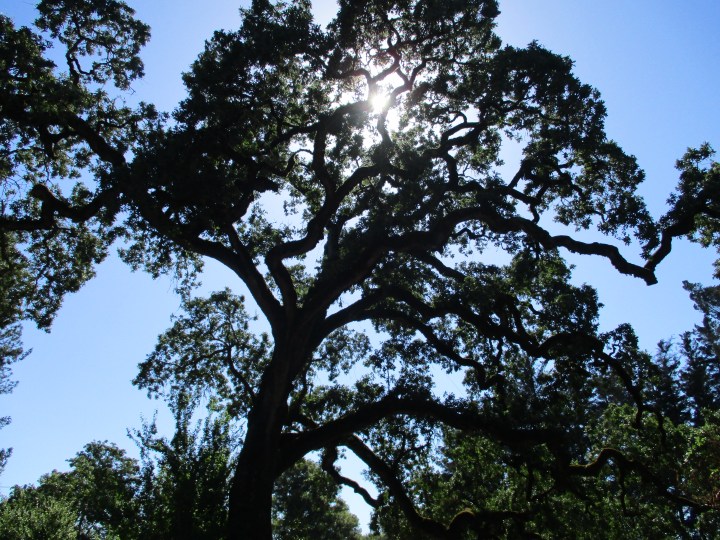
Victorian homes though, do not seem to be targeted by trees as much as others are. Most are closer to downtown, away from tall or very broad forest trees. Many are on somewhat narrow parcels that can not accommodate disproportionately large trees like the coast live oak in the picture above. Broadly sprawling trees tend to be too low to extend their limbs over the roofs of taller two story Victorian homes. Although taller than most other types of homes, two story Victorian homes do not occupy as much area as other homes, so are not such big targets.
Low profile homes of ranch architecture, or similar types of architecture, are more likely to be damaged by falling limbs or trees. Many happen to be located in suburban or rural areas, closer to bigger and broader forest trees. Their wider parcels can accommodate larger trees. Their roofs are low enough for trees to extend limbs over. Because they tend to be on a single level, they occupy more area, so are larger targets.

Trees Hate Cars

P71028That is a myth. They do not hate all cars. They just hate particular cars.
I did an internship with arborists in the summer of 1988, and have never been able to get away from arboriculture. Even as a nurseryman, I still sometimes work for arborists, and inspect trees that they are concerned with. I have seen many of their subject trees that have fallen onto parked cars, homes and whatever trees fall onto. I have noticed particular patterns.
Trees are more careful with Buick, Oldsmobile, Pontiac, Chrysler, Volkswagen, Mercedes Benz, and Datsun or Nissan. I have seen them put considerable effort into avoiding these cars when dropping limbs or falling over. When I was in school in San Luis Obispo, I drove my neighbor’s 1969 Oldsmobile Cutlass out from under his Chinese elm that fell over it. The tree held itself up on limbs that landed on the opposite side of the driveway so that the car came out from under it completely unharmed. When I lived in town in Los Gatos, a massive coast live oak two doors down fell harmlessly into the front yard next door. The roots pulled up in front of and behind a Volkswagen GTI that was parked at the curb, and barely tossed an ounce or two of mud onto the hood. A few big olive trees did the same at a large condominium complex in San Jose during a windy storm, leaving nothing more than a bunch of leaves and olives on top of a classic Mercedes Benz sedan and an old Datsun B210. These are certainly not the only examples. This seems to be a common theme for these particular cars.
I can not say the same for Mercury, Plymouth, Jeep, Cadillac, Mazda, Toyota, Lexus, Honda, Subaru, Infinity or Volvo. I have never seen trees damage or avoid damaging them.
Damage to Ford, Dodge, Audi, Isuzu and BMW did not see to be targeted. It was the sort of random damage that one would expect from a tree innocently falling onto parked cars.
Both of the only two cars that I know of that were squashed while being driven were Lincoln Navigators. That is not a good statistic at all. One was hit by a falling Canary Island pine in Fremont. The other was clobbered by a Coast live oak in Saratoga. No one was hurt; but the cars were killed.
I have seen only one Chevrolet damaged by a tree, but it was vicious! It was one of only three coastal redwood trees in a landscape situation that I had ever seen fall, although ‘fall’ does not adequately describe what this tree did. Without enough wind to damage adjacent and notoriously structurally deficient California pepper and Chinese elm trees, this redwood seemed to jump out of the ground to land on top of an Astro Van about twenty feet away! I do not think the tree was targeting it because it was a Chevrolet. The tree obviously hated this specific Astro Van VERY much.
Acura seems to be the second most hated sort of car among trees. They are less common than Honda, but I have never seen a Honda damaged by a tree that it did not run into first. Yet, I have seen at least three Acuras destroyed by a coast live oak, a blue gum eucalyptus and a Monterey pine. That is an inordinate number!
The car that trees seem to hate most is Porsche! They are uncommon cars, and are probably less common than any other car that I have ever seen damaged or destroyed by trees. Yet, I have probably seen more of them destroyed than Acuras, including one that was attacked as blatantly as the Astro Van was attacked by the small redwood. The ONLY blue spruce that I have ever seen fall landed squarely down the middle of a new Cayenne, back when they were the first SUV that Porsche made. The densely foliated canopy enveloped the car so thoroughly that only the middle of the tailgate was visible.
It would be interesting to know if insurance companies have determined if any particular types of cars are more likely to be damaged or destroyed by trees than any other. I would think that if the trends that I have noticed are accurate, that insurance companies would be aware of them as well. I am also curious to know if other arborists have noticed similar trends.P80106

Six on Saturday: Dia De Los Muertos


Dia de los Muertos, or Day of the Dead, was yesterday, Friday, November 2. However, the dead are still dead. They don’t need a special day to be so. In fact, they do it every day of the year. Dia de los Muertos is just one day of celebration to honor them.

Dia de los Muertos is not for plants though. Dead plants just get cut down and disposed of. Some get composted. Dead trees get recycled into firewood. These are six pictures of five species of dead plants that I needed to contend with in the week before last.

1. Rhododendron. I really do not know what killed this group of rhododendrons. It is not uncommon for one to die. With all the rhododendrons in the landscape here, a few dead ones get removed annually. However, it is rather disconcerting that a few died all in the same area at the same time. All their dead stems were rather sculptural. They were removed just after this picture was taken. Of the five specie in these six pictures, this is the only species that is not native.P81103

2. Madrone. Bits and pieces of madrone commonly succumb to blight, sort of like fireblight in apple and pear trees. Sometimes, entire trees are killed like this one. It is fire wood now.P81103+

3. Ponderosa pine. The forest does not burn as frequently as it used to before people were here to extinguish forest fires. The lack of restorative fires interferes with regional ecology. Not only is the forest becoming congested with unburned fuel, but pathogens are proliferating in the aging flora and consequently accelerating the deterioration of the forest, which increases the combustibility. It is a natural process designed to correct an unnatural lack of restorative fires, but does not go well for those of us who live here. Ponderosa pines can live for a few centuries. However, in our compromised ecosystem, many succumb to pathogens while still relatively young. This one will need to be removed next year. Once dead, they deteriorate and start to drop limbs within the year.P81103++

4. Coast live oak. This is one of the most adaptable of tree specie in California. It lives right down to the beach, and into interior valleys, and up the summit of the Santa Cruz Mountains. It does what it must to adapt to the various environments within its range. It often lives in groves of the same, where it is more likely to burn every few decades or so. In spacious valleys, it is often not so social, with individual trees living in relative isolation from their neighbors. Grass fires can burn harmlessly between such trees, allowing them to live for a few centuries. Wherever they are, they develop more trunks than they need. As they mature, subordinating trunks like this one, get shed naturally and harmlessly. It is not as bad as it looks. In the wild, it would rot and fall to the ground as the rest of the tree continues on as if nothing happened. In our landscape, it was cut and taken away.P81103+++

5. Coast live oak. This dead foliage is a bit more alarming because I do not know what caused it. It is probably superficial damage caused by a girdling beetle. I did not look for evidence. Sudden Oak Death Syndrome is a much more serious disease that is all too common here (and a very sensitive subject). Fortunately, this particular specimen is a small and unimportant tree that I would not mind cutting down if it were to succumb. I just do not like to be reminded of how rampant Sudden Oak Death Syndrome is here.P81103++++

6. Tan oak. This tree really did succumb to Sudden Oak Death Syndrome, Phytophthora ramorum, which is more commonly known here as SODS or SOD. A few adjacent tan oaks that succumbed last year are already very deteriorated and will soon be dropping limbs if not removed over winter. These particular trees are not very important to the surrounding forest. Their removal will actually improve the collective landscape, and give the surrounding redwoods more space to expand. The problem with SOD is that we never know which oaks it will kill next. It kills trees before we know they are infected. There is no remedy.P81103+++++

This is the link for Six on Saturday, for anyone else who would like to participate:

https://thepropagatorblog.wordpress.com/2017/09/18/six-on-saturday-a-participant-guide/

Argyle Apple

51104What an odd name. It sure sounds interesting, like some sort of exotic fruit tree. Alas; argyle apple is a eucalyptus; to be specific, Eucalyptus cinerea. Compared to most other eucalypti, it stays rather low. It barely gets as tall as a two story house, even if it gets broad enough to shade most of the backyard. The rusty brown bark becomes roughly furrowed. The irregular branch structure can be quite sculptural.

The main attraction of argyle apple is the aromatic silvery foliage. Young trees are outfitted with circular juvenile leaves that are attached directly to the stems without petioles (leaf stalks). Lanceolate adult leaves are as silvery as juvenile foliage is. (Juvenile foliage of most other eucalypti is more colorful than adult foliage is.) Aggressive pruning of small trees keeps foliage juvenile for a long time.

Actually, those who know how to work with it might pollard or coppice argyle apple. Pollarding eliminates all foliated stems at the end of winter, but for the rest of the year, allows vigorous arching canes of very silvery juvenile foliage to spread outward from a few stout limbs on top of a trunk. Coppicing allows the same sort of growth from stumps just above grade.