Feline Ecology

No one can build a better mousetrap.

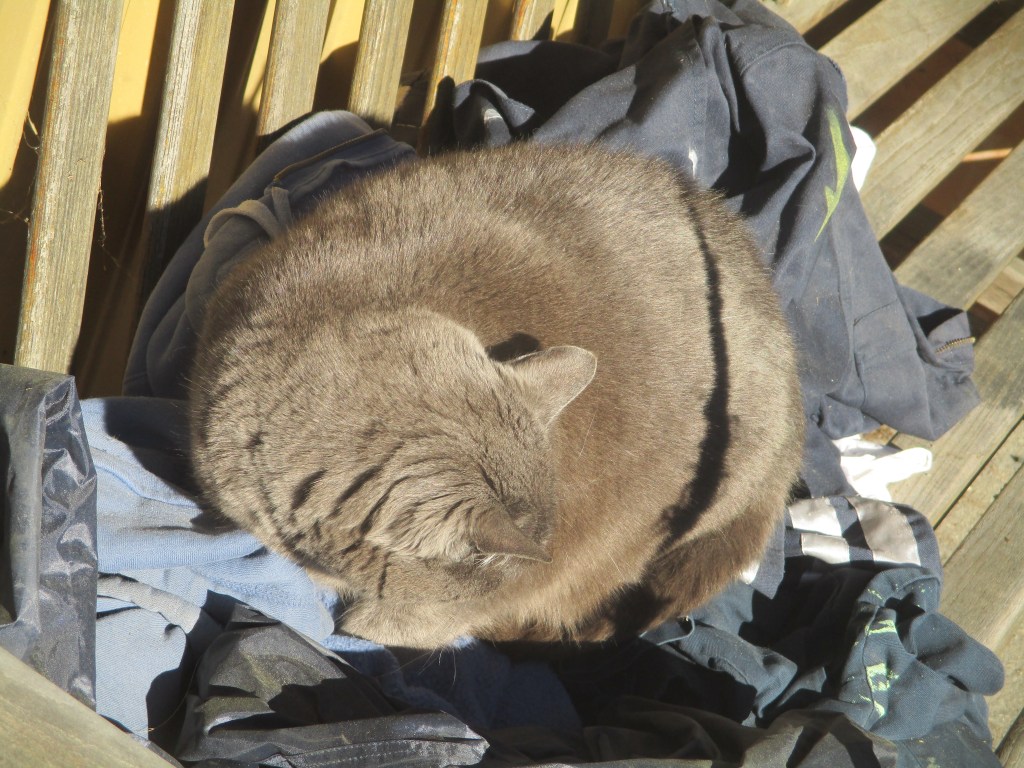
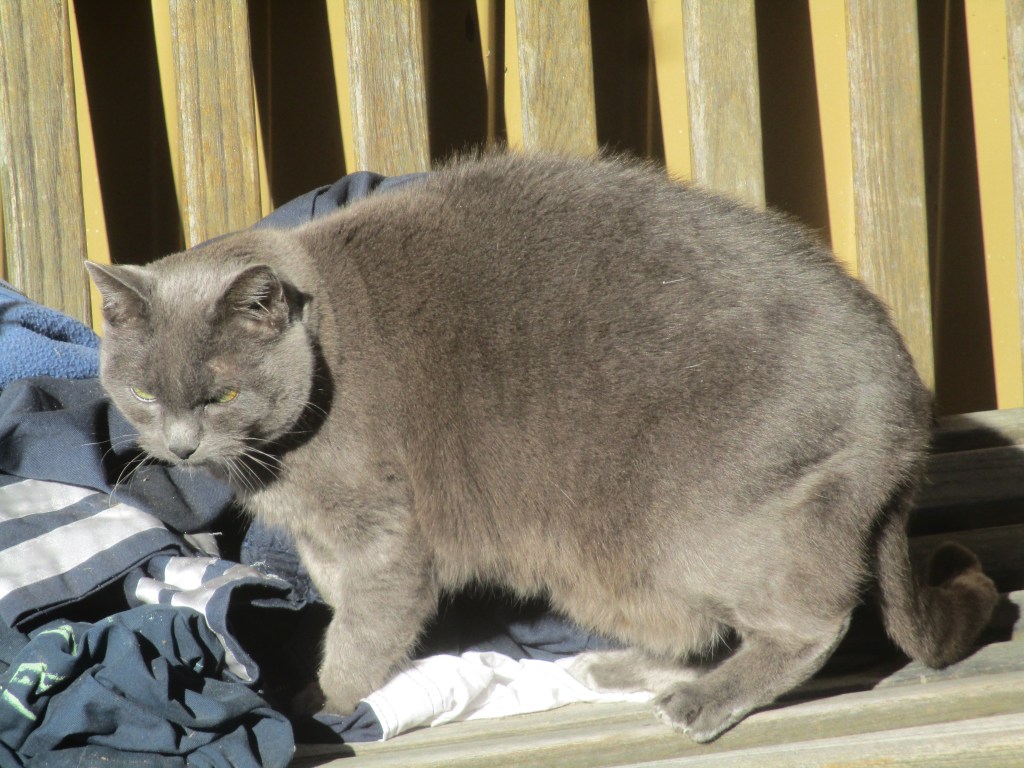
Darla is a feral kitty who used to live here. I believe that she is why no rodents lived here. I never actually saw her do anything to dissuade rodent infestation. Actually, I rarely saw her do anything. She was quite reclusive and disliked almost everyone except Rhody.

Unfortunately, someone else here insisted that fleas were a problem because of Darla. He also insisted that Darla came inside to share her fleas with the carpet and furniture. No one else, including Rhody, ever noticed a flea. Darla never came inside.

While the weather was getting nastier than it had since 1982 last winter, Darla went to live at a home in Santa Clara. After her initial disapproval, she efficiently adapted, and learned to appreciate it. Apparently, she is now happy with her more domestic lifestyle. She is quite elderly, so really deserves safer and more comfortable accommodations.

Rodents are everywhere now! Rats and mice come inside for any scraps of food that the crew leaves out. Ground squirrels have burrowed into much of the exposed soil downstairs. They as well as the rabbits and perhaps tree squirrels eat some of the plant material that is stored in the yard until it goes into the landscapes. The ground squirrels are already digging after the soft buds of the pups my giant bird of Paradise that were heeled in only yesterday! I need to put blood or bone meal out there in an attempt to repel them. I had not considered how horticulturally beneficial a kitty could be.

Of course, with so many rodents here, the fleas have also become a major annoyance, particularly for Rhody!

Now, others at work want me to hire another feral kitty. I do not know how to take care of a kitty, especially a feral kitty!
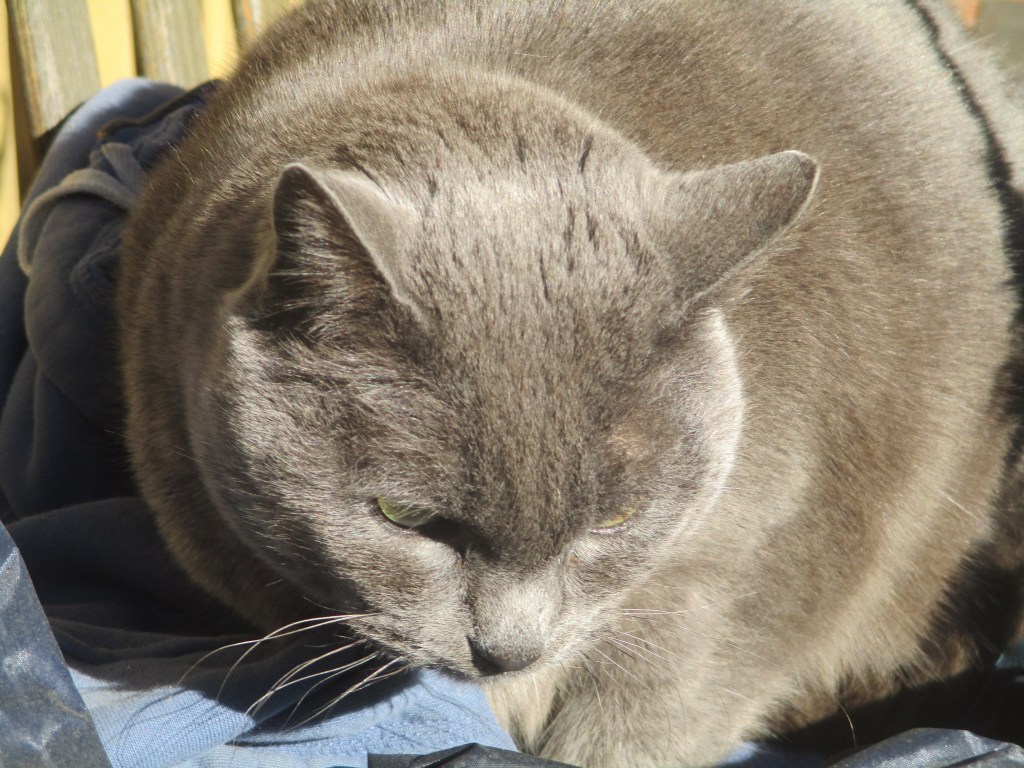
While the cat is away, the mice and all the other rodents will play.

Six on Saturday: Not So Bad

The wrong flowers are nonetheless pretty. Pretty flowers distract from unsightly foliage. Neighborly ground squirrels are people too.

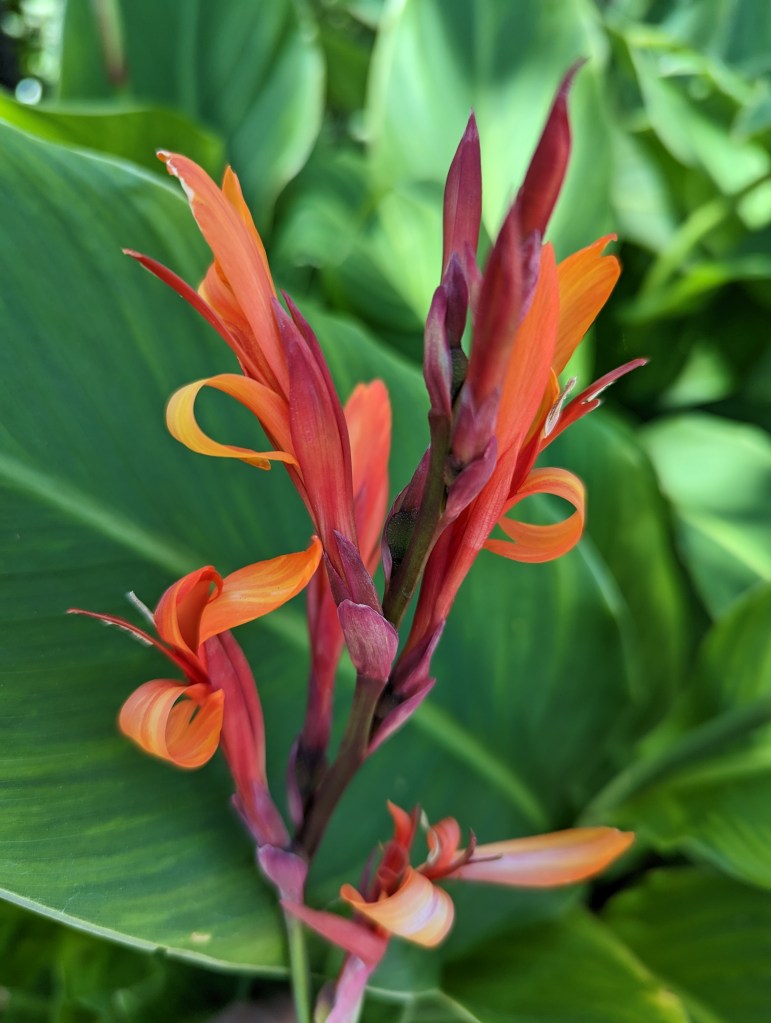
1. ‘Red King Humbert’ Canna was one of only two canna that I ever purchased. I still feel guilty about spending about $6 for ‘Australia’ years ago. This second purchase for thirty rhizomes late last season was not so inexpensive. I was so displeased as virused foliage emerged. I tried to believe that this discoloration was from starting so late in the season.

2. ‘Red King Humbert’ Canna gets about six feet tall, with billowy and bright red bloom. Because it started so late last year, it barely grew, and did not bloom. Now it blooms like this, and is only about two feet tall. It is all virused. It definitely is not what it should be.

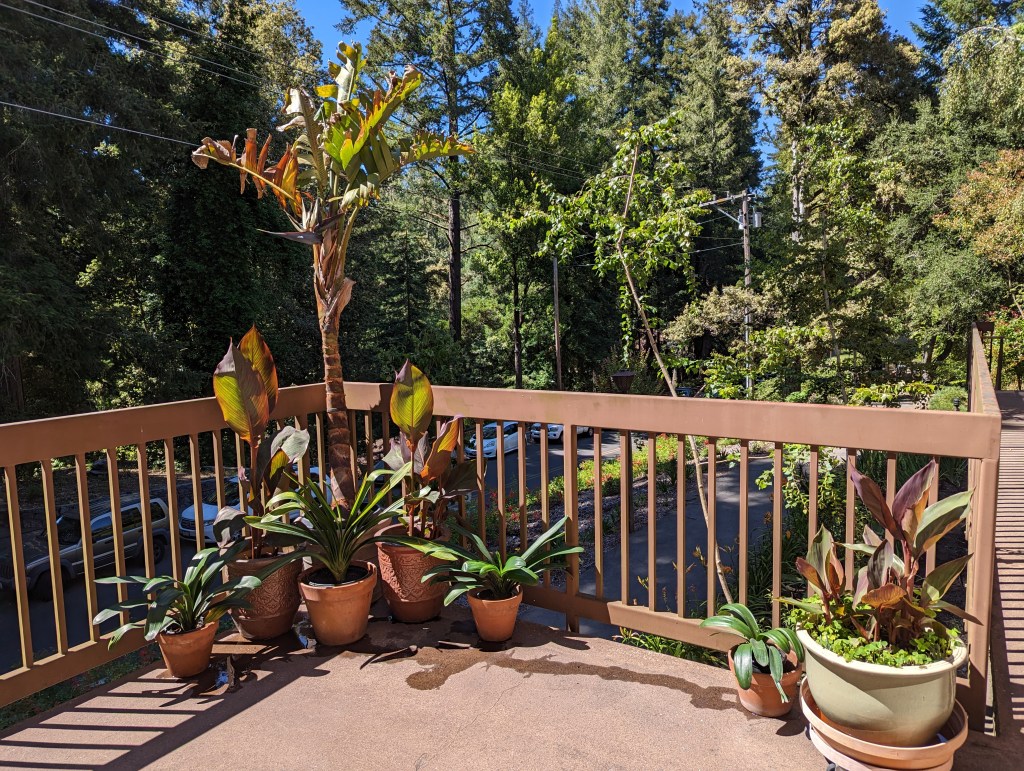
3. An assortment of formerly unappreciated canna, Kaffir lily and giant bird of Paradise temporarily inhabit this otherwise uninteresting deck at work. A gardener found them to be too appealing to leave in obscurity within the nursery yard, so brought them here and set their cans into more appealing pots. Only the canna to the right is original to the site.

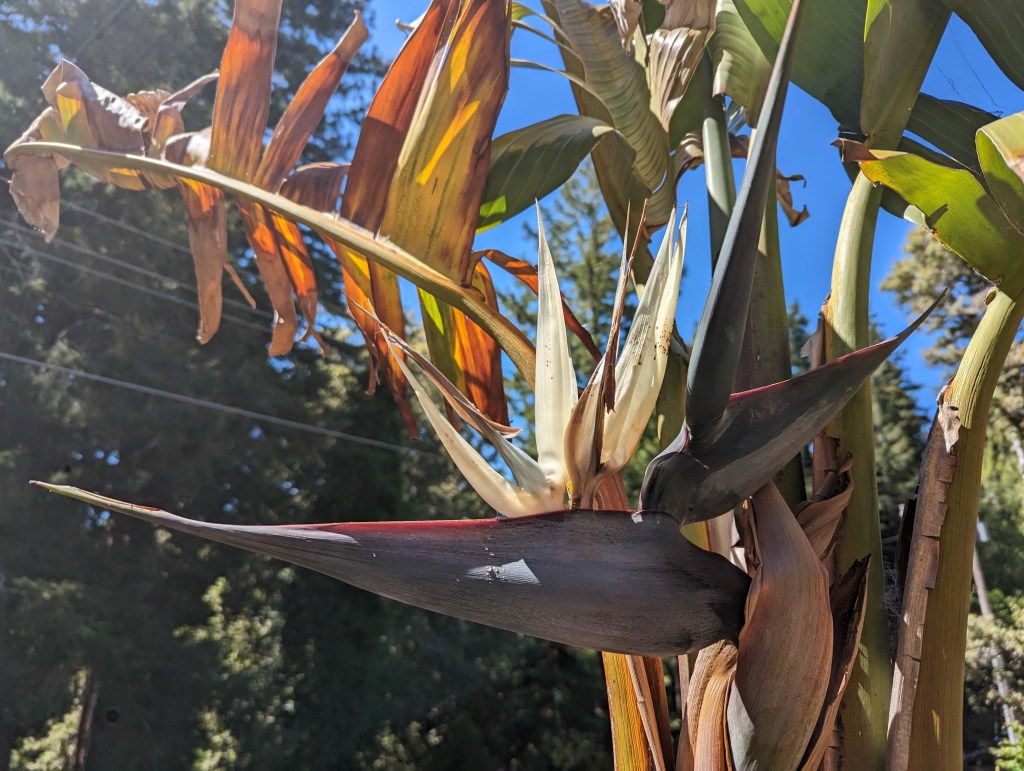
4. Strelitzia nicolai, giant bird of Paradise is shabby though. The worst of its few roasted leaves is to the upper left. However, only I notice it! Everyone else notices its rad bloom.

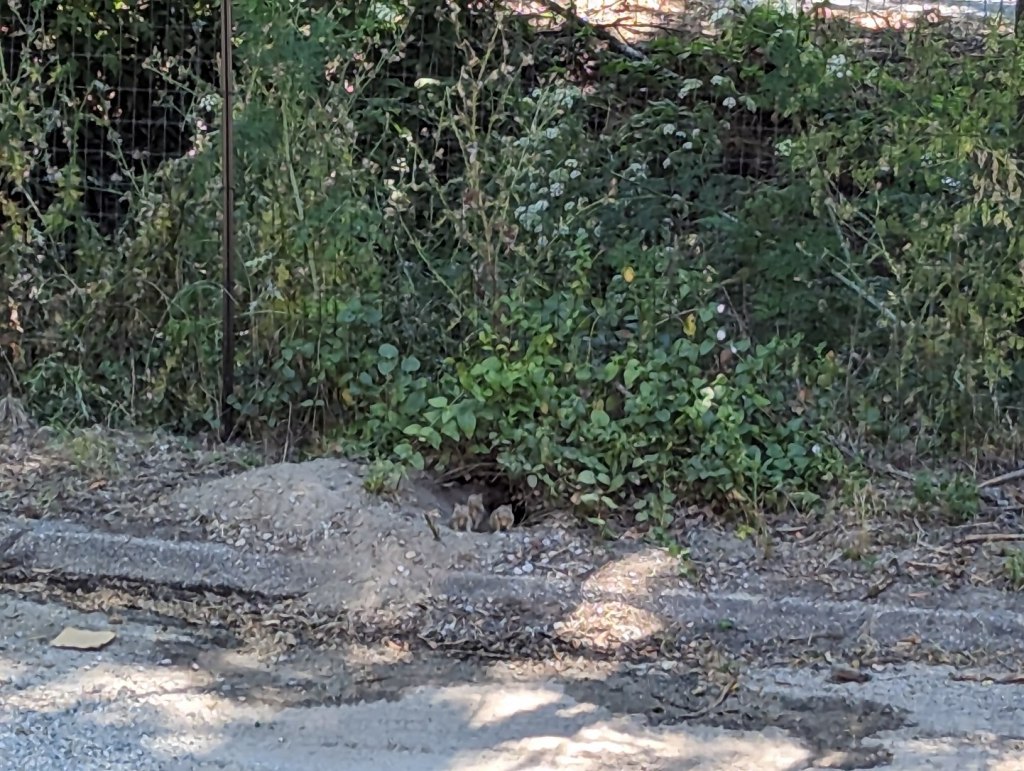
5. Alvin, Simon and Theodore are the new neighbors. I yelled at them initially. They just came out to stare at me. More of their friends and family moved in. They do not damage desirable vegetation though. Actually, they are eating undesirable weeds with brambles!

6. After recycling an article about the vandalism of the Memorial Tree in Felton Covered Bridge Park two Wednesdays ago, I should post this new picture of how happy it is now.

This is the link for Six on Saturday, for anyone else who would like to participate: https://thepropagatorblog.wordpress.com/2017/09/18/six-on-saturday-a-participant-guide/

Cats Gone Wild!

The best cats are domestic.

Rats, mice, squirrels, racoons, opossums, skunks, deer, pigeons and more; it just never ends! There are so many other life forms who often enjoy our gardens more than we do. While visiting my colleague in Los Angeles, his garden became overrun by a swarm of bees! Fortunately, they did no damage and left the same day.

The worst problem in his garden is cats. His neighbor hoards ‘unaltered’ feral cats that have proliferated into a substantial herd. Instead of exterminating rodents from the neighborhood, the overfed cats ignore the droves of rats that are drawn to the cat food left out on the porches. The rats attract opossums. Fleas are everywhere!

All this wildlife brings all sorts of other problems. The well kept domestic cats that live inside the home of my colleague are frequently afflicted with illness transmitted by the sickly feral cats. Flat roofs and basement crawl spaces of several adjacent homes have become litterboxes. The overpowering aroma is horrendous.

Fortunately, such proliferation of cats is rare. Most of us do not mind when a neighborhood cat, or even a few cats, visit the garden. However, when cats become a problem, they are nearly as difficult to remedy as vermin.

Although most municipalities have limited the number of domestic cats that can reside at individual residences, feral cats come and go freely, so are considered to be wild animals who are exempt from such limits. Besides, no one wants to enforce such ordinances with their neighbors, even if the problematic cats happen to be domestic house cats. All we can do is try to limit the problems in our own gardens and homes.

Flat roofs sometimes get used as litterboxes because they commonly have gravel on them and tend to accumulate a bit of other debris. If this is a problem, and if possible, access to flat roofs should be obstructed. Tree limbs and vines should be pruned back.

Basements and crawl spaces are easier to obstruct access to by simply repairing vent screens and exterior basement access. Cats like to use crawlspaces as litterboxes because the soil is always dry and dusty. Around the garden, dry spots are less attractive to cats if sometimes watered, even if there are no plants present. Adding spreading plants is even  better. In a small dusty area behind the garage, I spread out a bit of firewood over the soil. By the time the firewood gets used, it will be raining and too muddy for cats.

Gophers!

The best rodent control devices are useless against gophers.

Punxatawney Phil retreated from his shadow on Gobbler’s Knob, predicting a late spring. That was more than two weeks ago, and we are still waiting for a late rainy season to start! Regardless, Punxatawney Phil did his job and has gone back home to hibernate, or whatever he does this time of year. If only all rodents would do the same. Gophers do not ever seem to take any time off.

There is little agreement on how to efficiently evict gophers from the garden. A rodenticide that can only be applied by qualified pesticide applicators is purported to be the most effective means of extermination for large scale landscapes, but is not available to the general public and is very expensive when applied by professional exterminators.

Thumpers, battery powered devices that emit low frequency vibrations at random intervals, are only moderately effective at repelling gophers, and look rather odd in a lawn. Those cheap plastic whirlie thingies that spin in a breeze, causing their wiry stems to vibrate, are probably just as effective if occasionally relocated to keep the gophers from getting too comfortable with them. People who do not consider them to be appealing lawn ornaments think that they are tacky though.

Flooding gopher runs with water, or leaving sharp objects or chewing gum in the runs are generally not effective. It is nearly impossible to flood a system of runs, which is typically equipped with drainage. Gophers who are unfortunate enough to cut themselves on something sharp will bleed to death because their blood does not coagulate, but they are careful to not do so. Likewise, gophers who eat chewing gum will die because they can not digest chewing gum, but they prefer to eat roots. Besides, who really wants make gophers die in such agony?

Good old fashioned McAbee gopher traps, which incidentally were invented in Los Gatos, are probably the most effective means with which to eradicate gophers. They are difficult to set for a beginner; so it is a good idea to get trained by someone with experience. It is also important to set the traps in pairs with one trap in each direction of the main run below the exit tunnel, instead of setting a single trap in the exit tunnel. It takes some extra digging but is worth it. Because each pair catches only a single gopher, the empty trap should be sprung when pulled from the ground to avoid hurting someone. Do not let dogs dig up traps!

Trapping is only a temporary solution. Eventually, more gophers are likely to move in, necessitating more trapping.

Moles Are Different From Gophers

Gophers are more destructive than moles.

Wildlife belongs in the wild. Many of us appreciate it there, and get pictures of it to share with others as if it is rare and unusual. Deer, raccoons, skunks, squirrels, gophers and so many other residents of the wild are not so appealing in home gardens. They all need to eat. None are tactful about it. Some eat foliage. Some eat fruits. Moles eat larval insects.

That seems like it would be beneficial to the garden. In some situations, it is. Not only do moles inhibit the proliferation of grubs that damage roots, but they also aerate dense soil. The problem is that they heave soil as they excavate just below the surface. This activity damages lawns and shallow ground cover. Uninhibited grubs might cause less damage. 

Gophers often take the blame for damage that moles cause. However, gophers are much more destructive. They excavate more substantially, and generate larger mounds. While moles consume mostly detrimental grubs, gophers devour roots and any other plant part within the soil. Gophers do not hesitate to kill the most important plants in the landscape. 

Like gophers and other rodents, moles can not take much time off for hibernation through winter. The weather is just too mild. Although they are less active during cool weather, or while there is less to hunt, they never stop excavating. They merely become more active now because, as the weather warms, they can plan for a family, and find plenty of grubs.

Mole excavation generates distinctive small ‘berms’ of displaced soil within lawns. Such berms extend randomly in no particular direction, but are impressively consistent in form. Mounds of expelled soil are small and sporadic, or may not be evident. Moles often push their way below the surface of firmly rooted turf, without expelling any soil to the surface.

Unfortunately, moles can be about as difficult to dissuade as gophers. The most practical means of repellent is to eliminate the grubs that they crave, which can be difficult without insecticide. Blood meal and bone meal are fertilizers that can supposedly repel moles by their objectionable aroma, but require frequent application. Traps also require diligence, as well as precision.

Six on Saturday: Happy Beginning

Vermin, weeds and insects can be major problems. Gophers continue to inflict serious damage within the landscapes here. The predators who help with other vermin would get gophers too, if only they were more accessible. However, it could be significantly worse. Some weeds are actually pretty. The worst insect damage was neither serious nor prominent. Deer just glare at me as if wondering why I glare at them.

1. Gophers are the most destructive of the wildlife here. This was a new and perfect hedge of variegated Pittosporum tobira before the gophers got in. The spacing of its plants was impeccable.

2. Perennial pea should have finished blooming a while ago. It typically gets crispy during the warm and arid weather of summer. It is an annoying albeit pretty weed in some of the landscape.

3. Katydids chewed my roses last summer. Fortunately, the damage was not serious, and only affected my own roses that are not within the landscapes. This one seems to be in the family way.

4. Deer have potential to cause major damage to the landscapes, but never have. Their nibbling is minimal. No one knows why. They are a significant problem within adjacent neighborhoods.

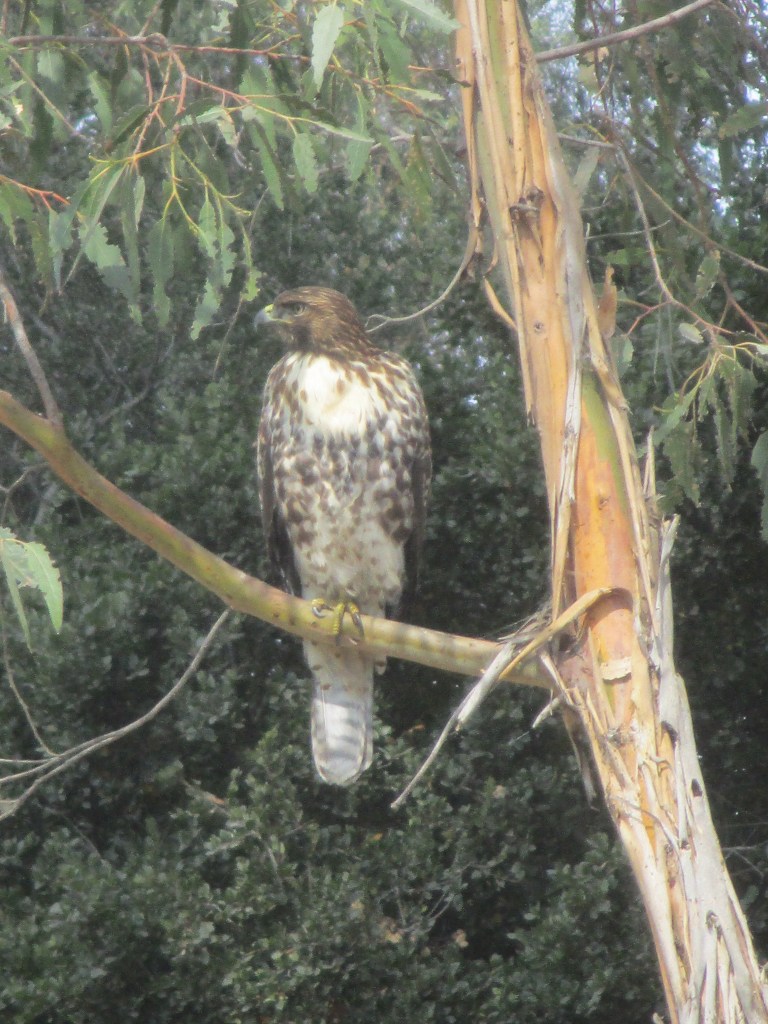
5. Predatory birds ‘control’ some of the rabbits and other vermin, but not gophers. I do not know who this bird is, but would guess that it could take off with Bambi if she nibbles the camellias.

6. RAIN! This is the happy ending of the Fire Season, as well as the happy beginning of the Rainy Season! The first storm of the season is always major news here, but is rarely this significant. The flashing blue light on the windshield of one of the pickups is a motion activated security system that began chirping in response to so much water falling from the perforated gutter above.

This is the link for Six on Saturday, for anyone else who would like to participate:

Vermin Run Amok In Spring

Gophers are busy with homemaking projects.

No one really hibernates here. Well, ground squirrels might, but they are unlikely to be a problem in refined home gardens. Winter weather is sufficiently mild for most of the most troublesome vermin to remain active, even if somewhat subdued. Some are more active in autumn before food gets scarce. They store food for later, and eat more to gain weight.

Now that it is spring, vermin are more active than they are at any other time of year, even autumn. Gophers, squirrels, rats and mice want to party like it is 1999; well, like spring of 1999. Although they all fattened up last autumn, and stored plenty of food for winter, they now want to exploit abundant spring vegetation. So do raccoons, skunks and opossums.

Generally most vermin, which most prefer to describe more politely as ‘wildlife’, are not a problem for home gardens. Some might be beneficial. Skunks may trench into lawns, but only because they want the grubs that would otherwise cause more damage from below. They also eat snails and slugs. Opossums eat snails and slugs too, as well as baby rats!

However, skunks and opossums can do more harm than good. They eat vegetables and fruits as they ripen, and pet food. Raccoons cause more significant damage, and can be very dangerous to pets. These three types of vermin are nocturnal, and therefore difficult to dissuade or confront directly. Fortunately, they are not very common in urban gardens.

Conversely, squirrels are everywhere except the harshest desert climates. Although they cause significant damage to new spring growth, and will later damage developing fruits, they are more tolerable than other vermin. Some people actually feed them to draw them to their gardens! Rats and mice are less tolerable, probably because they lack fluffy tails.

Gophers are likely causing more damage than other vermin now. Their growing families voraciously devour many of the fresh roots that disperse in spring. Now that their tunnels are not too muddy, gophers are remodeling to expand accommodations. Young gophers do not live with their parents for very long, so will eventually infest new adjacent territory. Lawns and vegetable gardens are most preferable.

Gopher It!

P00412
Honey badger don’t care. Neither does the gopher who did this.

Deer do not eat all plants. There are a few that are toxic to them. There are more that deer simply dislike. With a minimal bit of research, it is not difficult to find a few lists of plant species that deer are supposed to avoid. The problem with such lists though, is that deer do not read them. Only toxic plants are reliably safe from deer.

It would not be so bad if only deer were a bit more cooperative. They would be welcome in gardens if they ate only weeds that no one wants anyway. We all know that they can eat weeds, they just choose not to do so while they are in our gardens.

For that matter, gophers would not be such a problem if they ate only weeds, and aerated only soil that needs it. Instead, they seem to target the most important plants they can find, and excavate primarily in lawns. There is no effort to cooperate.

For as long as people have been growing vegetation, whether as agricultural commodities or in landscapes, people have been competing with wildlife of one form or another, or several others. Wildlife is no more cooperative now than it was many thousands of years ago. Some animals are even less cooperative than their ancestors were. Some are downright defiant!

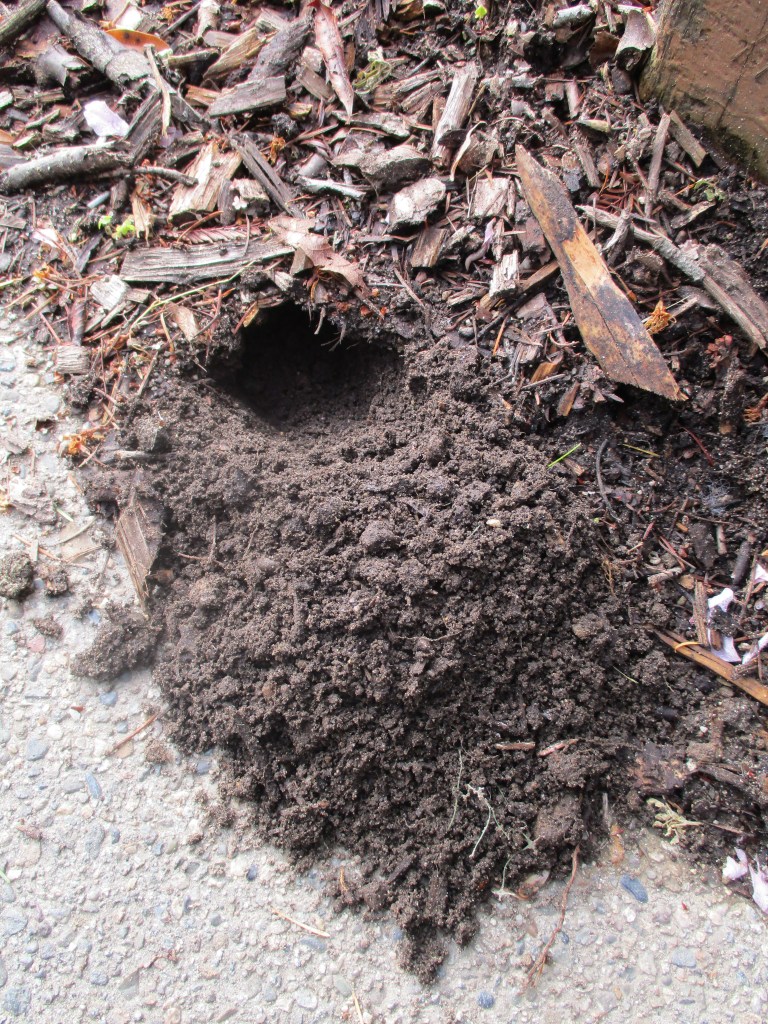
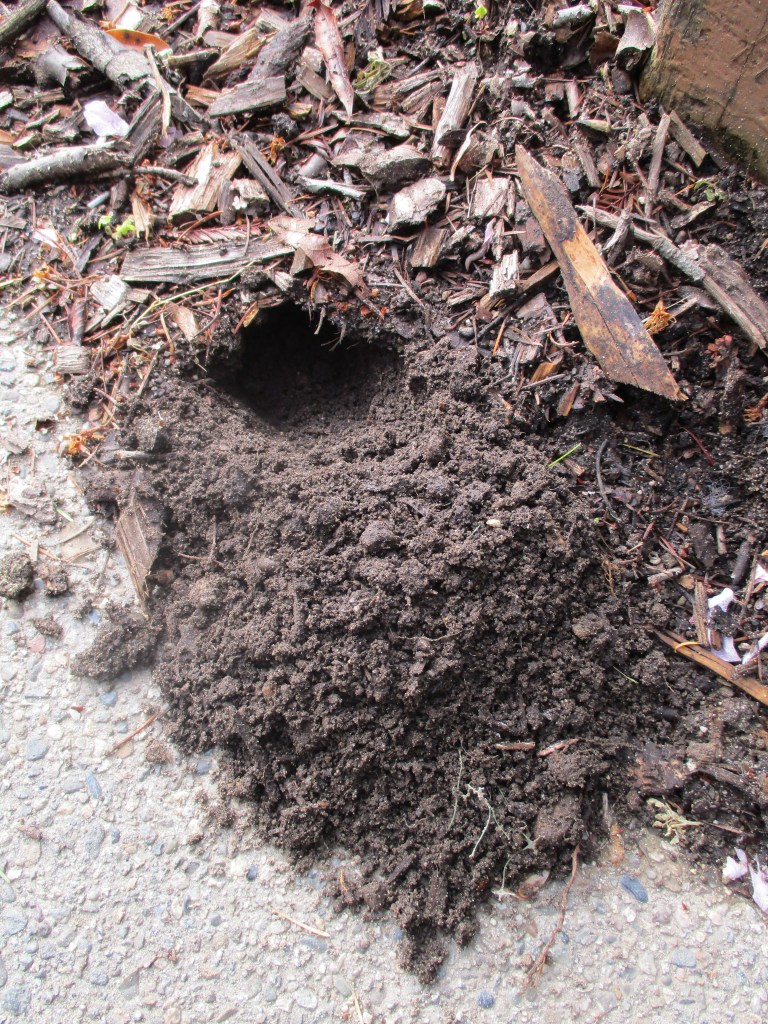
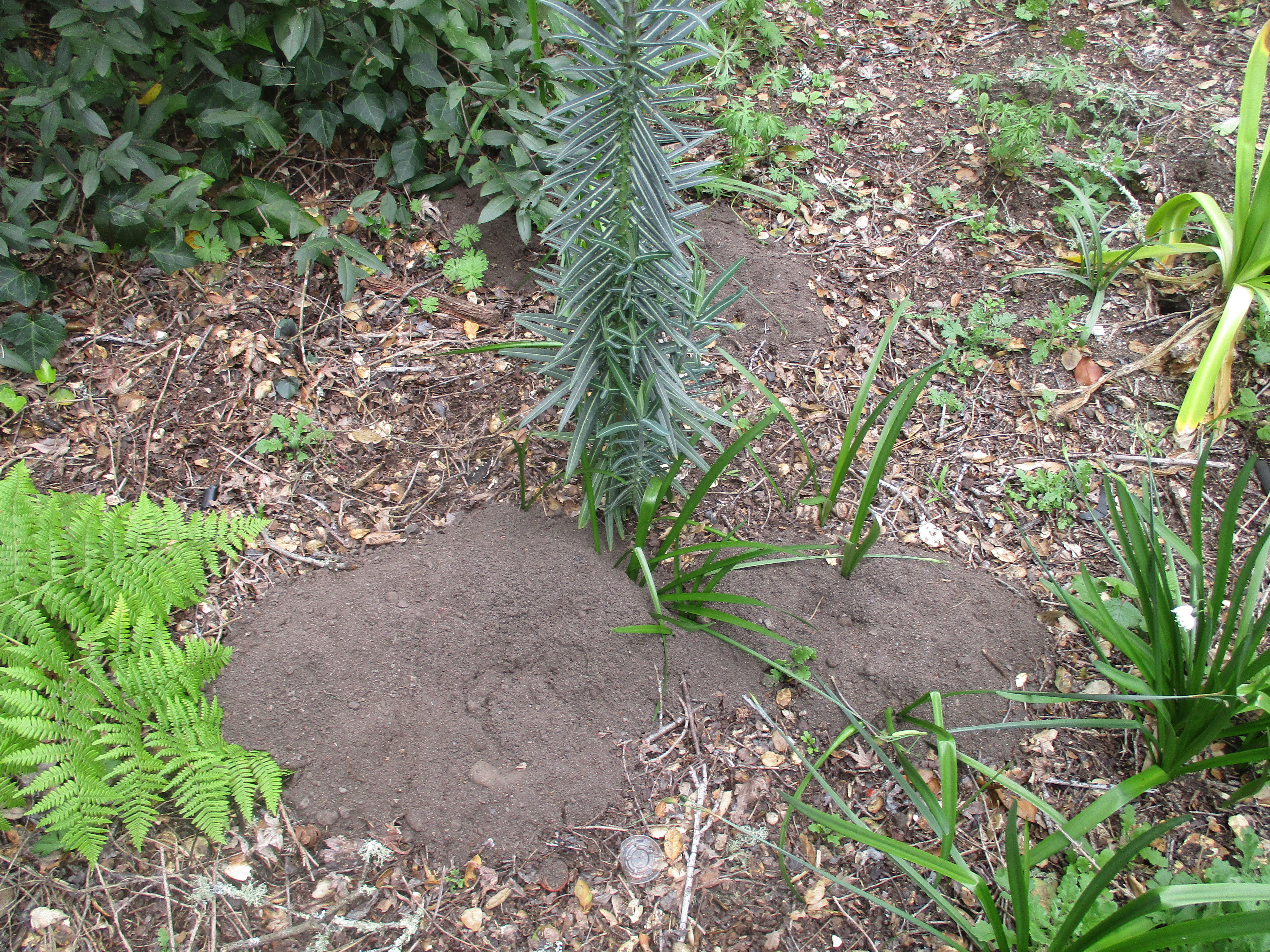
Gophers have been known to push traps out from their tunnels, without springing the traps. Some will emerge from their subterranean tunnels to step over the tops of root cages that are designed to exclude them, just to get to the roots within. The gopher associated with the excavation seen in the picture above was not so defiant, but was certainly undeterred.

The foliage at the center of the picture is gopher purge. Although not planted here intentionally, it used to be planted around vegetable gardens to deter gophers. It has a caustic sap that is very irritating to gophers if they try to excavate through the roots. However, the picture clearly shows excavation to the left, to the right, and behind the gopher purge.

Rodents Will Never Give Up

00401thumb
Warming weather brings out the gophers.

None of the most problematic rodents here hibernate completely. Only ground squirrels hibernate, but they are rare, and tend to avoid home gardens and refined landscapes. Some other rodents are less active through the cooler parts of winter, but never completely stop eating, chewing and digging up what they want from our gardens. Many will become more active with warming weather.

Gophers are the most destructive rodents right now. They might still be excavating the mud of last winter from their tunnels. They will find plenty to eat as warming weather stimulates root growth of their favorite plants. Young gophers are growing up and leaving home, to excavate more tunnels and consume more vegetation elsewhere. They are more numerous now than they will be all year.

Squirrels are not so industrious. For now, they are destructive only if they dig out recently planted seedlings and bedding plants, or eat flowers and freshly emerging foliage. They should otherwise be temporarily satisfied with acorns that they hid late last year. They will become more of a problem as they eat ripening fruit, nuts and maybe vegetables later in summer. Some might chew bark.

Rats are sneakier than squirrels. They are not as destructive to ripening nuts and stone fruits, but do eat some of what falls to the ground. Although not a problem for the garden, well fed rats infest adjacent homes, where they cause serious damage. At this time of year, rats sometimes ruin citrus fruit. They eat the pulp out from the rinds of oranges and tangerines, and the rind off of lemons.

Rodents are nearly impossible to exclude completely and safely from gardens. Poisons are too dangerous to be practical around the home, particularly if there are dogs or cats anywhere nearby. Traps are safer and effective, but require diligence. Also, some traps are difficult to set. Each type of rodent exhibits distinct characteristics. That which controls one type is ineffective for another.

Sanitation and vegetation management deters some rodents by depriving them of sustenance and nesting sites.

Six on Saturday: More Gopher Problems


Even underground, gophers must know what time of day or night it is. Otherwise, they would not know when to “lie awake at night, thinking up evil plans” (Micah 2:1). Why do they bother being so sneaky with their exploits? They know that there is not much I can do to stop them. Why are they so creative with their damage? Is it just to flaunt their ability to get away with it? Gophers enjoy this too much.

1. Only the Heavenly bamboo to the right in the background is standing upright to show off its red new foliage. The other four (with two in the background) are suspiciously flopped forward.P00229-1

2. It was as if they were just set on the surface, with no roots to hold them down. Removing their carcasses was like picking up litter. They flopped forward because of wind a few hours prior.P00229-2

3. This is all that remained of the roots. It is amazing that the foliage was as fresh as it was. This much damage did not happen just recently. Foliage should have started to desiccate already.P00229-3

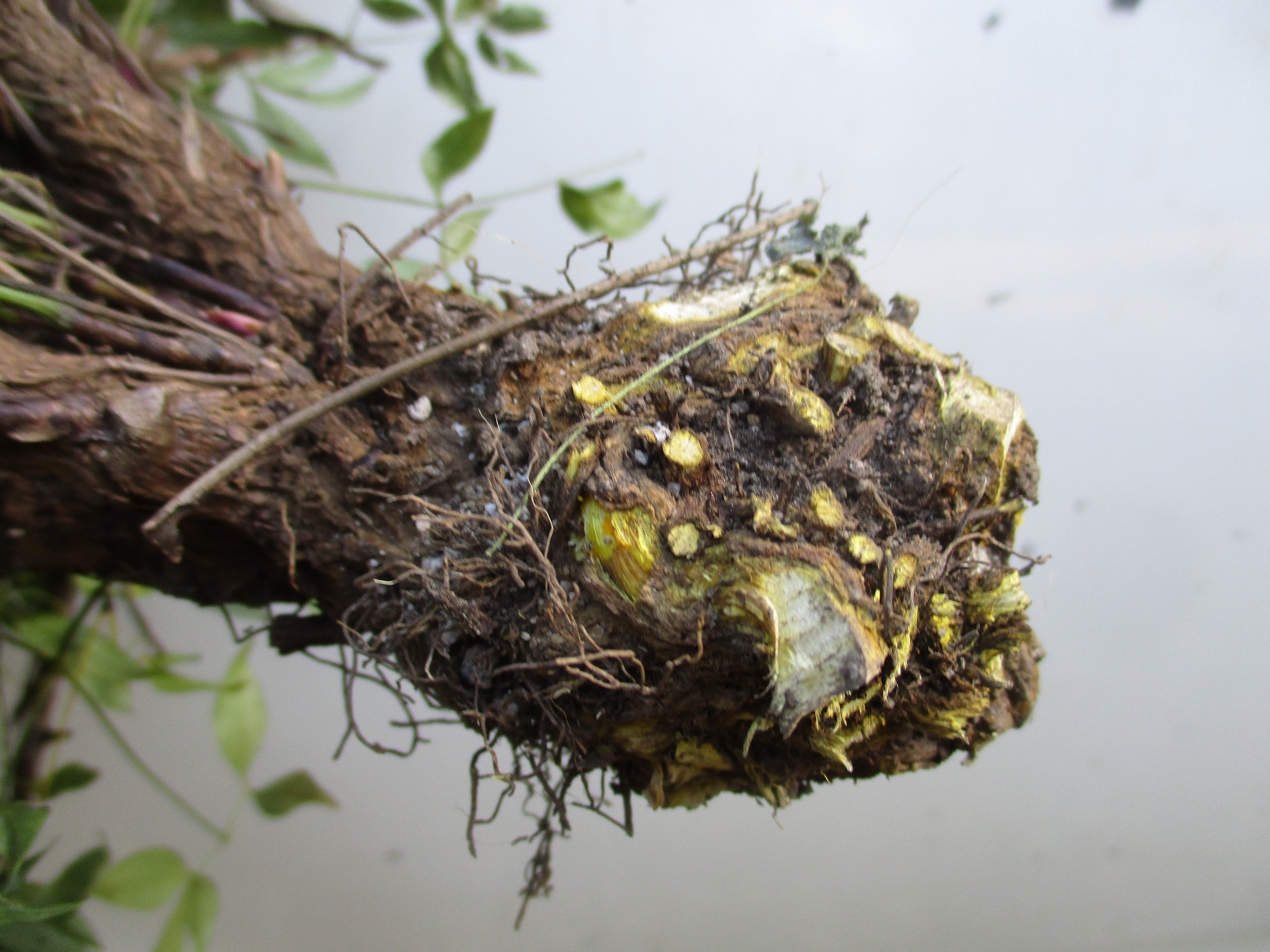
4. The worst of the four demonstrates how thorough the damage was. It was like a mean prank. It seemed as if someone pulled them up, whittled the roots away, and plugged them back in.P00229-4

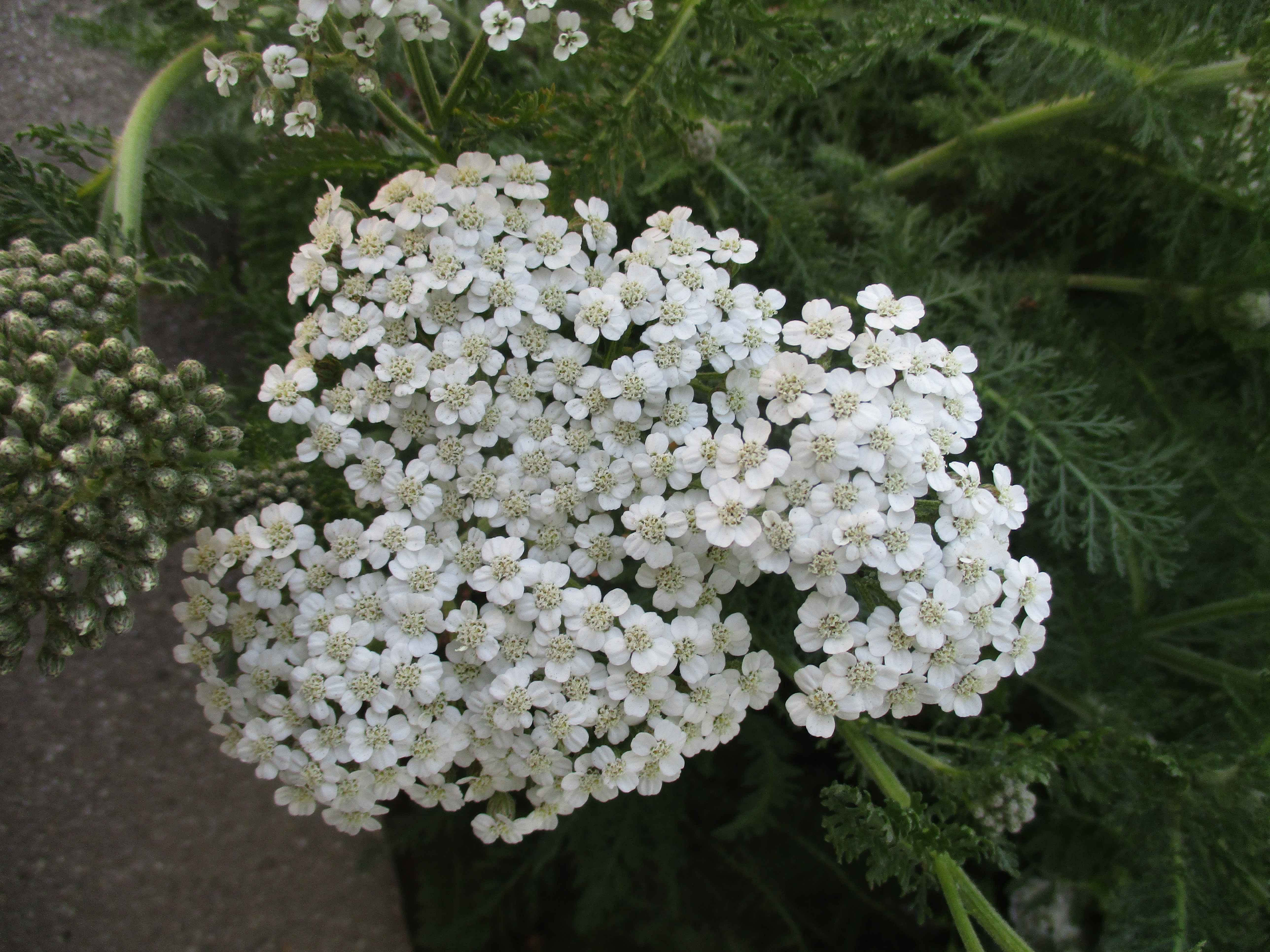
5. Yarrow gets partially eaten by gophers too, but somehow survives. Supposedly, only the thick tap roots get eaten, while lateral roots are ignored. Gophers do not seem to be so discerning.P00229-5

6. Daffodil is how I should end this mostly unpleasant six. No one eats them. Many are still blooming. I probably should have posted pictures of flowers, instead of what gophers are killing.P00229-6

This is the link for Six on Saturday, for anyone else who would like to participate:

https://thepropagatorblog.wordpress.com/2017/09/18/six-on-saturday-a-participant-guide/