Weather To Die For

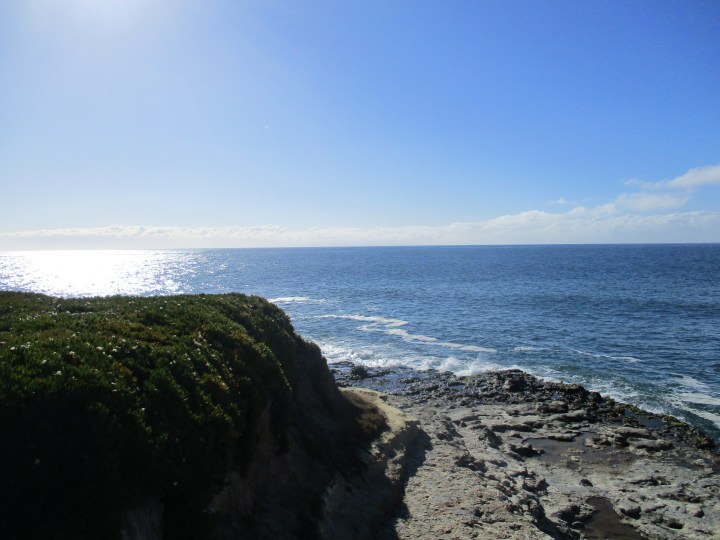
B80210KDon’t worry. He is not really deceased. He is just making good use of the lawn. The well foliated trees in the distance are a clue that this pictures was not taken recently, although it illustrates the current weather conditions accurately. We all want to be out in it, whether getting lazy in a local park, walking on the beach, or just staying home and working in the garden.

It seems that almost everyone else is contending with less pleasant weather. The summer in much of Australia had been historically hot. Much of Europe got some nasty storms. Parts of the Southeastern United States of America that get snow only on rare occasion got more than they have in recent memory.

We are certainly used to our share of pleasant weather through winter. We can only see snow in the distance on top of Mount Hamilton. Frost only happens a few times through winter. We often get a few consecutive days at of spring weather. What we are not accustomed to is this sort of duration of pleasant weather.

Many years ago, such a long duration of pleasant weather would have been bad for the orchards of the Santa Clara Valley. It would have prompted them to bloom prematurely, only to get the blossoms and developing fruit knocked off by subsequent rain. Although the orchards are gone, many of us still grow similar fruit trees in our home gardens. Apricots, cherries, nectarines, peaches, plums, prunes and almonds are all susceptible to premature bloom.

We really could use some wintry weather about now. Rain here with snow in the watersheds of the Sierra Nevada would be the best. Otherwise, cool weather to delay bloom of fruit trees until after the rain would be the second best option.

Rain Is Necessary But Messy

10914Water is no more scarce in California than it has been in recorded history. The problem with it is that it is a limited resource that must be shared amongst too many people. Likewise, rainstorms are no more torrential than they have ever been. Floods, erosion and wind are only more destructive now because there is so much more infrastructure that can be damaged than ever before.
Rain and wind are perfectly natural. Furthermore, it is natural for the weather to knock down limbs or entire trees. It only seems unnatural when these limbs or trees fall on houses, cars or anything else that gets in their way. Plants actually enjoy rainy weather much more than we do. Some like to be rinsed of dust and debris left from former infestations of mites, aphid, scale or sooty mold.

What plants do not like about rain is erosion. It is bad enough that so many plants in refined gardens are deprived of their own litter to insulate the surface of the soil. It is even worse if the bare soil gets eroded away from fine feeder roots at the surface of the soil. This is something that the rest of us would agree on. We do not want gullies carved into slopes, or drains clogged with mud.

Trees, shrubs and some stout perennials with aggressive roots are useful where the potential for major erosion is a concern, but might not do much for annoying surface erosion. Sprawling and spreading plants that form dense networks of low branches and surface roots are more effective. They soften the splatter of rain, slow the flow of drainage, and catch much of any dislodged silt.

Groundcover plants like ivy, gazania and iceplant are probably the best option for controlling surface erosion. Dense and low shrubbery that spreads over the ground and holds its own debris probably work just as well. These include low junipers, trailing rosemary and dwarf coyote brush. Larger shrubbery can help if it can drag its lowest limbs on the ground, and no one rakes below it.

Mulching limits erosion while new plants grow. Although new mulch needs to be added annually as old mulch decomposes, less will be necessary as plants grow and cover more area. Mulch is also effective where no plants are desired. For large areas, especially where plants are not expected to fill in, landscape cloth below ornamental bark inhibits weeds. However, coarse bark slowly shifts downhill, so replaces one kind of erosion with another, and will eventually need to be raked back uphill.

Snow

P80110It seems that almost all of us in the Northern Hemisphere are talking about it. Those of us who lack it can get to feeling somewhat deprived. It looks so pretty in pictures. It seems like such a natural part of winter. To many of us, it is a good excuse to take a break from gardening, stay inside, and write more compelling articles than the more technical sorts written when there is more activity in the garden.

In California, we get almost everything. Although most of the most densely populated ares lack snow, parts of the Sierra Nevada get more snow than anywhere else in the world. Californians can go to the snow to ski, hike, take pictures and do whatever people want to do in the snow; but we do not need to live with it at home like most people in other states do.

I grew up without snow. It snowed only once in 1976. It was only half an inch deep. The snow fell overnight while everyone slept, and it melted by early afternoon. Because the turf in the schoolyard was not resilient to snow, we were not allowed out there until the snow was gone. I later saw snow only when we went to where the snow was, in the Sierra Nevada. Snow only rarely fell at my home near the summit of the Santa Cruz Mountains above town, and it stayed for only a few hours.

I never had to live with snow until I went to Oklahoma at the end of 2012. Even then, it was minimal. The first snow fell only about three weeks before we left, and it never accumulated more than two inches or so. The difference from what I had experienced prior to that was that it lingered. It took a few days to melt. As minimal as it was, I could totally understand why people who live with snow dislike it so. I really can not imagine living with more accumulation of snow for months at a time.

First of all, snow is cold. It is very cold. It is, after all, frozen. That would not seem like much of a problem when the air is already cold, but snow is different. It sticks to the sides of boot and makes them cold inside. It seems to hold the cold on whatever it covers, including parked cars.

Also, snow is wet. Yes, as I already mentioned, it is is frozen, but it is frozen ‘water’, and it does not stay frozen when one is trying to get warm after being out in it. It gets clothing and everything else wet, just like a light rain. Frozen snow gets tracked in on boots and then melts just inside the doorway.

To go along with that, snow is messy. As cars drive through it, it becomes muddy, but does not necessarily melt right away. It becomes slushy mud that splatters onto otherwise clean cars.

There is actually quite a list of things to dislike about snow. It is dangerous on roadways. When it gets pushed off of roadways, it piles up around parked cars and on top of plants that happen to be in the way. I think that I prefer to see it in pictures of Switzerland, Minnesota, Ontario and Mount Hood as it looks from Portland.

Sometimes I think that it would be nice if we got a bit more of a chill here. We would be able to grow more varieties of apples, pears and other fruits. Perhaps peonies would do better, and autumn foliar color would be more spectacular. There are so many things that we can not grow or that do not perform as well as they want to in such a mild climate. However, all those frost sensitive plants that we can grow that others can not grow are nice too. Either way, I will pass on the snow.

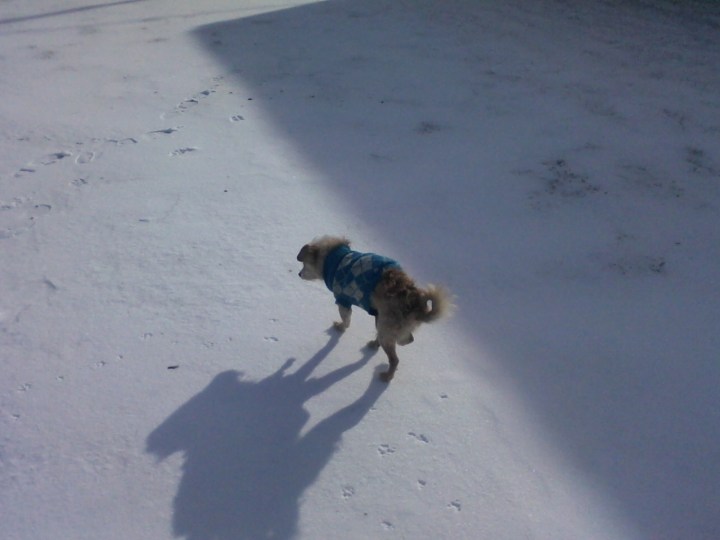
Bill was mostly blind by the time we went to Oklahoma, but he could feel the snow on the ground well enough to determine that he did not like it either.P80110+.jpg

The Molting Of The Chrysler

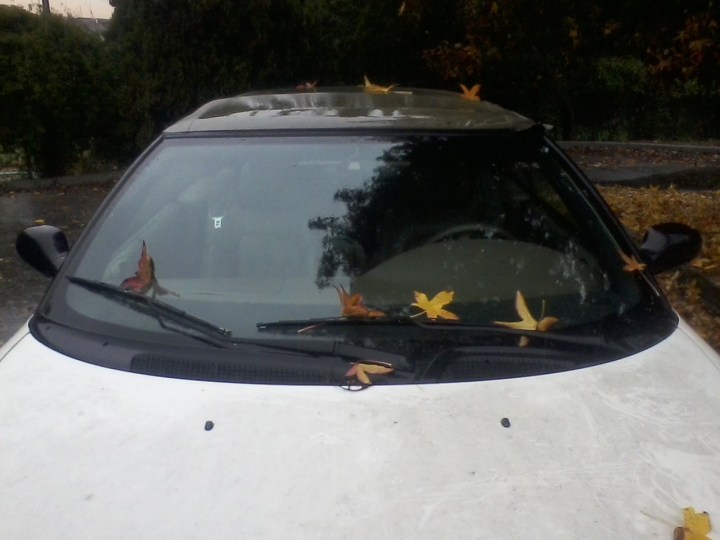
P80108+The old Chrysler looks different this time of year. Like dogs, cats, horses and deciduous plants, it adapted to the weather.

That tan canvas structure above the cab is known as a ‘roof’. It was there all along, but folded up behind the back seat. It was merely unfolded over the top of the cab. The ‘roof’ comes in handy this time of year, not only for keeping warmth within the cab, but also for keeping things out of the cab. Allow me to elaborate.

You may nave noticed that the Chrysler is wet. This is a direct result of mysterious droplets of moisture that fall from the sky. We discussed them earlier. They are known ‘rain’, and are falling from the sky presently. The ‘roof’ keeps the ‘rain’ out of the cab. Otherwise, the cab and everything in it would be as wet as the ‘roof’ is now.

The yellow, orange and reddish brown things strewn about are sweetgum leaves. You may not recognize them now because they are not green. They change color when the weather gets cool this time of year, and then get dislodged by meteorological events such as wind and the presently observed ‘rain’. The ‘roof’ excludes them from within the cab of the car.

The two devices at the bottom of the windshield are another adaptation to ‘rain’ known simply as ‘windshield wipers’. When in operation, they pivot from where they are affixed just below the windshield to literally wipe the the wet ‘rain’ away. They are a rather ingenious invention, since ‘rain’ on the windshield tends to inhibit visibility.

Just as a thick coat on a dog or horse can predict an unusually cool winter, the molting of the Chrysler is directly related to the weather. Although it can not predict ‘rain’ as early as dogs and horses can predict cold weather, it quite reliably happens immediately prior to ‘rain’. It is a good sign for the garden.

The ‘rain’ that falls immediately after the molting is composed of water, which is very important and useful to gardens and forests after such a long dry summer. As we discussed earlier, some of the water gets into the aquifer where it is stored for later use in and around our homes. We are very fortunate to have a Chrysler who is so proficient at predicting the delivery of the water that we need so much of.

‘Rain’

P80103+Like something from an old fashioned science fiction movie, this anomaly appeared in a roadway overnight. There are several more in other roadways and elsewhere about town. They are quite wet. In fact, they are composed almost completely of water. What is even weirder is that the water that they are composed of actually fell mysteriously from the sky overnight as many countless droplets all over town! Many of these droplets migrated into low spots such as this one to form what we now see in this picture.

People in other climates where these mysterious droplets are not so rare might be familiar with this sort of phenomenon. The droplets of water are known as ‘rain’. They precipitate out of the atmosphere as it cools and can not contain as much water vapor as it did when it was warmer. As the droplets migrate into low spots in roadways and anywhere else, they accumulate into these collective herds of droplets known as ‘puddles’. Many of the droplets continue to migrate as huge herds known as ‘creeks’, and even bigger creeks known as ‘rivers’. Some of these creeks and rivers migrate into really big puddles known as ‘ponds’, and even bigger ponds known as ‘lakes’. Sadly, not all of the droplets can be accommodated in ponds and lakes, so many continue to migrate out into the ‘ocean’, which is that really big pond full of salty water to the west that we are all familiar with.

Hopefully, some of these droplets of rain will stay around for a while and provide water for the plants in our gardens and forests. Ideally, some will burrow into the ground and stay for a very long time, and maybe even migrate into the aquifer to hibernate. In our climate, particularly after such a long and dry summer and autumn, these strange droplets of rain are very welcome to stay as long as they want to.

Unseasonable Weather Can Confuse Plants

70920thumbEven without any of the five senses that we are outfitted with, plants are remarkably perceptive of the weather and the changing seasons. They know precisely what time of year it is because they know how long the sun is up. Their calendar is just as accurate as ours is. They also know that the weather has been getting progressively cooler through autumn, and that it rained a bit earlier.
New Zealand tea tree, torch lily, euryops daisy and many other plants from other temperate climates do not seem to care that they should not be blooming at this time of the year, if the weather is telling them otherwise. If the weather is warm enough during the day, even if it gets cool at night, these plants will bloom right up until things get really cold, even if some of their bloom gets frosted.

Saucer magnolia, lilac, apple and the many other plants from climates with cooler winters should know better than to bloom this time of year. Many bloom only once annually, so whatever blooms now will not bloom when it should next spring. Besides, the flowers that try to bloom now will bloom slowly, and probably be ruined by cool or rainy weather before they can develop completely.

Roses had a particularly weird year. They bloomed well and on schedule last spring, but then idled through much of summer, only to express a new interest in blooming now that they should be going dormant for winter! No one wants to prune them while they have more buds than they did in August. Fortunately for them, they bloom more than once annually, so should recover by spring.

The colorful foliage of sweetgum and Chinese pistache, as well as the observable weather, indicate that everything is more or less in order for this time of year. Autumn might have started out mild, but it had been even warmer in past years. It is impossible to say why some magnolia, lilac and apple are trying to bloom already. They each have such distinct personalities, and respond to so many different variables besides the obvious; daylength, temperature and humidity.

Frost!

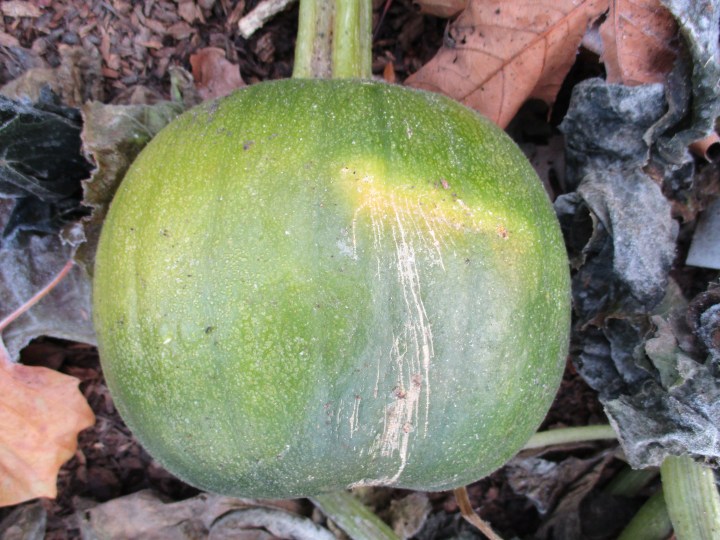
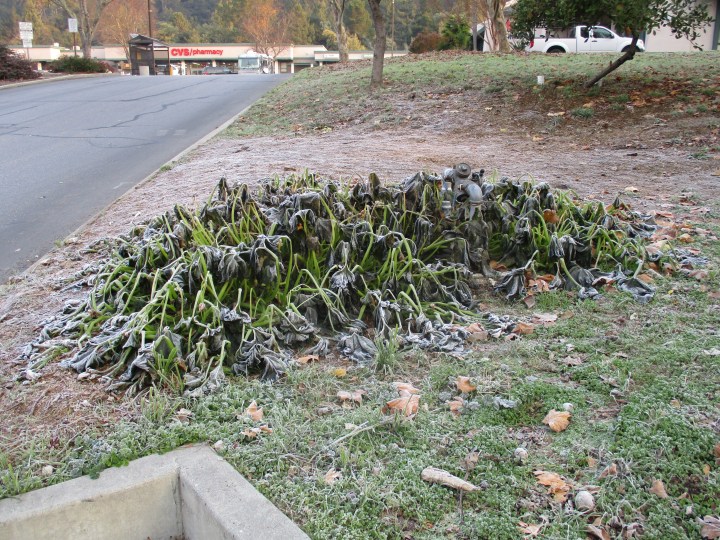
P71208+K1Yes, we get it too. It took a while, but we finally got it just like most of everyone else in North America and the Northern part of the Norther Hemisphere. It is not much to brag about, but it is enough to melt the big feral pumpkin vine that I wrote about earlier ( https://tonytomeo.wordpress.com/2017/12/03/too-late-for-pie/ ). It has actually been frosting for a few nights. I just got around to getting this picture this morning.

Now that the foliage is melting and collapsing, a leak is now visible in the exposed valve manifold that was obscured in the previous picture. It did not get cold enough to freeze the pipe, so the water was dripping freely. This confirms the earlier theory about where the pumpkin vine was getting water from.

Two pumpkins are also exposed by the collapsing foliage. They were not visible earlier. Unfortunately, they are too under-developed to mature and ripen. A neighbor will likely take them and set them aside on the porch, just in case they are able to finish ripening. It would be nice if they did. The vine certainly put a lot of work into them!P71208+K2P71208+K3

While taking this picture, I was reminded why people who live with cooler weather dislike it so. First of all, and most obviously, it kills things. The season is over for pumpkin vines, which is not a problem. The problem is that so many of the citrus, avocados and other plants from mild climates that we grow so easily here get damaged or killed by frost in other climates.

The second reason to dislike cool weather is that it is too cool, maybe even cold. It is uncomfortable to be out in long enough to walk over and get these pictures of the pumpkin vine and pumpkins. I am glad that it does not get much colder here.

Plants Are Particular About Exposure

1212121032One of the most important differences between plants and animals is that animals are ‘animated’, and plants are not. Aquatic plants might float about, and might even drift into more favorable situations. Vines and plants with creeping rhizomes can likewise relocate. Otherwise, most plants are confined to the same locations where they grew naturally, or where they were planted. They need to get it right from the beginning.

Most landscape plants that are commonly available in local nurseries are fortunately suited to local climates. A few tropical plants that prefer milder climates, as well as a few plants that prefer cooler winters, can be found; but most plants that prefer other climates are simply unavailable here. Yet, even within their preferred climates, the many diverse plants in our gardens are affected by many other environmental factors.

Exposure is nearly as important as climate is. Some plants need to be completely exposed, while some prefer shelter from heat, cold, wind or sunlight. It all depends on how they live in their natural environments. Some naturally live out in the open. Others live in dense forests, where they need to compete with other plants for sunlight. Even if we do not know where our plants come from, we should know what they require.

Japanese maples are understory trees that naturally grow in the partial shade of larger trees in mixed forests. Some types can do well in full sun exposure, but are likely get roasted by reflected glare, or dry wind. Lace-leaf Japanese maples are more sensitive to exposure, so prefer partial shade in the afternoon, and shelter from wind. However, too much shade compromises foliar color of the red and bronze leafed types.

Most cacti and some types of yucca are just the opposite. They naturally live out in deserts, without any significant competition. In home gardens, they will lean away from shade. Knowing what plants want helps to find the best exposures for them.

Rain!

P71020Something really crazy happened last night. From out of nowhere, a profusion of drops of water started to fall from the sky! It continued to fall for a while, and got everything wet. Soil that had been dry and dusty became rather muddy. As crazy as it sounds, it is not impossible, and actually happened repeatedly last autumn, winter, and into spring. In fact, it was so abundant that the San Lorenzo River filled with all this strange sky water, and flooded worse than it had since the flood of 1982! People in other less arid climates are more familiar with this sort of thing. It is actually no mystery. It is known simply as ‘rain’.

‘Rain’ is like free water. Really, we do not need to pay for it! It falls from the sky, and waters the garden so we don’t need to. It might be the only water that areas outside of the garden get. Some plants out there have been waiting for it since it stopped falling from the sky last spring. Rain that does not soak into the ground drains into creeks and rivers, which flow into reservoirs that store it for later use. (Local reservoirs don’t really save it for later use directly, but use it to recharge groundwater; but that is another story.)

Another advantage of rain is that it tends to get things wet, which makes them less combustible. This is rather useful when forests nearby are burning. The Bear Fire near Boulder Creek is not quite extinguished. In fact, it is not yet contained. This rain should help with that. It probably will not do much for what is already burning, but should slow the already stagnating progression of the fire.

The Trees Know

P71014The trees look spooky now. Box elders, honeylocusts and alders, and even some of the sycamores, have dropped so much of their foliage since that weirdly hot weather a few weeks ago. The smoky sky as a backdrop enhances the spooky factor. The trees do not seem to be too distressed. They just dropped their leaves a bit early to conserve resources. If they had not dropped foliage by now, they would be dropping it soon anyway.

Trees are not stupid. They know what they are doing. Otherwise, they would not survive as long as they do out in the elements. Sometimes, they seem to know what the weather will do before it does it; like dogs, cats and horses that start to get their undercoats early before a cold winter.

Deciduous trees and other plants defoliate for winter for a few reasons. Those from farther north probably see no need to work so hard to collect sunlight while sunlight is so minimal. Up north, days are shorter, and sunlight is diminished as it passes through so much of the atmosphere at a lower angle. Deciduous plants from colder climates shed their foliage because they know that if they do not, it will get frozen anyway. Those from snowy climates do not want foliage to collect heavy snow that can break limbs. Defoliation also eliminates much of the wind resistance that can break limbs during winter storms. There are a few advantages to being deciduous.

In California, we have a native California buckeye, Aesculus californica. In chaparral conditions, it can be ‘twice-deciduous’. It does not need to be so in less arid regions, such as the Santa Cruz Mountains. It really depends on the weather.

As a twice-deciduous plant, the California buckeye develops new foliage in spring like other deciduous plants do. It stays foliated as long as it wants to; but if things get too dry and warm in the middle summer, the foliage shrivels and falls. To a casual observer, the trees seem to die. However, between the first autumn rain and the first winter frost, California buckeye develops a second phase of autumn foliage to briefly compensate for summer dormancy. This foliage stays late until it gets frosted and falls. Winter dormancy is just like that of any other deciduous tree. In spring, the process starts all over again.