Humidity Is The Other Weather

Some delicate foliage prefers more humidity.

It is difficult to always ignore the weather. Regardless of how pleasant it typically is here, it sometimes gets warm or cool. It occasionally gets hot or cold. Rain is wet and perhaps messy. A breeze is comforting while the weather is warm. Strong wind can be damaging. However, humidity is one major component of local weather that gets little consideration. 

Humidity gets more consideration in climates that are either uncomfortably humid or arid. Some parts of Florida get famously humid and hot simultaneously during summer. Some flora and insects enjoy such weather. Unfortunately for the rest of us, humidity enhances the already unpleasant heat. Locally, hot or warm weather is rarely bothersomely humid.

Similarly, local weather is rarely unpleasantly arid (lacking humidity). This is a chaparral climate, which is ‘semiarid’. Relatively minimal humidity makes heat a bit more tolerable than it would be with more humidity. Yet, humidity is generally sufficient to sustain foliage that would desiccate in a more arid desert situation. Actually, this is an excellent climate.

Although, it is not perfect. Flora and fauna have different standards for exemplary climate and weather. The relatively minimal humidity that makes uncomfortably warm weather a bit more tolerable for people and animals is much less appealing to some plants. Except for those that are native to desert or chaparral climates, most plants prefer more humidity.  

Many popular plants are understory plants, that naturally live in the partial shade of taller vegetation. With shelter from desiccating arid wind and harsh sunlight (to enhance heat), most do not mind heat. Otherwise, foliage might roast. Those with finely textured foliage, such as astilbe, ferns, grasses and some Japanese maples, are particularly susceptible.

Some tropical and subtropical plants, such as split leaf philodendron and fuchsia, prefer to be understory plants here, even if they would prefer more exposure within their natural ecosystems. The shelter provided by more resilient vegetation compensates for deficient humidity. Furthermore, adequate irrigation promotes healthy hydration of delicate foliage. 
Six on Saturday: Some Like It Hot!

The climate here is mild. Winter chill is insufficient for some peonies and apples. Summer warmth is generally tolerable, particularly since humidity is generally low. Nonetheless, the weather occasionally gets quite warm. Fortunately, when this happens, it does not last for too long. It started to get unpleasantly warm on Wednesday, then remarkably hot on Thursday, but was then comfortably warm for Friday. I know that it is not much to complain about; but even brief warmth can damage the landscapes here.

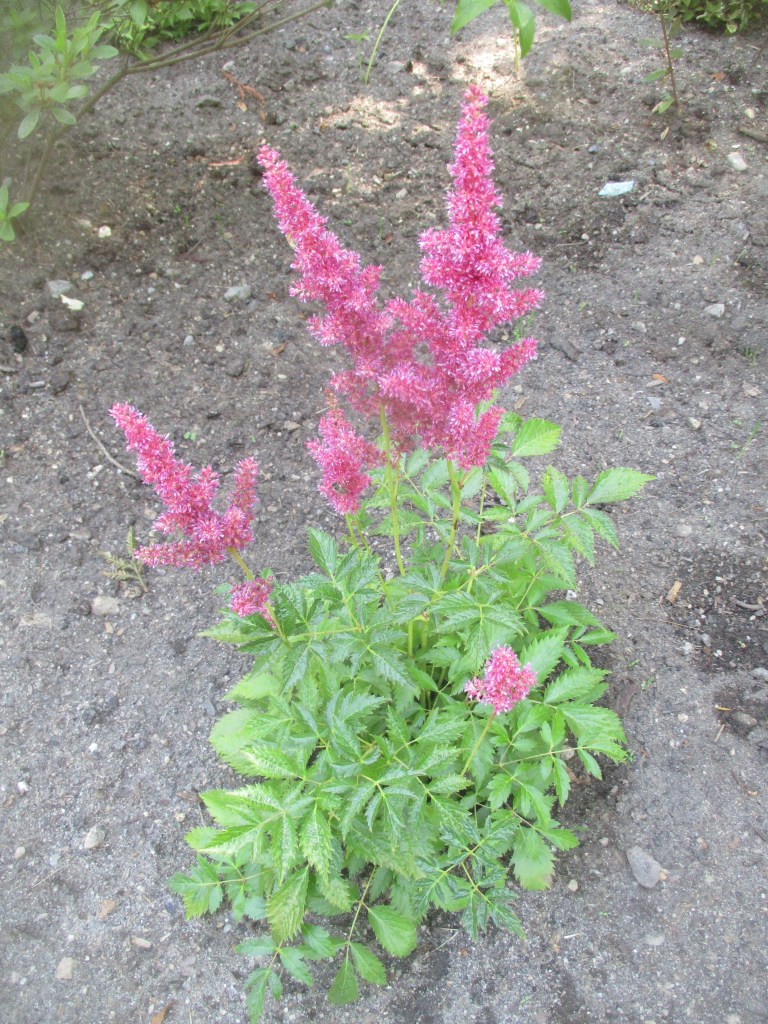
1. Astilbe is something that I have wanted to grow since about 1987. I just never found a good excuse to do so. This is not mine, but was added to two of the landscapes at work on Wednesday.

2. On Thursday, a few of the fresh new astilbe looked like this. The weather got too warm, too fast. Gads! This is my first experience with astilbe. Fortunately, they are green and viable within.

3. Shade is certainly not a rare commodity here. Redwoods are the tallest trees in the World, and many live in and around the landscapes. It would have been even warmer here without them.

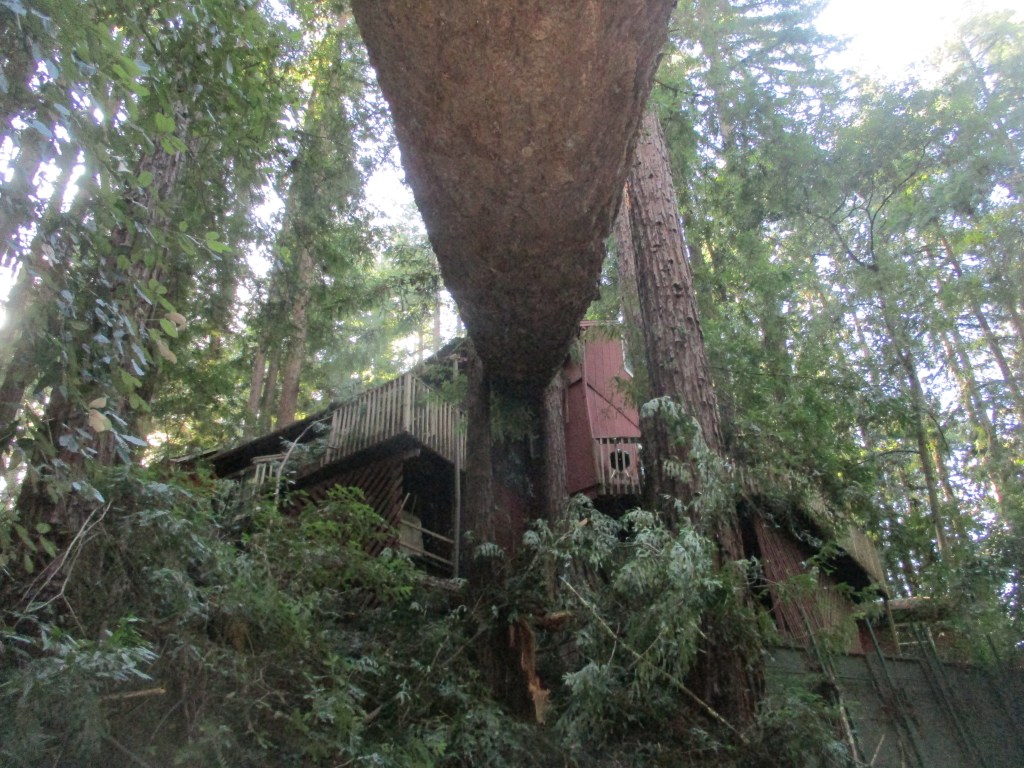
4. When I say that redwoods are tall, I mean that they are ‘tall’. This one is known as the woodpecker tree because woodpeckers store acorns in the perforated bark. Its shadow reaches Utah.

5. Anyway, this is how hot it almost got. The actual temperature was likely slightly less than this, but enhanced by the metallic roof above. What difference does it make? It was hot regardless!

6. Rhody knew what he wanted to do while it was so unbearably hot. He went out and laid in a sunny spot on the hot asphalt. He rolled around a bit too. He went for a swim in the creek later.

This is the link for Six on Saturday, for anyone else who would like to participate:

https://thepropagatorblog.wordpress.com/2017/09/18/six-on-saturday-a-participant-guide/

Last Frost Dates Help Scheduling

Frost is unlikely until next autumn.

Frost is not as much of a concern here as it is in other climates. It is very rare in some of the coastal climates of Southern California. The potential for frost damage increases farther inland, farther north, and at higher elevations. Regardless, it is generally tolerable locally. Even if it is necessary to protect a few marginal plants prior to frost, the ‘average last frost date’ gets little consideration.

The average last frost date designates the end of the frost season for a particular region. Although a specific date, it is an average of dates of the last frost of previous years. It includes minor frost that caused no major damage. Damaging frost, although possible, is unlikely afterward. It becomes more unlikely as the season advances. The process reverses after the average first frost date.

Obviously, average last frost dates are as variable as climates. They are irrelevant for climates without frost. Climates with cooler winters generally have average last frost dates later than those of milder climates. For most of us on the West Coast of California, the average last frost date happens before we are aware of it. Nonetheless, it is helpful to know the date for our particular regions.

Warm season vegetable and bedding plants should be safe in the garden after the average last frost date. Directly sown seed should get all the warmth it needs to germinate. Young plants will not likely experience damaging frost. The weather will continue to get warmer. The days will continue to get longer. Cool season vegetable and bedding plants will relinquish their space as necessary.

Plants that sustained damage from earlier frost can now be pruned and groomed. Damaged foliage that remained in place to insulate inner stems is no longer necessary. Pruning and removal of ruined vegetation stimulates new growth while it will be safe from frost. Aggressively pruning and grooming damaged plants that are already regenerating fragile new growth may be complicated.

Most local climates are beyond their respective average last frost dates. Soon, the others will be too.

Six on Saturday: After (And Before) The Storm

Rhody and something flowery are lacking from my Six on Saturday again. We got some good rain though, after the horrid wind that I wrote about earlier. That is worth bragging about. Prior to rain, I try to plant what needs to be planted, so that it can get soaked in by the rain. This technique is particularly important where there is no irrigation.

1. Banana slug, mascot of the University of California at Santa Cruz, magically appear as the annual rainy season begins. I do not know where they go for summer, but they do not go quickly.

2. Mud also arrives with rain. This mud was formerly a baseball field. It is now where we dump storm debris. Others of our crew thought it was fun to do donuts, . . . which is why I got stuck.

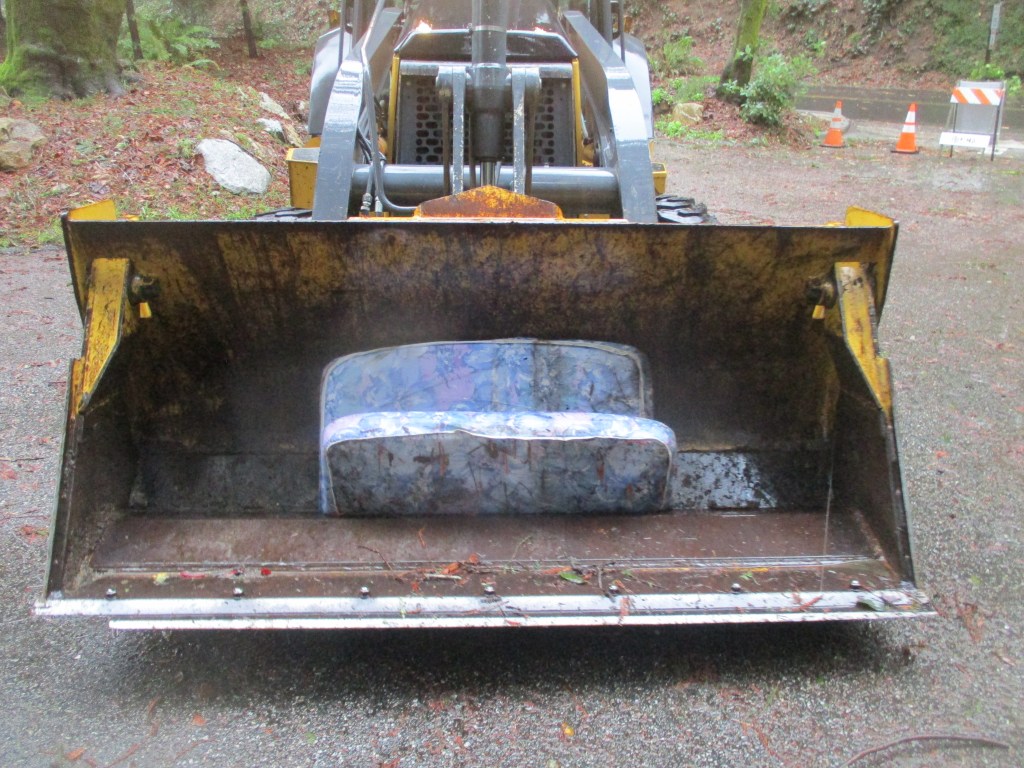
3. Sweeping storm debris from so much pavement here takes ingenuity. The bare tractor bucket damages old asphalt. This mattress was surprisingly effective, but difficult to sleep on later.

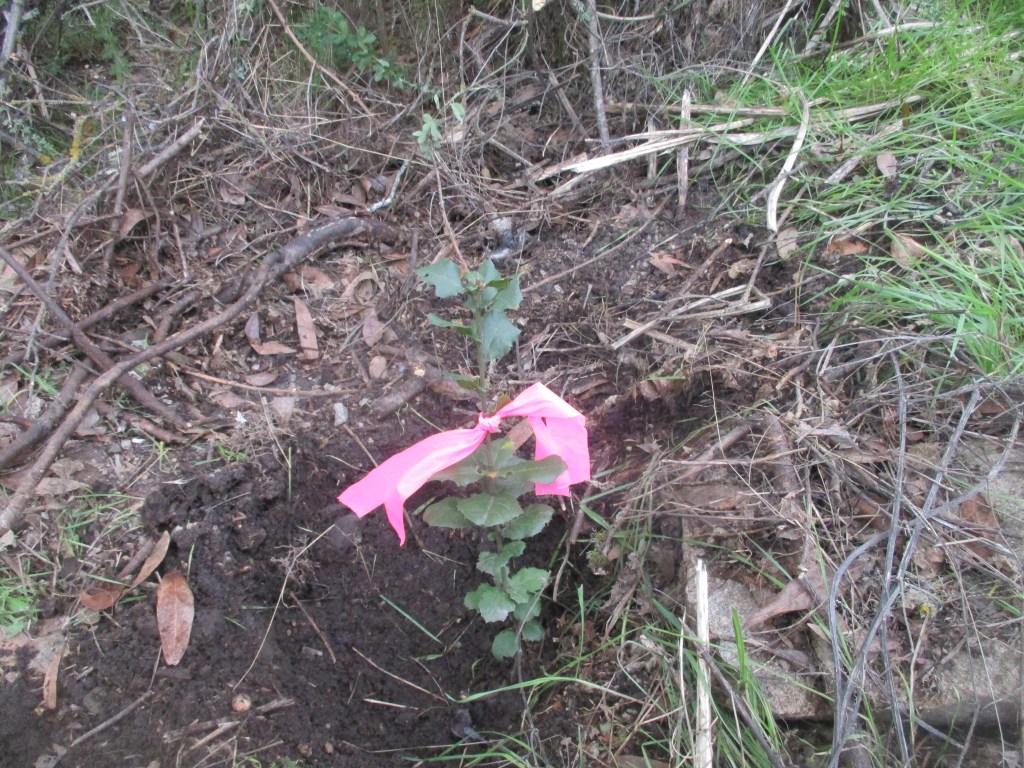
4. Coast live oak seedling grew where a squirrel buried an acorn with a potted epiphyllum. I pulled the seedling out, and plugged it by the roadside, where a new coast live oak would be nice.

5. Deodar cedar seedlings are abundant under a few mature trees here. Several have been plugged into landscapes. This one got plugged by the roadside with the coast live oak and cypress.

6. Arizona cypress seedlings are finally installed as an informal hedge on the roadside, with the coast live oak at one end, and two deodar cedars and the Steven Michael Ralls Memorial Tree at the other end. These five cypress had been canned for too long, so will be much happier in the ground where they can now disperse their roots. I am pleased with this new informal hedge.

This is the link for Six on Saturday, for anyone else who would like to participate:

https://thepropagatorblog.wordpress.com/2017/09/18/six-on-saturday-a-participant-guide/

Six on Saturday: Ill Wind

There are no flowery pictures here this week. Nor is there a picture of Rhody. I know that everyone loves Rhody. Also, I had been trying to include something flowery as everyone else does. Instead, I got only pictures of damage that was caused by very strong wind that blew through here on Monday night and Tuesday. I missed it while at my other work, but now have a major mess to contend with. Redwoods are very big and very messy, even without wind. With wind, they are very dangerous too. No one can remember stronger wind here.

1. Electricity sometimes gets disabled prior to strong wind. This wind storm disabled the electricity first. Debris such as this needed to be removed before the electrical service was restored.

2. Decayed dead trees blow down easily, even without much drag. They are not as heavy as viable trees, but are not as flexible either. A few stubs of broken limbs perforated this lodge roof.

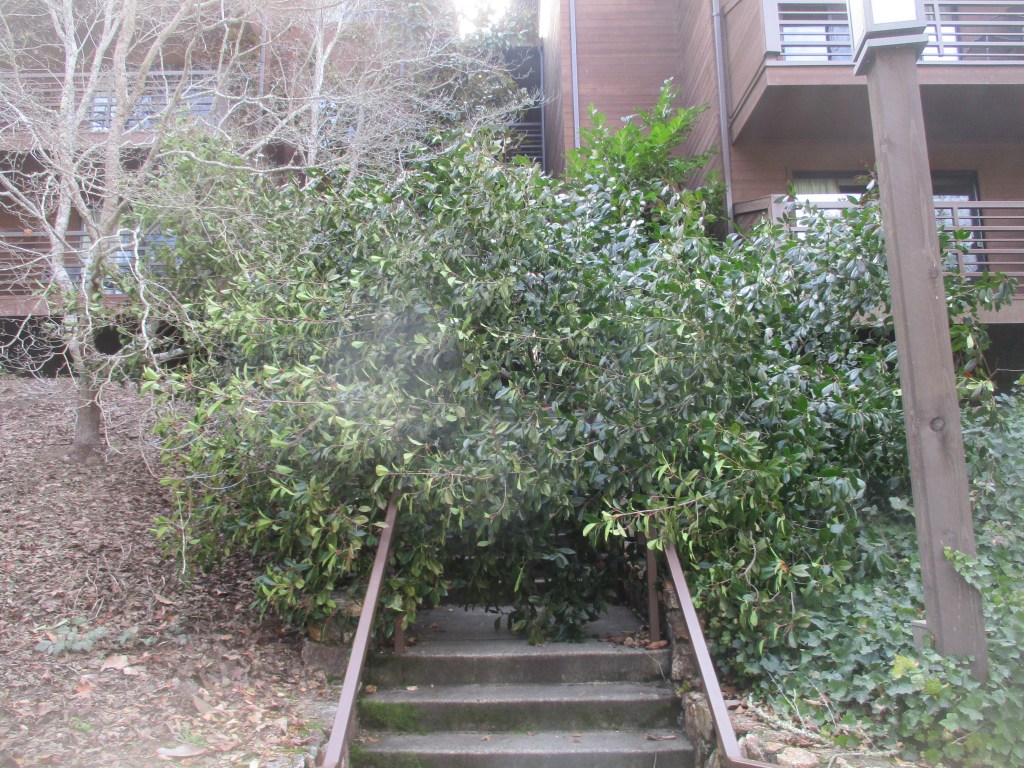
3. Stairway to photinia was too silly to not get a picture of. The photinia looks as if it had always been there. I certainly did not expect it to fall over. We took the necessary steps to remove it.

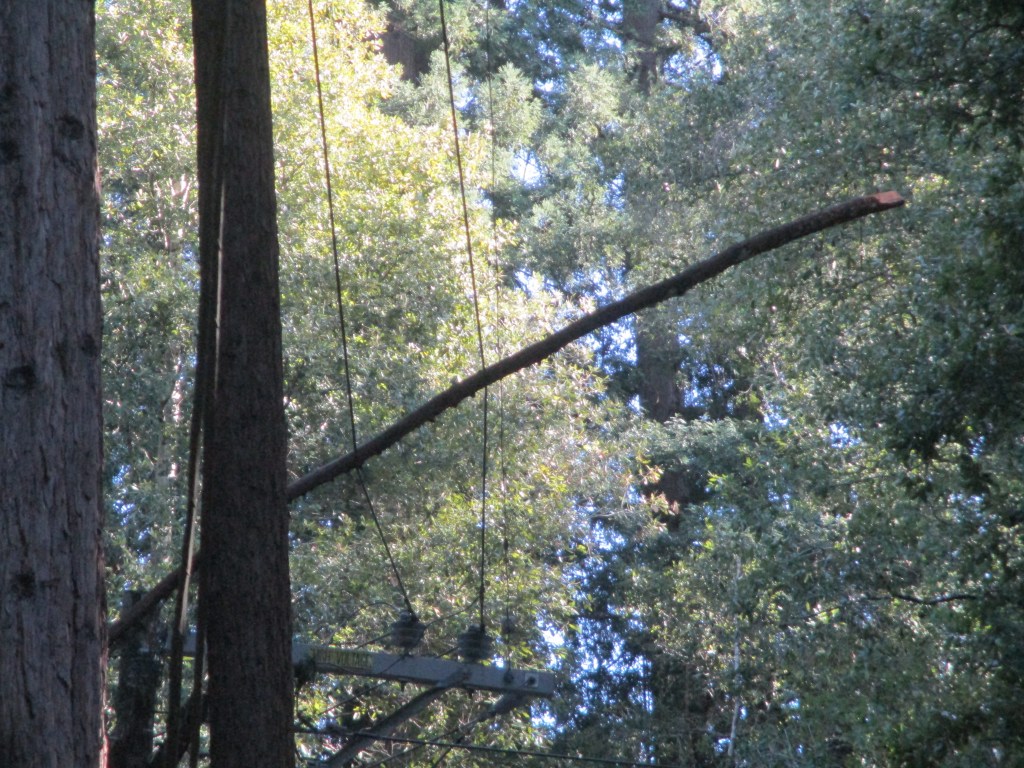
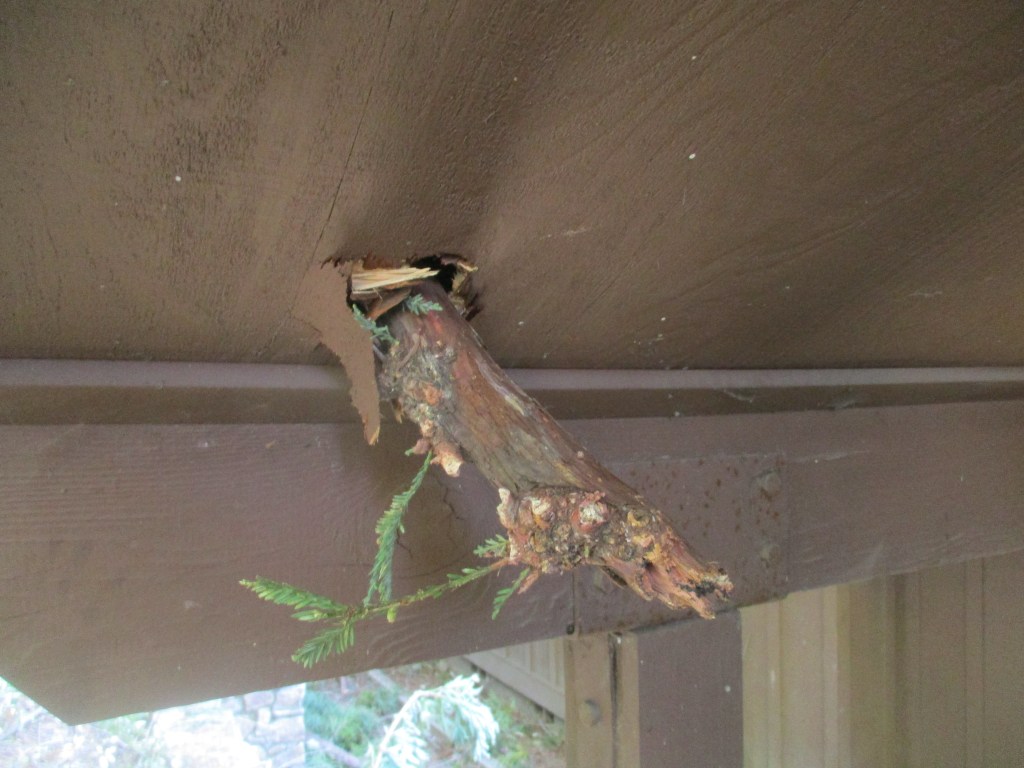
4. Redwoods are hundreds of feet tall. Even small limbs that fall from such heights come down with significant momentum. This limb punctured the roof and this plywood porch ceiling below.

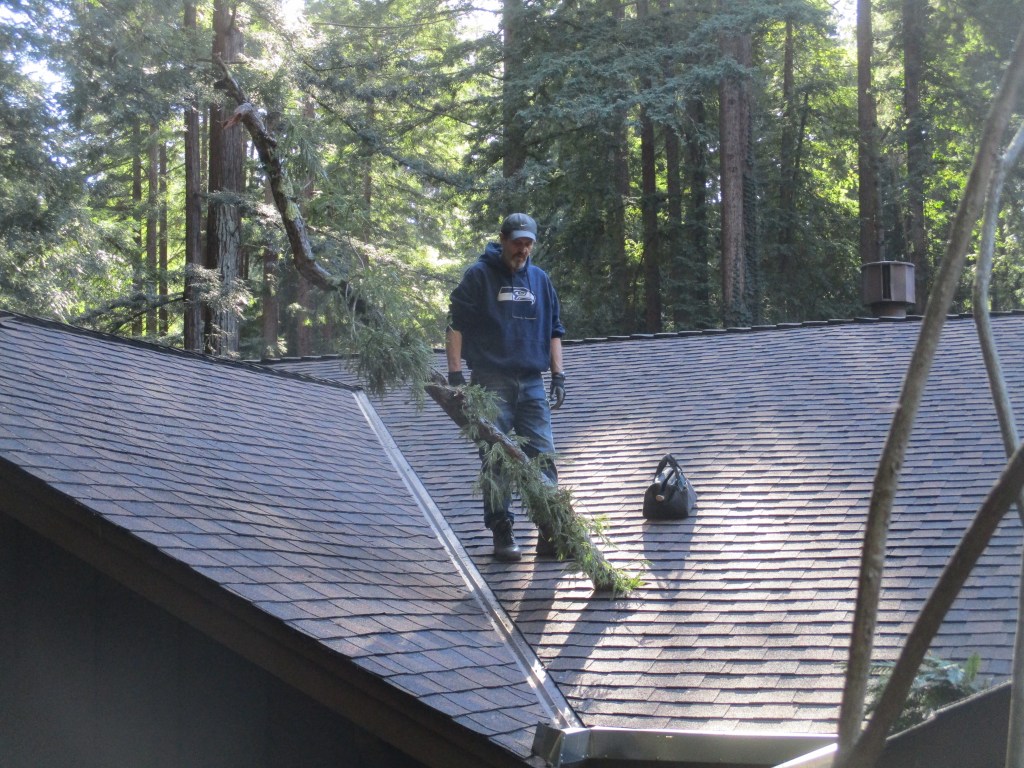
5. Several limbs such as this perforated this same roof. Abundant other debris was raked and blown off before these limbs could be removed, and the roof could be patched. Rain is expected.

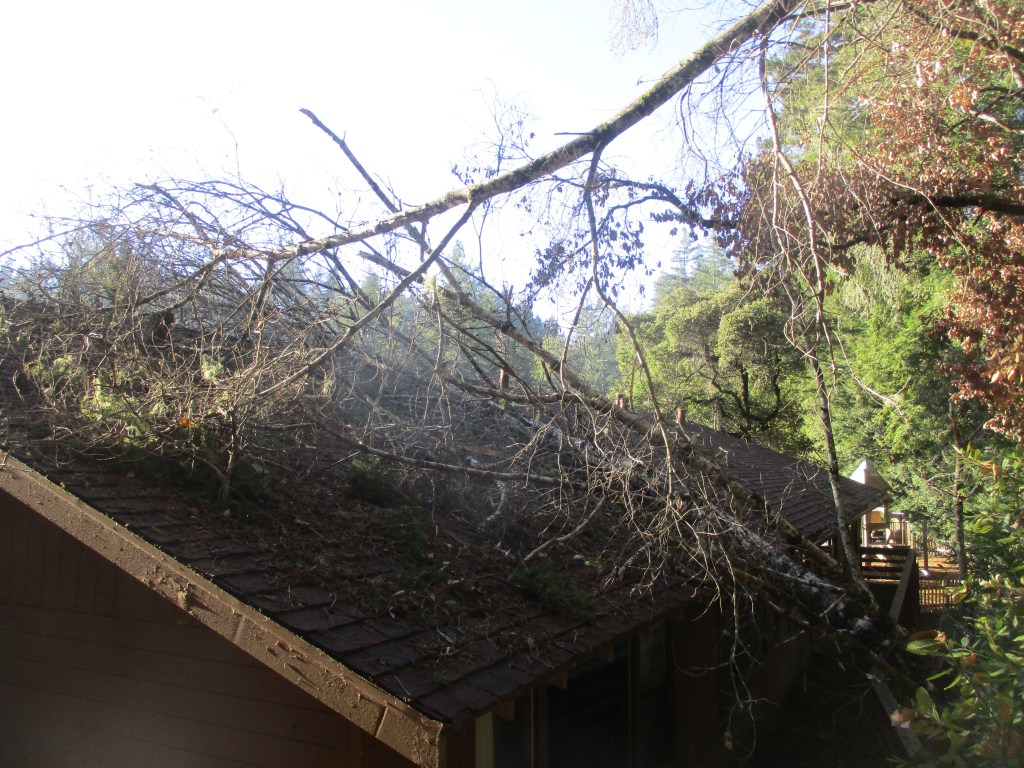
6. This roof, as well as the house below it, got the worst sort of damage when this big fir came down. Sadly, this is not the only home that was destroyed by falling trees. Several cars died too.

This is the link for Six on Saturday, for anyone else who would like to participate:

https://thepropagatorblog.wordpress.com/2017/09/18/six-on-saturday-a-participant-guide/

Good Weather Can Be Bad

This should be the rainy season.

As if the lack of rain is not serious enough, the lack of cool winter weather will also cause problems for gardening. Warmth is certainly not as bad as drought, and makes gardening and other outdoor activities more pleasurable, but it interferes with the schedules and cycles that we and the flora in our gardens rely on. Something as natural as the weather should not be so unnatural.

The earlier unseasonably cold weather convinced plants that it really was winter. The problem is that the weather then turned unseasonably warm, and has stayed this warm long enough for plants to believe that it is spring! Some established (not freshly planted) narcissus and daffodils that should bloom as winter ends are already blooming, and some that are naturalized where they get no supplemental watering are already fading from the lack of moisture.

Buds of dormant roses are not staying so dormant, and may soon pop and start to grow. Buds of dormant fruit trees could do the same. When the rain finally starts, it will likely damage and spread disease among freshly exposed rose foliage and newly developing buds. Fungal and bacterial diseases that get an early start will likely proliferate more than they normally do through the following spring. Rain can likewise damage and dislodge fruit blossoms.

The many plants in the garden fortunately have a remarkable capacity for adaptation to weird weather. Bulbs, roses, fruit trees and other plants should eventually recover and get on with life as if nothing happened. The weather is actually more of a problem to those of us who want an early and healthy abundance of roses and an abundance of fruit in summer.

It is still a bit too early to know how the weather will affect what happens in the garden this spring, but fruit production of many types of fruit, as well as bloom of some types of flowers is expected to be inhibited.

This Parade Needs Some Rain

Now, this is something you don’t see every day in a chaparral climate.

The lack or rain has really gotten serious! This winter so far has been the driest ever recorded. The past two winters had already been unusually dry. Even when the rain starts, it will be considerably behind schedule. Some seriously torrential rain will be needed to catch up.

As much as we like to think of gardening as something that brings us closer to nature, it demands unnatural volumes of water. Only established native plants or plants that are native to similar climates can survive with the limited moisture that they get from rain. This is why gardens get watered as much as they do.

Lawns of course require the most water because their shallow root systems require such frequent watering, and also because their vast foliar surface area loses so much moisture to evapotranspiration (evaporation from foliar surfaces). Lawns are the first and most prominent of landscape features to succumb to water restriction. Flowering annuals are the next to succumb, because they too want regular watering, especially while they are not getting any from rain.

Fortunately, lawns, annuals and other plants that want an abundance of moisture need less now because they are dormant or considerably less active through winter. Besides, evapotranspiration is inhibited by cooler temperatures, shorter day length, and most of the time, by higher humidity. It is nothing like the warm and arid (minimal humidity) weather during longer days of summer.

Many large and established shrubs and trees can survive quite easily with very minimal watering or even none at all. Established oleander, bottlebrush and juniper may not be as vibrant without watering, but should survive. If they notice a lack of water at all, it would not be until they start to grow again in spring. Mature trees take even longer to notice a problem.

Deciduous plants that are now bare really do not consume much moisture at all and really only need enough moisture in the ground to keep their roots from desiccating. This will only be a problem if the soil is very sandy and drains too efficiently to retain adequate moisture, or if freshly installed plants have not had enough time to adequately disperse their roots into the surrounding soil.

Automated irrigation systems should still be operated only minimally or not at all through winter. However, because of the unusually dry weather, they may need to be used a bit more than usual for this time of year to keep some things from getting too dry.

Winter Is Time For Pruning

Pomegranate trees appreciate major specialized pruning.

Plants are unable to migrate to warmer climates for winter like so many migratory birds do. They are immobile for their entire lives. Only potted plants can move to more sheltered situations when the weather gets too cool for them. Some get to live inside as houseplants. Otherwise, they all must contend with seasonally changing weather. Most are impressively efficient with how they do so.

Most that do not adapt efficiently to cool winter weather are tropical species. Tropicals that are native to high elevations can tolerate cold weather. However, many of the familiar tropical species are from low elevations where they never experience cold weather. Frost damages or kills them. Warm season annuals do not tolerate cool weather either. They just die at the end of their season.

Otherwise, almost all other plants go dormant through winter, at least to some degree. Even evergreen plants, which may not seem to go dormant, grow much slower during winter, or do not grow at all. Deciduous plants are much more obvious about their dormancy, because they defoliate. While bare, they are less susceptible to damage from wintry weather. Dormancy is like hibernation.

This is why winter is the best time for pruning most plants. While dormant, they are less susceptible to distress associated with pruning. Some plants expect some degree of damage from wintery weather during their dormancy anyway. They wake in spring, with no idea of what happened while they slept, and resume normal growth. Winter pruning conforms quite naturally to their life cycles.

There are, of course, a few exceptions. Citrus and avocado should not be pruned during winter. Such pruning stimulates new growth, which is sensitive to frost. Maple and birch should have been pruned earlier. They bleed annoyingly if pruned late into winter. Flowering trees that produce no fruit, such as flowering dogwood and flowering cherry, should be pruned after bloom, late in spring.

Deciduous fruiting trees, such as apricot, cherry, plum, peach, apple and pear, require specialized pruning during winter.

Jack Frost Nipping At Foliage

Yuck! Freezer burn!

It is impossible to deny that the weather has been unusually cold when tough perennials like ligularia and farfugium express symptoms of frost damage. Late autumn and winter are expected to be cold, but not as cold as it has been recently. Ligularia, farfugium and most tough perennials should recover as if nothing happened. Cannas will naturally die back or need to be cut back to the ground later, but their resilient rhizomes should be safe, and regenerate later as winter ends. Unfortunately, sensitive perennials like pelargoniums may have been killed if frost damage extended too far into lower stems and roots.

The best way to protect plants from frost is to grow only plants that are not so vulnerable to frost. The problem with this technique is that it is too limiting. Abstaining from the few most sensitive plants like bananas and angel wing begonia probably would not be a problem for most of us. However, avoidance of moderately sensitive plants would involve familiar plants like bougainvilleas, lemons and split leaf philodendron.

Many of the smaller sensitive plants like angel wing begonia, can be grown in containers that can be moved to more sheltered spots if and when necessary. They can be brought inside or moved onto covered porches. If they only need to be protected for a few days during the coldest weather, they can be moved into garages. The problem with this technique is that many plants get too big for containers.

Bougainvilleas eventually get big, and do not like to be grown in containers anyway. They should be planted in warm spots in the garden not only because their foliage can be damaged by frost in winter, but also because they like warmth during summer. A south facing wall with an eave above provides a nice warm exposure, a bit of protection from frost above, and a slight bit of ambient warmth from the building behind it. Even if the foliage gets frosted, the main stems within should be safe.

During the coldest nights, sensitive foliage can be protected by burlap, paper, plastic or any sheeting suspended above by stakes or any light framework. With this technique, only exposed foliage or foliage that touches the sheeting will be damaged. It is unfortunately not practical to tent large plants like giant bird-of-paradise.

Even though it is unsightly, unprotected foliage and stems that get damaged by frost should not necessarily be pruned away immediately. This damaged foliage insulates and protects sensitive stems below. Besides, such early pruning can stimulate new growth that will be even more sensitive to frost later.

Six on Saturday: Frozen

It was unusually cool yesterday morning. Deciduous trees are a bit more colorful. Some are defoliating. It is looking more like autumn. The soil is still damp from a little bit of rain more than a week ago. Although there is no more rain in the forecast, this rainy season could start at any time now. This is the time for autumn planting, and will soon be the time for dormant pruning.

As much as I like enjoy this weather and this time of year, I can understand why people get annoyed by it in climates where it starts sooner, lasts longer, and gets significantly cooler.

1. Frost on the windshield is not uncommon during winter. It is uncommon prior to winter though. It is also uncommon in the relatively warm (less cool) area where this vehicle was parked.

2. Frost on the roofs is a bit unexpected so early as well. It had covered this roof thoroughly, but is melting now that the sun is coming up. The weather really did not ‘feel’ as cold as it looked.

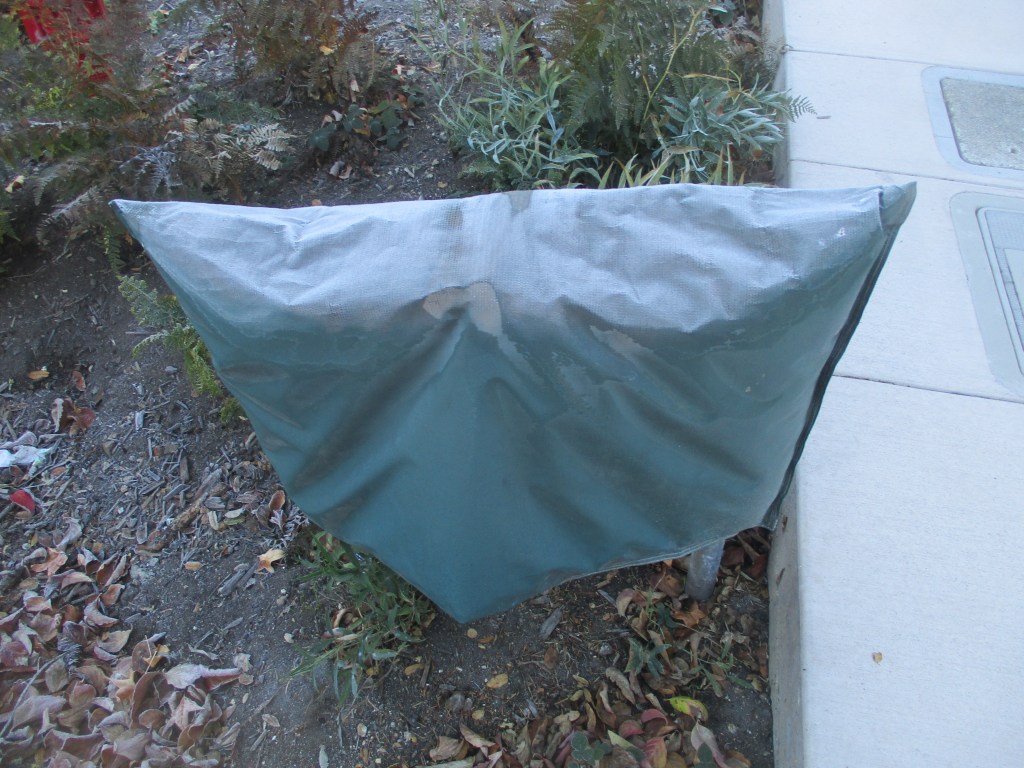
3. This contraption does not seem so ridiculous now. It insulates an exposed water main, to hopefully protect it from freezing. Water pipes seldom freeze here. Nonetheless, it is a possibility.

4. Dogwood colors well for autumn, even when the weather is not so cool. The species does not perform so well in the Santa Clara Valley, just a few miles north. Notice the frosty roof beyond.

5. This young birch is already defoliated! Actually, it is a formerly canned specimen that is a bit distressed from planting on November 8. Other birches are still wearing bright yellow foliage.

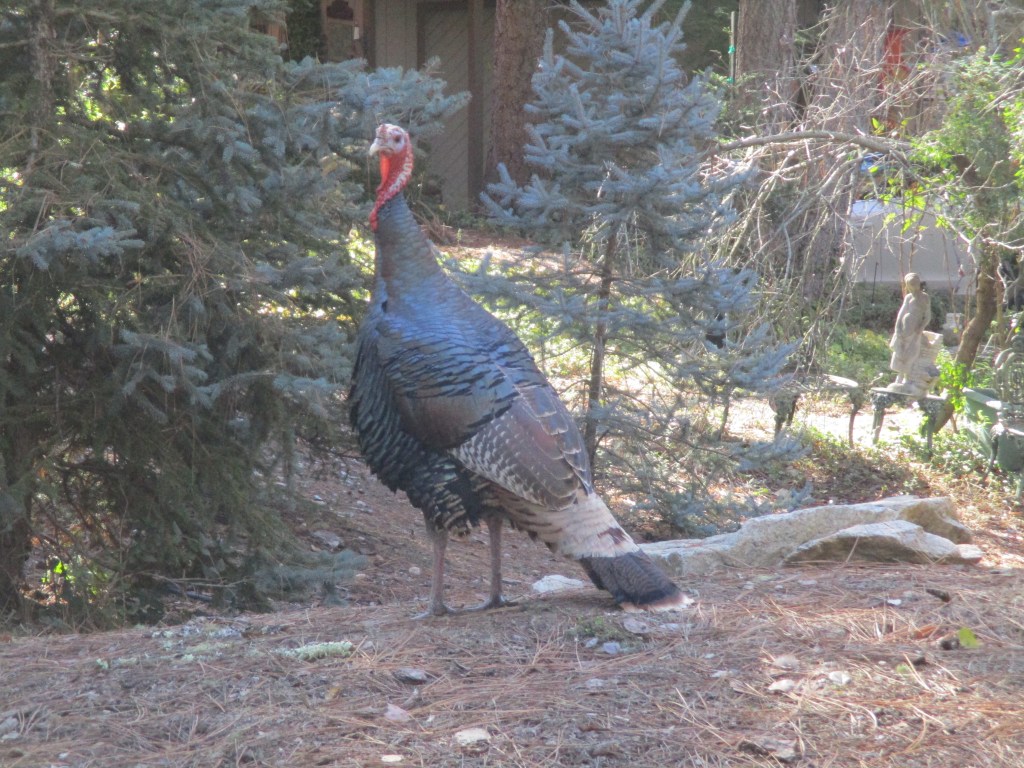
6. Turkeys return annually, precisely on the morning after Thanksgiving, after disappearing for about two or three weeks. Who knows where they go? Their stupidity might be exaggerated.

This is the link for Six on Saturday, for anyone else who would like to participate:

https://thepropagatorblog.wordpress.com/2017/09/18/six-on-saturday-a-participant-guide/