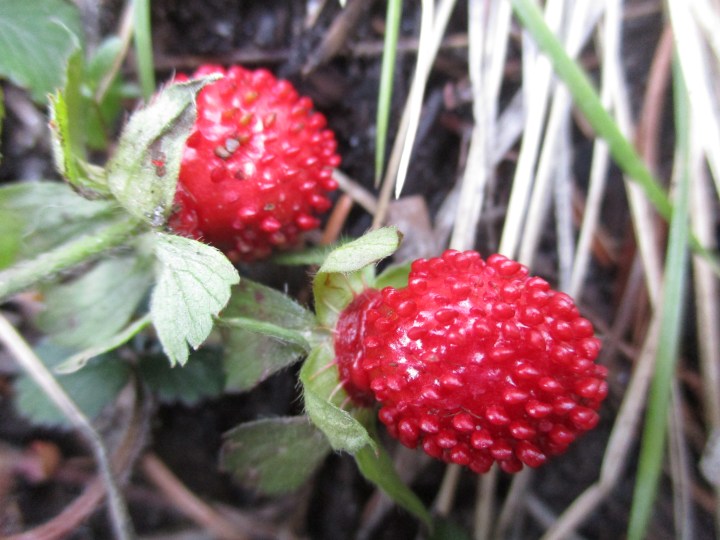
Under a bank of carpet roses that I am none too keen on, this grubby ground cover competes with more aggressive weeds. To me, it looks like common mock strawberry, Potentilla indica. I never gave it much though. It seemed to me that whoever had installed cheap and common carpet roses on that bank would have employed a comparably cheap and common ground cover.
The ground cover was more prolific in open spots that were too narrow for more of the roses, and from there, seemed to have migrated under the roses as a second layer of ground cover. It would not have been installed underneath intentionally. It did not occur to me that it may have grown from seed like so many other weeds there, or migrated in from the surrounding forest.
The white flowers did catch my attention though. I was not aware of a mock strawberry that bloomed with white flowers. I really was not concerned enough about it to investigate. This part of the landscape will be getting renovated soon anyway. The roses will be relocated to where they can not extend their thorny canes into an adjacent walkway. Agapanthus will replace them.
Now that I am seeing more of these odd strawberries, I am wondering if this low ground cover that I formerly had no regard for is actually the native wild strawberry, Fragaria californica. Not only should mock strawberry bloom with yellow flowers, but it should also produce more spherical berries. Now I will need to identify it before I either dispose of it, or merely relocate it.
I prefer to not salvage exotic species that exhibit potential to naturalize from landscaped areas into surrounding forests. If this ground cover is wild strawberry, it migrated from surrounding forests into a particular casually landscaped area.
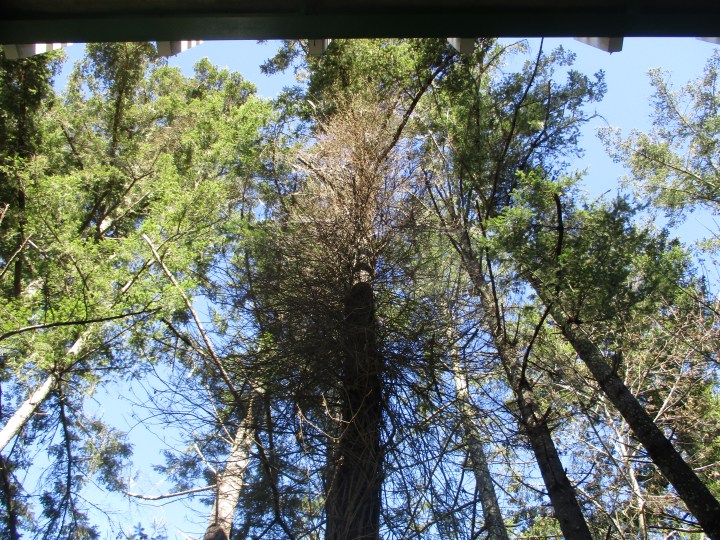 From below, this looks like a shrubby deciduous tree. It is really just a Douglas fir, like those around it. All the defoliated thicket growth is overgrown
 The coloring of foliage is a bit slow this autumn. The cooling nights after such warm weather is bringing some of the deciduous foliage down while it is barely yellowing. Honeylocust and black oak have already gotten notably sparse without much notable color. Hopefully, the more colorful sweetgum, flowering pear, pistache and gingko trees will retain their foliage later into cooler weather, so that they can put on a worthy show before filling compost piles.
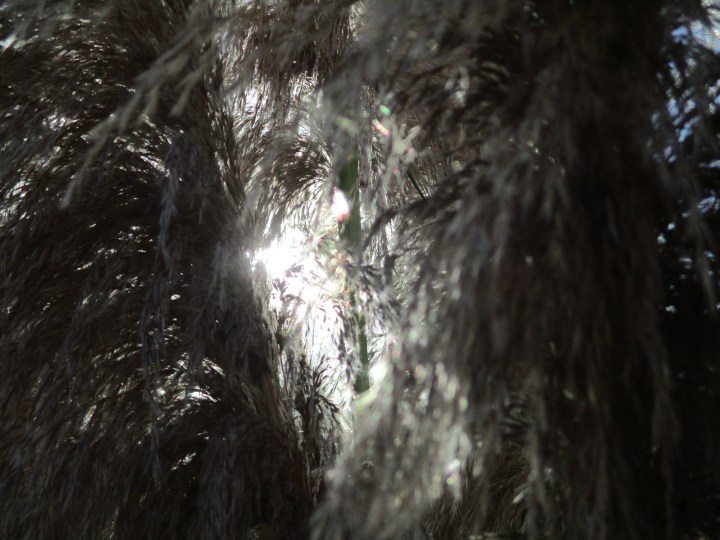
 It is known by a few different common names, including ‘Andean pampas grass’, ‘purple pampas grass’, and simply ‘pampas grass’. ‘Andean pampas grass’ sounds almost like an oxymoron, since the Andes Mountains are in a separate region to the west of the pampas region of Uruguay and eastern Argentina. ‘Purple pampas grass’ is even sillier, since it is devoid of any purple.

 Himalayan blackberry is to cane berries what blue gum is to eucalypti. It is what gives all cane berries a bad reputation, and is why so few of us want to grow them. Himalayan blackberry grows as an extremely vigorous weeds, extending sharply thorny canes over anything within reach. When the canes are removed, the tough roots are extremely difficult to remove and kill.
 Whether it is grown intentionally, or considered to be a common roadside weed, there is no denying that perennial pea, Lathyrus latifolius, knows how to brighten some of the wilder parts of the garden with brilliant purplish pink bloom. Some garden varieties bloom either pale pink or white, just like a few random feral plants do. Bloom resembles that of sweet pea, but without fragrance.
 Weeds are weeds because they grow where they are not wanted. They might be desirable plants in the wild within their native ranges, or beyond their native ranges where they are useful, but for one reason or another, are undesirable in other situations. In fact, many of the most invasive exotic (non-native) weeds were imported because they were useful for something, and then escaped.


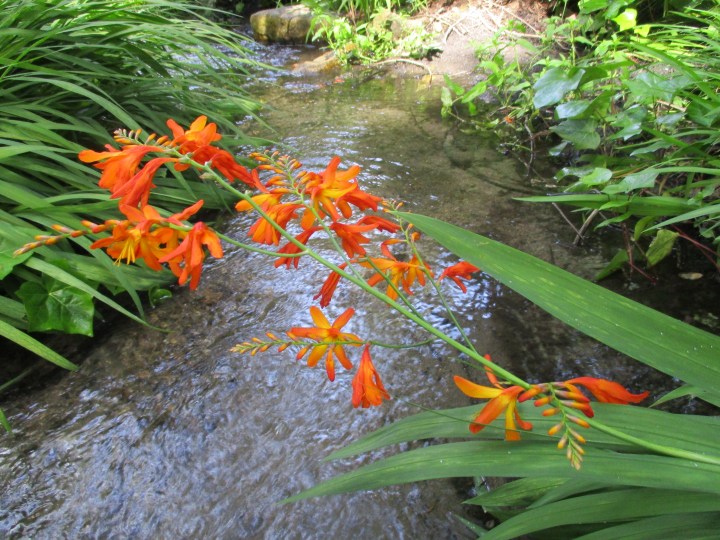
 Generally, that is how they are. Almost all perennial pea flowers bloom with the same bright purplish pink color of the bloom in the picture below. That is, of course, before their pods develop, but you get the point. We sort of know what to expect from them.