Vegetables Come And Vegetables Go

61012thumbVegetables are annuals too, just like the flowering bedding plants that get replaced seasonally. Some are technically biennials, and a few might even have the potential to be short term perennials if they ever got the chance. Yet, for the purposes of home vegetable gardens, the warm season vegetables that produced through summer should now get replaced with cool season vegetables.

Yes, pulling up tomato plants to make room for cabbage is the same dilemma as pulling up petunias to make room for pansies. No one wants to do it while the plants are still productive. Tomato plants might continue to make a few more tomatoes until frost. Yet, planting cool season vegetables should not be delayed for too long. They want to disperse their roots while the soil is still warm.

Just like warm season vegetables, many of the cool season vegetables are more efficiently grown from seed sown directly into the garden. Root vegetables like beet, carrot, radish and turnip do not recover well from transplanting. Besides, cell packs do not contain many seedlings, even if multiple seedlings within individual cells are divided. It is more practical to sow seed evenly in rows.

Baby greens can also be grown from seed because so many small plants are wanted. Unlike heading lettuce that get harvested as individual mature plants, baby greens get plucked as they develop, from plants that may never reach maturity. Chard, kale and collard greens grow well from seed, or can optionally be grown from cell pack seedlings if fewer larger leaves are preferred.

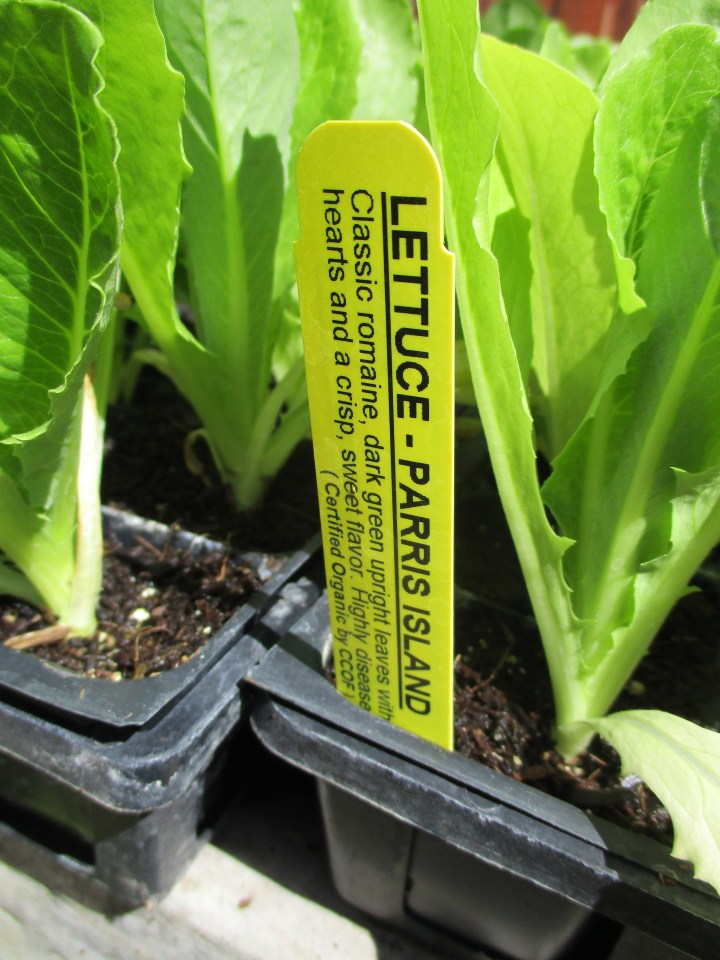
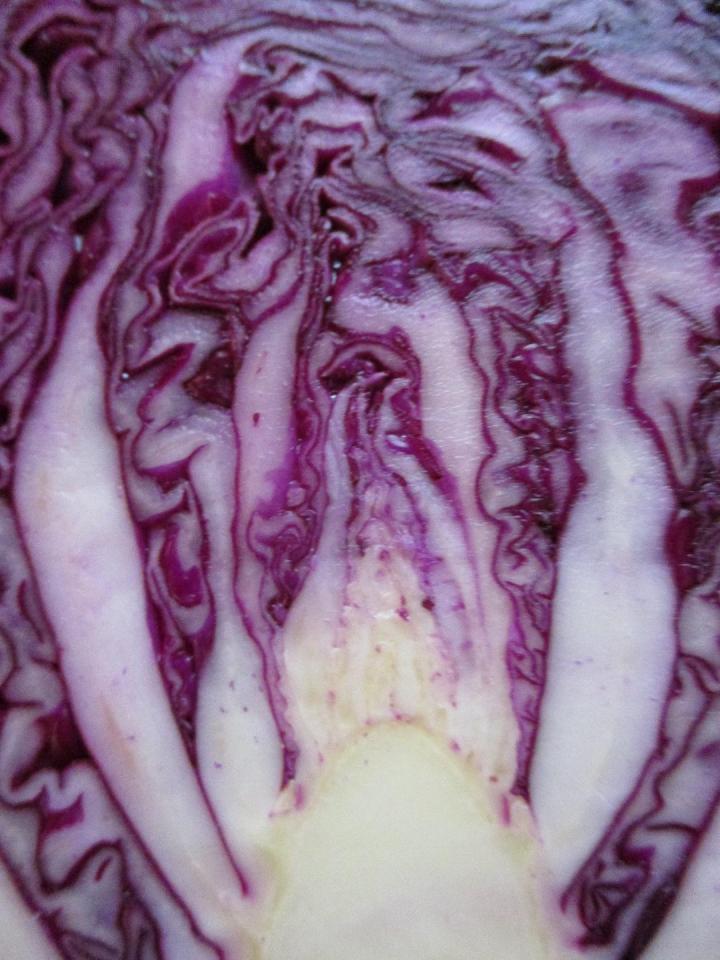
Broccoli, cauliflower, cabbage and Brussels sprout are more typically grown from cell pack seedlings because only a few individual plants are desired. One or two six packs of cabbage might be more than one garden needs, and do not cost much more than a packet of seed. They mature at different rates, so larger ones can be harvested first, while smaller ones get more time to mature.

The root vegetables work the same way, maturing somewhat variably through a few weeks. However, secondary phases planted a few weeks after primary phases can start to mature as the primary phases get depleted. ‘Cole’ crops such as broccoli, cauliflower, cabbage and Brussels sprouts, consume the same resources, so perform best in small groups with a bit of separation.
Cool Season Vegetables Are Coming

80926thumbIt is getting close to one of those two unpleasant times of year for the vegetable garden. It happened last spring, and it will happen again this autumn. Plants that so dutifully produced vegetables through the last season must relinquish their space for plants that will produce vegetables for the next season. In autumn, it will be cool season vegetables that replace warm season vegetables.
They are all on their own distinct schedule. Pulling up corn stalks is not so distressing because we know when they are finished. Pole beans, bell peppers and summer squash might make it easy as well, if they start to look shabby as their season ends. Tomatoes are the more unpleasant ones to pull up, since they can continue to produce right up to the end, even as the nights get cooler.

If they were planted on the edge of the vegetable garden, and allowed to grow outside of the space needed for incoming cool season vegetables, winter squash can stay until their vines succumb to frost. Fruits that get harvested just prior to frost last better in the cellar. Those exposed to a bit of frost attain better flavor. Winter squash really are summer vegetables. They just finish in autumn.

Seed for beets, carrots and various root vegetables that are grown this time of year should be sown directly into the garden. Root vegetables do not transplant well. Besides, too many relatively expensive seedlings would be needed to grow a substantial quantity of such vegetables. Seed should be sown in phases every few weeks so all the vegetables do not mature at the same time.

Peas, spinach and leafy (non-heading) lettuces should likewise be grown from seed sown directly into the garden. However, it is more practical to grow broccoli, cauliflower and cabbage from seedlings rather than seed. Because only a few plants of each are needed, they are not terribly more expensive than seed. One or two six packs might suffice. Another option that is useful for those who grow varieties that are unavailable in nurseries, is to grow seedlings from seed in small pots or flats, to plant out later.

Trout and Cabbage

61012No; this is not a recipe. It is two brief stories about my first fishing trip and the first vegetables I ever grew.
My first fishing trip was at Silver Lake, past my grandparents summer house in Pioneer. I was just a little tyke. I think I had just a small cane with a hook on a string tied to it. I doubt that I was expected to catch anything with it. I sat on a bare granite shore with my Uncle Bill behind me to keep me from falling in, and my hook on a string in the water.
‘Fishy’ took the hook almost immediately. He was a slippery and shiny trout who startled everyone around with his eagerness to grab onto the hook in order to come home with us. I pulled him up so that my Uncle Bill could take him off of the hook. However, to my surprise, my Uncle Bill explained that Fishy had to go back into the lake because he was too small! I was baffled. I told my Uncle Bill that Fishy could not bee too small because he was bigger than any other fish in my grandfather’s aquarium!
Of course, Uncle Bill then explained that the objective of fishing was not to relocate fish from the uncomfortably cold lake to the cozy warm aquarium. As he continued to explain what the real objective of fishing was, it became very obvious that the lake was the best option for Fishy! Uncle Bill put Fishy back in the water, where he happily swam away. I am pleased to say that I never saw Fishy again.
Shortly afterward, my grandmother gave me a six-pack of cabbage seedlings that I planted in a neat row below my mother’s kitchen window. I was so pleased with them. I watered them and talked to them and sometimes just petted their waxy leaves. They grew quite large, and started to crowd each other.
Then, one day while I was out playing with my pine cones and favorite dirt on the patio, my mother came out with a paring knife and walked by without saying anything. To my HORROR, she returned with a severed cabbage! I totally freaked out! Of course, my mother explained to me that the objective of growing the cabbages was to eat them, and that they were the same vegetable that I liked so much in a cooked form. That was not much consolation. If I had known that, I would have planted them up at Silver Lake so that they could live happily ever after with Fishy.
Well, I did not eat any cabbage with supper that evening. By the time the second cabbage was murdered, I was able to eat it. I did not want it to die in vain; and it really was quite good. So were the third, fourth and fifth cabbage.
The last cabbage was the runt of the litter, so my mother allowed me to care for it all through winter. When it got muddy from splattering rain water falling from the eave, I washed it with soap, which is how I learned that plants do not like soap. As the weather warmed in spring, it bolted. The outer leaves got rather crispy, and a floral stalk stretched upward from the center. It bloomed with small yellow flowers and even made little seed capsules. I do not know if it ever made viable seed, because I did not collect any. By the time it deteriorated and died, I knew that it had lived a full life, so was not too sad about it. The funeral was brief before it was interred behind the apricot tree.
In the end, I ate neither the first fish I ever caught, nor the first vegetable I ever grew.

It Will Soon Be Autumn

71004thumbFrom the time they get planted in early spring, tomato plants are expected to perform a bit better than they did earlier in the season. They start out with only a few early tomatoes, but quickly become prolific. Production continues to increase as the plants grow all through summer . . . until now. Newer leaves on top are not staying so far ahead of fading leaves below.

While the weather is still warm, it is difficult to say how tomato plants know that autumn will soon replace summer. They do not seem to be intelligent enough to realize that every day is imperceptibly shorter than the one before. Nor do they seem to be sensitive enough to notice if the nights get slightly cooler. They just know, and they tell all their friends.

If zucchini plants have not started to fade and sag, they will soon. As weather cools, they no longer grow faster than the mildew that they tolerated all summer. Any fruits that are present now should have time to finish developing, but there probably will not be many more after that. (Zucchini fruits are eaten before mature anyway.) Other warm season vegetables are in a similar state.

Acorn, Hubbard, butternut and other winter squash grow through summer just like summer squash do, but are not harvested until the vines wither in autumn and winter. Unlike summer squash that continue to produce many tender juvenile fruit to replace what gets harvested through summer, winter squash plants put all their effort into one or two large ripe fruit.

Warm season vegetable plants still need to be watered as the foliage slowly deteriorates. They only begin to need less water as they lose foliage and the weather gets cooler. They may like to be fertilized one last time, but will not not need it again. Any last phases of corn will stay thirsty later than other vegetable plants because they deteriorate slower, and are rather thirsty anyway.

Seed for broccoli, cauliflower, cabbage, kale and certain other cool season vegetables can be sown in flats or cell packs now so that their seedlings are ready to go when the warm season vegetables relinquish their space in the garden. If space allows, seed for beet, turnip and turnip greens can be sown directly into the garden. Carrot seed should still wait for cooler weather.

Seasons Are Constantly In Flux

80822thumbGardening requires planning. There is always planning. The vegetables that are getting harvested now are developing mostly on plants that were put out in the garden early last spring. Some of those plants were grown from seed sown even earlier, late last winter. Now that it is more than halfway through summer, it is time to plan for cool season vegetable and annuals for next autumn.

There is still no need to rush cool season vegetables and flowering annuals that will be purchased as small plants in six packs or four inch pots. They are only beginning to become available in nurseries, and get planted a bit later. Broccoli, cauliflower, cabbage and kale are popularly purchased as small plants because not very many are needed, and they are reasonably inexpensive.

However, if varieties of these vegetables that are not expected to be available in nurseries are desired, they must be purchased as seed. If space allows, they can be sown directly into the garden early in September. Otherwise, they can be sown now into flats, six packs or small pots to grow into small plants that will be ready when warm season plants relinquish their space later in autumn.

Root vegetables like beets, turnips and carrots should not be grown or purchased in flats or pots. They get disfigured by transplant. Therefore, they should be sown directly into the garden through September. Carrots should perhaps be delayed until halfway through September. Turnip greens and leafy lettuces should be sown directly as well just because they get distressed from transplant.

Almost all cool season vegetable plants can be grown in phases, or several small groups planted every two week or so, in order to prolong harvest. Those planted first develop and are ready for harvest first. By the time they are depleted, the next phase should be ready. However, because most cool season vegetables develop somewhat slowly, and individual plants within each group develop at variable rates, planting only one early phase, and one late phase, perhaps with another phase in between, might prolong harvest more than adequately.

Carrots Are EVIL!

P80811KHow can anyone eat them? No only do people eat them, but many people enjoy them, and some even consider them to be their favorite vegetable!
Carrots are ridiculously bright orange. They try to make themselves appealingly colorful like summery flowers or oranges. Something that grows underground has no business being that bright orange! About the time that typically bright orange California poppies became available in sickly purple, pale white, orangish red and a few other colors, carrots with the same colors also became available! Coincidence? I think not.
Carrots have that distinctively weird texture. Radishes have that perfect crunch. Beets are firm but cook up so nicely. All of the various root vegetables have the perfect texture that works for them; except for carrots. They try to mimic radishes, but are not as succulent and crisp. They are a bit more firm like turnips, but they can not get that technique down either. They are just nasty!
Carrots have that distinctive flavor . . . or unflavor. What does it taste like? No one can give a straight answer. Carrots can seem to taste mildly sweet, but it is all deception! People just say that about carrots because they do not taste like anything else!
Carrots have that distinctive evil shape. They are long drawn out roots that reach straight for Hell, from whence they came! If it were such a great shape other root vegetables would use it.
Carrots grow underground where we can not see what they are up to. What are they doing down there? That region of the garden below the surface of the soil should be reserved exclusively for turnips, beets, potatoes, onions, yams and any other subterranean vegetables that are actually good for something. Why waste space on evil carrots?

Vegetables Grow All Year Here

71018thumbThe difficult part is pulling up the warm season vegetable plants while they still seem to be productive. It gets much easier after that. Putting new cool season vegetable plants back into the garden is much more gratifying. Vegetable gardening never stops here. One season starts before the previous season ends. If cool season vegetable plants get a late start, they take longer to produce.

If there is enough space in the garden, the cool season vegetable plants can go somewhere else, while the warm season vegetable plants finish with what they might still be working on. Tomatoes might last until frost. Even when it get too cold for the foliage, green fruit can still ripen on the vine, and a bit more on the kitchen windowsill. Green tomatoes remaining after that can be pickled.

If the soil does not need too much amendment, and the spacing works out well, new cool season vegetable plants can be planted in with the warm season vegetable plants so that they can start to grow and disperse roots while the warm season vegetables finish. By the time the warm season plants succumb to cooling weather, the new cool season plants will already be maturing nicely.

This technique does not work so well with last season’s tomatoes only because they are so greedy with nutrients. Fertilizer might compensate for plants that seem slow where tomatoes had been previously. A bit of amendment can be added to the soil when new cool season plants get planted, and more can be added between them when old warm season vegetable plants get removed.

Broccoli, cabbage and cauliflower should all be planted as seedlings, so can work nicely with interplanting with aging warm season vegetable plants. Since only a few of each type are needed for a well outfitted garden, one or two cell packs of six or eight plants each should be sufficient. Each cell pack does not cost too much more than a packet of seed. Seedlings get established quickly.

Beets, carrots, lettuce, spinach and peas should be grown from seed sown directly into the garden, so do not work so well with interplanting. Too many individual plants of each type are needed. It just would not be practical to grow them from cell pack seedlings. Besides, they grow so efficiently from seed. Kale can be grown either from seed of seedlings. It might be too late for cucumbers.