Flowers bloom throughout the year here. I featured bloom this week to avoid the topic of minor frost damage that I should have protected vulnerable foliage from. Frost is minor here, and does not occur every year, but it occurred here prior to some other regions this year. However, this bloom can imply that it is springtime.
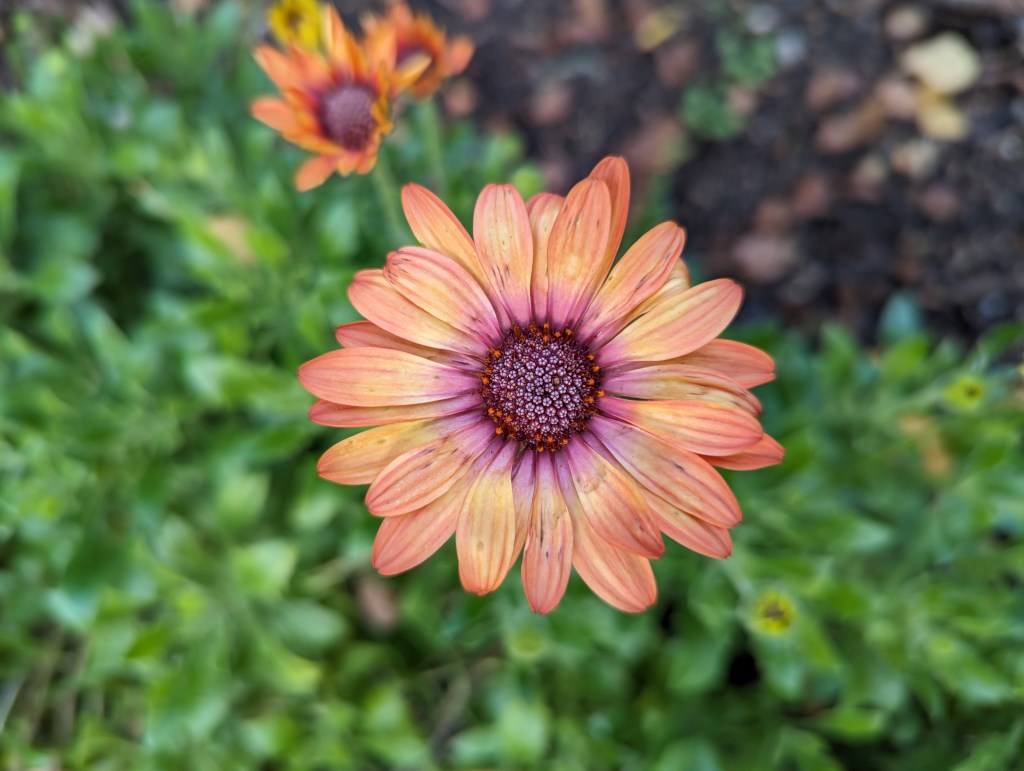
1. Osteospermum X hybrida, African daisy should bloom most for spring, but can bloom randomly whenever it chooses, and often blooms most profusely for summer or autumn.
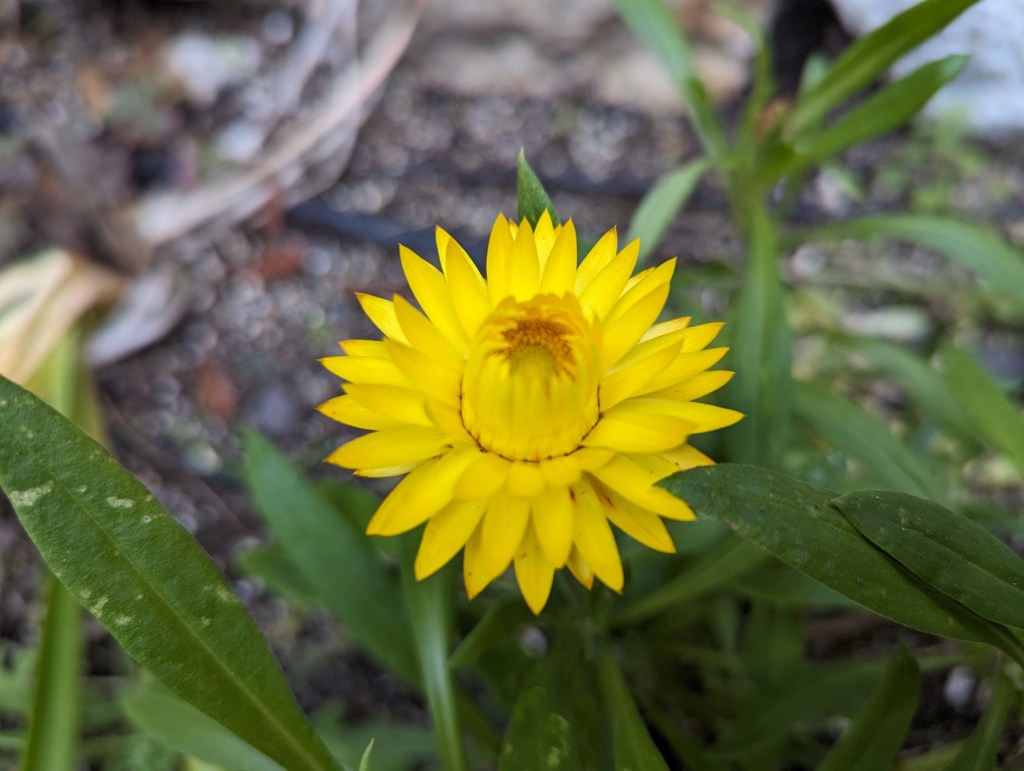
2. Helichrysum bracteatum, strawflower is my favorite of these six because I remember it as the main cut flower crop to the east of my Pa’s home in Montara through the 1980s.
3. Salvia chiapensis, Chiapas sage is a species that I had never met before last year. They grew well through last summer, and even better with more bloom through this summer.

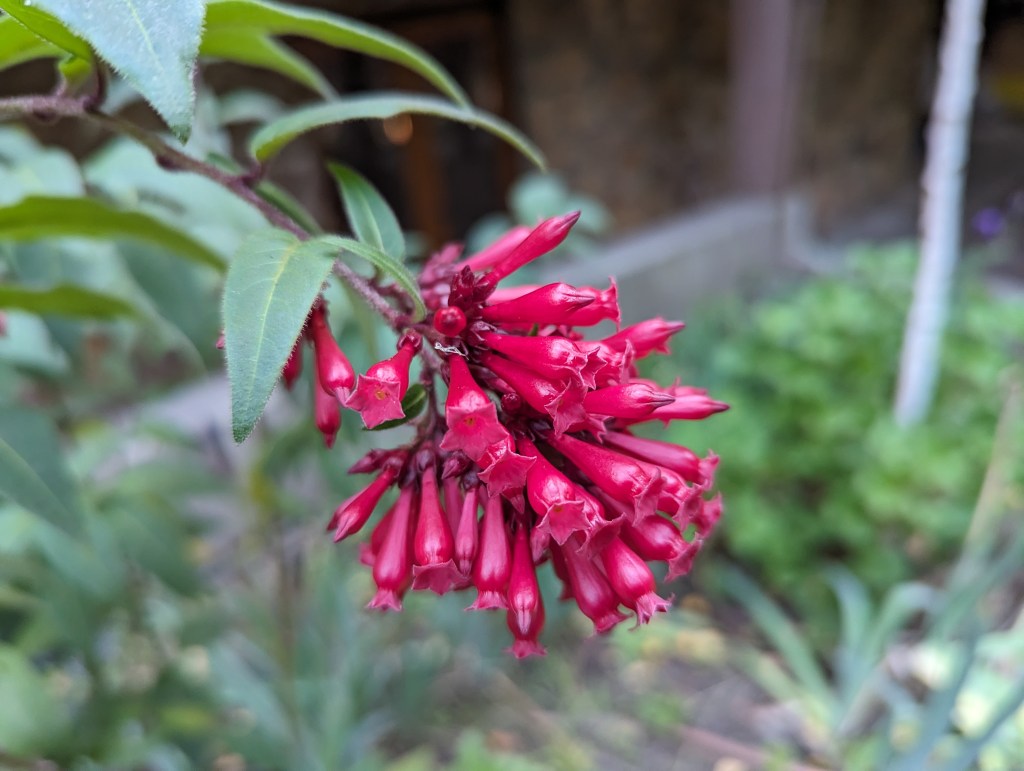
4. Cestrum fasciculatum ‘Newellii’, bastard jasmine has an interesting name. Of course, it is not really jasmine. It recovered slowly from gopher damage, but blooms nicely now.
5. Rosa, carpet rose is my least favorite of these six because it is so cheap and common. I prefer old fashioned and respectable hybrid tea roses that are such excellent cut flowers.

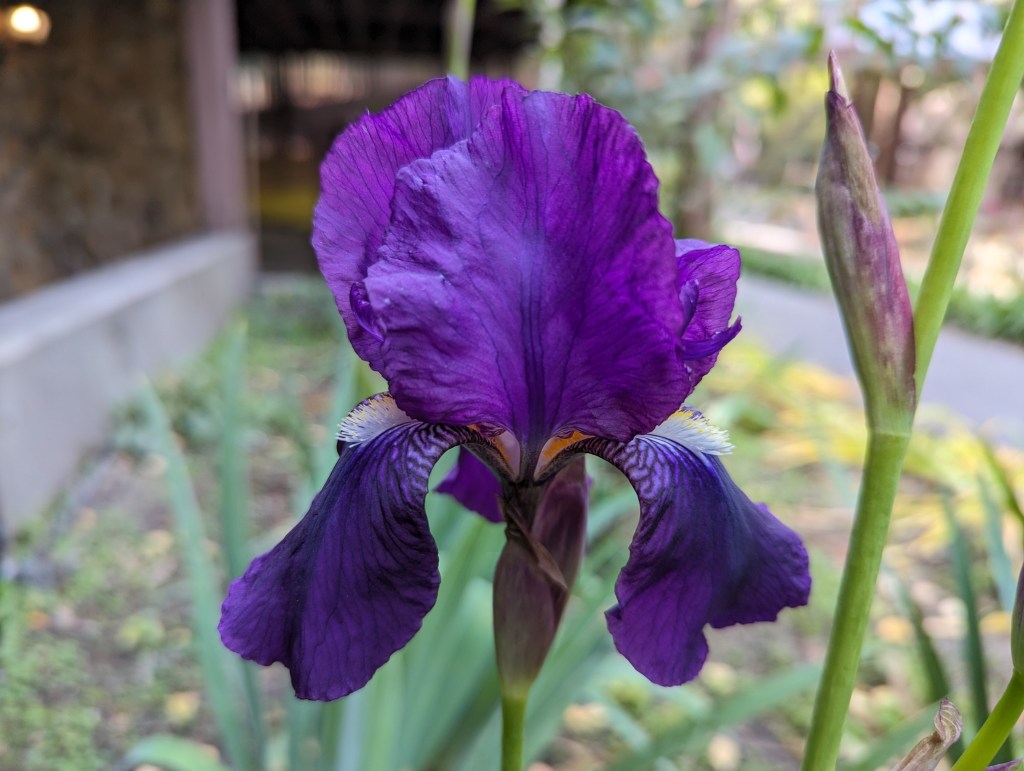
6. Iris X germanica, bearded iris should bloom for spring. Reblooming types also bloom for autumn. I have no idea what this is, but I sort of doubt that it is a reblooming variety. Earlier, it did not bloom much, so now seems to be blooming late for the first phase this year, rather than blooming again for a second phase within the same year. Furthermore, its simple bloom and slim floral stalks suggest that it is not extensively bred. It might be a simple species that is confused about the seasons here, because this climate is so mild.
This is the link for Six on Saturday, for anyone else who would like to participate: https://thepropagatorblog.wordpress.com/2017/09/18/six-on-saturday-a-participant-guide/
 Tony Tomeo
Very nice choice, is the bastard jasmine easy to grow and hardy enough to my area ( 8B) ?
LikeLiked by 1 person
It is supposedly hardy to Zone 8. It is more resilient to frost than other species of the genus that I am familiar with.
LikeLiked by 1 person
That salvia is a beauty – a wonderful rich pink. 👍
LikeLiked by 1 person
Yes, and it blooms for quite a while also. The other horticulturist here selected it. I did not know what to think of it at first, but have been impressed by its performance.
LikeLike
Much envy, here it is winter brown and plenty of frost.
LikeLiked by 1 person
Winter chill allows you to grow a few species that do not perform so well here, such as peonies, and many cultivars of apple and pear. I share these pictures because some people like to see flowers while they are out of season within their respective climates. We should appreciate what we can grow though. I am impressed by peonies and blueberries in Oregon, but do not try to grow them here. Instead, I grow what performs well here.
LikeLike
I do enjoy strawflowers. In the 1950s, I was introduced to them as artificial flowers that decorated everything in sight, including my dolls’ hats. I thought their name was given because they were made of straw. I was astonished to discover they’re also real flowers — that didn’t happen until about five years ago.
LikeLiked by 1 person
Artificial?! I remember that artificial flowers during the early 1970s were plastic, so were very different from strawflowers. However, ‘strawflowers’ included those dinky dried flowers that were dyed yellow, orange, red, white or sometimes green. They were glued onto all sorts of crafts that were popular at the time. Perhaps I never considered strawflowers to be artificial because I knew where they came from. I still sort of wonder about those dinky sorts though. I have never seen them grow for real.
LikeLiked by 1 person
That’s really interesting. As a kid, of course it never would have occurred to me that all those colors could have been produced by dyes!
LikeLiked by 1 person
The color was too uniform, and extended about three quarters of the way down the stem. The lower quarters were all the same straw color.
LikeLiked by 1 person
Oh my! I looked it up, . . . but still can not find the species! It is gazilda or glixia, but I can not identify it. I can only get pictures of it in all sorts of horrid colors that were not invented by the 1970s.
LikeLiked by 1 person
Whoever called it bastard jasmine really didn’t like it much, it doesn’t deserve that.
LikeLiked by 2 people
That name really does seem rather peculiar. It sounds like something that Brent and I would have come up with while we were in school, but only with justification. ‘Bastard’ is how we described hybrids of Washingtonia robusta and Washingtonia filifera. There was no other terminology for them in the 1980s. They were described simply as one species or the other. Nowadays, they are known as Washingtonia X filibusta.
LikeLike
If the choice was between x robifera and x filibusta, it was only ever going to go one way!
LikeLiked by 1 person
? Is ‘robifera’ bad?
LikeLike
There is something weird about fall blooming Iris. I like that salvia too and have never met it. Bastard Jasmine? Go figure.
LikeLiked by 1 person
Yes, that iris is odd. There are quite a few reblooming bearded iris, but they are fancier hybrids. This one seems to be a simple species, like Iris pallida, which is sort of what I like about it. It was a gift from someone who had too much of it. Although I am not so keen on purple, I am getting to like it because of these particular iris. They are difficult to dislike.
LikeLiked by 1 person
I agree. It is difficult to dislike an Iris. I think I associate them with spring. It’s like those Encore Azaleas, ugh.
LikeLiked by 1 person
Is that good or bad? ‘Encore’ is also a modern Buick, but that does not make it good. Some of those modern cultivars are too flashy. Iris can sort of get away with that degree of flashiness somehow.
LikeLiked by 1 person
I don’t like the Encore, the colors are weird and azaleas are spring. I think the frills allow Iris to get away with a lot of things.
LikeLiked by 1 person
‘Encore’ is one of too many modern introductions that, to me, seem cheap and common, like the carpet roses.
LikeLiked by 1 person
Exactly
LikeLiked by 1 person
(Well, there are many other purple flowers that I also like.)
LikeLiked by 1 person
Beautiful salvia. I used to have that cestrum, got left behind in my old garden.
LikeLiked by 1 person
I just remember to bring a copy of the Salvia chiapensis. Because I lack experience with it, I do not know if I should cut it back every winter. We did not cut it back last winter, but I suspect that it will eventually get overgrown. The Cestrum has not grown well enough for me to grow copies of it yet. The gophers have damaged it a few times.
LikeLike
Lovely six, your garden does have a lot of colour in winter! Lovely strawflower, flower carpet rose and iris. I grew Salvia Chiapensis once and think it succumbed to frost! We can grow most of the salias and can overwinter them except for the ones with really soft leaves like Pineapple sage that get zapped in winter. 🌼
LikeLiked by 1 person
Bloom never completely stops here. Winter is just too mild. However, spring bloom is not as profuse as it is in other climates. Pineapple sage is also blooming. It should be cut back at the end of winter.
LikeLiked by 1 person
Another beautiful post, Tony. And your SonS are always entertaining, but not always beautiful. The re-blooming iris looks very much like one of the re-blooming varieties that we can grow here, and the one that has historically performed the best for me here in our yard, which is known as ‘Rosalie Figge.’ A new neighbor had her yard worked on by a landscaper this past summer, and come late September she had purple Iris blooming in some new beds under her trees. Not smart to plant Iris under trees, but this landscaper did so, and the Iris bloomed very well this fall and looked just like yours. I asked the neighbor about the varietal name and she had not idea, so I mentioned our I. x germanica ‘Rosalie Figge’ that I purchased years ago from a local grower who specializes in re-blooming Iris. I didn’t get a feeling that knowing the name mattered to her, but those things interest me. We’ll have to see what her Iris do in years to come planted under mature oak trees. I hope they continue to bloom in spring and fall.
LikeLiked by 1 person
‘Rosalie Figge’ is what I thought it looked like. However, I dismissed that possibility because I thought that such an extensively bred cultivar would have more substantial floral stalks. That was merely an assumption of course, and I have no idea how extensively bred reblooming bearded iris are. Except for their reblooming, this particular cultivar looks like a simpler breed or even a straight species, like Iris pallida, only shorter and with dark purple bloom. Does ‘Rosalie Figge’ resemble a ‘simpler’ breed?
LikeLiked by 1 person
Yes, it does. If there is an I. pallida species with such dark coloring, I haven’t seen it, yet. Rosalie has an intense grape fragrance. Since that cultivar has been around for so long now, variations may have crept in through selection of clones- just guessing here. But yes, its form is fairly simple and straightforward, at least in the plants I have with that name. I would guess that cultural conditions would also influence number of buds per stem and length of scape.
LikeLiked by 1 person
Oh no, Iris pallida is another species. I was merely comparing the two. This iris really does smell like grapes.
LikeLiked by 1 person
Isn’t the fragrance wonderful? I love Iris for their fragrance as much as for their intense color and beautiful form. Mike Lockatell is a local grower- a great guy, I know him- who specializes in re-blooming Iris. Here is his inventory, which includes I. ‘Rosalie Figge,’ should you want photos and additional details: https://rootsandblooms.us/wordpress/tb-rebloom-availability/
LikeLiked by 1 person
Oh, I have a rule against purchaing iris. Like almost everything in my garden, the iris have history. Besides, I grow too many to acquire any more. The only one that I would purchase if I ever find it is ‘San Jose’.
LikeLiked by 1 person
The cestrum is pretty and I’m always a fan of anything fragrant, but I’m really curious how it ended up with that common name. I used to call one of my potted trees “the bastard lemon” because of its unknown provenance (seed from an unlabeled bag at a bargain store), but it has grown so well and been so easy to care for that I started feeling bad about it and had to stop. People were also wondering why I was angry at it.
LikeLiked by 1 person
This particular Cestrum lacks fragrance, . . . which seems weird to me. (The first Cestrum that I ever met was Cestrum nocturnum. To me, it seems that fragrance is the primary attribute of the genus.) It is grown for its distinctly garnet colored bloom. I have no idea how it got its name. I prefer to refer to it simply as ‘Cestrum lewissii’. ‘Bastard’ is how my colleague down south and I describe feral hybrids of Washingtonia robusta and Washingtonia filifera. Nowadays, they are intentionally hybridized as Washingtonia X filibusta.
LikeLiked by 1 person