Bauhinia punctata, Tupidanthus calyptratus, Olmediella betschleriana and Oreopanax capitatus are a few species that Brent and I studied in school during the late 1980s, then encountered only very rarely afterward. Actually, neither of us have encountered a single specimen of Oreopanax capitatus since 1990. Brent managed to procure a Tupidanthus calyptratus for his driveway. I may eventually procure a Bauhinia punctata. Nowadays, I work with Cocculus laurifolius and Pittosporum crassifolium, which, previously, I had not seen since school. Agapanthus orientalis and Juniperus chinensis ‘Kaizuka’ could be just as old fashioned, but never really got scarce. Perhaps I should post more pictures of species here that are actually rare instead.
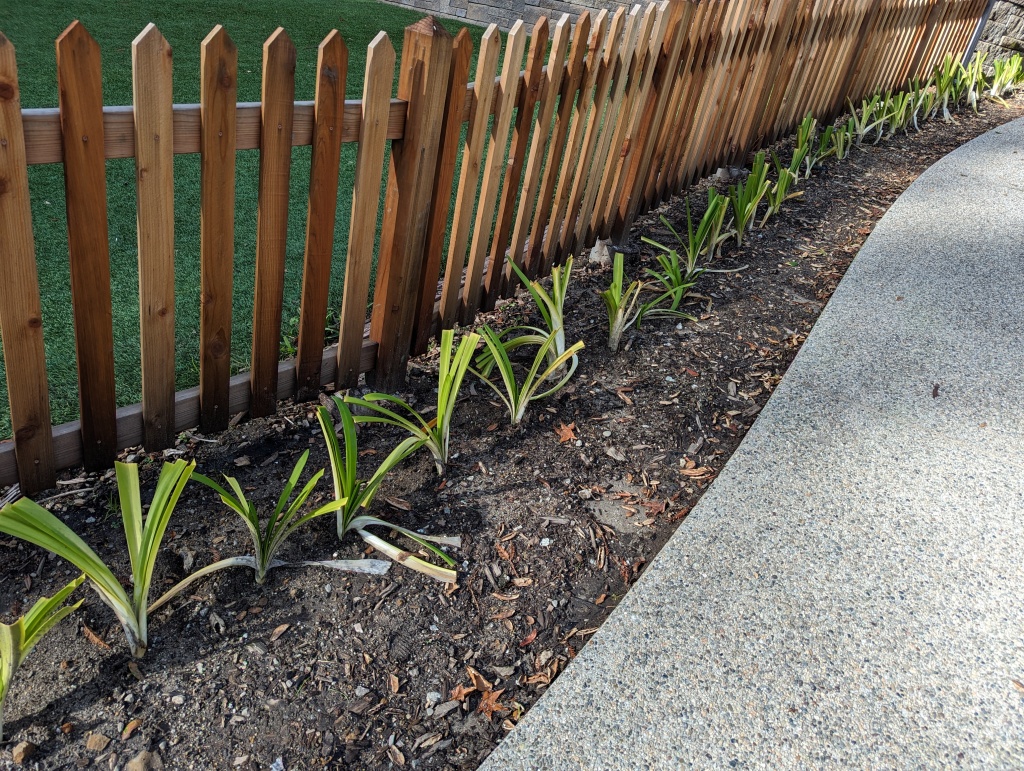
1. Agapanthus orientalis, lily of the Nile has been very popular and even common longer than anyone can remember, and still is. This picture of these divided and plugged shoots is here because I neglected to post it as I discussed them in Six on Saturday a month ago
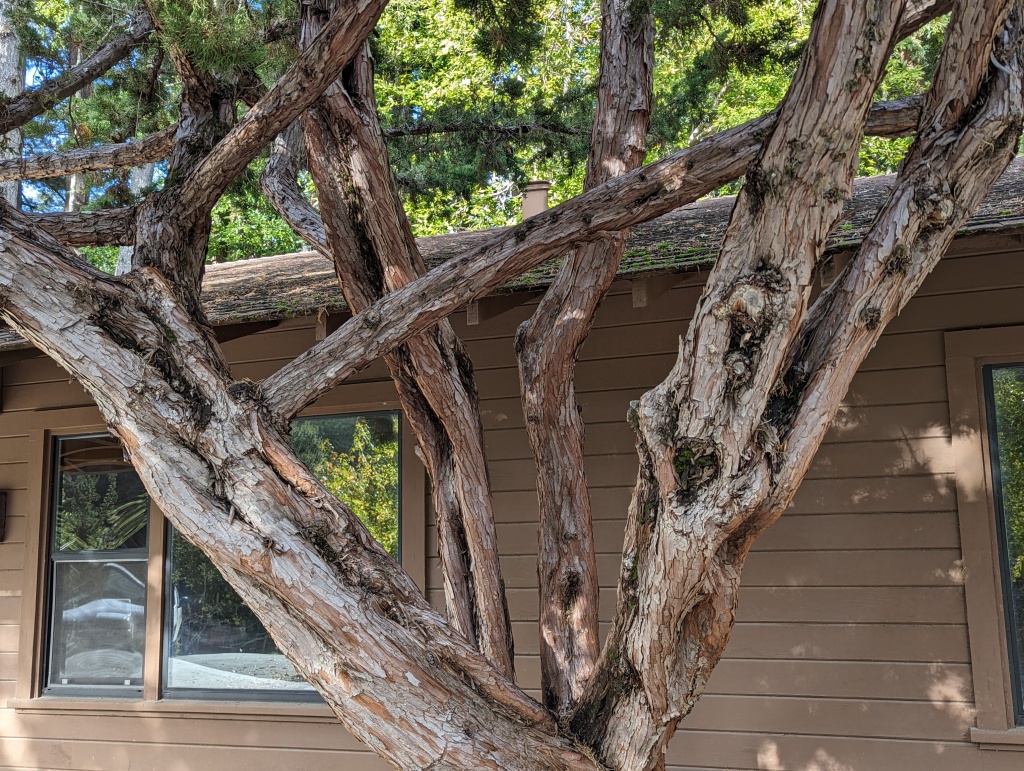
2. Juniperus chinensis ‘Kaizuka’, Hollywood juniper was passe prior to when Brent and I were in school, but older specimens remain. They are like sculptural small cypress trees.
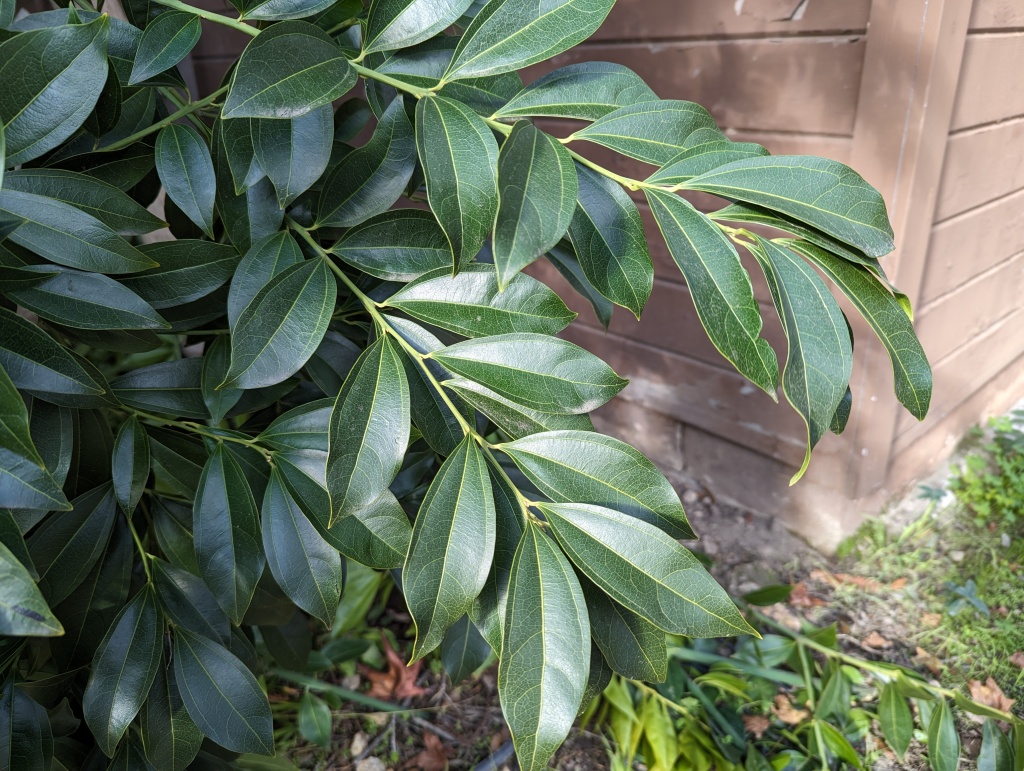
3. Cocculus laurifolius, laurel leaved snailseed is a species that we studied in school, but have seen in only a few situations since then. I happen to be acquainted with a few now.
4. Pittosporum crassifolium, karo is very similar in that regard. It might have been more popular a long time ago, but lost popularity as more interesting species were introduced.
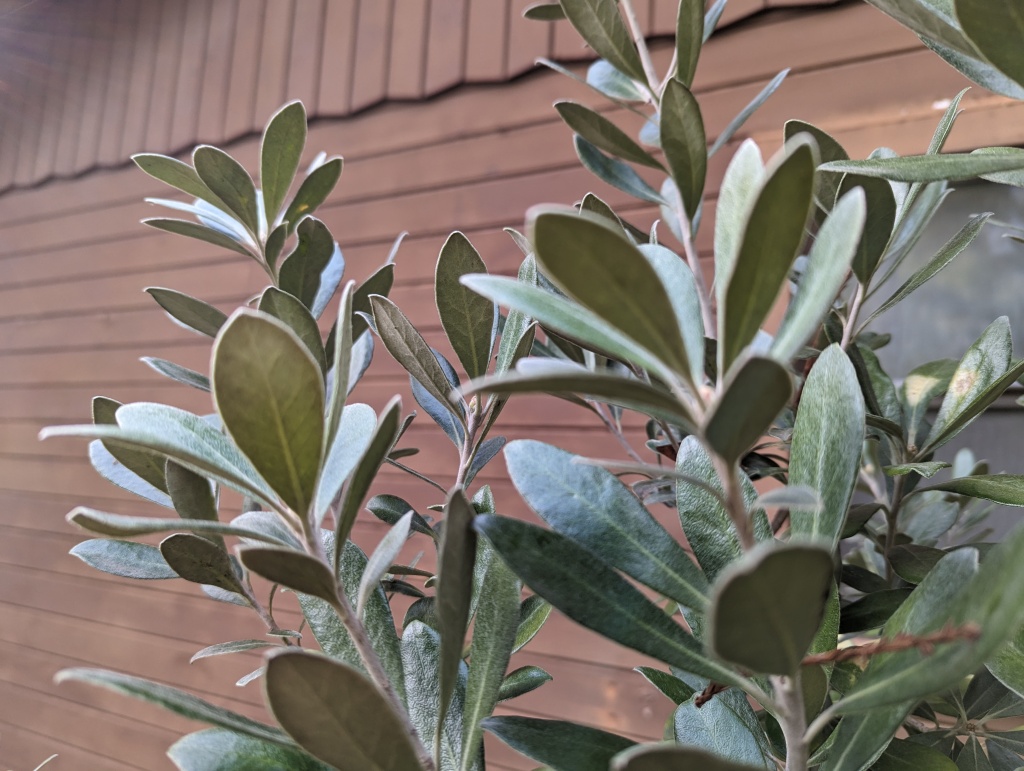
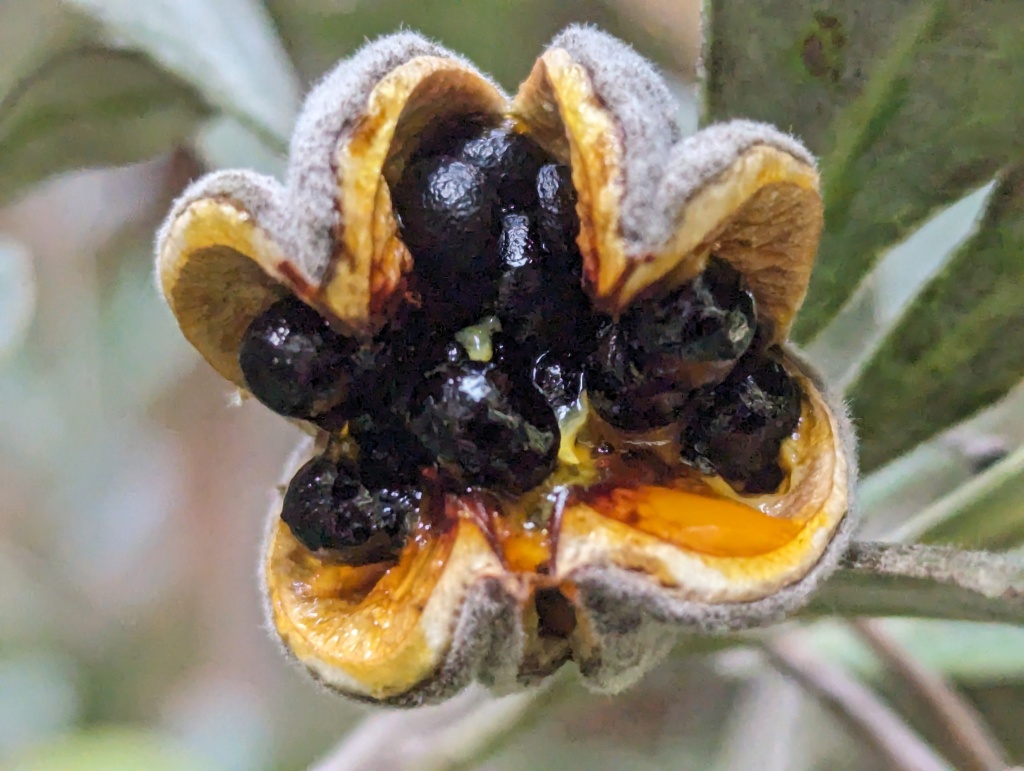
5. Pittosporum crassifolium, karo produces annoyingly abundant and annoyingly sticky seeds. ‘Pittosporum’ translates to ‘pitchy seed’. If they germinate, they do not do it here.
6. Rhody’s Roady got its new license plate with the colors of 1969. ‘O’ is for ‘Occidentale’, which is Rhody’s last name. It is irrelevant to an Isuzu or a downtown shopping district.

This is the link for Six on Saturday, for anyone else who would like to participate: https://thepropagatorblog.wordpress.com/2017/09/18/six-on-saturday-a-participant-guide/
 Tony Tomeo
Only a few enthusiasts manage to grow oreopanax around here. People I follow on social medias, post sometimes a few pictures of it , and it’s a very pretty plant. I had tried seedlings and it never worked but I will have to try again. Obviously in the ground in our region it’s impossible all year round.
LikeLiked by 1 person
You are only the second to acknowledge its existence. The only other is Brent, with whom I encountered it in about 1986 or 1987.
LikeLiked by 1 person
Pittosporum crassifolium is used for hedging on the Isles of Scilly just off the tip of England because its very tolerant of salt winds but its not hardy enough on the mainland. Seeds about freely enough out there. It’s a pity a few more “dwarf” conifers didn’t get kept long enough to have a second career as a smallish tree, they can be very characterful.
LikeLiked by 2 people
That is interesting about Pittosporum crassifolium because the first few that I met were naturalized from old Victorian landscapes in Montara, on the coast south of San Francisco, which has a weirdly foggy and cool climate that is sometimes compared to the coast of England. (I seriously doubt that the climates are similar though.) Hollywood juniper, as well as most other junipers, became passe because it had previously been too common. Other junipers became available more recently, but they likely became somewhat popular only because they are so different from the passe sorts.
LikeLike
I recognized the genus Bauhinia; our version is Bauhinia lunarioides. I’ve seen and photographed it in a demonstration garden at the Brazoria Wildlife Refuge, but even though it’s native to parts of Texas, it’s not native so far north, and the week-long freeze of 2021 took it out.
LikeLiked by 1 person
Bauhinia punctata is smaller and sparser (I believe) with brick red bloom. Bauhinia variegata is the only other species we studied back then. It was also uncommon, but not as rare. I could probably find a few of them in Southern California, along with Bauhinia blakeana, which had not been introduced while we were in school.
LikeLiked by 1 person
What a magnificent Juniper Tree, nicely pruned to maximise the view of its beautiful bark and branch network.
LikeLiked by 1 person
Yes, but it needs a bit more work for clearance of the roof below. The form is awkward, but that is normal for the cultivar.
LikeLike
I remember the Snailseed from school too. Never seen it again. Hmm. We have Bauhinia purpurea here. I am not sure what prompts plants to be taught in school. Rhody likes his new license plates I am sure.
LikeLiked by 1 person
Oreopanax capitatus was only studied because one of the professors there was fond of it. I distinctly remember our professor mentioning that, as if he would not have bothered discussing it otherwise. Bauhinia purpurea was the only other Bauhinia that we studied back then, but was not as rare. I still see it around Brent’s neighborhood, along with Bauhinia blakeana, which we did not study in school.
LikeLiked by 1 person
Probably the same in my class or maybe it was popular when our teachers were in school.
LikeLiked by 1 person
I have noticed that homes in the same area tend to use the same landscaping plants – I always wondered if they saw one in a neighbors yard and had to have it, or if it was what was on sale at the local nursery or big box store. In Seattle, when I lived there, I would see that a given neighborhood seemed to have the same azalea or rhododendron, rather than seeing a mix of colors. It is interesting to see what goes out of fashion in the plant world.
LikeLiked by 2 people
A great observation and fascinating question! We see the same sort of thing here, particularly in houses built in the same era with traditional yards. There is a fairly limited ‘plant palette’ of what is considered acceptable for home landscapes, and easy to purchase. But there may also be some element of seeing a plant in a neighbor’s yard and wanting it, too!
LikeLiked by 1 person
Yes, these are all relevant influences. I distinctly remember that I did not do so well in the (introduction to) landscape design class that I took in school (because nurserymen need to know how designers use what we grow). I incorporated old fashioned plant material into a 1987 landscape, just because I like the traditional material.
LikeLiked by 1 person
Heirloom plants have enjoyed some periods of revival since the 1980s, especially as our appreciation of native species has increased. Those ‘old fashioned’ plants are generally much better for wildlife than the newer, premium hybrids and cultivars. And, so often are easier to grow and longer-lived.
LikeLiked by 1 person
Gads! I really could get carried away on that topic. Wimpy modern cultivars that are marketed as sustainable are offensive.
LikeLiked by 1 person
That is one of several variables. The neighborhood that I lived in during high school was a tract of homes that were built at the same time. Most of those who purchased the homes when they were new in 1958 were from other regions, particularly Michigan. They wanted what they considered to be Californian plant material. Someone drove around the neighborhood selling Mexican fan palms from a pickup one week, Canary Island date palms another week, Washington oranges another week, Eureka lemons another week, and so on. Consequently, most of the original landscapes included much of the same material; citrus and palms. Most of the homes of the Santa Clara Valley were built at about the same time, so were similarly landscaped according to non-Californian perception of what Californian landscapes should look like. Eichler tracts were actually limited to a very specific palette. Some who own those home now do not mind adding other species to the landscapes (and ruining the homes by remodeling them), but some appreciate the homes enough to landscape them with the original palette. Anyway, the preponderance of junipers during the 1950s is why they are so passe now. I feel the same way about the all too common crape myrtles nowadays.
LikeLike
The Pittosporum seeds like like something out of a horror film. Great photo, terrible seeds. Those would be reason enough for me to remove the shrub, were it in my own landscape. And, I’ve never found much to admire in that genus, anyway. Love Rhody’s Roady and snazzy new plate. Great last name! It is very interesting to see what is in and out of fashion horticulturally, and particularly around old communities. The laurel leaved snailseed is a new one- never heard of it- but what interesting trunks!
LikeLiked by 1 person
Pittosporum crassifolium is an odd one. I like it only because it is old fashioned and happens to be the first species of the genus that I grew when I was a kid. I found it growing wild near Montara, and recognized it from old landscapes in San Francisco. Otherwise, I am not convinced that it is an asset to the landscape that it inhabits. The foliar color is rather grungy. Pittosporums are practical here because they enjoy the climate. Some perform even better on the coast. At least one (with a name that I can not remember) performs well in the Mojave Desert. I like the laurel leaved snailseed, but can not explain why. It needs too much pruning. It develops a weird form by growing upward and then falling over.
LikeLiked by 1 person
There are reasons to love plants beyond their relative beauty- we all are attracted to particular plants for our own reasons. And I believe that childhood experiences and memories count for a lot in shaping our passions as adults. How cool that you found Pittosporum, and recognized it in the wild, as a kid! We always had Abelia shrubs when I was a kid and I whiled away summer afternoons capturing the bees feeding on them in glass jars with lids. I have fond memories of Abelia, but have never felt inclined to plant one….
LikeLiked by 1 person
Oh yes, but it also makes us like plants that are not so desirable. I still like blue gum eucalyptus. It is a HORRID tree, but I miss the groves of it that I remember in San Bruno and elsewhere.
LikeLiked by 1 person
You know, too often we think of plants too much in terms of whether we judge them to be attractive, and too little in terms of their function within the ecosystem. What is ‘desirable’ to a person, to plant outside their front door, may not be what is most desirable so thrive in the climate, cooperate with other plants, and support the local wildlife…. One tree alone may be ‘horrid,’ but there must have been beauty in those groves for you to remember them affectionately.
LikeLiked by 1 person
Blue gum is about as horrid as trees can get, but that will not change my appreciation for them. They are part of why Oakland burned so badly. Monarch butterflies swarm to them. Those who do not know better think that they are good for the butterflies. However, they are really distracting the butterflies from native species that rely on them for pollination.
LikeLiked by 1 person
Please delete my picture from your blog. It is out of intended context. That edging is not neglected. It was just planted and has not filled in yet.
LikeLike