Some flowers are blooming strangely this year. Well actually, one bloomed strangely last year, and is now blooming normally. Flowers that prefer more winter chill than they can experience here are blooming quite nicely this year, even after less frost than last winter. I can neither make sense of it all, nor complain about it. I mean, it may be strange, but it is strange in a good way. We added a windmill palm that I mentioned two weeks ago to a landscape. I like palms, especially this palm, but I am not sure that I like them here with the redwoods. Palms are strange with redwoods.
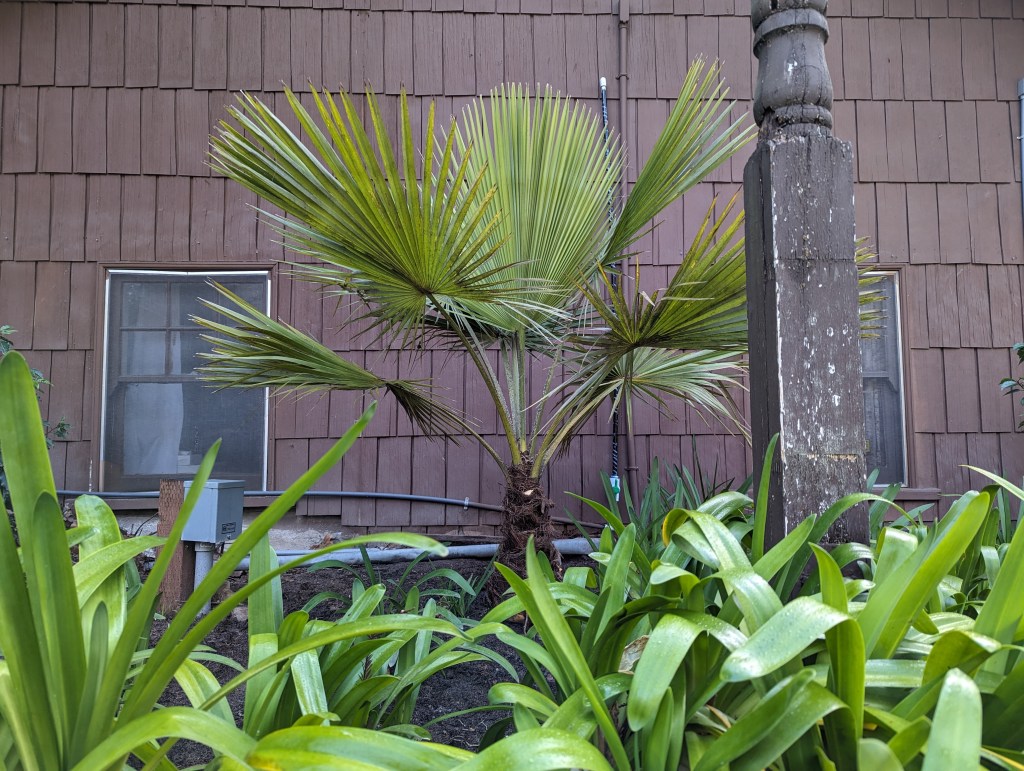
1. Trachycarpus fortunei, windmill palm is strange because it is one of only three palms here. Palms and redwoods should not mix. It remains canned, so will be removed as the unseen angel’s trumpet behind it grows. I featured it two weeks ago, before it came here.
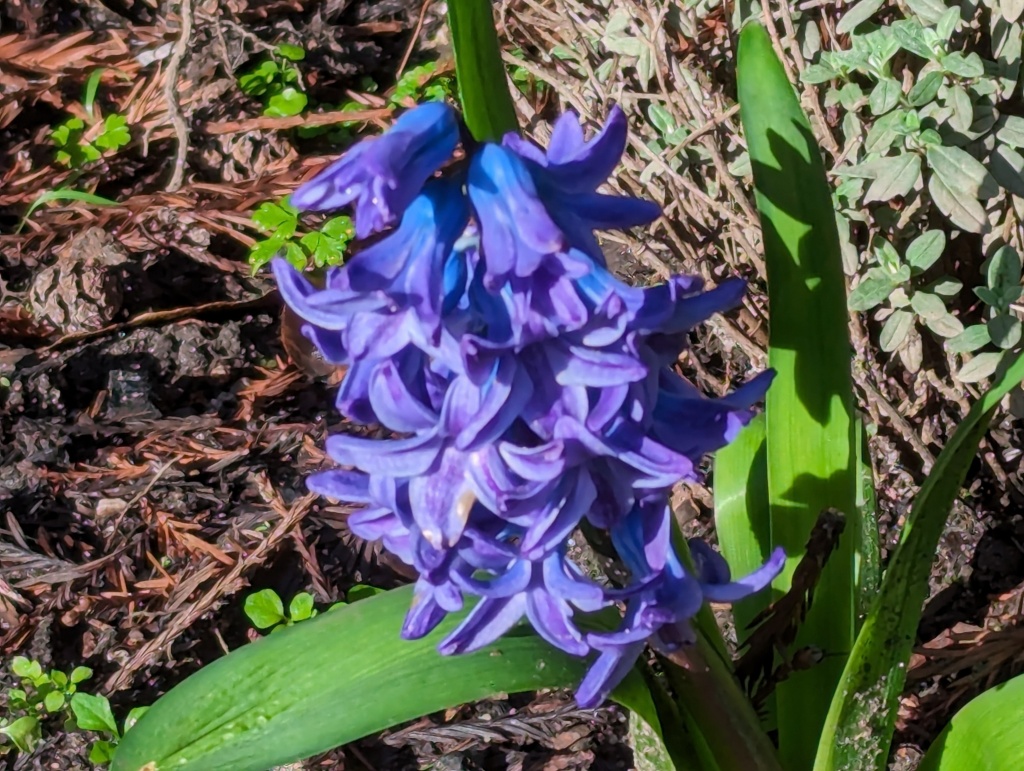
2. Hyacinthus orientalis, hyacinth is not so strange either, but it performs strangely well and reliably with only minor chill. Several have been blooming like this for several years.
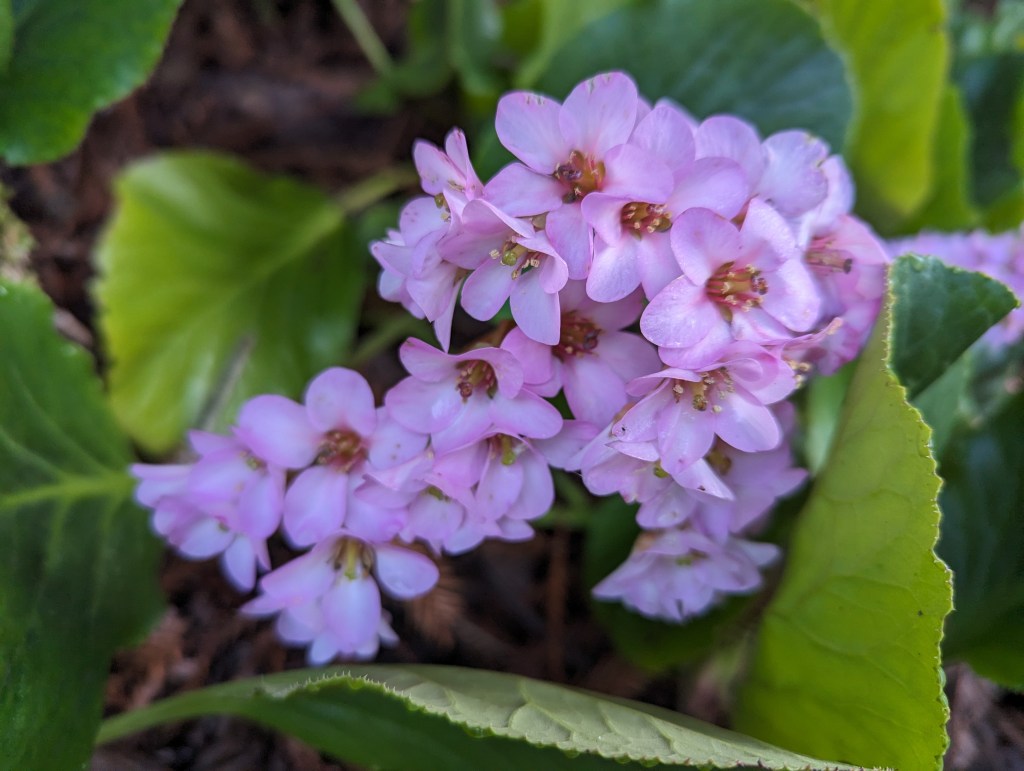
3. Bergenia crassifolia, pig squeak is blooming strangely late with a strangely light pink floral color. Otherwise, it blooms a bit better now that a sycamore that shaded it is gone.
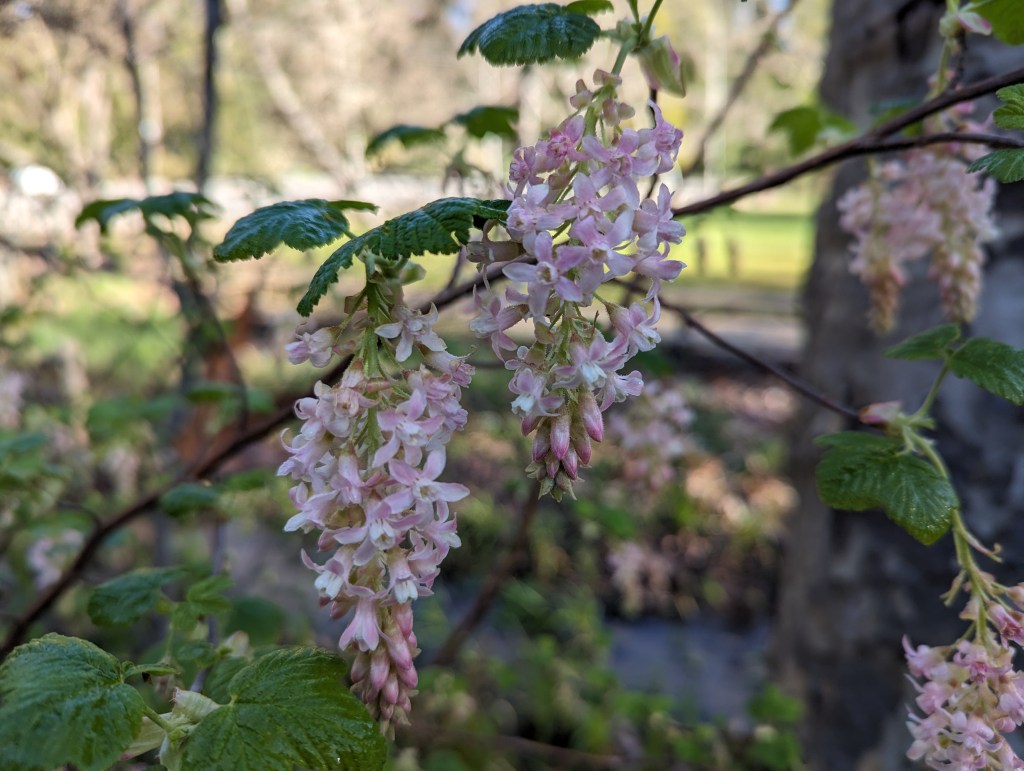
4. Ribes sanguineum, red currant is blooming with a strangely light pink floral color too. It is not much more than white, but is not white. All are this same strangely pallid color.
5. Brugmansia X cubensis ‘Charles Grimaldi’ angel’s trumpet did just the opposite. After blooming strangely pallid peachy orange since spring, it now blooms yellow as it should.

6. Helleborus orientalis, Lenten rose is blooming strangely well this year. Typically, only a few bloom like this. Now, many are. This is one of a uniform colony that is likely feral.

This is the link for Six on Saturday, for anyone else who would like to participate: https://thepropagatorblog.wordpress.com/2017/09/18/six-on-saturday-a-participant-guide/


The combination of 50ft Sphaeropteris medullaris with 200ft redwoods at Rotorua is not something I will ever forget, nor seeing native wild palms in Australia growing in swamps with Melaleuca. The latter a natural combination, the former completely artificial and offensive to many New Zealanders because the redwoods are non native and probably potentially invasive. It’s odd how we can get used to things, even grow to love them, then get to feel completely different when we get some piece of new information.
LikeLiked by 1 person
That illustrates it perfectly, because I would not be bothered by tree ferns with the redwoods. A few common Australian tree ferns inhabit our landscapes. Although I know it is not native, they seem compatible to me.
LikeLike
The palm looks very nice against the building, even if it is a strange combination with the redwoods. Are those lily of the Nile in the foreground? Some sort of Amaryllis? They look vibrant and healthy. Strange to see Brugmansia and Ribes blooming in February. But your Hellebores are right in line with ours here in VA. Very strange, indeed….
LikeLiked by 1 person
The windmill palm came from the home of the mother of two childhood friends near Saratoga. It has not launched yet, so might sit at ground level for a while. It is so striking to guests who expect to see palms in California, but would look weird if it were able to grow taller into the redwood canopy above. The lily of the Nile have been healthy there for a while, but are healthier now that a sycamore that was shading them is gone. Amaryllis belladonna grows on roadsides, but not within the semi-refined landscapes. It is not so pretty when it defoliates for summer. Brugmansia does not always bloom now. It got slightly frosted last year, so took some time off to recover.
LikeLiked by 1 person
How old does the windmill palm need to be to ‘launch’? It blows me away that A. belladonna is a roadside plant in your area. Here, each bulb is quite expensive and it is grown indoors, mainly, as a specialty holiday plant. The Brugmansia is so pretty, but it dies back completely each winter here, and so may or may not bloom by late the following summer. That color is lovely.
LikeLiked by 1 person
Amaryllis belladonna is not the same as the fancier potted amaryllis, which are cultivars of Hippeastrum. Most Hippeastrum are potted plants even here because they prefer shelter through winter. Brugmansia also prefers shelter in some inland climates or at higher elevations. Those in the landscapes here can bloom through most winters, but sometimes get slightly frosted. Here at the shops, they are a bit more susceptible to frost. Windmill palm is quite variable. It can grow slowly or relatively fast. This one has been growing slowly for a few years, likely because it is contained. It is about big enough to launch, so I hope that it can delay the process for another year. I know when it is about to launch when the base of the trunk is as wide as a trunk of a mature tree. That is all they need to launch, and is also why it takes longer for Canary Island date palms to launch. They can be ‘terrestrial’ for many years.
LikeLiked by 1 person
I agree with you about palms and redwoods, it is weird. Do the Angel Trumpets bloom year round?
LikeLiked by 1 person
Every few years, they get damaged by mild frost. Here, less than a mile away from the specimen in the picture, they would get frosted a bit more frequently. They take a bit of time to recover, but then bloom whenever they want to. It is difficult to prune the original specimen in Brent’s garden in the Los Angeles region because it is never without bloom.
LikeLiked by 1 person
Good to know. The one I planted recently has quadrupled in size. It is very happy so far.
LikeLiked by 1 person
They can grow like weeds when the weather is favorable and they get plenty of water. Some of ours grow quite fast, but an important double white specimen has grown slowly where the redwoods take its moisture.
LikeLiked by 1 person
I love that Brugmansia photo. The unusual angle looks like a vampire squid about to engulf its prey!
LikeLiked by 1 person
Oh my, I did not notice that. The original specimens that provided the cuttings are quite large, like small trees. https://tonytomeo.com/2019/04/06/six-on-saturday-brents-garden/
LikeLiked by 1 person
It is strange to me that you have Hellebores and Hyacinths which I associate with colder climates. I had a ruby red Ribes in my old garden that I sometimes cut early to force the buds open in a vase, and they would then also be only that pale pink or white. Interesting…
LikeLiked by 1 person
It is strange, which is why I got their pictures. Hellebore was installed here years ago, and now self sows (so ‘might’ be classified as naturalized), but only a few specimens perform well. Most are so shabby that the landscape might be better without them. However, I can not bear to get rid of any. Hyacinth bloom reliably annually, but do not bloom well. Both are performing better than typical this year, but strangely, this winter was not unusually cool. Red currant is native and grows wild near here. A few have self sown within the landscapes from specimens that were installed. There is a white cultivar available, but it does not live here. I have never seen them bloom with such pale pink before.
LikeLiked by 1 person