A crosswalk connects a rose garden at work to a fancy perennial and annual bed across a narrow road. As much as I would like to maintain certain standards within both of these two distinct gardens, neither is perfect. Each is inhabited by something that should be of the other. One stays because of its justification for being there. The other stays because I can not easily separate it from the roots of what moved in over it, and because we sort of like it there now. Anyway, I added another picture from Arizona a month ago, and one of Brent’s useless pictures, just because they are too pretty to discard without sharing here.
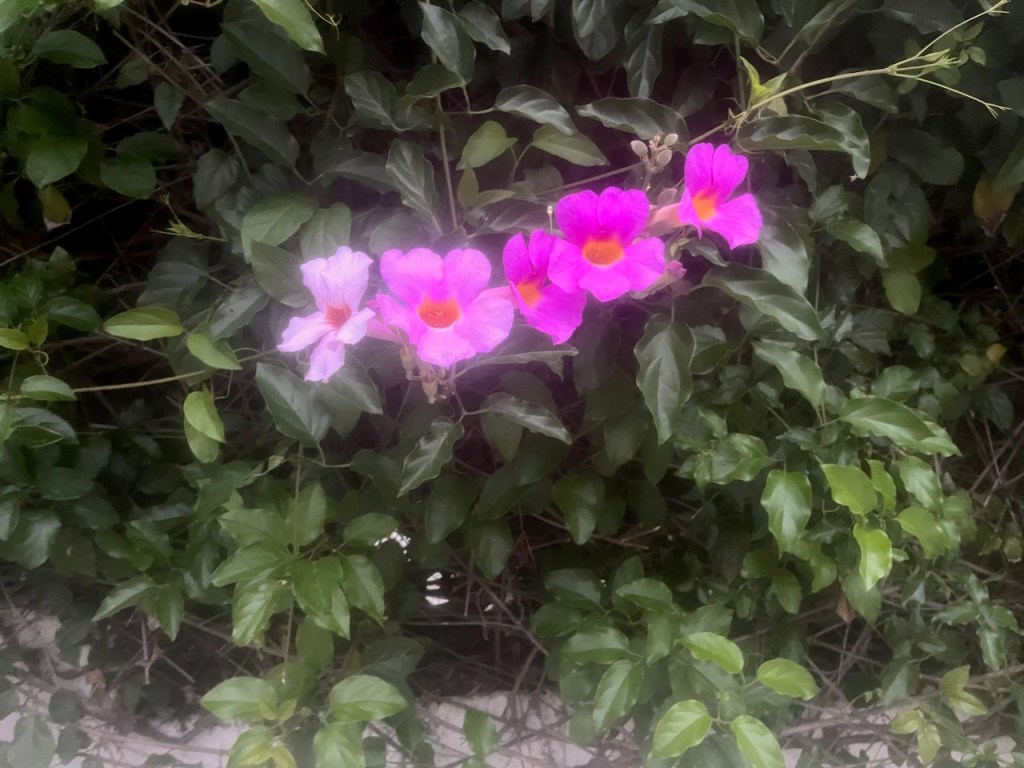
1. Distictis riversii, royal trumpet vine demonstrates that, no matter how much he wants to get one of his pictures into his local Canyon News, Brent does not provide a good one.
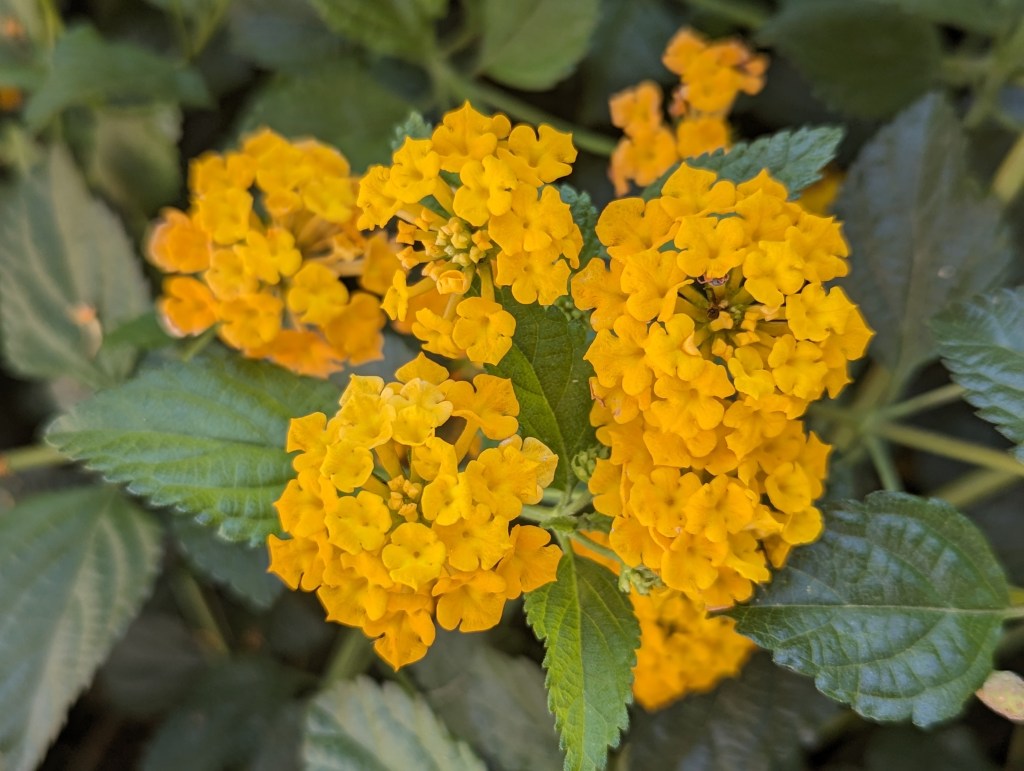
2. Lantana camara, which is known simply as lantana, bloomed within the same garden as the orange cultivar of last Saturday; so this picture is from a month ago near Phoenix.
3. Rosa, which is an unidentified miniature rose, is designated as the lily rose because of its stubborn occupancy of a former lily colony within a garish perennial and annual bed.
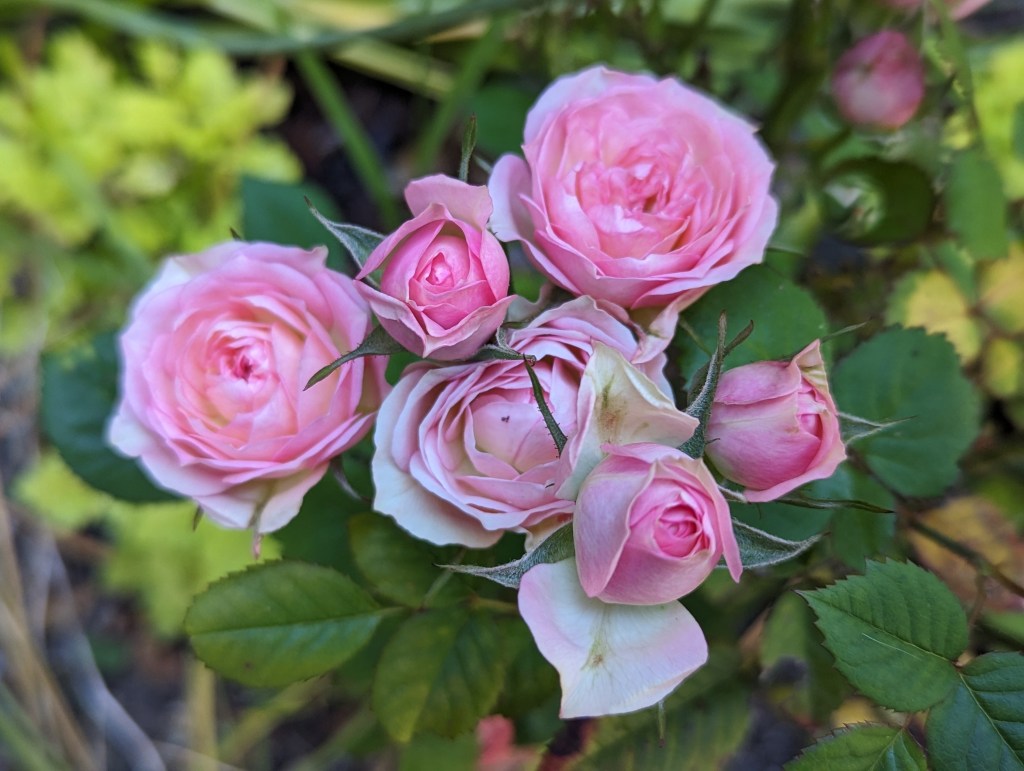
4. Although pretty, it really should be in the rose garden across the road. I can not move it over there, because of its sentimental significance for the person who installed it here.

5. Lilium, which is an unidentified Oriental lily, is designated as the rose lily because of its stubborn occupancy of a former perennial and annual bed that is now a rose garden.
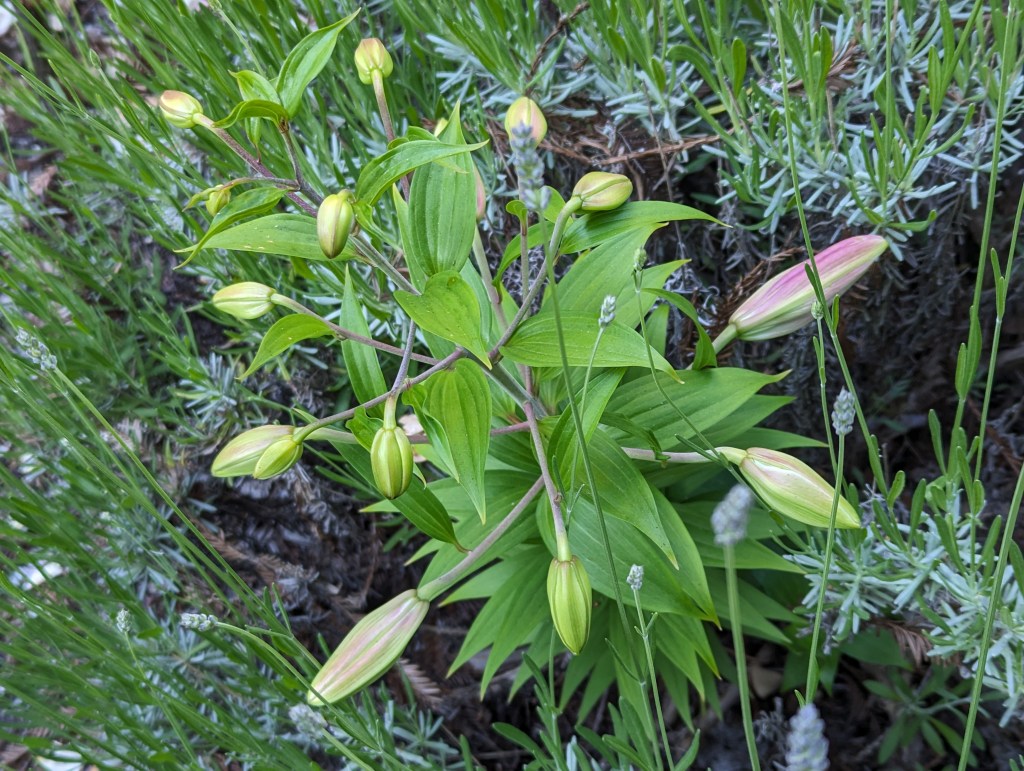
6. Although pretty in bloom, it really should be with this colony of abundant lilies, which I shared a picture of last Saturday, in a garish perennial and annual bed across the road.

This is the link for Six on Saturday, for anyone else who would like to participate: https://thepropagatorblog.wordpress.com/2017/09/18/six-on-saturday-a-participant-guide/
 Tony Tomeo
Gorgeous lilies !
LikeLiked by 1 person
Thank you. They were a gift from a neighbor. I was originally displeased with the bulbs, since I did not expect them to perform well or survive for long. Instead, they have performed so well that I should dig and divide a few of them. The rose lily is a remnant from liles that occupied the site before it was redeveloped as a rose garden. I dug and relocated the bulb a few years ago, but a piece must have remained in the soil, and grown into another bulb that is now mature enough to generate this significant floral truss! I could dig and relocate it also, but now I do not want to try to separate it from the roots of the roses, or damage the surrounding English lavender. Besides, it is something of a tradition now.
LikeLiked by 1 person
Having always associated trumpet vine with the color orange, this one surprised me — a good bit.
LikeLiked by 1 person
Orange?! Is that Campsis radicans? It is in the same family. The few that we see here are more red than orange. Brent grows a flame vine Pyrostegia venusta, which is bright orange and also in the same family, but is likely uncommon. It is spectacular in bloom during winter, but does not look like much for the rest of the year. I intend to grow some copies of it, although I have been procrastinating doing so for years.
LikeLike
That’s it: Campsis radicans. Bumblebees adore it. A friend had it covering one wall of her home, and we spent an entire afternoon photographing bumblebees partying in the blossoms.
LikeLiked by 1 person
Campsis radicans is more prolific in bloom, but only for its brief bloom season. The others bloom sporadically after their primary bloom, and are evergreen through winter. I saw Campsis radicans growing wild within its native range, and should have gotten cuttings from wild specimens.
LikeLiked by 1 person
I love plants in unexpected places. Though if they are thuggish, they will be dealt with. So many reseeds in my paths. In other places, I have vegetable reseeds and if they are in the path, they get eaten first!
LikeLiked by 1 person
Much of the best vegetation within the froufrou portions of the landscapes, particularly annuals, appeared unexpectedly in unexpected places, such as phlox, campanula, campion, oregano, alyssum and honesty. These two annoyed me because roses belong with the other roses, and lilies belong with the other lilies. Besides, I would prefer symmetry within the rose garden. Well, I can do nothing about them now.
LikeLike
Wow, those lilies are gorgeous, don’t you have the dreaded lily beetle?
LikeLiked by 1 person
No. I have never encountered it. Lilies are uncommon here, so there is not much host material for them.
LikeLike
Beautiful flowers today, Tony. Not familiar with the first one. It is pretty, though.
LikeLiked by 1 person
It is, but is strangely uncommon. Red trumpet vine, Distictis buccinatoria, is more common, even though it is more aggressive and blooms less. Lavender trumpet vine, Bignonia violacea is even more common, even though it is more likely to be damaged by frost in some climates here.
LikeLike