Cranberries have been elusive. I know of no one who grows them here. Furthermore, I am told that no one grows them here because they do not grow here. I am not convinced. They grow well in portions of western Oregon. Some of the riparian climates here are not too different from climates there. I am determined to try growing cranberries, even if I can grow only a few. Just this year, I procured seed that should vernalize through winter. If they grow, they will be comparable to those that grow wild within their native range, rather than a cultivar.
Blueberries were uncommon decades ago. I can remember, when I was a kid, being told that no one grows them here because they do not grow here, just like I am told in regard to cranberries. Well, nowadays, blueberries, although still uncommon, are not rare, and are actually somewhat popular among those who want to grow them. I grow a few only because I acquired them from a garden that they needed to be removed from. Otherwise, I would prefer to try cranberries. I can not complain about the blueberries, though. They are still here after a few years because they are reasonably productive.
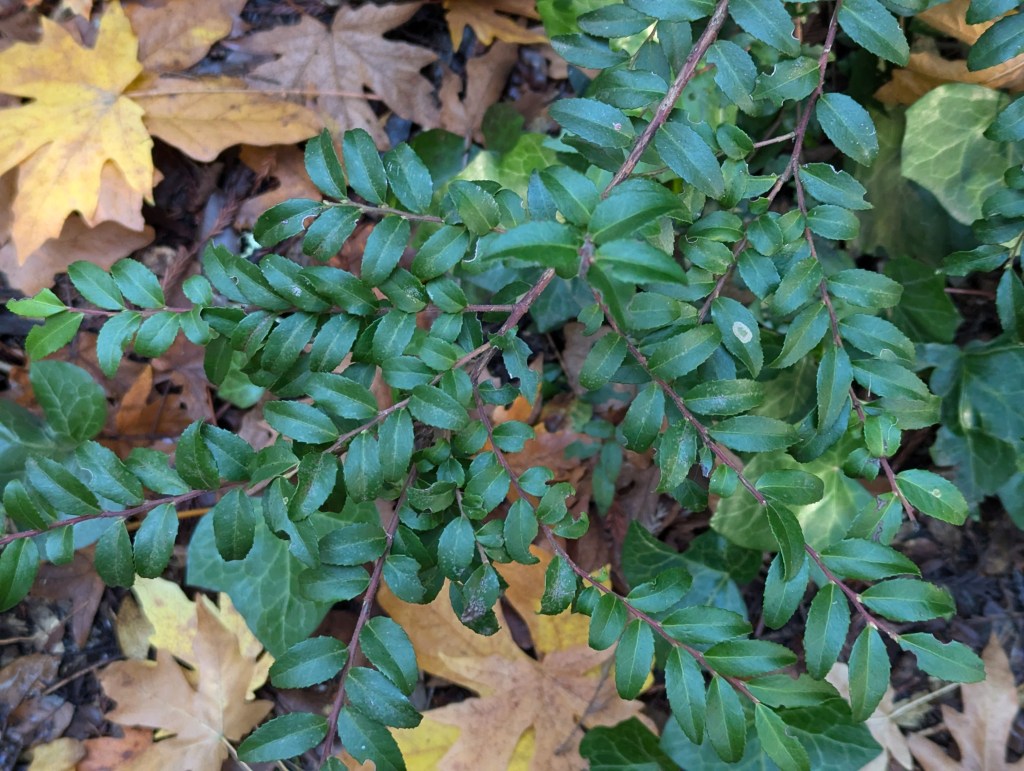
Huckleberries, or at least one species of huckleberry, are native. Although quite rare within home gardens, and more typically grown as an alternative to boxwood rather than for berries, they can produce a few berries. They might be more productive if cultivated more for berry production than merely for aesthetic appeal. I have collected enough berries from wild colonies of huckleberry to make jelly, which is encouraging. It is also encouraging that the native huckleberry is Vaccinium ovatum, which is the same genus as both blueberry and cranberry. I wonder how different their cultural requirements are.
 Tony Tomeo
I had to look up what a huckleberry is, but see it is called bilberry in England. I don’t think I have ever seen one though. We have wild blueberries in the woods here (Vaccinium myrtillus).
LikeLiked by 1 person
A few species qualify as huckleberry or bilberry, just as several species qualify as blueberry. The species that is native here is likely less productive than other species. That is typical for chaparral species, or species that are close to chaparral climates.
LikeLiked by 1 person
Nice post! I have a huckleberry plant growing well here at home (Seattle) but hasn’t produced berries yet. When my brother and I were young, we used to go into the woods behind our neighborhood and stuff ourselves on huckleberries. Good times :)!
LikeLiked by 1 person
A few species of huckleberry besides this one might be native there, even if they are known by different regional names. This species is likely more productive there than within the chaparral climates here. It happens to produce a few good berries within the relatively damp situation in which I got this picture, but berries are quite rare within drier situations.
LikeLike
The name variations!! Until 20 years or so ago, I thought people who used Latin plant names were pretentious. But so many things are known by the same name that are different plants, so the Lating helps! I have eaten huckleberries that came out of the woods in northern Alabama. Given the heat and humidity there, they may well be another variety than you see. Cranberries though, I always thought grew in bogs, so lots of water. Or it may just be that they use flooding to float the berries out. Not sure…
LikeLiked by 1 person
The huckleberry that is native here is native only to the West Coast, from the southern to the northern corners, and likely farther north, and perhaps farther south, but is not native to Alabama. Because it is not very productive, I suspect that those that are native to the east are more productive. Although cranberries prefer moist situations, they do not need to grow in bogs. With sufficient irrigation, I could grow them here.
LikeLike