A few late bloomers are making up for lost time. Hydrangea, although late, is somewhat earlier than it typically is. Bluegum is not blooming, but contributes its own sort of color with bark.
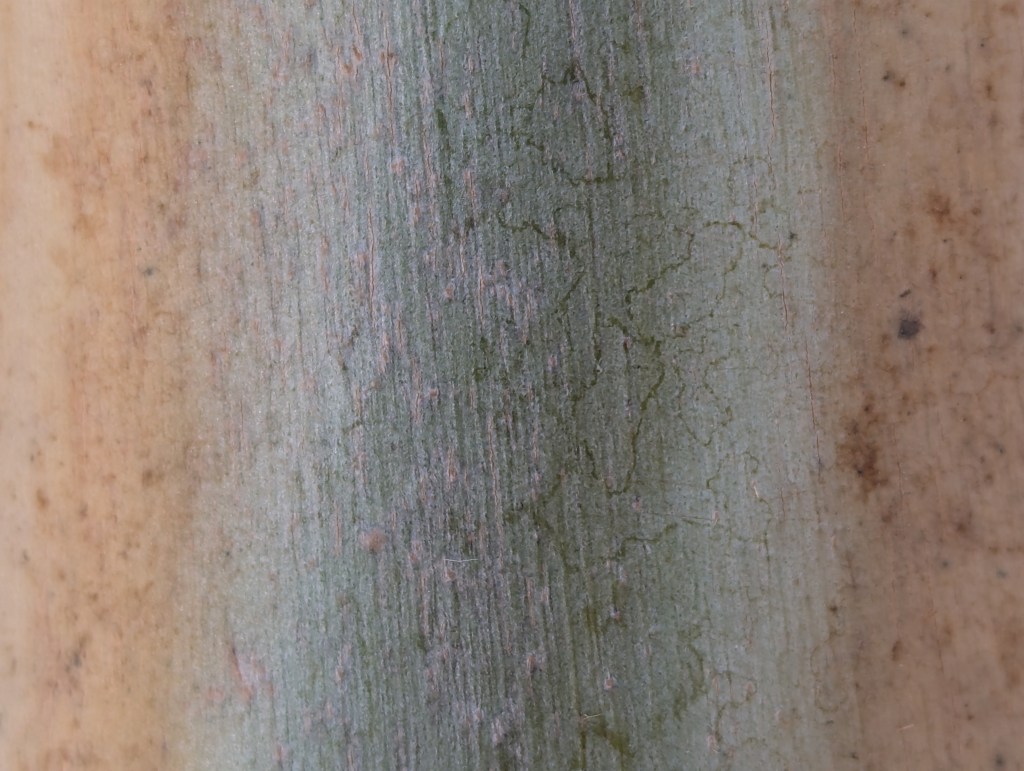
1. Eucalyptus globulus, bluegum remains canned because it grows too big too vigorously to go into the ground. Ultimately, it will likely need to be destroyed. For now, it provides both aromatic juvenile foliage and pretty adult foliage. It also has pretty watercolor bark.
2. Yucca recurvifolia, curve leaf yucca is known as Yucca gloriosa var. tristis now. What was wrong with its former botanical name? Its boring common name should be changed instead. Anyway, I am impressed that it is blooming so soon after relocation last winter.

3. Hibbertia scandens, guinea gold vine grew like a weed from a cutting last year, and is now beginning to bloom for the first time. This is the first of many flower buds to unfurl. Its bloom was expected, but its profusion is unexpectedly impressive. It remains canned.

4. Hemerocallis fulva, daylily was similarly expected to bloom and is similarly blooming with unexpected profusion. I have no idea what cultivar this is, but I suspect that it may be the straight species. We grow just one other daylily cultivar, and it is relatively docile.

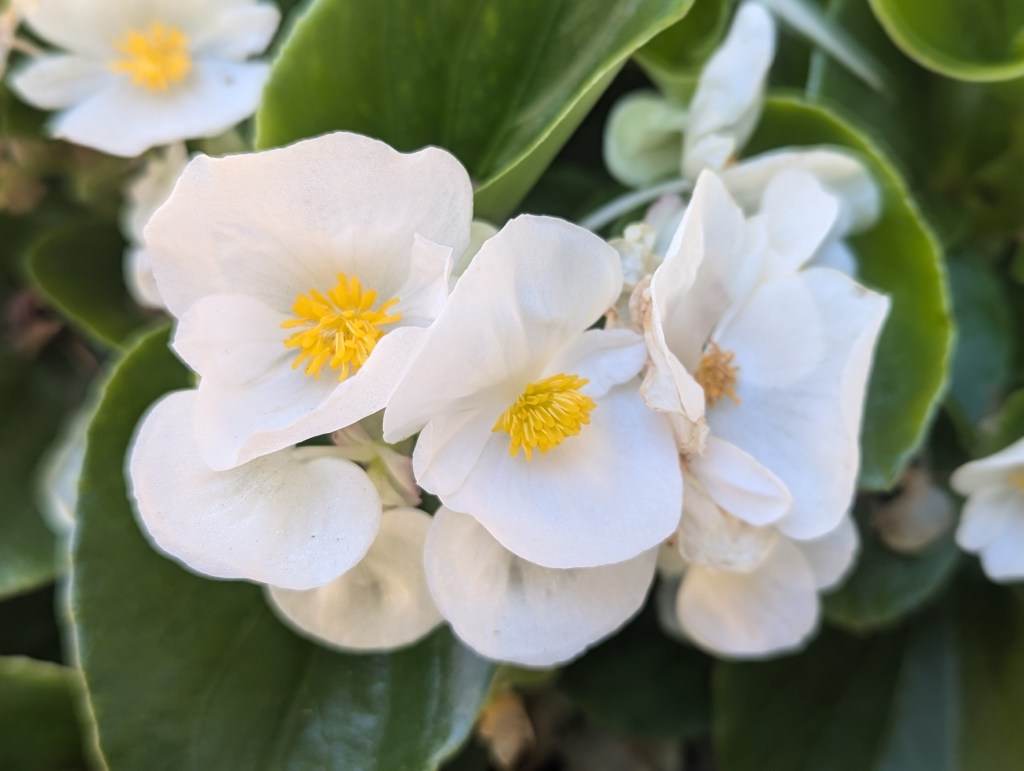
5. Begonia semperflorens-cultorum, wax begonia had languished for years in its planter box full of aggressive redwood roots. It now grows much more happily in its new planter box within its old planter box, which is elevated on cinder blocks above an empty space.
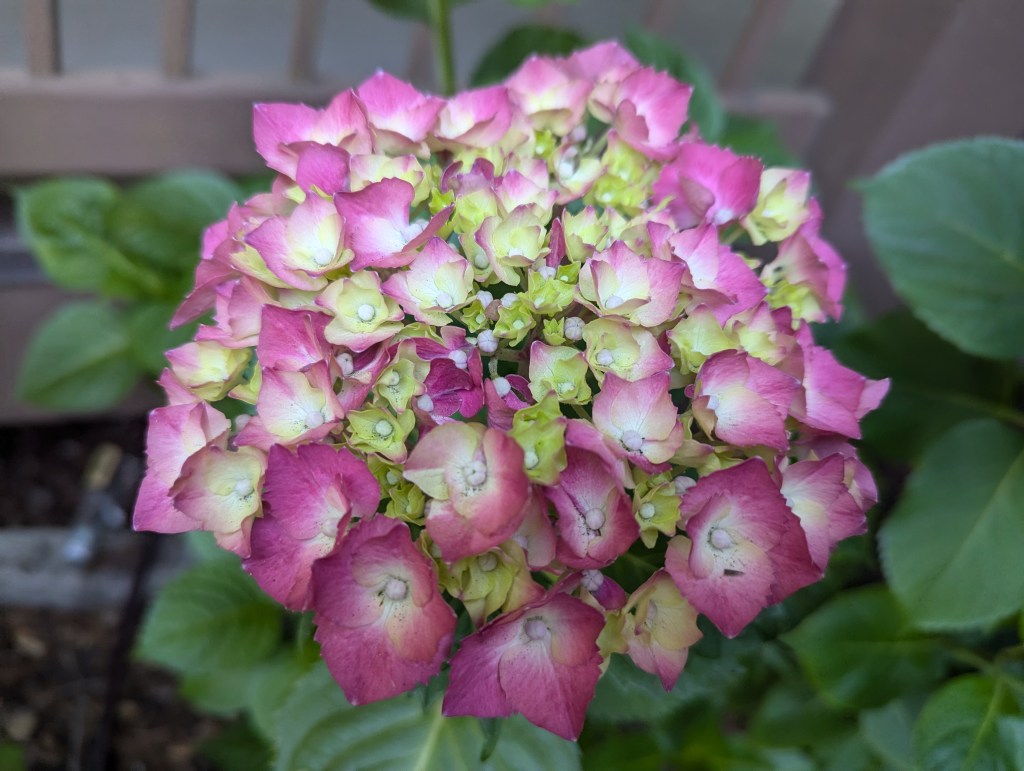
6. Hydrangea macrophylla, hydrangea typically blooms later on axillary stems because I prune the terminal buds off with winter dormant pruning. My concern was that, if I left the canes intact as I should, they would flop over. They are flopping, but it was worth it.
This is the link for Six on Saturday, for anyone else who would like to participate: https://thepropagatorblog.wordpress.com/2017/09/18/six-on-saturday-a-participant-guide/


This is the problem with hydrangeas (if it could be described as a problem). You aren’t supposed to prune the macrophylla types, especially here in the Frozen North, for fear of losing the bloom.
I just cut back our Endless Summer macrophyllas last week because the blooms were about to open and they still had all the dead winter killed wood sticking out. It looked horrible–& yet that’s truly the recommended practice so that you don’t lose the “good” wood.
If you are pruning as you are, it takes a little longer for those canes to support those huge floppy flowers. Some of our arborescens types have that problem here, especially after all our rain!
LikeLiked by 1 person
This is a mild climate here. None of the older growth freezes. I prune out canes that bloomed during the previous year, but retain those that grew while the others were blooming, like cane berries. However, unlike cane berries, hydrangea canes must retain their terminal buds for their first bloom. By removing them, I typically get only their secondary bloom. Unfortunately, these particular hydrangeas do not have much room to grow and flop, which is why I had pruned them as I did. I will figure it out as they grow this year.
LikeLiked by 1 person
If you are pruning out last year’s cane’s, though, are you not pruning the ones that would have the strength to hold the floppy mop heads?
I know you are the arborist, not me, and you can see your situation and site much better than I can.
It’s just a thought that probably wouldn’t work in your tight space.
LikeLiked by 1 person
The older canes do not bloom as well, so, since I must prune most canes out to leave just a few, I start with those. For most hydrangeas, I do not mind the flopping. These just happen to be in a narrow space where flopping is annoying. Because they are modern cultivars, I can prune the young canes back, and still expect secondary axillary bloom later. I just got greedy this year, and wanted the early primary distal bloom.
LikeLiked by 1 person
It makes perfect sense that the bud of your plant formerly known as Y. recurvifolia should look like that of our native Y. treculeana; I really enjoy yucca buds and flowers, and this is a nice one.
LikeLiked by 1 person
While we were starving students, we ate young stalks of (Hespero)Yucca whipplei like huge asparagus. They all look like vegetables to me now.
LikeLiked by 1 person
Blue Gum trunk is a nice watercolor shade of blue. I got rid of our Rainbow Eucalyptus for the same reason – and a big chunk blew off and almost hit the house!
LikeLiked by 1 person
OH! Rainbow eucalyptus is one that we want to add! Unfortunately, it is so sensitive to frost that it does not perform well here.
LikeLiked by 1 person
It grows so fast it is not really stable.
LikeLiked by 1 person
I suspect that, if it would grow here, it would not be as fast as it is in warmer climates.
LikeLike
Some beauties there, for sure. That white Begonia is a stunner! The bright golden color of the Hibbertia scandens is magical, too. All your plants look happy and healthy.
LikeLiked by 1 person
Hibbertia scandens was formerly common. I do not know why it is uncommon now. I suppose that we will find out now.
LikeLike