Molluscs, rodents, insects, virus, fungal pathogens and an identified disease that causes gummosis; we have it all. I know that it is nothing to brag about, but it makes a good six.
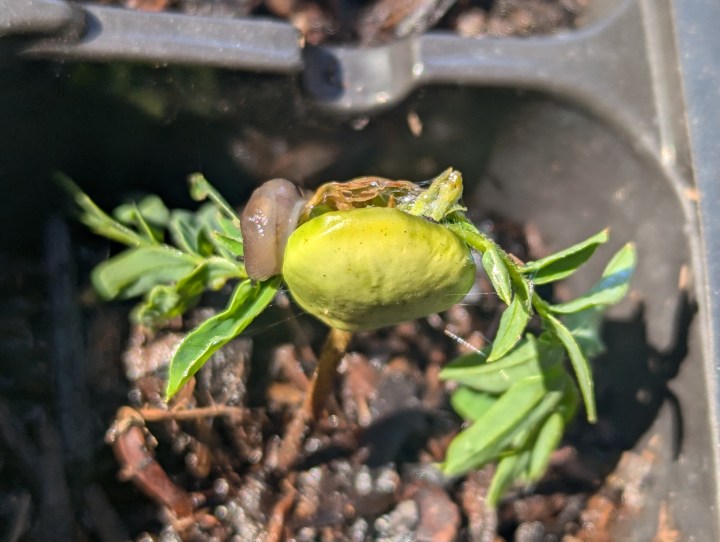
1. Tamarindus indica, tamarind seedlings are popular with slugs. Not much else here is. Weirdly, slugs do not seem to consume the foliage. They only coat it with slime that does not rinse off. The foliage eventually deteriorates. What is the point of this odd behavior?
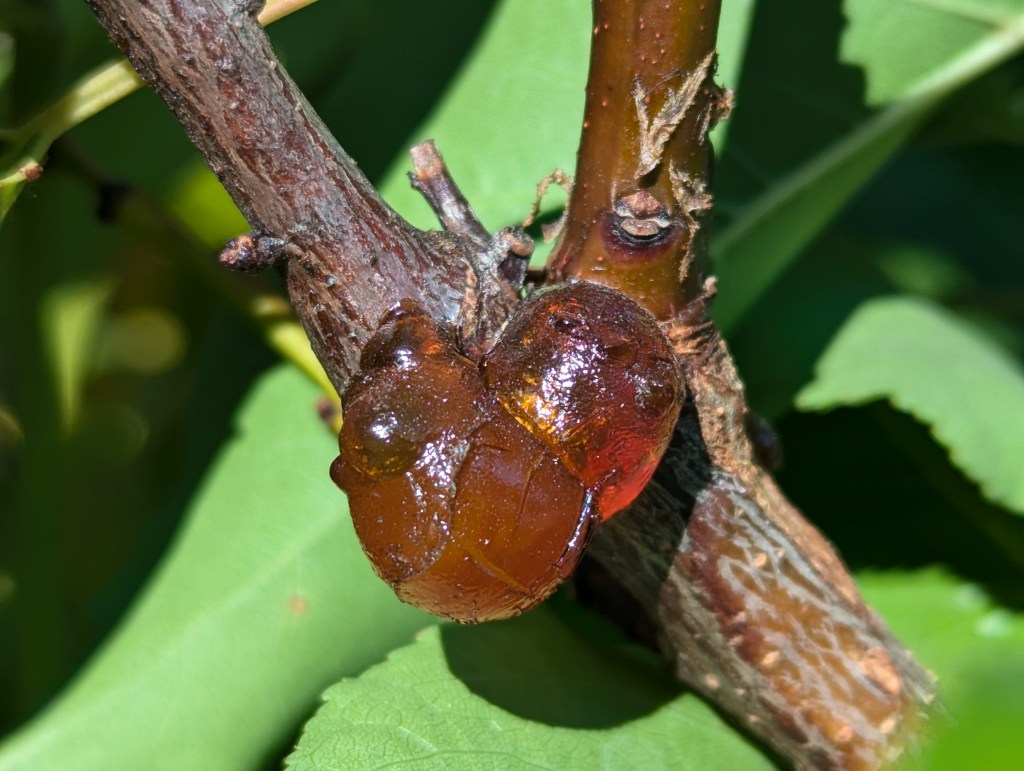
2. Prunus armeniaca, apricot trees sometimes exude gummosis as a symptom of disease or boring insect infestation. I can not see what caused this, and do not care to. I will just prune it out. I know that it will not be the last time. Gummosis is common with apricots.
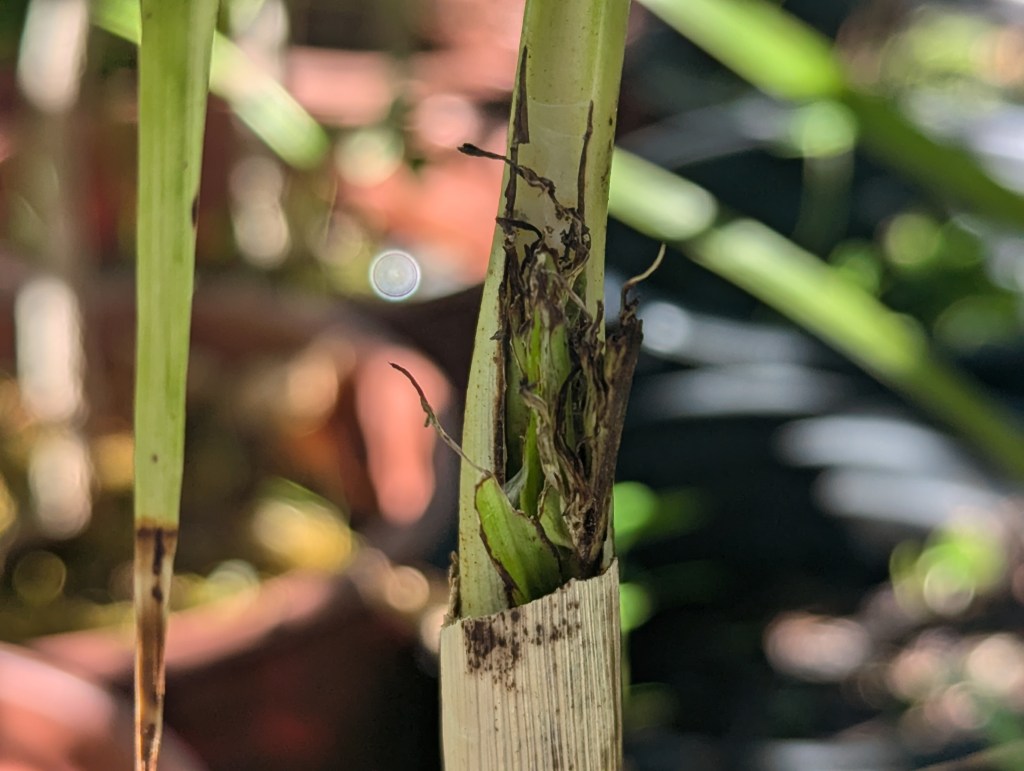
3. Chamaedorea plumosa, baby queen palm was chewed so badly by some sort of rodent that it will not likely survive. I suspect that a squirrel did this. I have not seen any rats or their damage since Heather arrived. This is one of only two rare baby queen palms here.
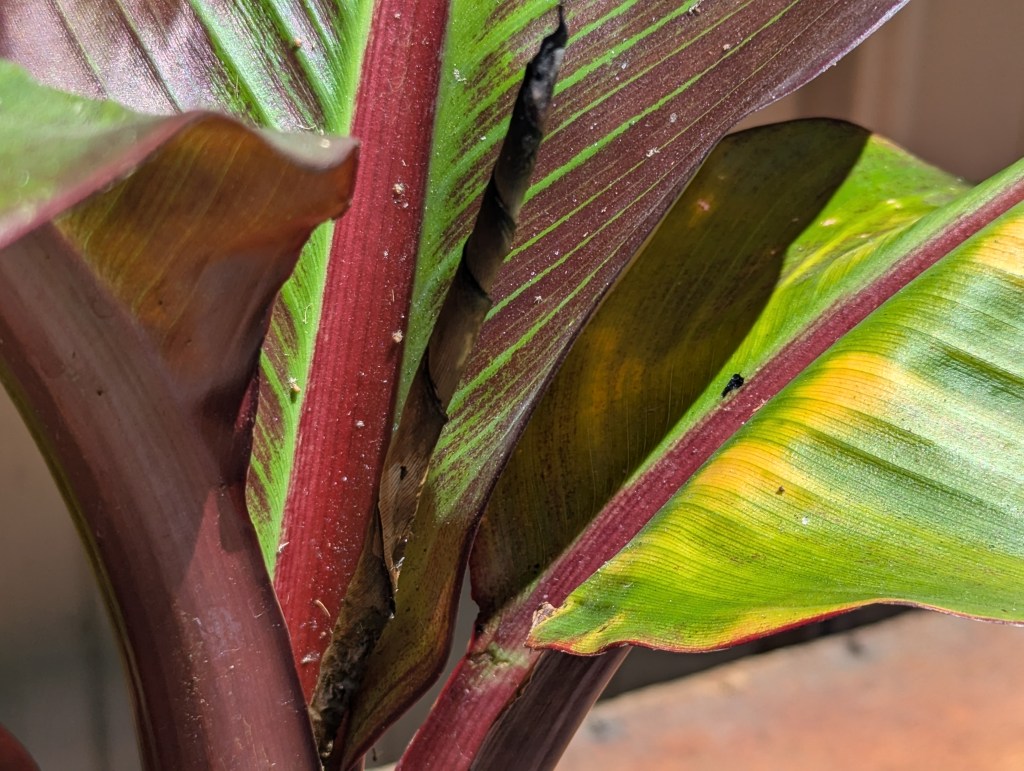
4. Ensete ventricosum ‘Maurelii’ red Abyssinian banana was initially infested with aphid and associated mold. The aphid disappeared, as it typically does, but the mold remained and ruined the currently emerging leaf. I hope that the primary bud within does not rot.
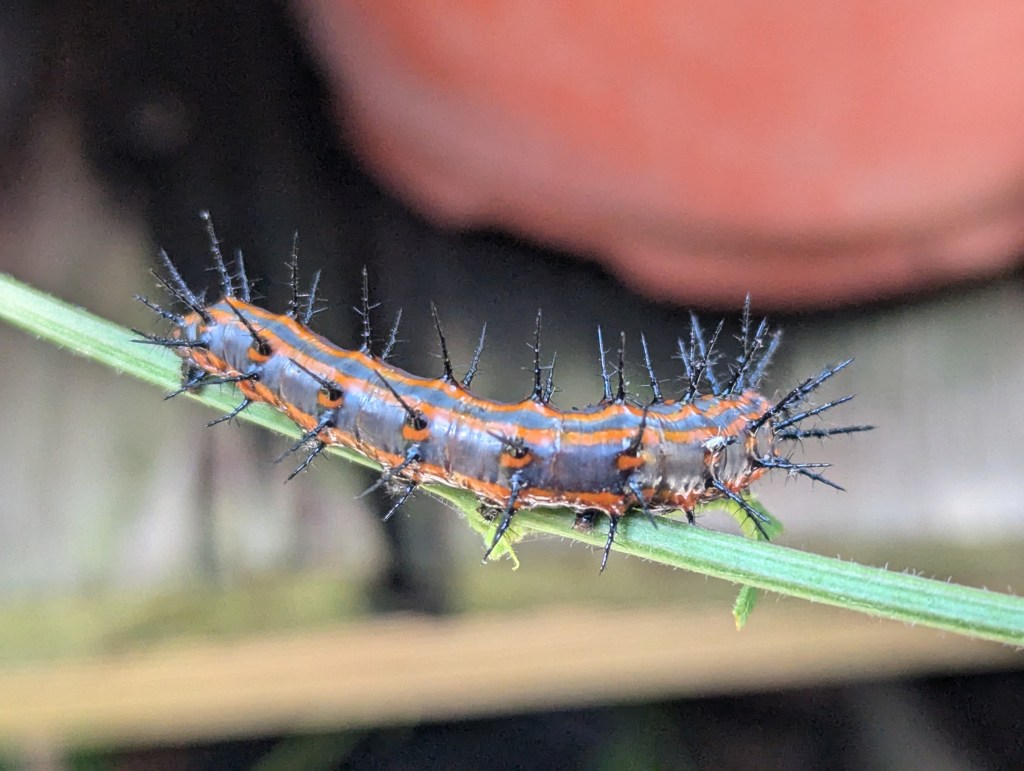
5. Passiflora racemosa, red passion flower vine has been defoliated a few times just this year by a few of these unidentified caterpillars. The caterpillars leave after they consume all foliage, but then return shortly after the foliage regenerates, while I am not watching.
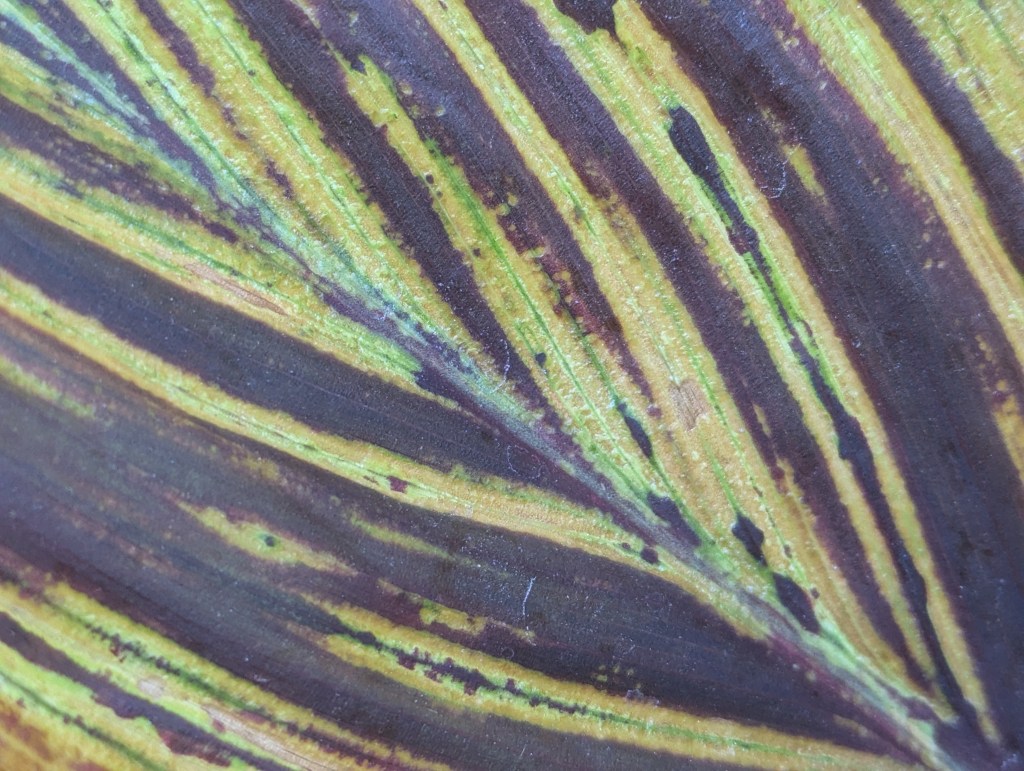
6. Canna indica ‘Australia’ canna is infected with canna mosaic virus. Several others are also, although they do not express symptoms as colorfully as ‘Australia’ does. Most other cannas are isolated from this virus within their landscapes. I am infuriated nonetheless.
This is the link for Six on Saturday, for anyone else who would like to participate: https://thepropagatorblog.wordpress.com/2017/09/18/six-on-saturday-a-participant-guide/
 Tony Tomeo
You are right. It does make a good six. What challenges we face.
LikeLiked by 1 person
Thank you. Once I got a picture of virused canna, I continued with the bad things.
LikeLike
Whew, I thought I was just having trouble with my hornets, some sort of wilt on my verbena, and ants getting into the hummingbird feeder. How boring that all sounds!
LikeLiked by 1 person
None of it is boring when it is happening.
LikeLiked by 1 person
Difficult to keep to just six. I have never heard of Passiflora catterpillar ( very pretty) or gummosis which sounds more like a dental problem than a horticultural one. But I would have gastrapods, vine weevil, scale insects, rose blackspot, lily beetles and whitefly as my top six. Mind you, red spider mite, sawfly , woolly aphids and violet gall deserve a mention.
LikeLiked by 1 person
Those caterpillars are awful! I have no idea where they came from, since, besides the few passion flower vines here, there are no other passion flower vines nearby. By the time I notice them, they have already defoliated the red passion flower vines. They are not quite a destructive to the other cultivars. They chew holes in the leaves, but do not completely defoliat.
LikeLike
Ugh! The gummosis is gross, and the caterpillar is scary!!!
LikeLiked by 1 person
When I was a kid, I thought that gummosis in the apricot orchards was pretty, like amber jewelry, which was still somewhat popular at the time. That caterpillar was more infuriating than scary. I did not notice it and others until after they had defoliated the red passion flower vine.
LikeLiked by 1 person
Some of the most grotesque caterpillars grow into some of the loveliest butterflies though. Your passiflora caterpillars will become frittilary butterflies, which are just lovely. I am sure they were psyched to see your vines.
When I first saw the caterpillars that eat my parsley (usually ), I freaked out because they too are quite nasty looking. Now that I know that they belong to a butterfly, I actively try to attract them!
LikeLiked by 1 person
Oh, no, I do not care who they are. I do not want them defoliating my red passion flower vines. The vines are still too small for that.
LikeLiked by 1 person
I leave the native Passiflora for larval hosting for butterflies, they host Zebra Longwing and Gulf Fritillary butterflies – their caterpillars look similar to yours.
LikeLiked by 1 person
These are neither native nor abundant enough to share yet. In the future, as they grow, they will be too big to be protected from whatever wants to eat them.
LikeLiked by 1 person
The caterpillar looks like that of some sort of frittilary. I am always happy to see caterpillars, if they seem to eat too much, I plant more of the same! Slugs are strange. Not complaining, but slugs in my yard do not seem to bother the garden at all. One wonders what it is that ARE eating. I have found them on the underside of dandelion leaves in the lawn, but never in the garden for whatever reason.
LikeLiked by 1 person
There is not enough passion flower vine to share yet. Once they get into the ground, they will grow like weeds, with plenty to share with the caterpillars. I could not control the caterpillars if I wanted to anyway. Slugs are not ‘much’ of a problem here. Although they ruin my tamarind seedlings, they do not do much more than that. Banana slugs are huge, but they do not each much viable vegetation. They consume rotting redwood debris instead.
LikeLike