Autumn foliar color is scarce here, not because the weather is too mild, but because it is not such a priority within landscape design. A few species can develop such color as they do where autumn weather is cooler. Of course, some do not. Native California sycamore is a stately deciduous tree with striking form while bare through winter, but contributes minimal color.
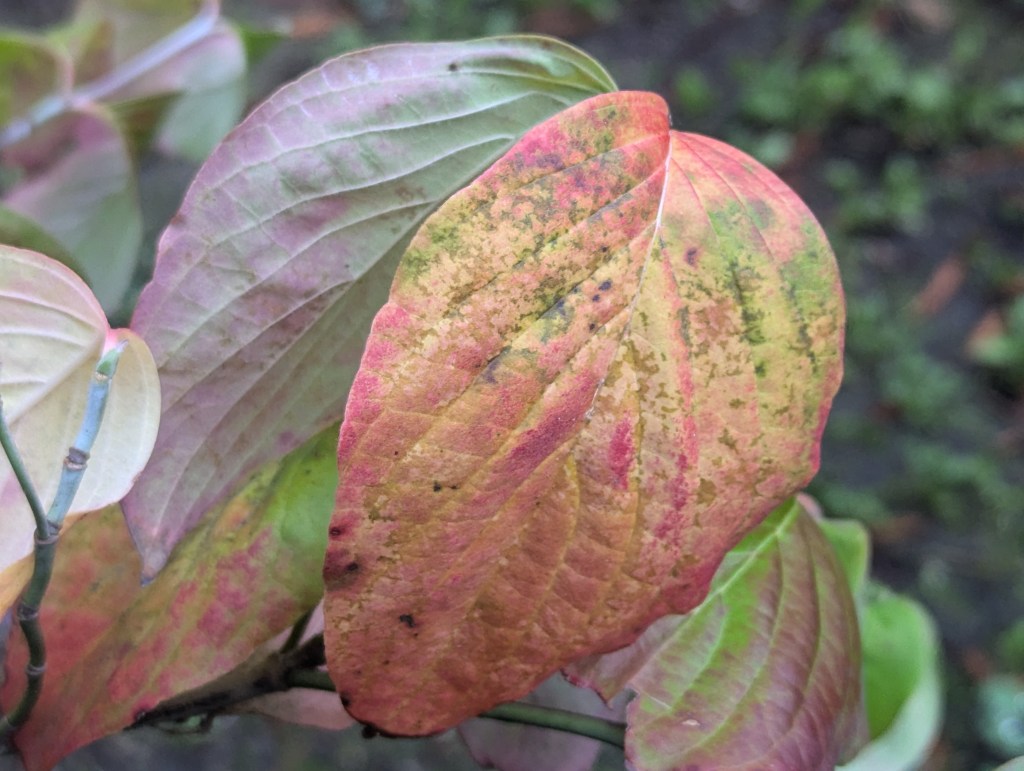
1. Cornus florida, flowering dogwood is just beginning to exhibit foliar color for autumn. It performs surprisingly well in the Santa Cruz Mountains above the Santa Clara Valley.
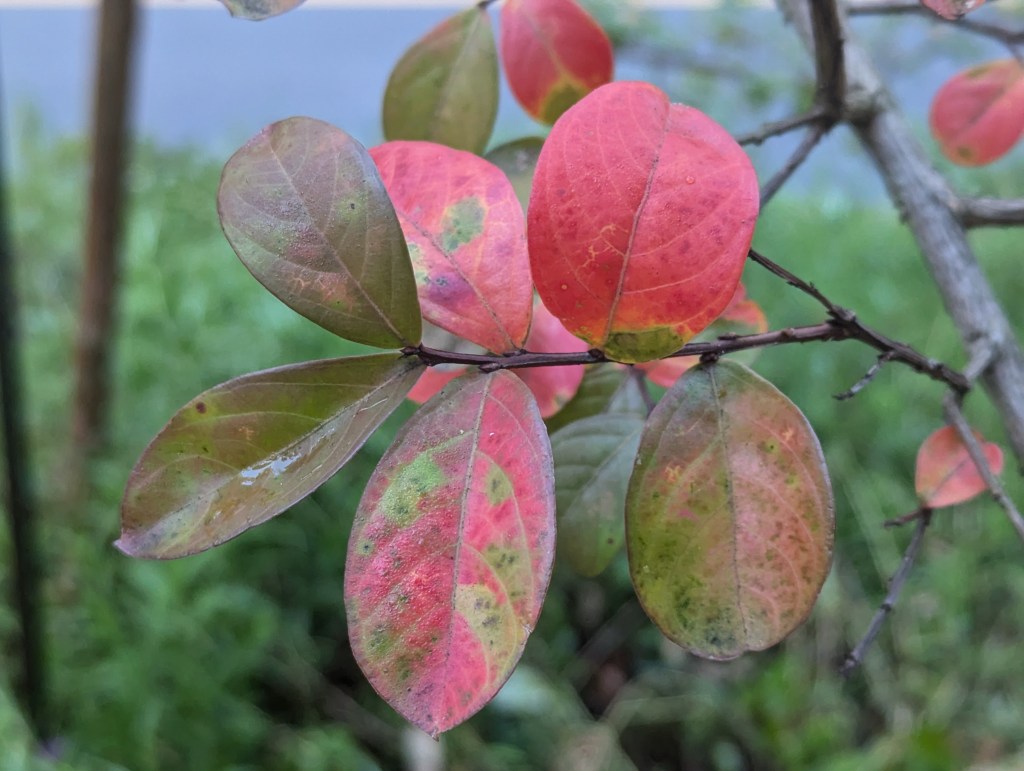
2. Lagerstroemia indica, crape myrtle is also starting to exhibit foliar color for autumn. It may do so before the weather gets cool, as if it somehow knows what time of year it is.
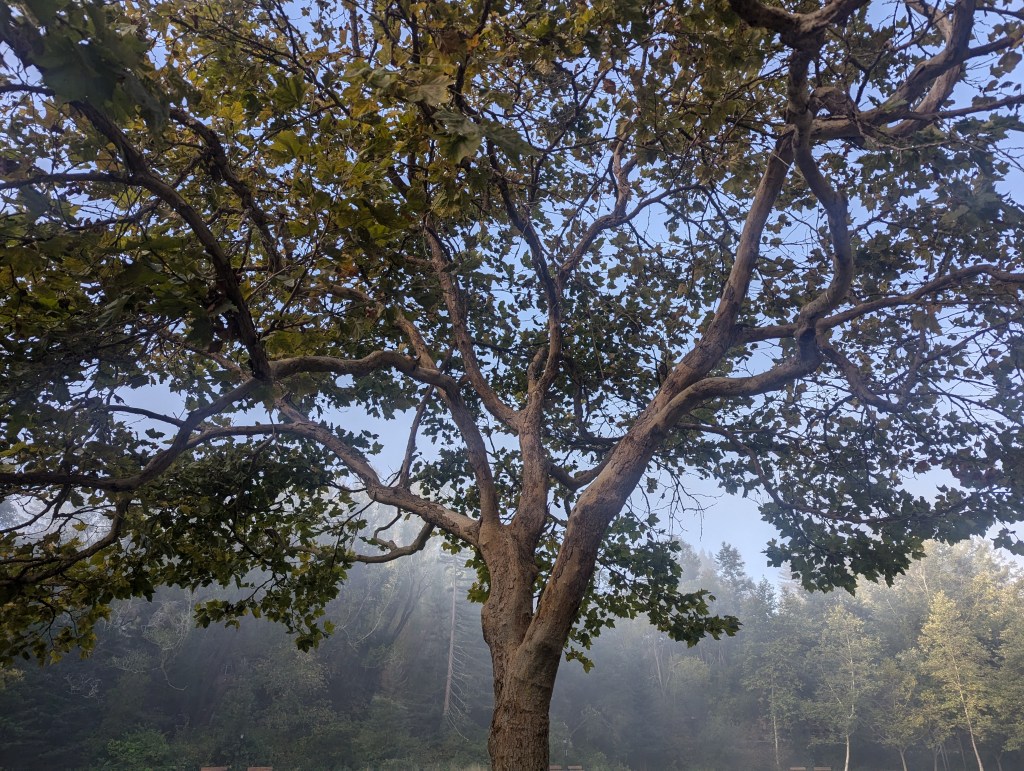
3. Platanus racemosa, California sycamore does not know or care what time of year it is. It is more likely to yellow in response to hot and dry summer weather than to do so now.
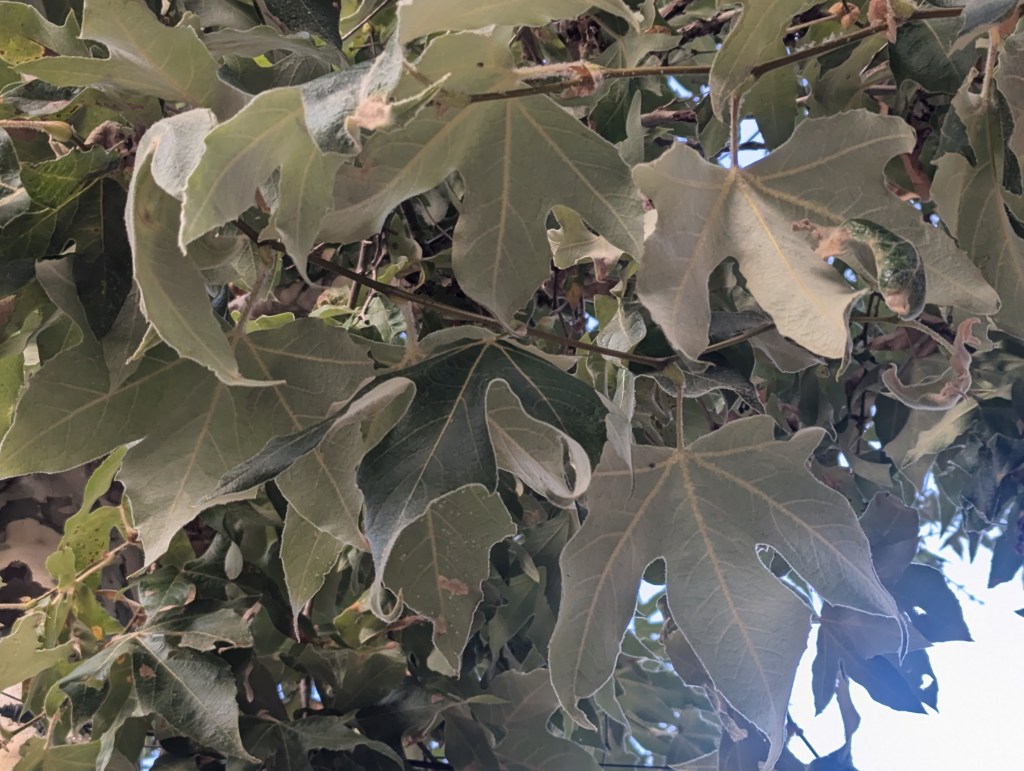
4. Platanus X acerifolia, London plane tree is the sycamore with maple foliage. It is just beginning to yellow, but ultimately, does not do much more than that before defoliation.
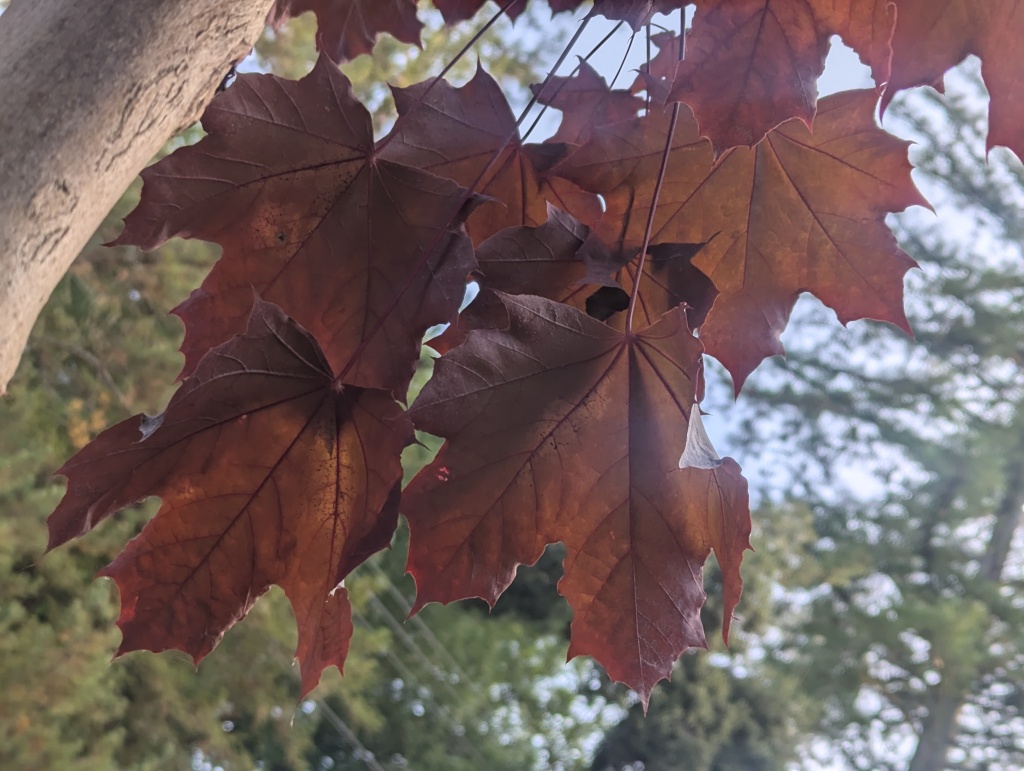
5. Acer platanoides, Norway maple is the maple with sycamore foliage. This cultivar has bronze foliage through summer, so develops its yellow foliar color for autumn quite late.
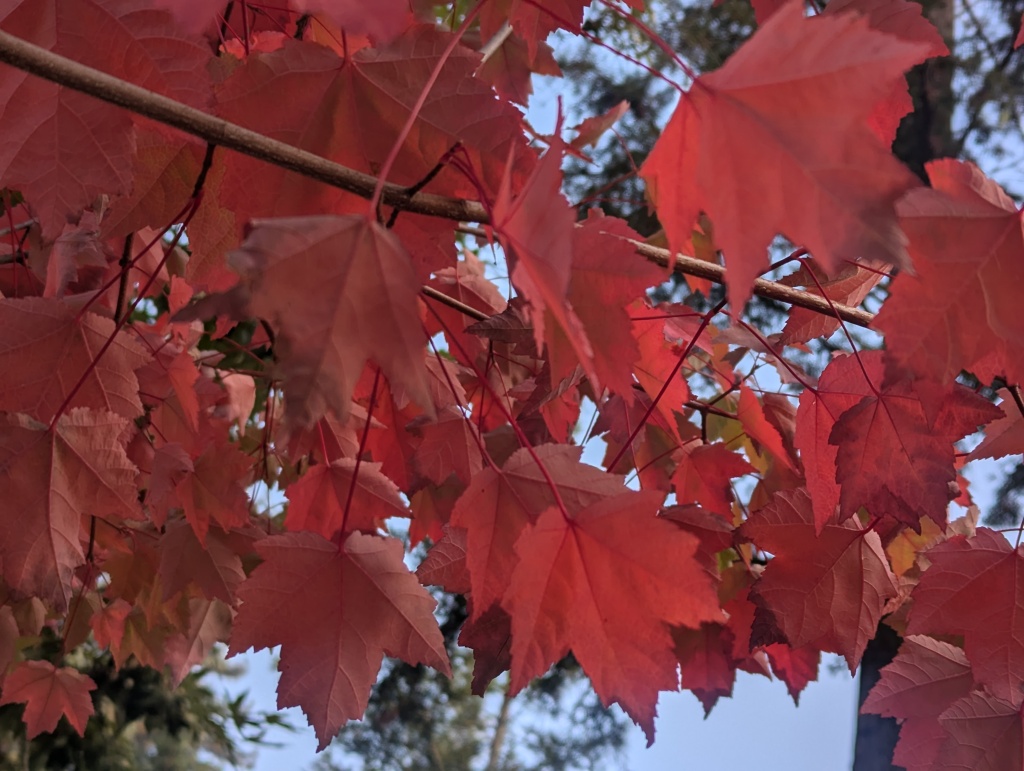
6. Acer rubrum, red maple, like crape myrtle, can develop foliar color for autumn before cool weather, as if it knows what time of year this is. It defoliates relatively early though.
This is the link for Six on Saturday, for anyone else who would like to participate: https://thepropagatorblog.wordpress.com/2017/09/18/six-on-saturday-a-participant-guide/
 Tony Tomeo
Fall color has peaked in the northernmost part of my state, but is just getting started where I am. It has been a little dry, so we shall see what we get as far as color. My weeping cherry, which needs some pruning should be a blaze of orange if all goes according to plant. Looks a bit like a green haystack at the moment, but I will prune it when the leaves drop and I can see what I am doing. My volunteer Cornus alternifolia has not started to change color yet, but it is coming.
LikeLiked by 1 person
There are likely more species there for such color. More of the native species that grow wild are colorful also.
LikeLike
As my “neighbor” at WisconsinGarden has described, the color is just starting to get vibrant here in S. Wisconsin. But with a cooler snap ahead, it won’t be long. The blending colors of your Crape Myrtle and Dogwood foliage are lovely. And the Maples, of course. The California Sycamore must be a wonderful tree to have year-round!
LikeLiked by 1 person
California sycamore is a grand tree! However, it does not develop good foliar color for autumn. Then, such huge trees make huge messes. The tomentum is hazardous to inhale while raking, so it is safest to rake the leaves after they get wet from rain.
LikeLike
A lot of dogwood leaves here turned brown and fell in late August/early summer thanks to the drought…those that were left are now great shades or red on both C. alternifolia and C. sericea. Interestingly, C. racemosa leaves always just turn brown and fall off in my garden although in the wild they apparently also have a nice red autumn colour.
LikeLiked by 1 person
Just a few miles away, in the Santa Clara Valley, flowering dogwood performs very differently from here. It dislikes arid warmth, so gets roasted by typical summer weather there. It is hard to imagine your climate getting arid warmth; but I suppose that it is all relative. Those particular species apparently notice the difference.
LikeLiked by 1 person