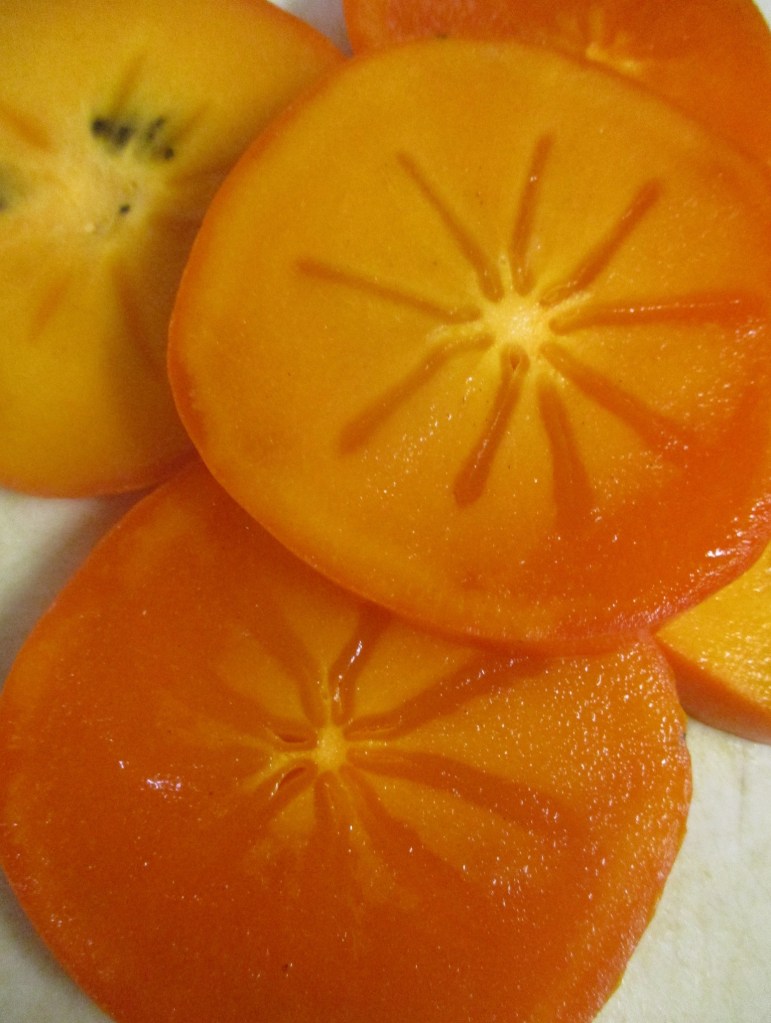
It lacks the spectacular spring bloom of the other deciduous fruit trees, but compensates. Persimmon, Diospyros kaki, performs double duty with fall color. Its autumn foliar color is impressively fiery orange. Then, it defoliates to reveal plump, abundant and comparably fiery orange fruit. So, it is spectacular with both autumn foliar color and autumn fruit color.
Persimmon trees are tempting. Some cultivars can grow twenty feet tall to become small or even mid sized shade trees. However, if they do so, much of their overly abundant fruit is unreachable. Aggressive and strategic pruning limits their production with most of their fruit in reach. Although undemanding otherwise, this major dormant pruning is important.
Persimmons are self fruitful without a pollinator. However, they supposedly provide more fruit of better quality with another cultivar. Fruit is unfortunately inedible before thoroughly ripe, but then all ripens simultaneously. That is an incentive to share with neighbors and friends. With a bit of effort, fruit is conducive to drying and freezing, although not canning. Ripe fruit is very perishable.
 Tony Tomeo
A friend had quite a large tree that produced a good crop of fruit every year, unless serious drought had set in. She had to fight the possums for it every year; they were as fond of the fruit as she was. One trick she had was picking slightly unripe fruit and then putting it in the freezer. Freezing doesn’t help persimmons ripen, but it does break down the cell walls, softening the fruit and reducing its astringency.
LikeLiked by 1 person
That is why the fruit is supposedly better after frost. Here, fruit usually ripens prior to frost. I like to find some that were left out late, but by that time, many are damaged by crows, and all are too squishy to collect. They must be eaten on the spot.
LikeLiked by 1 person