As bloom of most other plants decelerates for late autumn and winter, the floral color of common annuals becomes more prominent in the landscapes at work.
1. Viola X wittrockiana, viola blooms with smaller but more profuse flowers than pansy. I am not certain if they are the same species. Also, most of the flowers face one direction.
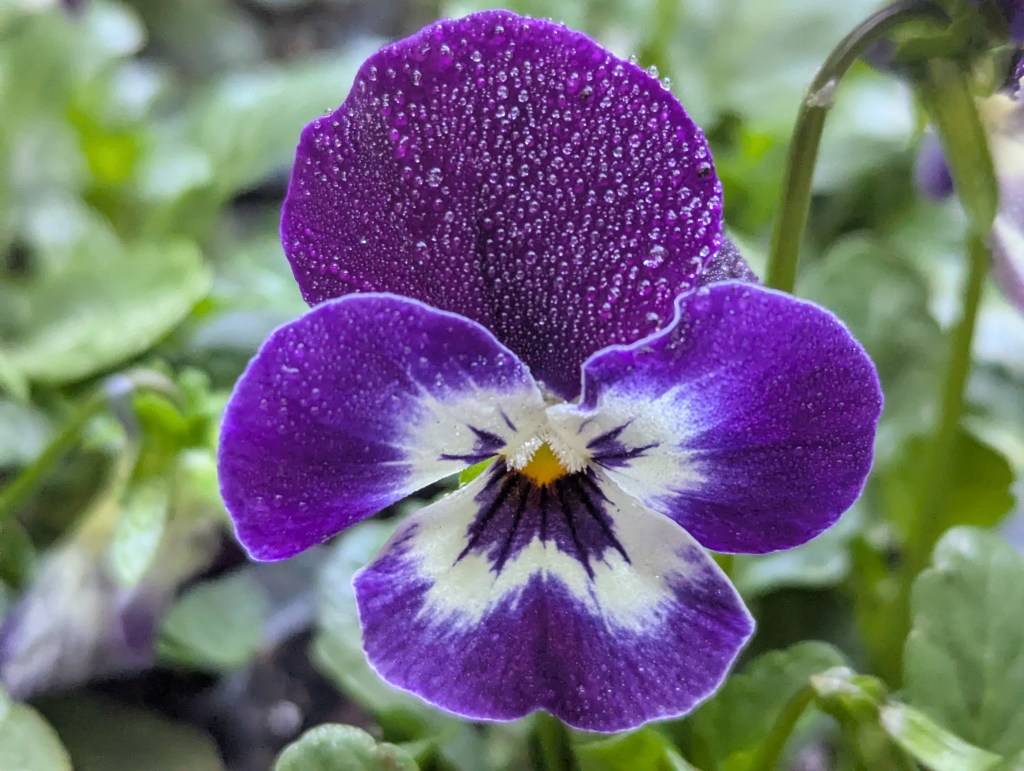
2. Viola X wittrockiana, pansy blooms with bigger but less profuse flowers which mostly face random directions. We got only two six packs to add to other flowers in a small bed.
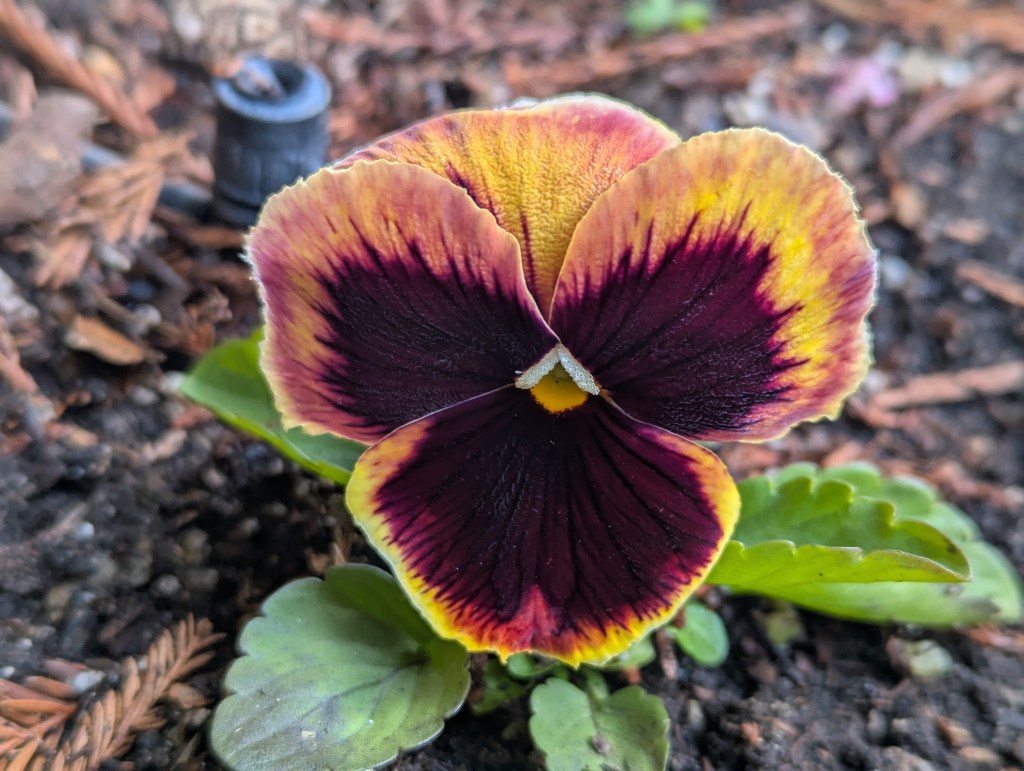
3. Viola X wittrockiana, pansy is redundant to the picture above, but is a different color. The plants are so dinky that they are scarcely visible behind their relatively wide flowers.
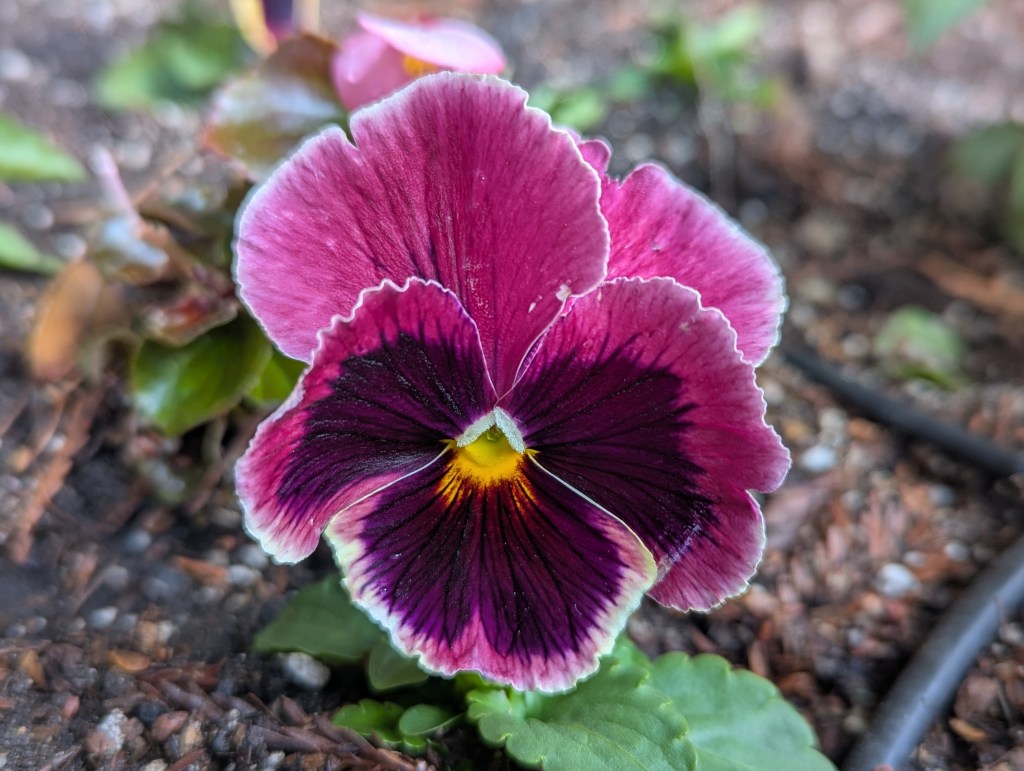
4. Bellis perennis, English daisy ranges in color from this rosy red to white like the color scheme of candy canes. I am fond of it because it is not so overly bred like other annuals.
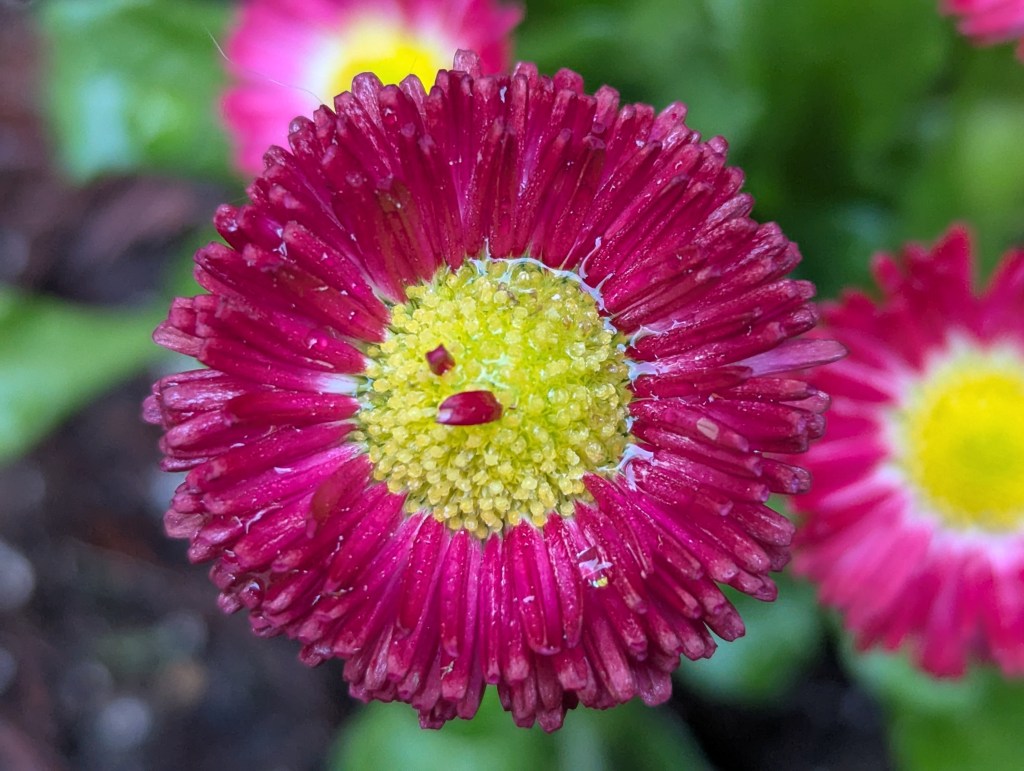
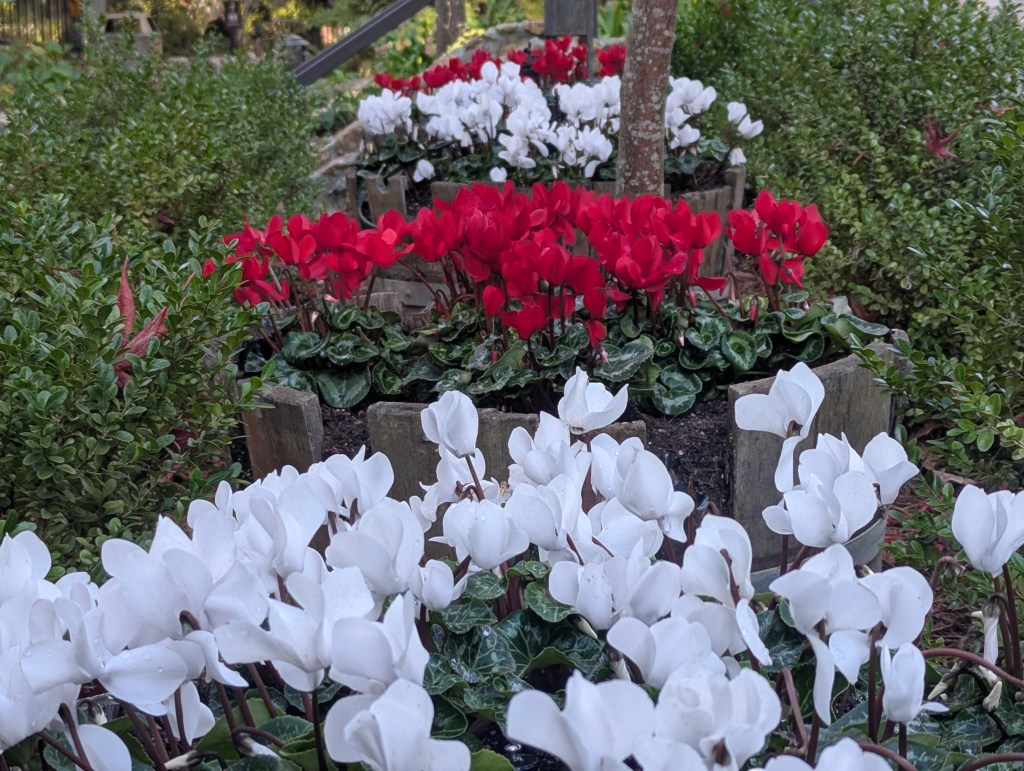
5. Cyclamen persicum, florist’s or Persian cyclamen is cheapened as an annual. I used to grow mine as cool season perennials. I also grew colors other than simple red and white.
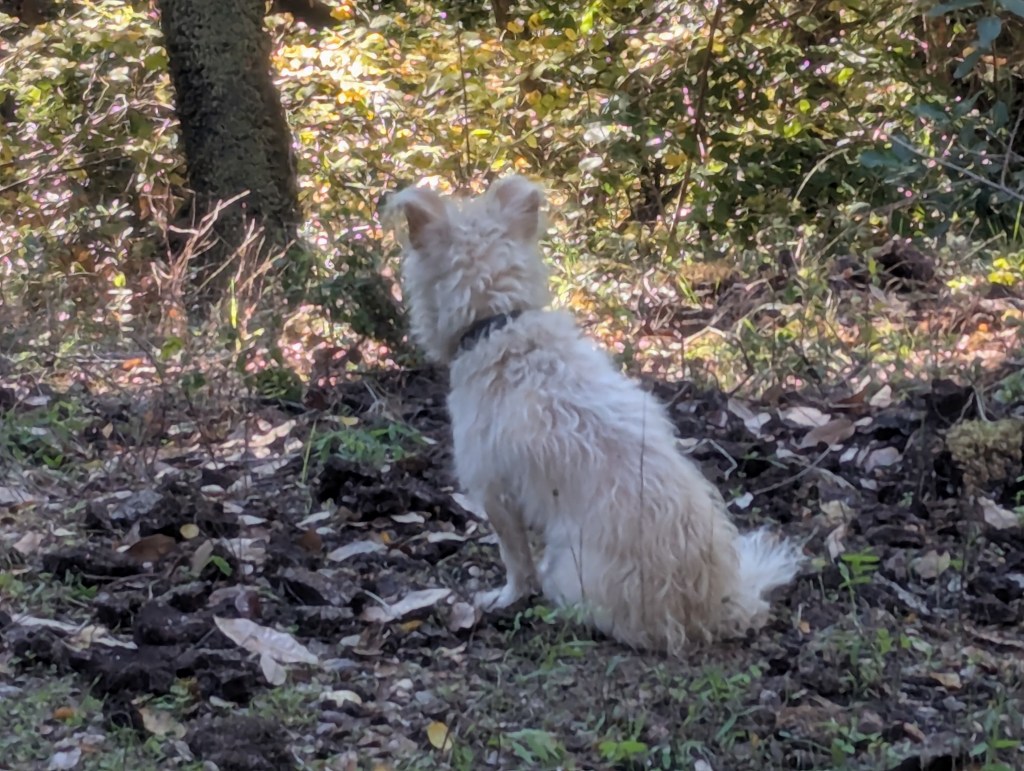
6. Rhody was unconcerned with these common annuals as he surveyed his domain early last Monday, while I burned forest green waste. He is not overly horticulturally oriented.
This is the link for Six on Saturday, for anyone else who would like to participate: https://thepropagatorblog.wordpress.com/2017/09/18/six-on-saturday-a-participant-guide/
 Tony Tomeo
You’ve made up for my lack of violas, beauties one and all. But who is the fairest of them all ………… Rhody!!!!
LikeLiked by 1 person
Yes, of course!
LikeLiked by 1 person
That photo of bellis is a nice reminder of something I can plant here in the late winter. They rarely last longer than a season here too – spring and early summer here. Love to see Rhody as usual, even with his back turned to us!
LikeLiked by 1 person
I do not know how long English daisy would last here if it got the chance. We need to remove them to replace them with warm season annuals later. They tend to look shabby by then, but I sort of expect them to be more perennial, like the feral sort that infests lawns. (Even the feral sort die back for part of the year.)
LikeLiked by 1 person
Just yesterday I noticed local landscapers changing out the flowers in a multitude of beds, putting in pansies, snapdragons, and cyclamen. The weather’s perfect for them now, and with luck we’ll keep them until February. Your flower selection is lovely; I suspect Rhody appreciates them as well, if not so obviously.
LikeLiked by 1 person
Rhody is a canine person, so can not see the same color range as a human person. I think that he merely tolerates my work with colorful flowers because he knows that human people appreciate them.
LikeLiked by 1 person
Love the violas. And I think that Rhody is lost in wonder as he gazes into the bushes. He’s probably trying to think of the Latin name for that tree.
LikeLiked by 1 person
Quercus agrifolia. (I should cut it down, but I do not want to.) I am pleased that he stays close while I work, rather than wandering off into the forest.
LikeLike
Yay for Rhody! (I’m sure he appreciates the garden for his own reasons. ❤ ) I’m a huge fan of Violas of all species and hybrids. We have quite a few growing out in the backyard, and as the years have gone by I’ve been increasingly encouraging them to grow naturally as great groundcover in some spots. The flowers are delightful. Happy six!
LikeLiked by 1 person
It is nice that they can grow like that naturally. The climate is a bit too arid here for them to do that. A colleague in Los Osos found them to be annoying as violas migrated into the lawn.
Rhody appreciates the ruff bark of dogwood.
LikeLike
So many lovely blooms! I especially like the English daisy. It really is a splash of colour! Yet another one to go on the wish list!
LikeLiked by 2 people
Oh, it really is not as impressive as it looks in the picture. We just use it as annual color. It stays quite small.
LikeLiked by 1 person
Are the “common annuals” Cyclamen? They are beautiful! I have struggled to grow them here in Melbourne, Australia for years and am only just getting a little success…. But these are amazing! Any extra info would be appreciated.
LikeLiked by 1 person
We use them as common annuals, but they really should be perennials. That is what I dislike about them. I loathe discarding them at the end of their season. We relocate some elsewhere in landscapes, but only a few survive as perennials after being forced. Those that survive their first year are more likely to survive for years afterward, though. I think that they are unpopular as perennials because they are dormant and bare through summer, when people want them to be lush and flowery.
LikeLiked by 1 person
Thankyou. Well, we pay quite a lot for them potted in shops!
LikeLiked by 1 person
That is something else that I dislike about them. Something that expensive should not be so cheapened.
LikeLiked by 1 person