After the warm and arid summers here, ferns enjoy the beginning of the rainy season in late autumn or early winter, which is about now.
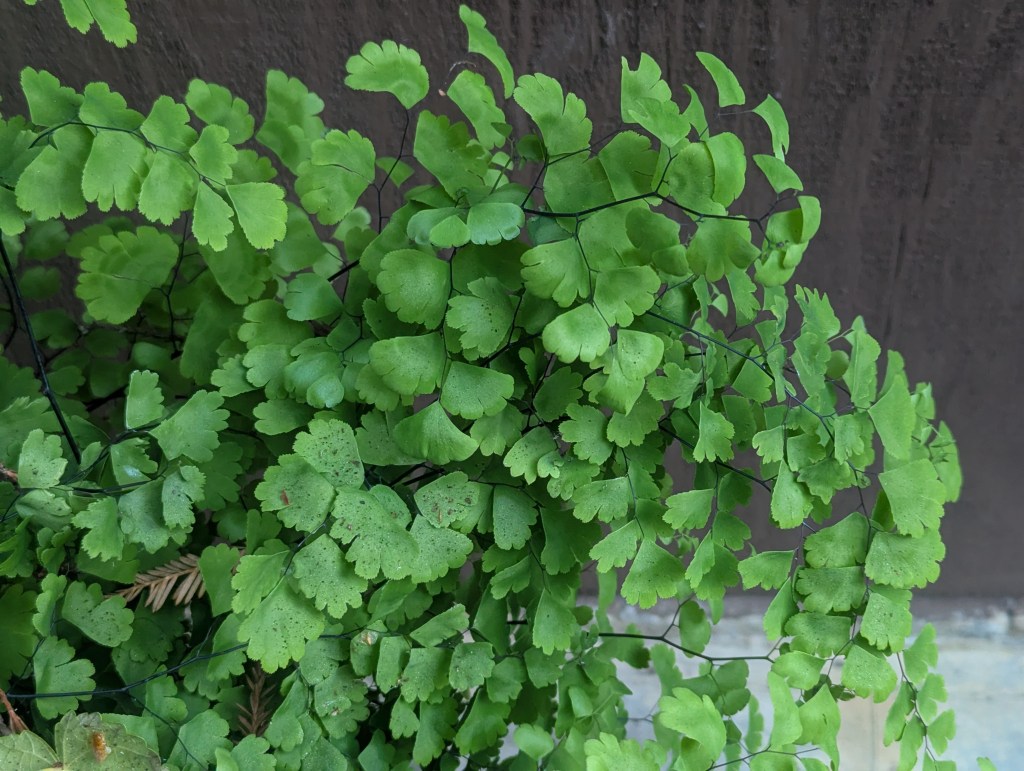
1. Adiantum capillus–veneris, Southern maidenhair fern replaces all its tired old foliage for autumn. It resembles native species of maidenhair fern, but with distinct foliar form.
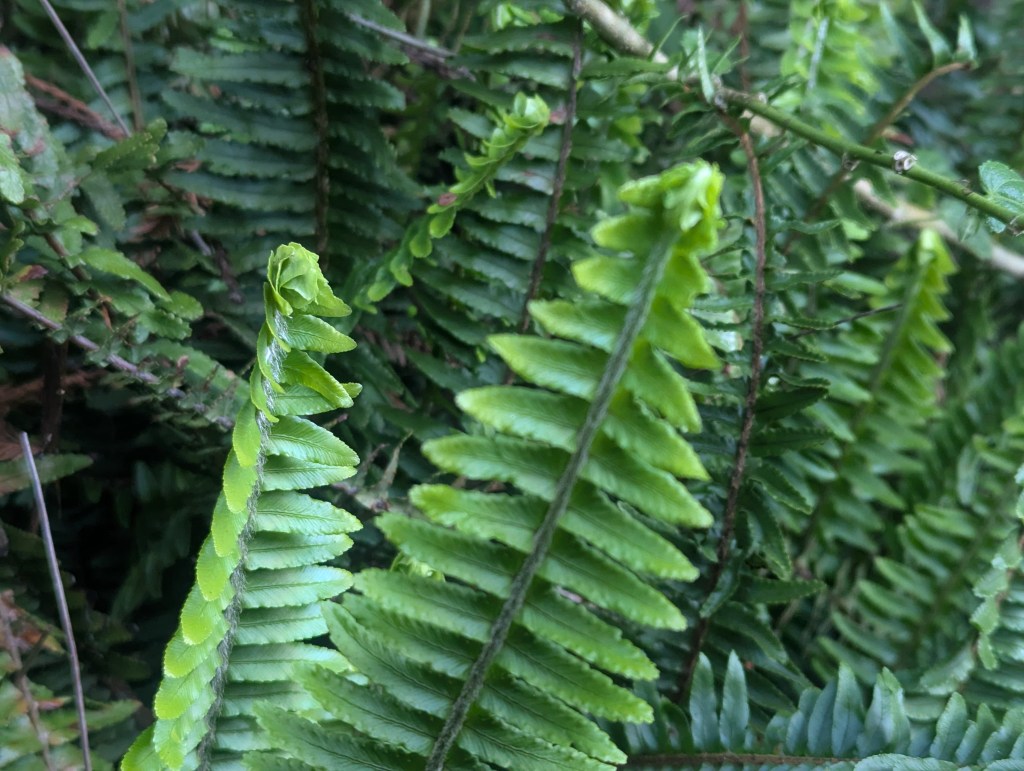
2. Nephrolepis cordifolia, sword fern remains within a big pot because it can be invasive in the ground. It is directly related to Boston fern, but is not quite as soft and pendulous.
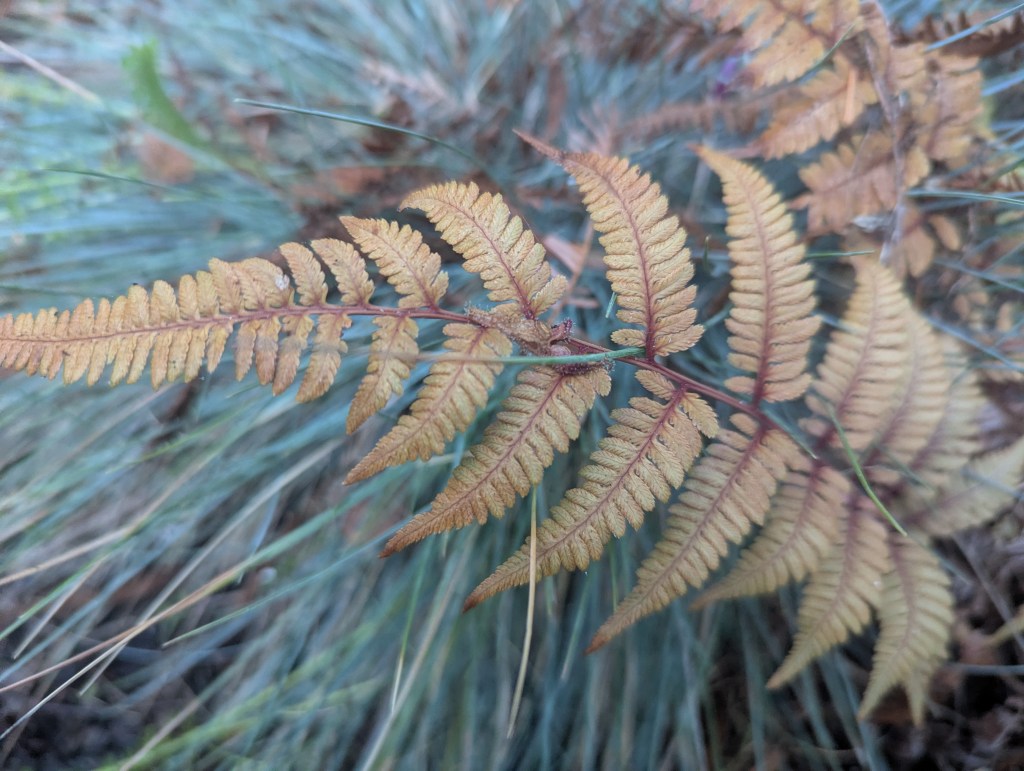
3. Dryopteris erythrosora, autumn fern is the only fern here that exhibits autumn foliar color. It is pretty, but quite diminutive. It is no bigger now than it was several years ago.
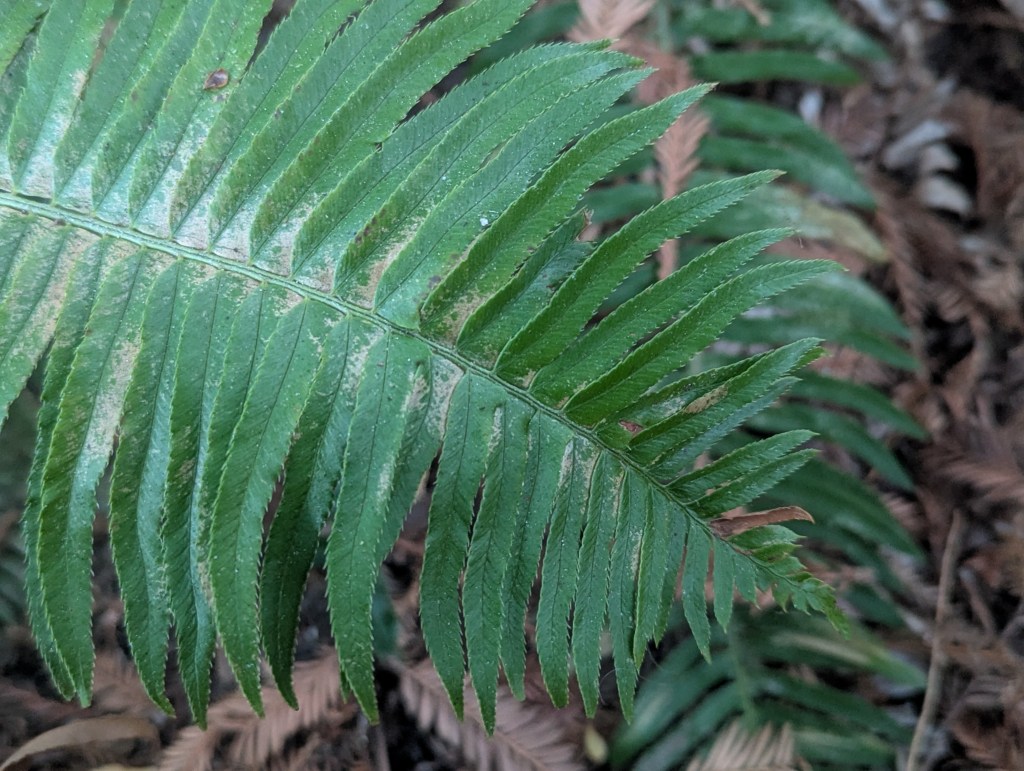
4. Polystichum munitum, Western sword fern and the next two ferns are native here. All three grow wild within some of our landscapes; and all are remarkably tolerant of shade.
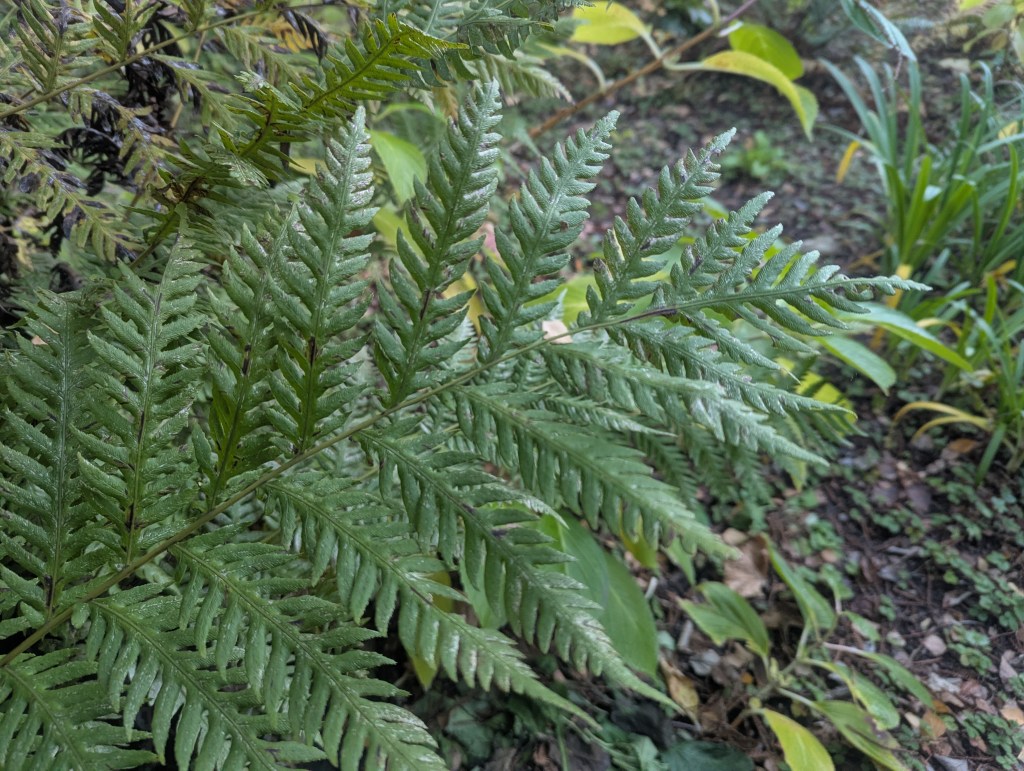
5. Athyrium filix–femina, lady fern is also known locally as ostrich plume fern, but is not related. It has tender leaves with almost succulent rachises that break easily if disturbed.
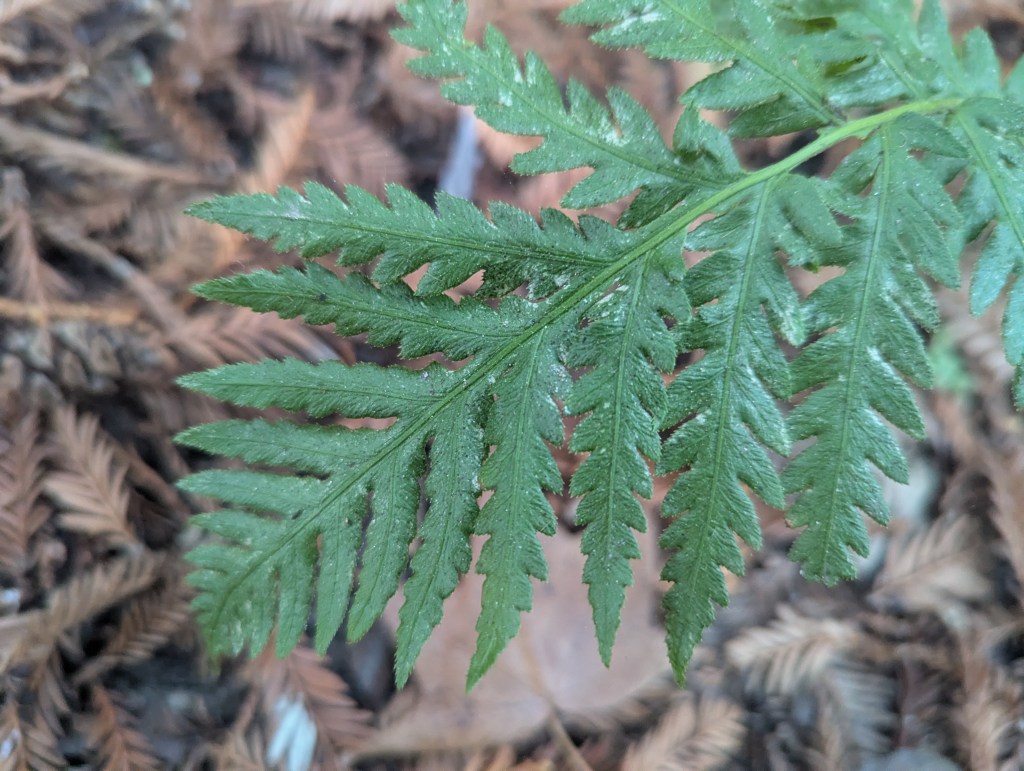
6. Woodwardia fimbriata, giant chain fern has a similar foliar texture, but is bigger and more resilient than lady fern. We sometimes need to remove big superfluous specimens.
This is the link for Six on Saturday, for anyone else who would like to participate: https://thepropagatorblog.wordpress.com/2017/09/18/six-on-saturday-a-participant-guide/
 Tony Tomeo
It’s a good idea to feature ferns this week!
LikeLiked by 1 person
Thank you. I could do it again for next week. There are quite a few ferns in redwood forests.
LikeLiked by 1 person
I am very fond of woodwardia, which probably is my favourite, although the maidenhair is a close second.
LikeLiked by 1 person
Woodwardia is a resilient one. We sometimes need to dig and relocate those that grow where we do not want them. Many grow where we do want them. I do not know how we got this maidenhair fern. It is fluffier than the native species. Both are good favorites.
LikeLiked by 1 person
This is a beautiful post! I love to observe and study ferns because they’re so graceful and lacy…and underappreciated!
LikeLiked by 1 person
Thank you. Ferns are common within redwood forests, and a few more are popular within home gardens amongst the redwoods.
LikeLike
Great compilation of the different species of ferns! It’s interesting to see just how different they all look when compared side to side.
Ferns seem to thrive in parts of our garden, so I’m sure we’ll keep some, as well.
LikeLiked by 1 person
Lady fern and giant chain fern look more similar in pictures than they do directly, but yes, there is considerable diversity among the ferns here.
LikeLiked by 1 person