This is why hummingbirds do not need to leave for the winter here. By the time autumn flowers finish blooming, a few sustaining winter flowers begin their bloom.
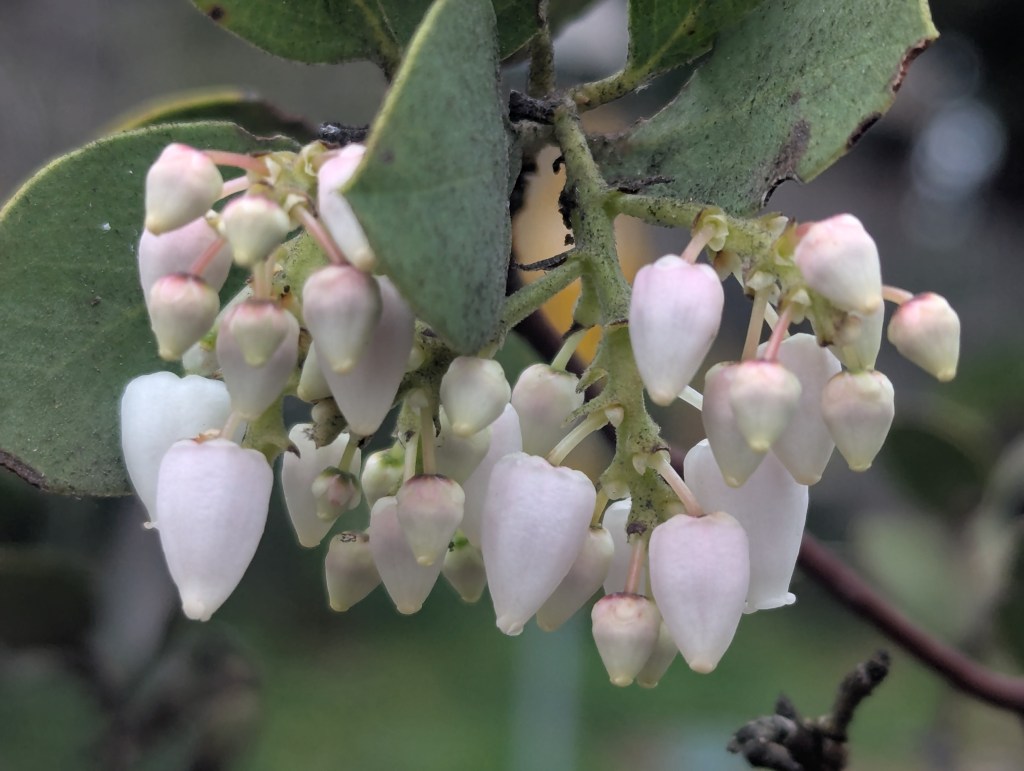
1. Arctostaphylos densiflora ‘Howard McMinn’ manzanita is the common cultivar of an uncommon species from Sonoma County to the North. It continues to bloom until April.
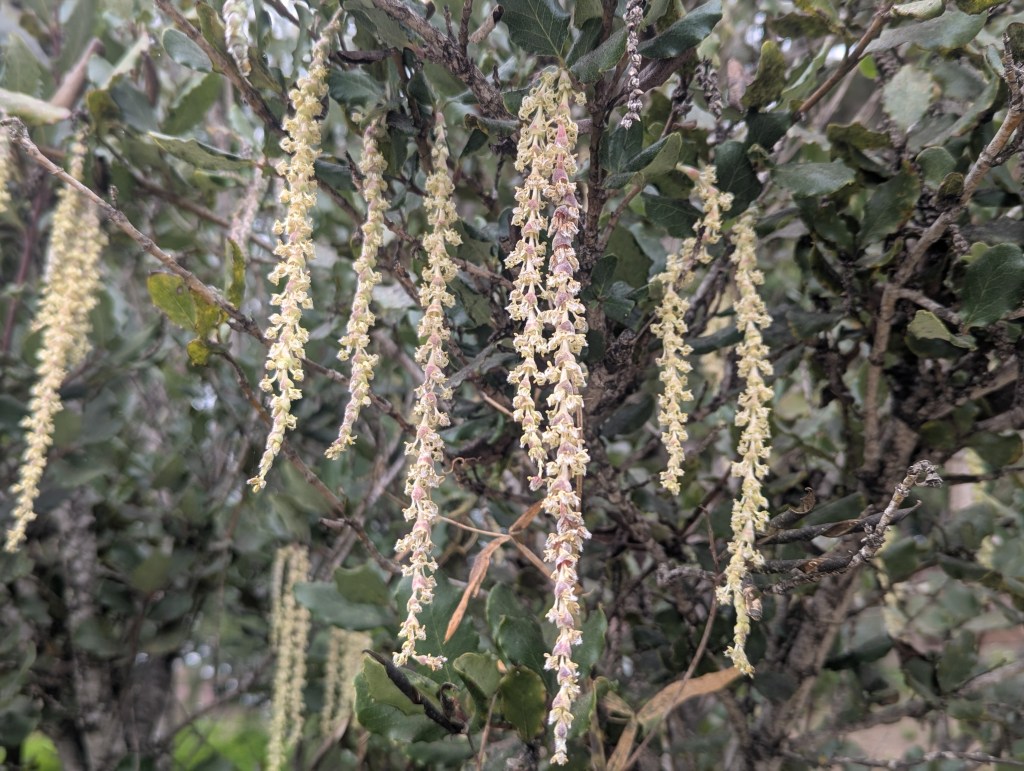
2. Garrya elliptica, silk tassel is native. This particular specimen and a few others in the landscapes were installed, though. They are surprisingly messy to work with and prune.
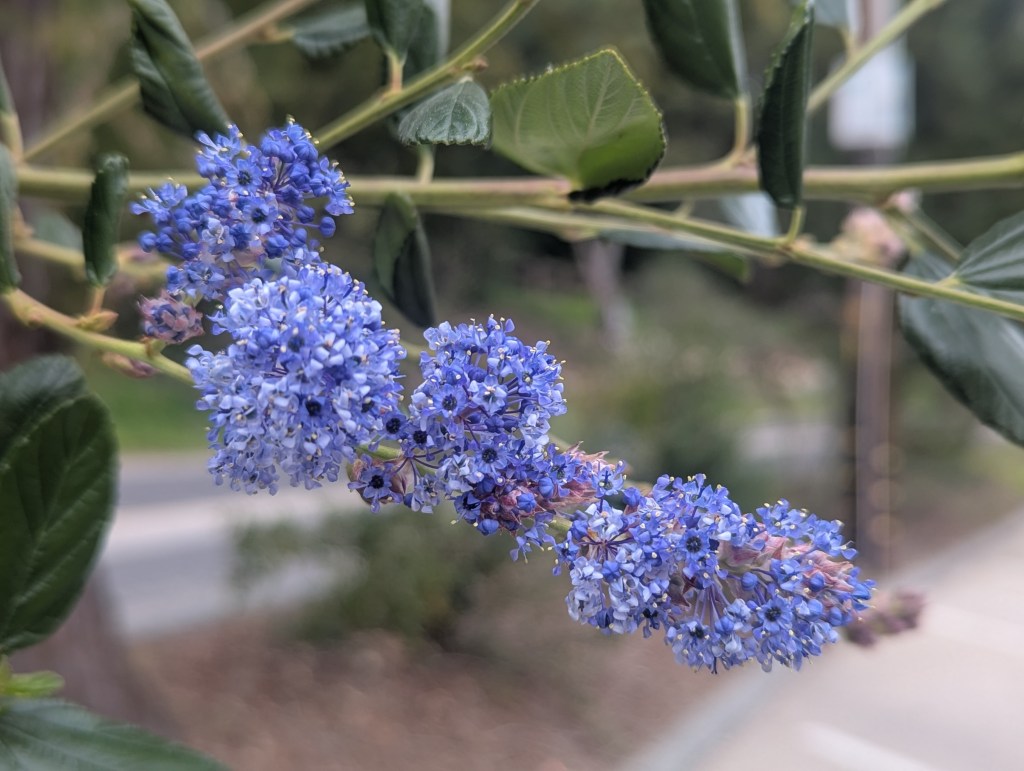
3. Ceanothus thyrsiflorus, California lilac is also native. I suspect that those that inhabit the landscapes were also installed. Their spacing is not haphazard enough to be natural.
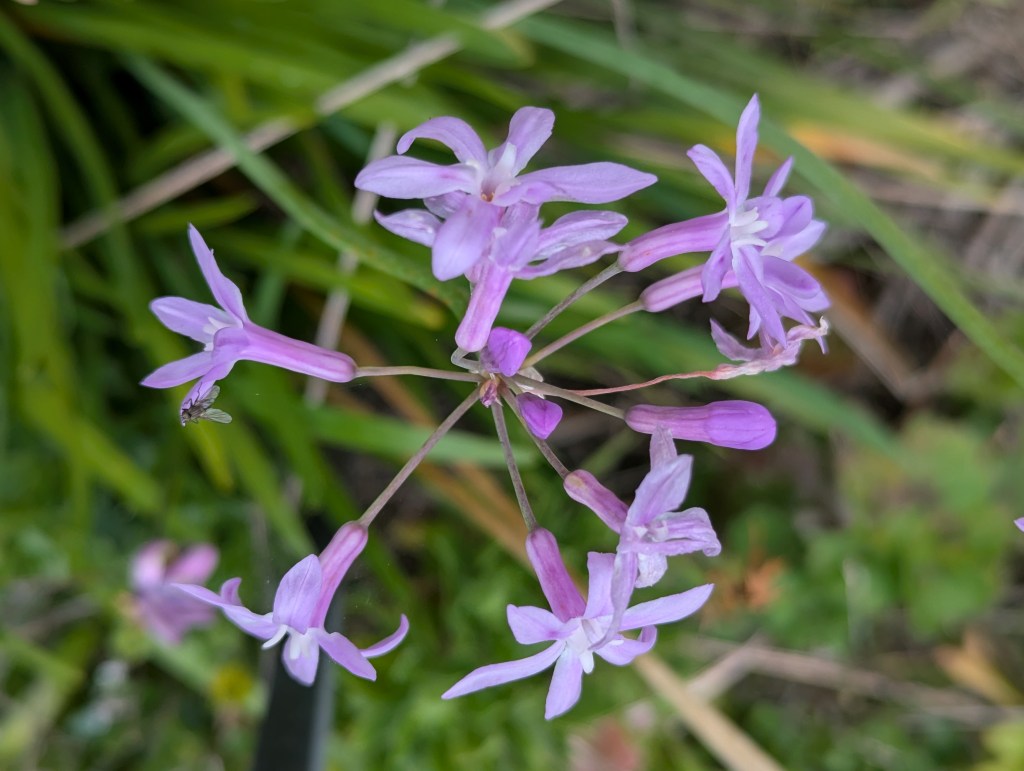
4. Tulbaghia violacea, society garlic is at its best for winter, not because it blooms more, but because it does not smell as objectionable as it will during warmer summer weather.
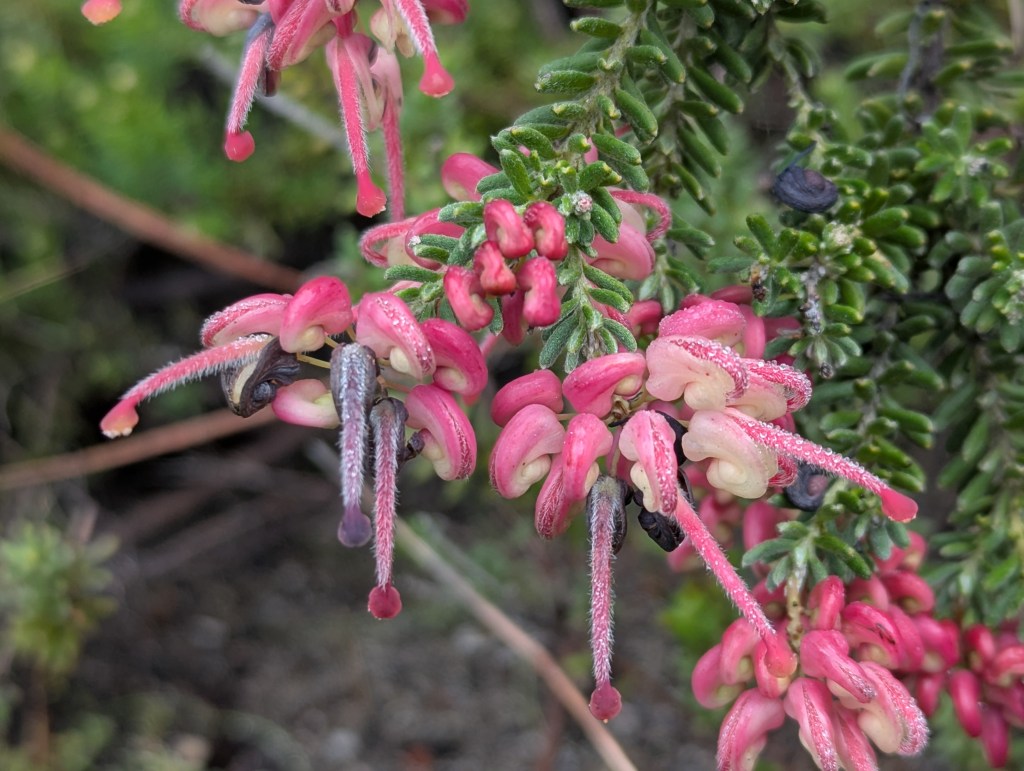
5. Grevillea spp. lost its identity. It seems to bloom continually. I can not remember ever seeing it without at least some bloom. Hummingbirds are very fond of it, especially now.
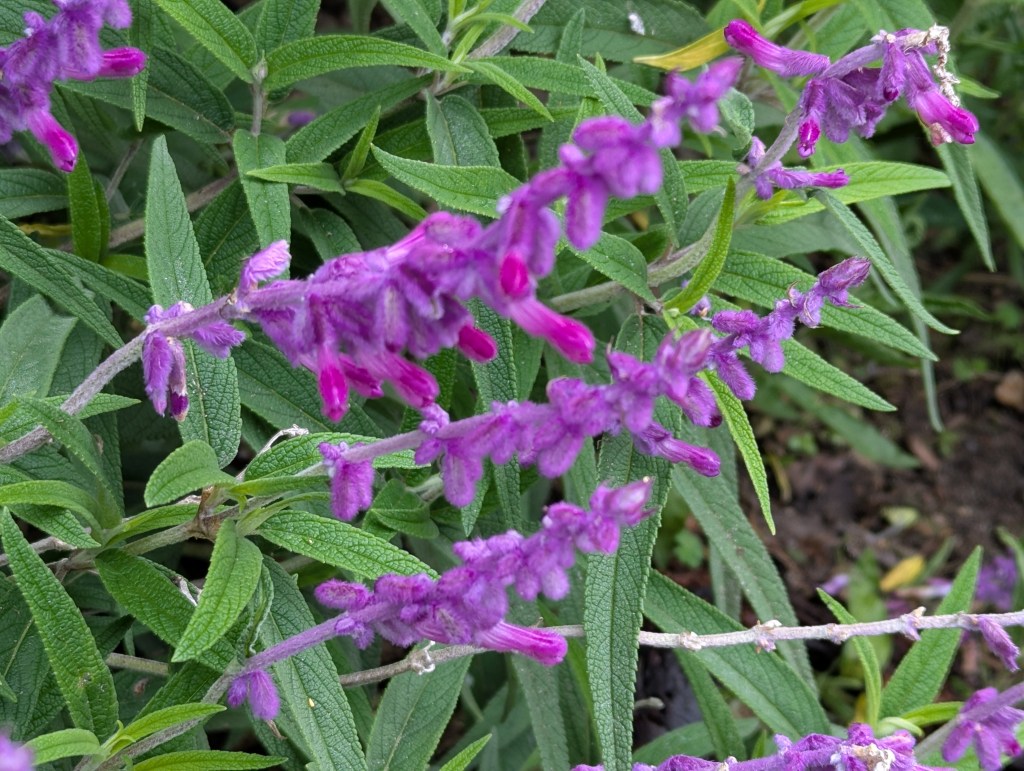
6. Salvia leucantha, Mexican blue sage bloom is fuzzy, but not quite as fuzzy as it seems to be in this unfocused picture. The camera was more interested in the foliage behind it.
This is the link for Six on Saturday, for anyone else who would like to participate: https://thepropagatorblog.wordpress.com/2017/09/18/six-on-saturday-a-participant-guide/
 Tony Tomeo
Excellent choice! What a pleasure to see all these flowers in January from our northern Europe, in the cold of winter!
LikeLiked by 1 person
Many natives bloom during winter because the weather is already getting warm and dry by spring. I suspect that the Grevillea and Salvia are also from chaparral climates. I do not know about Tulbaghia, but it seems to bloom whenever it wants to.
LikeLike
Well this warmed my chilly soul! I would so love to see a hummingbird in real life, it is on my bucket list. I have not heard of the top tree, is is ericaceous? I’m very fond of tulbaghia and the grevillea is a beauty. Top six Tony!
LikeLiked by 1 person
Yes, manzanita is ericaceous, like a small madrone. Hummingbirds are not much to see. They are not much bigger than big moths, but are much faster.
LikeLiked by 1 person
I have fond memories of horseback riding in San Diego county – up in Crest when California lilac was in bloom. It is lovely! The sage is also a good one! nice color!
LikeLiked by 1 person
California lilac is likely more prominent in Crest. It is more mixed with other vegetation here. I see more within landscapes than in the wild. (Those in our landscapes were likely installed there, rather than grown wild.)
LikeLike
I love grevilleas. Xera Plants from Portland offers many but they don’t mail order, sadly. I have a couple of new ones that might be too young to bloom in my lifetime and a ‘Canberra Gem’ that grew fast and does well.
Beautiful selection of flowers this week, Tony.
LikeLiked by 1 person
Thank you. I would not expect Grevilleas to be popular in the Portland region, since so many of them are chaparral species. (Perhaps I encounter only the chaparral species here.)
LikeLike
What a fabulous six. Such gorgeous colour to brighten up a gloomy January day. I love the grevillea.
LikeLiked by 1 person
Thank you. It has been so springlike here that we are concerned that more flowers will bloom, only to be ruined by rain when the rain eventually resumes.
LikeLike
Your pics are lovely, and it’s so interesting to learn a little about your native plants. California lilac is my favourite – I love these types of tiny clustered flowers. The society garlic is also very attractive.
LikeLiked by 1 person
Thank you. California lilac is prettier in the wild. It does not like the constraints of landscapes.
LikeLiked by 1 person
Hello, loved your SoS. I was especially enchanted with the California lilac….so pretty! Interested to hear the hummingbirds are fond of the Grevillea. That must be something special to witness.
LikeLiked by 1 person
Well, hummingbirds are so common here that nearby Mount Umunhum is named for them (in the indigenous language). I think it is odd, though, that an exotic flower is so popular with native hummingbirds. I would expect native hummingbirds to be more familiar with native flowers.
LikeLiked by 1 person
That is what I was thinking!
LikeLiked by 1 person
Native monarch butterflies do the same when they swarm the exotic blue gum and red gum eucalyptus bloom. It is very interesting.
LikeLiked by 1 person