Both of only two grand valley oaks at work are deteriorating. Sadly, the prognosis for the smaller of the two is not so good.
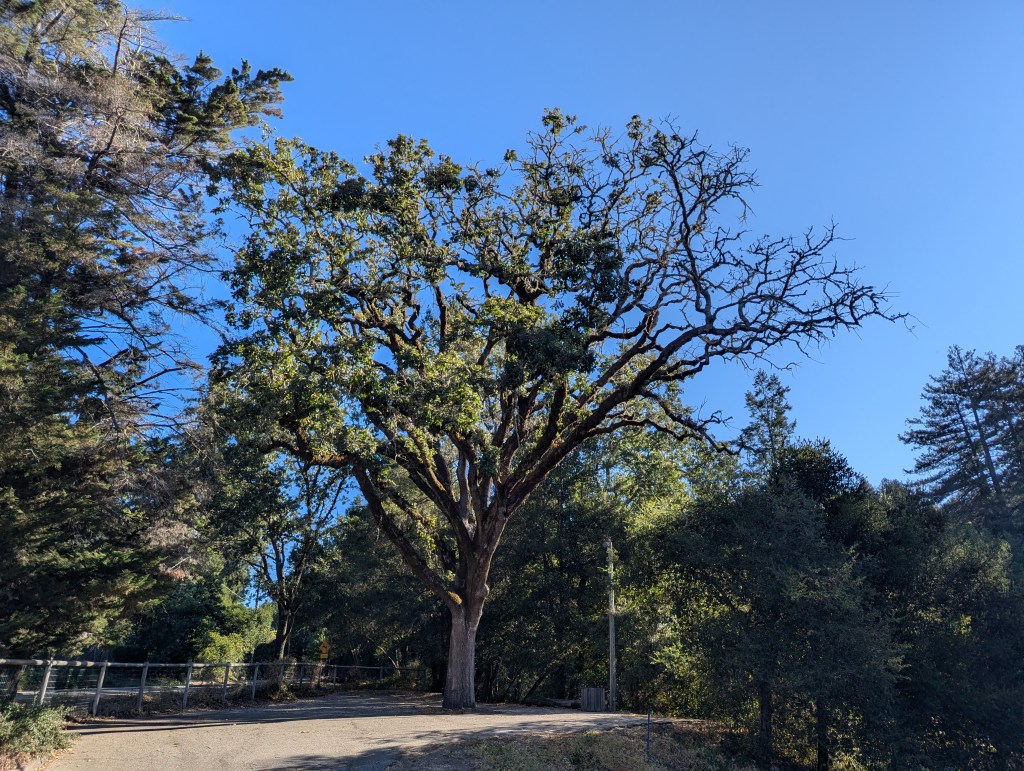
1. Quercus lobata, valley oak is obviously distressed. It should not start to defoliate until after cool weather later in autumn. Even then, defoliation should be more symmetrical.
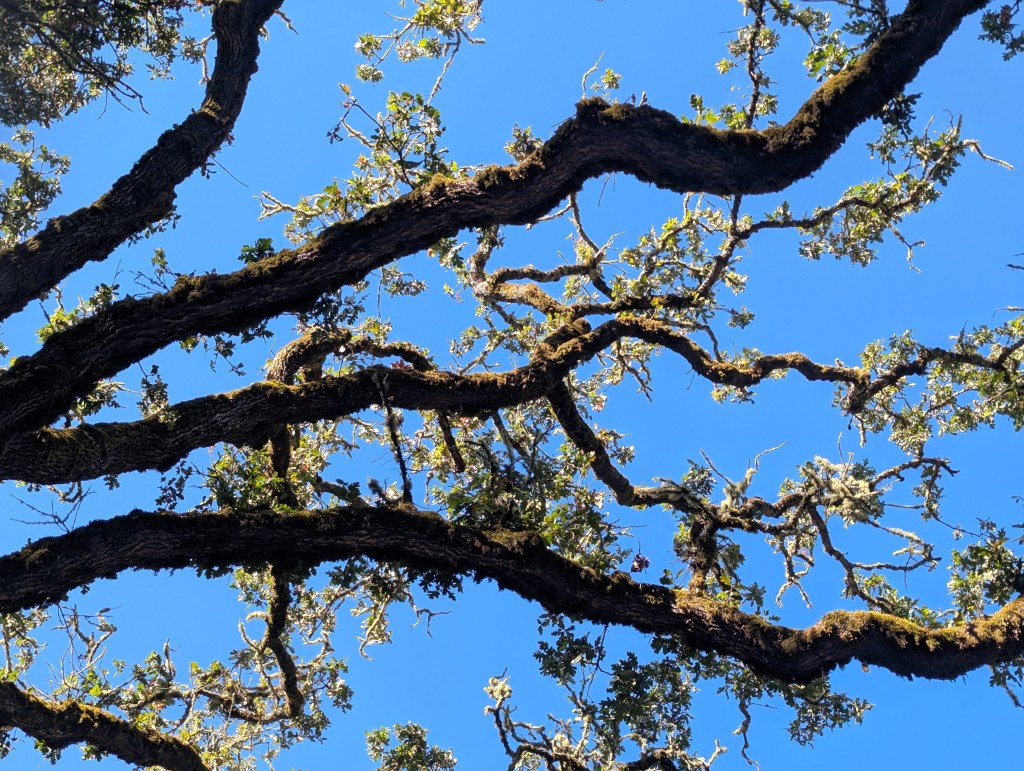
2. Upon closer inspection, fluffy and newer interior growth is evidently comprising most of the canopy, while the exterior of the canopy is notably sparse. It is not a new problem.
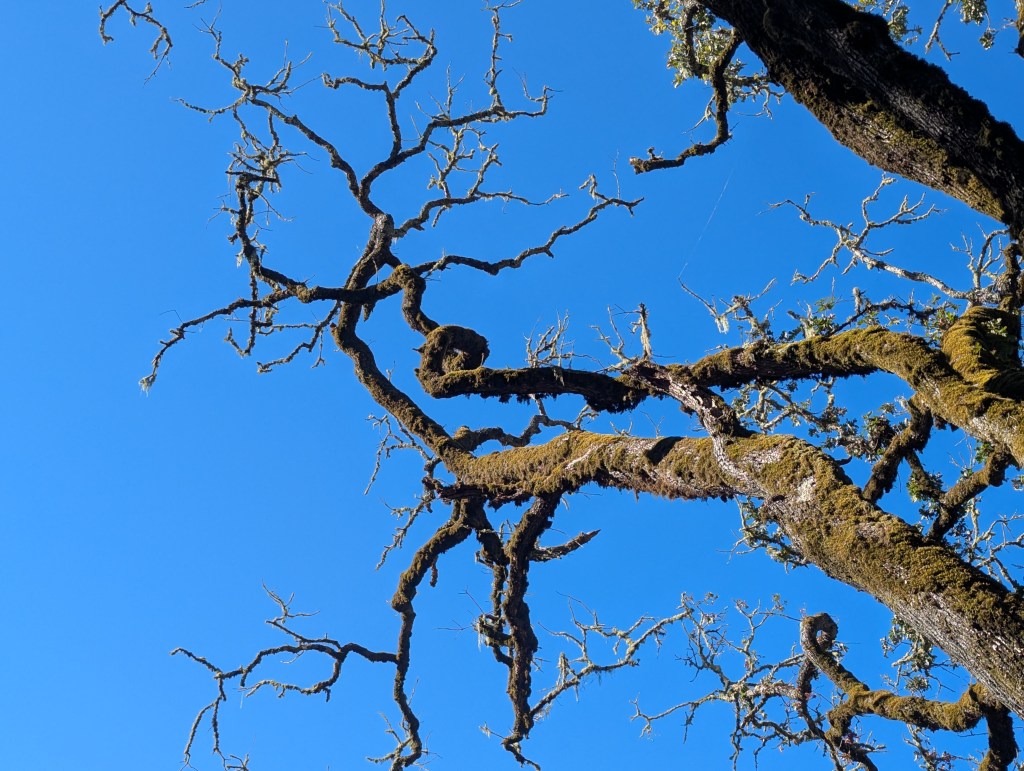
3. The defoliated portion of the canopy appears to be completely necrotic. No foliage can be seen. If the tree survives, removal of this portion will severely disfigure its symmetry.
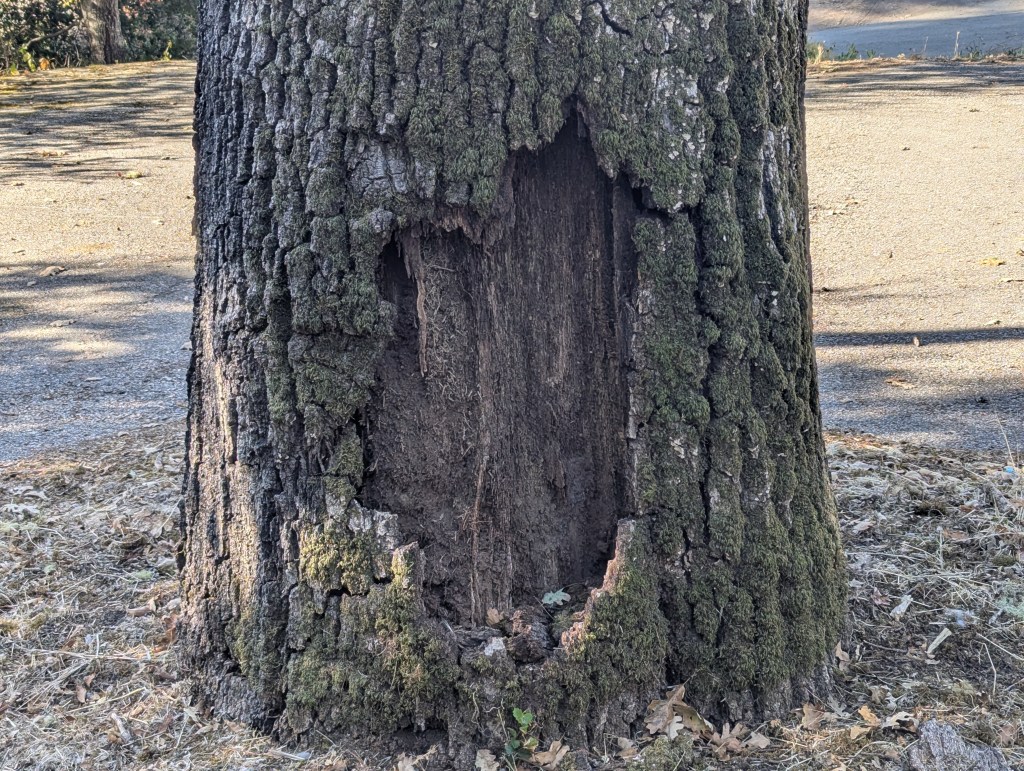
4. This significant cavity is developing on the formerly flawless trunk. The interior wood is badly decayed. Sadly, the tree may not live long enough for this to become a concern.
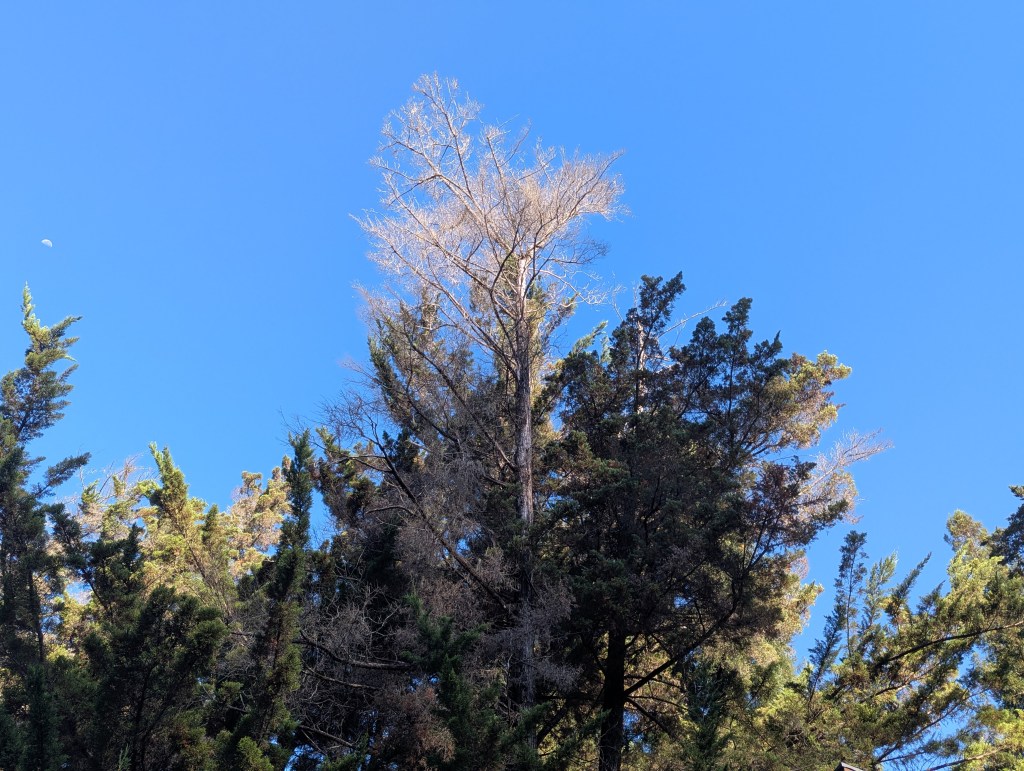
5. Cupressus macrocarpa, Monterey cypress, next to the valley oak, is likely succumbing to cypress bark canker. A few trees have already been removed. It is also a slow process.
6. Meanwhile, in other news, a collared mountain lion was seen on surveillance video in the neighborhood. We all know that they live here, but it is different to actually see one.
Anyone who would like to participate in this meme should peruse this participant guide for Six on Saturday.


These photos of twisted tree branches against that magnificent blue sky are stunning! Great job on the photos.
LikeLiked by 1 person
The valley oak is famously gnarly. This particular tree, although large, is not very old. They can live for centuries.
LikeLiked by 1 person
It is always with a sore heart that I view trees that are decaying, but I remind myself that this has been going on forever. What a great view of that feline, with its collar it must be being monitored. Thanks for sharing this with us. Have a great week. Noelle
LikeLiked by 1 person
Although death is natural, it will be saddening to lose such a prominent tree if it does not survive. Even if it does, the disfigurement will be saddening. The larger of the two trees is healthy, but structurally deficient. It has dropped huge limbs in the past, and may need to be removed for safety.
LikeLike
Wow, a mountain lion on video–thanks for sharing! That’s too bad about the tree issues at your work. We lost a mighty Oak in our woodland on New Year’s Day. We figure it was probably at least 100 years old, based on the diameter and the height (80 feet). It’s always sad to see a tree go, whether because of natural aging/progression or human impacts. Thanks for explaining the reasons for the trees’ deterioration.
LikeLiked by 1 person
Valley oaks commonly live for six centuries or so. This particular specimen is only about a century old. It was young in old pictures. Nonetheless, its deterioration is saddening.
LikeLike
Sorry about the trees. Is it sort of end of life leading to deteriorating health or environmental stress? Cool about the cougar! I knew someone in college who was an animal behaviorist and he spent summer of 1985 tracking them in southern California, Angeles National Forest and some other areas. He was shocked at how many he saw, though he was studying behavior, not trying to count how many there were.
LikeLiked by 1 person
The valley oak is likely succumbing to root damage caused by pavement over the area surrounding it. (It did not grow there with the pavement, but the pavement was added after it grew there.) It lived with the pavement for a few decades, but it can take that long for symptoms to develop. The cougar is cool, but is why I do not Rhody roam off leash.
LikeLiked by 1 person
Ahh. Well, what can a person do. Sometimes pavement is needed, or we can’t really control where things may get paved over, but it is sad to see a mature tree go.
When I lived in Seattle I had to keep my cat on a leash. She tried to go after an adult racoon once. I was glad she did not slip the harness. I do not think she would have done well in that fight. And then the coyotes. They will snatch a cat in a heartbeat, or a smaller dog. My current cat is terrified of the outdoors unless there is plate glass between her and it.
LikeLiked by 1 person
The tree was likely considered to be expendable at the time the pavement was installed. Besides, whoever installed the pavement likely did not consider that it could be so unhealthy for the tree.
LikeLike
Trees don’t like concrete? Who would have thought! I am amazed at the abuse that trees put up with.
LikeLiked by 1 person
The pavement would not have been a problem for the tree if the tree had grown up with it. The tree would have simply dispersed its feeder roots beyond the pavement. It was the change from unpaved to paved that was difficult for it.
LikeLiked by 1 person
Poor old trees. Very very impressive cat!
LikeLiked by 1 person
Skooter was an impressive cat. This mountain lion is just local wildlife.
LikeLike
Sad to see the valley oak going this way, especially with the decay cavity opening up in a trunk that used to be flawless. The photos of the fluffy interior growth against the sparse outer canopy are a useful clue for anyone wondering whether a big tree is in trouble. Hope the larger oak fares better.
LikeLiked by 1 person
Sadly, the other valley oak is also deteriorating, although in a different manner. It is vascularly healthy, but dropping large, seemingly healthy limbs. The water table is not far below the surface of the soil. I really do not know how it got as big as it did without breaking apart decades ago.
LikeLike