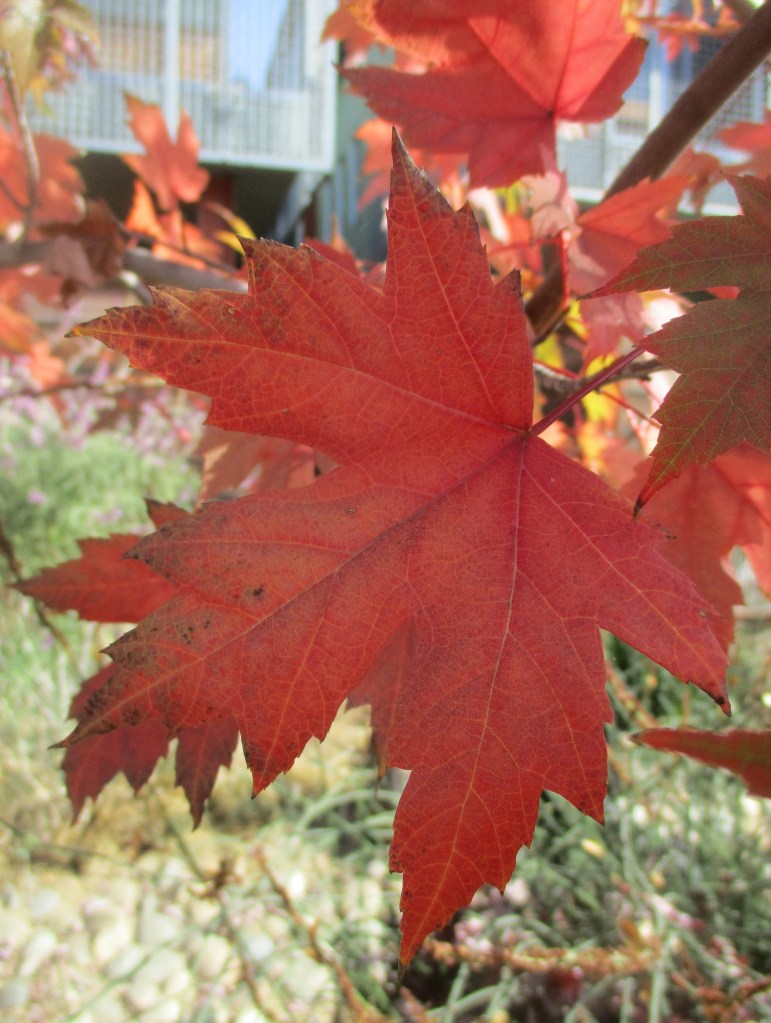
Autumn is known as fall for a reason. It is when foliage falls from deciduous plants. It is, of course, more interesting than that. Some deciduous foliage first provides spectacular autumn foliar color. Formerly green foliage turns bright yellow, orange, red or even dark purply red. Even some shades of brown are visually appealing as the weather changes.
All sorts of deciduous plants develop autumn foliar color. They can be shrubbery, vines, groundcovers or even perennials. The biggest and best are deciduous trees. Deciduous plants may seem to be messy, but that is only because they shed all at once. Many are tidy after autumn. Evergreen plants shed also but do so slower through longer seasons.
Sweetgum, or liquidambar, is likely the most familiar tree to produce autumn foliar color. It is also one of the messier deciduous trees. That is only because it does not shed all at once. Instead, it retains much of its color through autumn and perhaps into winter. Spiky seed capsules can become a nuisance among mature trees. Roots can be aggressive.
Chinese pistache is as colorful, with bright yellow, orange and red autumn foliar color. It seems to be a bit less messy because it sheds more efficiently. This means that it does not retain its color as late into autumn or winter. Its pinnately compound leaves fall apart into individual leaflets. These smaller leaflets take more effort to rake than larger leaves.
Ginkgo lacks orange and red autumn foliar color but excels at vividly bright yellow. It is a stately tree with tall and slender form. Modern cultivars are exclusively male, so can not generate messy and stinky fruit. While young, their roots are reasonably docile, which is why they are popular street trees. Ginkgo can defoliate prematurely, particularly in rain.
Although some deciduous plants do not develop autumn foliar color, several do. Quite a few options are available. Flowering pear and crape myrtle provide both foliar color and showy bloom. Flowering pear blooms white for spring. Crape myrtle blooms with various bright colors for summer. Boston ivy is a clinging vine that provides autumn foliar color. Smokebush is a big deciduous shrub that develops splendid color for autumn.


❤️😍🙌🏼🍂🧡🤗
LikeLiked by 1 person
Thank you.
LikeLiked by 1 person
Tony, the point about ginkgo’s docile young roots caught my eye — that’s exactly why it works so well as a street tree without heaving sidewalks early on, though I’d add that older ginkgos can eventually lift pavers if planted too close to a walkway or driveway edge. Here in Providence we see plenty of sweetgum and pear around older concrete walks, and root flare from those trees is a common reason slabs crack or tilt over time. Good reminder that fall color comes with maintenance tradeoffs. Do you find Chinese pistache holds up better near paved areas long-term?
LikeLiked by 1 person
Chinese pistache is the most popular street tree for a few municipalities here because it is supposedly such a good street tree. However, it needs pruning for clearance while young, and eventually displaces pavement. It seems to me that it displaces pavement at a younger age than ginkgo. I suspect that trees that are not overwatered develop more complaisant roots.
LikeLike