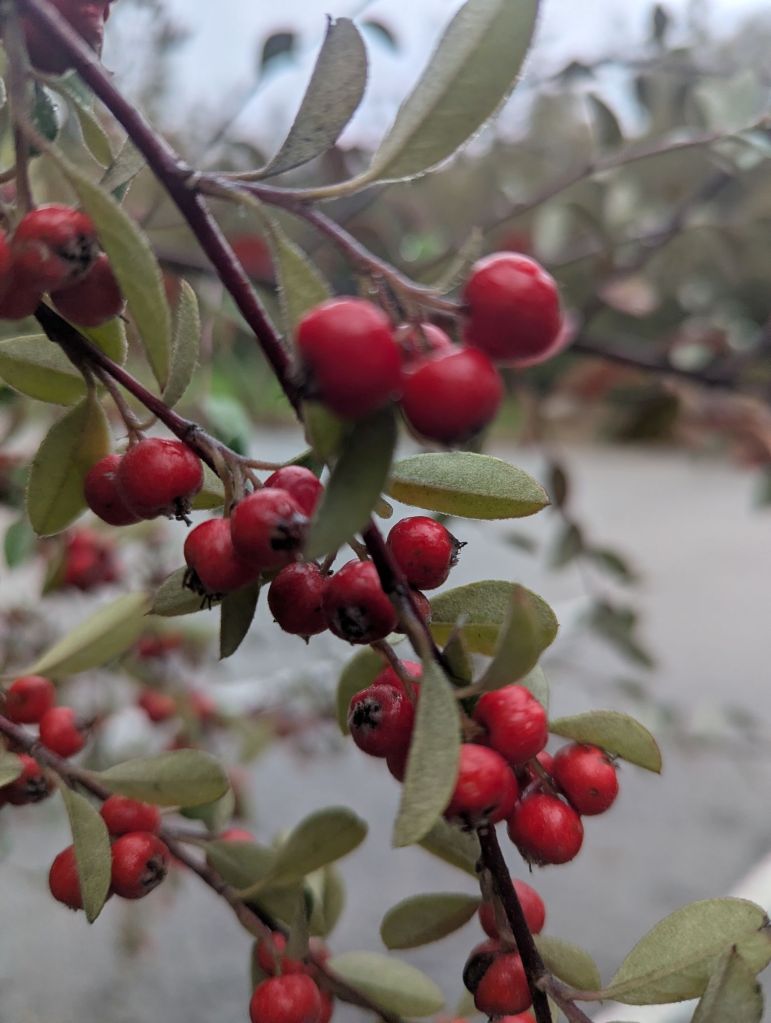
Autumn is time for planting. This is nothing new. Even plants that produce seed to ripen for autumn are aware of it. Birds and other wildlife unknowingly participate by dispersing such seed. Squirrels, for example, do not retrieve all the acorns they bury for storage. A few buried acorns grow into new oak trees. Colorful fruit and berries use a similar tactic.
It is a mutually beneficial relationship. Plants generate colorful berries that contain their seed. They do so for autumn when they want their seed dispersed. Birds consume such berries but do not digest the seed within. Such birds then disperse the undigested seed. Coincidentally, birds of all sorts consume more at that time for their autumnal migration.
To advertise, most berries that rely on birds for dispersion of seed are bright red. Some are bright orange. A few are bright yellow. Berries are both abundant and large enough to satisfy the birds who eat them. Yet they are small enough for birds to eat them whole. So, birds eat well while they simultaneously disperse seed for the plants that feed them.
These sorts of berries can add color to their gardens while floral bloom is less abundant. Alternatively, they attract birds and squirrels. Many garden enthusiasts enjoy them both for their color and for the wildlife they attract. Colorful berries generally ripen faster than wildlife can consume them. However, wildlife can sometimes eat them all as they ripen.
Firethorn is probably the most familiar and prolific of autumn and winter berries. It grows as large, evergreen and unfortunately very thorny shrubbery. English hawthorn is thorny also but grows as small and deciduous trees. Its fruit is not quite as prolific but becomes more exposed by defoliation. The native toyon is a thornless and evergreen alternative.
Some but not all cotoneaster are similarly prolific with their fruit. Even those that are not can produce a few berries. Most are evergreen shrubbery, while a few are groundcover. Holly are dioecious, so females can produce a few berries, but only if a male is nearby. Rowan are small deciduous trees with orange fruit but are unfortunately quite rare here. So are beautyberry, which are deciduous shrubs with pink fruit.

