These Bulbs Are Not Incandescent

Bulbs do not look too impressive.

It may seem to be too early to be concerned with narcissus, daffodil and grape hyacinth, but this is when their bulbs go into the garden. Once established, these familiar examples, as well as early bearded iris, can be the most reliable for colorful bloom at about the same time early each spring. Crocus and freesia bloom just as early, but may not naturalize as reliably. Lily, tulip, hyacinth, anemone and ranunculus really prefer cooler winters to bloom reliably after their first spring, even though they are worth growing for just one season.

Bulbs, including corms, rhizomes, tubers and tuberous roots, can be found in nurseries when it is time for them to be planted. Gladiolus are not yet available only because they are summer blooming bulbs that should be planted a bit later than spring bulbs. None of the bulbs are much to look at while dormant, and are even less impressive once they get buried out of sight, but they have already stored up everything they need for the blooms that we expect from them next year. Once hidden below the surface of the soil, seemingly dormant bulbs secretly disperse their roots into the surrounding cool and moist soil to be ready to bloom as soon as weather allows.

In their first year, some bulbs can be planted in groups at different times to coincide with the expected durations of their particular bloom cycles. For example, if the flowers of a particular type of bulb can be expected to last two weeks, a second phase of the same bulbs can be planted two weeks after the first phase. As the first phase finishes bloom next spring, the second phase should begin bloom. However, phasing is only effective for the first season, since all bulbs of any particular variety will be synchronized by their second season.

Anemone, ranunculus and bearded iris each bloom synchronously, regardless of when they get planted, so are immune to phasing. Fortunately, the many varieties of bearded iris have different bloom seasons. Some bloom as early as narcissus. Mid-season varieties bloom shortly afterward, and are followed by late varieties. Some modern varieties bloom early, and then again after the late varieties!

Firewood

As I have been recycling old articles such as this one for the past several weeks, it has been difficult to conform to the ‘Horridculture’ theme on Wednesdays. I will resume the tradition as I eventually resume writing new articles.

tonytomeo's avatarTony Tomeo

P71027Heating homes has certainly changed. It has gotten much more efficient and less polluting. Homes are much better insulated than they were only a few decades ago. Heating systems use much less fuel, and produce much cleaner exhaust. That is partly how more than a million people who live in San Jose now make less smog than when there were half as many.

The unfortunate part of that efficiency is the decline in popularity of traditional fireplaces and stoves. Burning wood is now politically incorrect, and at times, even illegal. ‘Spare the air’ days are strictly enforced when air quality gets unpleasant.

In San Jose, building codes do not allow fireplaces to be build into new homes. Only homes that were build with fireplaces or stoves prior to the ordinance are outfitted with them. Fireplaces that are damaged by earthquakes are often removed instead of repaired.

Tending a fire does…

View original post 184 more words

Abyssinian Gladiolus

Abyssinian gladiolus might still be blooming.

Summer bulbs and bulb like perennials bloom after spring bulbs. They therefore prefer later planting. Abyssinian gladiolus, Gladiolus murielae, is likely unavailable in nurseries while spring bulbs are seasonable. Their bulbs should be obtainable and ready for planting later, while other summer bulbs are in season. Abyssinian gladiolus blooms late in summer, or may still be blooming now.

Abyssinian gladiolus is more discreet than the more common hybrid gladiolus. It is also more reliably perennial. In favorable conditions, bulbs might multiply enough to be somewhat invasive. The narrow leaves stand more than two feet tall. Floral stems can be three feet tall, to loosely suspend a few white flowers with garnet red centers. Each mildly fragrant flower is about two inches wide.

The bulbs, which are technically corms, prefer organically rich soil that drains well. Digging and storing them through the locally mild winters is unnecessary. After many years, established colonies of bulbs might migrate upward and closer to the surface of the soil. Digging dormant bulbs that have gotten too shallow to stand upright while foliated, and burying them deeper, improves stability.

Spring Bulbs Begin In Autumn

Spring bulbs bloom months from now.

Spring bulbs lack immediate gratification. They will, of course, justify their habitation of the garden as they bloom next spring. For now, they are not much to look at, and do not stay visible for long. While dormant, they poses neither foliage nor significant roots. Most look something like small and disfigured onions. Burial in shallow graves conceals their uninteresting exteriors through winter.

Cool season bedding plants can effectively obscure the otherwise bare soil over the grave sites of some types of bulbs. Mulch might be best for those that should start to grow immediately or that will develop an abundance of foliage. While plants above them may need watering until the rainy season begins, dormant spring bulbs need no more attention. They disperse roots through winter.

Spring bulbs, including corms, rhizomes, tubers and tuberous roots, are oblivious to the discomforts of transplant while dormant. However, they want to wake from their dormancy in situations that are conducive to normal development and bloom. Some prefer shallow planting. Others require significant depth for stability. Most but not all spring bulbs perform best in small groups or colonies.

Narcissus, daffodil and crocus are the first spring bulbs to bloom as winter ends, or even earlier. Tulip, hyacinth, grape hyacinth, freesia, anemone, ranunculus and some types of iris bloom shortly afterward. Late iris, lily and montbretia bloom later, and some types are considered to be summer bulbs. Spring bulbs become available in nurseries while seasonable. Summer bulbs arrive later.

Most spring bulbs bloom only once. Plaiting them in phases a few weeks apart within their respective seasons can prolong bloom. Each subsequent phase begins bloom as the preceding phase finishes. However, narcissus, daffodil, grape hyacinth and others that can naturalize will bloom simultaneously after their first season. Most spring bulbs unfortunately do not naturalize reliably here.

Gladiolus and allium are summer bulbs that bloom once. Calla, canna and dahlia bloom through summer.

Anatomically Correct Horticulture

tonytomeo's avatarTony Tomeo

P71026Certain fruits and vegetables were so much more palatable before studying botany. Knowing what they really are sort of puts a damper on things.

Real fruits, including those known as vegetables, are no problem. We all know what they are, and they have the seeds to prove it. Just like flowers reward pollinators with nectar, many plants use fruit to get animals and people to disperse their seeds. Therefore, the fruit is designed to be eaten.

The majority of vegetables are fine too. It seems natural to eat leaves, stems, roots and even flowers. Things get a bit weird with petioles of rhubarb, celery and cardoon, since the leaves are not eaten. Cinnamon bark and saffron stamens also seems a bit odd. What about maple syrup? Is it a vegetable too?

Then there are fruits and vegetables that are not what we think they are.

You will never look at…

View original post 310 more words

Butterfly

tonytomeo's avatarTony Tomeo

P71022Before you send me a comment about it, I am already aware that this is a very bad picture. It was taken with my primitive telephone because it was convenient at the time. This tired looking butterfly might not have waited for me to get the camera. It passed away, seemingly peacefully, right there on the hood of the old Chevrolet. It did not seem to be injured in any way. It probably simply expired like butterflies do after breeding. It is a natural process that the butterfly did not seem to be too distressed about. It gets no obituary because I am not qualified to write one. We are not sufficiently acquainted. I do not even know the specie of this butterfly.

Now that he or she is deceased, I ponder the beauty of these insects. They are so graceful and very colorful. They flutter about like animated flowers…

View original post 237 more words

Six on Saturday: Another Quarter

Getting there is half the fun, but only half of that fun was illustrated last week. This it the remaining half of half the fun, . . . which is technically a ‘quarter’. The pictures are not very colorful. Mine are very often like that for Six on Saturday. I am sorry that I got no picture of Rhody.

1. Rhody’s meadow next door was a baseball field. It may eventually be restored. For now, compost piles occupy the edge of right field. The railroad bridge of last week is in the background.

2. Toasted leaves remain evident in undisturbed areas. There has been no rain to accelerate decomposition. It is disconcerting to see so many amongst combustible dried vegetation like this.

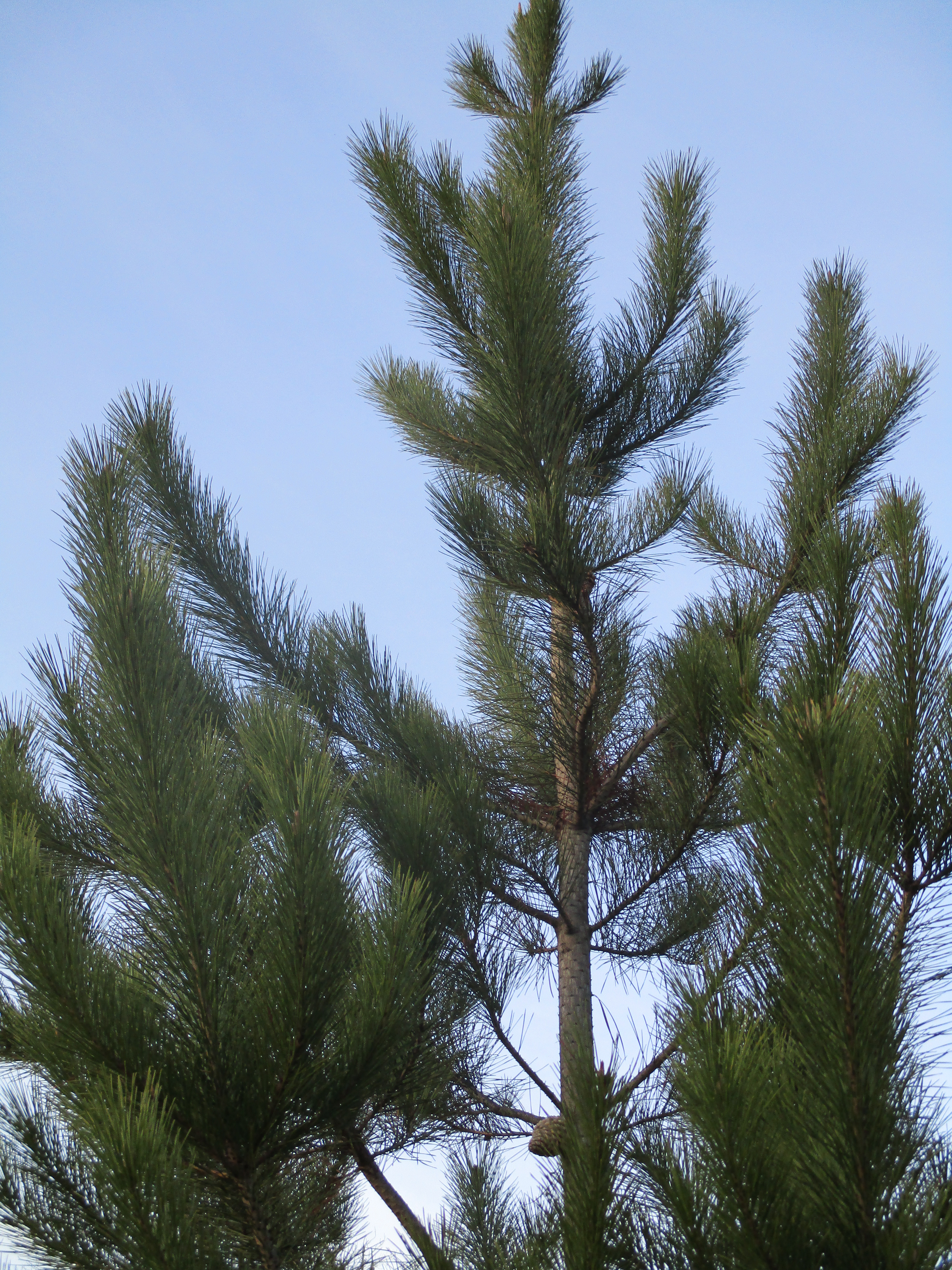
3. Charlie Brown’s Christmas Tree lives here. It is a baby ponderosa pine, which seems out of place among redwood forest. Those are sickly Monterey cypress in the background to the right.

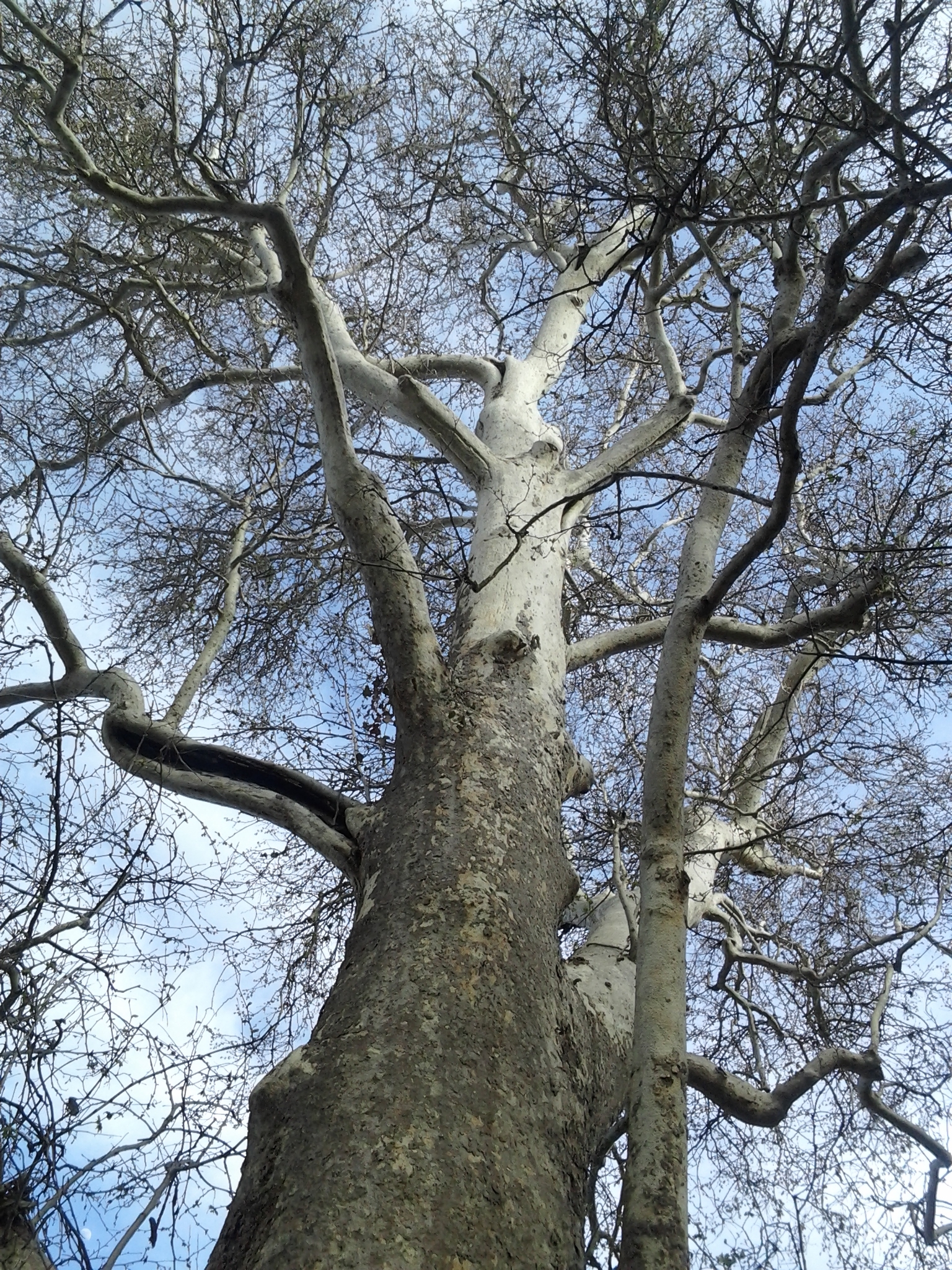
4. Trinity Tree was about this tall in historic pictures from more than a century ago. It is only plumper now. It may have been rejected from earlier harvest because it is so thickly branched.

5. California buckeye seed pods, or whatever they are, look even sillier than what the English know as conkers of red horse chestnut, because they linger after summer defoliation. This is an odd species that defoliates during the arid warmth of summer, refoliates for late autumn, and defoliates again after it gets frosted in winter, only to foliate late in winter to repeat the process.

6. Yuck! I detest carpet roses. Besides this pink colony at the Depot, there is a red hedge in another landscape. Without a picture of Rhody, it seems polite to add at least one colorful picture.

This is the link for Six on Saturday, for anyone else who would like to participate:

https://thepropagatorblog.wordpress.com/2017/09/18/six-on-saturday-a-participant-guide/

Angelonia

This annual can actually be perennial.

Angelonia is one of those warm season annuals that can actually survive through winter as a pernnial to bloom again next spring. It may even want to continue to bloom untill frost. The flowers can be blue, purple, red, pink or white, and look something like small snapdragon flowers. Most have spots or stripes of an alternate color or two in their throats. Some modern varieties have fragrant flowers. Plants can get a foot or two tall, and almost as wide. In sheltered spots, angelonia can be cut back as soon as it starts to look tired in autumn. Exposed plants might be happier if cut back significantly later, as winter ends. Old growth may be unsightly for a while, but can protect interior stems and roots from frost. Besides, pruning stimulates new growth that will be more susceptible to subsequent frost.

October Brings Cool Season Annuals

Warm season annuals are now passe.

As the name implies, ‘annuals’ need to be replaced ‘annually’. What is worse is that they do not even function for an entire year, but only for a specific season. Cool season annuals mostly work from autumn to spring. Warm season annuals mostly work from spring to autumn. Calendula is a popular cool season annual that may not last even that long, since it can mildew half way through winter.

Now that it is time for cool season annuals, it can be unpleasant to remove warm season annuals that are still performing well. In mixed plantings, new annuals can be phased in through autumn as older annuals deteriorate. Busy Lizzie (impatiens), wax begonia and other warm season annuals that are actually perennials can get cut back and overplanted with cool season annuals. The cool season annuals that temporarily overwhelm them can provide shelter from frost. As the cool season annuals finish next spring, the warm season ‘annuals’ can regenerate

However, not all cool season annuals need to finish next spring. Sweet William, cyclamen, chrysanthemum and the various primroses are popular cool season annals that are actually perennials. When the time comes, they can be overplanted with warm season annuals, so that they can regenerate the following autumn. In cool spots, sweet William and some primroses can actually perform all year. (Some people are allergic to primroses like poison oak.)

Alyssum and nasturtium really are annuals, but can function both as warm season and cool season annuals. They sow their own seeds so that new plants can reliably replace old plants without being noticed. The old plants only need to be pulled as they deteriorate. Alyssum is white, or pastel hues of pink or purple. Nasturtium is just the opposite, with bright hues of yellow, orange and red, with only a few pastel options.

Pansies and smaller violas are the two most popular of cool season annuals, since they function like petunias for cool weather. They lack few colors. Most have two or three colors. Ornamental cabbage and kale produce big and bold rosettes of pink, white or pink and white foliage. Kale has weirdly distinctive foliar texture. White, lavender, pink, purple and rose stock is the most fragrant of cool season annuals, and taller varieties are great for cutting. Iceland poppy has delicately nodding flowers on wiry stems. They can be pastel hues of white, pink, yellow, orange or soft red.

Planned Obsolescence

This is another recycled article. I still do not yet know when I can resume writing new articles.

tonytomeo's avatarTony Tomeo

P71028For my exquisite 1979 Electra, planned obsolescence did not work out so well. It was probably a grand Buick for that time, and one of the last with tail fins! It was elegant. It was big. It was steel. It was made to last ten years or 100,000 miles . . . and that was it. Seriously, as much as I enjoyed that car, it did not want go to much farther than it was designed to go. It limped along for almost 20,000 miles more, but was not happy about it, and was really tired and worn out by the time it went to Buick Heaven.

Planned obsolescence used to mean something completely different in landscaping. Yes, we all know what it means now; that many of the so called ‘sustainable’ modern cultivars last only a few years so that they need to be replaced sooner than older cultivars…

View original post 315 more words