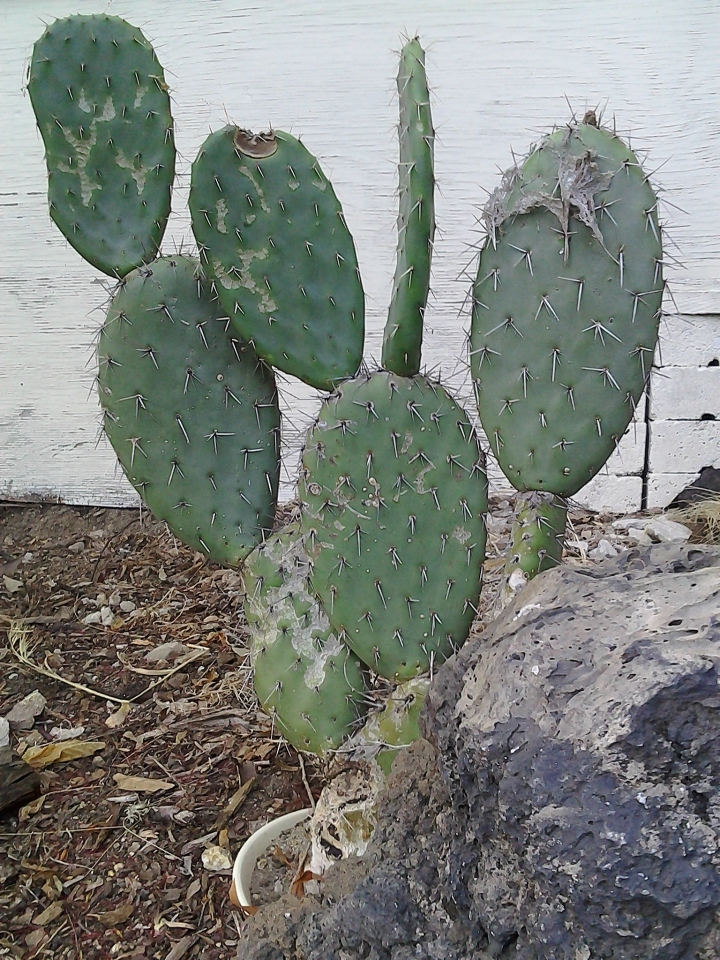
Cacti Are Notorious For Nonconformity

80808thumbAlmost everyone thinks of cacti as tough plants that live out in the hottest and driest parts of the deserts, where few other plants can survive. They are the sorts of plants that we threaten to plant out in the most inhospitable or neglected parts of the garden. We never actually do so, just because we do not appreciate cacti any more than weeds. They are fine over in the neighbor’s garden.

Whether we like them or not, cacti really deserve more respect than that. Even if they do not fit our style of landscape, they are striking and distinctive features within the landscapes that they are adapted to. Except for a few euphorbs that look sort of like cacti, there are no substitutes for their form and, of course, their texture! The uniquely specialized physiology of cacti is extraordinary.

Cacti really are built for the desert. In a climate where heat and arid air desiccates foliage, cacti do without. Photosynthesis is done in the green skin of the distended stems. Furrows in the stems of some cacti increase surface area for photosynthesis, but still expose far less surface area to the weather than individual leaves would. The succulent flesh of the distended stems stores water.

The foliage is not totally lacking. It is merely modified into sharp spines or irritating glochids with which cacti protect their succulent flesh from animals. Spines of the old man cactus are elongated into coarse hair that diffuses the intensity of the sunlight that might otherwise scorch the green skin below. Bigger thorns that extend beyond the spines within each tuft are actually modified stems.

Cacti certainly put significant effort into surviving desert climates; but surprisingly, most cacti do not even live in deserts, and many live in tropical rainforests of South and Central America! Some have weirdly pendulous stem structure, and some are epiphytic, so they hang from limbs of larger trees. In regions where most insect and animal activity is at night, cacti bloom nocturnally, with big luminescent and fragrant flowers that appeal to moths, bats and their associates.

Enjoy The Fruits Of Summer

70726thumbIs a prune really just a dried plum? No! A plum is really a prune. In fact, all ‘stone fruit’ are of the same prune genus known as Prunus. This means that apricot, cherry, peach, nectarine, prune, plum and even almond are all related. So are all their weird and trendy hybrids, such as aprium, pluots, plumcots and so on. (Almonds are the pits or ‘stones’ of dry leathery fruits that fall away as hulls.)

The main difference between prunes and plums is that prunes contain enough sugar to inhibit mold while they dry, . . . if they dry efficiently enough. Plums are juicier and contain less sugar, so are more likely to mold before they dry. If dried in a dehydrator, plums get squishy, and are likely to develop an odd flavor. Most prunes are European. Most popular plums are of Japanese descent.

The wrinkly and leathery fruit that most of us know as prunes are actually ‘dried’ prunes. Fresh prunes can be eaten just like plums, but are firmer, and have milder flavor. They are better for juicing, canning (whole, while firm) and cooking, although plums make better jam. Plums have richer flavor for eating fresh. Because they are so soft, they do not juice as well, but make nice plum nectar.

Apricots are not quite as easy to dry as prunes are. They must either be dried quickly in a dehydrator of some sort, or sulfured; and sulfuring is probably too much work for most of us. Most of the apriums, pluots, plumcots and other weird apricot hybrids that have become so trendy in the past many years are too soft for drying or canning. Like plums, peaches and nectarines, fresh is best.

Fruit that ripens evenly throughout the tree is best for canning, freezing, drying or any technique that takes large volumes of fruit at once. Uneven ripening is better for fruit eaten fresh. It allows later fruit to continue ripening while the earliest fruit is being consumed. The problem is that the best stone fruits ripen very evenly, all at the same time. If not shared with neighbors, some is sure to rot.

If some of the fruit ripens later than the rest, it will be inside the shadiest part of the canopy. The most exposed fruit on the exterior of the canopy ripens first, and for most types of fruit, has the best flavor. After all fruit is harvested from a tree, any remaining bad fruit should be removed from the tree, and from the ground around the tree. Diseases proliferate, and later overwinter in rotting fruit.

Summer Weather Can Scorch Foliage

80801thumbSevere summer weather is something that we think that we do not need to contend with. It only rarely gets as unbearably hot here as it does elsewhere, and when it does, it usually gets breezy by evening, and somewhat cooler overnight. Aridity, or the lack of humidity, is another advantage, at least for us. The plants in our gardens are affected by warm weather very differently than we are.

Plants will tolerate significantly more warmth than we will, but only in conjunction with humidity. In our climate, we get one or the other, but not often both. In fact, humid warmth is so rare here, that when it happens, it causes spontaneous limb failure in trees that are not accustomed to it. Spontaneous limb failure occurs as vascular activity accelerated by warmth increases foliar weight, but humidity inhibits evapotranspiration (evaporation of moisture from foliar surfaces) that would decrease the weight.

The aridity and breezes that make warmth more comfortable for us accelerate evapotranspiration, which increases the need for moisture. Plants that lack adequate moisture wilt, and the foliage of some can get dehydrated or scorched. Wilted plants recover if watered soon enough. Dehydrated foliage is crispy and can not recover. Severe dehydration kills buds, stems and entire plants.

Scorch is quite different from dehydration. It happens as overly exposed foliage literally gets cooked by sunlight. It is similar to sun scald on formerly shaded bark that gets cooked by sunlight after being exposed by pruning or other means of removal of adjacent vegetation. Scorch is more likely on inner foliage that had been recently exposed by pruning, or foliage near reflective surfaces.

Foliage can not recover from scorch. Damage is permanent, and should not even be pruned away. Just like foliage damaged by frost, outer foliage damaged by scorch shelters the inner foliage. Removal of damaged foliage exposes foliage behind it to subsequent damage. Besides, scorch typically damages only parts of individual leaves, so that undamaged parts continue to function.

Flowers Are Only The Beginning

70719thumbFlowers have a bigger and better agenda than coloring our gardens and homes. They bloom to get pollinated. Their color and fragrance are designed merely to attract pollinators. Less vain but more abundant blooms take advantage of the wind to disperse their pollen. Once pollinated, flowers fade and deteriorate as resources get diverted to the production of seed and fruit to contain it.

Some flowers are on a tight schedule. They bloom in a single brief season. Others have a bloom season that last significantly longer than the individual flowers do. They might bloom continually for a few months, replacing fading older flowers with new flowers; or they might bloom in phases, with each phase blooming simultaneously, and then getting replaced with a subsequent phase.

Fruit trees and many fruiting vegetable plants bloom once annually, and then produce fruit. Tomato, summer squash and bean plants bloom and produce fruit continually. Tomato fruits are best if allowed to ripen on the vine. Beans and summer squash like zucchini are better if harvested while young and tender. Also, the plants are more productive if regularly deprived of premature fruit.

The priority of these plants is to produce seed. Production of seed requires significant resources. Plants that are busy producing seed within maturing beans and zucchini do not put much effort into producing subsequent bloom and fruit. However, if deprived of maturing seed and fruit, these sorts of plants are compelled to divert resources into new bloom, and seed and fruit production.

The same applies to many flowering plants, particularly perennials and flowering annuals. ‘Deadheading’ is the removal of deteriorating flowers to promote continued bloom. It is not practical for plants with profuse small flower, such as sweet alyssum and lobelia. Nor is it necessary for some sterile or nearly sterile plants that do not produce much seed anyway, like busy Lizzy (impatiens).

French marigold, petunia, zinnia, floss flower and cockscomb all bloom better if deadheaded. Rhododendrons do not benefit directly from deadheading, but look better without old floral trusses. Conversely, the potentially picturesque dead flowers of sea holly might be left intact.

Weed Seeds Can Hurt Pets

80725thumbPlants are quite ingenious with their technology of exploitation of animals and people. Many get insects, birds, bats, spiders and anyone who is animated within their environment to disperse the plants’ pollen for them. Plants who prefer to not rely on wind, water or gravity to disperse their seed exploit a different range of animals to do so. They know how to compensate for their immobility.
This sort of exploitation is generally not as bad as it sounds. Many pollinators are rewarded for their service with nectar or surplus pollen. Dispersion of many types of seed is likewise rewarded with the fruit that surrounds the seed. Many types of nuts produce significant surpluses of seed to reward squirrels for burying them, and leaving just a few to germinate and grow into new plants.

However, there are many types of seed that are not so gracious, and several that are potentially dangerous because of the tactics they use to exploit those who disperse them. Mistletoe is an odd parasitic plant that makes very sticky berries. Those that do not get eaten by birds (for later ‘deposit’) can stick to the feet or feathers of unconsenting birds in order to catch a ride to other trees.

It is sneaky but effective. Most other plants that use this technique are small annual plants that rely on mammals instead of birds. Instead of sticking to feathers, their seed are designed to stick to fur. Such seed are not often a problem for wild animals who have short fur that the seed can stick to only for short distances before slipping out and onto the ground where seed really wants to be.

Domestic animals are not so fortunate. They have longer, shaggier and maybe curlier fur that weed seeds such as foxtail and burclover can get very entangled in. Because foxtail is designed to go into fur but not come out, it is seriously dangerous if it gets into the eyes, ears or noses of domestic animals. Because dogs and cats go wherever they want to, it is very important to eliminate such weeds from gardens where dogs and cats live, and to hopefully do so before they go to seed.

Be Tactful With Garden Art

70712thumbSaint Francis is actually the patron saint of animals. Saint Fiacre is the real patron saint of gardening. However, statues of Saint Francis, usually accompanied by birds, and sometimes by a deer, are popular in home gardens. Has anyone ever seen even a single statue of Saint Fiacre? Statues of Snow White are more common; but her only experience with horticulture was one bad apple.

There is good garden statuary, and there is bad garden statuary. Some of the bad can be exceptionally so. It is one of the many things that back yards are for. Not much offends neighbors like a bronzed lawn mower on a pedestal in the middle of a paved front yard. Yes, it has happened. Perhaps there is beauty in the diversity of unique artistic expression. Saint Francis can not do it all.

Garden statuary and other forms of garden art work like any other household art. For many of us, it merely provide dramatic form, and perhaps color that is more permanent than flowers are. For others, there is a certain degree of self expression associated with the careful selection and display of garden art. Some of us take this even further by creating our own distinctive garden art.

Fountains and wind chimes are often incorporated into gardens to detract from less pleasant ambient sound, or simply because they sound nice. A loud fountain probably would not obscure the sound of a freeway in the neighborhood; but the sound of even a modest fountain might be adequately distracting. Wind chimes are as variable as the delicate to bold breezes that operate them.

As far as garden art is concerned, fountains and wind chimes need more maintenance than simple inactive sculpture. Chimes might sometimes need to be tied up or taken down if they get too noisy in windy weather. They can get tangled or so weathered that the strings that suspend the chimes need to be replaced. When this happens, it might be easier to simply get new wind chimes.

Fountains are more involved. Water must be added to replace what evaporates. Mineral deposits must be cleaned from some surfaces. Any aquatic plants need to be groomed like other plants in the garden. For larger fountains, fish might be employed to control mosquitoes. However, fish might attract raccoons! Small fountains with neither fish nor plants might be kept clear with bleach. So, even though garden art is not as dynamic as living and growing plants are, some of it requires significant maintenance anyway.

Saving Seed For Next Season

80718thumbThe gardens with the most flowers need the most deadheading. This involves the removal of deteriorating flowers and any developing fruiting structures and seed associated with them so that they do not divert resources from subsequent bloom or vegetative growth. Old flowers that do not produce seed because they are sterile or lack pollinators might get deadheaded too if unsightly.
Deadheading is not for everyone though. Flowers up in trees, big shrubbery or large vines are obviously out of reach. Many annuals, like alyssum and nasturtium, produce far too many flowers to be deadheaded. Most plants bloom and disperse seed without bothering anyone, or even getting noticed. Bougainvillea blooms too flamboyantly to miss, but then sheds neatly without any help.

Bougainvillea does not set seed anyway. The insects that naturally pollinate it within its native range in the Amazon River Basin probably do not live here. Yuccas that live far from their native range likewise lack the specific yucca moth that they rely on for pollination, although some get pollinated by accident. Big yucca stalks get deadheaded just because they are not appealing after bloom.

What is more fun than what gets deadhead is what does not get deadhead. The alyssum and nasturtium mentioned earlier naturally naturalize where they get watered. They toss so many seed around that they can replace themselves as readily as the old plants die out. California poppy, cosmos, calendula, campion, and many other annuals as well as a few perennials, can do the same.

Besides that, there are all sorts of seed that can be collected from old flowers for the following season. Each variety of flower finishes in its own season. Each variety likewise gets sown in its own season. It is not necessary to leave all fading flowers if only a few can provide enough seed for later. It is important to remember that hybridized and some overly bred cultivars do not produce viable seed, and that subsequent generations of the fancier varieties will revert to be more similar to their simpler ancestral parents.

Things Heat Up In Summer

70705thumbThis does not seem like such a mild climate when it is difficult to distinguish between the time and the temperature on a local bank clock tower. You know; when punctuation is the only difference between four minutes past one, and one hundred four degrees. Fortunately, like mild frost in winter, hot weather does not happen too often, which is why this climate really is milder than most.
Most of us know what to do for the garden when the weather gets warmer. Obviously, many plants want more water. What we do not often consider is that there a few things that we should ‘not’ do. Unlike us, the plants in the garden can not find shade when the weather gets warm. Those that are exposed find creative ways to provide their own shade. We really do not want to mess with that.

By this time of year, outer foliage of exposed plants is mature enough to tolerate heat. Only foliage of plants that prefer to be partly shaded is likely to be damaged. However, inner foliage of even the toughest plants is not as resilient as outer foliage is. Simply shearing a hedge exposes inner foliage that can be scorched by overexposure. Sunlight enhances the effects of heat and aridity.

If possible, it is best to delay such pruning and shearing until after unusually hot weather. No one wants to be out working in the garden on a hot day anyway. More typical seasonable weather may not seem to be much cooler, but a few degrees can be a big difference to plants. Once exposed, inner foliage should adapt, and hopefully be resilient to heat before the weather gets hot again.

While young and thin, formerly shaded bark that suddenly becomes exposed can be damaged by sun scald. (Deciduous trees do not get scalded while defoliated in winter because the intensity of sunlight is diminished at that time of year.) Sun scald of bark is much more serious than foliar scorch because it kills bark, leaving open wounds on main limbs and trunks. Decay within these wounds compromises structural integrity, and can ruin otherwise healthy trees.

Although rare, spontaneous limb failure can occur in some trees during warm weather, particularly if humidity increases and breezes remain minimal. It sounds silly, but warmth accelerates vascular activity, possibly until foliage becomes too heavy for the limbs that support it. If limbs break, they can cause major disfigurement, and detrimentally expose bark of inner limbs and trunks.

pH Has Ups And Downs

80711thumbEnvironment is what determines what plants grow where. It may sound simple enough, but environment is a combination of many different factors, including but not limited to climate, soil quality and exposure. Each of these factors is a complicated combination of other factors. For example, climate includes temperature, humidity, rainfall, frost dates, winter chill duration, wind and so on.
Home gardening, like the production of horticultural and agricultural commodities, is obviously limited by environment. Plants that want rich soil with good moisture retention are not happy in clay or inert sandy soils. Annual vegetable and flower plants that do not tolerate frost are grown after the last frost, and finish before the first frost. Annual plants that survive frost are grown in between.

Environmental modifications, such as irrigation, fertilizers and other soil amendments, make it possible to grow what would not normally grow in particular environments. However, environmental modifications are not always practical. For example, if the cost of irrigation of a particular commodity might exceed the projected revenue of that crop, an alternative crop must be grown instead.

pH (the ‘power of hydrogen’) is another one of the many limiting environmental factors. It is what makes the soil acidic or alkaline. Some plants prefer the soil to be slightly acidic with low pH. Some are more tolerant of slight alkalinity with high pH. What we choose to grow in our gardens should be adaptable to the pH of the endemic soil, whether it is acidic, alkaline or close to neutral.

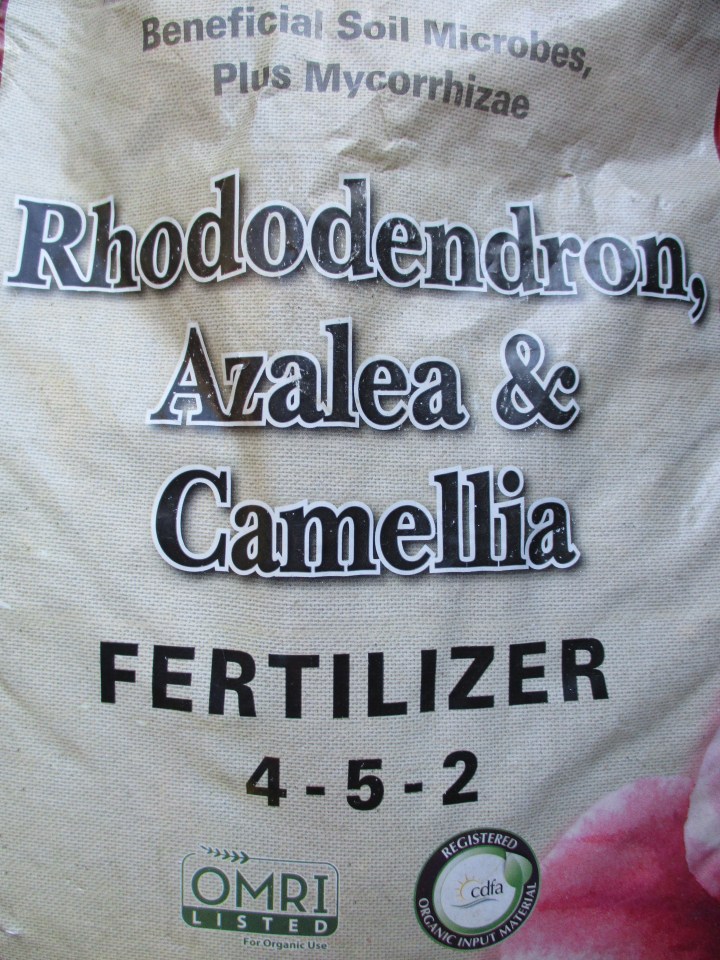
There are all sorts of fertilizers and soil amendments that can modify the pH somewhat if necessary. Such amendments make it possible to grow rhododendrons and azaleas and other plants that prefer slightly acidic soil where the soil is naturally slightly alkaline. The problem is that the adjustments of pH are not permanent, so must be maintained. In many situation, major modification of pH is impractical. It is generally more practical to select plants that will be happy with the natural endemic pH.

Good Roots Are Seldom Seen

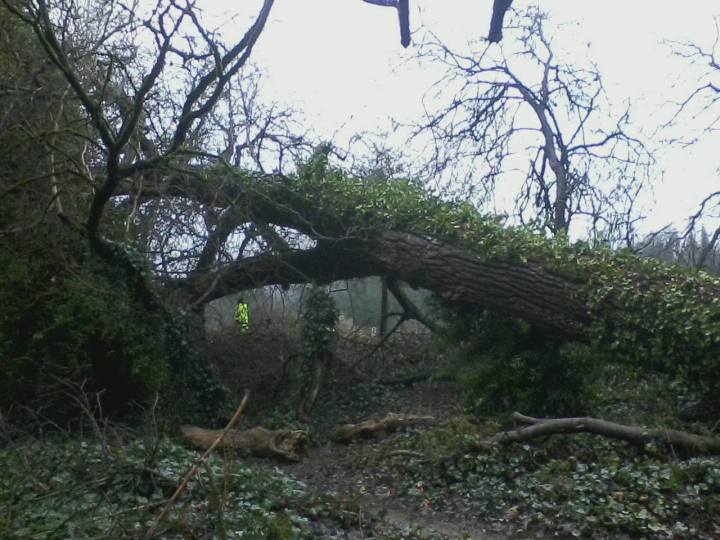
70628thumbWhen a tree falls in the forest, and there is no one around to hear it, does it make a sound? Of course it does! There is just no one to hear it. Why should that be such a profound question? A falling tree makes a mess too. Anyone who does not see or hear it in action can witness it afterward. Sometimes, roots that were inadequate to support the fallen tree become exposed as well.

There is certainly nothing unnatural about trees falling in forests. Otherwise, forests would be too crowded for new trees or anything else to inhabit. The roots of fallen trees might have been adequate for many decades or centuries, but eventually succumbed to decay and the weight of the canopies they supported and sustained. Trees falling in home gardens are completely different.

Domestic trees (in home gardens) are likely to land on homes, cars, other plants, or anything that happens to be in their way if they fall. Also, they are more likely to have problems with the roots that support them. Regular irrigation needed to sustain other landscape plants promotes rot, and also inhibits deep root dispersion. Excessive irrigation that keeps soil saturated is much worse!

The good news is that, despite their innate disadvantages, domestic trees tend to be shorter, stouter and more stable. With proper maintenance, they seldom fall; or at least they are more likely to get removed before they fall. Buttressed roots that are visible at the surface of the soil might indicate that deeper root dispersion has been inhibited. The best roots are too deep to be seen.

Whether or not buttressed or shallowly dispersed roots limit stability, they can damage pavement, lawns, septic systems, or other features on the surface of the soil. Subterranean utilities and foundations of modern buildings are typically safe, but on rare occasion, can be damaged by the largest sorts of trees. Root barriers divert roots, but those of big trees eventually get around them. Potentially damaging roots can be severed while young, but become more integral to sustaining and supporting as they grow.