Six on Saturday: ROCK ON!


This might be the very first post in the history of Six on Saturday that lacks any plant material! There are certainly plenty of flowers blooming out there, but that was not what I was working with this week. The first two pictures were at a site where I was working earlier in the week. The other four pictures were at a larger landscape that is in the process of being renovated. Until this week, I had not seen much of the site, but heard about it daily. The work is behind schedule, so a whole bunch of us went to the site to help. Although we were very grateful for the help, and everyone was genuinely pleased to be of service, I can not help feeling guilty about my esteemed colleagues engaged in the unpleasantries of such dusty and dirty work, especially when they have so much of their own work to tend to.

1. The soil at the first job site is of exceptional quality, but is only about a foot deep! This now broken mudstone is what lurks below, but it is not broken down under. It is only broken in the picture because it needed to be pried up so that larger plants could go into the ground. It took all morning just to install a few #5 plants. The smaller #1 plants were planted much more easily on top of the mudstone.P806162. This sometimes happens when prying up mudstone.P80616+3. At the second and much larger landscape, the irrigation system and lighting needed to be installed before the rest of the landscape. There is now irrigation pipe and electrical conduit everywhere! It took some serious digging. Because so much excavation had already been done at the site for the installation of big wide walkways, much of the soil was being moved a second time. The soil is so loose and sandy that much of it needed to be dug a few more times from the ditches as the irrigation system was installed.P80616++4. A few big boulders were installed on the site. To avoid driving the heavy machinery on the new concrete, the boulders were installed early in the renovation process, before the new concrete was installed. Consequently, they were buried by the soil that came from all the ditches for the irrigation and lighting systems. They reappeared as the ditches were filled. I still do not understand the appeal of stone and boulders in landscapes. The mudstone that was encountered earlier in the week was not much fun.P80616+++5. Plant material has not yet been installed, so the landscape features only a few dogwood trees that were already there, and these few boulders scattered about in the dusty soil. It really is dusty! I cannot figure out why the dogwoods are so happy there. I can not figure out why the boulders are so happy either, . . . or if they are happy . . . or if they really care at all. I just do not know.P80616++++6. One of our soil science professors at school was emphatic about soil being ‘soil’. We were not allowed to refer to soil as ‘dirt’. Well, this soil happens to be better than it looks, and it is good enough for dogwoods, but it really is very dirty soil.P80616+++++This is the link for Six on Saturday, for anyone else who would like to participate:

https://thepropagatorblog.wordpress.com/2017/09/18/six-on-saturday-a-participant-guide/

Horridculture – Satellite Dish

P80613

Satellite dishes, tater tots, fish sticks, soldiers, flat tops, gobstoppers, corks, oil tanks and trip hazards are just some of the many but less objectionable names that my colleague down south and I have developed for what should be good shrubbery, trees, vines or whatever that so-called gardeners got to with their hedge shears. Tater tots are usually Heavenly bamboo shorn into stout cylinders. Fish sticks are the same, but taller, narrower, and often composed of Podocarpus macrophyllus. Corks are commonly breath of Heaven, but could be just about anything shorn to be somewhat cylindrical, but narrower down low, and wider on top. Trip hazards are ground cover plants like creeping California lilac or creeping cotoneaster, shorn into absurd low hedges next to sidewalks. Gobstoppers could be just about anything, but tend to hang over the curbs in parking lots, ready to impale a radiator grill with a gnarly stub. You can use your imagination for soldiers, flat tops and oil tanks. You probably can not conceive anything more absurd than what my colleague and I see on our job sites.

‘Garage sales’ are probably the worst. They are a variety of plants that were probably intended to function as a practical landscape, but instead got shorn collectively into a large thicket of mixed foliage that rarely gets the chance to bloom. Bougainvillea, New Zealand flax, jade plant, pampas grass, wisteria, fruit trees and even the occasional century plant; anything goes! If the so-called gardeners can reach it, they will shear it.

The original satellite dish was a carob tree in Westchester. I first saw it in the early 1990s, when some homes that had a bit of space to spare were still outfitted with huge parabolic satellite dishes, before the much smaller ones that can be mounted on roofs were invented. This tree had a normal trunk that went up into a remarkably flat ceiling under which no foliage was allowed to hang. This ceiling was only about seven feet above the lawn below. Above that, there was a remarkably symmetrical but low dome of very tightly shorn foliage that looked something like a downward facing satellite dish. This dome was perhaps twenty feet wide, but less than four feet from top to bottom. So, with seven feet of clearance above the lawn, the entire tree was no more than twelve feet tall, barely higher than the eaves of the home behind it. I really wish I had a picture to share. Who puts so much work into ruining a tree?! Maintaining it properly would have been much less effort.

Earlier, we discussed renovating overgrown shrubbery as small trees. https://tonytomeo.wordpress.com/2018/05/21/overgrown-shrubbery-becomes-small-trees/ . The satellite dish was the exact opposite of such useful procedures. What is the point of planting trees and then not allowing them to develop as anything more than abused shrubbery?

The pair of satellite dishes in the picture above are Japanese maples. Their canopies are about the same depth as that of the carob tree in Westchester, but are only about half as broad. What is the point of planting Japanese maples if they are not allowed to look like Japanese maples? They look ridiculous. What is worse is that someone puts significant effort into making them look so ridiculous. They would be so much prettier if pruned only very rarely, and only for clearance above the driveway and away from the building behind. Such pruning would have been less work than shearing these disgraced trees just once.

Even more effort goes into humiliating the plants in the picture below. The fish stick to the upper right is a wisteria vine that is not allowed to bloom or climb onto the trellis that was built for it (which is not visible in the picture). The trip hazard to the lower left is some sort of lavender that is not allowed to spread out over the bare soil as it was intended to do. The cork in the middle is a New Zealand tea tree that can never develop the gracefully irregular canopy and sculptural trunks that it would be pleased to display. It is just a cork.

P80613+

Halston Junior

P80610Apparently, the warnings were effective. https://tonytomeo.wordpress.com/2018/01/27/caution/ . They managed to avoid the traps and survive to perpetuate another generation under the lawn of Felton Covered Bridge Park. It is impossible to know if they are directly related to the now deceased Halston https://tonytomeo.wordpress.com/2018/04/21/halston/ who infested a landscape only about two miles away. It is unimportant. They all are intent on conquest.

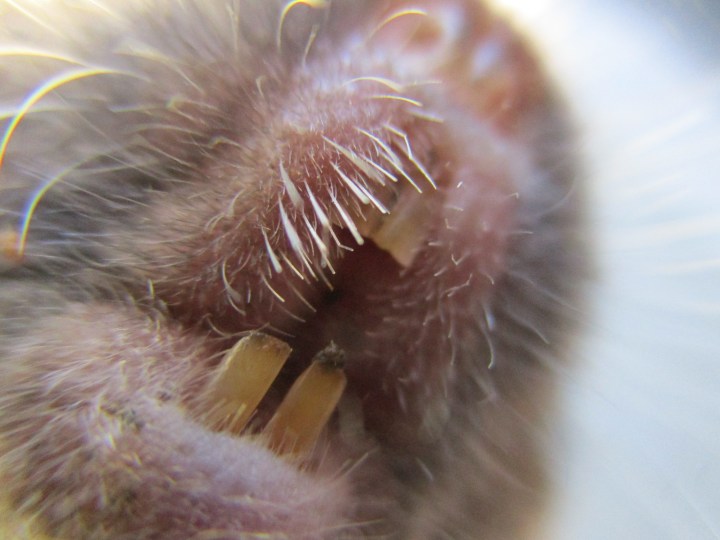
Halston Junior, a baby gopher who may or may not be a descendant of the famed Halston, was found wet and shivering on the surface of the ridiculously perforated lawn. Rhody wanted to play, but was restrained from consorting with the enemy. The prisoner was detained, dried and put in one of Rhody’s blankets to recover. There was no formal interrogation, but the detainee was found to be well armed.

It is impossible to imagine what sort of damage such sharp and strong claws could inflict!P80610+

It is equally as impossible to imagine how dangerous such nasty fangs could be!P80610++

The purpose of this formidable weapon is unknown, but it is undoubtedly very dangerous!P80610+++However, the most effective weapons of all were mind control techniques. Halston Junior used them merely for self defense, by convincing his captors that he was too cute to be euthanized. It could have been much worse if he had not been so mentally compromised from his ordeal.

We knew that Halston Junior could not be released back into the lawn from which he came, but we also knew that relocating him somewhere else would disrupt the ecosystem slightly, and that Halston Junior would likely migrate back to where he came from. Ultimately, he did get released into a nearby meadow. We can only hope that the rest of the ecosystem will not notice.

Halston Junior won this battle, but not the war.


Souvenir

P80609KNurseries are full of plants for sale. That is their business. They sell plants, and whatever plants need. With a bit of money, it is easy to purchase plants to compose an exquisite landscape. That is important to landscape professionals who make a business of composing landscapes to beautify the environments in which they work.

Those of us who enjoy home gardening might also purchase plants that we want for our garden. Yet, our home gardens are more than mere landscapes that are designed to simply beautify. The might also produce flowers for cutting, fruits and vegetables. Some might produce firewood. Gardens are usable spaces for active lifestyles. They are spaces for us to grow whatever we want to grow.

I buy almost nothing for my garden. The last item I purchased was a ‘John F. Kennedy’ rose, and I only did so because it was easier than growing one from scratch, and it is my favorite hybrid tea rose. Almost everything else was grown from seed, cutting, division or even as entire plants taken from somewhere else. They all have stories. My figs and quince are from trees that have been producing fruit in the Santa Clara Valley for generations. My great grandfather gave me my first rhubarb before I was in kindergarten. I found one of my pelargoniums in a neighbor’s trash heap when I was in junior high school. I found another in a creek where I grew citrus in Gilroy in the early 1990s.

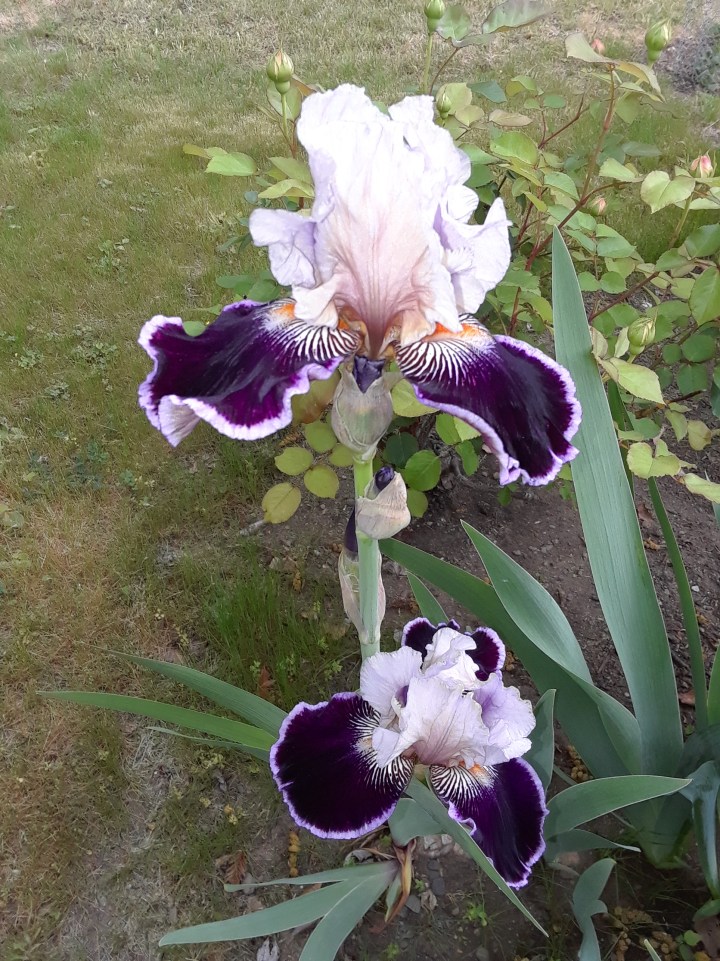
My iris are from all over. My favorite are still those from the garden of my great grandmother https://tonytomeo.wordpress.com/2017/09/10/roots/. Two others came from and ‘incident’ back in college https://tonytomeo.wordpress.com/2017/09/12/the-colors-of-karma/ . I may grow as many a four white iris, not only because they are my favorite color, but because they came from important origins. The short white iris that I do not like much must stay because it came from my grandmother’s garden in Saint Helens. There is another tall iris that is not a pure white, but seems to be somewhat grayish, but it must stay too because it is the only iris I got from the historic home of a friend’s mother in Monterey. One of my favorite whites was supposed to be red, but must stay because it came from a friend’s home in Lompico . . . and because it is one of the prettiest. I have a purplish burgundy iris that I only recently learned was brought from the garden of a colleague’s grandmother in Placentia, a town in Orange County that really should change it’s name. It proliferated and was shared with the Felton Presbyterian Church, where it proliferated again, which is how I found some on a trash heap. They are a keeper now.

When they were all together in the same garden, I grew as many as fourteen bearded iris, with a few other types. Some of the redundant white bearded iris have been relocated to the garden parcel in Brookdale, just to keep the separate from similar cultivars. Not many have been added, although there does happen to be a group of mixed iris from the garden of a former client in Ben Lomond. I think I will keep them mixed because they are easier to keep track of as a single mixed group rahter than as several separate cultivars.

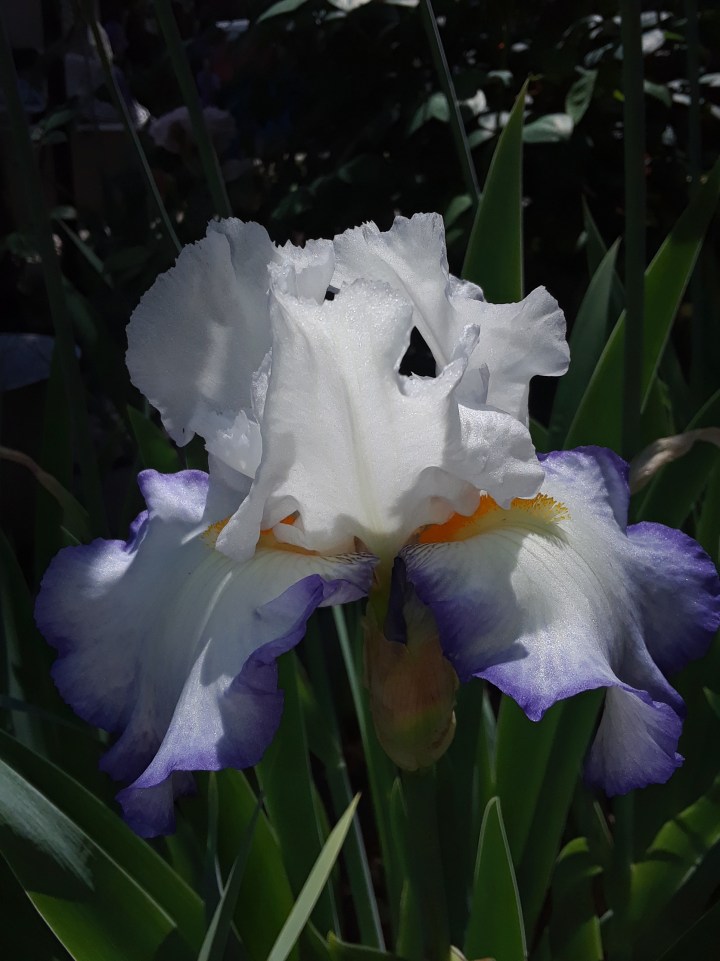
These pictures are a few weeks old, from when the iris were still blooming. The iris in the picture above came from the garden of a friend in the East Hills above San Jose. The flowers are the biggest of all the iris I grow. You can see how distinctive they are. The iris in the picture below, which is not a good picture, is ‘Blueberry Ice’. It was a gift from the Clara B. Rees Iris Society. It has stout stems to support the very wide flowers that are mostly white with a variable blue edge.P80609K+

Six on Saturday: Petunias


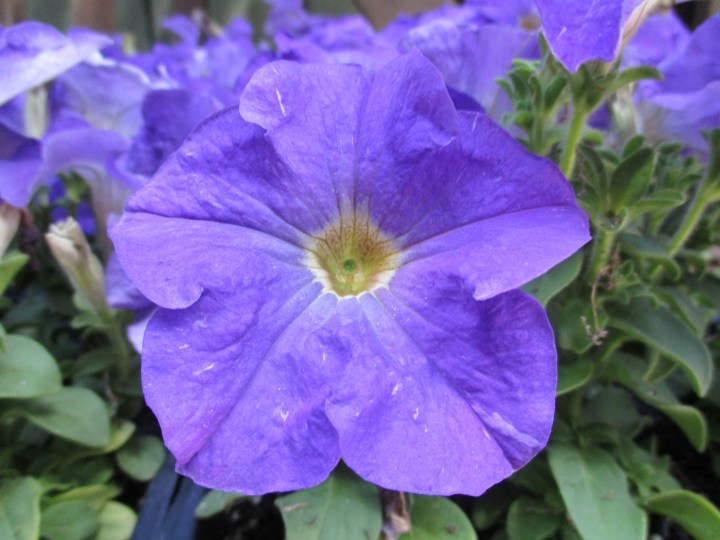
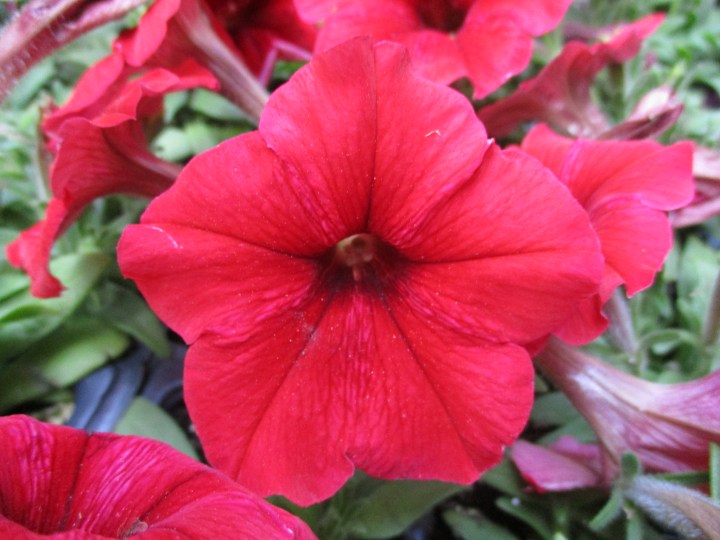
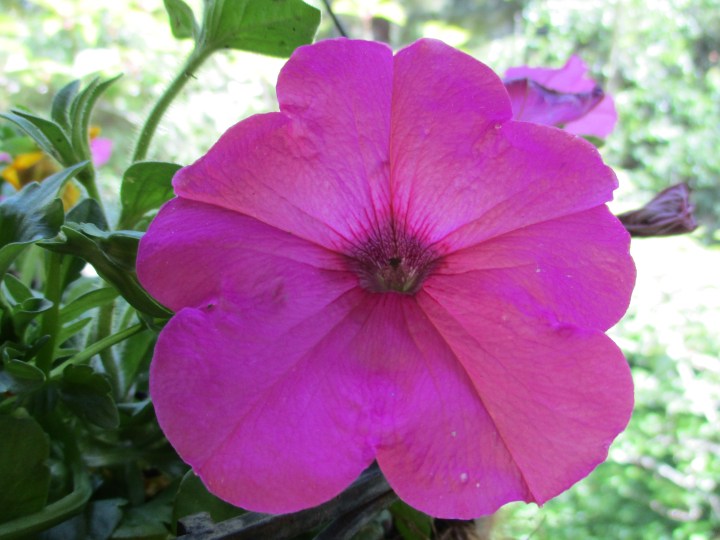
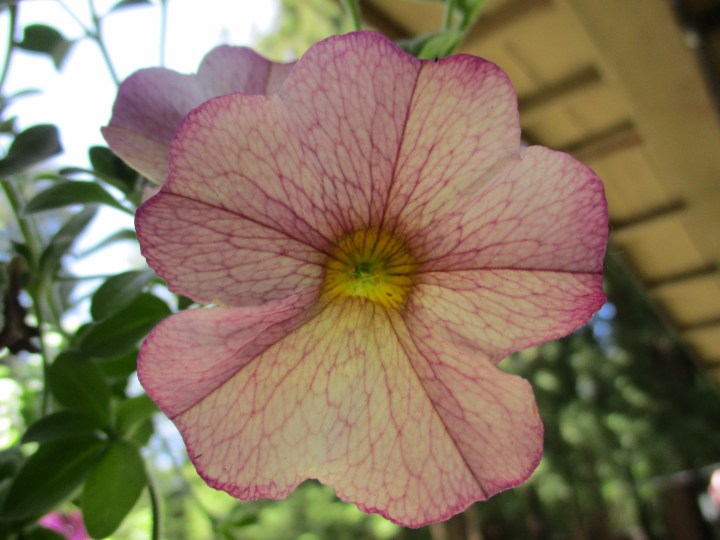
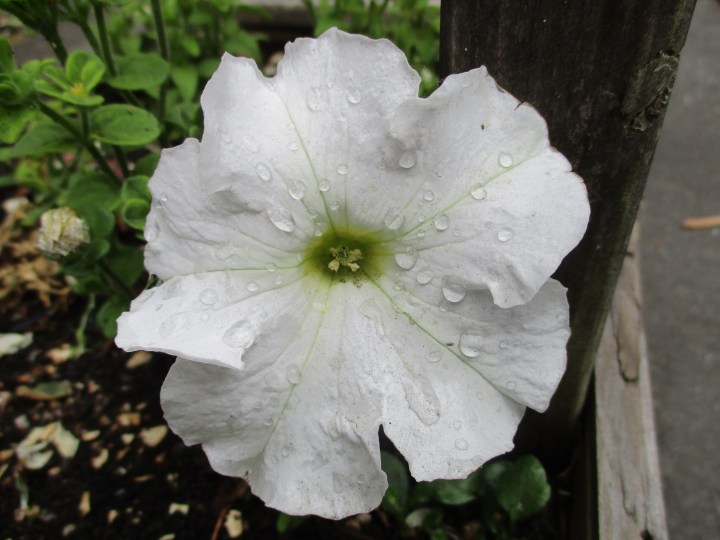
These were only recently planted, within the past few weeks, so are not completely filled in. That of course is unimportant for pictures of only the flowers close up. I have not grown petunias for many years, but I am getting to like these because they are so colorful in the sunnier spots. There are busy Lizzy in the shadier spots. (I can explain that later.) It is not easy to select a favorite. Although the white petunia should be my favorite, I really like how brightly colorful the first one ‘Dreams Sky Blue’ is on the side of the road. ‘Blue Madness’ and ‘Red Madness’, the second and third pictures, are so reminiscent of petunias that we grew many years ago, and might even be the same. The unknown petunia in the fifth picture is the only one here that I do not like much, and it did not work out as well as hoped anyway. It is planted in hanging pots, but does not cascade. That is why a few ‘Wave Lavender’ in the fourth picture were added in with them. The white petunia happens to be only one of a mix of various colors.

The first three were planted in beds at ground level. The fourth was planted both in an elevated planting bed, and added to hanging baskets with the fifth. The fifth was the first to be planted in the hanging baskets, but is not cascading as expected. The sixth, along with a variety of other colors, is in a few large planter boxes, so will hopefully cascade somewhat, but does not need to.

1. Dreams Sky BlueP80609
2. Midnight MadnessP80609+
3. Red MadnessP80609++
4. Wave LavenderP80609+++
5. This variety is unknownP80609++++
6. This variety is unknown and includes a mix of colors.P80609+++++
This is the link for Six on Saturday, for anyone else who would like to participate:

https://thepropagatorblog.wordpress.com/2017/09/18/six-on-saturday-a-participant-guide/
Horridculture – Fat Hedges

P80606

This is the first article within the designated ‘rant’ format, that will continue each Wednesday. Articles for the other six days of the week will be more cheerful, or at least less objectionable. These articles may not always be rants, so might alternatively include discussions of particular fad, trends, gimmicks and so on. Perhaps some topics will remain just that; discussions in which the advantages and disadvantages of a particular subject are compared. Categories may develop, so besides ‘Horriduclture’, there could be a category for discussions of fads, for example. This is a new format for me, so I will keep it open to modification, and see how it goes.

Fat hedges are one of my serious peeves!

Hedges done properly are very useful landscape features, that provide privacy, obscure undesirable views, muffle outside sound or simply divide a large garden space into smaller garden rooms. Landscape designers know how to use them, and are good at planning their locations and orientations, as well as designating the plant material to be used for particular hedges. Some informal hedges or screens are outside of useful space, where they have plenty of room to grow plump and wild without becoming obtrusive. Formal hedges are those that require shearing for confinement within limited space.

Fat hedges are those that are designed to be contained, typically by formal shearing, but are instead allowed to encroach into the usable space within the landscape that they are designed to enclose. They can be a serious problem in confined garden space, and sometimes occupy most of the space themselves.

Seriously, they are very often several feet deep (from front to rear). Fat hedges on either side of a small garden room that is only about twelve feet wide can easily occupy more than half of the area. Think about it. If each hedge is just three feet deep, and there are two hedges, that means that six feet of the width of the twelve foot wide space is occupied by fat hedge! That is half of the area available! Some fat hedges are even deeper! A fat hedge does nothing more than a properly maintained hedge. Really, a three foot hedge accomplishes no more than the same sort of hedge that is only one foot deep. The interior is only bare twigs.

Fat hedges are mostly the result of inept gardeners who allow the hedges to gain a bit more width with each shearing, without ever renovating overgrown hedges. To make matters worse, they allow the tops of the hedges to get wider, which shades out lower foliage, which becomes sparse. Then the fat hedge becomes a top heavy hedge, leaning into usable space where it should be leaning slightly away. Ends of top heavy hedges often protrude a bit more than the sides of the hedges. If these hedges flank a driveway or walkway that is perpendicular to the sidewalk or a patio, the distended end is particularly obnoxious.

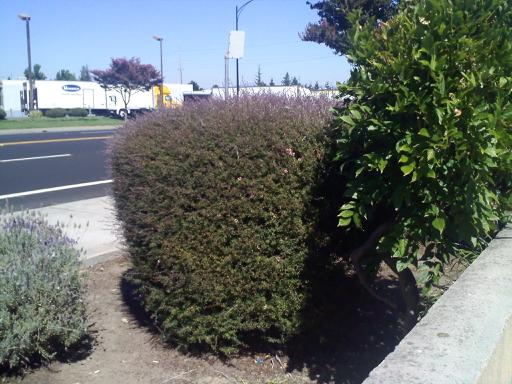
In the picture above, the low hedge seems to be well maintained. If it is a fat hedge, it is in a situation where it is not really crowding much. However, notice the width of the sidewalk. It is quite broad. Then there is a significant constriction where the hedge protrudes over the sidewalk. What is the point of so much concrete and such a wide sidewalk if almost a quarter of the width of it is overwhelmed by vegetation? It is like four lanes of freeway that merge into three, only to merge back into four.

Career Counseling

P71206This is not a sequel to my rant ‘Real Deal’ from yesterday. It is just another rant. I should write more such rants; and I am actually considering designating Wednesday, as the day for discussion of the various hooey in horticulture, from some of the many fads and gimmicks to the lack of professionalism in the horticultural industries. Wednesday is the day between my current gardening column articles and the gardening column articles that are recycled from last year. There is certainly no shortage of hooey to discuss. I have been mostly polite about it so far. I sometimes wonder why I should bother with politeness. I sort of think that some would prefer more honesty than such unfounded pleasantries. Well, I can give more thought to that later. There are still a few more pleasant topics that should be discussed as well. For now, I will continue:

Many years ago, while driving the delivery truck, I took a few orders to various jobs of a particularly annoying ‘landscape designer’ in Contra Costa and Alameda Counties. His orders were never planned. He would come to the nursery and just pick out random plants that he thought were interesting, including many that happened to be on the side of the road waiting to be taken away for disposal. (Overgrown and disfigured rhododendrons that get junked often bloom better than plants of better quality because they are more mature.) His landscape design was planned in the same manner. He just planted things wherever he though they looked good. There was no thought to the preferences of the various cultivars, exposure, irrigation, the trees above . . . or anything. He landscaped right around whatever happened to be in the way, including dead trees, fences overwhelmed with ivy, and dilapidated carcases of old brick barbecue pits that were beyond repair. I really disliked being on his job sites.

During one such deliver, he explained to me that he had been a chiropractor. He got bored with his career, and decided to do something more fun, so decided to become a landscape designer. He enjoyed buying pretty blooming plants in nurseries and wearing khaki shorts and big straw hats to work like all the landscapers with something to prove do.

My comment to him was that my career as a horticulturist was so much hard work and so frustrating at times that maybe I should also consider a career change. Perhaps I should consider becoming a chiropractor. If someone without ANY education or experience in horticulture or design . . . or anything even remotely useful in the landscape design industry can become a landscape designer, than it should be just as easy to become a chiropractor, despite a lack in formal education or experience in the industry.

He did not like that comment.

Real Deal

P80203Stereotypes can be such a bother. For the past almost twenty years that I have been writing my gardening column, many of those who read the column have been making assumptions about who I am and how I behave. I actually find much of the behavior that I should conform to be rather objectionable. Even the lingo would be awkward for me. I am a horticulturist, and if you must know, an arborist as well. It is my profession. I did not take an interest in horticulture because I retired or got bored with my primary career. Nor did I flunk out at everything else. I am not a garden guru, flower floozy or hortisexual. I do not crowd my garden with garden fairies, repurposed junk or rare and unusual plants. There is nothing eclectic or quaint. There is no whimsy or magic, and most certainly NO riot of color! Brent does not even flinch at my offensive racial comments.

Does anyone remember the yellow clivia fad? Everyone wanted yellow clivias in their own gardens because they were so rare, and so different from the typical orange. Does anyone even know what ‘rare’ means? When we all get them growing in our own garden, they are NOT rare! Has anyone tried to find an orange clivia lately? Yellow clivias had been rare back when orange was the more popular color, but only because orange clivias were the previous fad, and nurseries did not bother to grow the undesirable yellow clivias. Both yellow and orange are nice, but only if they happen to be the right perennial for a particular situation. They work nicely in spots that are too shady for other plants, and the bright colors are striking against the richly dark green foliage. However, they are not better than lily-of- the-Nile for sunny spots. I have grown more lily-of-the-Nile than I can write about, but have grown only one orange clivia.

The same goes for dawn redwood, or like landscapers with something to prove say, ‘Metasequoia glyptroboides’. They are nice trees in the right situation, particularly where redwoods would be nice, but a bit of sunlight is preferred through winter. However, that certainly does not make the right tree for every situation. I have worked with a few, but have never grown one in my own garden.

I loath Japanese maples! I do not mind growing them in the nursery, but I do not want to waste garden space on something so trendy. There are plenty of other more useful or prettier trees and shrubs. When I say that maples are some of my favorite trees, I mean ‘real’ maples, such as sugar maples and red maples. I know that silver and bigleaf maples are not very desirable trees, but they happen to be two of my favorites.

Being a good horticulturist is about knowing the many plant specie that we work with. Although silver maple happens to be one of my favorites, I have only been able to recommend it for just one application in my entire career. Just because it would be nice in my home garden, and I am willing to deal with the problems, does not mean that I can recommend it for other landscapes where others would need to contend with the problems. As much as I dislike Japanese maples, I have recommended them a few times for small spaces like atriums, particularly for clients who happen to like them. Unfortunately, they are more useful than silver maple. It is all a matter of knowing what specie are most appropriate for every application.

Six on Saturday: Rose Parade


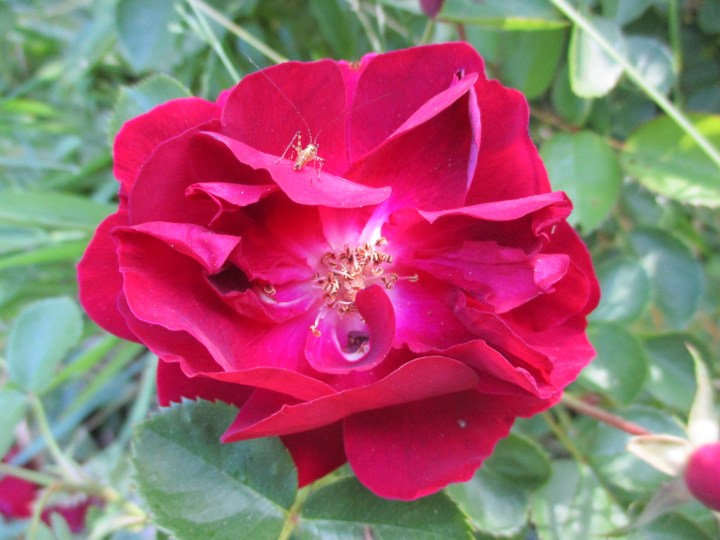
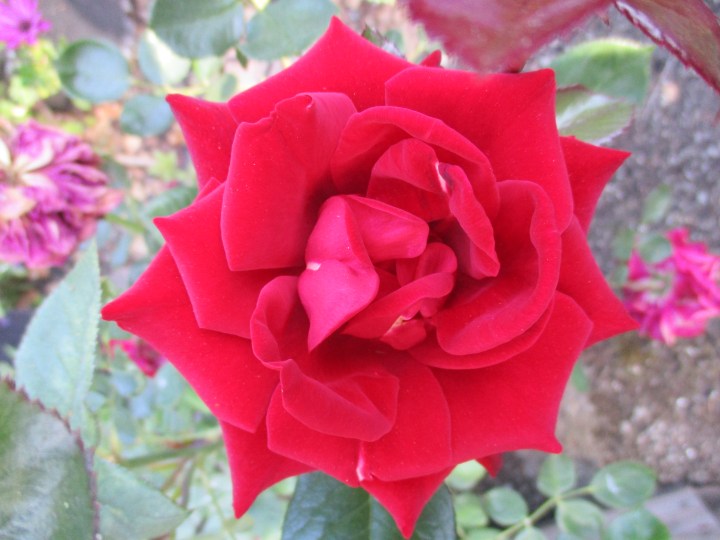
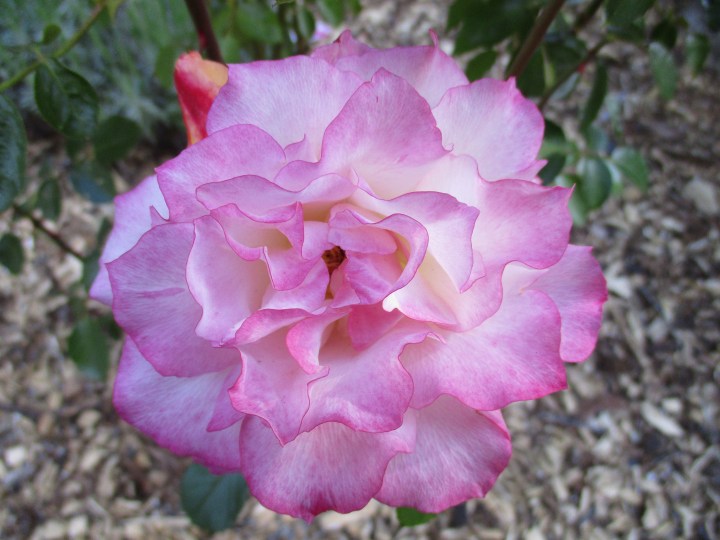
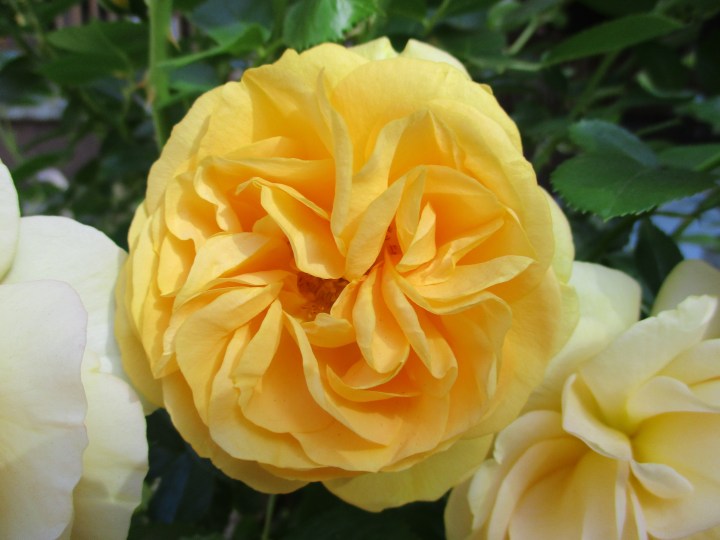
There is way too much blooming for me to keep up with. Because I know there will be less blooming through summer, I get pictures while I can, even if I can not use them right away. Consequently, these pictures are not exactly from this last week. Some were from the second phase of bloom, and the first picture is from the first and only phase of bloom of a rose that blooms only once annually. I suppose I could have gotten pictures of the other five this last week, but I wanted to get them earlier than later, just in case they were between phases when I wanted to get the pictures.

Roses do very well here, and are even happier in the warmer and more arid weather of the Santa Clara Valley, just a few miles away. The Santa Clara Valley is one of the best places in the world for roses, which is why the Heritage Rose Garden is located there. Sadly, that collection is presently not in very good condition.

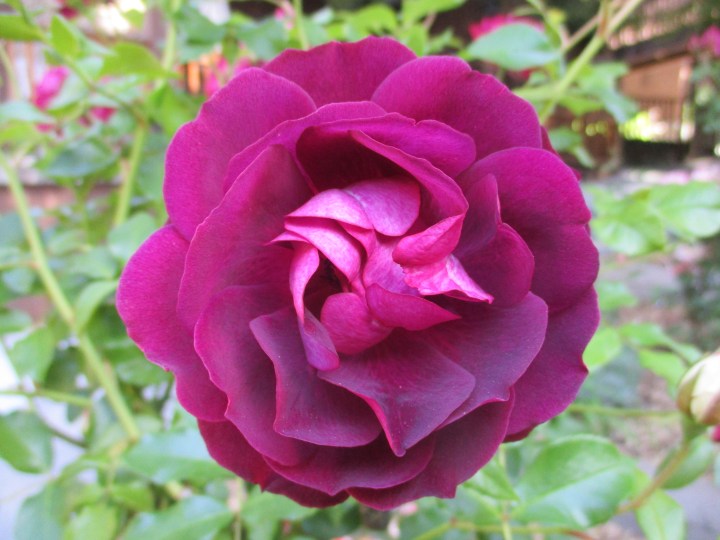
1. ‘Doctor Huey’ is the only cultivar of these six that I can positively identify. It has been the common understock for grafted roses longer than I can remember. Because it is only used as understock, it is not often seen blooming out in the garden. These are only blooming because the original scion died, and was replaced with sucker growth from below the graft. ‘Doctor Huey’ blooms profusely but only once in spring. It grows as a bramble, and can form small thickets if neglected long enough.P80602
2. Although not white, this pretty hybrid tea rose is probably my favorite of the six just because it is so perfect. I do not know the cultivar. It is not in the landscape, but is in the nursery, waiting to be installed into the landscape. Hybrid teas are the roses that I grew up with, so are my favorites.P80602+
3. I am not sure if this bicolored rose is a hybrid tea or a floribunda. I am guessing that it is a floribunda because there are groups of flowers blooming where I earlier deadhead the first phase of single blooms. It is out in the landscape, in the same garden with 4, 5 and 6 below. It is grown as a shrub. The others are grown as standard or tree roses.P80602++
4. This is my least favorite of the six because it looks like one of those trendy David Austin roses. The color is nice, but the form is weird. I will never understand fads. I know that hybrid tea roses were a trend or maybe even a fad at one time, but it was the trend that I grew up with, which is why they are what I compare all other roses to. This rose does not compare to them too well. It is grown as a standard or tree rose.P80602+++
5. This is also grown as a standard or tree rose, but in conjunction with 6 below. I mean that they are grafted together on the same trees. Individually, they are nicely formed roses with excellent color, but they look silly stuck together with the white roses. I could probably identify this rose if I wanted to, but I do not want to misidentify it. Except for the color, the rest of it grows just like ‘Iceberg’.P80602++++
6. This one looks just like ‘Iceberg’, and except for the color, grows just like 5 above, which it is grafted onto the same trees with (as I mentioned above). The white is perfect. If it were a hybrid tea, it would be my favorite of these six. I just prefer 2 above because it is such a perfectly formed rose on good stems.P80602+++++
This is the link for Six on Saturday, for anyone else who would like to participate:

https://thepropagatorblog.wordpress.com/2017/09/18/six-on-saturday-a-participant-guide/

O

P80530

‘O’ is for ‘opossum’. That it the proper common name for the familiar North American critter who lives in or near many home gardens where fruit, vegetables or pet food are available. When a similar critter was found in Australia, it was given the same name by someone who did not spell it properly, hence ‘possum’. It is marsupial, and therefore related to many familiar Australian critters like koalas, kangaroos and the most terrifying of all, wallabies. Well, if the North American name can be applied to an Australian critter, it only makes sense that the Australian name can be applied to the North American critter. Thought technically and correctly ‘opossum’, many of us know them simply as ‘possum’, without the preceding ‘O’.

Opossums have a vast native range in North America. They can live anywhere that does not get too cold for them. They have likely always lived in the Santa Clara Valley to a limited degree. There was not much for large populations of opossums to eat just a few centuries ago.

As orchards grew and displaced native vegetation, there was more fruit that they could eat in season, but still not so much else during the rest of the year to sustain large populations of opossums. It was not easy for opossums to make homes at the modest home sites isolated by large orchards with only seasonal vegetation on the ground.

As orchards were developed into suburban neighborhoods, more habitat was created for opossums. They lived in and around homes, woodpiles, sheds, and areas landscaped with permanent vegetation. Vegetable gardens and more varieties of fruit trees in home gardens provided food throughout the year. There were citrus, avocados, guavas, persimmons and loquats, as well as ornamental berries like pyracantha and cotoneaster. Pet food and household trash were abundant. While San Jose was still a small town, it was inhabited by more opossums than could have been sustained in the entire Santa Clara Valley only a century earlier.

Those old suburban neighborhoods are now even more urban, and their landscapes are much more overgrown than they were when the homes were new. Rats, snails, slugs, grubs and large insects that live in the landscapes are fair game for opossums. Aging and deteriorating homes are easier for opossums to get access to, so finding shelter is easier than it has ever been. With more than a million people just in San Jose, there is no shortage of trash.

All through history, people have been moving in on wildlife. However, what we do not often hear about is the wildlife that moves in on humans.