Tent City

P80224KIn the autumn of 1989, small and temporary tent cities appeared in parks and other public spaces around the San Francisco Bay Area and the Monterey Bay Area, where many homes had been damaged or destroyed by the Loma Prieta Earthquake. They were necessary at the time, but were not intended to be permanent features of the landscapes. For a while, they were unpleasant reminders that some people could not go home until their homes were repaired or rebuilt.

In more recent history, ridiculously expensive real estate and rents have increased homelessness in the same regions. Even gainfully employed people are homeless because they can neither purchase nor rent a home, either because of expense or because of a lack of availability. Those who live in homes complain about the unsightliness and other problems associated with the homeless living in homeless encampments and small tent cities.

We get it. Tents are bad.

So then, what is this small tent city on one of the main roadways in town?

Good planning and bad planning.

First the good. Each of the shop spaces in the contemporary retail building behind this tent city needs its own water meter and valve manifold. Each of these meters and manifolds must be easily accessible. Because they are accessible, they are also exposed, so they need to be insulated so that they do not freeze during the very rare occasion (in our mild climate) that the weather gets cold enough to do so. This explains why the water meters are next to the sidewalks, and the upright valve manifolds behind them are covered with these billowed tents.

The bad? Good landscape design should have been considered with the location of these meters and manifolds. A water main line should have been routed so that this whole complex could have been constructed within a utility closet or shed, or even a small utility yard that could have been fenced in a less prominent location. If constructed inside a utility closet or shed, the insulating tents would not be necessary. Now that it is too late for that sort of planning, there is not even enough clearance from the sidewalk for hedging or low fencing to obscure the meters and manifolds without obstructing access. It really would not have taken much of a landscape modification to obscure the view of all this infrastructure, if only more space had been made available where it is needed.

Sadly, landscape design was not a priority on this building. Although the water meters and manifolds are completely exposed, shrubbery obscures window and more appealing features of the buildings, such as ornamental stonework. The view from inside many windows is of the unsightly backsides of pointlessly shorn shrubbery. Trees were crowded and planted directly in front of signs, even though there is plenty of frontage without signs where trees could have been planted. It is amazing what some landscape designers get away with.

Foliar Tapestries

P80224Succulent foliage is remarkably variable, even without bloom. There are so many unusual colors, textures and patterns to choose from. Many are complimentary to others. Many contrast exquisitely. What better way to display some of the favorites than to assemble them into a succulent foliar tapestry!?

This is actually old technology that started to become a fad again only somewhat recently, after these foiar tapestries were installed on a retaining wall in North Hollywood a few years ago by GreenArt Landscape Design. Small cuttings of succulent plants were plugged into rigid mesh panels that hold growing medium vertically against another flat panel of the same size. The whole contraption was suspended against the concrete wall, with a bit of space in between to limit staining and bleeding onto the wall.

With the fountain, potted plants and other features, the limited space was insufficient for a hedge to obscure the retaining wall. Besides, the uniform foliage of a hedge or clinging vines climbing upward, or cascading plants hanging downward, would have been rather boring. These foliar tapestries look like artwork that might hang on walls inside the home, except that they are outside, visually extending the interior living space out onto the patio.

Foliar tapestries certainly are not for everyone. There is nothing ‘low maintenance’ about them. The small plants must be groomed regularly, and trimmed to stay flat. Flowers will need to be snipped off before or after bloom. The heavy planters must only be installed onto concrete walls or walls that are able to support the weight, and must be installed properly to avoid staining and bleeding. Wooden walls would be likely to rot so close to so much moist growing medium. However, as you can see, in the right situation, such tapestries are worth the effort.P80224+P80224++

The Weather Outside Is Frightful

P80110It is certainly not as cold as it is in other regions at or north of this latitude. Nor is it unusually cold for this time of year. It is not stormy. We got only a few heavy but brief rain showers with a bit of small hail. A slight bit of snow fell only on the Summit of the Santa Cruz Mountains

The problem is that the weather had been so mild earlier, and at times, downright warm. Many plants were coerced into premature bloom. Some started to generate new spring growth. When the weather suddenly became more seasonably cool, many of the flowers and new growth got frosted and ruined.

Fortunately, most of the deciduous fruiting trees seemed to know what they were being set up for, and abstained from bloom. So far, even the early blooming apricots, cherries, almonds prunes and plums are safe. The wild American plums bloomed, but not many of us use their fruit anyway. (I want some – both amber and red – for jelly, but there will be plenty of other fruit.)

Saucer magnolias were just beginning to bloom when the cool weather moved in. Now, some of the big pink flowers are spotting and melting before they open completely. Many of the camellias are succumbing to blight, and falling to the ground shortly after they open.

Weather is always risky, even in mild climates. Actually, our mild climate allows us to grow more of the plants that are sensitive to anomalies of the weather. Perhaps such anomalies would be less of a problem in harsher climates where the weather is naturally more variable. If so, it is probably a fair compromise. The problems with such a mild climate are still less significantly less than the advantages.

Six on Saturday: My Favorite Color


WHITE!

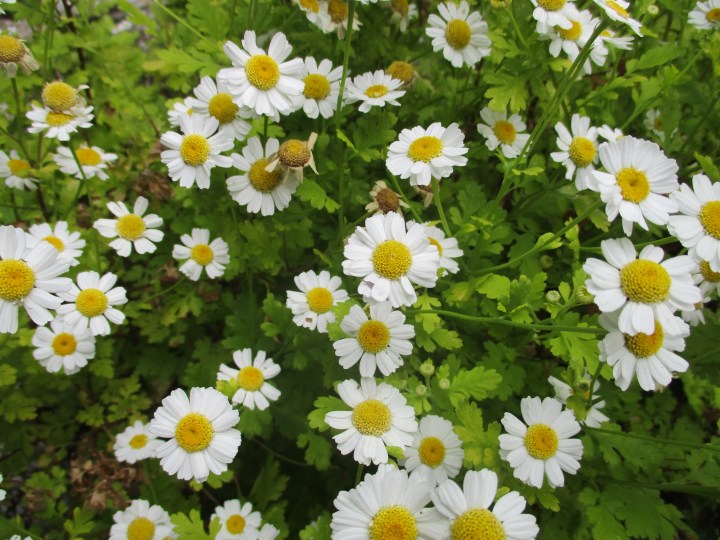
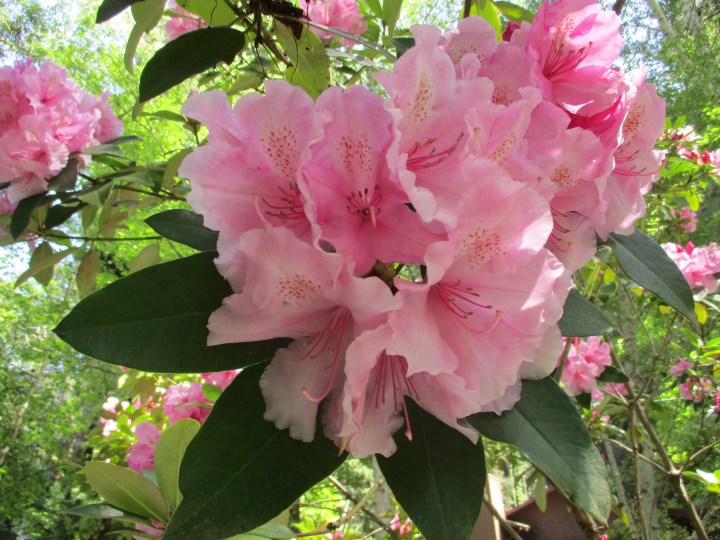
These are a few of the flowers I get to work with. I do not know any of the cultivars. Some are blooming a bit early because of the prior warm weather.

If you are easily offended, you should not read this article I wrote earlier about my favorite color: https://tonytomeo.wordpress.com/2017/09/21/white-supremacy/

1. American plumP80224
2. rhododendronP80224+
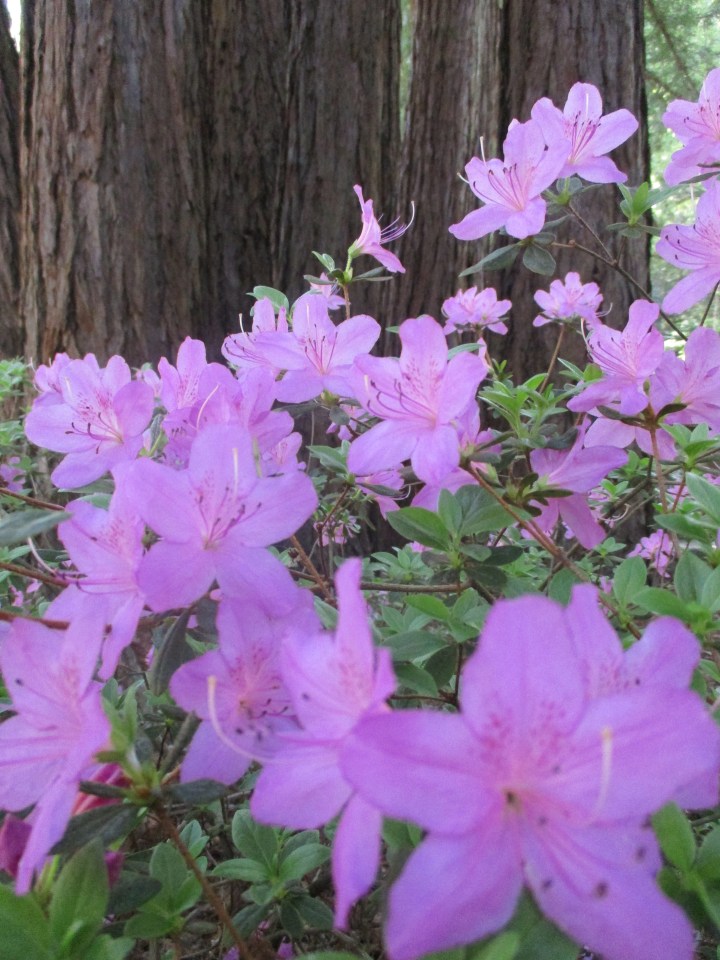
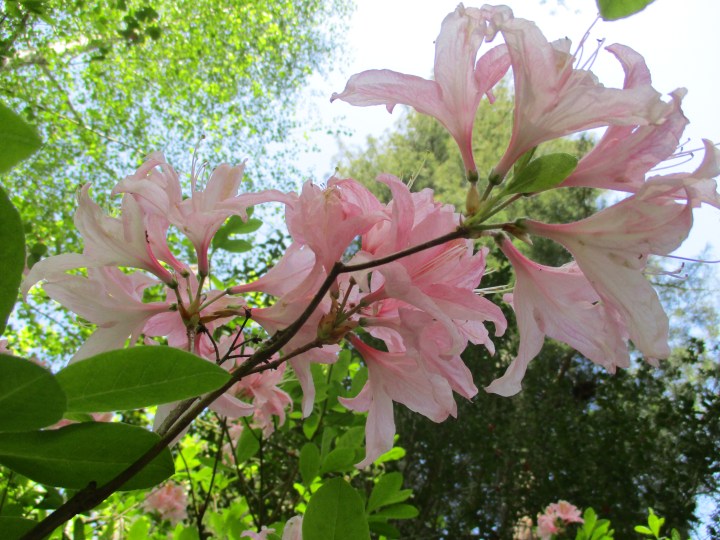
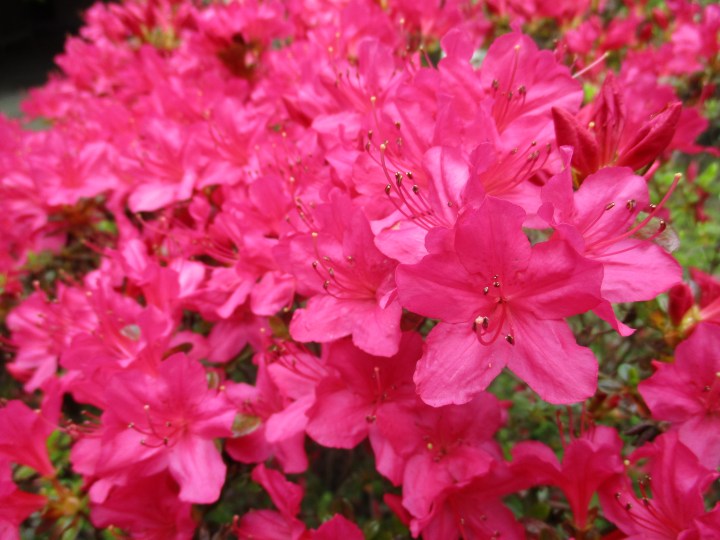
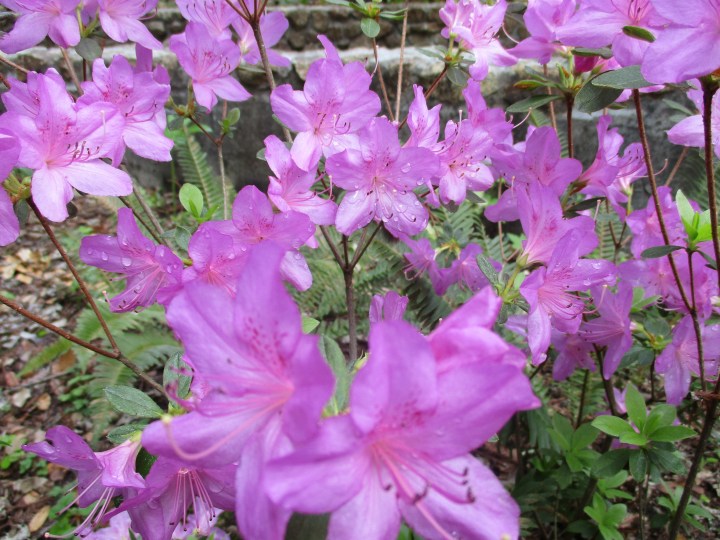
3. azaleaP80224++
4. camelliaP80224+++
5. zonal geraniumP80224++++
6. callaP80224+++++
This is the link for Six on Saturday, for anyone else who would like to participate:

https://thepropagatorblog.wordpress.com/2017/09/18/six-on-saturday-a-participant-guide/

Two Heads Are Better Than One

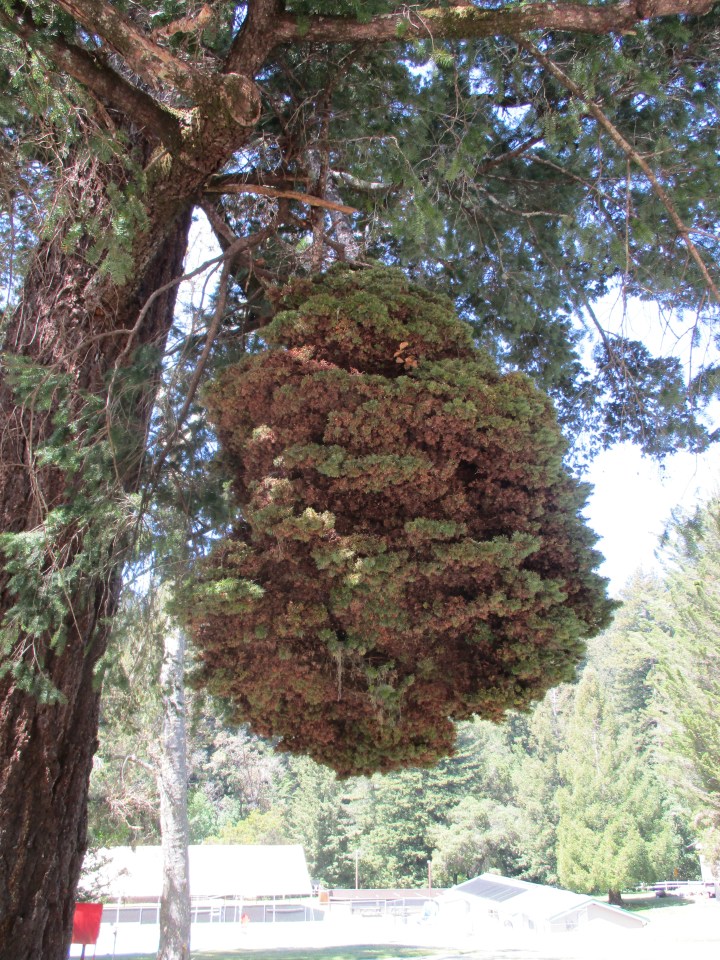
P80221Three or four might be better than two. Perhaps that is what this queen palm was thinking when it decided to get extras.

This is not a good picture, and the tree is a bit too shaggy with old foliage to see what is going on inside clearly. To the left, a secondary limb is curving downward and away from the main trunk, before curving back upward as a secondary canopy. Another limb is developing immediately above this secondary canopy, and another is visible to the right of the main trunk. It is hard to say how many individual canopies are within the collective canopy of this single specimen.

What is weird about this development is that the popularly available palms do not form branches. Think of it. When was the last time you saw a palm tree with a limb or branches? Before you answer that, yuccas (such as Joshua trees) and dracaenas are not palms. Also, clumping palms like Mediterranean fan palm do not form limbs from their main trunks. They merely develop multiple trunks from basal pups.

The very few specie of palm that develop branches regularly are very rare and live very far away. Date palms, either grown for dates or recycled into landscapes from displaced date orchards, have the potential to develop pups higher on their trunks, but rarely do so.

Palms are only trees because they have trunks. Otherwise, they are merely really big perennials, with single terminal buds from which all their foliage, flowers and fruit develop. If deprived of the terminal bud, a palm can not generate a new one, which is why a palm will die if topped.

So why does this queen palm have more than one terminal bud? It is impossible to say.

The Coast Is Clear

P80218Between here and Hawaii, there is a whole lot of water. Between Hawaii and Australia, there is a whole lot more. Everywhere to the west and southwest of California, there is a lot of water. Unfortunately, none of this huge volume of water is useful for gardening. It is saline. It would kill plants.

Of course this is not just any water. It is the Pacific Ocean. Although the water within it is useless directly, it is what feeds the weather that provides the precipitation that becomes the water that makes gardening and everything else possible. Rain fills local aquifers. Snow in the Sierra Nevada fills reservoirs as it melts.

The weather that the Pacific Ocean feeds gets shared over a very large area. Weather that does not make rain here might make rain or snow in Nevada, or Oklahoma, or really anywhere the weather wants to go to. In fact all the oceans all over the world cooperate to make climate and weather what it is.

What is so special about the Pacific Ocean being right here off the coast is that it moderates our climate and weather. Places like Nevada and Oklahoma that are not on the coast get water from the Pacific Ocean because weather is mobilized. The moderating effect of all that saline water is not. It stays right here in coastal regions.

Water has a high specific heat. That means that it takes a lot of energy to change the temperature of water. Saline water has an even higher specific heat. The temperature of the Pacific Ocean therefore changes very slowly and very minimally.

This inhibits extremes of temperature in the air above all that saline water. Small batches of extremely cold weather tends to collect a bit of heat energy as they pass over the Pacific Ocean. Weather coming in over so much saline water can not get extremely hot without the water absorbing at least some of all that heat energy. Therefore, coastal weather is rarely extremely cold or extremely hot. Temperatures can be more pronounced a few miles inland from the Pacific Ocean, especially when the weather comes from inland. Farther inland cold and heat can get significantly more extreme.

A lack of cold weather in winter limits what can be grown here. Plants that require a good chill are not satisfied with our pathetic winters. That is why some bulbs that do well as perennials farther inland bloom only once here, and why some varieties of apple that perform well in central Washington are not grown here.

However, a lack of hard frost allows us to grow many plants that can not be grown where winters are more severe. Even if bougainvillea gets frosted every few years or so, it typically recovers. Avocados and lemons are likewise quite happy here. The weather may seem to be boring, but it certainly has its advantages.

Little League

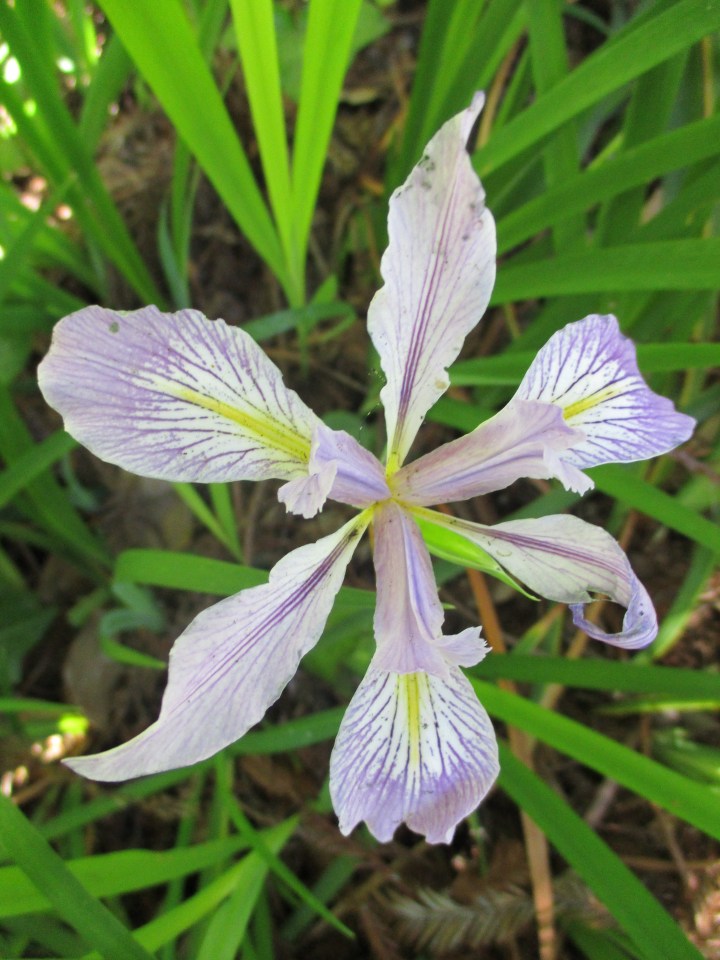
P80217+K1There are so many big trees in the Santa Cruz Mountains that keep most of us looking up. It is easy to miss much of the understory plants that grow on the forest floor.

While getting the pictures for the ‘Six on Saturday’ article posted earlier, I happened to notice these few small pale flowers that contrasted more with their own dark green foliage than they would have if they were more brightly colored. Perhaps that is a technique to get the attention of pollinators. It certainly got my attention.P80217+K2.JPGThe flowers were not completely white. They were very pale hues of pink. The wood sorrel in the last picture was slightly more pinkish than the unidentified cruciferous (of the family Cruciferae) flowers of the first two pictures. Pale flowers, particularly those that seem to be adorned with barely perceptible patterns, are typically those that use infrared and ultraviolet color to attract pollinators that can see such color. If that was their intention, they would not look so bland to the pollinators whom they prefer to attract.

Much of the surrounding dark green foliage is exotic (non-native) English ivy. It climbs some of the redwood trees and makes quite a mess of the forest. Native specie are too docile to compete with it. The two species in these pictures might have been more common years ago, before the English ivy invaded.

Neither of these specie are the sort that I would plant in my own garden. I do not even know what the first species is. The wood sorrel looks too much like related oxalis. Although several specie of oxalis are popular in home gardens, I still think of them as invasive weeds. Yet, in their natural environment, they are too happy and pretty to not be appealing.P80217+K3

Six on Saturday: Big League


Again, my six pictures are not from my own garden, which incidentally, is not at all interesting. Instead, these pictures are from the biggest site I work at. It is many acres, with some very big features.
1. Big lawns are acres of turf. The kid in front of the building in the distance shows how big the building and lawn is. This is the biggest of three big lawns.P80217
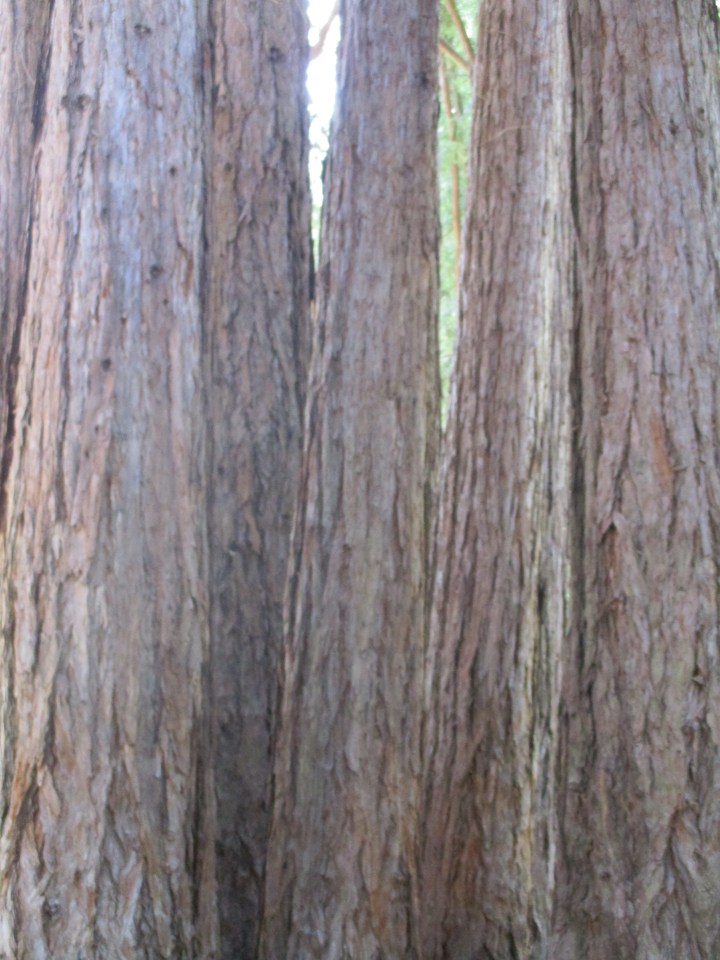
2. Big trees are very common here. These are coastal redwoods. There are also big Douglas firs and ponderosa pines.P80217+
3. Big water features are not constructed backyard fountains or koi ponds. This is Bean Creek, which flows into Zayante Creek less than half a mile away. It is more than a hundred feet below where the picture was taken.P80217++
4. Big shovels are necessary for working in such big gardens.P80217+++
5. Big garden sheds and big garden carts made by Dodge, Ford and Chevrolet are also very important.P80217++++
6. Big insects are quite at home in such big gardens.P80217+++++
This is the link for Six on Saturday, for anyone else who would like to participate:

https://thepropagatorblog.wordpress.com/2017/09/18/six-on-saturday-a-participant-guide/

Year of the DOG!

P71019

Tet, Vietnamese New Year’s Day, is today! This is the first day of the Year of the Dog! Tet is celebrated for at least three days, and besides all the popularly known traditions that go along with it, a few horticulturally oriented traditions are also observed.

When I grew citrus back in the early 1990s, I can remember than we sold every kumquat and calamondin tree that had fruit on it prior to Tet. When those ran out, we sold every fruited mandarin orange and tangerine tree, and then every fruited orange and lemon tree. Eventually, just about every fruited tree we could supply was gone. Citrus trees with colorful ripe fruit are traditional decoration for Tet, and might even be a gift for someone lacking such a tree. Kumquat trees are the favorite, but others will do if necessary.

Fruit baskets containing primarily citrus fruits are also very popular and traditional. Bananas, pineapple and any colorful fruit are fair game as well. Shaddock fruit is popular if available. Shaddock is the dwarfing understock for other dwarf citrus trees, but is not commonly grown for fruit production.

Blooming stems of apricot, peach and plum, as well as Saint John’s wort flowers, are the favorite traditional cut flowers for Tet. Each type of flower corresponds to the region of Vietnam from which the family displaying it originated. In the Santa Clara Valley years ago, there were plenty of fruit blossoms to go around. The stems were sometimes cut early and forced to bloom on time for Tet. Nowadays, such blooming stems can be purchased from florists, along with the other traditional flowers; chrysanthemums, narcissus, marigolds, pansies and cockscombs. Families who own a bonsai or more display them prominently for Tet.

Happy Tet and Year of the Dog!80131

More Misplaced ‘Environmentalism’

P80214Nature has been getting by just fine for a very long time before humans started to interfere. It has survived all sorts of catastrophes literally longer than anyone can remember. It was here when dinosaurs were exterminated by a meteorite or comet or vulcanism or whatever catastrophic yet natural event finished them off. In fact, Nature was here for all of the few mass extinction events of the very distant past, including the Permian – Triassic Extinction, which only about 4% of life on earth survived! We all know that “It’s not nice to fool with Mother Nature.”, or serve her margarine that tastes like real butter; but we should also realize that it is rather presumptuous to think that we can be more efficient with correcting all environmental damage. Very often, it is best to let nature do what nature does best.

For example, forest fires are perfectly natural. They are more frequent now because of human activity; but they are less extensive, likewise because of human activity. Humans contain fires that would naturally burn much larger areas. Preventing vegetation from burning allows it to accumulate and become more combustible. If deprived of fire long enough, vegetation within ecosystems that rely on fire as part of their natural restorative cycle eventually deteriorates, or become so combustible that when it does burn, its seed gets incinerated.

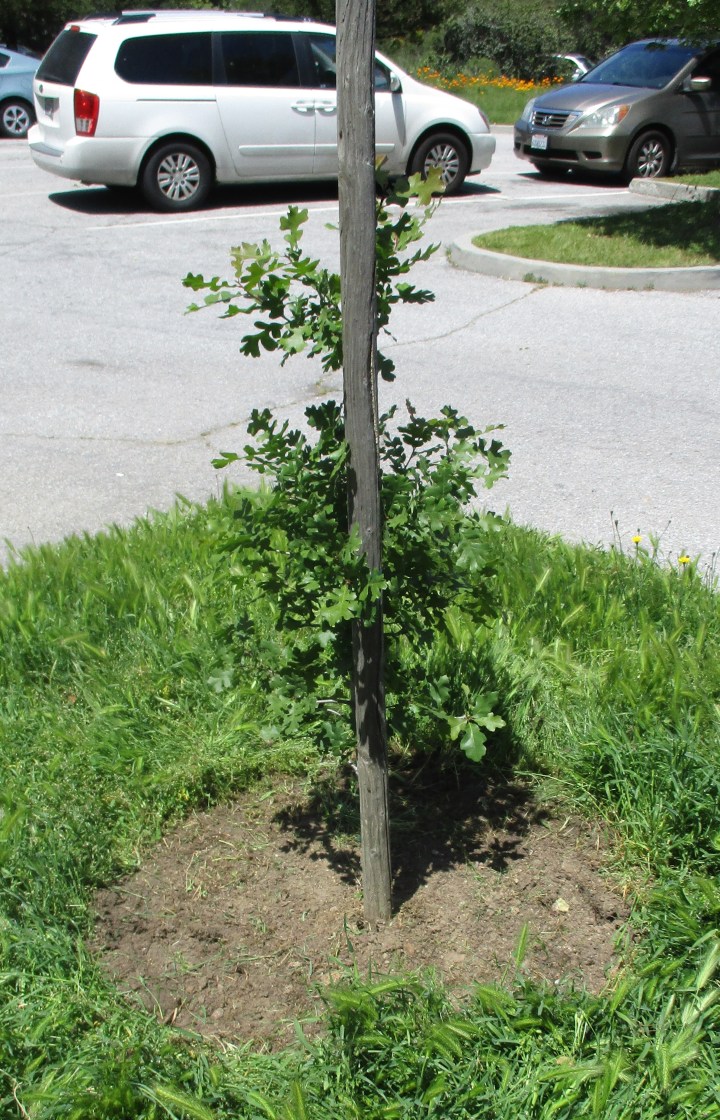
Many box elders along the San Lorenzo River have been dying for the past many years. We have not identified the pathogen associated with the necrosis, but it is probably a naturally occurring pathogen that is an intricate component to the natural ecosystem, (although after last winter, an inordinate number of box elders succumbed at the same time). Regardless, trees succumbed and fell. A significant void developed within the collective forest canopy on the Eastern Bank, near the Graham Hill Road Bridge. ‘Environmentalists’ wanted to ‘help’.

These new trees in the picture were planted within the area vacated by a few deceased box elders. The closer of the two is a coast live oak. The other is a bay laurel. There are a few more beyond those in the picture. Native vegetation that developed ‘naturally’ but happened to be in the way was removed to facilitate this project. To prevent native deer from damaging the trees as deer would do ‘naturally’ the trees were imprisoned in small cylindrical cages. Because the trees did not grow there and disperse their roots ‘naturally’, they must be irrigated until they can survive on what they get ‘naturally’ from rain.

The irony of all this is that native vegetation that was growing ‘naturally’ was removed to install ‘unnatural’ nursery grown trees intended to restore a ‘natural’ ecosystem that was already doing what it does ‘naturally’. Although native, the coast live oak ‘naturally’ prefers to avoid riparian environments such as this. It ‘naturally’ prefers a more exposed and drier situation. Bay laurel trees live there ‘naturally’, which is why a few had already started to grow from seed. These seedlings would not have needed to be caged or watered, but were removed to plant the new trees. Yes, bay laurels that would have survived on their own were replaced by bay laurels that must be watered and protected. Willows and cottonwoods that were quite prolific in the area were likewise removed, although many more remain lower on the bank of the River.

In the background, in the upper right corner of the picture, the bright yellow flowers of an Acacia dealbata can be seen. It is a seriously invasive exotic species that displaces native vegetation. Although it is impossible to exterminate the species, this individual tree that has been dispersing profuse seed into the San Lorenzo River for many years, really should be removed. Even if nothing were to be installed to replace it, the removal would benefit the ecosystem. Nature would have no problem finding native trees that would like to occupy that spot.