Six on Saturday: More Recycling


Since lauristinus, deodar cedar and a few other species are happy enough here to naturalize and proliferate a bit too much where we do not want them, they should be just as happy to perform where we do want them. That is how we justify reallocation of such resources. We do it with other species too, just to avoid wasting them, or just because they are easy to propagate.

Norway maples and birches got canned over winter too, but I did not get pictures.

1. cyclamen – was something I grew in high school as a perennial that went bare for the heat of summer. It saddens me that it is so expensive, but also so expendable as a cool season annual.P00404-1
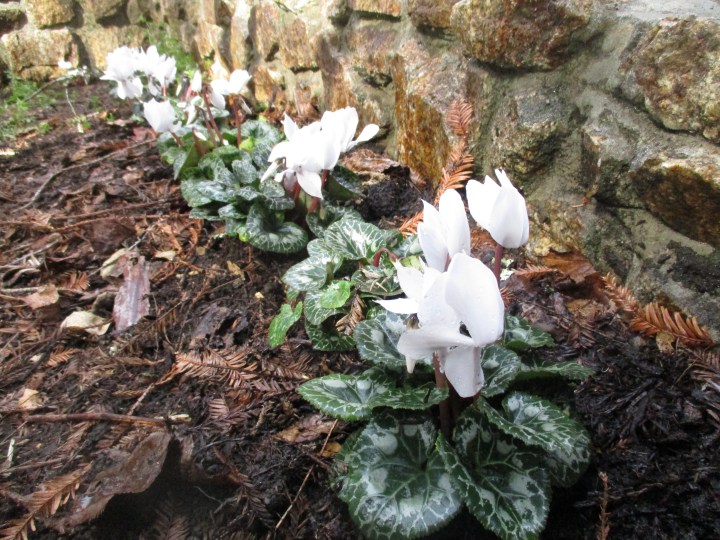
2. cyclamen – will get a second chance this year. They got replaced earlier because of mold, but both the white group above and this red group went out into a landscape where they can stay.P00404-2

3. ivy geranium – pruning scraps got plugged as cuttings to eventually replace zonal geranium that were mistakenly planted into hanging baskets. (That is the Pet Rock in the background.)P00404-3

4. zonal geranium – pruning scraps get plugged as cuttings also. As they hopefully subordinate to ivy geranium, those in the hanging baskets will get pruned back more until totally replaced.P00404-4
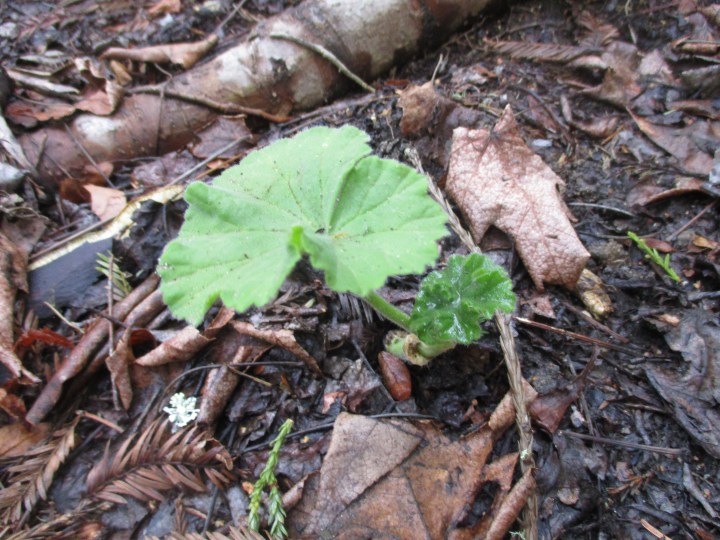
5. pigsqueak – that needed to be removed from one spot got plugged into another. Leftovers that could not be accommodated there and then, got canned for another time and another place.P00404-5
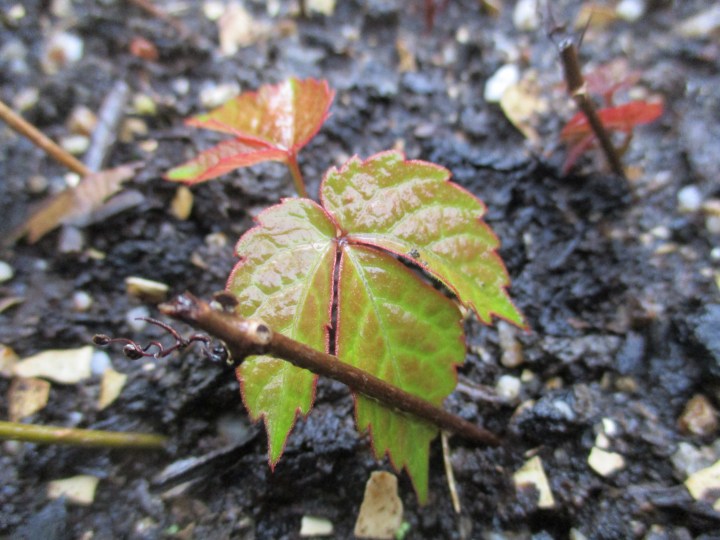
6. Boston ivy – could be a problem. We wanted only a few copies. Rather than plug just a few pruning scrap cuttings into just a few cans, I plugged a whole flat of a hundred. Most are rooting!P00404-6
This is the link for Six on Saturday, for anyone else who would like to participate:

https://thepropagatorblog.wordpress.com/2017/09/18/six-on-saturday-a-participant-guide/

Horridculture – Major Improvement

P00401-1
A bit of Boston ivy adds a bit of texture and color to the stone wall.

My rant for this week is that I was deprived of my rant. I went to a nearby landscape that had been trashed by the so-called ‘gardeners’ for many years, only to find some unexpected and major improvements. I do not know what happened. Although it will take some time for the landscape to recover from the prior damage, it is already starting to function as intended.

It is obvious that the landscape was very well designed. Although I know very little about design, I know what is horticulturally correct. The designer selected species that are very appropriate for every application, even though none were particularly trendy at the time. Those who were hired to maintain the landscape only interfered with its intended development.

I noticed several improvements, but got pictures of only two features that bothered me the most prior to this season.

Obviously, the landscape designer intended the trailing rosemary in the picture above to cascade over the stone retaining wall, not so much to obscure the appealing stonework, but to break up its expansiveness. Obviously, the Boston ivy was intended to climb up from below to do a bit more of the same, and provide a bit of color in autumn, without overwhelming the rosemary.

Until recently, the so-called ‘gardeners’ had shorn the Boston ivy into useless little globs at the base of the wall. If it crept onto the wall, they were sure to remove it just as it was starting to exhibit color for autumn. The rosemary was never allowed to hang over the edge, and typically got shorn just as it was beginning a bloom phase.

Now, the Boston ivy is allowed to climb the wall somewhat. I suspect that it will be partly removed through the year, just so that it can provide a bit of color by autumn, but without getting too overgrown. Also, the formerly shorn edge of the rosemary is beginning to take on a natural form, and will likely start to cascade through summer, hopefully with occasional thinning.

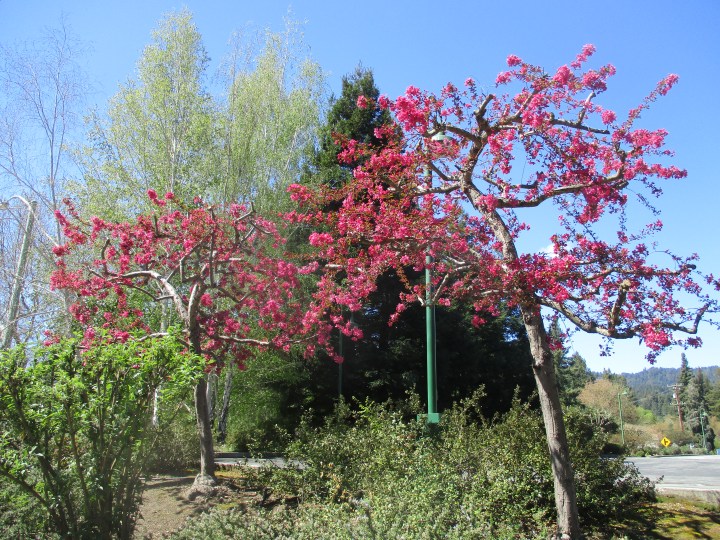
What bothered me even more than the glaringly bare wall was how this pair of flowering crabapples in the picture below got hacked back annually just as the flower buds were beginning to show the slightest bit of color. Seriously! Every little twig that could have bloomed was removed. The so-called ‘gardeners’ were weirdly punctual about this.

Well, the trees got pruned a bit earlier last winter. What I did not bother to notice earlier was that much of the unsightly stems that had been disfigured by what the so-called ‘gardeners’ did to them were pruned back to healthier growth, while much of the blooming stems were left intact to bloom now! All the damage can not be repaired in one season, but this a great start.

P00401-2
Someone is putting serious effort into renovating these flowering crabbaple trees.


Viability

P00329
Oldies but not likely goodies.

31,800 years or so ago, busy arctic squirrels of northeastern Siberia stored more campion seed than they could consume. Of a store of more than 600,000 such seed, which were found deep below permafrost, three immature seed contained viable embryos. These three embryos were extracted and grown into plants that bloomed and produced new seed as they would have 31,800 years ago.

A 2,000 year old date palm seed, which was found in the palace of Herod the Great on Masada in Israel, is the oldest known intact and mature seed to germinate. It was approximately 29,800 years younger than the miraculously viable embryos of the Siberian squirrel stashed campion seed, but is ridiculously older than the oldest of the old seed in my partly neglected collection. There is hope.

Some of the seed that I saved is not dated because, at the time, I figured that they would be sown during the following season. A few of those that are dated are embarrassingly from five years ago. I know that canna seed lasts much longer than that. So do seed of some of the most aggressively invasive exotic species, such as broom and Acacia dealbata. Vegetable seed are not so fortunate.

However, I cannot discard them without giving them a chance. If they do not germinate on schedule, replacements will be sown immediately.

The two cans of seed to the left in the picture above are for two unknown varieties of pumpkin, and might have been three years old last autumn. Butternut squash seed to the upper middle is about the same age. Hyacinth bean seed to the lower middle is perhaps a year older. Blue dawn flower seed to the upper right is at least five year old. Parsley seed to the lower right was packed for 2015.

Out Of Step

P00328K-1
Watch your step . . . while there is one to watch!

This is . . . odd. It is like something of the Winchester House. It seems that these steps in the picture above should go down to a lower deck, but there is no indication that there had ever been such a deck down there. The steps are well maintained and swept mostly clean of forest debris, so whatever happened to whatever should be down there must have happened recently.

Actually, these steps are for what is above rather than what is not below. The picture below shows that there is a deck associated with these steps, but that it is a considerable distance away, and that the only way to get there is by the cable that extends to it from the upper right corner of the picture, over Zayante Creek. The deck is rather sloped to facilitate arrival.

The cable that extends in the same direction from the middle of the top of the picture is somehow associated with the collective infrastructure, but I do not know how or why. Heck, I do not know how or why anyone would put such a deck so far away while there is plenty of space right here for a luxuriously spacious deck! Apparently, this whole setup is part of a short ‘zip line’ tour.

I don’t get it. It must be fun. It looks terrifying to me. I think that if I were to try something like this, I would rather be terrified someplace with more appropriate scenery, like between the skyscrapers of downtown San Jose! Now that would be RAD . . . and terrifying! In this particular location, I would not want to speed past all this interesting flora without slowing down or stopping to appreciate it.

The lower right quadrant of the lower picture shows young alders. Above and beyond, to the upper right, there are young redwoods with some Douglas firs mixed in. Just to the left of them, at the upper center, is an exemplary bigleaf maple. Most of the vegetation to the left is bay laurels, with some tanoaks, and perhaps madrones mixed in. The undergrowth the lower left is filberts.

I am certainly in no hurry to try this ‘zip line’ tour, and if I do, I seriously doubt that I will be noticing the surrounding flora; not just because of the speed, but because of the terror!

P00328K-2
Oh, . . . so that is where these steps lead to!

Six on Saturday: Greens


There are no vegetables in the garden yet. It is so shameful. Work had been so overwhelming that I am only now renovating a small vacant space into a new vegetable garden, and only because I am unable to go to work at my most time consuming job. I needed to remove our berry canes to do it!

Until the garden becomes productive, and perhaps to avoid the supermarket, I have been getting much of my produce from the surrounding forest and landscapes.

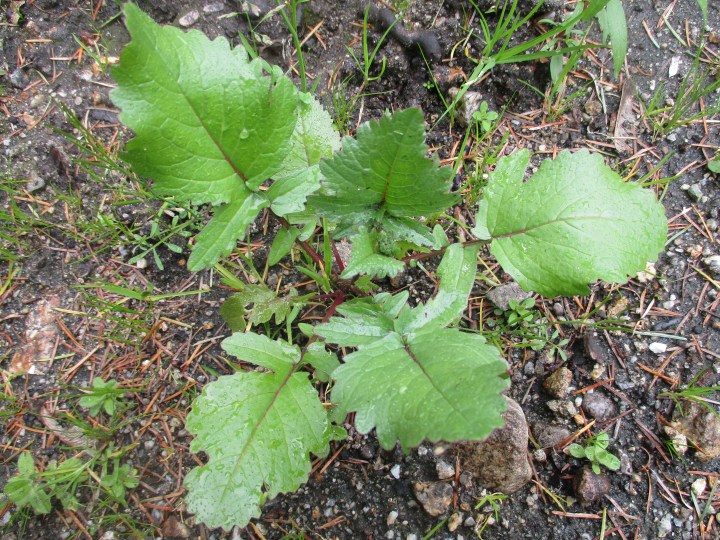
1. mustard greens – are the most abundant of the greens growing wild around the perimeter of the abandoned baseball field. Similar wild radish and turnip greens are even better, but not abundant.P00328-1

2. dandelion – grows in the outfield of the same abandoned baseball field, mostly past third base. They are not my favorite, but are an alternative to the other greens. These are dirty from heavy rain.P00328-2

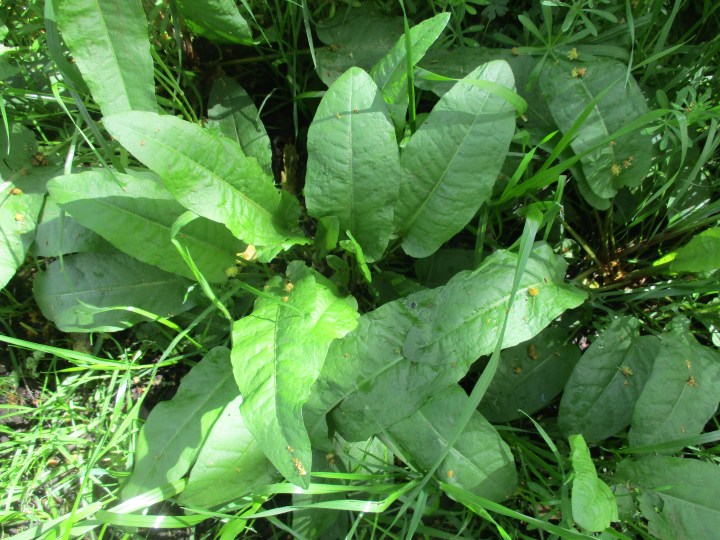
3. dock – is more randomly sporadic. It grows amongst the other greens and elsewhere, although not in significant colonies. The tough midribs are supposed to be removed. I just chop them up fine.P00328-3

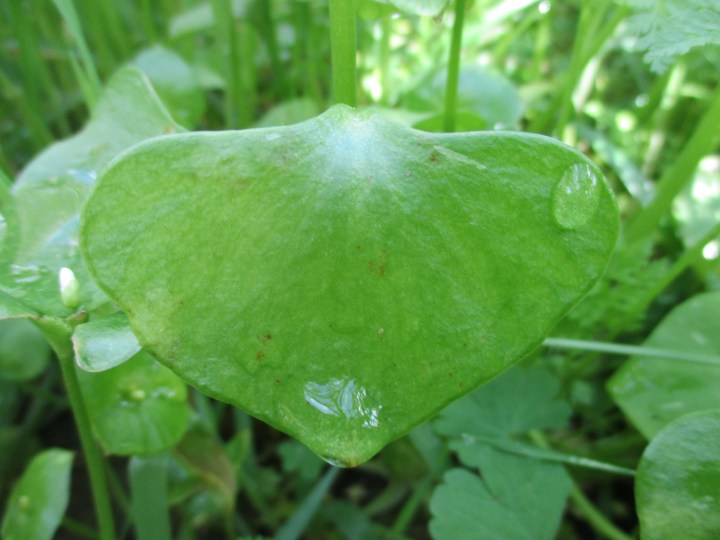
4. miners’ lettuce – is the only native of these greens. Most leaves are circular with tiny white flowers in the center. These vegetative leaves are supposedly better. Like lettuce, they do not get cooked.P00328-4

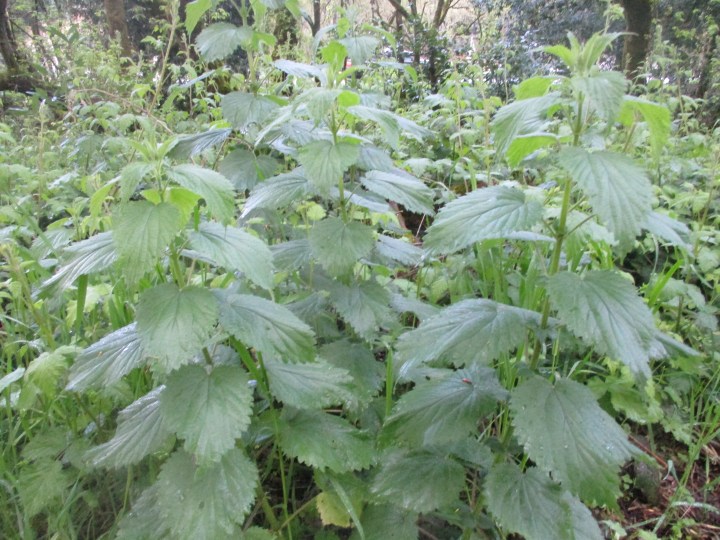
5. stinging nettle – must be cooked to stop stinging. This is my favorite of the greens. It is like spinach that I do not need to tend to. I get it from along the trails where it should be eradicated anyway.P00328-5

6. Rhody – is not even remotely relevant to greens; but everyone wants to see him. Someone suggested that I write exclusively about Rhody, as if my horticultural topics are insufficiently interesting.P00328-6

This is the link for Six on Saturday, for anyone else who would like to participate:

https://thepropagatorblog.wordpress.com/2017/09/18/six-on-saturday-a-participant-guide/
Unused Pictures

P00325K-1
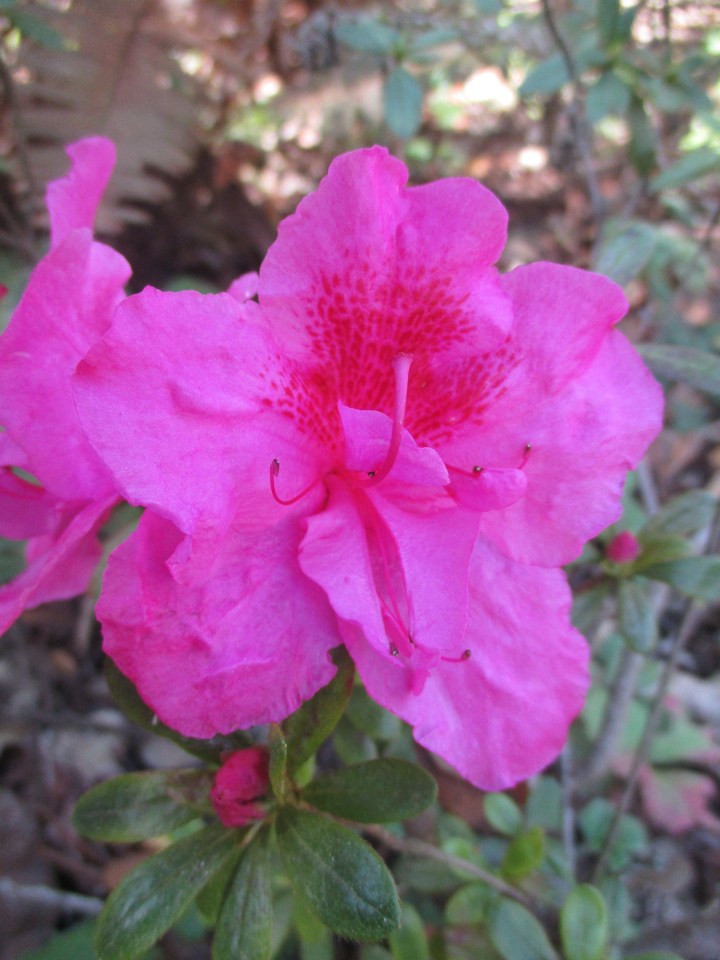
I believe that this azalea is ‘Phoenicia’.

Okay, so I felt slightly guilty about not posting anything of any horticultural interest today. Okay, perhaps a bit more than slightly. Okay, perhaps guilty enough to post a few pretty flowery pictures . . . and the last one, which some might find objectionable.

P00325K-2
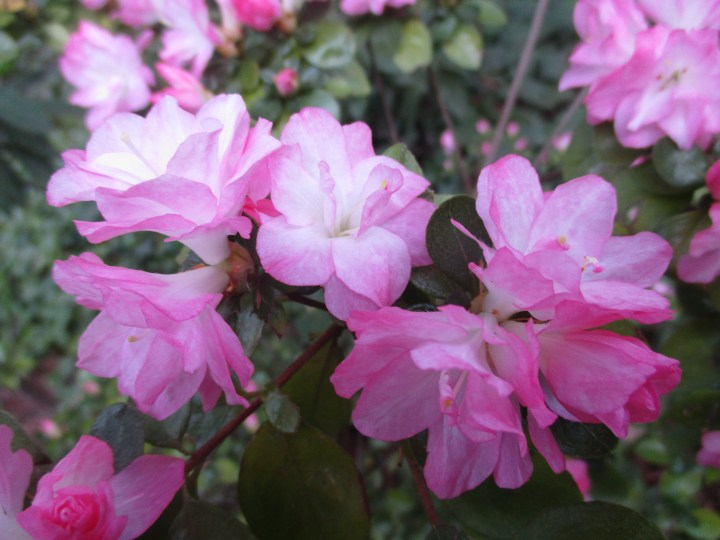
‘Coral Bells’ is not one of my favorite azaleas, but is reliable and profuse.

I will not put much effort into this. I did not even take these pictures for any particular article.  I am only sharing them here and now because I have no use for them, but did not want to just file them away unseen forever. Hey, these flowers work hard to bloom!

P00325K-3
I have no idea what this azalea is, but I am impressed.

Actually though, except for the last picture, all are about a month old. The last picture is half as old, and the bloom that is shows continues. Otherwise, the other blooms are already finished. Although colorful, none are particularly remarkable or interesting.

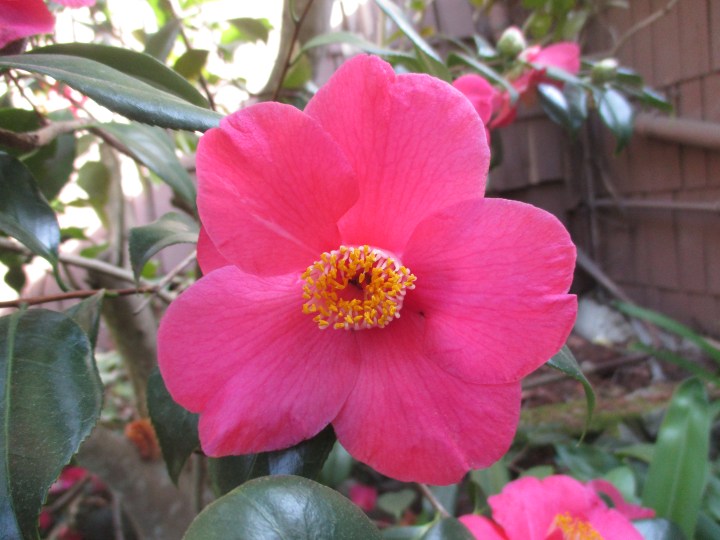
This odd camellia seemed to grow from the base of a bigger and older specimen, as if it is a sucker from understock. However, there is no indication that the original specimen is grafted. Nor is there any reason why a Camellia japonica should be grafted. The odd camellia could have grown from seed. It is rare but not impossible for Camellia japonica to produce seed here. It is not crowding anything, so remains.

P00325K-4
This odd camellia looks like it could be an extra on the Muppet Show.

I really should eradicate this pampas grass. However, it has been here for many years without becoming aggressively invasive. We have observed no seedlings nearby. Besides, even if we did eradicate it, there are herds of more just over the ridge. I can not explain why it is not migrating inward, but I am not complaining. I happen to like the bloom.

P00325K-5
This is not just any pampas grass. It is the dreaded Cortaderia jubata.

These pictures are, of course, not nearly as awesome as the pictures of Rhody that posted earlier. They just happen to be more relevant to what should be a horticultural blog.

Memorial Tree Update – March 22, 2020

P00322-1
Memorial Tree – Before

Updates get complicated as they link back to previous updates to previous updates to previous updates and so on. Linking and reblogging from another blog adds more complication. The last update for the Memorial Tree was reblogged from Felton League on August 10. It and previous updates should link back to preceding updates chronologically. At least it sounds simple.

Another brief update that will reblog here from Felton League at noon will describe more of the social significance of the Memorial Tree rather than horticultural concerns. It really is special.

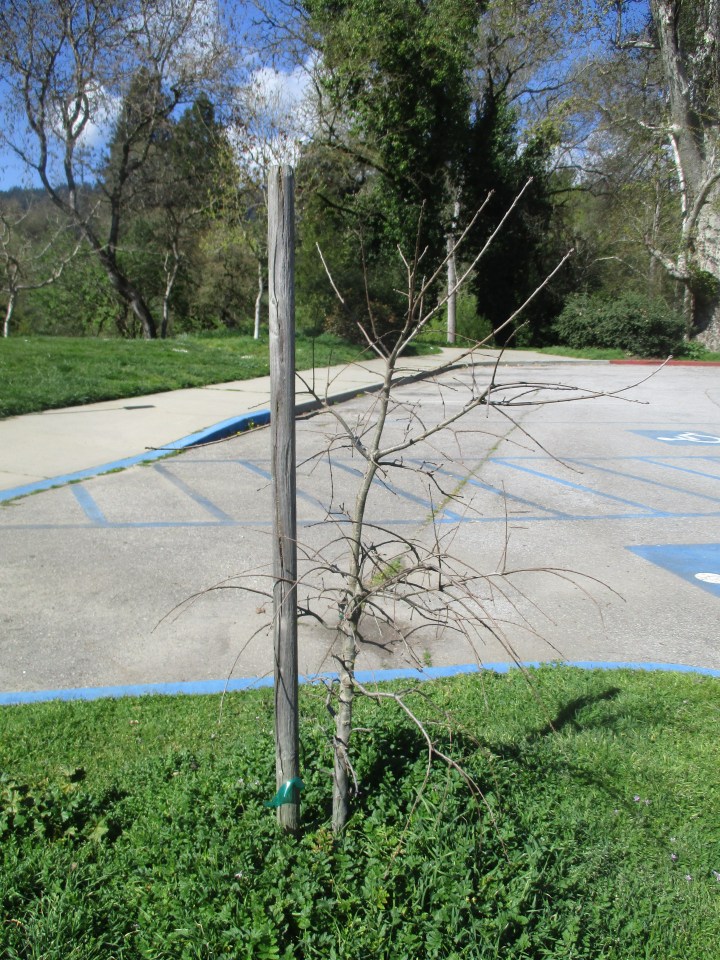
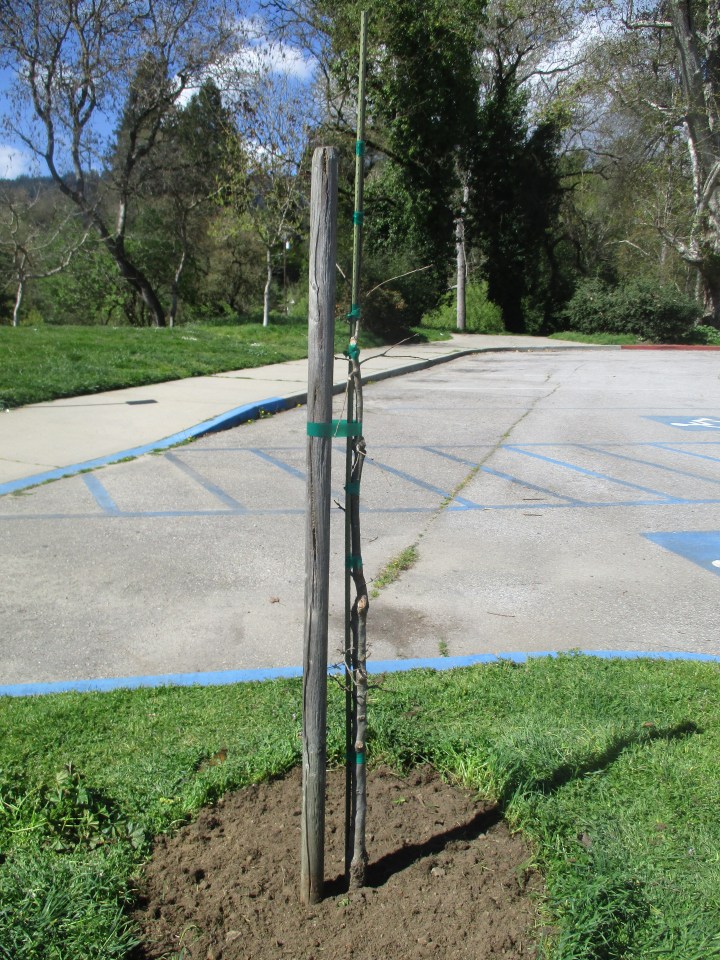
This little Memorial Tree has certainly been through some difficult times. Despite reassurances that it would not happen again, and that the tree would be outfitted with an ‘approved’ trunk guard, the trunk base has been gouged by weed whackers on more occasions than I can remember. That is an unfortunate consequence of efficient but unaware community service workers.

Such major damage severely inhibited growth. As it begins its fifth year, the Memorial Tree is barely six feet tall. By now, it should be developing branch structure above minimal clearance. Fortunately, it was quite healthy last year. If it continues to grow similarly this year, it will grow above six feet, where it can later develop scaffold limbs. I intend to apply fertilizer regularly.

Stubble had been left on the trunk to enhance caliper growth. That which was developing into significant branches was removed to concentrate resources into vertical trunk growth. Stubble that remains is minimal, but should be substantial enough by winter to get mostly pruned away again. It will more likely be unnecessary, and pruned away completely from the main trunk.

Binding is unfortunately still necessary. The species innately develops irregular form. Binding straightens the otherwise curved trunk. Once the trunk lignifies in the desired position, binding and the associated stake will not be necessary. The larger lodgepole stake holds the binding stake vertical, but is more important for protection from those who bump into the still small tree.

Weeds were removed from around the base of the Memorial Tree, so that there would be no need for a dreaded weed whacker to get close to it. Former damage is compartmentalizing well.

P00322-2
Memorial Tree – After

Poppy And Periwinkle

P00321-1
Even though I know they are slightly purplish, periwinkle look blue to me.

Clearing space for a new small vegetable garden is more work than it will be worth. It took more than a day to remove the thicket of bramble from a triangular area that is only about forty feet from front to back, and not much more than twenty feet wide. After so many years of getting trash dumped on top of them, the brambles were unusually prolific with gnarly root burls.

There is still significant work to do. I still need to condition the soil and groom the adjacent junipers before sowing seed for the warm season vegetables for this summer. Now that I can see that the junipers that were formerly concealed by brambles are worthy of salvage and grooming, I will need to clear a bit more garden space across the road, and cut back a few trees above.

When finished and producing, the garden will not produce enough. The four hundred or so square feet in the main part of the garden should supply enough for two people; but realistically, it would more likely produce enough for me alone, with a bit extra to can for when it is not producing much. There are about a dozen on our crew. They all have families. I need a quarter acre!

The math of it all is frustrating. So is all the work to get it started. It all seems so futile. I know we will appreciate the little bit that we get. I will still get plenty from the weeds that grow wild around the baseball field, so will not take much from the garden.

P00321-2
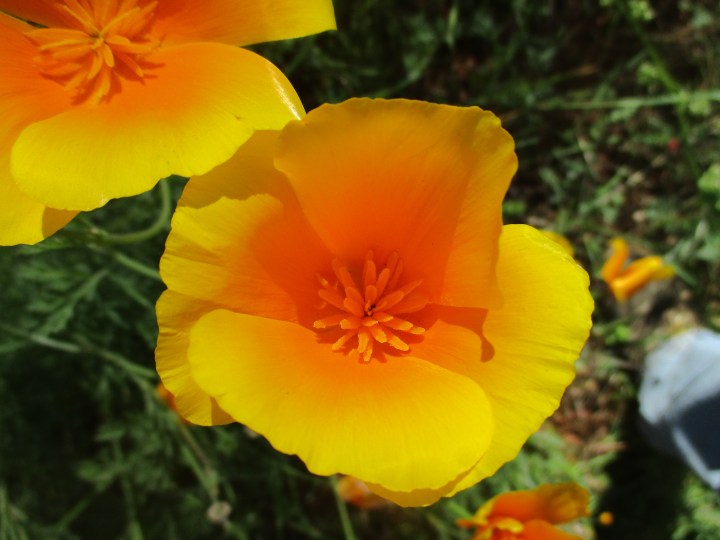
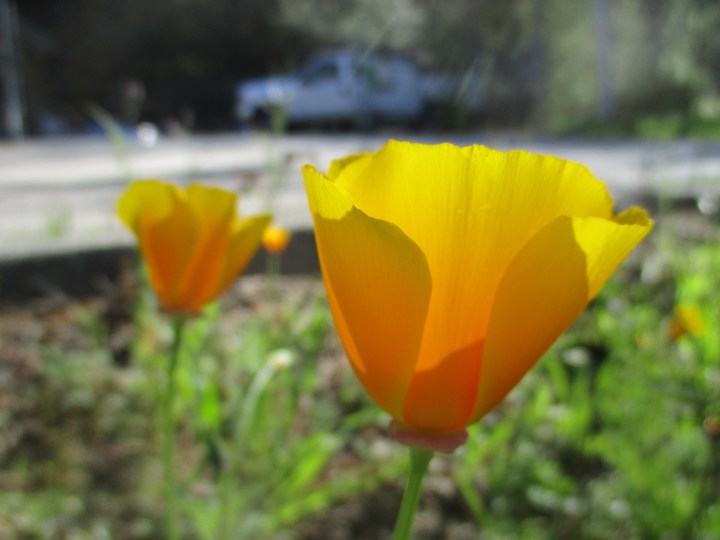
As simple as they are, poppies are still my favorite native wildflower.

For now, I try to visualize what the small vegetable garden will look like in production this summer, even if all that I see blooming are the poppies and periwinkle on the outskirts.

P00321-3
My illustrations are more technical than artistic. It looks like someone else took this one. Ignore the pickup in the background.

Six on Saturday: New Vegetable Garden


There is more time for a late start on a new vegetable garden now. I had planed to take this and next week off from most of my work, to tend to other neglected obligations. However, under the circumstances, I am still unable to tend to many of those obligations! Well, the crew wants a new vegetable garden.

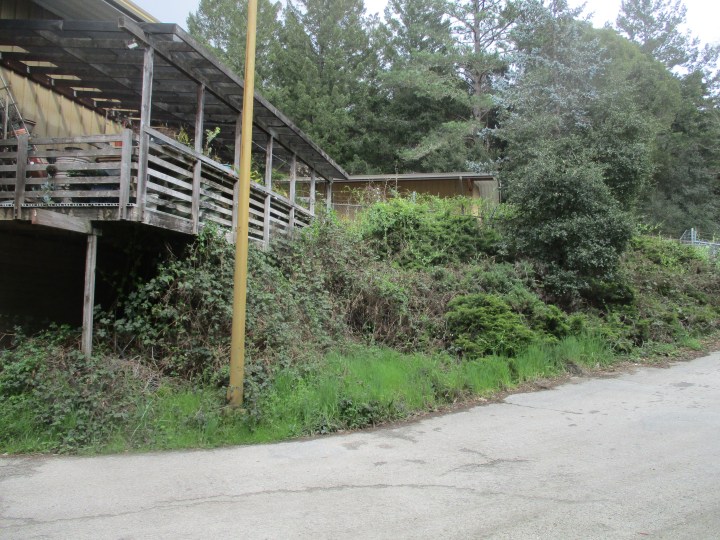
1. Before, the area was overwhelmed with a dense thicket of Himalayan blackberry brambles, that had grown up into the joists of the deck above, and over the adjacent junipers to the right.P00321-1

2. After, it is not much better. This initial phase took me half a day!! I intended to remove most or all of the junipers, but as they become exposed, it is evident that they are worth salvaging.P00321-2

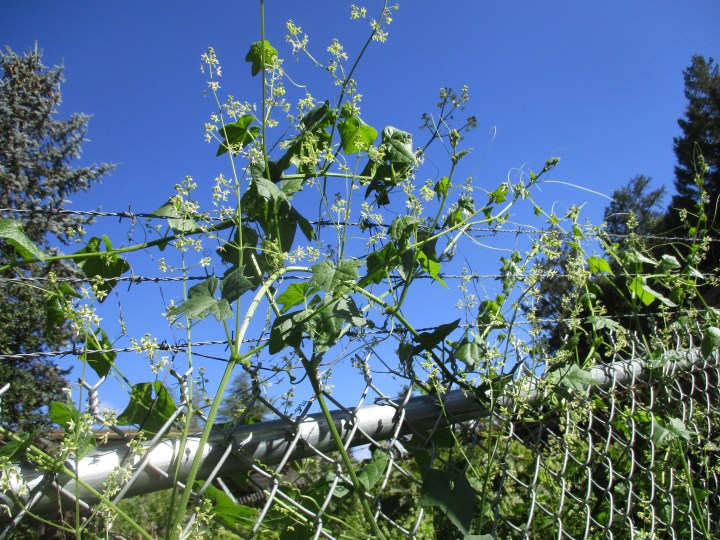
3. I already know I will be sowing seed for the warm season vegetables a bit late; but this wild cucumber feels compelled to remind me. It is already past the top of this seven foot high fence.P00321-3

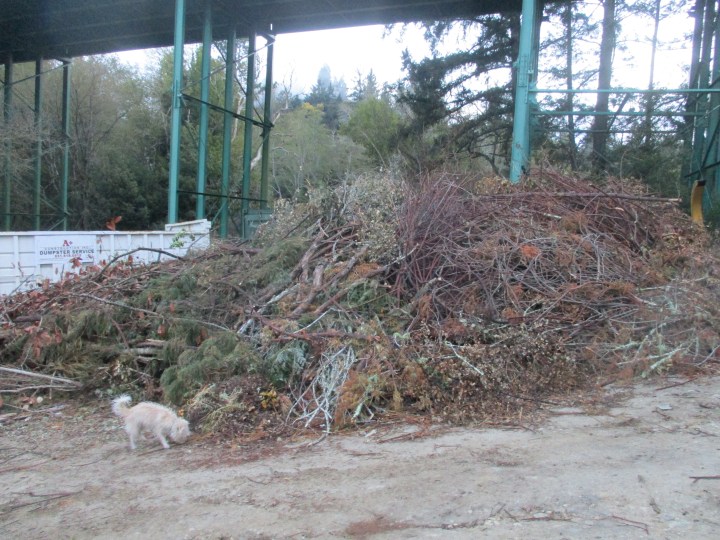
4. This is just some of the debris that I removed. For comparison, the animal to the lower left is a buffalo. Okay, it is really just Rhody. The dumpster is as high as the cargo container though.P00321-4

5. Okay, so that was a bit of an exaggeration. The pile really is this big, but only the small portion outlined in yellow to the upper right is from the new garden, and is only about two feet high.P00321-5

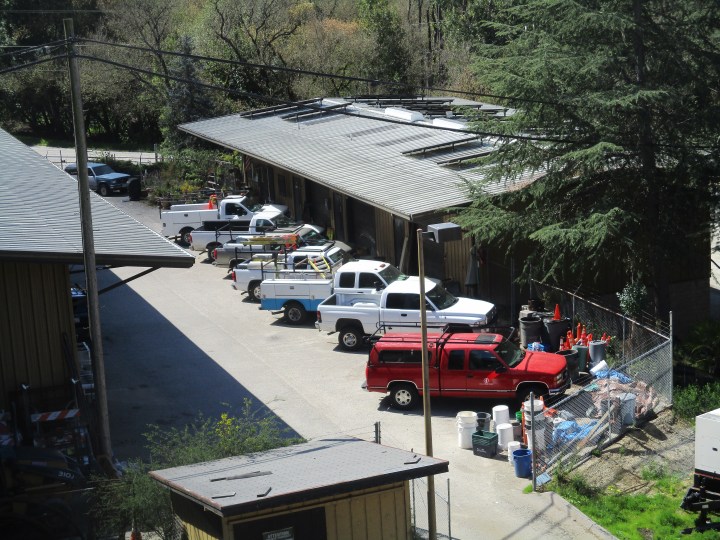
6. While up on the bridge over the debris pile, I got this picture of most of the work trucks that are not at work where they belong. Everyone else writes about it; but I have not mentioned it.P00321-6

This is the link for Six on Saturday, for anyone else who would like to participate:

https://thepropagatorblog.wordpress.com/2017/09/18/six-on-saturday-a-participant-guide/

Horridculture – Red Hot Chili Peppers

00325thumb
Sweet bell peppers are actually more of a challenge to grow.

This illustration is relevant neither to the topic, nor to that really creepy rock band of the same name. Even though the band has been popular since I was in high school, all that I know about them is that I am none too keen on their music. Embarrassingly, I do not know much more about the topic, and it has been a hot topic much longer than I have been growing my vegetables.

Vegetables make no music of course. I just mean that I am no more familiar with contemporary cultivars of hot pepper than I am with music that I do not appreciate. I happen to appreciate some types of peppers, and some of them happen to be hot peppers. However, I have not bothered to get acquainted with those that are so ridiculously hot that I do not want to grow them.

Why should I? What are they good for? Why waste my time, limited garden space and other resources on something that no one wants to eat or add to any recipe? They are not particularly productive. If they were, they would only make more of something that is just as useless as the few that each plant produces. I can not even justify putting effort into finding a picture of one.

Those who indulge in this fad brag about it profusely. They post pictures of their few tiny hot peppers online, with sensational claims that there is nothing hotter. Some post selfies with their free hand dangling one of their weird peppers over their extended Gene Simmons tongue. Some even post videos of their drunken friends tasting their peppers, as if it can not be done sober.

I suppose that, regardless of how pointless it seems to me, it is one way to enjoy gardening.