Six on Saturday: Housebound


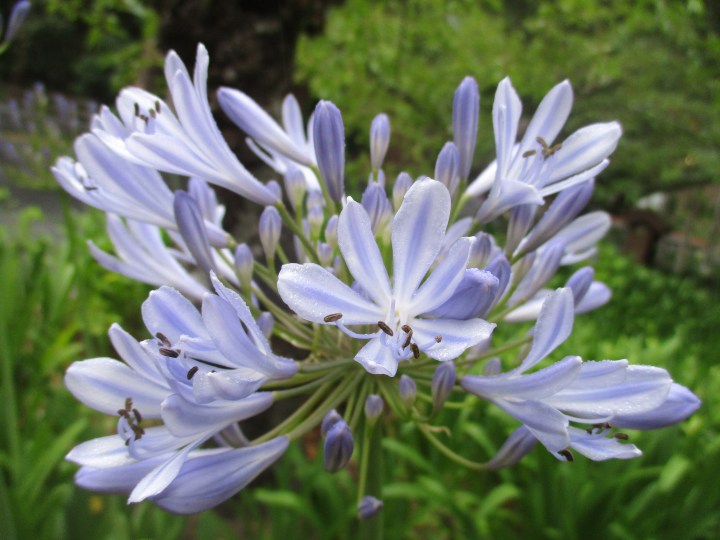
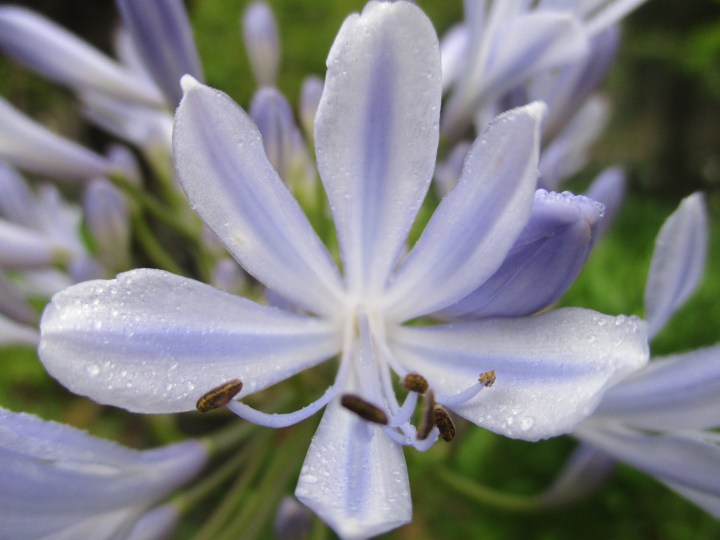
This is not a good week for my Six on Saturday. The first three are of pansies; and the last two are of gladiolus. That is not much variety. Posting six pictures of different cultivars of roses or rhododendrons is somehow different and more interesting.

I did not get out enough to get many good pictures this week. I work inside for part of the week, and needed to stay in for Thursday as well. I got outside only on Wednesday and Friday.

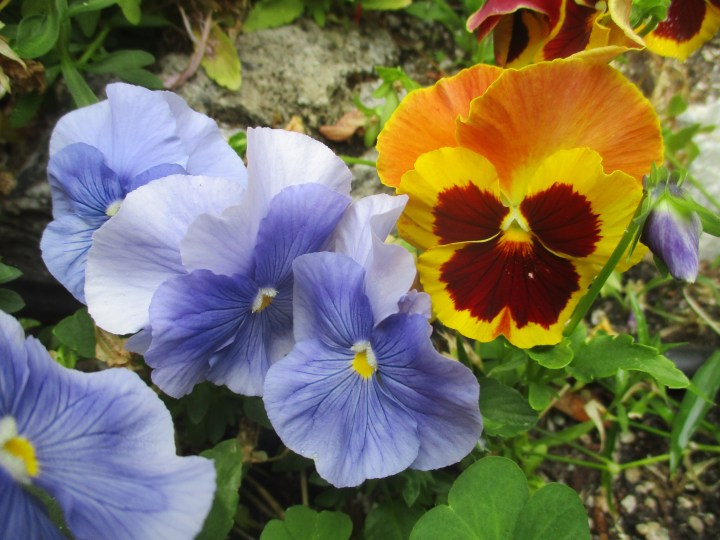
1. Pansies are slowly succumbing to the warmth of spring and early summer. They can continue to perform as long as they like, we will not be replacing them with any warm season annuals.00627-1

2. Pansies are even prettier up close. Foliage was unusually sparse among this group, even prior to spring. Pansies had never stayed so late before. I would not have guessed that they could.00627-2

3. Pansy is one of the favorite flowers of my colleague down south. Although he does not use many at work, or even in his home garden, he always grows one pot full of them through winter.00627-3

4. Alstroemeria, which are also known as Peruvian lilies, do very well here. I do not remember if this is pink or ‘peachy’. I believe it is ‘peachy’. There are also yellow alstroemeria here.00627-4

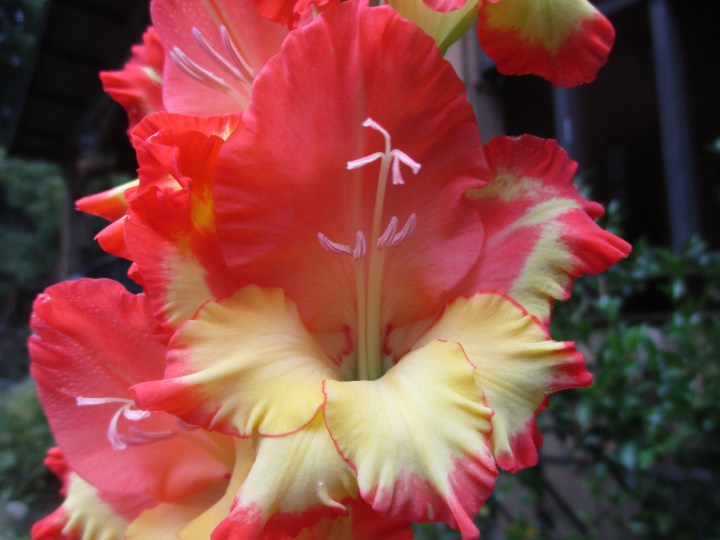
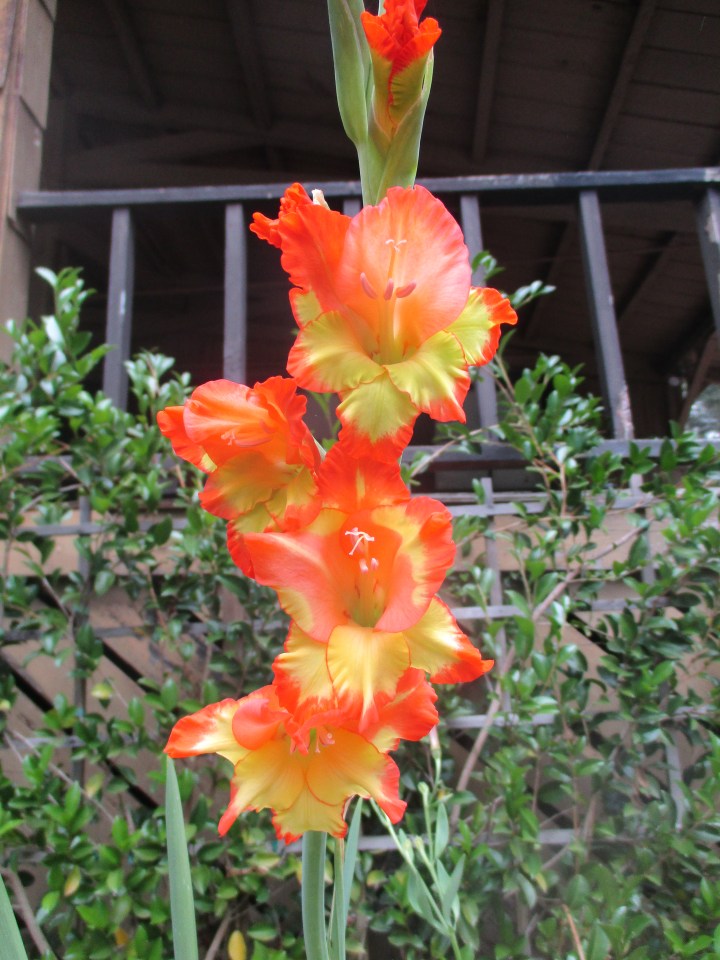
5. Gladiola is one of my favorite summer bulbs, but I have not planted any in many years. They are not reliably perennial here. However, this orange gladiola has bloomed for several years.00627-5

6. Gladiola, now that I think about it, is actually my favorite summer bulb, rather than just one of my favorites. This purple gladiola has bloomed as long as the other, only in a different area.00627-6

This is the link for Six on Saturday, for anyone else who would like to participate:

https://thepropagatorblog.wordpress.com/2017/09/18/six-on-saturday-a-participant-guide/

Horridculture – eBay

P00624
I certainly got good deals on these recent acquisitions. However, I have no idea what I will do with them.

It is such a bad habit! Even if I spend no money, I spend too much time perusing what I could spend a little bit of spare cash on. On rare occasion, I actually do spend a little bit on something that I can get a good deal on, not because I actually have any use for it, but merely because I got a good deal on it, . . . or because I believe that I may not be able to find it for sale again later.

Now, I have more than two hundred seed for Pygmy date palm, Phoenix roebelenii. They certainly were inexpensive, costing less than a few dollars. Most of the expense was for postage. It really was a good deal. However, I have no plan for so many Pygmy date palms. I do not expect all to germinate; but I have no plan for just half of them. Actually, I have no plan for just one.

The other seed to the right in the picture are for muscadine and scuppernong, Vitis rotundifolia. Although I purchased them as a ‘mix’, the seller kindly separated the two varieties. They are easier to accommodate than two hundred palms, and I really do have plans for them. I know growing them from seed is riskier than growing known cultivars, but I wanted them to be ‘wild’.

Regardless, I really should not have purchased even muscadine and scuppernong seed while there is so much other seed here that can not be accommodated. I really must sow all of the old seed this autumn or winter, whether I have plans for it or not. I suspect that most will not germinate. Some of the most questionable seed can be sown out in the garden rather than in flats.

No more eBay!

Sole Survivor

P00621-1
One is the loneliest number. (It is in the middle of the far edge of the flat.)

By now, I can safely assume that any of the various old seed that were sown late last February that have not yet germinated are not likely to do so. They were all so old that I knew at the time that their viability was questionable. Nonetheless, I could not discard them without confirming that they were no longer viable. Four months later, this empty flat just about confirms it.

So far, the sole survivor is a seedling of a California fan palm, Washingtonia filifera. It looks silly all alone in the otherwise empty flat. Yet, even if no other seedlings germinate, the effort will have been worth this dinky palm seedling. California fan palm happens to be my favorite palm; but I would have been just as pleased with something that is not a favorite.

This little seedling is still too young to be pulled and canned. It will therefore wait and grow in the flat for now, and perhaps until autumn. I still hope that other seed will germinate during that time. Even if they do not, the empty flat will get set aside where it will continue to be irrigated as needed until late next spring. Viable but old seed may be unusually slow to germinate.

I can not help but wonder if some of the seed did not get enough chill after they were sown late in February. Maple, ash, elm, birch and arborvitae might require more of a chill through more of winter to be convinced that the warm weather afterward really is spring. I am not quite ready to give up on them yet.

There are still many more very old seed to sow this autumn. For most, I do not expect germination to be any better than it was for this previous batch.

P00621-2
This little California fan palm seedling certainly seems determined to survive.

Ghost of Weddings Past

P00620K
Easter lilies are still my favorite of the lilies!

Weddings are normally common at the small historic chapel at work. This is normally the busiest season there. Since the chapel is presently unused, and it will likely remain unused for quite a while, we have not replaced the white pansies, that were out front through winter, with new white blooming warm season annuals for summer. The minimal landscape seems a bit emptier.

A colony of white hydrangeas to the left of the chapel happen to be blooming late this year, as if they know there is no rush. The smaller hydrangeas in the foreground of this colony were not original to the landscape, but were added as they were left behind after weddings. (Florist hydrangeas are innately more compact.) Blue and pink hydrangeas went to blue and pink colonies.

Our chrysanthemums were left behind after weddings too. They were originally fancy potted mums that provided more color than white. They are not as prolific with bloom in landscapes as they were originally, but they seem happy to adapt, and perform as short term perennials. It is better than going straightaway to the compost pile or greenwaste. They are appreciated here.

A pair of potted Easter lilies that were left behind with other potted blooming plants after a wedding last year were not installed into the landscape, so remained in the storage nursery. They were not expected to regenerate efficiently after their primary bloom. Surprisingly, they not only regenerated, but bloomed about as spectacularly as we want to believe they are capable of.

Rather than put them out into a landscape where there are few people about to see them, we left them to bloom here where at least those who work here can appreciate them for a few days. They will go to one of the gardens this autumn.

Six on Saturday: Kitchen Scraps


The first of our compost piles will not die. Some of the scraps of vegetables from the kitchens grow to produce more of the same. As this first pile of pre-compost gets turned over to the next pile, we commonly find potatoes and onions. Tomatoes, squash and sometimes cucumbers grow around and on top of the pile. Without watering, their season is limited, but just long enough.

It is actually frustrating that some of the vegetables that are not so productive where tended in the vegetable garden perform better, although likely briefly, on the random compost pile.

1. Vegetable scraps and rotten vegetables are common in the compost pile, even while the kitchens here are not presently operating. These do not seem to have been rotten when discarded.P00620-1

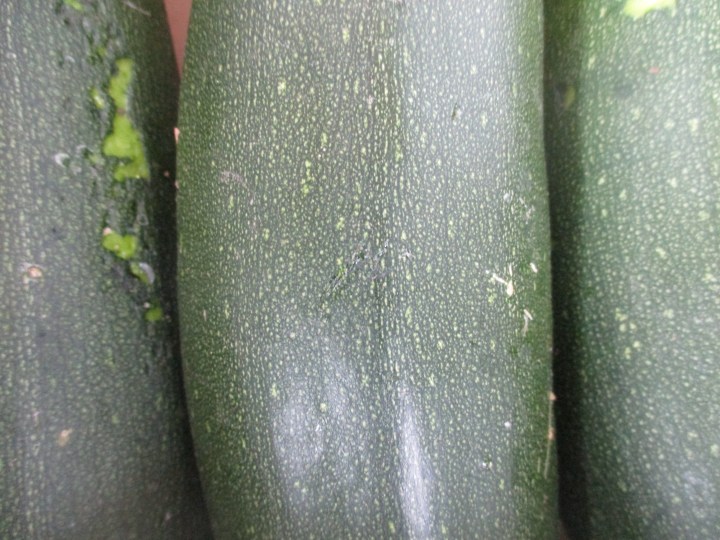
2. Summer squash is common here, even though scrap from the kitchens should be from juvenile squash, which should contain no viable seed. This might produce yellow crookneck squash.P00620-2

3. Cucumber is not so common, and will not likely last as long as other vegetable plants. The area is warm and dry. Cucumber prefers sunny but not so warm exposure, and regular watering.P00620-3

4. Determinate tomato looks just like what grew here last year. If so, it makes small cherry tomatoes that are shaped like ‘Roma’ tomatoes; and all the fruit will ripen at about the same time.P00620-4

5. Pumpkin vine should be sprawling more than this. It could be just another type of squash. The round fruits with stout stems resemble baby pumpkins. However, the leaves are not right.P00620-5

6. Bearded iris is no vegetable, but naturalized similarly next to the compost piles. It is perennial rather than annual. Although shabby here, it can be recycled into landscapes. Bloom is gold.P00620-6

This is the link for Six on Saturday, for anyone else who would like to participate:

https://thepropagatorblog.wordpress.com/2017/09/18/six-on-saturday-a-participant-guide/

Horridculture – Bucket of Bolts

P00425-6
They started out nicely.

Radishes seemed like a good idea back when I sowed the seed in the garden. I had not grown any in many years. I thought that the particular location would be cool enough to inhibit bolting, even though it was starting to get close to the end of their season here. They are definitely a cool season vegetable here, with brief seasons in spring and autumn. Some linger through winter.

The seed germinated efficiently. The seedlings started out well. Radishes are small roots that mature in only about three weeks. Technically, they were right on schedule. I happened to get a few tiny radishes from the batch. However, after the seed were sown, but before the radish roots developed, the formerly cool spring weather warmed suddenly enough to stimulate bolting.

The elongation of floral stalks was visible within the foliar rosettes of most of the individual radishes while they were still quite dinky. Initially, I thought it would be no problem. There were a few good radish roots, which was all I needed to brag to my colleague down South about. Those that bolted would sort of be palatable as radish greens. Bitterness does not bother me much.

Now, because so few of the radishes were pulled for their roots, too many are growing as greens, and they evolved from merely bolting to blooming. The flavor evolved from normal bitter to almost icky bitter. I will not be sharing these with anyone. I can not leave them in the garden to get shabby either. Besides, I want the space for something else. I suppose I will freeze some.

After all the effort, I got only a few small radishes, some decent greens, and mostly bitter greens. Perhaps I will try radishes again in autumn. This radish trial was a ‘FAIL’.

P00617
Yes, we have no radishes.

Silver Lining

P00614-1
This little silver dollar tree did well with a second chance.

Among the more than seven hundred species of Eucalyptus, nomenclature gets confusing. It certainly does not help that some species have multiple common names. Eucalyptus cinerea is a rather distinctive species with at least two equally distinctive common names. The problem with these names is that, although sensible in Australian, they are not so sensible to Californians.

‘Mealy stringybark’ is a name that must describe something of the physical characteristics of the species. The bark is rather stringy, but no more stringy than that of so many other species. The glaucous foliage might be described as mealy in Australian English. ‘Argyle apple’ is a weirder name. Again, it must make sense in Australian culture. I just know it as ‘silver dollar tree’.

A few years ago, I acquired a severely disfigured and overgrown #5 (5 gallon) specimen of silver dollar tree, along with three comparable specimens of dwarf blue gum, Eucalyptus globulus ‘Compacta’. They were about to be discarded from the nursery where I found them. They got canned into #15 cans, and coppiced back to their distended lignotubers. All regenerated nicely.

Two of the blue gums found appropriate homes. One remains here, and was coppiced again last year. The silver dollar tree stayed late too, but happened to get planted into a landscape last autumn. It is developing into such an appealing tree that one would not guess that it had experienced such neglect and subsequent trauma. The exemplary silvery gray foliage is so healthy.

As it regenerated after getting coppiced, the strongest of the new stems was bound to a stake to form a single straight trunk. All smaller basal stems were pruned away after the first season. The little tree cooperated through the process, and now lives happily ever after. I still do not know its name.

P00614-2
Silver dollar tree produces strikingly silvery foliage.

Wasps!

P00613K
Dead wasps are the best wasps.

Wasps, hornets and yellow jackets that get established within landscapes or buildings are a serious problem. They are not so easily avoided like those out in the wild are. They are aggressive to people and pets who get too close to their nests, and attack with painful stings. Such behavior is unacceptable within the publicly accessible landscapes at work.

There are a few species of wasp, hornet or yellow jacket here. We do not get sufficiently acquainted with any of them to actually identify them. Our priority is eliminating as many of them as possible from the landscapes. Some get trapped. Others get evicted from the few nests that we locate. It is unpleasant work, but it is better than others getting stung.

Wasps, hornets, yellow jackets, or whatever they are, become more of a problem later in summer. They are just getting started for now. We were surprised to find two subterranean nests in a landscape that is in the process of being cleared for renovation. More surprisingly, they were only eight feet apart. Whomever they were, they should have been more territorial than that.

Since they are just getting started, there were not very many to get aggressive when we got too close to them. There were scarcely enough to follow as they entered and emerged from their nests. They were surprisingly easy to kill. The first nest was quite small. The second nest was a bit more concerning. We dug both out as the last few visible insects were dying.

The picture above shows a few waffle-like layers of the larger nest. Empty cells were likely left by the adult insects that were flying about and trying to defend the nest. Other cells are full of larvae that would have matured to many more of the same!

Six on Saturday: Bark


Rhody said, “Cornus florida bark is rough.” He likely intended to say, “Dog would bark, ‘ruff!’.”

This is not about Rhody though. It is about these six pictures of bark of some of the more significant trees that I work with. All are native here. Only the sycamore was installed intentionally into a landscape. All of the others grew wild. There are so many interesting trees here that it was not easy to limit these pictures to just six. I actually took more pictures that were omitted.

Furthermore, a picture of Rhody is not included.

1. Platanus racemosa – California sycamore is bigger and bolder than other American sycamore. Trunks of mature trees are massive and gnarled, with this distinctively blotchy gray bark.P00613-1

2. Pinus ponderosa – Ponderosa pine is the grandest of pines. The massive trunks seem to be comparable to those of Douglas fir. Bark often flakes in bits that resemble jigsaw puzzle pieces.P00613-2

3. Quercus agrifolia – Coast live oak is second only to valley oak in regard to grandeur. Unlike valley oak, it is evergreen. Smooth gray young bark eventually becomes darker and furrowed.P00613-3

4. Pseudotsuga menziesii – Douglas fir is the majestic State Tree of Oregon, and a main timber crop there. Locally, it mixes with various ecosystems. Corky bark is rather finely furrowed.P00613-4

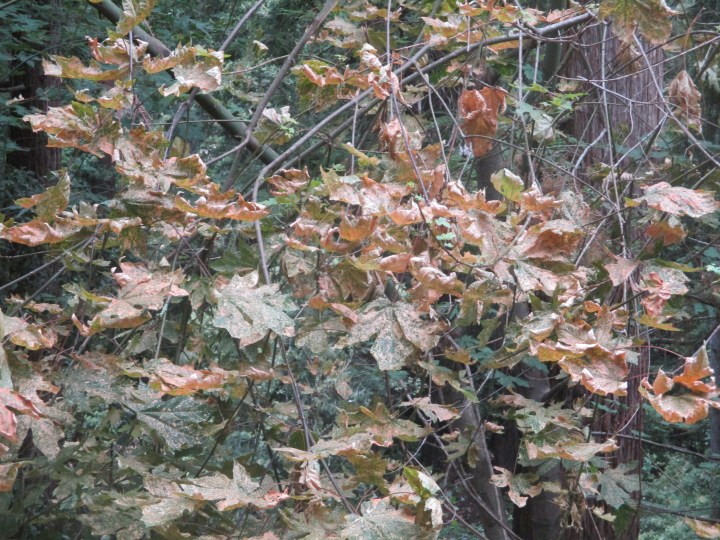
5. Acer macrophyllum – Bigleaf maple is the most imposing maple of the West. As the name implies, the leaves are bigger than those of any other maple. Bark gets sort of checked with age.P00613-5

6. Sequoia sempervirens – Coastal redwood is the grandest of all, and it happens to be the tallest tree in the World. Also, it is the state tree of California. The ruddy bark is distinctly fibrous.P00613-6

This is the link for Six on Saturday, for anyone else who would like to participate:

https://thepropagatorblog.wordpress.com/2017/09/18/six-on-saturday-a-participant-guide/

Post Script: For the first time, I am violating the recommended limit of six pictures to include this extra (but unnumbered) picture of Rhody for those who would be otherwise disappointed.P00613-7

Horridculture – Spruce Up

P00610
Even Charlie Brown would reject this little blue spruce.

No one wants to cut down this little blue spruce. What is worse is that no one wants anyone else to cut it down either. We all know it is ugly. We all know that it can not be salvaged. We all know that it really should relinquish its space to the healthy and well structured coast live oak next to it, in the lower left of the picture. Yet, it remains.

It was planted amongst a herd of gold junipers in about 1980 or 1981, shortly after the construction of the adjacent buildings. An abandoned irrigation system indicates that it was likely irrigated for some time afterward, although it is impossible to know for how long. Otherwise, it and the junipers were completely ignored for the last four decades.

When the vegetable garden was installed nearby, brambles, weeds and trash that had been accumulating for forty years was removed from the area. A few of the most decrepit junipers that were not worth salvaging were removed too. The young and feral coast live oak that grew next to the spruce should have been removed as well, but is actually in very good condition.

Furthermore, the coast live oak is a better tree for the particular application. It is native, so does not mind neglect. The spruce was never really happy there, which is why it is so puny and disfigured now, with the lower two thirds of the trunk bare of limbs and foliage. Obviously, the spruce should be removed so that the oak can continue to develop as it should.

We just like the spruce too much to remove it directly. Even though it would look silly if the bare trunk were exposed by the removal of the oak, the bit of foliage on top is so pretty and blue and familiar. I mean, it looks like we have a spruce in the yard; and everyone likes a spruce!

The plan is to subordinate it to the oak. As the oak grows upward and outward, the lower limbs of the spruce will be pruned away to maintain clearance. Eventually, the spruce will look so silly that the landscape would look better without it, and we will not mind cutting it down so much. It will be unpleasant, but it will be better than interfering with the development of the oak.