There is no rush to leave the office and shop when the weather is cold and rainy. We have been getting quite a few of the inside chores done. When we do go out in the rain, I do not like to take the camera out from under my rain gear; so I do not take many pictures. Besides, since most of my work involves pruning right now, I have not been working much around what is blooming or other interesting subjects.
1. Sitka spruce brought back from near Smith River within their native range are now happily canned in the recovery nursery at our shop. They look as if they were grown here, or are on a bench in a production nursery. They will eventually go out into the landscapes.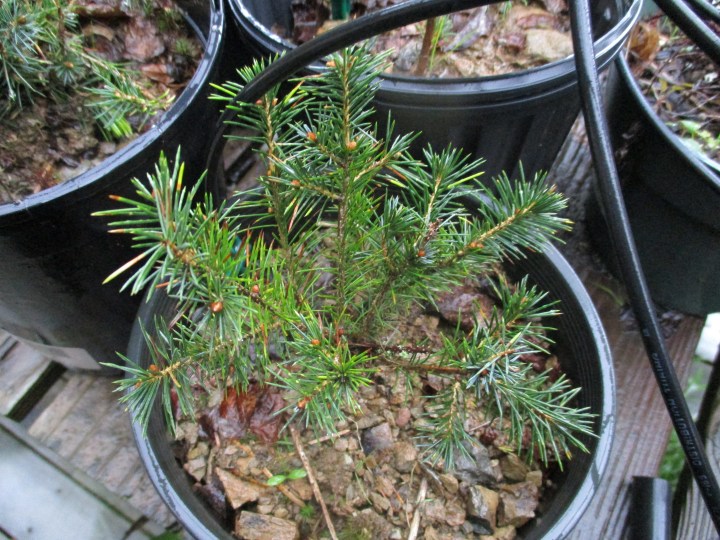
2. Staghorn fern that the same colleague with the Sitka spruce brought back from his grandparents’ home in Orange County are not so happy. They were desiccated on arrival. Now that they are getting much more rain then then need, they are just rotting. The specimen that is still attached to the plywood on the left is probably beyond salvage. The specimen that broke its wire and fell onto the deck to the right is only partially viable. The viable portion will probably be separated from most of the rotting necrotic portion when it is attached to a new slab.
3. Colorado blue spruce and a young coast live oak are adjacent to the deck where the Sitka spruce and staghorn fern reside. This is not a good picture, but shows how the young oak to the left is crowding the older spruce to the right. Their main trunks are only about two feet apart at grade. The spruce was planted back in the middle of the 1980s, and would be a more desirable tree, but is very distressed, and is not likely worthy of salvage. The native oak grew from seed within only the past several years, and is not particularly remarkable, but happens to be quite healthy and well structured. It is not easy to decide which tree to cut down. I sort of suspect that the oak will win, and the spruce will need to go. Those are cruddy box elders in the background.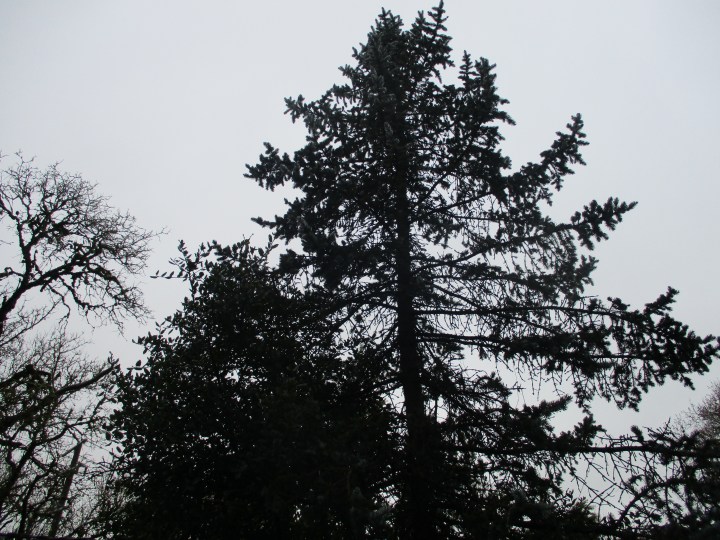
4. Bucket of rain water is impressively full next to the spruce and oak . . . and other spruces and staghorn ferns. There is an open recycle bin nearby that is also full. It must have been somewhat dark rather early in the morning for the flash to operate when I took this picture. I do not know if it ruined my selfie or just made it more artistic.
5. Wild plum is still blooming in some spots. These survived all the rain rather well by delaying their bloom somehow. It will be raining again by the time you see this after midnight on Saturday morning, so this bloom will not last long. There may be others that bloom even later though, and with one exception, the flowering cherries have not started their bloom yet. That darkness in the background is the trunk of a big redwood tree.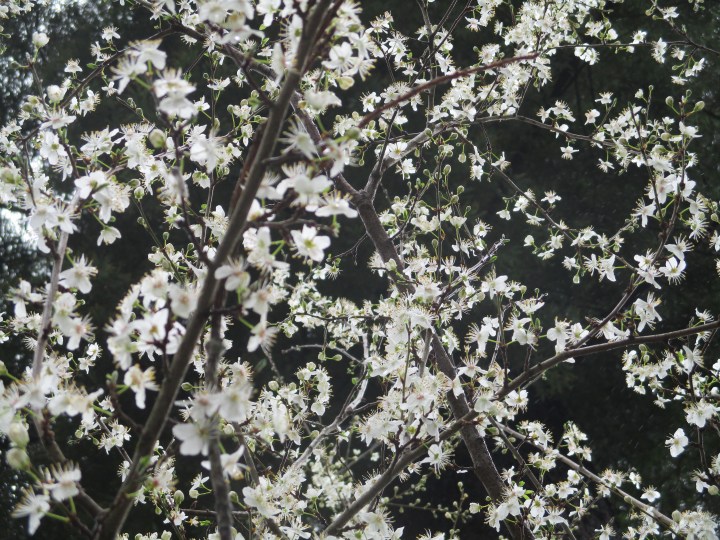
6. Wild plum close up shows the detail of the blossoms, and the unfocused silhouette of the redwood trunk in the background.
This is the link for Six on Saturday, for anyone else who would like to participate:
https://thepropagatorblog.wordpress.com/2017/09/18/six-on-saturday-a-participant-guide/
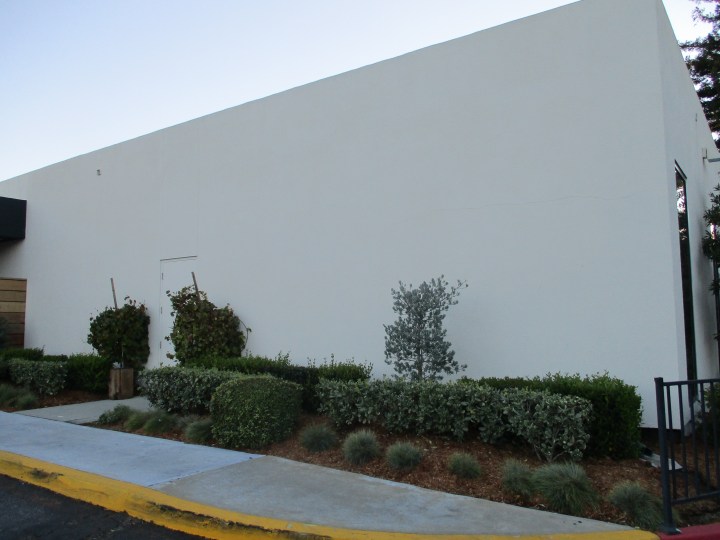 From a distance, this landscape does not look so bad. It seems to have been only recently installed, and features the sort of material that was likely intended to not necessarily obscure the sleek architecture of the building behind it, but to eventually soften the starkness of it.
 This is a relatively new development. The first few arrived here only two years ago. By last year, a few more arrived to make a significant herd that split into two smaller herds. Now these two smaller herds are quite significant. If they continue to proliferate as they have been, they will become more of a problem. They are already shredding flowers and colorful berries that are within their reach, and digging up flexible irrigation hoses.
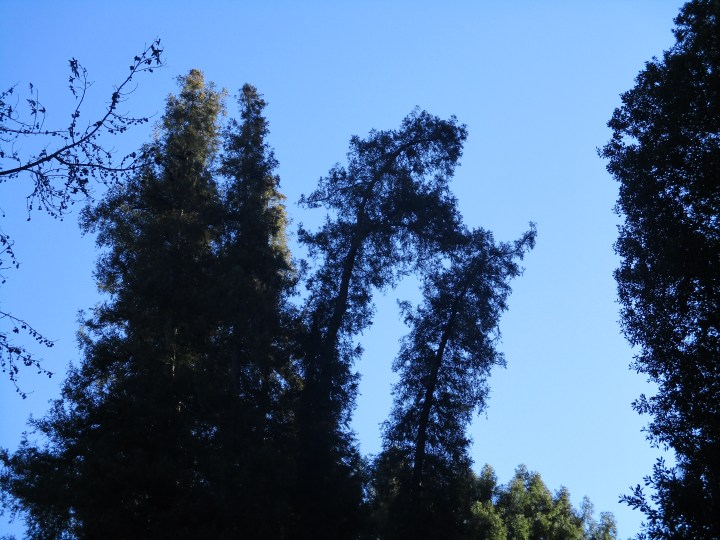 Coastal redwood, Sequoia sempervirens, are remarkable stable trees. They rarely fall, which is how they get to be thousands of years old. They prefer to live in groups, where they mesh their roots together, and shelter each other from wind. Those that live outside of a group stay shorter than forest trees, and typically develop multiple trunks that function as a group.


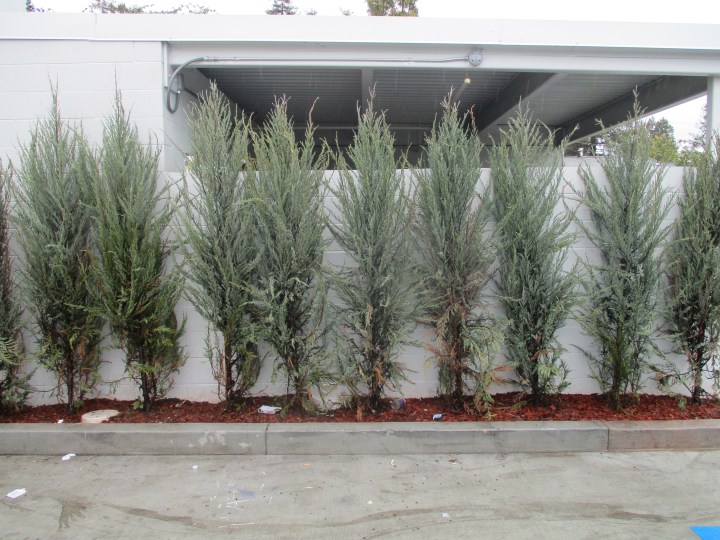 Back when horticulture was still respected, a very long time ago, dense shrubbery with finely textured foliage, such as Japanese boxwood, could be purchased already shorn into cubes that only needed to be installed in a closely set row to become an ‘instant hedge’. For some small hedges composed of small plants that recovered efficiently from transplant, it actually worked reasonably well, even if they did not look so great at first. It also worked for a few larger shrubs that happened to transplant very easily, such as glossy privet. Tall arborvitaes happen to work exceptionally well as instant hedges, although the best spacing for them leaves temporary gaps in between.
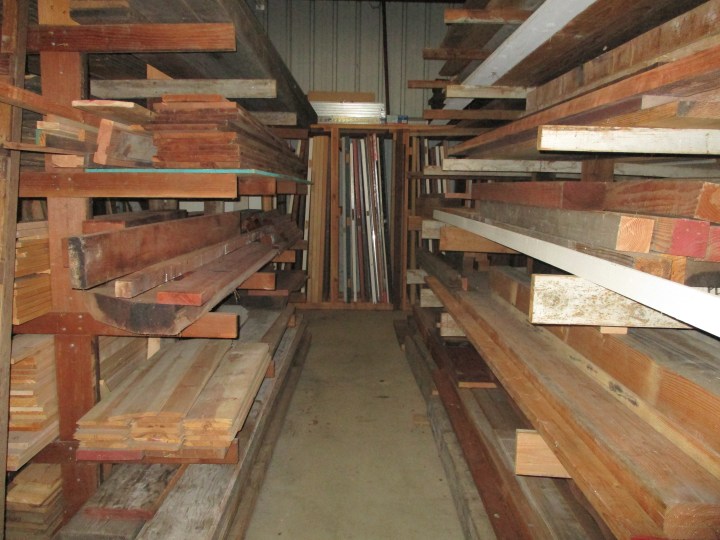 Saint Joseph did not have it so good. He is still the most famous carpenter, and somehow got the most excellent city in the World named after him, but he did not work in a shop like this one. The most well outfitted carpentry shops back then lacked modern power tools, and the selection of woods that are now so easily imported from all over the World.
 Today’s episode is brought to you by the letter ‘T’.

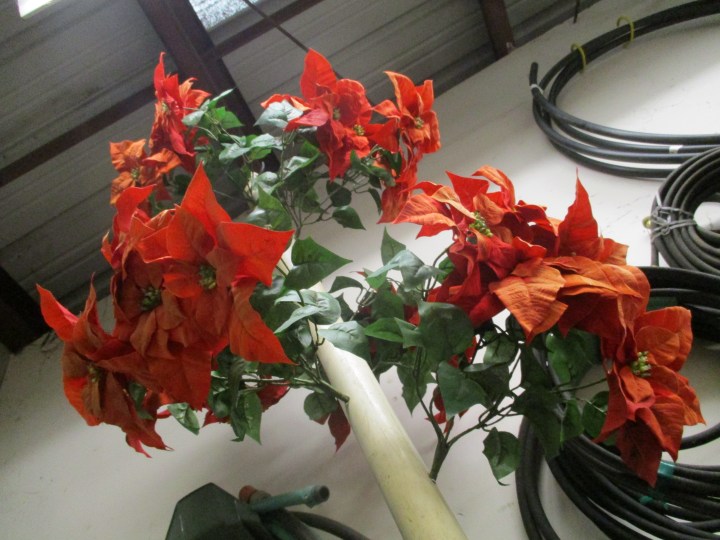

 This landscape is nothing fancy. It is out in front of a fast food establishment on Ocean Street in Santa Cruz. It is low maintenance, and starkly simple. It would be nice if the so-called ‘gardeners’ would cut back the African iris and English lavender a bit better, but they may have left them like this so that they are less likely to get trampled. The colored chips get replenished regularly, and the trash gets harvested quite efficiently. As I said, it is nothing fancy. The only remarkable feature had been this exemplary crape myrtle in the middle.
 Tony Tomeo